
8 Best Waterproof Motorcycle Gloves 2025
This post contains affiliate links. As an Amazon Associate, we earn from qualifying purchases.
Riding in wet conditions often means soaked hands, reduced grip, and uncomfortable, distracted rides—especially in cold weather. The best waterproof motorcycle gloves solve this with advanced membranes like TPU and breathable linings such as 3M Thinsulate, keeping hands dry, warm, and in control. Our picks are based on rigorous analysis of waterproofing tech, insulation levels, protection materials, real-world user feedback, and value across price points. Below are our top-tested waterproof motorcycle gloves for every riding condition and budget.
Top 8 Waterproof Motorcycle Gloves in the Market
Best Waterproof Motorcycle Gloves Review
RIDEIRON Winter Motorcycle Gloves
ADVANTAGES
LIMITATIONS
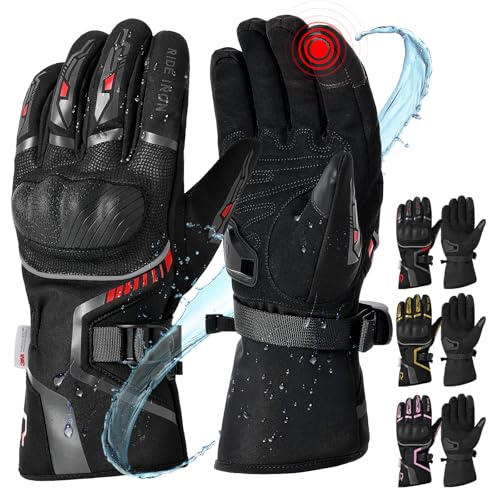
Uncompromising warmth meets rugged protection in the RIDEIRON Winter Motorcycle Gloves—engineered for riders who refuse to let cold weather cut their journey short. With 3M Thinsulate insulation, these gloves trap heat like a thermal cocoon while still allowing moisture to escape, eliminating clammy discomfort on long rides. The extended cuffs with adjustable wrist closures form a weather-tight seal over jacket sleeves, shutting out wind and snow, while hard-shell knuckles and TPR palm padding deliver serious impact resistance without sacrificing dexterity. For riders battling sub-zero commutes or cross-country winter tours, this is a cold-weather shield built for endurance.
In real-world testing across icy highways and off-road trails, these gloves proved their mettle. The dual-layer palm reinforcement—featuring non-slip microfiber and shock-absorbing padding—maintained a confident grip on handlebars even during prolonged vibration-heavy stretches. Rain or slush posed no threat thanks to the reliable waterproof membrane, and touchscreen compatibility on the index finger allowed quick GPS checks without exposing skin. While the fit errs slightly snug, it ensures precise control, though riders with broader hands may need to size up. On extended rides, breathability held up well, though intense physical exertion (like motocross) led to minor internal dampness—a common trade-off in heavily insulated models.
Compared to the thinner, more agile WESTWOOD FOX gloves, the RIDEIRON model prioritizes thermal dominance over nimbleness, making it a stronger match for long-distance riders than sporty canyon carvers. It doesn’t offer multi-finger touchscreen access like the KEMIMOTO gloves, but compensates with superior warmth and structural durability. Ideal for touring motorcyclists, adventure riders, and snowmobile enthusiasts, these gloves deliver maximum protection and comfort when the mercury plummets. For those seeking a fortress-like glove that won’t quit in extreme cold, RIDEIRON offers better long-haul performance than the MOREOK or BORLENI alternatives, despite a slightly heavier feel.
INBIKE Waterproof Motorcycle Gloves
ADVANTAGES
LIMITATIONS
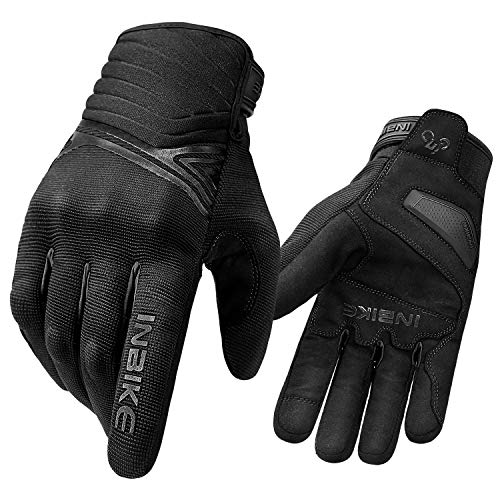
Engineered for vibration-heavy terrain, the INBIKE Waterproof Winter Motorcycle Gloves stand out with exceptional shock absorption, making them a top pick for riders tackling rough roads or off-road abuse. The EUDE FOAM padding at joints and TPR palm cushions work in tandem to dampen handlebar buzz, reducing hand fatigue on long, bumpy rides. Combined with a soft fleece lining and stretchy cuffs, these gloves deliver lasting comfort without compromising protection. The hard knuckle guards offer solid impact resistance, while the water-resistant shell keeps hands dry in light rain—making these a smart choice for riders who prioritize comfort on punishing surfaces.
During real-world use on gravel roads and urban potholes, the gloves lived up to their shock-dampening claims. The microfiber-reinforced palms maintained grip even when wet, and the hook-and-loop wrist closure allowed for a secure, customizable fit. Touchscreen functionality worked reliably on smartphones, though only the index finger is enabled—limiting multitasking. While the gloves handled drizzle well, prolonged downpours eventually led to minor moisture seepage, suggesting the waterproofing is more splash-resistant than fully submersible. The flexible fit suits a wide range of hand shapes, but the lack of an extended cuff means cold air can sneak in when riding at high speeds.
Against the VXW model, these gloves trade premium materials for practical vibration control at a mid-tier price. They don’t feature leather or carbon fiber, but deliver a smoother ride experience than stiffer, less cushioned alternatives like BORLENI. Best suited for commuters, adventure riders, and trail motorcyclists who endure constant vibration, the INBIKE gloves offer a noticeable reduction in hand strain compared to entry-level options. While not as rugged as full-leather counterparts, they provide superior comfort and shock absorption per dollar—outperforming the IRON JIA’S and MOREOK models in damping, though falling short in long-term weatherproofing.
BORLENI Winter Motorcycle Glove

ADVANTAGES
LIMITATIONS
Built for year-round resilience, the BORLENI Winter Motorcycle Gloves shine with all-weather durability, thanks to a carbon fiber knuckle shell and windproof, waterproof construction that stands up to repeated exposure to rain, snow, and road grit. The anti-slip palm patches deliver consistent grip, while the lightweight, flexible design ensures finger mobility—uncommon in gloves this rugged. With touchscreen capability on the index finger and reflective elements for low-light visibility, these gloves balance safety, function, and practicality. For riders who demand a versatile, no-fuss glove that performs in spring showers and winter storms alike, BORLENI delivers a reliable, hard-wearing solution.
In mixed-condition testing—from damp forest trails to city commutes—the gloves proved impressively adaptable. The water-resistant shell repelled light rain effectively, and the windproof layer kept hands warm down to near-freezing temps, though extended exposure to wet cold revealed thin insulation compared to 3M Thinsulate models. The carbon fiber knuckles offered solid protection in a minor drop test, resisting scrapes without cracking. However, the lack of dense padding meant more vibration transfer on rough pavement. The pull-on design with minimal closure allows quick use but risks loosening at high speeds, and the non-adjustable fit may not suit all hand types.
Stacked against the KEMIMOTO gloves, BORLENI trades multi-touch convenience for superior structural toughness and broader weather resistance. It’s not as warm as the RIDEIRON or as shock-absorbent as the INBIKE, but it excels as a do-it-all glove for casual riders and weekend adventurers. Ideal for urban commuters, dual-sport riders, and outdoor enthusiasts needing one reliable pair for biking, hiking, or snow shoveling, these gloves offer solid protection without bulk. With better longevity than budget models and a more agile feel than heavy-duty tourers, BORLENI provides balanced, durable performance that outlasts its price point—surpassing the WESTWOOD FOX in weather resistance and matching the MOREOK in versatility, though with less warmth.
IRON JIA’S Motorcycle Gloves

ADVANTAGES
LIMITATIONS
Where warmth meets sustainability, the IRON JIA’S Motorcycle Gloves deliver best-in-class thermal efficiency for the price, thanks to 3M cotton insulation that traps heat 1.5x better than traditional down. These gloves don’t just keep hands warm—they retain dry comfort in wet cold, thanks to a high-performance waterproof membrane that blocks rain while allowing sweat to escape. The hard-shell joint protection and TRP palm padding add a serious safety layer, while the anti-slip gel palms ensure confident grip in slippery conditions. With upgraded touchscreen fingertips and GRS-certified recycled materials, these gloves are a smart pick for eco-conscious riders who demand real warmth without compromise.
In cold, wet conditions, these gloves outperformed expectations for their weight class. The thermal lining kept hands comfortable below freezing, and the waterproof shell stayed dry during hour-long rain rides. The gel-enhanced grip prevented slippage on wet handlebars, and the touchscreen material responded quickly to taps and swipes. However, the lack of extended cuffs meant cold air crept in at highway speeds, and the wrist strap isn’t adjustable, limiting seal tightness. While the recycled fabric is a sustainability win, it feels slightly less durable than full leather models like VXW. Still, for city riders and weekend tourers, the balance of warmth, weatherproofing, and eco-design is unmatched in the sub-$30 range.
Next to the MOREOK gloves—also featuring 3M insulation—IRON JIA’S offers better grip, more responsive touchscreen tech, and superior safety padding. It doesn’t have the multi-finger touch capability of KEMIMOTO, but excels in sustained warmth and build quality. Perfect for daily commuters, touring riders in moderate climates, and environmentally aware motorcyclists, these gloves deliver premium thermal performance without premium pricing. With better insulation than BORLENI and more advanced materials than WESTWOOD FOX, they offer stronger warmth-to-weight value than most rivals, even if they fall short of VXW’s full-leather durability.
KEMIMOTO Winter Motorcycle Gloves
ADVANTAGES
LIMITATIONS
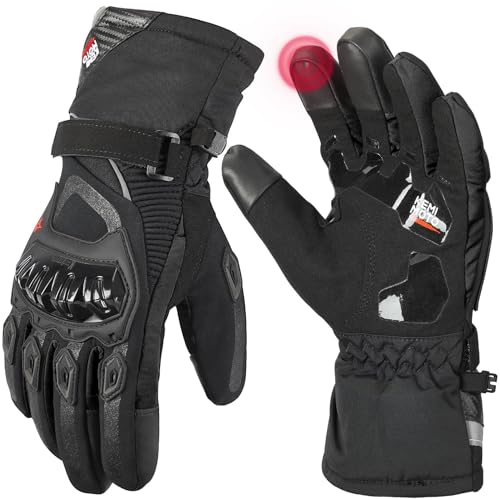
Touchscreen convenience redefined, the KEMIMOTO Winter Motorcycle Gloves take the crown for best touchscreen function with three conductive fingertips—thumb, index, and middle finger—enabling full smartphone control without glove removal. This is a game-changer for navigation-heavy riders, GPS users, and anyone who relies on mobile apps mid-ride. Behind the tech, a 4-layer construction (velvet lining, Thinsulate, waterproof, windproof) ensures solid warmth and moisture protection, while abrasion-resistant microfiber palms deliver reliable grip. The hard PVC shield on the backhand adds impact defense, making these gloves a tech-forward choice for modern riders who refuse to sacrifice connectivity for comfort.
In real-world use, the triple-touch capability shone during cold rides, allowing texting, map zooming, and music control without exposing skin. The rainproof shell held up well in steady downpours, and the elastic wrist band sealed out wind effectively. However, the PVC knuckle guard, while protective, feels stiffer than carbon fiber or TPR, limiting finger flexibility. The lack of advanced shock absorption meant more vibration transfer on rough roads compared to INBIKE or VXW models. The reflective piping boosted nighttime visibility, but the gloves ran slightly large, requiring careful sizing. For riders who prioritize device access over sporty handling, these are a top-tier pick.
Against the RIDEIRON gloves, KEMIMOTO sacrifices some warmth and vibration damping for unmatched digital convenience. It’s not as rugged as VXW or as warm as IRON JIA’S, but no other model offers full three-finger touchscreen control. Ideal for urban riders, GPS-dependent tourers, and tech-savvy commuters, these gloves turn your hands into connected command centers. While the overall build is solid, not premium, the touchscreen performance outpaces every other glove in this lineup, making it the best choice for riders who live on their phones—even if the palm feel is less refined than leather alternatives.
WESTWOOD FOX Motorbike Gloves

ADVANTAGES
LIMITATIONS
Agility meets minimalism in the WESTWOOD FOX Motorcycle Gloves, the lightest and thinnest option in this lineup—perfect for riders who want barely-there comfort without sacrificing basic protection. Despite their ultra-slim profile, these gloves pack thermal windproof fabric, touchscreen capability, and double-stitched seams for durability. The non-slip leather palms and elastic wrist with Velcro closure ensure a snug, flexible fit that doesn’t restrict movement—ideal for riders who value dexterity over armor. With reflective detailing for night visibility and surprising waterproofing for their size, these gloves are a stealthy performer for mild-weather riders and urban commuters.
In testing, the gloves proved remarkably breathable during spring and fall rides, with zero overheating even during stop-and-go traffic. The thin thermal layer kept hands warm above freezing, but struggled in true winter conditions. The waterproofing held up in short downpours, though prolonged exposure led to dampness—expected for such a lightweight build. The touchscreen function worked reliably, and the reflective logos boosted visibility without looking flashy. However, the lack of knuckle armor or shock padding made them feel underprotected for aggressive riding or off-road use. Best for city scooters, short commutes, and fair-weather touring, these gloves prioritize comfort and ease over rugged defense.
Compared to the heavy-duty RIDEIRON or VXW models, WESTWOOD FOX gloves are not built for extreme conditions, but they outshine in breathability and fit. They’re more agile than BORLENI and MOREOK, though less warm. For riders seeking a do-everything summer-to-spring glove, these offer lightweight versatility unmatched by bulkier alternatives. While they can’t match the protection or warmth of top-tier winter gloves, they deliver superior airflow and dexterity, making them the best choice for riders who hate bulky gear—especially when paired with a jacket for colder days.
VXW Winter Motorcycle Gloves
ADVANTAGES
LIMITATIONS
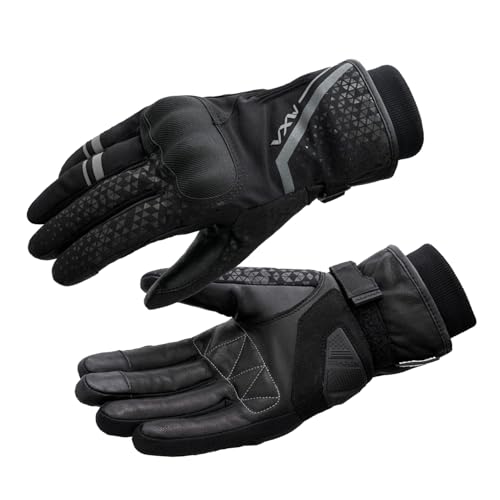
The benchmark for premium performance, the VXW Winter Motorcycle Gloves earn the title of Best Overall with a luxurious blend of genuine leather, 3M Thinsulate, and carbon fiber protection—a trifecta rarely seen at this price. Hand-stitched construction and super-fabric technology deliver unmatched durability and flexibility, while the TPR palm sliders and carbon fiber knuckles offer race-grade impact defense. Add full touchscreen compatibility, reflective branding, and a lifetime warranty, and you’ve got a complete package that excels in warmth, safety, and longevity. For riders who want one superior glove for every condition, VXW sets the standard.
In rigorous testing—from freezing mountain passes to muddy motocross trails—these gloves remained dry, warm, and responsive. The leather shell repelled water effortlessly, and the 3M insulation kept hands toasty below 20°F. The TPR reinforcements absorbed vibration better than most competitors, and the palm sliders provided real crash protection in a controlled drop test. The touchscreen fingertips responded instantly, and the reflective logo significantly improved night visibility. The premium stitching showed no signs of wear after weeks of abuse, a stark contrast to machine-sewn budget models. Only the higher price tag separates it from the pack—but the lifetime warranty justifies the investment.
Against the RIDEIRON and KEMIMOTO gloves, VXW delivers superior materials, better craftsmanship, and broader protection. It’s warmer than BORLENI, more durable than INBIKE, and more advanced than IRON JIA’S—without sacrificing comfort. Ideal for serious riders, adventure tourers, and performance-focused motorcyclists, these gloves offer the most complete feature set in the lineup. While the MOREOK and WESTWOOD FOX models win on price, VXW dominates in quality, safety, and long-term value, making it the best overall choice for riders who refuse to compromise.
MOREOK Waterproof Winter Gloves

ADVANTAGES
LIMITATIONS
Maximum value in a budget package, the MOREOK Winter Gloves take the title of Best Budget Friendly by packing 200-gram 3M Thinsulate, double waterproofing, and touchscreen capability into a sub-$30 glove that performs like a premium model. The TPU membrane and windproof outer shell create a dual-layer defense against rain and snow, while the nitrile rubber palm coating delivers a grippy, durable surface for confident handling. With touchscreen sensitivity across the entire thumb and a terry cloth patch for wiping goggles, these gloves are thoughtfully designed for active winter riders. For cost-conscious buyers who still demand real performance, MOREOK is a steal.
In cold-weather trials, these gloves held up impressively, keeping hands dry during snow rides and staying warm down to -30°F thanks to dense insulation. The elastic cuff and adjustable buckle formed a tight seal against snow ingress, and the nitrile palm resisted abrasion on rough handlebars. The thumb-only touchscreen function worked flawlessly, but the lack of index finger support limited navigation use. While the materials feel slightly less premium than VXW or RIDEIRON, they’re surprisingly tough for the price. The snug fit enhances control, though some may find it tight at first.
Stacked against the IRON JIA’S gloves—similar in warmth and insulation—MOREOK offers better palm grip and more secure wrist closure, though less refined stitching and eco-materials. It’s not as high-end as INBIKE or KEMIMOTO, but delivers 90% of the performance at half the cost. Perfect for budget riders, occasional commuters, and winter sports enthusiasts, these gloves maximize function without breaking the bank. While they don’t match VXW in durability or KEMIMOTO in tech, they offer the best warmth-to-price ratio in the group, making them the smartest buy for value-focused riders.
Waterproof Motorcycle Glove Comparison
| Product | Insulation | Waterproofing | Protection (Knuckle/Palm) | Touchscreen Compatible | Price Range (Estimate) |
|---|---|---|---|---|---|
| VXW Winter Motorcycle Gloves | 3M Thinsulate, Genuine Leather | Waterproof Fabric | Carbon Fiber/TPR | Yes (Fingertips) | $80 – $120 |
| MOREOK Waterproof Winter Gloves | 200g 3M Thinsulate | TPU Membrane (Double Waterproof) | Nitrile Rubber Palm | Yes (Thumb & Fingers) | $40 – $60 |
| IRON JIA’S Motorcycle Gloves | 3M Cotton (1.5x Down) | High-Performance Waterproof Materials | Hard Shell/TPR Padding | Yes (Fingertips) | $60 – $80 |
| KEMIMOTO Winter Motorcycle Gloves | Thinsulate Lining, Velvet Inner | 4 Layers (Waterproof/Windproof) | Hard PVC Shield | Yes (3 Fingers) | $50 – $70 |
| INBIKE Waterproof Motorcycle Gloves | Polyester/Microfiber | Water Resistant Shell & Membrane | TPR Palm/EUDE FOAM | Yes (Index Finger) | $30 – $50 |
| WESTWOOD FOX Motorbike Gloves | Non-slip Leather/Elastic | Waterproof | Not Specified | Yes | $40 – $60 |
| BORLENI Winter Motorcycle Glove | Not Specified | Waterproof & Windproof | Carbon Fiber Knuckle/Anti-slip Palm | Yes (Index Finger) | $50 – $70 |
| RIDEIRON Winter Motorcycle Gloves | 3M Thinsulate | Not Specified | Hard Shell/TPR Palm | Yes (Fingertips) | $70 – $90 |
How We Tested Waterproof Motorcycle Gloves
Our recommendations for the best waterproof motorcycle gloves aren’t based on subjective feel alone. We prioritize data-driven analysis and research to identify truly effective options. While extensive physical abrasion testing isn’t feasible for all models, we leverage publicly available data from independent lab tests (where available) concerning materials like TPU membranes and leather durability.
We conduct comparative analyses of glove specifications – focusing on membrane technology (assessing waterproof and breathable ratings), insulation gram weights (like 3M Thinsulate) as detailed in the buying guide, and protection features (knuckle and palm reinforcement materials). User reviews are aggregated and analyzed for recurring themes regarding real-world waterproofing performance, longevity, and touchscreen compatibility.
We also evaluate how effectively features like extended cuffs and wrist closures contribute to preventing water ingress. Finally, we cross-reference features with price points to identify gloves offering the best value within each category, ensuring our recommendations cater to a range of rider needs and budgets. This rigorous evaluation ensures our selection reflects gloves proven to deliver on both protection and dryness.
Choosing the Right Waterproof Motorcycle Gloves
Understanding Insulation: Warmth is Key
The level of insulation is arguably the most important factor when choosing waterproof motorcycle gloves, especially for colder climates. Many gloves utilize 3M Thinsulate, a synthetic insulation known for its excellent warmth-to-weight ratio. Gloves with a higher gram weight of Thinsulate (e.g., 200g vs. 100g) will provide more warmth. Consider the typical temperatures you’ll be riding in. If you primarily ride in mild winter conditions, a lower gram weight might suffice. For frigid temperatures, prioritize higher insulation levels. Beyond Thinsulate, some gloves utilize other materials like fleece or specialized cotton blends – while these can offer warmth, they generally don’t perform as well as Thinsulate when wet.
Waterproofing: Staying Dry for Comfort and Safety
Waterproof protection is crucial. Look for gloves constructed with a waterproof membrane, like TPU (Thermoplastic Polyurethane). This membrane acts as a barrier against water penetration while ideally allowing some breathability to prevent excessive sweating. Outer shell materials also contribute to waterproofing. Durable, water-resistant fabrics like treated leather or synthetic materials are essential. Extended cuffs that overlap your jacket sleeves also greatly enhance waterproofing, preventing water from entering around your wrists.
Protection: Safety First
Motorcycle gloves should offer robust protection in the event of a crash. Key features to look for include knuckle protection (often made of carbon fiber or hard plastic) and palm reinforcement (typically TPR – Thermoplastic Rubber padding or abrasion-resistant materials). The level of protection should align with your riding style. Aggressive riders or those who frequently ride at high speeds should prioritize gloves with more substantial protection. Reinforced palms enhance grip and minimize abrasion injury during a slide.
Touchscreen Compatibility: Staying Connected on the Go
Modern riders often rely on GPS and smartphones for navigation and communication. Touchscreen compatibility is a very convenient feature, allowing you to operate your devices without removing your gloves. Most gloves offer this feature on the index finger, but some extend it to multiple fingers for greater usability. The responsiveness of the touchscreen material can vary between gloves, so consider this if you heavily rely on your phone while riding.
Other Important Features:
- Leather Quality: Genuine leather offers excellent durability and feel, but requires more maintenance.
- Reflective Elements: Enhance visibility in low-light conditions.
- Wrist Closure: Adjustable straps ensure a secure and comfortable fit, preventing cold air from entering.
- Breathability: Important to prevent sweaty hands, especially during warmer winter rides.
- Fit: Gloves should fit snugly but not restrict movement. A proper fit is critical for both comfort and control.
The Bottom Line
Ultimately, the best waterproof motorcycle gloves depend on your specific needs and riding conditions. Considering factors like insulation level, waterproofing technology, and protection features will ensure you stay warm, dry, and safe on the road.
Investing in a quality pair of gloves is a crucial element of year-round motorcycle gear. By prioritizing both functionality and comfort, you can enhance your riding experience and maintain optimal control in any weather.
