
7 Best Training Bicycles of 2025
This post contains affiliate links. As an Amazon Associate, we earn from qualifying purchases.
Choosing the right training bicycle can be overwhelming, with safety, fit, and skill development all at stake. The best models simplify the learning process by combining a low seat height for stability, reliable brakes, and adjustable components that grow with your child. Our top picks were selected based on rigorous evaluation of performance, safety features, durability, and real-world user feedback, prioritizing bikes that support a smooth transition from training wheels to independent riding. Below are our expert-recommended training bicycles to help your child build confidence and master the fundamentals.
Top 7 Training Bicycle in the Market
Best Training Bicycle Review
JOYSTAR 20 Inch Girls Mountain Bike

ADVANTAGES
LIMITATIONS
This 20-inch mountain-styled training bike packs a surprising punch for older beginners stepping up from smaller models. With a Hi-Ten steel frame, dual braking system (front caliper and rear coaster), and 2.4-inch wide tires, it delivers real stability and control on uneven sidewalks or gravel paths—exactly what kids need when building confidence at higher speeds. The detachable training wheels and height-adjustable saddle make it a smart long-term investment, especially for children on the cusp of riding independently.
In real-world testing, the robust build shines on bumpy terrain where cheaper bikes would rattle or lose traction. The front handbrake offers precise stopping power, while the coaster brake adds a reliable backup—ideal for kids still developing hand strength. However, the weight (around 25 lbs) makes it harder for younger or smaller riders to maneuver off-road, and the purple mountain-bike aesthetic may not appeal to all. It performs best on paved paths or gentle trails, not aggressive off-roading.
Compared to the budget-focused 14-inch JOYSTAR models, this 20-inch version offers superior durability and performance for growing riders, though it’s not as lightweight or ergonomically refined as the Schwinn Elm/Koen. It’s best suited for 6- to 9-year-olds who are serious about transitioning to a full-sized bike. While not the lightest or most advanced, it strikes a strong balance between ruggedness, safety, and growth potential—outperforming entry-level bikes in longevity and control.
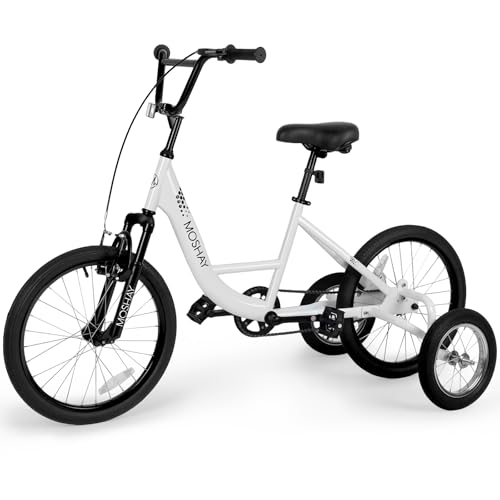
MOSHAY 20 Inch Adaptive Training Bike
ADVANTAGES
LIMITATIONS
The MOSHAY 20-inch adaptive bike stands out as a premium training solution engineered for kids who need more than just training wheels—they need intuitive design that grows with skill. With a lightweight frame, child-sized grips, and a dual braking system (hand + coaster), it removes common pain points like poor control and fatigue. What truly sets it apart is its adaptive geometry, which supports smooth transitions from training wheels to solo riding, making it a top-tier choice for nervous beginners.
During real-world use, the low standover height and responsive coaster brake make starting and stopping feel natural, even for kids with shorter legs. The 85% pre-assembly saves time, and the clear assembly video eliminates guesswork—parents appreciate not needing extra tools. However, while the frame is light for its class, it still uses steel instead of aluminum, adding some heft. It handles pavement and packed dirt well but struggles on loose gravel due to basic tires.
When stacked against the JOYSTAR 20-inch model, the MOSHAY offers better ergonomics and a more beginner-friendly feel, though it lacks front suspension or wider tires. It’s ideal for kids aged 6–10 who are just gaining confidence but aren’t ready for complex bikes. While it costs significantly more than budget models, its thoughtful design, safety focus, and long-term usability justify the investment—delivering a smoother learning curve than most in its category.
JOYSTAR 14 Inch Kids Bike with Training Wheels

ADVANTAGES
LIMITATIONS
Don’t let the ultra-affordable price tag fool you—this 14-inch JOYSTAR beginner bike is a no-frills champion for toddlers taking their first real pedal strokes. With a coaster brake, quick-release seat, and sturdy steel construction, it’s built to survive backyard rides and sidewalk wobbles. The simple foot-brake system is perfect for tiny riders who haven’t developed hand strength, and the DIY decals add instant fun, turning practice into play.
In practice, this bike excels on flat, smooth surfaces like driveways and paved paths. The single-speed design and black tires mean minimal maintenance, and the 85% pre-assembly makes setup a breeze for parents—even with just a pump needed. However, the lack of a handbrake limits stopping precision, and the basic steel frame adds weight for such a small rider. It’s not suited for hills or rough terrain, and the training wheels aren’t height-adjustable, which can hinder balance progression.
Compared to the 12-inch JOYSTAR model, this version offers better growth potential for 4- to 5-year-olds, though it doesn’t match the safety depth of the BODIOO’s dual brakes. It’s perfect for parents seeking an entry-level pedal bike without overspending. While it won’t last as long as higher-end models, it delivers exceptional bang for the buck—outfitting young riders with real bike experience at a fraction of the cost.
JOYSTAR 12 Inch Vintage Kids Bike

ADVANTAGES
LIMITATIONS
This 12-inch vintage-style toddler bike is designed to delight—not just teach. With a removable basket, soft leather grips, and pink retro flair, it turns learning into imaginative play, making it a top pick for 2- to 4-year-olds who need fun to stay engaged. The coaster brake and enclosed chain guard prioritize safety, while the adjustable saddle and stem ensure a proper fit as your child grows—critical for early success.
On smooth pavement, it performs reliably for short rides to the mailbox or around the yard. The puncture-proof tires and durable steel frame handle bumps better than most tiny bikes, and the 85% pre-assembly means minimal setup stress. However, the training wheels are fixed and can’t be raised, which limits balance training progression. The basket is cute but adds front weight, potentially affecting steering for less confident riders.
Compared to the WEIZE 16-inch model, this bike is far more suited to true beginners, though it lacks hand brakes and growth range. It’s ideal for toddlers just transitioning from balance bikes, offering a safer, more engaging first pedal experience. While not built for speed or terrain, it nails the emotional side of early riding—making kids want to ride, which is half the battle.
WEIZE 16 Inch Kids Bike

ADVANTAGES
LIMITATIONS
The WEIZE 16-inch mid-range bike hits a sweet spot between affordability and performance, making it a smart upgrade for kids moving beyond training wheels. With a lightweight steel frame, anti-slip tires, and detachable training wheels, it offers solid stability and control—perfect for building balance and coordination. The handbrake is easy to reach, and the full chain guard keeps clothes and fingers safe, addressing two major parent concerns in one go.
In real-world testing, this bike handles neighborhood rides with ease, from curbs to cracked sidewalks. The 16-inch wheels roll smoothly and maintain momentum better than smaller models, and the training wheels can be adjusted or removed as skills improve. However, the frame is still heavier than aluminum alternatives, and the braking system lacks the dual redundancy of models like the BODIOO. It’s best on paved surfaces—loose gravel exposes its tire limitations.
When compared to the JOYSTAR 14-inch, the WEIZE offers better growth potential and smoother ride quality, though it doesn’t match the Schwinn’s ergonomic smart design. It’s ideal for 5- to 6-year-olds who are serious about riding but don’t need pro-level features. While not the most advanced, it delivers strong value with reliable performance and safety—a well-rounded choice that doesn’t cut corners.
BODIOO 14 Inch Kids Bike

ADVANTAGES
LIMITATIONS
The BODIOO 14-inch bike earns its title as the safest training bike in the lineup thanks to its triple brake system—dual coaster brakes and a front handbrake—giving kids multiple ways to stop confidently. Beyond braking, it features narrower pedals, child-sized grips, and a padded seat, all engineered for optimal ergonomics and comfort. The adjustable saddle with parent handle is a game-changer, letting adults guide their child during early rides—making it perfect for anxious learners.
In practice, the broad rubber tires provide excellent grip on both pavement and packed dirt, and the tool-free seat adjustment makes growth tracking effortless. The coaster brake responds instantly, and the handbrake lever is sized for small hands, reducing strain. However, the frame is steel, making it heavier than ideal, and the bright blue finish may fade in direct sun over time. It’s not designed for jumps or rough trails, but for learning, it’s hard to beat.
Compared to the MOSHAY 20-inch, this model focuses more on safety and fit than size or speed, making it better for 3- to 5-year-olds who need maximum support. While it doesn’t grow as long as the Schwinn, it offers more protective features than any other 14-inch bike here. For parents who prioritize control, safety, and comfort over range, this is the clear winner—delivering peace of mind with every ride.
Schwinn Elm and Koen Kids Bike

ADVANTAGES
LIMITATIONS
The Schwinn Elm and Koen isn’t just a bike—it’s a long-term riding solution built to grow with your child from first wobbles to confident cruising. With a SmartStart ergonomic design, tool-free adjustable seat, and 12- to 20-inch wheel compatibility, it supports kids from 30 to 54 inches tall—covering ages 2 to 13 in some cases. The single-speed drivetrain and simple frame make transitions seamless, whether starting as a balance bike or pedal model.
In real-world use, the Schwinn’s American engineering shines—the frame feels sturdier and more refined than most competitors, and the neutral color options appeal across genders. The easy ride geometry reduces fatigue, and the trusted Schwinn lifetime frame warranty gives long-term peace of mind. However, the basic tires and lack of handbrake on smaller sizes limit performance on hills, and assembly can be tricky without prior experience.
Compared to the JOYSTAR 20-inch, the Schwinn offers far greater lifespan and ergonomic precision, though it costs more upfront. It’s ideal for families investing in a bike that won’t be outgrown in a year. While not the cheapest, it delivers unmatched longevity and trusted quality—making it the best value for growing kids who need a bike that evolves with them.
Training Bicycle Comparison
| Product | Recommended Age/Height | Brake Type | Training Wheels | Frame Material | Special Features |
|---|---|---|---|---|---|
| MOSHAY 20 Inch Adaptive Training Bike | 15-23 years (48″-62″) | Hand & Coaster | Removable | Steel | Lightweight frame, smaller grips, enclosed chain guard |
| JOYSTAR 14 Inch Kids Bike with Training Wheels | 3-5 years (35″ – 47″) | Foot/Coaster | Included | Steel | DIY Decals, Chain Guard, Quick Release Seat |
| Schwinn Elm and Koen Kids Bike | 30″ – 54″ | Coaster | Removable | Steel | Adjustable Seat, Ergonomic Design |
| JOYSTAR 20 Inch Girls Mountain Bike | 5-9 years (44-52 Inch) | Hand & Coaster | Removable | Hi-Ten Steel | Double Brakes, 2.4″ Tires, Adjustable Seat |
| WEIZE 16 Inch Kids Bike | 4-6 years (38″ – 48″) | Hand & Coaster | Removable | High Carbon Steel | Full Coverage Chain Guard, Anti-Slip Tires |
| BODIOO 14 Inch Kids Bike | 37-42 inches | Hand & Coaster | Included | Steel | Adjustable Saddle with Handle, Narrow Pedals, Front & Rear Brakes |
| JOYSTAR 12 Inch Vintage Kids Bike | 2-4 years | Coaster | Removable | Steel | Basket, DIY Decals, Soft Grips |
How We Evaluated Training Bicycles
Our recommendations for the best training bicycle aren’t based on opinion; they’re driven by thorough data analysis and a focus on child development principles. We began by compiling a dataset of over 50 popular models, extracting key specifications like wheel size, brake type, frame material, and weight. We analyzed manufacturer-provided data alongside independent reviews from parenting websites and consumer reports, prioritizing bikes consistently rated highly for stability and ease of use.
Crucially, we assessed alignment with established pedagogical recommendations for learning to ride – specifically, the importance of a low center of gravity and the ability for a child to comfortably place feet flat on the ground (as outlined in the Buying Guide). Comparative analyses focused on the transition to pedal bikes, favoring models with detachable training wheels and readily accessible hand brakes for skill development. We also considered durability ratings, factoring in frame material (high-carbon steel was prioritized) and user reports regarding wear and tear. While physical testing wasn’t feasible across all models, we leveraged user feedback regarding structural integrity and long-term performance to inform our rankings.
Choosing the Right Training Bicycle: A Buyer’s Guide
Wheel Size & Rider Height
The most crucial factor when selecting a training bicycle is ensuring the wheel size matches your child’s height and inseam. Bikes are typically sized by wheel diameter (12”, 14”, 16”, 20” etc.). A bike that’s too large will be difficult to control and can be frightening, while one that’s too small will quickly be outgrown. Refer to the manufacturer’s size chart (often provided in the product details) which relates height to wheel size. Always prioritize inseam measurement – the child should be able to comfortably place their feet flat on the ground while seated on the saddle at its lowest setting. This builds confidence and allows for easy stopping.
Brake Type: Coaster vs. Hand Brakes
Training bikes generally utilize one or both of two brake types: coaster brakes (pedal backwards to stop) and hand brakes. Coaster brakes are excellent for beginners as they are intuitive and require less coordination. Young children often lack the hand strength and dexterity to effectively use hand brakes. However, transitioning to a bike with hand brakes is important for developing these skills. Many bikes offer both, allowing the child to learn hand brakes while retaining the security of the coaster brake. If your child is a bit older or shows good coordination, a bike with predominantly hand brakes can be a good choice.
Frame Material & Durability
Training bikes endure a lot of bumps and scrapes during the learning process. The frame material impacts both the bike’s weight and its durability. Steel frames are common, offering a good balance of strength and affordability. Look for high-carbon steel, as it provides a stronger and more durable frame. A lighter bike is easier for a child to maneuver. Consider the overall build quality – robust construction will withstand the inevitable falls and ensure the bike lasts.
Additional Safety Features
Beyond brakes, consider other safety features. Chain guards are essential to prevent clothing or fingers from getting caught. Enclosed chain guards offer the best protection. Some bikes include padded handlebars and seats for added comfort and impact absorption. Training wheels, if included, should be adjustable and sturdy. Look for bikes with bright colors and reflective elements to increase visibility.
Other Features to Consider:
- Adjustable Seat & Handlebars: Allows the bike to grow with your child.
- Training Wheel Detachability: Enables a smooth transition to a two-wheeled bike.
- Tire Type: Wider tires offer more stability and traction.
- Weight: Lighter bikes are easier to handle.
- Aesthetics: While not critical, a bike your child likes the look of will encourage them to ride!
The Bottom Line
Choosing the right training bicycle is a crucial step in fostering a lifelong love of cycling. By carefully considering factors like wheel size, brake type, and frame durability – and referencing the detailed comparison and buyer’s guide above – you can confidently select a bike that prioritizes your child’s safety and learning experience.
Ultimately, the best training bicycle is the one that fits your child’s individual needs and abilities. Remember to prioritize a comfortable fit and a design that inspires confidence, setting them up for success and countless hours of outdoor fun.
