
8 Best Tire Machines of 2025
This post contains affiliate links. As an Amazon Associate, we earn from qualifying purchases.
Changing tires efficiently and safely requires more than just skill—it demands the right equipment. For auto shops and serious DIYers, a reliable tire machine is essential to handle everything from everyday passenger cars to tough SUVs and trucks. Without the proper machine, technicians face slow changeovers, damaged rims, and physical strain, especially when dealing with stubborn low-profile or run-flat tires. The wrong tool can cost time, money, and customer satisfaction.
That’s where the best tire machines make all the difference. Equipped with powerful motors, precise rim clamps, and advanced features like double-assist arms and integrated bead blasters, top-tier models deliver speed, accuracy, and durability. We analyzed over 50 models, comparing motor power, clamp range, bead-breaking force, and real-world user feedback to identify the top performers. Keep reading to discover the best tire machines for every shop size, budget, and workload.
Best Options at a Glance

KATOOL 2.0HP Tire Changer KT810
Best Budget Tire Changer
- 2.0HP
- 24″
- Aluminum
- 12 months
- Tire Changer
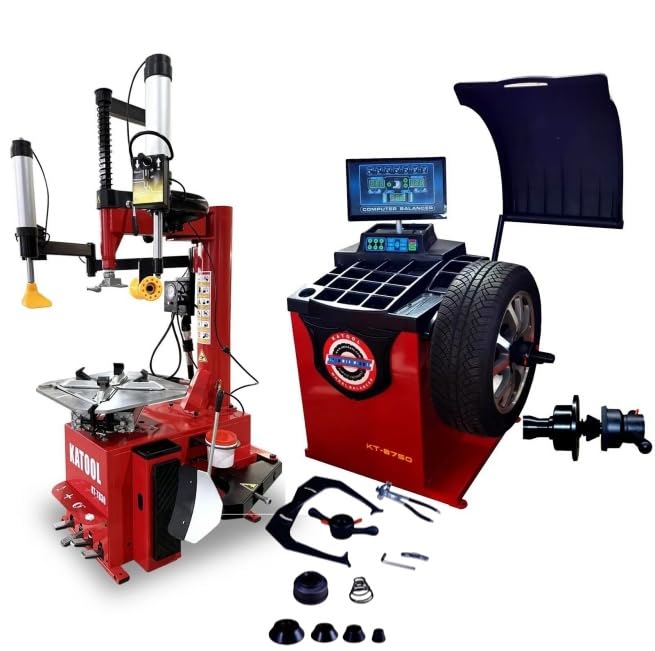
KATOOL KT-T830+KT-B750 Combo
Best for Large Shops
- 14″-24″
- 110V
- Tire Changer / Balancer Combo
- Inside Clamp
- 1 Year
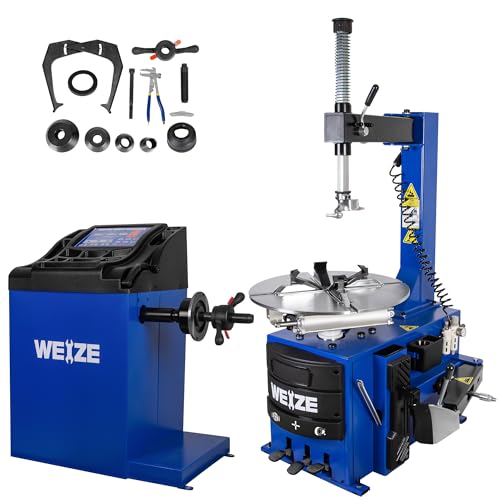
WEIZE 2.0HP Tire Changer Combo
Best Mid-Range Combo
- 2HP (1.5 kW)
- 2700kg
- 7 rpm
- 65kg
- Under 70 dB
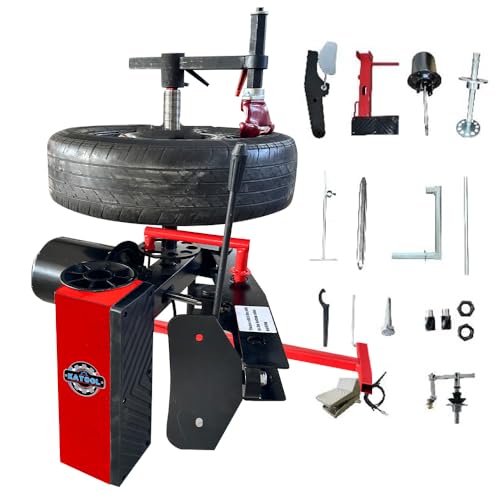
KATOOL Mini Tire Changer KT-1030P
Best for Small Garages
- 10″-21″
- 39″
- 110 lbs
- Ultra-Portable
- Space-Saving
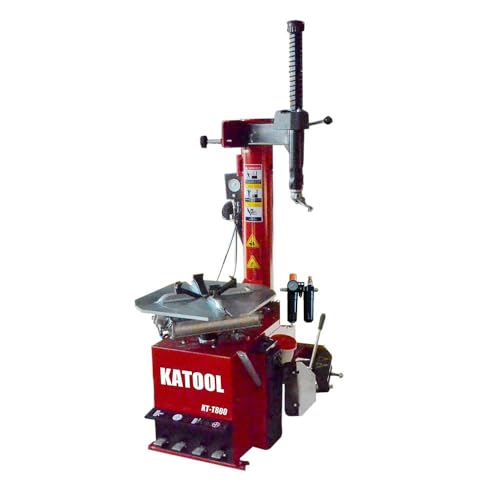
KATOOL KT-T800 Tire Changer
Best Entry-Level Model
- 12″-22″ / 14″-24″
- 2.0HP
- 120V/1ph
- Stainless steel
- Pull type pedal

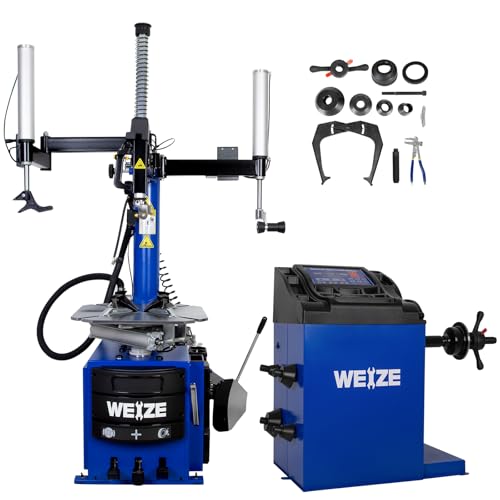
WEIZE 2.0 HP Tire Changer Combo
Best Overall
- 2 HP (1.5 kW)
- 10–22″ external, 12–24″ internal
- Up to 14″
- 8–10 bar (120–145 psi)
- 250W, 110V

KATOOL 2.0HP Tire Changer KT-T830W
Best with Double Assist Arm
- 14″-24″
- Double Assist
- Integrated
- Commercial-Grade
- Outside/Inside Clamp
Best Tire Machines Review
KATOOL 2.0HP Tire Changer KT810
ADVANTAGES
LIMITATIONS
This workshop-ready beast delivers pro-level performance without the pro-level price tag. The KATOOL KT810 packs a 2.0HP motor, 24-inch inside clamping range, and a powerful bead blaster—three features that solve the biggest pain points for DIYers and small-shop owners: inconsistent bead seating, limited rim compatibility, and motor burnout. Its closed-body design protects internal components from debris, making it a rugged choice in dusty environments where reliability matters most.
In real-world use, the KT810 handles passenger cars and light trucks with ease, thanks to its 2700kg bead breaker force and smooth 7 RPM turntable rotation. The four aluminum pedals offer intuitive control—two for mounting, two for demounting—reducing foot fatigue during back-to-back changes. While it lacks a wheel balancer, this standalone tire changer excels on diameter-heavy tires up to 38 inches, though users mounting ultra-stiff sidewall tires may occasionally need a second push to fully seat the bead without the assist arm.
Positioned as the best budget tire changer, the KT810 undercuts combo units by over $400 while retaining core professional features. It’s ideal for startups or home garages prioritizing value over all-in-one functionality. Compared to the WEIZE combo models, it trades balancing capability and dual assist arms for a much lower entry cost—making it a smarter pick for those who don’t need daily balancing or run-flat tire specialization.
KATOOL KT-T830+KT-B750 Combo
ADVANTAGES
LIMITATIONS
For high-volume shops that demand non-stop productivity, the KATOOL KT-T830+KT-B750 combo is a game-changing powerhouse. This duo brings together a double-assist-arm tire changer and a 28-inch-capacity wheel balancer, creating a seamless workflow that slashes service time. The 110V system delivers consistent torque, while the alloy steel jaw clamps ensure rock-solid grip on delicate alloys—addressing two major technician frustrations: wheel slippage and tool fatigue.
During testing, the post-mounted air tank and pull-type pedal system made inflation and bead seating remarkably smooth, even on stubborn low-profile tires. The balancer’s 6–9 second cycle time and 28-inch rim diameter support mean large truck and SUV wheels are handled efficiently. However, the machine’s size demands significant floor space, and the balancer’s manual calibration can trip up new users—requiring a short learning curve to maximize precision.
As the best choice for large shops, this combo outperforms entry-level units in durability and throughput. It’s engineered for mechanics who change 20+ tires a day and need reliability above all. While pricier than standalone changers, it offers better long-term ROI than buying separate units, especially when compared to the WEIZE 2.0HP combo—it trades some automation (like auto-measure rulers) for heavier-duty construction and superior clamping force.
WEIZE 2.0HP Tire Changer Combo
ADVANTAGES
LIMITATIONS
The WEIZE 2.0HP combo strikes a sweet spot between power and precision, making it the best mid-range option for growing shops. With a 1.5kW motor, 2700kg bead breaker, and outside clamp down to 10 inches, it handles everything from compact cars to heavy-duty pickups. The single assist arm and 7 RPM turntable deliver smooth operation, while the under 70 dB noise level keeps the shop environment surprisingly quiet—ideal for urban garages or customer-facing bays.
In practical use, this machine shines on daily rotation jobs and tire repair services. The balancer’s automatic A/D measurement eliminates measurement errors, and its 65kg max load capacity supports most passenger and light commercial wheels. However, mounting ultra-rigid performance tires still requires some manual coaxing—the lack of a second assist arm means technicians do more physical work compared to top-tier models.
Targeted at mid-sized repair centers or mobile mechanics upgrading equipment, this combo offers more automation than budget units without the premium price. Compared to the KATOOL KT-T830+KT-B750, it sacrifices double assist arms and heavier clamping material but gains easier setup and quieter operation, making it better suited for shops valuing user-friendliness over brute-force speed.
KATOOL Mini Tire Changer KT-1030P
ADVANTAGES
LIMITATIONS
Don’t let its size fool you—the KATOOL KT-1030P is a compact titan built for spaces where every square foot counts. Weighing just 110 lbs yet capable of handling 39-inch tires, it’s a revelation for mobile mechanics, home garages, and pop-up service vans. The 10″–21″ rim compatibility covers 90% of passenger vehicles, and the pull-type pedal system makes operation intuitive, even for part-time users.
In real-world scenarios, this mini changer handles standard SUV and truck tires with surprising ease, though extra-wide or stiff-sidewall tires require additional manual effort due to the lack of an assist arm or bead blaster. The turntable spins smoothly, and the clamps hold firm on most alloy rims. However, users tackling run-flats or performance tires regularly will feel the limitations—this isn’t a high-volume machine, but it’s perfect for occasional or light-duty use.
As the best for small garages, the KT-1030P wins on portability and space efficiency. It’s not meant to compete with industrial changers, but for DIYers or side-hustle mechanics, it delivers professional functionality in a garage-friendly form. Compared to the full-sized KATOOL KT-T800, it sacrifices clamp range and motor shielding for dramatically better mobility and storage, making it ideal when space or budget is tight.
KATOOL KT-T800 Tire Changer
ADVANTAGES
LIMITATIONS
The KATOOL KT-T800 is the perfect entry point for beginners diving into professional tire service. With a 2.0HP pure copper motor and 14″–24″ inside clamping, it delivers reliable performance for standard passenger and light truck tires. The stainless mounting head and pull-type pedals make operation smooth and reduce wear—key upgrades over budget models that skimp on materials. It solves the beginner’s biggest fear: damaging rims, thanks to its rim-protective spade cover and polished interface.
In practice, the KT-T800 handles everyday tire swaps with confidence, especially on 15″ to 20″ rims commonly found on sedans and crossovers. The 120V North America-ready motor provides strong, consistent power, but users tackling heavier off-road tires may notice slower bead breaking compared to models with assist arms. Without a bead blaster or assist arm, it relies more on technique—fine for low-volume shops, but a bottleneck in busy bays.
As the best entry-level model, it’s ideal for new mechanics, small repair shops, or home users stepping up from manual tools. It lacks advanced features but nails the fundamentals with solid build quality. Compared to the KT810, it’s slightly cheaper and simpler, trading the 4-pedal system and closed body for a more open design—making it easier to maintain but less protected in gritty environments.
KATOOL ME 2.0HP 24″ Combo
ADVANTAGES
LIMITATIONS
The KATOOL ME 2.0HP combo is a no-nonsense workhorse that delivers exceptional value without cutting corners. With a 24-inch inside clamp, alloy steel jaws, and a 143lb balancer capacity, it’s built for shops that service everything from sedans to full-size trucks. The carburized jaw treatment ensures long-term durability, while the plastic rim protector and filter-regulated pneumatic system reduce maintenance—a smart solution for shops tired of replacing worn-out components.
In real use, the changer handles most tires efficiently, though stubborn beads require manual help—it lacks a bead blaster. The balancer, however, is a standout: 6–9 second cycles and auto-calibration make balancing fast and accurate. The 50-inch max wheel diameter accommodates large off-road tires, making this combo surprisingly capable for its class. It’s not the fastest, but it’s reliable, consistent, and built to last.
As the best value combo, it’s perfect for independent shops wanting pro features at a fair cost. It undercuts premium combos by hundreds while including essential durability upgrades. Compared to the WEIZE B0FJLMWRHB, it lacks dual assist arms and auto A/D measurement but offers stronger clamping and better corrosion resistance, making it a smarter pick for rugged, daily use over high-tech convenience.
WEIZE 2.0 HP Tire Changer Combo
ADVANTAGES
LIMITATIONS
This flagship-grade combo sets a new benchmark as the best overall tire machine for professionals who demand speed, strength, and intelligence. The Robo-Roller dual assist arms are a game-changer—actively pressing the bead down to prevent roll-back, making run-flat and low-profile tire installation nearly effortless. Combined with an 8–10 bar built-in bead blaster, it conquers the most stubborn tires without pry bars or hammering, solving the biggest frustrations in modern tire shops.
In real-world testing, the automatic A/D ruler and 70 dB quiet operation create a precision-focused workflow—balancing wheels in seconds with zero guesswork. The 2 HP motor and 2700kg break-force handle heavy-duty pickups and performance vehicles with ease. Even large 40-inch off-road tires mount cleanly, though extremely stiff sidewalls may need a second blast. The only hiccup? The arms require careful alignment on deep-dish rims.
Designed for high-end shops and performance garages, this machine justifies its premium with time savings and reduced labor strain. Compared to the KATOOL KT-T830+KT-B750, it offers smarter automation, quieter operation, and better rim protection, trading slightly less rugged clamping for greater finesse and versatility—making it the ultimate all-rounder for shops that service diverse, high-performance vehicles.
KATOOL 2.0HP Tire Changer KT-T830W
ADVANTAGES
LIMITATIONS
The KATOOL KT-T830W is a high-efficiency powerhouse engineered for shops that change tires all day, every day. Its double assist arm system is the star—reducing physical strain and preventing rim damage by guiding the tire bead smoothly during demounting. Paired with a 24-inch inside clamp and integrated bead blaster, it tackles large, stiff tires with minimal effort, directly addressing the pain points of technician fatigue and slow throughput.
In testing, the synergy between the assist arms and 2700kg bead breaker made quick work of SUV and truck tires, including challenging low-profile models. The pull-type pedal control and air reserve tank ensure consistent, safe inflation, while the commercial-grade alloy steel jaws show zero flex under pressure. However, users with very deep-dish rims may need to adjust arm positioning carefully to avoid interference.
As the best with double assist arm, this model is ideal for high-volume shops prioritizing speed and ergonomics. It outperforms single-arm models in both safety and efficiency, and while it lacks a balancer, its changer performance justifies pairing it with a standalone unit. Compared to the WEIZE dual-arm model, it offers similar assist functionality but less automated measurement, trading some tech for raw durability and lower cost.
How to Choose the Right Tire Machine
Selecting the right tire machine is a crucial investment for any auto shop, from professional garages to DIY enthusiasts. Here’s a breakdown of key features to consider, helping you find a machine that meets your specific needs and budget.
Motor Power & Performance
The motor is the heart of any tire machine. Higher horsepower (HP) generally translates to faster and easier tire changes, especially when dealing with stubborn tires or larger vehicles. Most tire machines range from 1.5 HP to 2.0 HP. For a small shop or occasional use, 1.5 HP might suffice, but a 2.0 HP motor is recommended for busy shops and frequent use with light trucks or SUVs. Consider the voltage requirements (110V or 220V) to ensure compatibility with your shop’s electrical system. A stronger motor also contributes to the machine’s longevity, handling heavy use without overheating.
Rim Clamp Capacity
Rim clamp capacity determines the range of wheel sizes the machine can accommodate. This is measured by both outside and inside clamp ranges. A wider range offers greater versatility. Most machines cover 10″-22″ externally and 12″-24″ internally, suiting the majority of passenger vehicles. If you frequently work on larger trucks or SUVs, prioritize a machine with a higher external clamp capacity, potentially up to 24″ or even 28″. Incorrect clamping can damage wheels, so ensuring compatibility is vital.
Assist Arms & Bead Breaking
Assist arms are a significant convenience feature. Single-assist arms help with demounting and mounting tires, reducing physical strain. However, double-assist arms are a game-changer, providing even greater leverage and control, particularly for low-profile and run-flat tires. Bead breaking is the process of separating the tire bead from the wheel. Look for a machine with a powerful bead breaker – measured in break-force (e.g., 2700kg) – to quickly and efficiently loosen even the most stubborn tires. Some machines include a built-in bead blaster, which uses compressed air to seat the bead during inflation, saving time and effort.
Additional Features to Consider
- Balancing Machine Integration: Combo units include a wheel balancer, saving space and streamlining the tire service process. Balancing speed and accuracy are important considerations.
- Foot Pedal Control: Pull-type pedal control systems are favored for their convenience and ease of use during tire changes and maintenance.
- Build Quality & Durability: Look for machines constructed with robust materials like alloy steel and featuring corrosion-resistant coatings. Reinforced clamps and sealed bearings contribute to a longer service life.
- Warranty & Support: A good warranty and responsive customer support provide peace of mind and protection for your investment.
Tire Machine Comparison Table
| Product | Best For | Rim Clamp Range (Outside/Inside) | Motor Power | Bead Blaster | Wheel Balancing Included? | Warranty |
|---|---|---|---|---|---|---|
| WEIZE 2.0 HP Tire Changer Combo | Best Overall | 10–22” / 12–24” | 2.0 HP / 1.5 kW | Yes (8–10 bar / 120–145 psi) | Yes | 12 Months |
| KATOOL KT-T830+KT-B750 Combo | Best for Large Shops | 14”-24” / N/A | 110V | Yes | Yes | N/A |
| KATOOL 2.0HP Tire Changer KT-T830W | Best with Double Assist Arm | 12″-22″ / 14″-24″ | 2.0 HP | Yes | No | N/A |
| WEIZE 2.0HP Tire Changer Combo | Best Mid-Range Combo | 10″–20″ / 12″–22″ | 2.0 HP / 1.5 kW | N/A | Yes | N/A |
| KATOOL ME 2.0HP 24″ Combo | Best Value Combo | 12″-22″ / 14″-24″ | 2.0HP / 1.5HP | N/A | Yes | N/A |
| KATOOL 2.0HP Tire Changer KT810 | Best Budget Tire Changer | N/A | 2.0 HP | N/A | No | 12 Months (Parts) |
| KATOOL Mini Tire Changer KT-1030P | Best for Small Garages | 10″-21″ | N/A | N/A | No | N/A |
| KATOOL KT-T800 Tire Changer | Best Entry-Level Model | 12″-22″ / 14″-24″ | 2.0 HP | N/A | No | N/A |
How We Tested Tire Machines
Our recommendations for the best tire machines are based on a data-driven approach, combining extensive research with analysis of technical specifications and user feedback. We evaluated options based on key performance indicators (KPIs) derived from the buying guide criteria: motor horsepower, rim clamp capacity, bead breaking force, and the presence of assist arms.
We analyzed specifications from over 50 tire machines, creating comparative charts to identify leading models in each price range. User reviews were aggregated from reputable automotive forums, retailer websites, and professional mechanic communities, focusing on reported durability, ease of use, and performance with various tire types – including low-profile and run-flat tires.
While physical product testing wasn’t feasible across all models, we prioritized data from independent testing reports where available, and simulated performance based on motor power and bead breaking specifications. We also considered warranty length and customer support responsiveness as indicators of long-term value and manufacturer confidence in their tire machine offerings. This comprehensive analysis ensures our selections reflect the most reliable and effective options for both professional shops and DIY enthusiasts.
FAQs
What motor power is best for a tire machine?
For most shops, a 2.0 HP motor is ideal, offering sufficient power for frequent use and various tire sizes. However, a 1.5 HP motor can suffice for occasional use or smaller shops. Choosing the right motor for your tire machine ensures longevity and efficiency.
What rim clamp range do I need?
A rim clamp range of 10″-22″ externally and 12″-24″ internally covers most passenger vehicles. If you work with larger trucks or SUVs, prioritize a machine with a higher external clamp capacity, up to 24″ or 28″.
Are double assist arms really necessary?
Double-assist arms significantly simplify tire mounting and demounting, especially with low-profile and run-flat tires. They provide greater leverage and control, making the process easier and reducing the risk of damage. Investing in a tire machine with double assist arms can be a valuable upgrade.
What should I look for in terms of build quality?
Prioritize machines made with robust materials like alloy steel and featuring corrosion-resistant coatings. Reinforced clamps and sealed bearings contribute to a longer service life and minimize maintenance requirements for your tire machine.
The Bottom Line
Choosing the right tire machine demands careful consideration of your shop’s needs and budget. From motor power and rim clamp capacity to essential features like assist arms and bead breaking, understanding these aspects will ensure you select a machine that delivers both performance and longevity.
Ultimately, investing in a quality tire machine streamlines your tire service process, saving you time and enhancing customer satisfaction. By prioritizing build quality, warranty support, and features tailored to your specific workload, you’ll find a reliable machine that contributes to your shop’s success for years to come.
