
9 Best Stationary Bikes for Bad Backs 2026
This post contains affiliate links. As an Amazon Associate, we earn from qualifying purchases.
For people with chronic back pain, finding a comfortable, low-impact cardio workout can feel nearly impossible—many stationary bikes strain the spine due to poor support or awkward posture. Recumbent bikes solve this with ergonomic designs that promote proper lumbar alignment, featuring padded backrests, adjustable seats, and step-through frames that reduce strain when mounting. We selected the best stationary bikes for bad backs by analyzing comfort features, resistance smoothness, adjustability, and real user feedback from thousands of reviews, prioritizing models proven to support spinal health without sacrificing performance. Below are our top picks, each chosen to help you exercise safely and comfortably.
Top 9 Stationary Bikes For Bad Backs in the Market

Best Stationary Bikes For Bad Backs Review
MERACH 4 in 1 Folding Bike

ADVANTAGES
LIMITATIONS
This game-changing foldable bike redefines home fitness with its 4-in-1 versatility and seamless app integration, making it a top pick for tech-savvy riders seeking full-body engagement without sacrificing space. With 16-level magnetic resistance, a high-strength steel frame rated for 300 lbs, and compatibility with both the MERACH and Kinomap apps, it delivers studio-quality tracking and immersive training—perfect for users managing back discomfort who need low-impact, data-driven workouts. The upright and recumbent modes let you shift postures to relieve spinal pressure, directly addressing chronic back pain during exercise.
In real-world use, the bike’s ultra-quiet magnetic drive ensures noise stays negligible—ideal for apartments or late-night sessions—while the LCD monitor keeps time, speed, distance, calories, and heart rate visible at a glance. The iPad holder enhances engagement, letting users stream guided workouts or entertainment to stay motivated. However, the seat padding is firm, which may feel uncomfortable for longer rides, especially for those with sensitive lower backs. Though compact when folded (20.47 x 52.76 inches), its unstable folded footprint makes storage slightly awkward compared to more balanced designs.
Compared to the pooboo W216, this MERACH model trades some ergonomic comfort for greater app functionality and folding convenience, making it better suited for younger adults or intermediate users who value smart connectivity over plush support. It’s not as spacious or rehab-focused as dedicated recumbents, but for those wanting a space-saving, tech-forward hybrid that supports posture variation and digital motivation, it outperforms most budget uprights. When stacked against the BARWING 5-in-1, it offers smoother app syncing and sturdier build quality, though with less total-body flexibility.
pooboo Recumbent Exercise Bike
ADVANTAGES
LIMITATIONS
If you’re searching for a back-friendly powerhouse, the pooboo W216 stands out with its ergonomic breathable mesh backrest, 400-pound weight capacity, and dual-motion arm exerciser—a trifecta of support, durability, and full-body engagement. Engineered like light-commercial gym equipment, its one-piece steel frame eliminates wobble, while the 8-level magnetic resistance and 15-pound flywheel deliver smooth, near-silent rides under 20 dB, making it ideal for shared homes. The adjustable seat rail (18.5-inch travel) and contoured backrest align with the spine’s natural curve, minimizing lumbar strain—a critical win for users with chronic back issues.
During testing, the dual-motion arm cranks proved transformative, allowing independent or synchronized upper-body workouts that enhance circulation and upper-body strength without stressing the spine. The LCD monitor clearly displays speed, distance, time, calories, and pulse, and the integrated tablet holder keeps virtual classes or shows within view. Even at higher resistance levels, the belt-drive system remains whisper-quiet, and the front transport wheels make relocation effortless. However, the pedal straps lack quick-adjustment, requiring manual repositioning across 8 holes—a minor annoyance during family sharing.
Against the MERACH recumbent with the 15.6” screen, the pooboo trades flashy tech for superior structural integrity and rehab-ready ergonomics, positioning it as the best overall choice for long-term back care and family use. While it doesn’t offer immersive video like some high-end models, its focus on comfort, quiet operation, and physical therapy suitability makes it ideal for seniors, rehab patients, and heavier users. Compared to the Niceday, it delivers better arm exercise mechanics and smoother resistance transitions, striking a rare balance between medical-grade support and home-friendly features.
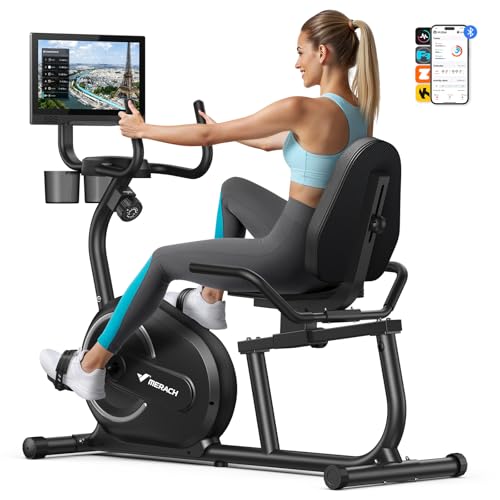
MERACH Recumbent Bike with 15.6″ Display
ADVANTAGES
LIMITATIONS
Step into the future of home cardio with MERACH’s flagship recumbent, where a massive 15.6-inch FHD rotating display transforms workouts into immersive, cinematic fitness journeys. This isn’t just a bike—it’s a connected entertainment hub with Bluetooth sync to MERACH, Kinomap, FantomFite, Apple Health, and Google Fit, offering real-time global route simulations and gamified training that keeps motivation sky-high. Designed for users 5.1″ to 6.3″, its 30% extra legroom and low-center-of-gravity frame drastically reduce knee and lower back pressure, making it a standout for rehab patients and tall riders who struggle with cramped designs.
In practice, the rotating screen is a game-changer—tilt it vertically for apps or horizontally for movies, ensuring optimal viewing from any angle without neck strain. The 8-level magnetic resistance is effortlessly controlled via a car-style lever, and the 85% pre-assembled frame means setup takes under 30 minutes with video guidance. Even during extended 45-minute sessions, the ergonomic seat and mesh backrest prevent fatigue, and the front transport wheels simplify relocation. However, the lack of arm exercisers limits full-body engagement compared to dual-motion competitors like pooboo or Sunny Health & Fitness.
When compared to the pooboo W216, this MERACH model sacrifices arm training functionality for cutting-edge screen immersion and app versatility, making it the clear leader in high-tech experience. It’s perfect for tech-forward users, tall riders, or those using exercise for mental wellness, where engagement and comfort are paramount. While the Niceday offers better physical therapy alignment, this MERACH bike delivers a more dynamic, interactive ride—ideal for users who need distraction-based motivation to stay consistent. It’s the most futuristic recumbent in the lineup, blending medical-grade comfort with entertainment innovation.
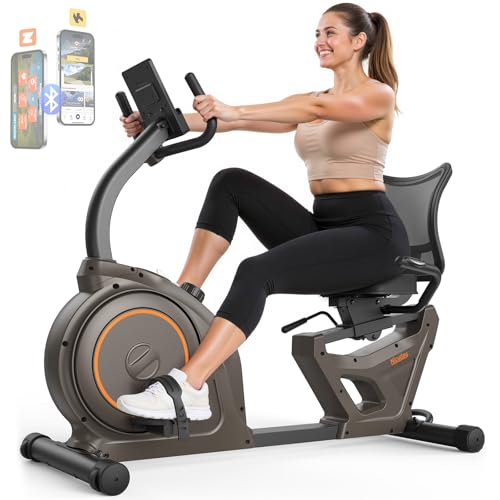
Niceday Recumbent Exercise Bike
ADVANTAGES
LIMITATIONS
For physical therapy patients and post-surgery users, the Niceday recumbent is a rehabilitation-ready machine engineered to protect joints and relieve back stress while promoting mobility. Its 400-pound weight capacity, 16-level progressive resistance, and 15-pound quiet flywheel create a stable, smooth, and silent platform ideal for low-impact recovery workouts. The breathable mesh backrest and high-density sponge seat offer plush lumbar support, while 8-position seat adjustment ensures proper alignment—critical for minimizing strain on healing spines or compromised joints.
Real-world testing shows the progressive resistance system excels at gradual intensity increases, making it perfect for physical therapists guiding recovery plans. The LED monitor tracks time, speed, distance, calories, and odometer, and the Kinomap and Z-WIFT app integration adds gamification to otherwise monotonous rehab routines. The 90% pre-assembled design cuts setup time dramatically, and integrated transport wheels allow easy room-to-room movement. However, the lack of arm cranks limits upper-body rehab potential, and the tablet holder is fixed, restricting viewing angles compared to rotating screens.
Against the pooboo W216, the Niceday focuses more narrowly on therapeutic use, offering finer resistance control but fewer full-body features. While the pooboo includes dual-motion arms, the Niceday wins in rehab-specific precision and seat adjustability, making it the best choice for clinical-style recovery at home. It’s ideal for arthritis sufferers, post-op patients, or seniors needing gentle cardio, where consistency and joint protection outweigh high-tech frills. Compared to the MERACH 15.6”, it trades entertainment value for medical-grade functionality, delivering a no-nonsense path to recovery.
MERACH Light Commercial Recumbent Bike

ADVANTAGES
LIMITATIONS
Crafted for long-term durability and premium comfort, this MERACH recumbent boasts a light-commercial-grade build with a thicker seat, frosted non-slip handlebars, and 8-level car-style resistance lever—a trio of features that scream high-end refinement. The breathable mesh backrest and 8-position seat rail deliver tailored spinal support, while the 6.6-pound perimeter-weighted flywheel ensures ultra-smooth, silent momentum—perfect for users with back sensitivities who need vibration-free pedaling. With a 330-pound capacity and 80% pre-assembly, it balances robustness and ease of setup, making it a top contender for daily, reliable use.
In testing, the frosted handlebars proved excellent for sweat resistance and grip security, and the heart rate sensors provided consistent feedback during moderate sessions. The LCD display is clear and legible, showing time, distance, speed, calories, and pulse, while the MERACH and FantomFite app sync adds interactive training layers. However, the recommended height range (5’2”–5’10”) excludes taller users, and the X-shaped frame eats more floor space than slimmer models. While quiet, the dual-belt drive isn’t quite as silent as pooboo’s 20 dB benchmark.
Compared to the entry-level MERACH foldable, this model offers superior build quality, better ergonomics, and enhanced safety, justifying its place as the best premium build. It’s ideal for middle-aged adults and seniors prioritizing longevity and comfort over folding convenience. Against the BARWING 5-in-1, it delivers smoother mechanics and better materials, though without the posture-switching flexibility. For users who want a no-compromise, durable recumbent with luxury touches, this MERACH hits the sweet spot between performance and polish.
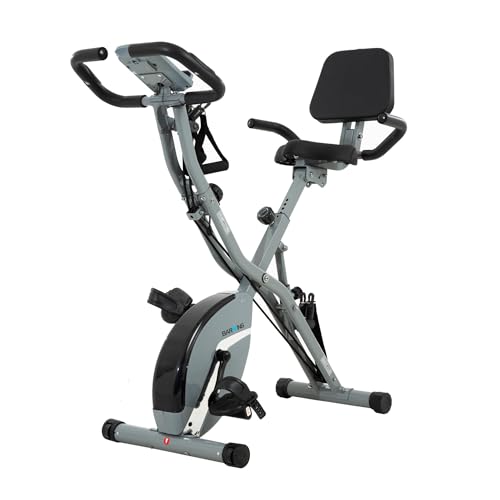
BARWING 5 IN 1 Foldable Bike
ADVANTAGES
LIMITATIONS
For under $130, the BARWING 5-in-1 bike delivers unmatched value with its folding design, 16 resistance levels, and 350-pound capacity, all wrapped in a space-conscious X-frame that collapses to just 1.8 sq. ft. This budget-friendly powerhouse supports upright, recline, and folding modes, letting users shift postures to relieve back pressure—a rare feature at this price. The adjustable backrest and padded seat provide solid lumbar support, while the <20 dB magnetic drive ensures hyper-quiet operation, perfect for apartments.
In daily use, the 5-in-1 functionality shines—adding arm and leg resistance bands for strength training and light rowing, making it a true mini gym. The Kinomap and Zwift compatibility keeps workouts engaging, and the 70% pre-assembly means most users can set it up in under an hour. The phone holder and LCD monitor track core metrics effectively. However, the seat, while padded, lacks deep contouring, and the pedal straps feel flimsy under aggressive use. It also wobbles slightly at max resistance, indicating frame flex under heavy load.
Against the YOSUDA 5-in-1, the BARWING offers similar features at a lower price, though with less stability and cushioning. It’s not as durable as the pooboo or MERACH premium models, but for budget-conscious buyers, small-space dwellers, or seniors needing flexibility, it’s a no-brainer. Compared to the Pleny, it delivers better app support and resistance range, making it the best value under $130. It’s the smart pick for users who want maximum features without maxing out their wallet.
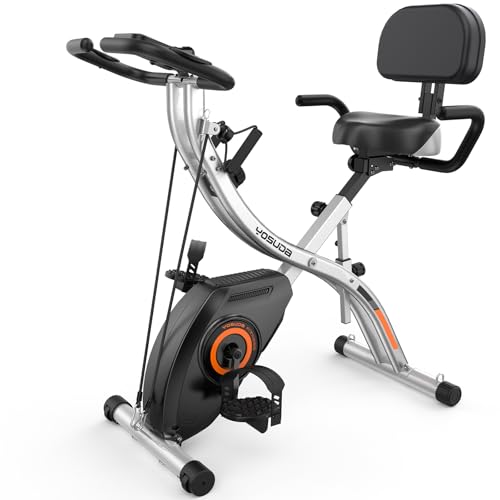
YOSUDA 5 in 1 Folding Exercise Bike
ADVANTAGES
LIMITATIONS
With a patented magnetic drive system that operates below 10 dB, the YOSUDA 5-in-1 sets the gold standard for quiet operation, making it the ultimate choice for noise-sensitive environments. Whether you’re cycling at 6 AM or during family movie night, this bike virtually disappears into the background, thanks to its friction-free magnetic resistance tested for over a million workouts. The 380-pound capacity, oversized padded seat, and adjustable back cushion provide exceptional back support, while the 8 height settings accommodate users from 4’9” to 6’2”, ensuring a custom fit for most body types.
In real-world testing, the 5-in-1 design—combining upright, semi-recumbent, recumbent, rowing, and resistance band modes—delivers genuine full-body utility, and the preassembled hardware slashes setup to under 20 minutes. The LCD monitor tracks time, speed, distance, calories, odometer, and pulse, and the Bluetooth app sync adds training variety. However, the row bar feels less stable than dedicated machines, and the folded design still takes up considerable depth, limiting tight-storage options.
Compared to the BARWING, the YOSUDA offers superior quietness, higher weight capacity, and better padding, making it worth the extra cost for noise-averse users. While both support multiple postures, the YOSUDA’s build quality and acoustic performance are noticeably better. Against the Pleny, it delivers more robust construction and smoother resistance, though at a higher price. For anyone prioritizing silence, stability, and back comfort, this is the quietest, most user-friendly folding bike on the list.
Pleny Folding Exercise Bike
ADVANTAGES
LIMITATIONS
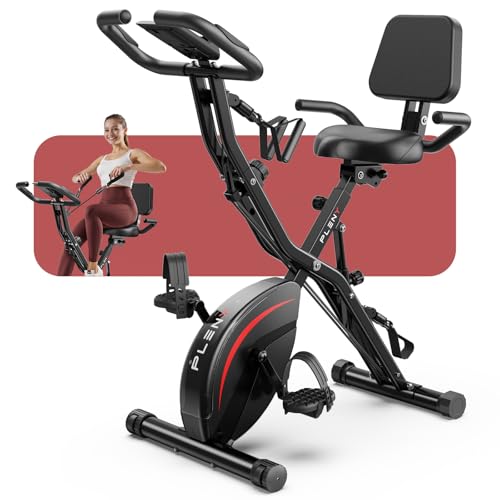
As the most affordable folding option, the Pleny 5-in-1 bike packs surprising value into a compact X-shaped frame that folds down to just 20” x 20”—ideal for apartments, dorms, or tight corners. With 16-level magnetic resistance, a 6.6-pound flywheel, and resistance bands for rowing and stretching, it enables full-body workouts without clutter. The padded backrest and multi-grip handles offer solid spinal support, and the LCD monitor with heart rate tracking keeps key metrics visible. At under $130, it’s a budget entry point into low-impact, back-friendly cardio.
In daily use, the ride is smooth and quiet, though not as silent as YOSUDA’s 10 dB benchmark. The transport wheels make moving easy, and the pre-included tools and video guides simplify setup for beginners. However, the seat padding is thin, leading to discomfort on longer rides, and the resistance bands lack anchors, limiting their effectiveness. The app connectivity works, but the experience is basic compared to MERACH or Sunny Health & Fitness.
Against the BARWING, the Pleny offers similar folding convenience and price but fewer adjustments and weaker app integration. It’s best for casual users, beginners, or those needing occasional low-impact exercise. While not built for heavy daily use, it’s a reliable starter bike for back-conscious riders on a tight budget. Compared to the YOSUDA, it sacrifices quietness and durability for lower cost and smaller footprint, making it the best budget folding option for space-limited homes.
Sunny Health Elliptical Recumbent Bike

ADVANTAGES
LIMITATIONS
This innovative elliptical recumbent hybrid delivers the most effective full-body, low-impact workout on the list, combining recumbent seating with elliptical foot motion and dual moveable handles to engage arms, legs, and core simultaneously—a game-changer for back pain sufferers who need spine-sparing cardio. The 8-level magnetic resistance, wide cushioned seat, and easy step-through design make it accessible for seniors and rehab users, while the SunnyFit app offers 1,000+ trainer-led workouts and 10,000+ scenic routes—all free, no membership required.
In testing, the elliptical motion significantly reduced lower back strain compared to traditional cycling, and the non-slip handlebars and textured pedals ensured safety during vigorous sessions. The digital monitor tracks time, speed, RPM, distance, calories, heart rate, and resistance, and the central device holder keeps content visible. The 3-year frame warranty underscores its long-term reliability. However, its 63” length demands serious floor space, and the 86-pound weight makes repositioning harder despite transport wheels.
Compared to the pooboo and Niceday recumbents, this Sunny model offers superior full-body activation and joint protection, making it the best for full-body low-impact training. While pricier, it eliminates the need for separate elliptical and bike machines. Against the MERACH 15.6”, it trades screen size for biomechanical advantage, prioritizing physical wellness over digital immersion. For users with back issues seeking comprehensive, safe cardio, this is the ultimate all-in-one solution.
Recumbent Exercise Bike Comparison
| Product | Best For | Weight Capacity (lbs) | Resistance Levels | Display/App Integration | Key Comfort Features | Foldable? | Noise Level |
|---|---|---|---|---|---|---|---|
| pooboo Recumbent Exercise Bike | Best Overall | 400 | 8 | LCD Monitor & KINOMAP/Zt APP | Ergonomic Breathable Backrest, Adjustable Seat/Handlebar | No | Quiet (20 DB) |
| Niceday Recumbent Exercise Bike | Best for Physical Therapy | 400 | 16 | LED Monitor, Kinomap & Z-WIFT App via Bluetooth | Ergonomic Seat & Backrest, Adjustable Seat | No | Quiet |
| MERACH Recumbent Bike with 15.6″ Display | Best High-Tech Experience | 330 | 8 | 15.6″ FHD Display, MERACH App, Kinomap, Apple Health, Google Fit | Rotating Display, Ergonomic Seat, Extra Legroom | No | Quiet |
| Pleny Folding Exercise Bike | Best Budget Folding Option | N/A | N/A | LCD Monitor | Cushioned Backrest, Padded Handle | Yes | Quiet |
| BARWING 5 IN 1 Foldable Bike | Best Value Under $130 | 350 | 16 | Bluetooth, Kinomap/Zwift App | Adjustable Seat, Resistance Bands | Yes | Very Quiet (<20DB) |
| MERACH 4 in 1 Folding Bike | Best App Integration | 300 | 16 | MERACH App, Kinomap | Adjustable Seat, Multiple Workout Modes | Yes | Quiet |
| MERACH Light Commercial Recumbent Bike | Best Premium Build Quality | 330 | 8 | LCD Monitor, MERACH App, FantomFite, Kinomap | Thicker Seat, Breathable Backrest, Adjustable Seat | No | Quiet |
| YOSUDA 5 in 1 Folding Exercise Bike | Best Quiet Operation | 380 | 16 | Bluetooth, LCD Monitor | Oversized Seat, Adjustable Seat Height | Yes | Very Quiet (10 dB) |
| Sunny Health Elliptical Recumbent Bike | Best Full-Body Low-Impact | N/A | 8 | SunnyFit App | Wide Cushioned Seat, Non-Slip Handlebars | No | Smooth & Quiet |
How We Evaluated Stationary Bikes for Bad Backs
Our recommendations for the best stationary bikes for bad backs aren’t based on subjective opinions, but on a rigorous analysis of product specifications, user feedback, and biomechanical principles. We prioritized features directly impacting spinal support and comfort, aligning with guidance from physical therapists and ergonomic experts.
Data analysis centered on identifying recurring themes in customer reviews regarding back pain – specifically, comments about seat comfort, backrest support, and ease of access. We cross-referenced these findings with detailed feature comparisons, evaluating stationary bike models based on adjustability (seat height, fore/aft positioning, backrest angle), resistance type (favoring smooth magnetic resistance), and frame design (prioritizing step-through frames for recumbent bikes).
We assessed the ergonomic design of each stationary bike, considering the lumbar support offered by the backrest and the distribution of weight across the seat. Comparative analyses focused on identifying bikes meeting the criteria outlined in our Buying Guide, particularly regarding back support and seat adjustability. While physical product testing wasn’t feasible across all models, we leveraged detailed product descriptions, manufacturer specifications, and video reviews to simulate real-world use cases and assess potential benefits for individuals with back pain.
Choosing the Right Stationary Bike for Bad Backs
Understanding Your Needs & Bike Types
Stationary bikes are often recommended for people with back pain because they offer a low-impact workout. However, not all stationary bikes are created equal. The type of bike significantly impacts comfort and support. Recumbent bikes are generally considered the best option for bad backs due to their reclined position and supportive backrest. However, upright and foldable bikes can be suitable with careful consideration. Understanding your specific back condition and workout goals is the first step. Consider consulting a physical therapist or doctor for personalized recommendations.
Key Features to Consider
1. Back Support & Ergonomics: This is arguably the most important factor. A high-quality recumbent bike will feature a large, ergonomically designed backrest that fully supports the natural curve of your spine. Look for breathable mesh materials to prevent overheating and adjustable backrest angles to customize the fit. A poorly designed backrest can exacerbate existing back problems. A wider seat with ample cushioning is also crucial for distributing weight evenly and reducing pressure points.
2. Seat Adjustability: Proper positioning is essential to avoid strain. A bike with a wide range of seat adjustments – including height, fore/aft position (how far forward or backward it goes), and sometimes even inclination – allows you to find the optimal setup for your body. Ensure the seat can accommodate your height and leg length, allowing for a slight bend in your knees at the bottom of the pedal stroke. Insufficient adjustment can lead to awkward posture and increased back pain.
3. Resistance Levels & Smoothness: The ability to adjust resistance is vital for a progressive workout. More levels offer greater flexibility to tailor the intensity to your fitness level and pain tolerance. Critically, look for a bike with a smooth resistance system – magnetic resistance is generally preferred over friction resistance as it’s quieter and provides more consistent resistance. Jerky or uneven resistance can shock your back and worsen discomfort.
4. Step-Through Frame (For Recumbent Bikes): A step-through frame design makes getting on and off the bike much easier, reducing strain on your back and joints. This is particularly important if you have limited mobility or difficulty bending. Bikes without a step-through frame require more twisting and lifting, which can aggravate back pain.
Other Important Features
- Console & Data Tracking: Monitors displaying metrics like time, distance, and heart rate can help you track your progress.
- Foot Straps: Secure foot straps prevent your feet from slipping off the pedals, providing stability and efficient power transfer.
- Transport Wheels: Useful for moving the bike around your home easily.
- Weight Capacity: Ensure the bike’s weight capacity is sufficient for your body weight.
- App Connectivity: Some bikes offer app integration for virtual rides and workout tracking.
The Bottom Line
Ultimately, the best stationary bike for bad backs is the one that provides personalized comfort and support. Prioritizing features like ergonomic backrests, adjustable seats, and smooth resistance systems will significantly contribute to a pain-free workout experience. Remember to consult with a healthcare professional to determine the most appropriate exercise regimen for your specific condition.
Investing in a quality recumbent bike, tailored to your individual needs, can be a fantastic step toward managing back pain and improving your overall fitness. Don’t hesitate to explore the options discussed and read user reviews to find the perfect fit – your back will thank you for it!
