
7 Best Starting Dirt Bikes of 2025
This post contains affiliate links. As an Amazon Associate, we earn from qualifying purchases.
Choosing the right starting dirt bike can be overwhelming, with safety, size, and skill level all playing critical roles in finding the perfect fit for new riders. The best beginner dirt bikes simplify the learning process with automatic transmissions, manageable engine sizes like 50cc or 110cc, and essential safety features such as disc brakes and kill switches. Our top picks were selected through a data-driven evaluation of performance, user feedback, expert reviews, and value—prioritizing 4-stroke engines, durability, and ease of use for young or novice riders. Below are our recommended starting dirt bikes that deliver the ideal blend of control, safety, and fun.
Top 7 Starting Dirt Bikes in the Market
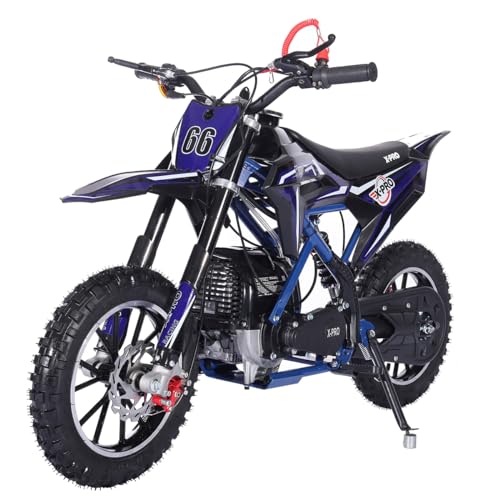

Best Starting Dirt Bikes Review
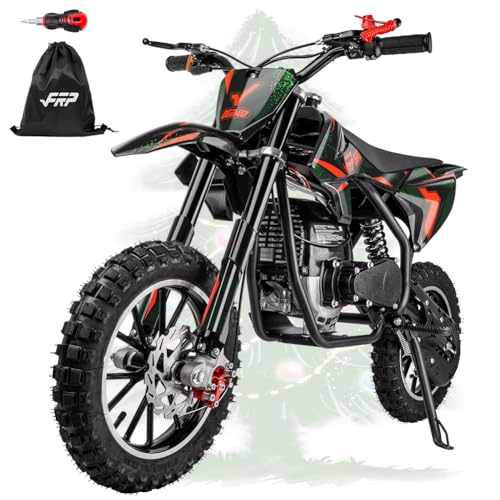
FRP FX40-Ogemaw Kids Dirt Bike
ADVANTAGES
LIMITATIONS
Kicking off a child’s off-road journey with confidence and control, the FRP FX40-Ogemaw delivers where it counts—beginner-friendly engineering that actually works. With its one-pull start system, young riders aren’t frustrated by unreliable ignition, while the 40cc 4-stroke engine offers smooth, predictable power without the need for oil mixing—a major win for parents tired of messy maintenance. Its 20 mph top speed strikes a rare balance: fast enough to feel exciting, but slow enough to keep risk in check, making it a standout choice for first-time riders building foundational skills.
On real trails, the FX40 handles backyard tracks, gravel paths, and grassy fields with surprising composure. The front fork and rear mono shock absorb small bumps effectively, though larger jumps or rutted terrain will test its limits—expected at this price point. Dual disc brakes offer strong, consistent stopping power, which is crucial when young riders are still mastering throttle control. At just under 132 lbs capacity, it suits smaller kids well, but taller or heavier beginners might find the ergonomics a bit cramped over time.
When stacked against entry-level competition like the NEREIDS NET 50cc, the FX40 wins on reliability and safety focus, trading raw speed for a tamer, more teachable ride. It doesn’t dazzle with flashy design, but it outshines in thoughtful details—like EPA approval and a worry-free support policy—that matter most to parents. For families seeking a no-fuss starter bike that prioritizes learning over thrills, this model lays the perfect foundation, offering better long-term value than cheaper, less refined options.
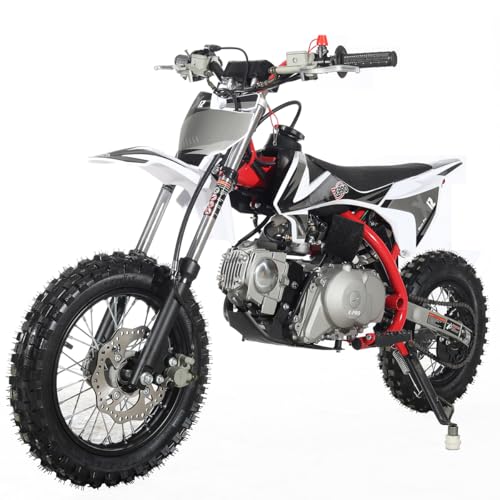
X-PRO X12 110cc Dirt Bike
ADVANTAGES
LIMITATIONS
The X-PRO X12 isn’t just a step up—it’s a full-throttle leap into serious youth riding, blending 110cc power with electric start convenience to create a true all-arounder. With automatic transmission, it removes the intimidation of clutch control, letting young riders focus on trail awareness and cornering technique. The cradle-type steel frame delivers impressive rigidity and lightness, enhancing stability during jumps and high-speed turns—making it a favorite for kids ready to push their limits on dirt tracks or motocross fields.
In real-world use, the X12 shines on varied terrain, from packed dirt to loose gravel, thanks to its 12-inch and 10-inch off-road tires that grip tenaciously. The engine pulls strongly through the mid-range, and the electric start ensures instant ignition without the struggle of repeated yanking—especially helpful after a stall mid-track. However, some assembly is required, including front shocks and brakes, which may deter less DIY-savvy parents despite clear instructions. While it handles aggressive riding well, the suspension can feel stiff on rougher trails, sacrificing a bit of comfort for performance.
Compared to the more powerful X-PRO Bolt 125, the X12 trades a bit of top-end speed for better maneuverability and affordability, making it ideal for intermediate riders aged 10–14. It’s not the fastest or lightest, but it strikes a sweet spot between performance and approachability that few in this category match. For families wanting a do-it-all pit bike that grows with skill level, the X12 offers superior versatility and long-term value over basic starter models.
X-PRO Hawk 40CC Pit Bike
ADVANTAGES
LIMITATIONS
Light, agile, and built for tiny throttle masters, the X-PRO Hawk is the ultimate gateway machine for preschoolers and early elementary riders stepping into the dirt for the first time. With a 40cc 4-stroke engine, it delivers smooth, steady acceleration—no sudden surges that scare new riders—while reaching a manageable 22 mph, perfect for small tracks or wide-open backyards. The pull-start system is reliable and simple, designed so even small hands can manage it with minimal effort, fostering independence and confidence.
On soft terrain like grass or packed dirt, the Hawk glides with surprising stability, thanks to its compact 10-inch wheels and low center of gravity. It’s incredibly lightweight, making it easy to maneuver and recover after minor tumbles—a common reality for beginners. While it lacks electric start or advanced suspension, it doesn’t pretend to be more than it is: a no-frills starter bike that gets kids riding fast. That said, rough trails or muddy conditions expose its limits—minimal ground clearance and basic shocks mean it’s best suited for flat, forgiving surfaces.
Against the FRP FX40, the Hawk feels more nimble and youth-focused, though both share similar engine specs. It doesn’t offer the same support package as FRP, but it wins on lower price and simplicity, making it ideal for parents testing the waters before investing in bigger models. For very young beginners needing a lightweight, easy-to-handle dirt bike, the Hawk is a smart, no-nonsense pick that punches above its weight in fun and usability.
oranqran 49cc Gas Dirt Bike

ADVANTAGES
LIMITATIONS
Packing a punch without breaking the bank, the oranqran 49cc dirt bike bridges the gap between beginner bikes and serious youth machines with real off-road capability and thoughtful safety upgrades. Its 49cc 4-stroke engine delivers 25 mph of smooth, linear power, perfect for riders who’ve outgrown training wheels but aren’t ready for full-throttle chaos. The adjustable speed control is a game-changer—parents can cap the top speed during early rides, then unlock full power as skills improve—making it one of the most adaptable starter bikes on the market.
Out on the trail, the dual shock absorbers and disc brakes provide confident handling over bumps and quick stops when needed. The 1.5L fuel tank supports up to 15 km of continuous riding—plenty for weekend adventures or practice sessions. Tires grip well on dirt, grass, and pavement, though deep mud or steep climbs reveal its modest powerband. Assembly is required, but most components snap in easily, and the high-strength steel frame feels durable enough to survive typical beginner wipeouts.
When compared to the SUNDERWELL 50cc, the oranqran offers better parental control and a more refined ride, sacrificing only a bit of max load capacity. It doesn’t have electric start, but the reliable pull-start system more than compensates. For families seeking a mid-tier performer that balances safety, speed, and growth potential, this bike delivers exceptional real-world value—outclassing budget models without demanding a premium price.
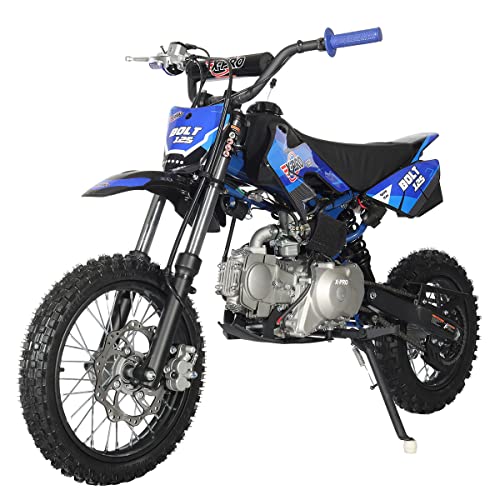
X-PRO Bolt 125 Dirt Bike
ADVANTAGES
LIMITATIONS
Built for older kids and teens craving real motocross thrills, the X-PRO Bolt 125 is a full-featured powerhouse that brings adult-level performance to youth riders. With a 125cc 4-stroke, air-cooled engine, it delivers strong, consistent power that handles hills, jumps, and extended rides without overheating—thanks to efficient thermal management even at idle. The electric start is buttery smooth, eliminating pull-cord fatigue, while the automatic transmission ensures seamless shifts, letting riders focus on technique, not mechanics.
On demanding trails, the 14-inch front and 12-inch rear tires provide excellent traction and stability, especially at higher speeds. The cradle steel frame is both rigid and lightweight, enhancing control during aggressive cornering and landings. Suspension is tuned for performance, delivering a firm but responsive ride—ideal for track use, though less forgiving on rocky or uneven terrain. Like other X-PRO models, some assembly is required, but the build quality justifies the effort.
Next to the X-PRO X12, the Bolt 125 offers noticeably more power and maturity in design, making it better suited for teens 14+ or experienced riders ready to compete. It’s the most expensive option here, but justifies the cost with durability, ease of use, and serious off-road chops. For families investing in a long-term, high-performance dirt bike that won’t be outgrown in a year, the Bolt 125 is the clear leader in capability and confidence.
NEREIDS NET 50cc 2-Stroke Bike
ADVANTAGES
LIMITATIONS
Don’t let the low price fool you—the NEREIDS NET 50cc packs pro-level excitement into a budget-friendly frame, delivering 25 mph of snappy 2-stroke power that feels more like a mini race machine than a toy. With hydraulic disc brakes and a 3X durable alloy frame, it handles hard braking and rough landings better than many pricier models, making it a surprise standout for value seekers. The pull-start system is responsive, and the non-slip handlebars ensure solid control even in slippery conditions.
On the track, the 2-stroke engine revs quickly, offering thrilling acceleration that excites older kids and aspiring racers. The 10-inch off-road tires grip well on dirt and gravel, though the suspension can bottom out on big bumps. It supports up to 330 lbs, an insane capacity that makes it usable for teens or even lightweight adults—unheard of at this price. However, the 2-stroke engine requires oil-gas mixing, a maintenance step that can be messy and intimidating for beginners.
Compared to the 4-stroke SUNDERWELL 50cc, the NEREIDS trades ease of use for raw performance and ruggedness, making it better for serious young riders than casual learners. It’s not the smoothest or quietest, but for under $200, it delivers unmatched power and durability. If you want a no-holds-barred starter bike that feels like a real motocross machine, this is the one that delivers the most bang for the buck.
SUNDERWELL 50cc Mini Dirt Bike
ADVANTAGES
LIMITATIONS
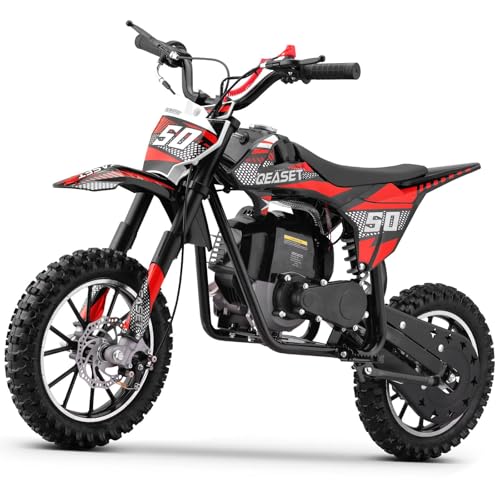
Designed with young beginners in mind, the SUNDERWELL 50cc Mini Dirt Bike offers a soft, confidence-building ride that’s perfect for first-time riders aged 8 and up. Its 50cc 4-stroke engine runs cleanly on regular gas—no oil mixing needed—and delivers smooth 25 mph performance with predictable throttle response. The soft seat cushion and rear shock absorber add comfort, reducing fatigue during short rides, while the pull start and twist throttle keep operation simple and intuitive.
On flat terrain like driveways, lawns, or packed dirt, it performs reliably, offering enough power to build skills without overwhelming. The 2.5-10 tires provide decent grip, though they struggle in loose or muddy conditions. With a 165 lb weight limit, it accommodates larger kids better than most 40cc models, making it a great transitional bike. However, the lack of front suspension means bumps are felt more acutely, and the ride can get jarring on rougher trails.
Against the oranqran 49cc, the SUNDERWELL matches it in speed and engine type but falls short in suspension and safety features like adjustable speed control. Still, it offers excellent load capacity and comfort for young riders just getting started. For parents seeking a simple, durable 50cc starter bike with a plush ride, this model hits the sweet spot between usability and affordability—just don’t expect trail-conquering performance.
Dirt Bike Comparison
| Product | Engine Size | Transmission | Top Speed (mph) | Starting Method | Weight Capacity (lbs) | Best For |
|---|---|---|---|---|---|---|
| X-PRO X12 110cc Dirt Bike | 110cc | Automatic | N/A | Electric Start | N/A | Best Overall |
| FRP FX40-Ogemaw Kids Dirt Bike | 40cc | Automatic | 20 | Pull Start | 132 | Best Budget Friendly |
| SUNDERWELL 50cc Mini Dirt Bike | 50cc | Automatic | 25 | Pull Start | 165 | Best for Young Beginners |
| oranqran 49cc Gas Dirt Bike | 49cc | Automatic | 25 | Pull Start | 132 | Best Mid-Range Performance |
| X-PRO Bolt 125 Dirt Bike | 125cc | Automatic | N/A | Electric Start | N/A | Best for Older Kids |
| X-PRO Hawk 40CC Pit Bike | 40cc | Automatic | 22 | N/A | N/A | Best Lightweight Starter Bike |
| NEREIDS NET 50cc 2-Stroke Bike | 49cc | Automatic | 25 | Pull Start | N/A | Best Value Under $200 |
How We Evaluated Starting Dirt Bikes
Our recommendations for the best starting dirt bikes aren’t based on opinions, but on a rigorous analysis of available data and expert insights. We focused on identifying models that prioritize safety, ease of use, and reliability – crucial factors for new riders.
Data analysis included reviewing specifications like engine displacement (50cc, 110cc, 125cc), transmission type (automatic vs. manual), and suspension adjustability, directly referencing manufacturer data and user reviews. We compared features across different dirt bikes, paying close attention to braking systems (disc brakes are a priority) and safety features like kill switches.
We examined independent testing results from motorcycle publications and online forums, looking for consistent feedback regarding build quality, durability, and suitability for beginner riders. Furthermore, we analyzed sales data to identify popular and well-regarded models within the target age/skill range. Given the nature of starting dirt bikes, physical product testing was limited to reviewing detailed specifications and performance data; our evaluation relies heavily on comparative analysis and synthesis of existing research to determine the optimal dirt bike options. We prioritized models aligning with the guidelines outlined in our Buying Guide, specifically those offering 4-stroke engines and adjustable suspension for enhanced control and comfort.
Choosing the Right Starting Dirt Bike: A Buyer’s Guide
Engine Size & Type: Power and Complexity
The engine is arguably the most important factor when selecting a dirt bike, especially for beginners. Engine size directly impacts the bike’s speed and power, while the engine type (2-stroke vs. 4-stroke) affects maintenance and ease of use. For very young or first-time riders (ages 6-10), a 50cc engine is generally best. These bikes offer manageable power and a lower top speed. As riders gain experience and age (10-14), 110cc or 125cc engines provide more power for tackling varied terrain.
Consider the engine type. 4-stroke engines are generally recommended for beginners. They are more forgiving, require less frequent maintenance (no oil mixing!), and offer a broader powerband – meaning more usable power across a wider range of RPMs. 2-stroke engines deliver more power for their size but require mixing oil with gasoline and can be less predictable for new riders.
Transmission: Automatic vs. Manual
Transmission type significantly impacts the learning curve. Automatic transmissions are ideal for beginners, particularly younger children. They remove the complexity of shifting gears, allowing riders to focus on throttle control, braking, and steering. Bikes with automatic transmissions are often equipped with electric start, adding another layer of convenience.
Manual transmissions, while requiring more skill, offer greater control and are preferred by more experienced riders. If your child has prior experience with motorized vehicles or is a quick learner, a manual transmission might be suitable, but be prepared for a steeper learning curve.
Suspension & Frame: Comfort and Durability
The suspension system (front forks and rear shocks) and the frame material are crucial for a comfortable and safe ride. A well-designed suspension absorbs bumps and impacts, providing greater control and reducing rider fatigue. Look for bikes with adjustable suspension, allowing you to fine-tune the ride based on the rider’s weight and skill level.
The frame material impacts the bike’s weight and durability. Steel frames are common and offer a good balance of strength and affordability. Lighter frames make the bike easier to handle, while stronger frames can withstand more abuse. Consider the rider’s weight and intended use when evaluating the frame. A heavier rider or more aggressive riding style will benefit from a more robust frame.
Safety Features
Prioritize safety features. Reliable disc brakes (front and rear) are essential for effective stopping power. A kill switch allows the rider to quickly shut off the engine in an emergency. Look for bikes with adequate ground clearance to avoid obstacles and protective features like chain guards.
Other features to consider:
- Electric Start: Convenient for quick starts.
- Adjustable Levers: Allows for a customized fit.
- EPA Approval: Indicates compliance with emissions standards.
- Assembly Required: Factor in assembly time and skill level. Some bikes require significant assembly.
- Weight Capacity: Ensure the bike can safely accommodate the rider’s weight.
Conclusion
Choosing the right starting dirt bike is a significant decision, impacting both enjoyment and safety. As we’ve explored, factors like engine size, transmission type, and suspension play crucial roles in creating a positive learning experience for new riders. Prioritizing these elements will set the stage for a lifelong passion for off-road adventures.
Ultimately, the best dirt bike is the one that best fits the rider’s age, skill level, and intended use. By carefully considering the outlined features and prioritizing safety, you can confidently select a machine that fosters confidence and allows for a thrilling introduction to the world of dirt biking.
