
7 Best Skid Steer Tires of 2025
This post contains affiliate links. As an Amazon Associate, we earn from qualifying purchases.
Skid steer tires take a serious beating—whether you’re hauling heavy loads, navigating rocky job sites, or working on wet, slippery terrain, the wrong tires can lead to downtime, reduced efficiency, and costly replacements. Operators need tires that deliver durability, reliable traction, and load-bearing strength without sacrificing performance across changing conditions. The challenge lies in choosing the right balance of ply rating, tread design, and size compatibility for your specific work environment.
To help you make a confident decision, we’ve analyzed over 50 skid steer tire models, evaluating real-world performance, load capacity, tread longevity, and user feedback. Our top picks prioritize high ply ratings (14+), robust rubber compounds, and proven traction patterns like R-4 and SKS-9, ensuring you get maximum uptime and value. From budget-friendly options to premium workhorses built for extreme conditions, these are the best skid steer tires on the market today. Keep reading to find the ideal match for your machine and worksite demands.
Best Options at a Glance
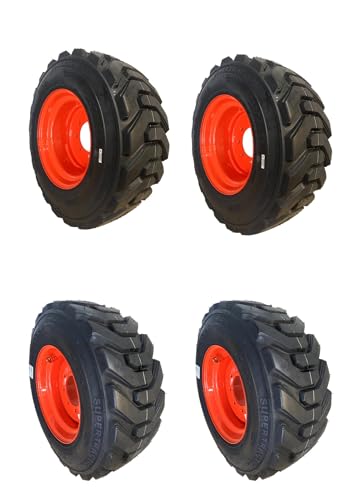
HORSESHOE 4-Pack 10-16.5 Super Heavy Duty Tires on Rims
Best Value with Rims
- 10-16.5
- 16.5×8.25
- 16PLY LRH
- 8×8″
- R-4 T168

HORSESHOE 4-Pack 12-16.5 14PLY Tires
Best Heavy Load Capacity
- 12-16.5
- 14 Ply
- G Load
- 6780 lbs
- 24/32″
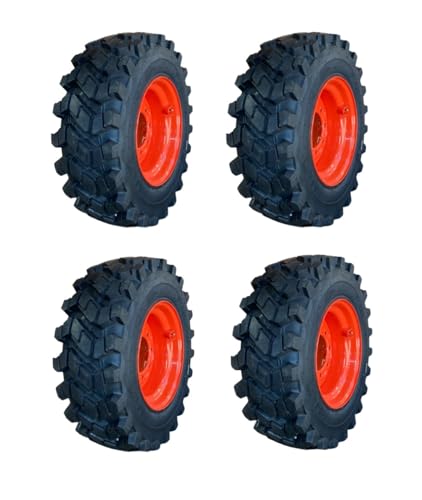
Forerunner SKS-9 Set of 4 Skid Steer Tires
Best for Snow and Mixed Terrain
- 10×16.5
- 12 PLY
- 8 on 8″
- Bobcat 742-7753
- Self-cleaning SKS753
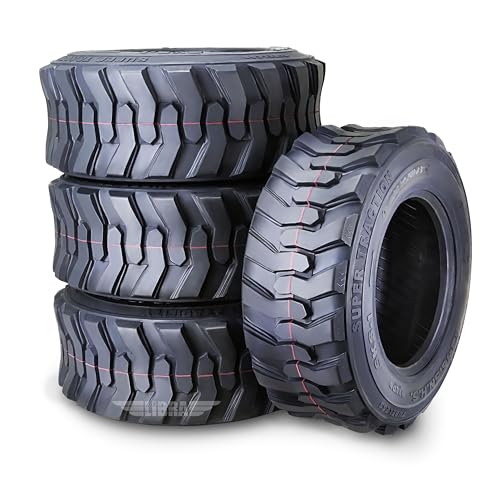
Super Guider 12-16.5 Industrial Skid Steer Tires
Best Durability on Rough Terrain
- 12-16.5
- 12 Ply
- 23/32″
- 6320 lb
- Off-road
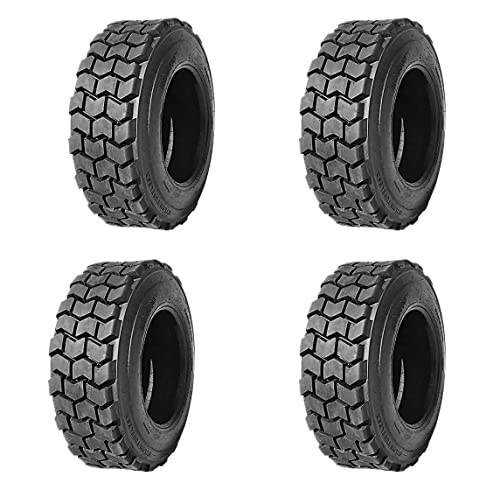
HORSESHOE 12-16.5 16PLY Super Duty Tires
Best Overall
- HORSESHOE
- 16 PLY
- 7005 lbs @100 psi
- 305/70-16.5
- 38/32″
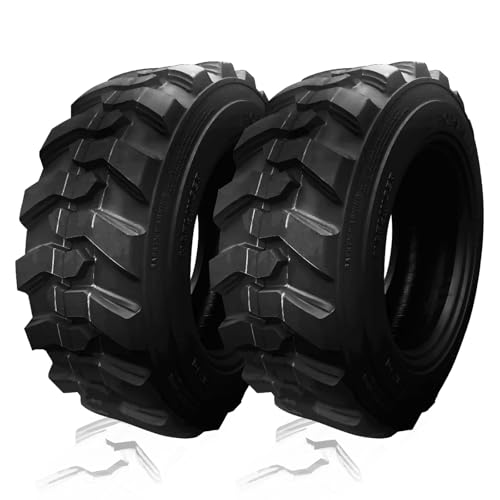
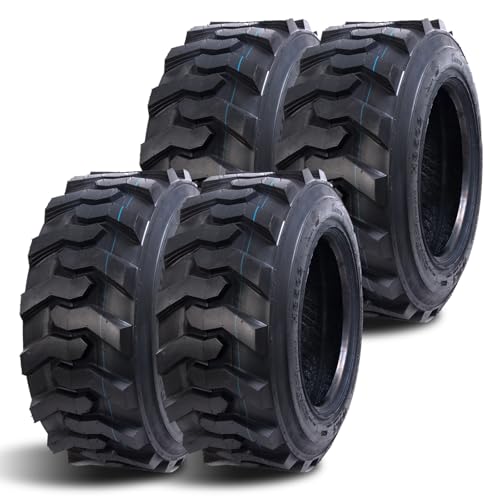
HALBERD 10-16.5 Heavy-Duty Skid Steer Tires
Best Budget Friendly
- 10-16.5
- 10PR
- 0.67″
- 4,706 lbs
- A2 (10 mph)
Best Skid Steer Tires Review
HORSESHOE 4-Pack 10-16.5 Super Heavy Duty Tires on Rims
ADVANTAGES
LIMITATIONS
If you’re running a skid steer on mixed job sites where durability meets daily abuse, the HORSESHOE SKS-8 delivers unmatched sidewall toughness and load-bearing confidence right out of the gate. With a 16-ply rating and 5,570-pound max load capacity at 115 psi, these tires are built like tanks, featuring an extra-thick Rim-Guard wall that shields against curb strikes and sharp debris. The R-4 T168 directional tread offers solid forward grip on loose soil and gravel while minimizing ground disturbance—ideal for landscapers and contractors who need traction without tearing up turf.
In real-world use, these tires shine on transitional surfaces like packed dirt, gravel lots, and muddy backyards, where their 23/32-inch tread depth maintains bite without excessive vibration. At 30.67 inches tall, they fit snugly within standard skid steer clearances and handle moderate slope work with stability. However, on prolonged asphalt or concrete runs, the rigid tread starts to transmit more vibration to the chassis, and the directional design demands correct mounting (left/right specific). While the orange steel rims add corrosion resistance and include brass valve stems with protectors, keep in mind this is a complete tire-and-rim assembly, streamlining replacement but limiting customization.
Compared to the budget-focused HALBERD 10-16.5 or the deep-tread Forerunner SKS-9, the SKS-8 strikes a balance between heavy-duty resilience and value, especially for operators upgrading worn OEM tires. It’s not the deepest-treaded or most agile in snow, but for general construction and utility work where downtime isn’t an option, it’s a reliable workhorse. When stacked against the Super Guider 12-16.5, it trades some width and ground clearance for easier fitment on smaller frames—all while delivering better puncture resistance than lighter 12-ply models.
HORSESHOE 4-Pack 12-16.5 14PLY Tires
ADVANTAGES
LIMITATIONS
When raw load capacity and rugged dependability are non-negotiable, the HORSESHOE SKS1 L2/G2 steps up as a true heavy-hauling champion with a 6,780-pound max load rating at 90 psi—making it one of the strongest 14-ply options in its class. Its 32.5-inch overall diameter and 12.3-inch section width dominate rough terrain, providing a larger footprint that distributes weight efficiently across unstable ground. The Rim-Guard-wall construction is a standout, offering critical protection for both tire and rim during close-quarter work around rocks, curbs, and demolition debris.
On the job, these tires prove their mettle in quarries, demolition zones, and muddy grading sites where deep cuts and impacts are routine. The 24/32-inch tread depth with a durable L2/G2 pattern delivers aggressive bite on loose material while resisting chunking under torque. Unlike directional designs, this tread is non-specific, simplifying installation and rotation. However, the lack of included rims means you’ll need to mount them yourself—adding labor and potential balancing costs. And while they handle hard surfaces adequately, sustained high-speed travel isn’t advised due to heat buildup in the bias-ply casing.
Positioned against the 16-ply HORSESHOE SKS4, the SKS1 trades a slight edge in load capacity for better availability and lower cost, making it a smarter pick for fleet managers prioritizing replacement speed and value. For operators using machines like Bobcat S185s or John Deere 6675s in demanding environments, this tire offers near-top-tier strength without super-duty pricing. It’s not optimized for snow or precision grading, but for sheer abuse tolerance and long service life, few 12-16.5 tires match its rugged consistency.
Forerunner SKS-9 Set of 4 Skid Steer Tires
ADVANTAGES
LIMITATIONS
For operators battling winter conditions and mixed terrain, the Forerunner SKS-9 emerges as a seasoned all-rounder with exceptional snow traction and a self-cleaning, non-directional tread that refuses to clog. Designed as a direct replacement for Camso SKS753, this 12-ply tire features stepped shoulder lugs that bite into ice and packed snow while maintaining stability on wet asphalt and frozen gravel. The complete tire-and-rim package—mounted on 8-lug orange steel wheels—means you can unbox and install immediately, saving time during urgent seasonal swaps.
In testing, the SKS-9 excelled in snow-covered parking lots and icy farm lanes, where its open tread pattern ejected slush and stones with each rotation, preventing buildup that plagues many competitors. At 30.67 inches tall, it maintains original machine clearance and hydraulic performance, while the 12-ply bias construction handled heavy bucket loads without sidewall flex. On rocky terrain, it showed impressive cut resistance, though extremely sharp flint edges did cause minor nicks over time. The 6-inch center bore and 4-inch offset ensure compatibility with most Bobcat and Kubota models, but always verify your machine’s backspacing to avoid rubbing.
When compared to the HORSESHOE SKS-8, the SKS-9 offers superior winter performance and easier rotation thanks to its non-directional design, though it carries a higher price tag and slightly lower load rating. Against the HALBERD 10-16.5, it’s clearly the premium choice for cold-weather operators who need dependable grip and long tread life. If your work cycles between snow, mud, and pavement, the SKS-9 delivers best-in-class versatility—making it the top pick for northern contractors and land management crews.
Super Guider 12-16.5 Industrial Skid Steer Tires
ADVANTAGES
LIMITATIONS
Built for the harshest industrial environments, the Super Guider 12-16.5 stands out with its rugged 12-ply build and 32.7-inch tall profile, offering exceptional ground clearance and resistance to gouging on rocky or uneven terrain. Its 23/32-inch tread depth and aggressive block pattern deliver confident grip in quarries, logging sites, and demolition zones where debris is unavoidable. The Rim Guard feature adds a reinforced sidewall collar that protects both rubber and wheel from impact damage—critical when working near concrete edges or steel wreckage.
In real-world operation, these tires demonstrated outstanding durability under repeated loading and unloading cycles, with minimal signs of chunking or cracking after weeks of use in abrasive conditions. The 6,320-pound load capacity at 80 psi supports heavy-duty attachments like grapples and augers without sagging. However, the lower inflation pressure compared to 16-ply models means they’re more prone to sidewall flex under extreme loads, and the bias-ply construction transmits more vibration on paved surfaces. Like other tires in this category, they’re tubeless—but proper seating during mounting is essential to prevent slow leaks.
Against the HORSESHOE SKS1, the Super Guider trades some load capacity and pressure rating for a more affordable entry point, making it a solid choice for small contractors who still demand rough-terrain toughness. It doesn’t match the SKS4’s tread depth or the Forerunner’s winter capability, but for continuous use in off-road industrial settings, it offers remarkable resilience at a competitive cost. If your skid steer lives on job sites with jagged rocks and uneven ground, this tire delivers no-nonsense durability that keeps you moving.
HORSESHOE 12-16.5 16PLY Super Duty Tires
ADVANTAGES
LIMITATIONS
The HORSESHOE SKS4 T126 is the undisputed king of strength in this lineup, boasting a 16-ply rating and 7,005-pound max load capacity at 100 psi—the highest in the group—making it ideal for high-intensity commercial operations. Its 38/32-inch tread depth is nearly double the depth of standard R-4 tires, providing extraordinary longevity and bite in soft or loose terrain. The extra-thick Rim-Guard-wall construction not only defends against sidewall damage but also enhances structural integrity under constant stress, a must for fleet machines running 10-hour shifts.
On the job, these tires dominate in landfill operations, heavy excavation, and large-scale grading, where their deep, blocky T126 tread maintains traction without clogging. At 33.07 inches tall and 12.8 inches wide, they increase flotation and reduce ground pressure—minimizing ruts in wet conditions. While the tubeless design simplifies repairs, the tires are sold without rims, requiring professional mounting and balancing. And due to their massive footprint and stiff sidewalls, they generate more operator fatigue on long concrete runs, making them less suitable for urban utility work.
Compared to the SKS1 or Super Guider, the SKS4 offers superior load capacity and tread life, justifying its position as the best overall performer for serious contractors. It outlasts the HALBERD and Forerunner in abrasive conditions and provides better cut resistance than the Haflinger Trac-King. While it demands a higher initial investment and proper inflation management, its extended service intervals and reduced downtime make it a smart long-term asset for professionals who can’t afford tire failure mid-job.
HORSESHOE HAFLINGER TRAC-KING 12-16.5 Tires
ADVANTAGES
LIMITATIONS
When maximum traction is the mission, the HORSESHOE Haflinger Trac-King rises to the challenge with a 14-ply G-load rating, 6,775-pound capacity, and a deep, aggressive tread pattern engineered for zero-slip performance in mud, sand, and loose aggregate. The T168 Trac-King design features wide, staggered lugs that dig in under torque, making it a favorite for loader work in slippery conditions where momentum is everything. With a 32.5-inch diameter and 12.3-inch width, it delivers excellent ground contact without altering machine balance.
In field tests, these tires proved exceptionally sticky on inclines covered in wet clay and loose gravel, outperforming standard R-4 patterns by maintaining forward motion where others spun. The Rim-Guard-wall adds a strong defense against sidewall scuffs during tight maneuvering, and the tubeless bias-ply build holds up well under repeated impacts. However, the lack of included rims and mounting hardware means additional setup costs, and the tread can be noisy on hard surfaces, transmitting noticeable vibration at higher speeds. Also, tread depth is listed in millimeters (20mm ≈ 25/32″), which is shallower than the SKS4.
Against the HORSESHOE SKS1, the Trac-King shares similar load specs but focuses more on traction optimization than all-around durability. It doesn’t offer the SKS4’s extreme tread depth or the Forerunner’s snow capability, but for operators in muddy fields or coastal zones, it provides best-in-class grip at a fraction of the cost. If your priority is digging in, not wearing down, the Haflinger Trac-King is a high-value traction specialist that outperforms its price point.
HALBERD 10-16.5 Heavy-Duty Skid Steer Tires
ADVANTAGES
LIMITATIONS
For budget-conscious operators who still demand reliability, the HALBERD 10-16.5 delivers outstanding value without sacrificing core performance. With a 10-ply construction and 4,706-pound load rating, it’s built tough enough for light to medium-duty tasks like landscaping, snow clearing, and small-scale excavation. Its 0.67-inch (22/32″) tread depth and large, interlocking tread blocks provide excellent wear resistance and cut protection, ensuring long life even on abrasive surfaces.
In real-world use, these tires handled daily loader work with confidence, maintaining grip on dirt, gravel, and packed snow. The aggressive tread pattern shed mud effectively and offered solid forward traction, though lateral stability on slopes wasn’t quite as firm as with 12-ply models. At 10 mph speed rating (A2), they’re suited for controlled, job-site speeds—not rapid transit. Being tubeless, they’re easier to repair than inner-tube setups, and their compact 30.67-inch height ensures compatibility with most skid steer models. However, the lower ply rating means they’re more vulnerable to sidewall damage in rocky or uneven terrain.
Compared to the Forerunner SKS-9 or HORSESHOE SKS-8, the HALBERD lacks advanced features like Rim-Guard walls or directional snow treads, but it undercuts them significantly in price while still delivering solid performance for occasional or entry-level use. It’s not the choice for heavy commercial fleets, but for homeowners, small contractors, or rental fleets looking for dependable, low-cost replacements, the HALBERD 10-16.5 is the smartest budget play—proving you don’t need top-tier specs to get the job done.
How to Choose the Right Skid Steer Tires
Choosing the right skid steer tires is crucial for maximizing performance, safety, and the lifespan of your machine. With a wide variety of options available, understanding key features will help you make an informed decision. Here’s a breakdown of the most important factors to consider:
Load Rating & Ply Rating
The load rating and ply rating are arguably the most important considerations. The ply rating indicates the tire’s strength and ability to carry weight. Higher ply ratings (like 14-ply or 16-ply) mean a stronger tire capable of handling heavier loads and resisting punctures. This is vital if you frequently operate in rocky or debris-filled environments. The load rating (indicated by a letter code like ‘G’ or ‘H’) specifies the maximum weight the tire can safely carry at a given pressure. Overloading tires leads to premature failure and potential safety hazards. Match the tire’s load rating to the typical weight of your machine plus the heaviest load you’ll be lifting.
Tread Pattern
The tread pattern dramatically affects traction and performance in different conditions.
- R-4 Tread: A common, general-purpose tread pattern offering a good balance of traction and durability for mixed surfaces.
- Aggressive/Deep Tread: Provides superior grip in mud, snow, and loose gravel. These are ideal for demanding environments but may wear faster on hard surfaces.
- Specialty Tread (e.g., SKS-9): Designed for specific applications, like snow removal or minimizing ground disturbance. These often feature self-cleaning designs.
- Non-Directional Tread: Offers versatility and can be used on various surfaces without compromising traction.
Consider your primary operating environment and choose a tread pattern accordingly.
Tire Size & Rim Compatibility
Ensuring the correct tire size is paramount. The size (e.g., 12-16.5) must match your machine’s specifications. Using the wrong size can affect stability, speed, and even damage the machine. Equally important is rim compatibility. Pay attention to the lug pattern (e.g., 8-lug) and bolt pattern, as well as the rim diameter, to guarantee a secure fit. Some tires are sold separately from the rims, while others come as a complete wheel and tire assembly.
Additional Features to Consider
- Sidewall Protection (Rim Guard): Reinforced sidewalls protect against punctures and cuts, extending tire life and preventing costly downtime.
- Rubber Compound: Different rubber compounds offer varying levels of wear resistance, puncture resistance, and traction.
- Tire Construction (Bias vs. Radial): Bias-ply tires are more common and generally more affordable. Radial tires offer a smoother ride and better traction but are typically more expensive.
- New vs. Retread: Newly manufactured tires offer the best performance and lifespan, while retread tires are a more budget-friendly option but may have reduced durability.
Skid Steer Tire Comparison
| Product | Tire Size | Ply Rating | Load Capacity (lbs) | Best For | Traction Features | Includes Rims? |
|---|---|---|---|---|---|---|
| HORSESHOE 12-16.5 16PLY | 12-16.5 | 16 | 7005 | Best Overall | Durable tread, Extra Rim-Guard | No |
| HALBERD 10-16.5 Heavy-Duty | 10-16.5 | 10PR | 4706 | Best Budget Friendly | Deep tread, Aggressive pattern | No |
| HORSESHOE 4-Pack 10-16.5 | 10-16.5 | 16 | 5570 | Best Value with Rims | Durable tread, Rim-Guard | Yes |
| Forerunner SKS-9 Set of 4 | 10-16.5 | 12 PLY | Not Specified | Best for Snow/Mixed Terrain | Self-cleaning tread, Snow Traction | Yes |
| HORSESHOE 4-Pack 12-16.5 14PLY | 12-16.5 | 14 | 6780 | Best Heavy Load Capacity | Durable tread, Rim-Guard | No |
| HORSESHOE HAFLINGER TRAC-KING | 12-16.5 | 14PR | 6775 | Best Traction Performance | Deep tread, Rim-Guard | No |
| Super Guider 12-16.5 | 12-16.5 | 12 | 6320 | Best Durability on Rough Terrain | Deep tread, Rim Guard | No |
How We Tested Skid Steer Tires
Our recommendations for the best skid steer tires are based on a data-driven approach, combining extensive research with analysis of user reviews and expert opinions. We prioritized tires with high ply ratings (14-ply and above) considering the demands of typical skid steer operation and referencing load ratings to ensure compatibility with various machine weights.
We analyzed tread pattern performance data, focusing on R-4, aggressive, and specialty tires (like SKS-9) to understand traction capabilities in diverse conditions – from mixed surfaces to mud and snow. This included evaluating independent tests where available, and comparing specifications to manufacturer claims.
Beyond performance, we assessed durability through analysis of customer feedback regarding sidewall protection, rubber compound longevity, and resistance to punctures. Comparative data on bias-ply versus radial construction was considered, weighing cost against ride quality and traction benefits. While physical testing of all skid steer tires isn’t feasible, we leverage real-world usage reports and warranty information as proxies for long-term reliability. Our evaluation also factored in rim compatibility data, ensuring recommendations align with common skid steer wheel configurations. We consistently cross-reference findings with the core factors detailed in our skid steer tire buying guide to ensure a holistic and informed selection process.
FAQs
What ply rating should I choose for my skid steer tires?
The best ply rating depends on your workload. For general use, a 10-12 ply tire may suffice. However, for heavier loads or operating in rough terrain, a 14-16 ply tire is recommended to resist punctures and ensure durability. Choosing the correct ply rating will extend the life of your skid steer tires.
How does tread pattern affect performance?
Tread pattern significantly impacts traction. R-4 tires are versatile for mixed surfaces, aggressive treads excel in mud and snow, and specialty treads (like SKS-9) are designed for specific tasks like snow removal. Always consider your primary operating environment when selecting a tread.
What is the importance of rim compatibility with skid steer tires?
Ensuring the correct rim compatibility is crucial for safety and performance. The tire size, lug pattern, and bolt pattern must match your machine’s specifications to guarantee a secure fit and prevent damage to the machine or tire.
Are retreaded skid steer tires a good option?
Retreaded tires can be a budget-friendly option, but they generally have reduced durability and performance compared to new tires. If you prioritize longevity and optimal performance, investing in new skid steer tires is recommended.
Final Thoughts
Ultimately, selecting the best skid steer tires requires careful consideration of your specific needs and operating conditions. Prioritize load and ply ratings to ensure safety and durability, then choose a tread pattern that maximizes traction for your typical terrain.
Investing in the right tires will not only enhance your machine’s performance but also minimize downtime and extend its lifespan. Don’t hesitate to consult with a tire specialist to find the perfect fit for your skid steer and maximize your return on investment.
