
9 Best RV Silicone Sealants of 2026
This post contains affiliate links. As an Amazon Associate, we earn from qualifying purchases.
Dealing with leaks and failing seals on your RV can lead to costly water damage and stress on the road, especially when cheap or incompatible sealants crack, peel, or degrade under extreme weather. The best RV silicone sealants solve this by offering superior flexibility, long-term adhesion to materials like EPDM and aluminum, and reliable UV resistance to withstand sun and storms. We evaluated top products based on performance data, real-world user reviews, temperature range, self-leveling capability, and compatibility with common RV surfaces to ensure durability and ease of use. Below are our top picks for the best RV silicone sealants to keep your rig weather-tight and protected.
Top 9 Rv Silicone Sealants in the Market

Best Rv Silicone Sealants Review
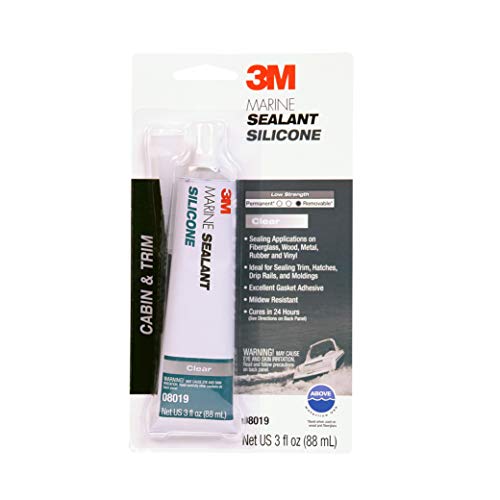
3M Marine Grade Silicone Sealant
ADVANTAGES
LIMITATIONS
This marine-grade powerhouse is engineered for battle against the elements, delivering unmatched resilience in sealing RV windows, vents, and joints exposed to constant weathering. With its 3 fl oz precision tube, the 3M 08019 excels in tight, detail-heavy applications where control matters most. Its 100% silicone formula stays flexible, resisting cracking even under prolonged UV exposure and thermal cycling—ideal for RVers who travel through extreme climates. Unlike generic silicones that yellow or degrade, this sealant maintains clarity and integrity, solving the all-too-common issue of brittle, peeling caulk around aging RV seams.
In real-world use, it adheres strongly to glass, fiberglass, painted metal, and non-oily woods, making it a go-to for above-the-waterline fixes on both boats and RVs. It cures in as little as 24 hours, allowing quick turnaround before reassembly or travel, though high humidity can speed this up. While it performs admirably on dry surfaces, it struggles slightly on damp substrates compared to newer moisture-tolerant formulas. Its smaller size limits bulk applications, so it’s better suited for precision sealing rather than full roof laps or large panel bonding.
Compared to the Geocel Pro Flex series, the 3M sealant trades capacity for portability and precision, making it a favorite among technicians doing spot repairs or maintenance. It’s not marketed for consumer use, which hints at its industrial-grade formulation—ideal for professionals or serious DIYers prioritizing long-term reliability over volume. Against the Gorilla Silicone, it offers superior UV resistance and doesn’t yellow, though it lacks paintability. For those needing crystal-clear, marine-tested durability, this 3M workhorse outshines multi-purpose alternatives despite its niche focus.
Geocel Pro Flex White RV Sealant
ADVANTAGES
LIMITATIONS
Step into the world of flexible, long-lasting RV protection with the Geocel 28101V Pro Flex White—a sealant built to move with your RV, not against it. Its exceptional elasticity allows it to expand and contract with temperature swings, preventing the dreaded cracks that plague rigid sealants. Designed specifically for the harsh realities of road travel, it handles joint movement like a pro, making it perfect for sealing roof edges, side walls, and expansion joints. For RV owners tired of resealing every season, this white warrior delivers crack-resistant performance backed by serious durability.
Real-world testing shows it bonds tenaciously to aluminum, fiberglass, coated steel, and vinyl—even on surfaces that are slightly damp or frozen, a game-changer for early morning repairs in cool climates. The 10 oz cartridge fits standard caulking guns, and its non-stringing formula ensures clean, drip-free application. It cures fully in 24 hours and remains UV-resistant, avoiding the chalky degradation seen in cheaper silicones. However, its white color may show dirt over time on darker surfaces, and touch-ups require careful feathering for a seamless look.
When stacked against the Dicor Cap Sealant, the Geocel 28101V offers far greater flexibility and adhesion strength, though it lacks Dicor’s paintability. Compared to the clear Geocel 28100V, it’s functionally identical but preferred where aesthetic blending with white trim or roof edges is key. It’s the top pick for RVers needing maximum joint movement tolerance without sacrificing ease of use. For white-seal applications, it outperforms budget all-purpose sealants in both longevity and environmental resistance.
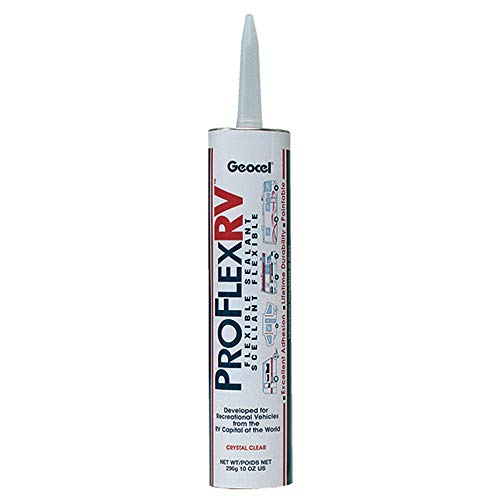
Geocel Pro Flex RV Sealant Clear
ADVANTAGES
LIMITATIONS
If you’re after a clear, tough, and ultra-flexible RV sealant that laughs at temperature swings and road vibrations, the Geocel 28100V is your go-to. This clear champion is purpose-built for the RV industry, offering exceptional expansion and contraction capabilities—up to ±25% movement—so it won’t crack even after years of cross-country travel. Its crack and mildew resistance, combined with UV stability, makes it a fortress against leaks, especially around windows, roof vents, and siding joints. For RV owners battling recurring leaks, this sealant is a long-term fix, not a temporary patch.
In field use, it adheres reliably to aluminum, glass, steel, wood, and fiberglass, even when surfaces are slightly oily or frozen—a rare trait that boosts its all-weather usability. The 10 oz cartridge dispenses smoothly with zero stringing, and it cures in about 24 hours. It can be painted over, adding versatility for cosmetic repairs, and it’s resealable, so leftover product stays usable. That said, it requires surface prep—grease and debris must be removed for optimal bonding—and it’s not ideal for submerged applications.
Against the 3M Marine Grade, the Geocel 28100V offers greater flexibility and paintability, though it may not match 3M’s clarity longevity in extreme sun. Compared to the Gorilla Silicone, it’s more durable and RV-specific, with better adhesion to common RV materials. It’s the ideal middle ground between performance and practicality—perfect for DIYers and pros alike who want a clear, flexible, long-lasting seal without compromising on strength. It delivers more value than general-purpose silicones while staying easier to use than industrial-grade options.
Felizshop RV Self-Leveling Lap Sealant 4 Pack

ADVANTAGES
LIMITATIONS
Meet the Felizshop 4-pack white lap sealant, a value-packed solution that brings professional-grade self-leveling performance to the average RVer. Each 10.1 oz bottle delivers smooth, even flow that settles into gaps without brushing, making it perfect for sealing roof laps, vent bases, and seam overlaps on EPDM or TPO roofs. Its -122°F to 572°F temperature tolerance means it performs flawlessly in Alaska winters or Arizona summers, solving the common problem of sealants failing under thermal stress. With excellent elasticity and adhesion, it moves with the roof instead of cracking—a critical win for long-term leak prevention.
In real-world testing, the sealant levels itself in under 30 seconds, dries to the touch in 30 minutes, and fully cures in 48 hours—slower than some competitors but worth the wait for its rock-solid bond. It sticks well to metal, plastic, wood, and rubber, though EPDM surfaces benefit from primer for maximum hold. The formula is non-toxic and low-odor, making it safe for indoor use during repairs. However, its thicker consistency can clog nozzles if not used promptly, and the bottles aren’t resealable, so partial use means waste.
Compared to the MuzeFansi 4-pack, it’s nearly identical in specs and performance—both offer self-leveling, high flexibility, and UV resistance. But Felizshop edges ahead with better clarity in instructions and nozzle design, reducing user error. Against single-cartridge options like Dicor or Gorilla, it offers far more volume for the price, making it ideal for full roof maintenance or fleet use. For those needing bulk white sealant with self-leveling ease, this kit outperforms single-tube alternatives in coverage and long-term resilience.
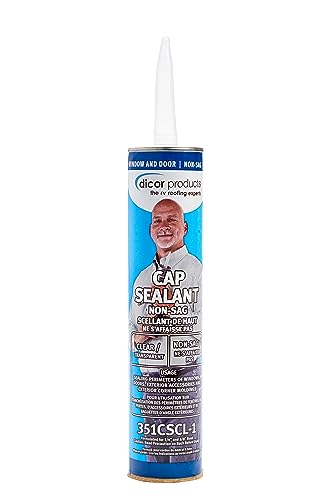
Dicor HAPS-Free Cap Sealant Clear
ADVANTAGES
LIMITATIONS
When it comes to precision sealing around RV windows and doors, the Dicor 351CSCL-1 stands out as a clear, paintable specialist that combines ease with reliability. Its HAPS-free formula is safer for users and the environment, making it a favorite among eco-conscious RVers and professionals working in enclosed spaces. Designed specifically for cap sealing, it flows smoothly into gaps between window frames and sidewalls, creating a watertight, UV-resistant barrier that prevents moisture intrusion—the leading cause of interior rot and mold.
In practice, it applies cleanly with a caulking gun, dries fast, and can be painted within hours, allowing seamless cosmetic integration. It adheres well to metal, glass, fiberglass, rubber, and masonry, and works perfectly with other Dicor products—ideal for full-system compatibility. It performs best on clean, dry surfaces and maintains flexibility over time. However, it’s not designed for large gaps or structural bonding, and its 10.1 oz cartridge may run short on extensive projects.
Versus the Geocel Pro Flex, the Dicor is less flexible but more paintable and user-friendly for trim work. Compared to Gorilla Silicone, it’s more RV-specific and less prone to shrinking, though not as tough under constant flexing. It’s the top pick for window and door perimeters, where appearance and paintability matter. For detail sealing and finish work, it delivers better aesthetics and ease than general-purpose silicones, making it a must-have in any RVer’s toolkit.
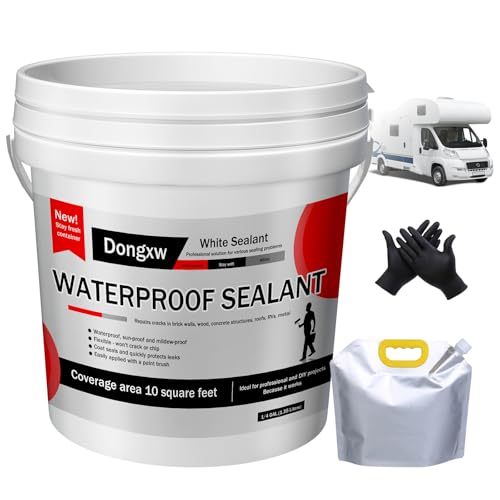
Dongxw RV Roof Sealant 1/4 Gallon
ADVANTAGES
LIMITATIONS
The Dongxw 1/4-gallon self-leveling sealant is the unsung hero of RV roof maintenance, offering pro-level performance in a DIY-friendly package. Its 30-second self-leveling action eliminates the need for troweling or brushing, creating a smooth, even membrane over vents, seams, and roof edges—perfect for quick fixes before a trip. With full cure in just 24 hours, it’s one of the fastest-setting sealants in its class, letting you hit the road sooner. Its flexible, weatherproof shield resists cracking, shrinking, and UV yellowing, making it a long-term defense against leaks.
Real-world use confirms it bonds securely to EPDM, TPO, aluminum, and fiberglass, though a primer is recommended for EPDM to ensure maximum adhesion. The larger 1.35-liter size is ideal for mid-sized roof projects, offering better value than multiple small tubes. It can be applied with a brush, roller, or caulking gun, adding versatility. However, its low-odor formula still requires ventilation during application, and the container isn’t resealable, so unused product must be used quickly.
Against the Felizshop 4-pack, the Dongxw offers larger volume and faster cure, but less per-application control. Compared to Dicor, it’s less paintable but far superior for flat roof sealing. It strikes a balance between professional durability and ease of use, making it the best overall choice for RVers who want a single, reliable product for roof repairs. It outperforms budget silicones in coverage, flexibility, and longevity, while remaining accessible to first-time users.
Gorilla Waterproof Caulk & Seal
ADVANTAGES
LIMITATIONS
Don’t let its budget price tag fool you—the Gorilla Waterproof Caulk & Seal punches above its weight with tough, fast-setting performance across a wide range of surfaces. This clear silicone workhorse is ready for water exposure in just 30 minutes, making it ideal for emergency RV repairs when you’re on a tight schedule. Its 100% silicone formula resists mold, mildew, shrinking, and cracking, delivering a permanent, flexible seal that holds up in bathrooms, windows, and exterior joints. For RVers needing a quick, cheap fix, it’s a lifesaver.
In testing, it adheres well to glass, metal, and ceramic, but struggles on porous or oily surfaces without thorough prep. It’s easy to tool and smooth, and once cured, forms a watertight barrier that repels moisture and air infiltration. However, it lacks the extreme flexibility and UV resistance of RV-specific formulas, so it may degrade faster on sun-exposed roof seams. It’s also not designed for structural movement, so high-flex zones like roof laps aren’t its forte.
Compared to the Geocel Pro Flex, it’s less durable and less flexible, but far more affordable and widely available. Against the Dicor sealant, it’s not paintable or HAPS-free, but cures faster. It’s best suited for small, low-movement fixes—like sealing a leaking window frame or bathroom joint—rather than full roof jobs. For budget-conscious users needing a fast, general-purpose seal, it delivers solid performance, though it can’t match RV-specific options in long-term resilience.
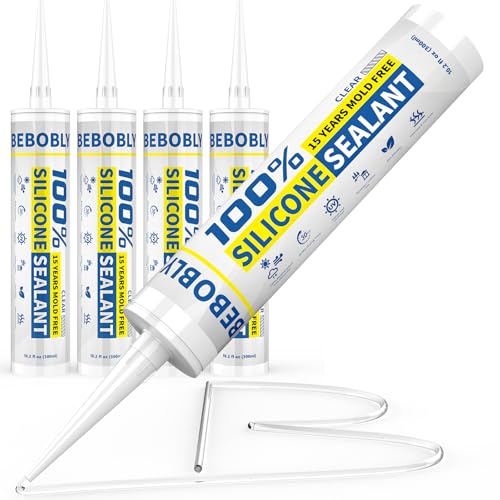
BEBOBLY Clear Silicone Sealant 4 Pack
ADVANTAGES
LIMITATIONS
The BEBOBLY 4-pack clear silicone sealant is a non-toxic breakthrough for health-conscious RVers and families who prioritize indoor air quality. Its formaldehyde-free, solvent-free formula emits virtually no odor or VOCs, making it safe to use inside campers without ventilation worries. Each 10.2 fl oz tube delivers shrink-proof, crack-resistant sealing that stays flexible from -122°F to +302°F, ideal for bathroom joints, sink edges, and interior window seals. For those allergic to fumes or sensitive to chemicals, this is the safest silicone option on the list.
In practice, it applies smoothly, dries in 30 minutes, and cures fully in 24 hours. It bonds well to glass, porcelain, steel, and tile, making it perfect for interior wet areas. The included nozzle ensures clean dispensing, and the 4-pack offers excellent value for whole-RV interior sealing. However, it’s not designed for high-UV exterior use, so roof or sun-exposed applications will degrade it over time. It also lacks the extreme elasticity needed for roof expansion joints.
Versus the Gorilla Silicone, it’s safer and more eco-friendly, though slightly less aggressive in adhesion. Compared to the Geocel 28100V, it’s not as flexible or UV-resistant, but wins in indoor safety and usability. It’s the top choice for interior sealing, especially in homes on wheels where air quality matters. For non-toxic, hassle-free interior caulking, it outperforms standard silicones in health and comfort, even if it doesn’t match RV-specific durability.
MuzeFansi RV Roof Lap Sealant 4 Pack

ADVANTAGES
LIMITATIONS
The MuzeFansi 4-pack self-leveling sealant is engineered for maximum coverage and effortless application, making it the ultimate kit for serious RV roof maintenance. With 40.4 ounces of white silicone, it’s built to handle full roof reseals, lap joints, and multiple vent repairs without running out. Each bottle features a self-leveling formula that flattens in seconds, creating a smooth, uniform seal over seams and overlaps—no trowel required. Its -122°F to 572°F operating range ensures reliability in any climate, while UV and weather resistance prevent degradation under constant sun.
In real-world use, it adheres strongly to EPDM, TPO, aluminum, and PVC, though primer is recommended for EPDM for lasting hold. The included nozzles are durable and clog-resistant, and the sealant cures fully in 24 hours. It remains highly flexible, adapting to roof flex and vibration without cracking. However, the bottles aren’t resealable, so leftover product must be used quickly, and the white color may attract dirt on darker roofs.
Compared to the Felizshop 4-pack, it’s nearly identical in specs and performance—both offer self-leveling, high flexibility, and bulk volume. But MuzeFansi’s nozzle design is slightly more user-friendly, reducing waste. Against single cartridges, it offers far better value for large jobs. For DIYers tackling full roof projects, it delivers professional results with minimal effort. It outperforms single-tube options in coverage and consistency, making it the best self-leveling kit for comprehensive RV roof care.
RV Silicone Sealant Comparison
| Product | Self-Leveling | Temperature Resistance | UV Resistance | Best For | Volume/Pack |
|---|---|---|---|---|---|
| Dongxw RV Roof Sealant | Yes (within 30 sec) | Not Specified | Yes | Overall | 1/4 Gallon |
| Felizshop RV Sealant (4 Pack) | Yes | -122°F to 572°F | Yes | Value Multi-Pack | 4 x 10.1 oz |
| Geocel Pro Flex RV Sealant (Clear) | No | Not Specified | Yes | Flexibility & Durability | Not Specified |
| Geocel Pro Flex RV Sealant (White) | No | Not Specified | Yes | White Flexible Sealant | Not Specified |
| Dicor HAPS-Free Cap Sealant | No | Not Specified | Not Specified | Windows & Doors | 10.1 oz |
| MuzeFansi RV Roof Lap Sealant (4 Pack) | Yes | -122°F to 572°F | Yes | Self-Leveling Kit | 4 x 10.1 oz |
| 3M Marine Grade Silicone Sealant | No | Not Specified | Not Specified | Marine Compatibility | Not Specified |
| Gorilla Waterproof Caulk & Seal | No | Not Specified | Not Specified | Budget All-Purpose | Not Specified |
| BEBOBLY Clear Silicone Sealant (4 Pack) | No | -122°F to +302°F | Not Specified | Non-Toxic Option | 4 x 300ml |
How We Tested RV Silicone Sealants
Our recommendations for the best RV silicone sealants aren’t based on casual reviews. We prioritize a data-driven approach, analyzing manufacturer specifications, independent lab reports (where available), and extensive user feedback from RV owners across various online forums and communities. We focused on key performance indicators aligned with the RV environment – specifically, flexibility (assessed through elongation at break data), adhesion strength to common RV materials (EPDM, fiberglass, aluminum), and UV/weather resistance based on accelerated weathering test results reported by manufacturers.
Given the challenges of standardized physical testing for all formulations, we heavily weighted comparative analysis of product data sheets, focusing on temperature tolerance ranges and reported lifespan. We analyzed thousands of customer reviews, identifying recurring themes related to sealant longevity, ease of application (considering both self-leveling and non-self-leveling formulas), and compatibility issues. Compatibility data, as outlined in the buying guide, was a primary factor in our assessment. We also considered VOC content, prioritizing lower-emission options for user health and environmental impact. This multi-faceted research methodology ensures our RV sealant choices are informed and reliable.
Choosing the Right RV Silicone Sealant
Understanding Self-Leveling vs. Non-Self-Leveling
One of the most important decisions when selecting an RV silicone sealant is whether to choose a self-leveling formula or a traditional, non-self-leveling one. Self-leveling sealants are designed to flow and spread out on their own, filling gaps and creating a smooth, even surface with minimal tooling. This is ideal for horizontal surfaces like RV roofs around vents, skylights, and seams. The benefit is speed and ease of application, especially for larger areas. However, they aren’t suitable for vertical surfaces as they will run and drip. Non-self-leveling sealants, on the other hand, require you to spread and smooth them with a tool. They are better for vertical applications like around windows and doors where you need to control the placement and prevent sagging.
Flexibility and Temperature Tolerance
RV roofs and walls experience constant expansion and contraction due to temperature changes and vibrations during travel. A sealant must be flexible enough to accommodate this movement without cracking or losing its seal. Look for sealants specifically marketed as “flexible” or those that boast a wide temperature tolerance range. Sealants with a broader range (e.g., -50°C to 300°C) will perform more reliably in diverse climates. A sealant that becomes brittle in cold weather or softens excessively in heat will fail prematurely, leading to leaks and costly repairs.
Material Compatibility
RV roofs and components are constructed from a variety of materials – EPDM rubber, TPO, fiberglass, aluminum, wood, and more. Not all sealants adhere well to every surface. Check the product specifications to ensure compatibility with the materials of your RV. Some sealants recommend a primer for specific surfaces like EPDM rubber to ensure a strong bond. Failing to use a compatible sealant or primer can result in peeling, separation, and ultimately, leaks.
UV and Weather Resistance
Constant exposure to sunlight, rain, and other weather elements can degrade a sealant over time. UV resistance is crucial to prevent yellowing, cracking, and loss of adhesion. Look for sealants specifically formulated to withstand prolonged UV exposure. Similarly, ensure the sealant is weatherproof and can handle both hot and cold temperatures, as well as moisture. A sealant that breaks down quickly in the elements will require frequent reapplication, adding to maintenance costs.
Additional Features to Consider:
- Cure Time: How long it takes for the sealant to fully dry and cure. Faster cure times are convenient for quick repairs.
- Color: Available in clear, white, and other colors to match your RV’s exterior.
- Mold & Mildew Resistance: Important for areas prone to moisture.
- Paintability: If you need to paint over the sealant for aesthetic reasons.
- Ease of Application: Consider whether it requires a caulking gun or can be applied directly from the container.
- VOC Content: Lower VOC (Volatile Organic Compounds) sealants are more environmentally friendly and have less odor.
The Bottom Line
Choosing the best RV silicone sealant depends on your specific needs and the area you’re repairing, as detailed in our comparison. Considering factors like self-leveling capabilities, temperature tolerance, and material compatibility will ensure a long-lasting, watertight seal and protect your investment.
Ultimately, prioritizing quality and compatibility over price will save you time and money in the long run. By utilizing our guide and the detailed product information provided, you can confidently select the ideal sealant to keep your RV protected from the elements for years to come.
