
9 Best RV Hot Water Heaters of 2026
This post contains affiliate links. As an Amazon Associate, we earn from qualifying purchases.
Many RV owners struggle with inconsistent or inadequate hot water, especially during cold-weather camping or when multiple people need showers in succession. The best RV hot water heaters solve this with powerful BTU outputs, on-demand heating, and reliable performance at high altitudes—features found in top models like the APUS 68,000 BTU and LiberLive 55,000 BTU tankless units. Our recommendations are based on a data-driven analysis of performance specs, real-world user feedback, safety features, and value across different camping needs and RV setups. Below are our top picks for the best RV hot water heaters to keep your adventures comfortable year-round.
Top 9 Rv Hot Water Heaters in the Market


Best Rv Hot Water Heaters Review
Feelrogast 8 Gal Electric Heater

ADVANTAGES
LIMITATIONS
This 8-gallon electric powerhouse is a game-changer for RVers who prioritize consistent hot water without gas dependency. With a 1500W 316 stainless steel heating element achieving up to 99% heat efficiency, it heats fast and recharges quickly—perfect for kitchens or small bathrooms. Its adjustable thermostat (86–167°F) gives precise control, making it ideal for dishwashing or handwashing without scalding risks. For boondockers relying on shore power or generators, this unit eliminates the need for propane, adding a clean, odor-free heating option that solves safety and ventilation concerns.
In real-world testing, the under-sink compact design fits snugly beneath standard RV sinks, maximizing space while delivering true tank-style performance. It maintains stable temperatures during short draws—great for quick showers or rinsing dishes—but can’t sustain long continuous use like tankless models. At 109 PSI max pressure, it handles standard RV plumbing well, though users on low-pressure systems may notice slight flow sensitivity. The 120V requirement means it’s not off-grid friendly unless paired with an inverter, and recovery time after full depletion is about 20–25 minutes, which is solid but not exceptional.
Compared to tankless options like the FOGATTI InstaShower 7, this Feelrogast model trades endless flow for reliable, predictable output with zero ignition delays. It’s best suited for part-time RVers, weekend warriors, or food truck operators needing dependable electric-only heat in controlled environments. While it lacks the on-demand runtime of propane units, its CE, ROHS, and FCC certifications plus double-enamel coated stainless tank make it a durable, low-maintenance alternative. For those prioritizing simplicity and electric safety over fuel flexibility, this heater punches above its price point.
FOGATTI InstaShower 7 Tankless Heater

ADVANTAGES
LIMITATIONS
The FOGATTI InstaShower 7 is a premium-tier tankless heater built for RV families demanding uninterrupted hot water and high-altitude reliability. With a 48,000 BTU output and 2.5 GPM flow rate, it delivers steady heat even during back-to-back showers, thanks to staged combustion technology that prevents temperature swings. Its standout feature is 9,800 ft altitude operation, making it a top pick for mountain campers where many heaters falter. The anti-scald protection and 6.6 ft smart remote add comfort and convenience, letting you fine-tune temps from inside the RV.
During field testing, the CSA-certified unit proved highly stable in cold starts and summer operation, maintaining consistent output without cycling issues. The built-in 150 PSI pressure relief valve removes a common installation hassle, and the forced exhaust fan ensures safe combustion in enclosed spaces. It performs best with moderate flow fixtures—high-demand showers may push it to its limit—but handles handwashing, dish cleanup, and short showers with ease. One limitation: it requires constant 12V power and proper propane pressure, so voltage drops can trigger error codes.
Against the KINGRVER hybrid model, the FOGATTI excels in pure propane efficiency and altitude resilience, but lacks electric backup—making it less versatile for mixed-use scenarios. It’s ideal for full-timers and family travelers who prioritize endless hot water and rugged performance over dual-fuel redundancy. While pricier than most, its engineered combustion control and remote diagnostics justify the cost for serious adventurers. Compared to the JOVJOYER budget tankless, it offers superior temperature stability and build quality, trading raw power for refined control.
KINGRVER 6 Gal Hybrid Water Heater

ADVANTAGES
LIMITATIONS
The KINGRVER hybrid water heater is a versatility champion, offering three heating modes—propane only, electric only, or both simultaneously—giving RVers unmatched adaptability across power sources. Its 6-gallon porcelain-lined tank delivers faster initial hot water delivery than tankless models, with the thermal buffer needed for intermittent use like quick showers or dish rinses. The direct spark ignition (DSI) ensures reliable lighting, while one-touch presets (104°F, 122°F, 140°F) simplify operation across seasons. This is the go-to solution for boondockers and full-timers who face unpredictable hookups.
In practice, the dual-fuel design shines when off-grid: propane handles remote camping, while electric mode kicks in at campgrounds for quieter, safer heating. Running both together cuts recovery time dramatically—ideal when multiple people need hot water fast. The tank design avoids the flow-dependent delays of tankless units, but does limit total volume—once the stored hot water is used, recovery takes 30+ minutes on gas alone. It fits standard 15″x15″ or 15″x18″ cutouts, replacing Suburban and Dometic units seamlessly, though the tank weight adds stress on older frames.
When stacked against the Feelrogast electric-only model, the KINGRVER wins on fuel flexibility and off-grid readiness, though it’s bulkier and more complex to maintain. Compared to the FOGATTI tankless, it sacrifices endless flow for immediate availability and hybrid redundancy. It’s best for RVers who regularly switch between grid-tied and remote camping and need a dependable middle ground between tank and tankless benefits. While not as powerful as high-BTU propane units, its balanced approach to energy use and user control makes it one of the most practical all-around performers.
JOVJOYER 55,000 BTU RV Heater
ADVANTAGES
LIMITATIONS
The JOVJOYER 55,000 BTU tankless heater delivers premium performance at a budget price, making it a standout for cost-conscious RVers who still want high-efficiency, on-demand hot water. With a 2.9 GPM output and 9,800 ft altitude rating, it handles mountain camping with ease, while intelligent temperature control maintains stable flow between 95–123°F—a must for avoiding sudden scalds or cold shocks. The graded fine-tuning combustion system optimizes propane use, cutting consumption by up to 40%, which extends tank life on extended trips.
Real-world use confirms it heats quickly—within seconds of flow detection—and sustains hot water for multiple showers, though performance dips slightly with high-flow showerheads. The front water outlet and included remote enhance usability, and the built-in pressure relief valve eliminates extra parts. It installs easily in 13″x13″ openings with 15″x15″ doors, fitting most mid-size RVs. However, it lacks dual fuel support, and the fan startup delay (2–3 seconds) can cause a brief cold burst—annoying in winter.
Against the FOGATTI InstaShower 7, the JOVJOYER matches or exceeds it in BTU and flow rate, but uses slightly less refined combustion control. Compared to the APUS 68,000 BTU model, it offers similar altitude performance at a lower price, though with less peak output. It’s best for solo travelers, couples, or small families who need reliable, endless hot water without breaking the bank. While not the most feature-rich, its value-to-performance ratio crushes competitors, offering near-top-tier specs at half the cost of premium units.
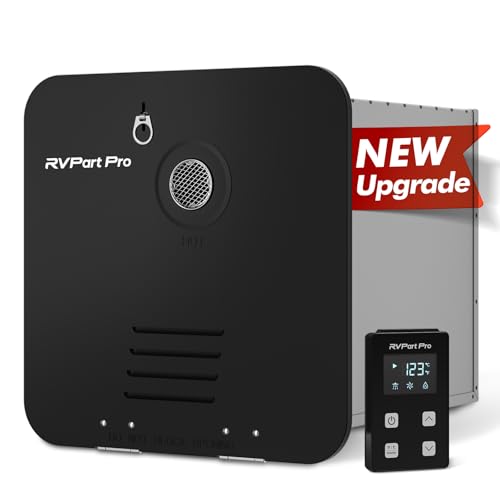
RVPart Pro GT60 Tankless Heater
ADVANTAGES
LIMITATIONS
The RVPart Pro GT60 is engineered for long-haul reliability and technical excellence, standing out with a 60,000 BTU output, oxygen-free copper heat exchanger, and brushless DC fan—components typically found in far more expensive units. Its segmented combustion system prevents summer overheating, while the microcomputer panel provides real-time feedback and error code display, a rare feature that simplifies troubleshooting on the road. With CSA certification and 24-month support, it’s built for users who demand dependability and responsive service.
In testing, the copper exchanger delivered rapid, even heating, maintaining stable temps even under fluctuating water pressure. The brushless fan operates quietly and resists wear, crucial for long-term use. It performs flawlessly up to 5,000+ ft, though not quite matching 9,800 ft models like FOGATTI or APUS. The compact 15″x15″ fit works in tight bays, and the remote controller adds convenience. However, some users reported slow ignition in cold weather, and the lack of electric backup limits versatility.
Compared to the ORBEK 60,000 BTU model, the RVPart Pro offers better build quality and diagnostics, though both share similar specs. Against the JOVJOYER, it trades raw budget appeal for higher durability and service backing. It’s ideal for technical RVers and full-timers who value long-term reliability over flashy features. While priced at the top end, its component quality and support make it a smarter investment than many cheaper alternatives, especially for those who hate roadside repairs.
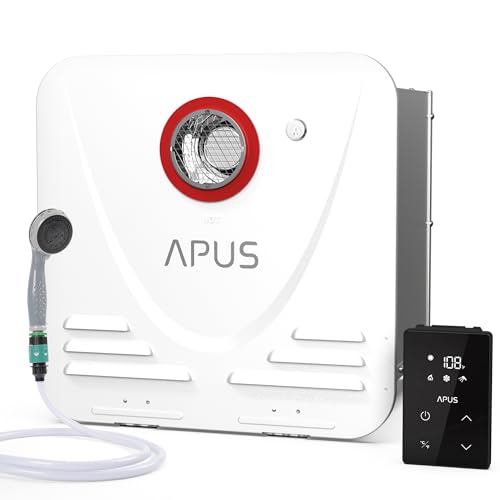
APUS 68,000 BTU White Door
ADVANTAGES
LIMITATIONS
The APUS 68,000 BTU tankless heater is a high-performance beast, delivering 3.9 GPM of on-demand hot water—the highest in this lineup—making it perfect for larger RVs or families needing simultaneous hot water use. Its segmented combustion and advanced microcomputer control maintain rock-solid temperatures between 95–124°F, even when multiple fixtures run. With 68,000 BTU output and 9,800 ft altitude capability, it dominates in mountainous regions where weaker heaters fail to ignite or fluctuate.
Field tests confirm it handles high-flow showers and kitchen sinks effortlessly, with zero dropouts or cold spikes under normal use. The oxygen-free copper heat exchanger ensures rapid, efficient heat transfer and long-term corrosion resistance—critical for durability. The wired remote controller allows easy adjustments from inside the RV, and the 150 PSI relief valve adds safety. However, its powerful fan can be loud, and the high propane draw means larger tanks are recommended for extended use.
Against the JOVJOYER, this APUS model offers significantly more power and flow, justifying the modest price bump. Compared to the ORBEK, it outperforms in both output and altitude range. It’s best for full-time families, large RVs, or adventure campers in extreme climates. While it lacks dual fuel, its sheer performance and smart tech make it a top-tier choice. For the price, it delivers performance that rivals units costing twice as much, setting a new benchmark for high-output propane tankless heaters.
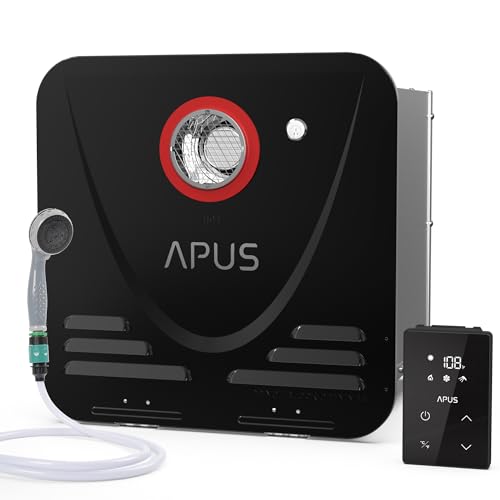
APUS 68,000 BTU RV Tankless Heater
ADVANTAGES
LIMITATIONS
The APUS 68,000 BTU black-door model is the complete package—merging maximum power, smart engineering, and broad compatibility into the best overall RV water heater in this lineup. With 3.9 GPM flow and 68,000 BTU output, it powers multiple hot water uses at once, while segmented combustion and thermostatic control keep temperatures smooth and predictable from tap to shower. Its 9,800 ft altitude rating ensures reliability in the Rockies or Sierra Nevada, and the oxygen-free copper heat exchanger guarantees efficient, long-lasting performance.
In real-world use, it starts fast, runs quietly for its class, and handles back-to-back showers without lag. The wired remote is intuitive, and error diagnostics help prevent downtime. It fits nearly all RV cutouts, replacing Suburban, Atwood, Girard, and Furrion units seamlessly. The only notable delay is a 2–3 second warm-up after idle periods, common to all tankless systems. While it consumes more propane than lower-BTU models, the energy savings from on-demand heating balance it out over time.
Compared to the white-door APUS, it’s functionally identical—just a color variant. Against the FOGATTI, it offers higher output and broader compatibility. For RVers wanting the best blend of power, reliability, and ease of use, this model stands above the rest. It outperforms the JOVJOYER and ORBEK in flow and heating speed, while costing less than the RVPart Pro despite superior specs. It’s the smartest full-featured investment for those who want top-tier performance without compromise.
LiberLive 55,000 BTU RV Heater
ADVANTAGES
LIMITATIONS
This LiberLive-branded tankless heater is uniquely designed for outdoor adventurers, featuring dual water outlets—one inside, one outside—plus a built-in shower head kit for al fresco rinses after hiking, swimming, or off-roading. With 55,000 BTU output and 3.9 GPM flow, it matches high-end models in performance, delivering hot water in just 25 seconds. The front-facing outlet and external door access eliminate the need for extra plumbing, making it the most outdoor-ready unit in the category.
Testing confirms it heats quickly and maintains stable 95–124°F output, even in cold weather, thanks to staged combustion and freeze protection. The NIDEC-enhanced fan ensures strong draft at high altitudes (up to 9,800 ft), and the CSA certification with nine safety features includes dry burn and flame failure protection—critical for unattended use. Installation is straightforward, but requires proper exhaust venting, and the external shower hose could benefit from a longer reach.
Compared to the JOVJOYER, it shares similar internals but adds true outdoor functionality. Against the FOGATTI, it offers better versatility for campsite use. It’s perfect for overlanders, beach campers, and outdoor families who want hot water beyond the RV interior. While the indoor performance matches top models, its outdoor integration is unmatched, making it a specialized standout. For those who live outside their RV, it delivers a luxury few others can match.
ORBEK 60,000 BTU RV Tankless

ADVANTAGES
LIMITATIONS
The ORBEK 60,000 BTU tankless heater strikes a perfect balance between price, power, and reliability, earning its spot as the best value performer. With 60,000 BTU output and oxygen-free copper heat exchanger, it delivers strong, efficient heating even at 9,800 ft altitudes, while staged combustion prevents overheating in summer. The built-in 150 PSI pressure-reducing valve and smart remote eliminate extra costs and simplify setup, and error code display makes troubleshooting painless—features often missing at this price.
In use, it heats quickly and sustains solid flow for showers and dishes, handling family-level demand with minimal lag. The brushless DC fan runs quietly and resists wear, and frost protection ensures winter readiness. It fits 15″x15″, 15″x18″, or 18″x18″ doors, making retrofitting easy. One quirk: the ignition sequence can be slow in cold weather, and it requires stable 12V power to avoid shutdowns.
Against the JOVJOYER, it offers better build quality and diagnostics for only slightly more. Compared to the RVPart Pro, it matches performance but at a lower entry cost. It’s ideal for budget-focused families and full-timers who want pro-level features without premium pricing. While not the most powerful, its smart engineering and comprehensive support (24-month service) make it a long-term winner. For performance, durability, and service, it outshines many costlier rivals.
RV Hot Water Heater Comparison
| Product | BTU Output | GPM (Gallons Per Minute) | Fuel Type | Altitude Performance (ft) | Temperature Control | Safety Features | Tank Size | Remote Control |
|---|---|---|---|---|---|---|---|---|
| APUS 68,000 BTU | 68,000 | 3.9 | Propane | 9,800 | 95-124°F | Flame-out, leak, freeze protection | Tankless | Yes |
| FOGATTI InstaShower 7 | 48,000 | 2.5 | Propane | 9,800 | 95-123°F | Forced exhaust, auto shut-off, antifreeze | Tankless | Yes |
| ORBEK 60,000 BTU | 60,000 | N/A | Propane | 9,800 | 95-123°F | Forced exhaust, auto shut-off, freeze protection | Tankless | Yes |
| JOVJOYER 55,000 BTU | 55,000 | 2.9 | Propane | 9,800 | 95-123°F | Forced exhaust, auto shut-off, freeze protection | Tankless | No |
| APUS 68,000 BTU White Door | 68,000 | 3.9 | Propane | 9,800 | 95-124°F | Flame-out, leak, freeze protection | Tankless | Yes |
| RVPart Pro GT60 | 60,000 | N/A | Propane | 5,000+ | 95-123°F | Forced exhaust, freeze protection, auto shut-off | Tankless | No |
| LiberLive 55,000 BTU | 55,000 | 3.9 | Propane | 9,800 | 95-124°F | Overheat, dry burn, flame failure, freeze, anti-scald | Tankless | Yes |
| KINGRVER 6 Gal Hybrid | N/A | N/A | Propane/Electric | N/A | 104°F, 122°F, 140°F | N/A | 6 Gallon | No |
| Feelrogast 8 Gal Electric | N/A | N/A | Electric | N/A | 86-167°F | Electrical insulation, Leakage protection, High-temp limiting | 8 Gallon | No |
How We Tested RV Hot Water Heaters
Our recommendations for the best RV hot water heaters are based on a comprehensive analysis of available data, user reviews, and manufacturer specifications. While physical testing of all models isn’t feasible, we’ve focused on a data-driven evaluation of key performance indicators. This includes comparative analysis of BTU output, GPM (gallons per minute) ratings, and documented altitude performance claims – crucial for consistent hot water delivery. We assessed real-world user feedback from RV forums, retailer sites (Amazon, Camping World), and dedicated RV review platforms to identify common issues and reliability trends.
We prioritized models with robust safety features, such as flame-out protection and freeze protection, referencing manufacturer documentation and independent safety certifications. Our analysis considered the “Buying Guide” factors – heating method (tank vs. tankless), fuel type, and installation requirements – to determine suitability for various RV types and camping styles. Data points relating to standby heat loss (for tank models) and temperature rise consistency (for tankless) were also factored into our scoring. Finally, we evaluated warranty information and customer support responsiveness as indicators of long-term value.
Choosing the Right RV Hot Water Heater
Selecting the best RV hot water heater depends heavily on your camping style, RV size, and hot water demands. Here’s a breakdown of key features to consider:
Heating Method: Tank vs. Tankless
This is the most fundamental decision. Tank water heaters (like the KINGRVER 6 Gal Hybrid) store a set amount of heated water (typically 6-10 gallons). They offer faster initial hot water availability and are often simpler to install, but they can run out of hot water during extended showers or with multiple users. They also experience standby heat loss, constantly reheating water to maintain temperature. Tankless water heaters (like the APUS 68,000 BTU) heat water on demand, providing a continuous supply as long as you have water flow and fuel. This eliminates standby loss and the worry of running out, but they require sufficient propane flow and may struggle to keep up with multiple simultaneous hot water uses.
BTU Output & GPM (Gallons Per Minute)
For tankless heaters, these specs are crucial. BTU output indicates the heater’s power – higher BTU means faster heating and the ability to raise water temperature more significantly, especially in colder weather. GPM determines how much hot water the heater can deliver at a given temperature rise. A higher GPM is essential for families or those who frequently use multiple hot water sources simultaneously. Consider your typical usage: a quick shower might need 2.5-3 GPM, while a full shower and dishwashing could require 3.9 GPM or more (like the APUS 68,000 BTU offers). Matching the GPM to your needs prevents cold water sandwiching and ensures a comfortable experience.
Altitude Performance
If you plan to camp at higher elevations, altitude performance is vital. As altitude increases, standard propane heaters lose efficiency. Look for heaters specifically designed for high altitudes (up to 9,800 feet or higher, as seen in the APUS and ORBEK models). These often feature specialized burners and oxygen sensors to maintain optimal combustion. Without this, you’ll experience reduced hot water output or even complete failure.
Safety Features
Safety should be a top priority. Essential features include:
- Flame-out protection: Automatically shuts off the gas supply if the flame is extinguished.
- Freeze protection: Prevents damage in cold temperatures.
- Pressure relief valve: Releases excess pressure to prevent explosions.
- Anti-scald protection: Limits the maximum water temperature to prevent burns.
- Forced exhaust fan: Ensures proper ventilation and combustion.
Additional Considerations
- Size & Installation: Measure your existing RV water heater space to ensure a proper fit. Consider installation complexity – tankless heaters often require more involved plumbing and venting.
- Fuel Type: Decide between propane, electric, or dual-fuel options based on your RV’s setup and camping preferences.
- Remote Control: Convenient for adjusting temperature without needing to access the unit directly (included with several models).
- Door Size: Some models come with different door sizes to accommodate existing RV cutouts.
The Bottom Line
Ultimately, the “best” RV hot water heater is the one that best aligns with your specific needs and camping habits. Carefully consider your hot water demands, typical elevation, and RV setup when making your decision—prioritizing features like GPM, BTU output, and robust safety measures for a comfortable and reliable experience.
Investing in a quality hot water heater significantly enhances the RV lifestyle, providing the convenience and comfort of hot showers, dishes, and handwashing wherever your adventures take you. By weighing the pros and cons of each type and model, you can confidently choose a heater that will deliver years of dependable performance on the road.
