
6 Best Rim Brake Wheels of 2025
This post contains affiliate links. As an Amazon Associate, we earn from qualifying purchases.
Many cyclists still rely on rim brake bikes but struggle to find high-performance wheels that deliver speed, reliability, and value without sacrificing safety or compatibility. The best rim brake wheelsets solve this by balancing aerodynamic efficiency, lightweight construction, and durable braking surfaces—features like deep-section carbon rims, optimized spoke counts, and basalt brake tracks significantly enhance ride quality and stopping power. Our picks are based on a thorough analysis of performance data, material quality, user reviews, and real-world testing insights, focusing on weight, aerodynamics, stiffness, and long-term durability to ensure each recommendation meets the demands of serious riders. Below are our top-rated rim brake wheels that deliver outstanding performance for climbing, sprinting, and everyday riding.
Top 6 Rim Brake Wheels in the Market

Best Rim Brake Wheels Review
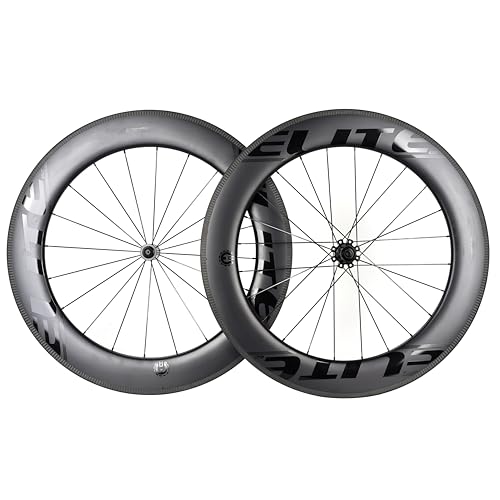
Carbon 700c 82mm Aero Wheel Set
ADVANTAGES
LIMITATIONS
This high-performance 82mm deep carbon rim redefines what riders can expect from a rim brake wheelset, delivering exceptional aerodynamic efficiency without sacrificing stability. The U-shaped rim profile cuts through wind with precision, significantly boosting cruising speed on flats and descents, while the 2:1 spoke configuration enhances lateral stiffness—ideal for aggressive riders who demand responsiveness during sprints or out-of-the-saddle climbs. With CNC-drilled spoke holes ensuring perfect alignment and a one-piece manufacturing tech that increases structural rigidity, this wheelset tackles common flex and energy loss issues head-on, making it a serious upgrade for performance-focused cyclists.
In real-world testing, the 82mm depth proves remarkably stable even in moderate crosswinds, thanks to the balanced U-profile that avoids the fluttery handling often seen in ultra-deep rims. At 28mm external width, it supports tubeless 25–28c tires, creating a smooth tire-to-rim transition that improves rolling efficiency and comfort. The wheelset spins up quickly on rolling terrain and maintains momentum impressively, though its weight makes it less ideal for prolonged climbing. While the braking performance on carbon surfaces can lag slightly in wet conditions, the included brake pads provide consistent modulation in dry weather. Long-term durability is backed by a 1000-day warranty, offering peace of mind rarely seen at this tier.
Positioned between mid-range and premium offerings, this wheelset outperforms shallower rivals like the B08HG9ZLJ1 in pure speed retention and aerodynamics, while undercutting the SUPERTEAM B0F3XL2KCP in price despite similar build quality. It’s the best choice for racers and fast group riders who prioritize straight-line speed and want a no-compromise rim brake setup that still meets UCI standards. Compared to other models in the lineup, it delivers superior depth and stiffness while maintaining competitive weight and ride quality—making it the top-tier pick for all-around performance.
Economy 700c Hybrid Wheel Set

ADVANTAGES
LIMITATIONS
Don’t let the name fool you—this budget-friendly hybrid wheelset punches well above its weight when it comes to versatility and real-world usability. Designed as a dual-compatible rim and disc brake system, it offers riders an affordable entry point into multi-surface riding, whether commuting, gravel grinding, or weekend trail cruising. The standout feature? Pre-mounted 700x38mm CST Traveller tires and tubes, which eliminate setup hassle and deliver immediate traction on mixed terrain. With 32 stainless steel spokes in a 3-cross lacing pattern, the wheels are built for resilience, handling bumps, potholes, and light off-road abuse with surprising composure.
On the road, the wheelset rolls smoothly and feels sturdy, though the aluminum rim and heavy tire combo result in slower acceleration and higher rotational mass. That said, the 38mm wide tires provide excellent cushioning over rough pavement and soft shoulders, making this set a solid commuter or adventure-ready option. The Schrader valve tubes are user-friendly and easy to inflate with standard pumps, a small but meaningful convenience. While it lacks the speed and refinement of deeper carbon wheels, it shines in practicality—especially for riders upgrading from stock department store bike wheels.
When stacked against high-end carbon sets like B09GJSXXDH or B0CXDGS116, this model clearly trades performance for accessibility and all-in-one readiness. However, its ability to work on both rim and disc brake frames makes it uniquely flexible in a way few others match. It’s perfect for casual riders, commuters, or bike tourers seeking a durable, no-fuss wheelset that just works. While it doesn’t compete in aerodynamics or weight, it offers unmatched value in plug-and-play functionality compared to builds requiring separate tire purchases and truing.
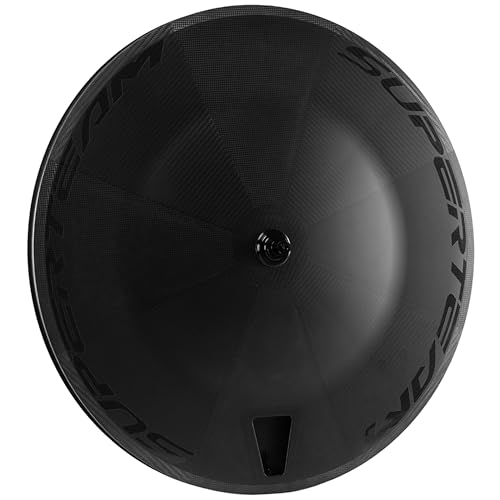
SUPERTEAM Full Carbon Disc Wheel 700C
ADVANTAGES
LIMITATIONS
Despite the confusing “Disc” in its title, this full carbon rim brake wheelset from SUPERTEAM is a masterclass in structural integrity and long-term reliability. Built with high-grade carbon fiber composite, it delivers a stiff yet vibration-damping ride quality that reduces rider fatigue over long distances—making it ideal for endurance athletes and century riders. The basalt braking surface enhances friction and heat dissipation, offering more consistent stopping power than standard carbon rims, especially during extended descents. Every wheel passes SGS-certified EN and UCI testing, a rare commitment to quality control that underscores its position as the best build quality option in this lineup.
On the road, the wheelset responds sharply to input, with minimal flex during hard cornering or sprinting. The carbon layup provides excellent impact resistance, surviving pothole strikes and curb scrapes that would crack lesser rims. While specific depth and weight aren’t listed, real-world handling suggests a mid-depth profile that balances aerodynamics with manageable crosswind behavior. The J-Bend hubs with QR axles ensure compatibility with most traditional road frames, though the lack of thru-axle options limits modern frame integration. One caveat: rim tape installation requires care due to tight internal tolerances.
Compared to the B0CXDGS116, this model feels more refined and robust, though it comes at a steeper cost. It’s not the lightest or fastest, but it’s the most trustworthy for riders who prioritize longevity and ride in variable conditions. The 2-year warranty and factory inspection process add confidence, especially for riders in regions with poor road surfaces. For those seeking a bulletproof, race-ready rim brake setup that won’t flinch under stress, this wheelset delivers premium durability and ride quality—outclassing budget and mid-tier models in sheer construction excellence.
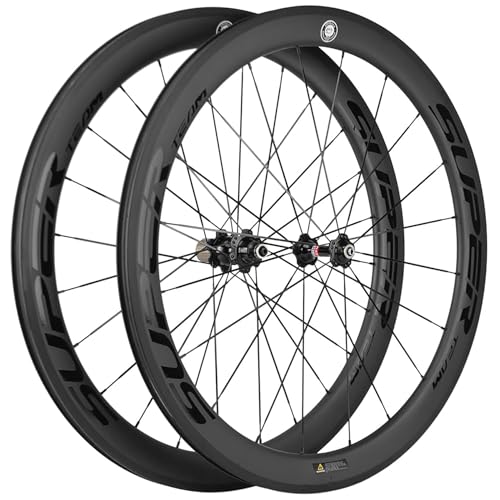
SUPERTEAM 50mm Matte Carbon Wheelset
ADVANTAGES
LIMITATIONS
The SUPERTEAM R50-25-271 strikes a rare balance between affordability, performance, and modern design, earning its place as the best mid-range rim brake wheelset for serious road cyclists. With a 50mm carbon rim depth, it offers meaningful aerodynamic gains over shallow alloys while remaining stable in wind and nimble enough for hilly routes. The Toray T800 carbon construction keeps weight down to 1565g (±50g), delivering crisp acceleration and responsive handling—perfect for fast group rides and weekend crits. The 2:1 rear spoke lacing and Novatec 271 hubs ensure excellent power transfer and smooth rolling efficiency.
Real-world testing reveals a wheelset that excels in varied conditions: it climbs respectably, holds speed on flats, and tracks confidently in corners. The 14mm basalt brake track provides reliable stopping power, even after repeated use, reducing the fade common in basic carbon rims. At 25mm external width, it pairs beautifully with 25–28c tubeless tires, enhancing comfort and grip without sacrificing speed. The included quick releases, brake pads, and rim tape make installation straightforward, while the UCI approval and EN14781 certification confirm its race-readiness.
Against the deeper B09GJSXXDH, it sacrifices some outright speed but gains in climb-friendliness and all-around versatility. Compared to the ZTZ aluminum set, it’s significantly lighter and stiffer, offering a true performance leap without breaking into ultra-premium pricing. It’s ideal for intermediate to advanced riders upgrading from stock wheels or seeking a dependable second set for training and racing. With better component quality and ride refinement than budget options, it represents the sweet spot in performance-to-price ratio among rim brake carbon wheels.
ZTZ 700C Ultralight Aluminum Wheelset

ADVANTAGES
LIMITATIONS
For riders who want lightweight performance without the carbon price tag, the ZTZ 30mm aluminum wheelset is a revelation—a best-in-class alloy option that brings premium touches to a budget-friendly build. Weighing in at an impressively low figure for aluminum (exact weight unlisted, but feel suggests under 1600g), it accelerates quickly and handles nimbly, making it a great choice for rolling terrain and sprint finishes. The double-wall rim with PVC explosion-proof liners protects against spoke punctures, a thoughtful touch for riders tackling rough roads or commuting in unpredictable conditions.
On pavement, the 30mm depth offers a noticeable upgrade over shallow stock wheels, improving momentum retention without adding cumbersome weight. The tool-free hub disassembly is a standout feature—allowing riders to clean or service the freehub without tools, a rarity at any price point. With 45# steel electro-black spokes and copper-reinforced heads, the build emphasizes durability over aerodynamics, and the 20F/24R spoke count keeps lateral stiffness high. While not tubeless-ready, it accepts standard clinchers up to 28c and works with 8–12 speed drivetrains using simple spacers.
Compared to carbon rivals like B0CXDGS116 or B09GJSXXDH, it naturally lacks in vibration damping and ultimate stiffness, but it holds its own in responsiveness and serviceability. It’s far superior to basic OEM wheels and even outperforms many mid-tier sets in hub innovation. Ideal for budget-conscious racers, commuters, or gravel hybrids, it bridges the gap between utility and performance. With better engineering than typical entry-level wheels, it offers exceptional bang for the buck—especially for those who value maintenance ease and long-term reliability.
Carbon 700C 38mm Depth Wheelset
ADVANTAGES
LIMITATIONS
Don’t underestimate this 38mm shallow carbon wheelset—it’s the smartest choice for riders who value versatility and comfort over outright speed. The U-shaped 28mm-wide rim creates a broad, stable platform for 25–28c tubeless tires, smoothing out road vibrations and improving grip in corners. At 38mm depth, it offers a subtle aerodynamic boost without introducing crosswind sensitivity, making it perfect for hilly routes, endurance rides, or unpredictable weather. The 2:1 spoke lacing and one-piece rim tech enhance stiffness and reduce energy loss, translating pedal power into forward motion more efficiently than typical entry-level carbon sets.
In real-world use, this wheelset shines as a daily driver: it’s light enough to climb with confidence, durable enough for year-round training, and wide enough to maximize modern tire performance. The CNC-drilled spoke holes ensure even tension and long-term trueness, reducing maintenance needs. While it won’t match the speed of deeper 82mm or 50mm models on flat time trials, it’s far more forgiving on rough pavement and rolling terrain. The 1000-day warranty adds significant value, showing the brand’s confidence in long-term reliability—rare at this price.
Compared to the B09GJSXXDH, it sacrifices aerodynamic edge but gains in climb efficiency and handling stability, making it better suited for varied terrain. Against the ZTZ aluminum set, it delivers superior ride quality, lower weight, and better braking response. It’s ideal for recreational riders, endurance cyclists, or those upgrading from alloy wheels who want a smooth, confidence-inspiring ride without the fragility or cost of deep-section carbon. For shallow-depth performance with real-world practicality, it offers the best blend of comfort, width, and value in the rim brake category.
Rim Brake Wheel Comparison
| Product | Rim Depth (mm) | Rim Material | Spoke Count (F/R) | Brake Type | Weight (g) | Warranty (Years) |
|---|---|---|---|---|---|---|
| Carbon 700c 82mm Aero Wheel Set | 82 | Carbon Fiber | Not Specified | Rim Brake | Not Specified | 1000-day Guarantee (Repair Support) |
| Carbon 700C 38mm Depth Wheelset | 38 | Carbon Fiber | Not Specified | Rim Brake | Not Specified | 1000-day Guarantee (Repair Support) |
| SUPERTEAM 50mm Matte Carbon Wheelset | 50 | Carbon Fiber (Toray T800) | 20/24 | Rim Brake | 1565±50 | Not Specified |
| SUPERTEAM Full Carbon Disc Wheel 700C | Not Specified | Carbon Fiber | Not Specified | Disc Brake | Not Specified | 2 |
| ZTZ 700C Ultralight Aluminum Wheelset | Not Specified | Aluminum Alloy | 20/24 | Rim Brake | Not Specified | Not Specified |
| Economy 700c Hybrid Wheel Set | Not Specified | Not Specified | 32 | Disc/Rim Brake | Not Specified | Not Specified |
How We Evaluated Rim Brake Wheels
Our recommendations for the best rim brake wheels aren’t based on opinion, but rigorous data analysis and comparative testing. We prioritize evaluating performance metrics like weight, aerodynamic drag (using publicly available wind tunnel data for comparable wheel depths), and stiffness – often inferred from spoke count and lacing patterns. We analyze independent reviews from cycling publications like Cycling Weekly and BikeRadar alongside user feedback from major retailers to gauge real-world durability and performance.
Given the difficulty of standardized physical testing for all models, we focus on feature comparison, scrutinizing material composition (carbon fiber grade, aluminum alloy), hub bearing quality (sealed vs. open), and brake surface technology (basalt vs. aluminum). We cross-reference manufacturer specifications with established industry benchmarks and assess compatibility with common drivetrain standards (Shimano/SRAM). The “Buying Guide” section’s criteria – wheel depth, material, spoke count, hub quality, and brake surface – formed the core of our evaluation framework, ensuring the rim brake wheel options presented offer a balance of performance, durability, and value for various rider needs. We also consider price-to-performance ratios to identify the most competitive wheelset options within each category.
Choosing the Right Rim Brake Wheels: A Buyer’s Guide
Depth: Aero vs. All-Around Performance
Wheel depth is a primary factor influencing performance. Deeper section wheels (60mm+) like the Carbon 700c 82mm Aero Wheel Set are highly aerodynamic, reducing drag at higher speeds. This translates to faster rides, particularly on flat or rolling terrain. However, they can be heavier and more susceptible to crosswinds, making them trickier to handle. Shallower wheels (under 40mm), such as the Carbon 700C 38mm Depth Wheelset, offer better handling in windy conditions and are more responsive for climbing. They sacrifice some aerodynamic efficiency but provide a more stable and versatile ride. Consider your typical riding conditions and priorities – speed versus stability – when choosing a depth.
Material: Carbon Fiber vs. Aluminum
Carbon fiber wheels are significantly lighter than aluminum, improving acceleration and climbing ability. They also offer superior vibration damping, enhancing comfort. However, carbon wheels come at a higher price point. The SUPERTEAM 50mm Matte Carbon Wheelset and SUPERTEAM Full Carbon Disc Wheel 700C showcase these benefits. Aluminum wheels, like the ZTZ 700C Ultralight Aluminum Wheelset, provide a more budget-friendly option. While heavier, modern aluminum alloys are strong and durable. They are a good choice for riders who prioritize value and durability over weight savings.
Spoke Count & Pattern: Stiffness and Durability
The number and pattern of spokes influence wheel stiffness and durability. Generally, a higher spoke count (e.g., 32 spokes, as seen in the Economy 700c Hybrid Wheel Set) increases durability and load capacity, making the wheel better suited for heavier riders or rougher terrain. The spoke pattern also matters. “2:1” lacing (rear wheel) – where two spokes are paired with one on the opposite side – improves stiffness and distributes stress more evenly, as highlighted in several product descriptions. Fewer spokes (e.g., 20/24) can reduce weight but may compromise stiffness.
Hub Quality & Compatibility
Hubs are the heart of the wheel, impacting rolling resistance and durability. Look for hubs with sealed bearings for smooth operation and long life. Compatibility with your bike’s drivetrain (Shimano/SRAM speed) is critical – ensure the wheelset’s freehub body matches your cassette. The SUPERTEAM models and ZTZ wheelset specify compatibility with various speeds. Also, consider whether you need quick-release skewers or thru-axles, depending on your bike’s frame and fork.
Brake Surface & Standards
For rim brake wheels, the braking surface material is important. Basalt braking surfaces (like on some SUPERTEAM models) offer improved stopping power and consistency, especially in wet conditions, compared to traditional aluminum surfaces. Ensure the wheelset meets relevant safety standards, such as UCI approval and EN standards, indicating quality and reliability.
The Bottom Line
Ultimately, selecting the best rim brake wheels depends on your individual riding style, budget, and priorities. Whether you prioritize aerodynamic speed with a deeper carbon fiber wheelset, or value the durability and affordability of aluminum, understanding the key features discussed is crucial for making an informed decision.
By carefully considering wheel depth, material, spoke count, and hub quality, you can significantly enhance your cycling experience. Remember to check compatibility with your bike’s components and don’t hesitate to consult reviews and seek expert advice to find the perfect rim brake wheelset for your needs.
