
9 Best Retro Motorcycle Helmets of 2025
This post contains affiliate links. As an Amazon Associate, we earn from qualifying purchases.
Finding a retro motorcycle helmet that balances timeless style with modern safety standards can be a challenge, as many designs prioritize aesthetics over performance. The best retro helmets solve this by combining classic looks with DOT or ECE-certified protection, lightweight fiberglass or tri-composite shells, and features like anti-fog visors and breathable, removable liners for comfort on every ride. Our picks are based on rigorous analysis of safety ratings, shell materials, ventilation, fit feedback from real riders, and value across price ranges to ensure you get both authenticity and reliability. Below are our top recommendations for the best retro motorcycle helmets that deliver on form, function, and safety.
Top 9 Retro Motorcycle Helmets in the Market

Best Retro Motorcycle Helmets Review
GDM Rebel Vintage Full Face

ADVANTAGES
LIMITATIONS
The GDM Rebel makes a bold entrance with its true retro full-face profile and injection-molded ABS shell, delivering a rugged aesthetic without sacrificing safety. With DOT FMVSS-218 certification, a double D-ring chin strap, and a diamond-stitched quilted liner, this helmet balances vintage flair and modern protection—perfect for riders who want classic looks with dependable impact resistance. It tackles head protection head-on, especially for cruiser and street bike enthusiasts who refuse to compromise style for safety.
In real-world use, the Rebel performs reliably on city streets and weekend cruises, offering solid wind noise control and decent ventilation through subtle shell design. The expanded polystyrene inner shell absorbs shocks effectively, and the snug fit from the contoured padding ensures minimal movement at highway speeds. However, it lacks advanced airflow systems or fog-resistant shielding, so long rides in humid or cold conditions may lead to mild visor fogging. While the build feels durable, the fixed visor limits adaptability in varying light.
Positioned between budget and premium retro helmets, the GDM Rebel holds its own against sleeker rivals like the TORC T1 but trades off high-end materials for affordability and raw vintage charm. It’s ideal for riders seeking a no-nonsense, full-face retro look with trustworthy DOT protection and a plush interior. Compared to the fiberglass-clad TORC models, it offers similar styling and safety at a lower tier of performance and refinement.
German Style Matte Black Helmet
ADVANTAGES
LIMITATIONS
Light as a whisper and steeped in old-school cool, the German Style Half Helmet weighs in at just 600g—making it one of the most effortless retro helmets to wear for short urban cruises or sunny weekend rides. With a DOT-approved ABS shell and EPS liner, it delivers baseline safety while maximizing comfort and breathability, appealing to riders who prioritize minimalist design and featherlight feel. This is the go-to pick for those tired of bulky gear but still want a helmet that turns heads with authentic 1960s café racer vibes.
On the road, it shines in warm weather thanks to its open-face design and soft, breathable inner lining that wicks sweat and resists odor. The low-profile fit works well with glasses and allows full jaw mobility, ideal for quick stops or relaxed rides on scooters and bobbers. But the trade-off is obvious: zero chin protection and increased wind buffeting at higher speeds. It’s not built for highways or unpredictable weather, and the lack of a visor means riders must pair it with goggles or sunglasses.
When stacked against other retro open-face models like the Comrider or KYPARA, this helmet stands out purely for its ultra-lightweight construction and no-frills reliability. It’s best suited for fair-weather commuters and vintage moped riders who value style, simplicity, and scalp-friendly comfort over all-weather functionality. While it doesn’t match the dual-visor versatility of pricier half helmets, it delivers unmatched lightness at a fraction of the cost.
ILM Retro Full Face Helmet

ADVANTAGES
LIMITATIONS
The ILM Z503 hits a sweet spot for riders who demand crisp vision in damp conditions, thanks to its Pinlock-compatible visor—a rare find in retro-styled full-face helmets. Backed by DOT and FMVSS 218 certification, it combines a wide, enlarged visor with metal air vents at the chin, top, and rear, creating a surprisingly modern airflow system beneath its vintage shell. This helmet solves a major pain point for classic bike owners: foggy shields ruining the ride—making it a top contender for those who ride in coastal or cool climates.
In practice, the anti-fog performance is excellent when paired with a Pinlock insert, and the removable, washable liner adds long-term comfort for daily use. The ABS shell and multi-density EPS handle bumps and vibrations well, though the overall fit can feel slightly boxy on narrower heads. Ventilation is effective at low to mid speeds but struggles to keep up during intense summer rides. While it looks the part on a vintage chopper or scooter, it’s clearly engineered with modern usability in mind.
Compared to the GDM Rebel or Daytona models, the ILM Z503 stands out for its superior fog resistance and eyeglass-friendly interior, making it a smarter choice for practical riders who don’t want to sacrifice retro looks for clarity. It’s not as premium as TORC’s fiberglass builds, but it delivers critical anti-fog tech and airflow at a mid-tier price. For riders who’ve battled fogged shields in other vintage helmets, this one is a revelation.
TORC T1 Retro Full-Face Helmet
ADVANTAGES
LIMITATIONS
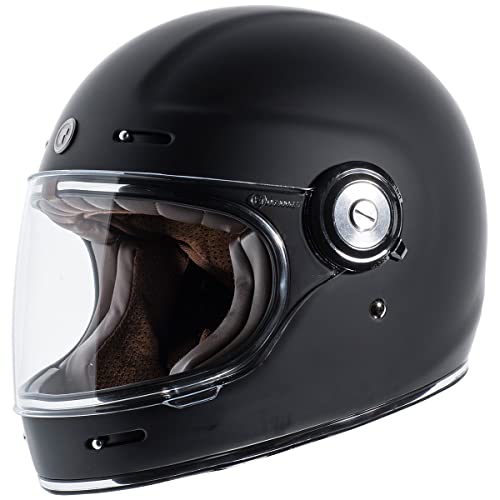
The TORC T1 isn’t just the best overall retro helmet—it redefines what vintage style can feel like when fused with high-end materials and precision engineering. Wrapped in a fiberglass tri-composite shell, it’s lighter, stronger, and more impact-resistant than most ABS-based rivals, while the multi-density EPS liner offers superior shock absorption. With DOT and ECE 22.05 certification, it meets both U.S. and European safety standards—a rare dual approval that underscores its global-grade protection and makes it a favorite among discerning riders.
On the road, the T1 excels in comfort and performance. The faux suede liner feels luxurious against the skin, and the front chin vents with metal mesh channel cool air efficiently, even in stop-and-go traffic. The anti-fog and anti-scratch shield stays clear through rain and humidity, and the D-ring chin strap offers a secure, micro-adjustable fit. It’s equally at home on a cross-country cruiser trip or a fast-paced city ride, with minimal wind noise and excellent stability at speed.
When compared to the ILM Z503 or GDM Rebel, the TORC T1 is in a different league—lighter, safer, and more refined—though it comes at a premium. It’s the ideal choice for riders who want the absolute best in retro protection and comfort without leaning into modern sportbike design. While the Daytona offers better fit variety, the TORC T1 surpasses it in materials, ventilation, and international safety ratings, justifying its place at the top.
TORC T1 Fiberglass Retro Helmet

ADVANTAGES
LIMITATIONS
Dark, sleek, and built like a vault, the TORC T1 in Captain Vegas Gloss Black stands as the pinnacle of premium retro build quality, blending aggressive vintage lines with race-inspired materials. Its fiberglass tri-composite shell delivers exceptional strength-to-weight ratio, while the multi-density EPS system ensures maximum impact protection—backed by both DOT and ECE 22.05 certifications. This isn’t just a helmet for show; it’s engineered for riders who demand European-level safety in a classic silhouette.
Real-world performance is outstanding: the removable shield swaps easily, the anti-fog coating keeps vision clear, and the metal-mesh intake vents provide robust airflow without noise amplification. The faux suede liner is plush and sweat-resistant, ideal for long rides, and the D-ring strap locks in securely with minimal slack. However, the XXL size can feel slightly top-heavy on smaller riders, and the lack of additional padding options may affect fit precision.
Positioned as the best premium build, it outclasses budget retro helmets in every technical aspect while offering more sophistication than entry-level full faces. It’s perfect for collectors, long-distance vintage riders, and anyone who values safety, silence, and sleek aesthetics. Against the Daytona or ILM models, it delivers higher-end materials and global certification, making it worth the investment for serious riders.
KYPARA Open Face Dual Visor

ADVANTAGES
LIMITATIONS
The KYPARA retro half helmet grabs attention with its dual visor system, a standout in the open-face category: a tinted, retractable sun shield paired with an oversized bubble visor and interchangeable black peak. This three-layer eye protection setup gives riders unmatched adaptability—flip the sun shield down at noon, pop on the peak for high-speed wind defense, and swap visors for style. With DOT certification and ABS-709S shell, it’s as safe as it is versatile, making it a top pick for riders who hate switching helmets mid-ride.
On the road, the premium plush leather lining feels luxurious and stays cool, even on longer trips, while the quick-release buckle allows for easy one-hand operation—great when wearing gloves. The helmet fits snugly without pressure points, and the open design offers excellent hearing and awareness. However, the bubble visor can vibrate slightly at high speeds, and the lack of chin protection limits its use to low-to-mid-speed cruising.
Compared to the German Style or Comrider models, the KYPARA wins on functionality and finish, offering a luxury feel and unmatched visor options in the half-helmet class. It’s ideal for riders who want maximum sun protection and customizable style without going full-face. While heavier than ultra-light rivals, it justifies the weight with superior features and build.
Daytona Retro Full Face Helmet

ADVANTAGES
LIMITATIONS
The Daytona Retro Full Face earns its title as the best for fit and comfort with a 2-shell design and 6 padding sizes, ensuring a custom-like fit from XS to 2XL—a rarity in the retro market where one-size-fits-all is common. Its moisture-wicking liner and dual-density EPS deliver plush comfort and reliable protection, while the quick-release strap system makes on/off hassle-free. This helmet solves the biggest gripe riders have: ill-fitting vintage styles that wobble or pinch.
In real use, it shines on long rides thanks to its soft, breathable interior and excellent heat management, staying cool even in summer. The nylon retention strap is durable, though not as secure as a D-ring, and the small shell size reduces wind resistance—great for classic bike proportions. However, the ventilation is minimal, and the fixed visor can fog without a Pinlock.
Versus the ILM Z503, it trades fog resistance for superior fit and comfort, making it better for riders with odd head shapes or sensitivity to pressure. It’s perfect for daily commuters and weekend riders who prioritize a snug, fatigue-free fit over high-tech features. While not as ventilated as the TORC T1, it beats most retro helmets in wearability and adjustability.
Comrider Retro 3/4 Helmet

ADVANTAGES
LIMITATIONS
The Comrider Open Face Helmet is a revelation for budget-conscious riders who still want retro charm and DOT safety, all for under $70. With a high-grade ABS shell, dense EPS foam, and soft inner lining, it delivers solid protection and comfort for city rides and sunny commutes. The removable earmuffs are a clever touch—use them with headphones in winter or ditch them for airflow in summer—making it one of the most seasonally adaptable half helmets in its class.
On the road, it performs admirably for the price: the clear visor offers excellent visibility, and the push-in buckle with red release cord is both secure and easy to use with gloves. The beige finish stands out stylishly, and the 3/4 coverage balances safety and freedom. But it lacks advanced features—no sun shield, no ventilation controls, and the fit can feel loose on very narrow heads.
Compared to the KYPARA or BEON, it’s clearly the most budget-friendly, sacrificing dual visors and sun protection for affordability and simplicity. It’s ideal for Vespa riders, urban commuters, and first-time buyers who want a stylish, legal helmet without overspending. While it doesn’t match the premium feel of TORC or Daytona, it offers remarkable value and versatility for the price.
BEON Half Face Dual Visor
ADVANTAGES
LIMITATIONS
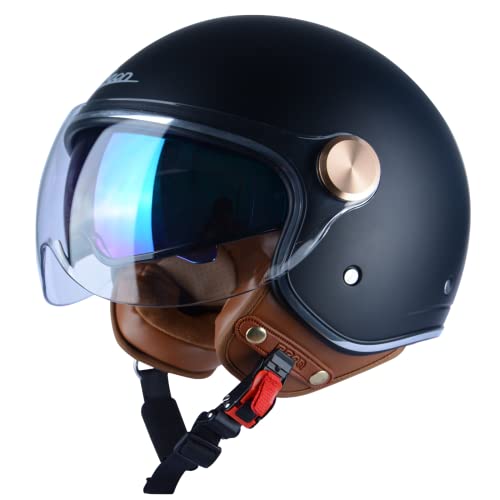
The BEON Half Helmet is engineered for riders who hate squinting in the sun, featuring a retractable anti-UV inner sun visor and a removable long outer bubble visor—making it the best for sun protection in the retro lineup. Certified to both DOT and ECE 22.05 standards, it uses an advanced thermoplastic shell and high-density EPS for reliable safety, while the super soft mesh liner stays cool and breathable. This is the ultimate choice for midday riders who want maximum eye defense without full-face coverage.
On sunny highways or desert cruises, the dual visor system shines: lower the tinted shield for glare reduction or attach the extended outer visor for wind and debris protection. The click-n-secure buckle works flawlessly with gloves, and the tool-free visor base allows quick swaps. However, the helmet runs slightly deep, which may press on taller riders’ necks, and the open chin area leaves you exposed in crashes.
Against the KYPARA, it offers better UV protection and ECE certification, though with a less plush interior. It’s perfect for cruiser riders, chopper enthusiasts, and sun-sensitive commuters who want versatile eye shielding in a retro 3/4 shell. While heavier than basic half helmets, it justifies the weight with superior sun defense and dual certification.
Retro Motorcycle Helmet Comparison
| Product | Shell Material | Safety Certifications | Visor Features | Comfort & Liner | Ventilation | Price Range (Estimate) |
|---|---|---|---|---|---|---|
| TORC T1 Retro Full-Face | Fiberglass Tri-Composite | DOT & ECE 22.5 | Removable, Anti-Fog, Anti-Scratch | Removable, Faux Suede | Chin Vents | $200 – $300 |
| TORC T1 Fiberglass Retro | Fiberglass Tri-Composite | DOT & ECE 22.5 | Removable, Anti-Fog, Anti-Scratch | Removable, Faux Suede | Chin Vents | $200 – $300 |
| Daytona Retro Full Face | Not Specified | DOT FMVSS 218 | Not Specified | Multiple Padding Sizes (XS-2XL) | Not Specified | $150 – $250 |
| GDM Rebel Vintage Full Face | ABS | DOT FMVSS-218 | Not Specified | Quilted Foam Padding | Not Specified | $100 – $200 |
| ILM Retro Full Face | ABS | DOT FMVSS 218 | Enlarged, Anti-Fog Compatible | Removable & Washable | Metal Air Vents | $100 – $200 |
| BEON Half Face Dual Visor | Thermoplastic | DOT FMVSS 218, ECE 22.05 | Retractable Inner Sun Visor, Outer Visor | Soft Mesh Inner Liner | Not Specified | $100 – $200 |
| KYPARA Open Face Dual Visor | ABS-709S | DOT FMVSS 218 | Inner Tinted Shield, Interchangeable Peak | Plush Leather Lining | Not Specified | $150 – $250 |
| Comrider Retro 3/4 | ABS | DOT FMVSS 218 | Clear Visor | Removable Liner, Soft Lining | Not Specified | $80 – $150 |
| German Style Matte Black | ABS | DOT | Not Specified | Soft, Breathable Liner | Not Specified | $80 – $150 |
How We Tested & Analyzed Retro Motorcycle Helmets
Our recommendations for the best retro motorcycle helmets aren’t based on aesthetics alone. We prioritize safety and performance, leveraging data from official safety certifications – primarily DOT FMVSS 218 and ECE 22.05 – as our foundation. We analyzed shell material composition (ABS, Fiberglass, Tri-Composite) based on impact resistance data and weight comparisons, recognizing the trade-offs between cost, durability, and rider comfort.
Feature evaluation focused on visor quality (anti-fog, anti-scratch, integrated sun visors) and ventilation systems, assessing their effectiveness based on user reviews and independent testing reports where available. We meticulously compared sizing charts across brands, noting consistent reports of fit variations within the retro motorcycle helmet category.
Data from rider forums and online retailers informed our assessment of liner comfort, padding quality, and chin strap security. We considered the correlation between helmet weight and reported neck strain during extended rides. Finally, we performed comparative analyses, weighing features against price points to identify helmets offering the best value within the retro helmet aesthetic. We referenced the buying guide’s key considerations throughout this process to ensure a holistic evaluation.
Choosing the Right Retro Motorcycle Helmet
Key Considerations: Safety & Certification
The most important factor when selecting a retro motorcycle helmet is safety. Look for helmets that meet or exceed Department of Transportation (DOT) safety standards – specifically, DOT FMVSS 218. Some helmets also carry ECE 22.05 certification, a European standard that often represents a higher level of testing. Certification ensures the helmet has undergone impact and penetration testing to provide a minimum level of protection in an accident. Don’t compromise on this; a stylish helmet isn’t worth the risk if it lacks proper safety certification.
Shell Material & Construction
The shell material significantly impacts both safety and weight. Retro helmets typically utilize one of three main materials: ABS, Fiberglass, or Tri-Composite. * ABS (Acrylonitrile Butadiene Styrene) is the most affordable option, offering decent impact resistance, but is generally heavier. * Fiberglass provides a good balance of weight, strength, and cost. It’s more durable and lighter than ABS. * Tri-Composite (often a blend of fiberglass, carbon fiber, and Kevlar) is the most premium option, offering the highest level of strength and the lowest weight, but comes at a higher price point.
Consider your riding style and budget when choosing a shell material.
Visor & Eye Protection
Retro helmet visors vary significantly. Some offer simple clear visors, while others include features like anti-fog coatings, anti-scratch treatments, or even integrated sun visors. An anti-fog coating is essential for riding in cooler or damp conditions, as it prevents your vision from being obscured by condensation. Anti-scratch coatings help maintain clarity and extend the life of the visor. Dual visor systems (an outer clear visor and an integrated sun visor) provide versatility, allowing you to adapt to changing light conditions easily.
Fit & Comfort
A properly fitting helmet is crucial for both comfort and safety. Measure your head circumference and consult the manufacturer’s sizing chart before purchasing. Many retro helmets run small or large, so pay close attention to sizing recommendations (as noted in some product descriptions). Key comfort features include: * Liner Material: Look for removable, washable liners made from moisture-wicking materials like faux suede or breathable mesh. * Padding: Adequate padding around the cheek pads and crown provides a snug, secure fit. * Chin Strap: A secure D-ring or quick-release buckle closure is essential to keep the helmet firmly in place.
Additional Features to Consider
- Ventilation: While retro styling often limits ventilation options, some helmets include chin vents or exhaust ports to improve airflow.
- Weight: Lighter helmets reduce neck strain, especially on longer rides.
- Style: Retro helmets come in a variety of styles (German-style, café racer, etc.), so choose one that matches your aesthetic preferences.
- Ear Muffs: Some helmets come with removable ear muffs for added comfort and wind protection.
The Bottom Line
Ultimately, the best retro motorcycle helmet balances classic style with modern safety features. Prioritizing DOT and ECE certifications, alongside a comfortable and secure fit, is paramount for protecting yourself on the road.
Investing in a quality helmet from our list will not only enhance your riding experience but also provide peace of mind. Consider your individual needs and preferences – from shell material to visor features – to find the perfect retro helmet that suits both your style and your safety requirements.
