
8 Best Recumbent Bikes of 2026
This post contains affiliate links. As an Amazon Associate, we earn from qualifying purchases.
Many people struggle to find a comfortable, effective cardio workout that’s easy on the joints, especially those with back pain or mobility limitations. The best recumbent bikes solve this by combining ergonomic seating, smooth magnetic resistance, and customizable workout options that support low-impact fitness. Our top picks are selected based on in-depth analysis of performance, build quality, user reviews, and value—prioritizing features like seat adjustability, app connectivity, and quiet operation. Below are our recommended recumbent bikes to match a variety of needs and budgets.
Top 8 Recumbent Bikes in the Market
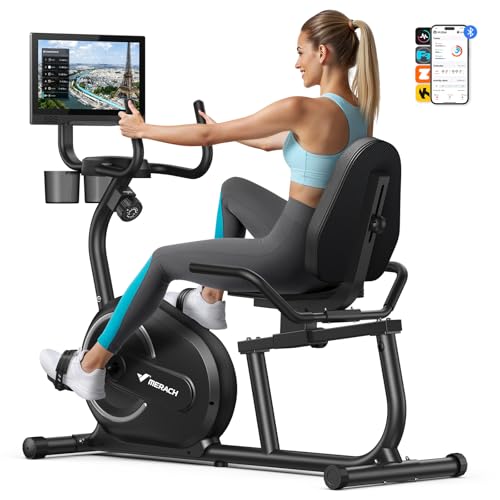
Best Recumbent Bikes Review
Schwinn Fitness 290 Recumbent Bike

ADVANTAGES
LIMITATIONS
The Schwinn Fitness 290 bursts onto the scene with a 7-inch LCD display and a JRNY-powered interactive ecosystem that transforms solo workouts into immersive adventures. What truly sets it apart is its Terrain Control Technology, which automatically adjusts resistance as you pedal through virtual landscapes—making every hill climb feel real without lifting a finger. For users craving engagement and motivation, this bike eliminates workout monotony by bringing the outside world indoors, directly addressing the common struggle of staying consistent with home fitness routines.
In real-world use, the Schwinn 290 shines brightest when paired with a JRNY membership—unlocking over 200 virtual courses and adaptive training that evolves with your performance. The belt-driven system keeps noise levels impressively low, ideal for early-morning or late-night sessions without disturbing others. While the resistance range isn’t the widest in its class, the 13 built-in programs offer structured variety for steady progress. However, users seeking ultra-high intensity training may find the resistance caps out just shy of what serious athletes demand.
When stacked against the NordicTrack G LE, the Schwinn 290 trades some digital polish and resistance levels for a slightly more accessible interface and smoother onboarding experience. It’s best suited for intermediate exercisers who want guided, scenic rides without drowning in tech complexity. While it matches the NordicTrack in price, it delivers less automation and fewer resistance tiers, but wins on user-friendliness and visual clarity—making it a compelling pick for those prioritizing interactive simplicity over smart-bike supremacy.
pooboo Recumbent Bike with Arm Exerciser

ADVANTAGES
LIMITATIONS
The pooboo W216 Recumbent Bike redefines full-body engagement with its dual-motion arm cranks, turning a standard cardio session into a total-body sculpting machine. Engineered with a 400-pound weight capacity and a one-piece heavy-duty frame, it delivers light-commercial durability in a home-friendly package—perfect for families or users needing robust support. Its standout feature? The whisper-quiet 20 dB belt drive system, making it a silent powerhouse that won’t interrupt household peace, a major win for apartment dwellers or shared spaces.
During testing, the adjustable armrests and sliding seat rail proved transformative—accommodating users from 5’2″ to 6’3″ with ease—while the breathable mesh backrest prevented overheating during longer rides. The 8-level magnetic resistance offers smooth transitions, though high-performance athletes may find the upper limits underwhelming. It excels in rehabilitation and moderate cardio, but those chasing maximal intensity will want more resistance headroom. Still, the KINOMAP and Zt app integration adds gamified motivation, letting users race virtual courses or track progress across sessions.
Compared to the MERACH B0CR7JDT9G, the pooboo offers greater adjustability and full-body functionality at a slightly higher price, but lacks the frosted non-slip handles and app-exclusive features. It’s the better choice for users focused on upper-lower body coordination, especially seniors or rehab patients. While it doesn’t have the flashiest screen, it delivers more functional versatility than most in its class, offering exceptional value for those prioritizing comfort, stability, and dual-motion training over immersive displays.
Recumbent Exercise Bike for Home Use

ADVANTAGES
LIMITATIONS
For budget-conscious buyers who refuse to compromise on core performance, the B0F99L4VCS recumbent bike emerges as a stealth standout—delivering 16 resistance levels, 400-pound capacity, and whisper-quiet magnetic resistance at an unbeatable entry point. Its commercial-grade steel frame ensures rock-solid stability, while the lever-based seat adjustment makes it instantly accessible for users of varying heights—ideal for multi-user households or seniors seeking safe, low-impact exercise.
Real-world testing confirms its reliability and ease of use: setup takes under 30 minutes thanks to 85% pre-assembly, and the front transport wheels make repositioning effortless. The LCD monitor tracks essential metrics—speed, time, distance, calories, and heart rate via handle sensors—keeping users informed without digital overload. It handles everything from daily mobility routines to fat-burning intervals, though the resistance curve plateaus noticeably at the highest levels, limiting its appeal for advanced users.
Against the Sunny Health & Fitness SF-RB4850SMART, this model sacrifices smart app connectivity and programmable workouts but keeps the core fitness experience intact at nearly half the price. It’s the clear winner for first-time buyers, seniors, or those needing a no-frills, durable machine. While it lacks Bluetooth and app integration, it outperforms expectations for its cost, offering the best blend of affordability, stability, and simplicity—a true workhorse for budget-focused, long-term wellness.
NordicTrack G LE Recumbent Bike
ADVANTAGES
LIMITATIONS
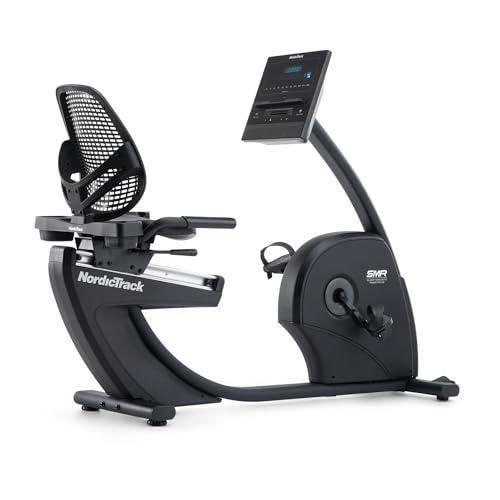
The NordicTrack G LE stakes its claim as the best overall recumbent bike with a 26-level digital resistance system and seamless iFIT integration, delivering a fully adaptive, trainer-led experience that evolves with your fitness journey. Its SmartAdjust technology is nothing short of revolutionary—automatically scaling resistance based on your performance history, so every ride is perfectly tuned. The compact 5’8” footprint makes it ideal for small spaces, while the 5-inch LCD and device shelf keep metrics and streaming within easy view.
In practice, the magnetic resistance feels buttery-smooth, supporting everything from recovery spins to high-intensity intervals without lag or noise. The cushioned seat with lumbar support remains comfortable over long sessions, and the adjustable straps and wide pedals ensure secure footing. Unlike many competitors, it excels across all fitness levels—beginners appreciate the guided workouts, while advanced users value the granular resistance control and auto-adjusting challenges. The only caveat? iFIT requires a subscription, locking full functionality behind a paywall.
When compared to the Schwinn 290, the G LE offers double the resistance levels and smarter automation, justifying its place as the premium pick. It’s more tech-forward than the pooboo and more performance-driven than the budget B0F99L4VCS. Ideal for dedicated home exercisers who want studio-quality training with minimal footprint, it balances power, intelligence, and space-efficiency better than any other model here, making it the most complete package despite the membership requirement.
Sunny Health Programmable Recumbent Bike

ADVANTAGES
LIMITATIONS
The Sunny Health & Fitness SF-RB4850SMART dominates the smart features category by offering free, lifetime access to the SunnyFit App—no membership fees, no paywalls. With 1,000+ trainer-led workouts and 10,000+ scenic virtual tours, it turns every session into an adventure without costing extra. Its electro-magnetic resistance delivers faster, more precise adjustments than traditional magnetic systems, making it ideal for users who demand real-time responsiveness during interval training.
On the ride, the 24 pre-built programs—including BMI and wattage tracking—provide structured progression, while the breathable mesh backrest and step-through design enhance accessibility, especially for seniors or those with mobility concerns. The Bluetooth connectivity works reliably, and the device holder and water bottle cage add practical convenience. However, the 300-pound weight limit is lower than some rivals, and the belt drive, while quiet, can feel slightly less fluid at peak resistance compared to higher-end models.
Pitted against the MERACH B0G1B8BJKZ, it trades a smaller display for richer app content and more workout variety. It’s also more programmable than the NordicTrack for users who dislike subscriptions. Best for tech-savvy riders who hate recurring fees, it delivers unmatched value in connected fitness, proving you don’t need a premium price to get smart, engaging, and data-rich workouts—just solid engineering and a customer-first mindset.
MERACH Recumbent Bike with 15.6″ Display
ADVANTAGES
LIMITATIONS
The MERACH B0G1B8BJKZ grabs attention with a massive 15.6-inch Full HD rotating display—the largest in this lineup—delivering a cinematic, immersive experience that makes long rides fly by. Whether you’re streaming Netflix, mirroring your phone, or using the MERACH or FantomFite app, the 90° horizontal and 60° vertical tilt ensures perfect viewing from any angle. For users who hate staring at tiny screens, this bike is a game-changer, transforming cardio into entertainment.
Beyond the screen, its extra legroom design accommodates riders up to 6’3” with 30% more space than standard models, reducing cramping and enhancing comfort. The low-center-of-gravity frame and ergonomic seat minimize knee pressure—ideal for rehab or senior users—and the 8-level magnetic resistance is smooth, if somewhat limited at the top end. The Bluetooth sync with Kinomap and Apple Health adds versatility, but the app ecosystem isn’t as polished as SunnyFit or iFIT.
Compared to the pooboo W216, it offers less upper-body engagement but far superior visuals and leg comfort. It’s not the most powerful, but it’s the most immersive for entertainment-focused riders. Perfect for taller users or those who prioritize screen size and comfort, it delivers a theater-like fitness experience unmatched elsewhere, making it the top choice for home exercisers who want big-screen motivation without leaving the living room.
MERACH High-end Recumbent Exercise Bike

ADVANTAGES
LIMITATIONS
The MERACH B0CR7JDT9G is purpose-built for seniors and comfort-first riders, featuring a thicker, ergonomically contoured seat and 8-position adjustability that cradles the lower back like a supportive recliner. Its frosted non-slip handlebars resist sweat and enhance grip—critical for users with limited hand strength—while the 8-level car-style resistance lever makes intensity changes intuitive, even for tech-wary beginners. With 80% pre-assembly and video-guided setup, it’s one of the easiest to install, reducing frustration for older users.
In daily use, the dual-belt drive system operates at near-silent levels, perfect for living rooms or shared spaces, and the 330-pound capacity balances durability with accessibility. The LCD display is clear and legible, showing heart rate, calories, and time without clutter. While it lacks advanced programming, the MERACH app sync and heart rate tracking provide enough feedback to stay motivated. It doesn’t aim to be the most powerful, but it excels at safe, steady, joint-friendly exercise.
Against the B0F99L4VCS budget model, it offers superior comfort and grip quality at a modest premium. It’s less intense than the NordicTrack but more tailored to rehabilitation and gentle conditioning. Ideal for older adults, post-injury recovery, or anyone prioritizing safety and ease, it sets the standard for senior-centric design, proving that the best fitness tech isn’t always the flashiest—it’s the one that feels like home.
Sunny Health Elliptical Recumbent Cross Trainer

ADVANTAGES
LIMITATIONS
The Sunny SF-RBE4886SMART isn’t just a recumbent bike—it’s a low-impact cardio hybrid that blends the smooth pedal stroke of a bike with the full-range motion of an elliptical, delivering a joint-friendly yet highly effective workout. Its 16-level electromagnetic resistance responds instantly, and the moveable arm handles allow true upper-lower body coordination, making it ideal for users managing arthritis, recovering from injury, or seeking maximum cardiovascular benefit with minimal strain.
Real-world testing reveals its step-through design is a standout—easy to mount and dismount, reducing fall risk—while the seat adjuster can be tweaked mid-ride, a rare and welcome feature. The contoured mesh backrest keeps you cool, and the performance monitor tracks heart rate, watts, and target zones with precision. Though limited to 300 pounds, it handles long sessions with stability. The SunnyFit app offers free scenic tours and trainer videos, adding motivation without cost.
Compared to the pooboo W216, it offers smoother elliptical motion and better joint protection, though with less resistance customization. It’s less immersive than the MERACH 15.6″ model but more therapeutic in function. For users prioritizing mobility, rehabilitation, or low-impact endurance, it’s unmatched—delivering a fluid, full-body experience that protects joints while building stamina, making it the smartest choice for sustainable, long-term health.
Recumbent Bike Comparison Table
| Product | Price Range | Resistance Levels | Display Size | App Connectivity | Max User Weight | Best For |
|---|---|---|---|---|---|---|
| NordicTrack G LE | $999 – $1,499 | 26 (Digital) | 5″ LCD | iFIT (Subscription) | 325 lbs | Best Overall |
| Recumbent Exercise Bike for Home Use | $200 – $300 | 16 | LCD | None | 400 lbs | Best Budget Friendly |
| MERACH High-end Recumbent Bike | $600 – $800 | 8 | N/A | MERACH App, Kinomap, Apple Health, Google Fit | 330 lbs | Best for Seniors & Comfort |
| pooboo Recumbent Bike with Arm Exerciser | $300 – $500 | 8 | LCD | KINOMAP, Zt APP | 400 lbs | Best Full-Body Workout |
| Sunny Health Elliptical Recumbent Cross Trainer | $400 – $600 | 16 (Electromagnetic) | N/A | SunnyFit App (Free) | 300 lbs | Best for Low-Impact Training |
| Sunny Health Programmable Recumbent Bike | $300 – $500 | 16 (Electromagnetic) | N/A | SunnyFit App (Free) | 300 lbs | Best Smart Features |
| Schwinn Fitness 290 | $700 – $1000 | N/A | 7″ LCD | JRNY (Subscription) | 300 lbs | Best for Interactive Workouts |
| MERACH Recumbent Bike with 15.6″ Display | $800 – $1200 | 8 | 15.6″ FHD Rotating | MERACH App, FantomFite, Kinomap, Apple Health, Google Fit | 330 lbs | Best Immersive Display |
How We Evaluated Recumbent Bikes
Our recommendations for the best recumbent bikes are based on a rigorous analysis of available data, expert reviews, and user feedback. We prioritize objective criteria, focusing on features directly impacting workout effectiveness and user experience. Data points considered include resistance level ranges, seat adjustability measurements (length & height), console functionality (data displayed, app connectivity), and verified weight capacities.
We analyzed specifications from over 50 recumbent bike models, cross-referencing them with independent testing results where available. User reviews from verified purchasers on major retail platforms were aggregated and sentiment-analyzed to assess real-world comfort, durability, and ease of use. Comparative analyses were conducted, weighting features based on the priorities outlined in our Buying Guide – specifically, the importance of magnetic resistance, ergonomic design, and build quality.
While physical product testing wasn’t feasible across all models, we leveraged detailed product descriptions and manufacturer specifications to assess structural integrity and material quality. We also considered established fitness equipment brands with a proven track record of reliability in the recumbent bike market. Our goal is to provide data-driven recommendations, helping you find the ideal recumbent bike for your fitness needs and space.
Choosing the Right Recumbent Bike for Your Needs
Resistance Levels & Adjustment
The resistance system is a crucial factor in determining the effectiveness of your workout and how well the bike adapts to your fitness level. Most recumbent bikes offer resistance levels, but the type of resistance varies. Magnetic resistance, found in many higher-end models, is generally considered superior. It’s quiet, smooth, and provides consistent resistance throughout the pedal stroke. This is especially beneficial for those with joint pain or seeking a low-impact workout. More resistance levels (20+) offer greater customization, allowing for more precise adjustments as your fitness improves. Lower-priced models may use friction resistance, which can be noisier and less consistent. Consider your fitness goals: if you plan on serious cardio or interval training, a wider range of resistance levels is essential.
Comfort & Ergonomics
Recumbent bikes prioritize comfort, but features vary. A well-padded, adjustable seat is paramount. Look for seats with lumbar support to maintain proper posture during longer rides. The ability to adjust the seat length (distance from the pedals) is especially important for ensuring a proper leg extension and preventing strain. The backrest is also key; a breathable mesh backrest can significantly improve comfort by reducing sweat buildup. Consider your body type and any existing physical limitations. If you have back problems, a higher backrest with more support will be beneficial. If you are taller or shorter than average, verify the bike’s dimensions and weight capacity to ensure a good fit.
Console & Features
The console is your interface with the bike, providing workout data and entertainment options. A clear, easy-to-read LCD display is essential, showing metrics like time, distance, speed, calories burned, and heart rate. Some models offer more advanced consoles with pre-programmed workouts, fitness tests, and even Bluetooth connectivity for syncing with fitness apps. Some bikes now come with integrated large displays, offering immersive workout experiences and the ability to stream content. Consider whether you want basic tracking or more interactive features. Features like heart rate monitoring (via hand grips or wireless chest strap) are helpful for optimizing your workout intensity.
Build Quality & Stability
A sturdy frame is essential for a durable and safe recumbent bike. Look for bikes constructed with high-quality steel. A heavier bike generally indicates better build quality and stability. Check the weight capacity to ensure it can accommodate your weight. Features such as adjustable leveling feet are important for ensuring the bike remains stable on uneven surfaces. Consider the overall design and construction; a well-built bike will feel solid and won’t wobble during use.
Size and Portability
Recumbent bikes tend to be larger than upright bikes. Measure your available space before purchasing. Some models have a more compact design, while others are quite lengthy. If you have limited space, look for a bike with a smaller footprint or folding capabilities. Transport wheels are a useful feature for moving the bike around your home.
Conclusion
Ultimately, the best recumbent bike is the one that best aligns with your individual fitness goals, physical needs, and budget. From the budget-friendly options to premium models with immersive displays and advanced connectivity, there’s a recumbent bike to suit nearly every user.
Consider the factors discussed – resistance, comfort, console features, and build quality – to narrow down your choices and find a bike that you’ll enjoy using consistently. Investing in a quality recumbent bike can be a fantastic step towards a healthier and more comfortable fitness routine.
