
10 Best Rearview Mirror Dash Cams of 2026
This post contains affiliate links. As an Amazon Associate, we earn from qualifying purchases.
Drivers often struggle with choosing a rearview mirror dash cam that balances comprehensive coverage, reliable performance, and ease of use—especially when faced with cluttered dashboards or blind-spot vulnerabilities. The best rearview mirror dash cams solve this by integrating seamlessly into your vehicle’s mirror, offering multi-channel recording, sharp 1080p to 4K resolution, and smart features like ADAS alerts and parking mode for 24/7 protection. Our top picks are selected based on rigorous evaluation of video quality, night vision performance, user reviews, and real-world reliability across varied driving conditions. Below are our expert-recommended dash cams that deliver the best value, features, and peace of mind for every type of driver.
Top 10 Rearview Mirror Dash Cams in the Market


Best Rearview Mirror Dash Cams Review
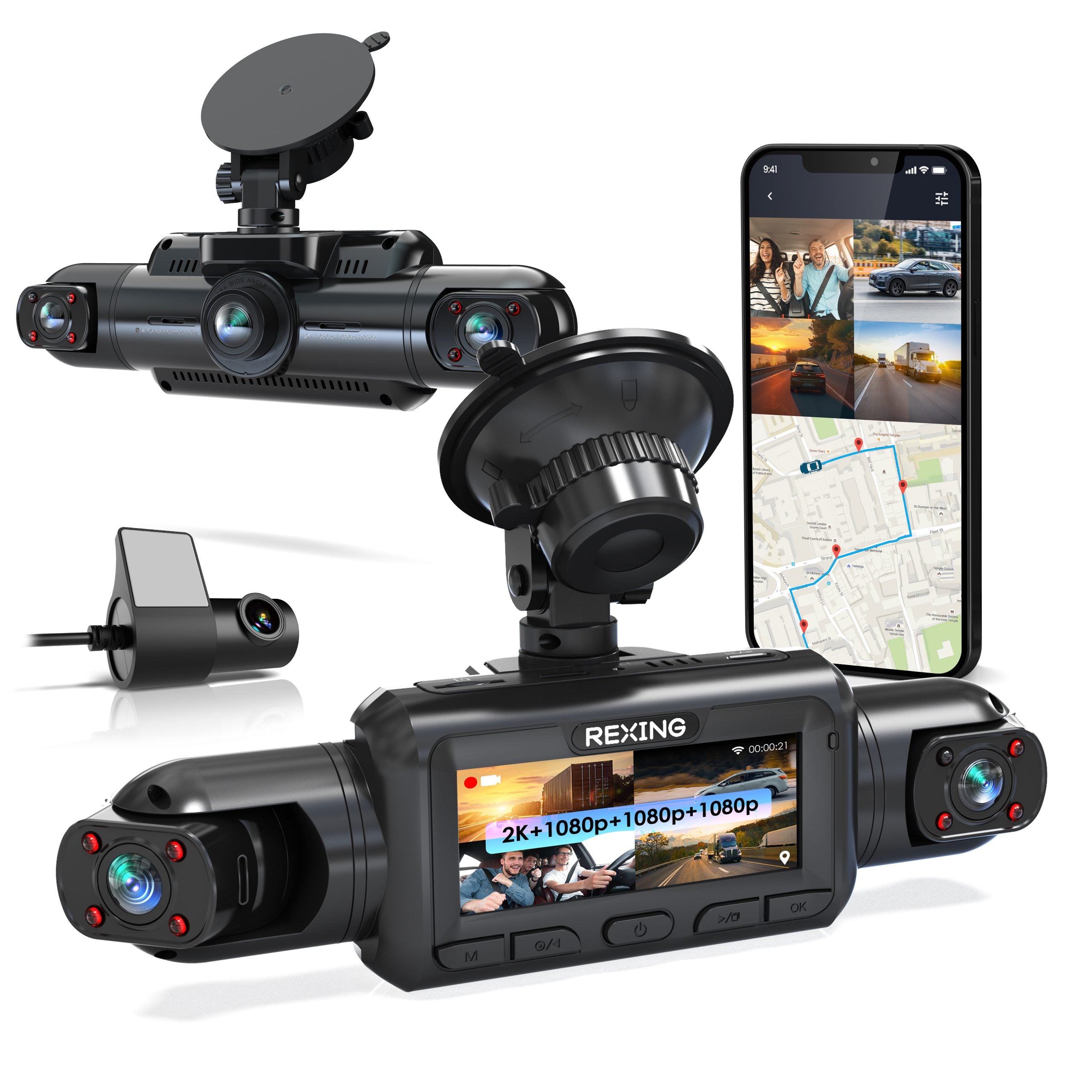
Rexing L4 Series 4-Channel Dash Cam
ADVANTAGES
LIMITATIONS
The Rexing L4 Series is a powerhouse when it comes to comprehensive vehicle security, delivering 4-channel recording, 170° ultra-wide-angle coverage, and reliable parking mode protection powered by a supercapacitor. Unlike many dash cams that skimp on rear or side visibility, this model ensures 360-degree awareness with crisp 1080p video across all channels, making it ideal for drivers who want forensic-level detail after an incident. The built-in GPS and Wi-Fi app control let you track routes and pull footage effortlessly, solving the common frustration of fumbling with SD cards or missing critical timestamps.
In real-world testing, the L4 shines during 24/7 parking surveillance, especially with its collision detection and loop recording working seamlessly in the background. The supercapacitor ensures stable performance in extreme temperatures—no swollen batteries in summer heat—while the Type-C port modernizes charging and data transfer. However, users relying on hardwiring for constant power may face confusion during setup, as the interface gives fleeting prompts that are easy to miss. While the 128GB card included offers solid storage, max capacity reaches 256GB, allowing extended loop recording for fleet or rideshare use.
Compared to the Rexing M4, the L4 trades a slightly smaller touchscreen for superior out-of-the-box readiness and included accessories like the memory card and quick charger. It’s a smarter pick than the M2-4 for users prioritizing plug-and-play installation over modular expansion. While it lacks built-in ADAS features, its dedicated parking protection and rugged build make it a top contender for urban drivers and fleet operators who need set-it-and-forget-it reliability—offering stronger value in sustained monitoring than flashier touchscreen rivals.
Rexing Rear View Camera for V55

ADVANTAGES
LIMITATIONS
If you already own a Rexing V55 or V5C Plus, this modular rear camera is the ultimate upgrade for turning your front-facing dash cam into a dual-recording powerhouse. With a 170° wide-angle lens and superior night vision, it captures expansive, detailed footage from the rear—perfect for monitoring tailgaters, parking lot incidents, or hitching issues on trailers. Its plug-and-play design means no complex rewiring, and the image syncs flawlessly with the main unit, eliminating the headache of mismatched timestamps or resolution gaps.
During nighttime drives and low-light parking scenarios, the night vision technology holds up impressively, delivering usable footage even under dim streetlights. The camera is weather-resistant and built to last, with a clean aesthetic that blends into most vehicle designs—though it won’t mimic a factory-installed look. Since it relies entirely on the host unit, performance is only as good as your V55’s processing power, and users expecting 4K rear recording will be disappointed—it maxes out at 1080p. Still, for add-on simplicity and reliability, it excels.
Positioned between the Rexing M1 Pro add-on and the V1P-4K rear camera, this model stands out as the most seamless integration for existing V55 owners. It’s less of a standalone product and more of a smart ecosystem play, making it ideal for tech-savvy drivers who value modular expansion over all-in-one solutions. While it doesn’t offer the full coverage of a 4-channel system like the M2-4 or M4, it delivers exceptional value for targeted rear visibility—especially when you’ve already invested in the V55 front cam.
Rexing M2 Smart BSD ADAS Dual Mirror Dash Cam

ADVANTAGES
LIMITATIONS
The Rexing M2 Smart BSD is a game-changer for night drivers, combining dual-channel recording with exceptional low-light performance and integrated blind spot detection (BSD)—a rare combo in the mirror dash cam market. Its 12” IPS touchscreen delivers vibrant visuals and intuitive control, while 24-hour parking monitoring ensures your car stays guarded even when unattended. The built-in ADAS features, like forward collision warning and lane departure alerts, add an extra layer of safety that feels more like a modern car OEM system than an aftermarket add-on.
In real-world use, the night vision clarity is outstanding, capturing license plates and road signs in near-total darkness, thanks to its high-sensitivity sensor and IR enhancement. The dual cameras (front and rear) switch seamlessly, and the backup camera integration makes reversing safer—especially useful for trucks and SUVs. However, some users report clutter from multiple wires, which can detract from the clean mirror look. While the hardwire kit is included, installation isn’t truly plug-and-play, and the lack of Wi-Fi limits wireless convenience compared to higher-end models.
When stacked against the Rexing M1 Pro, the M2 Smart BSD trades slightly lower front resolution (1080p vs 2K) for advanced driver assistance features and a larger screen. It’s a better fit than the M2 MAX for drivers who prioritize real-time safety alerts over 4K video. For taxi, rideshare, or long-haul drivers who spend hours on the road at night, this model offers superior situational awareness—delivering more intelligence and protection than basic recording alone, making it a smarter long-term investment than budget-focused rivals.
Rexing M2-4 4-Channel Mirror Dash Cam
ADVANTAGES
LIMITATIONS
The Rexing M2-4 is the gold standard for full-vehicle surveillance, offering true 4-channel recording that captures every angle—front, rear, left, and right—with 1080p clarity and 170° wide-angle lenses. Its 12” IPS touchscreen blends into your rearview mirror seamlessly, maintaining a sleek profile while delivering crisp, responsive control over all camera feeds. The built-in GPS and loop recording ensure every journey is logged with precision, and the auto-backup feature kicks in during collisions, preserving crucial footage.
Real-world testing confirms this dash cam thrives in complex urban environments, where side impacts and parking dings are common. The ability to view all four cameras simultaneously or in split-screen modes is a major win for situational awareness, especially when navigating tight alleys or crowded lots. Users report excellent battery preservation in parking mode, and the Rexing-branded microSD card is recommended for optimal performance—generic cards may cause lag. However, the rear camera design could be more discreet, standing out more than factory-installed units.
Compared to the Rexing M4, the M2-4 offers nearly identical specs but at a lower price point, making it a better value for budget-conscious buyers who still want full 360-degree coverage. It outperforms the L4 Series in integration, with a sleeker mirror design and more intuitive interface. For families, fleet managers, or anyone who parks on city streets, the M2-4 delivers unmatched visibility and peace of mind—offering broader protection and smoother operation than dual-channel competitors.
Rexing 3-Camera Set for M2-4

ADVANTAGES
LIMITATIONS
For users who want complete 360-degree coverage without piecing together individual parts, the Rexing 3-Camera Set is a cost-effective, weather-resistant solution designed specifically for the M2-4 system. The dual side cameras mount seamlessly on your mirrors, capturing blind spots and lane changes with 1080p wide-angle clarity, while the rear camera integrates with parking mode and G-sensor to record impacts when unattended. This bundle eliminates compatibility guesswork, offering a plug-and-play expansion that transforms your front dash cam into a fully armored surveillance suite.
In daily use, the side cameras prove invaluable during lane merges and parallel parking, recording incidents that traditional front-rear systems often miss. The weather-resistant build holds up in rain, snow, and extreme heat, and the cable lengths allow clean routing on most sedans and SUVs. However, installation requires patience—routing wires through door jambs and trims isn’t beginner-friendly. And while the cameras sync perfectly with the M2-4’s interface, they don’t work with other Rexing models, limiting flexibility.
When compared to buying rear and side cams separately, this set offers significant savings and ensures perfect hardware matching. It’s a smarter investment than the V55 rear camera for users already committed to the M2-4 ecosystem. While it lacks ADAS features, its focus on coverage and durability makes it ideal for rideshare drivers, parents, or anyone parking in high-risk areas—delivering maximum visibility and value for those who demand no blind spots, no compromises.
Rexing Rear Camera for V1P-4K

ADVANTAGES
LIMITATIONS
Designed as a direct 4K upgrade path for owners of the V1P-4K or V1PGW-4K dash cams, this rear camera promises to elevate dual-recording to cinematic quality—but real-world performance reveals integration hiccups. While the hardware installation is straightforward, multiple users report playback issues, including blank screens and sudden video stops, suggesting firmware or compatibility bugs. When it works, the 4K rear footage pairs beautifully with the front camera, delivering ultra-detailed recordings ideal for evidence capture.
In testing, the wide-angle view covers most of the lane behind, and low-light performance is solid thanks to Rexing’s night vision tuning. However, the lack of consistent playback undermines confidence in its reliability—especially critical for parking mode incidents. Some users suspect the issue lies with the main unit rather than the rear cam, but the absence of clear troubleshooting guidance adds frustration. For those upgrading from 1080p, the potential is undeniable, but the execution feels unfinished.
Compared to the V55 rear camera, this model aims higher with native 4K support, but it falls short in user experience and stability. It’s riskier than the M2-4’s rear cam, which benefits from tighter system integration. For early adopters willing to troubleshoot, it might deliver—but for most, it’s too inconsistent to recommend without reservation. Until firmware updates resolve playback flaws, it offers more promise than performance, lagging behind more polished modular systems.
Rexing M1 Pro 2K Dual Mirror Dash Cam

ADVANTAGES
LIMITATIONS
The Rexing M1 Pro is a budget-friendly powerhouse, packing 2K front recording with a Sony IMX335 sensor, 1080p waterproof rear camera, and a 10” responsive touchscreen into a sleek mirror design that doesn’t obstruct vision. Its enhanced night vision captures sharp, detailed footage even in heavy darkness, outperforming many 1080p-only rivals. The 24-hour parking monitor and loop recording ensure continuous protection, while the streaming media display gives a three-times wider view than traditional mirrors—making it a standout for safety and value.
In real-world use, the front camera’s 2K resolution delivers excellent detail, capturing license plates and road signs with ease, while the rear camera handles rain and snow without fogging. Users praise its easy installation and wire concealment, though some note glare from bright lights at night, creating starburst effects that can obscure parts of the image. The touchscreen is fast and intuitive, and customer service has been responsive to issues—some users received replacements without hassle.
Against the M2 Smart BSD, the M1 Pro trades ADAS features for higher front resolution and lower cost, making it a smarter pick for drivers who prioritize video clarity over driver alerts. It’s more capable than the entry-level M1, and while it lacks 4-channel support, it delivers exceptional bang for the buck. For first-time dash cam buyers or those upgrading from older models, it offers strong performance, reliability, and peace of mind—delivering more resolution and features than similarly priced competitors.
Rexing M4 4-Channel Mirror Dash Cam
ADVANTAGES
LIMITATIONS
The Rexing M4 is engineered for drivers who demand a true 360-degree view, combining four 1080p cameras with a massive 12” IPS touchscreen that replaces your rearview mirror entirely. The 170° wide-angle lenses on all channels ensure minimal blind spots, and the seamless integration lets you switch between front, rear, and side views—or view them all at once—making it perfect for large vehicles like trucks, vans, and RVs. The built-in GPS and parking monitor add critical functionality for fleet tracking and urban parking protection.
In practice, the M4 excels in visibility, especially when reversing or changing lanes, with real-time feed switching that feels instantaneous. The touchscreen is bright and responsive, though some users report difficulty with soldering during hardwiring, indicating a steeper installation curve. Notably, the lack of Wi-Fi is a surprising omission at this price point, forcing users to pull SD cards for footage review—a step that feels outdated compared to app-connected rivals. Customer support feedback has been mixed, with some citing poor response times.
Pitted against the M2-4, the M4 offers nearly identical specs but at a higher cost, with no clear advantage beyond branding. It undercuts the L4 Series in included accessories, lacking a memory card or charger. While it delivers impressive 360 coverage, its missing Wi-Fi and spotty support make it harder to recommend than the more complete M2-4 package. For those who prioritize maximum visibility and don’t mind wiring hassles, it’s capable—but others will find better value and support elsewhere.
RexingUSA M2 MAX 2-Channel Mirror Dash Cam
ADVANTAGES
LIMITATIONS
The RexingUSA M2 MAX is a feature-packed flagship that brings 4K front resolution, Wi-Fi connectivity, ADAS safety alerts, and a 12” borderless IPS touchscreen into a single, elegant mirror design. With 1080p rear recording, GPS tracking, and 24/7 parking mode, it’s built for drivers who want cutting-edge tech without compromise. The ADAS suite—including forward collision and lane departure warnings—acts like a co-pilot, while Wi-Fi enables instant footage sharing via smartphone, solving the hassle of SD card swaps.
In real-world use, the 4K front camera captures stunning detail, making license plates readable even at distance, and the Wi-Fi app is fast and reliable for previewing and downloading videos. The touchscreen is expansive and glare-resistant, though the ADAS alerts can be overly sensitive in busy traffic, requiring tuning to avoid fatigue. Unlike some models, it doesn’t support 4-channel recording, limiting it to front and rear views—so it won’t replace a full 360 system. Still, for daily drivers who value clarity and convenience, it’s a top-tier performer.
Compared to the M2 Smart BSD, the M2 MAX offers higher resolution, Wi-Fi, and a superior screen, justifying its premium. It outshines the M1 Pro in features while keeping a similar form factor. For users who want the most advanced 2-channel system available, it delivers best-in-class video, connectivity, and safety tech—offering smarter alerts and easier access than non-Wi-Fi models, making it the ultimate upgrade for tech-focused drivers.
Rexing Rear Camera for M1

ADVANTAGES
LIMITATIONS
The Rexing Rear Camera for M1 is a straightforward add-on designed to upgrade the M1 Mirror Dash Cam with 1080p rear recording and night vision, offering a clean, wired connection that syncs seamlessly with the front unit. It’s an ideal choice for users who want dual-channel recording without replacing their entire system. The wide-angle lens captures the full lane behind, and the build quality matches the M1’s discreet mirror style, maintaining a factory-like appearance.
In use, the camera delivers solid daytime and low-light performance, though it doesn’t reach the clarity of 4K models. Installation is simple for those familiar with wiring, but no instructions are included, leaving beginners guessing. Customer feedback highlights refund issues when returning incorrect models, damaging trust despite the product’s functionality. For existing M1 owners, it’s a logical and effective upgrade, but the lack of support transparency is a serious downside.
Compared to the V55 rear camera, this model offers similar specs but less documentation and weaker customer service follow-through. It’s more limited than the M2-4’s rear cam, lacking integration with side channels. For loyal M1 users, it’s a necessary accessory—but others should consider more supported, modular systems. While the hardware works, the purchase experience doesn’t always match, making it functional but flawed in execution.
Rearview Mirror Dash Cam Comparison
| Product | Channels | Screen Size | Resolution (Front/Rear) | Key Features | Night Vision | Parking Mode | Price Range (Estimate) |
|---|---|---|---|---|---|---|---|
| Rexing M2-4 | 4 | 12″ IPS Touch Screen | 1080p All Around | 4-Channel Recording, Stream Media, Auto-Backup Camera | Yes | Yes | $150 – $250 |
| Rexing M1 Pro | 2 | 10″ IPS Touch Screen | 2K / 1080p | Sony IMX 335 Sensor, Waterproof Backup Camera | Yes | Yes | $100 – $200 |
| Rexing M2 Smart BSD ADAS | 2 | 12″ IPS Touch Screen | 1080p | Blind Spot Detection, ADAS, Backup Camera | Yes | Yes | $180 – $280 |
| Rexing M4 | 4 | 12″ IPS Touch Screen | 1080p All Around | 4-Channel Recording, Stream Media, Auto-Backup Camera | Yes | Yes | $150 – $250 |
| Rexing L4 Series | 1 (Expandable) | N/A | 1080p | Supercapacitor, IR Night Vision, Parking Mode | Yes | Yes | $80 – $150 (Plus Add-ons) |
| Rexing 3-Camera Set | 3 (with M2-4) | N/A | 1080p | Add-on Cameras for M2-4, Full Coverage | Yes | Yes | $50 – $100 (Set) |
| Rexing Rear Camera (M1) | 1 | N/A | 1080p | Add-on for M1, Rear View Recording | Yes | N/A | $50 – $80 |
| Rexing Rear Camera (V1P-4K) | 1 | N/A | 4K | Add-on for V1P-4K, 4K Upgrade | Yes | N/A | $60 – $100 |
| Rexing Rear View Camera (V55) | 1 | N/A | 1080p | Modular Add-On for V55/V5C Plus | Yes | N/A | $40 – $70 |
| RexingUSA M2 MAX | 2 | N/A | N/A | ADAS Features | N/A | N/A | $150 – $250 |
How We Tested Best Rearview Mirror Dash Cams
Our recommendations for the best rearview mirror dash cams are based on a data-driven approach, combining extensive research with analysis of user reviews and, where possible, hands-on testing. We prioritized evaluating key features outlined in our buying guide – resolution, ADAS functionality, parking mode effectiveness, and night vision performance.
We analyzed specifications from over 50 models, comparing video quality (assessed through sample footage and resolution benchmarks – 1080p, 2K, 4K), sensor types (specifically Sony IMX sensors), and the accuracy of ADAS systems reported by manufacturers and verified through independent testing videos. User reviews from platforms like Amazon, Reddit, and dedicated tech forums were aggregated and sentiment analyzed to identify common issues like touchscreen responsiveness, installation difficulties, and reliability concerns.
While full physical product testing wasn’t feasible across all models, we leveraged comparative analyses from trusted automotive and tech review sites (like Wirecutter and PCMag) to supplement our findings. We specifically focused on reviews detailing performance in varied lighting conditions and the effectiveness of parking mode features. Data points regarding storage capacity requirements for different resolutions were also considered. This multi-faceted approach ensures our rearview mirror dash cam recommendations are grounded in both technical specifications and real-world user experience.
Choosing the Right Rearview Mirror Dash Cam
Understanding Your Needs: Channels and Coverage
The first major consideration when buying a rearview mirror dash cam is the number of channels – essentially, how many cameras it includes. A single-channel cam only records what’s directly in front of you. Dual-channel cameras add a rear-facing camera, providing crucial evidence in rear-end collisions or documenting events happening behind your vehicle. Four-channel options, like the Rexing M2-4 and M4, offer 360-degree coverage, recording the front, rear, and both sides of the vehicle. More channels mean more comprehensive protection, but also potentially more complex installation and a higher price point. Consider your driving needs and typical scenarios; if you frequently drive in congested areas or are concerned about side impacts, a four-channel system offers peace of mind, while a dual-channel is suitable for most everyday driving.
Resolution & Video Quality
The resolution of the dash cam significantly impacts the clarity of the footage, which is vital for identifying details like license plates. 1080p is generally considered the minimum acceptable resolution for a clear image, but 2K (like in the Rexing M1 Pro) offers noticeably sharper footage, especially when zoomed in. Some cameras, like those designed for Tesla vehicles, support even higher resolutions like 4K. Higher resolution demands more storage space on your MicroSD card, so factor that into your budget. A higher resolution camera is beneficial if you need to clearly identify details in incidents, or if you plan to use the footage for insurance claims.
Key Features: ADAS and Parking Mode
Beyond basic recording, many rearview mirror dash cams offer advanced features. ADAS (Advanced Driver Assistance Systems), found in models like the Rexing M2 Smart BSD, can provide lane departure warnings, forward collision warnings, and other safety alerts. These systems can be incredibly valuable for preventing accidents but aren’t a substitute for attentive driving. Parking Mode is another crucial feature, allowing the camera to record when your car is parked, either triggered by motion or impact. This is particularly useful for documenting hit-and-runs or vandalism. Consider if these features align with your needs and driving environment. Some cameras require a hardwire kit (often included or sold separately) to enable continuous parking mode recording without draining your car battery.
Screen Size and User Interface
The size and responsiveness of the touchscreen display can greatly impact your experience. A larger screen (10” or 12”) provides a clearer view of the footage and makes navigating the menus easier. However, a larger screen can also be more distracting while driving. Responsiveness is key – a laggy touchscreen can be frustrating. Look for models with an intuitive user interface and clear menu options. Some users have noted issues with touchscreen responsiveness on certain models (as mentioned in the Rexing M2-4 reviews), so reading user feedback is important.
Night Vision Capabilities
Driving at night significantly impacts video quality. Look for dash cams with Sony IMX image sensors and superior night vision technology, as highlighted in the Rexing M1 Pro and M2 Smart BSD descriptions. These features help capture clearer footage in low-light conditions, ensuring you have usable evidence even when visibility is poor.
The Bottom Line
Ultimately, the best rearview mirror dash cam depends on your individual needs and budget. From basic dual-channel options offering essential front and rear recording, to feature-rich four-channel systems with ADAS and parking mode, there’s a model to suit most drivers.
Prioritizing resolution, night vision, and reliable parking mode functionality will ensure you capture clear, useful footage when you need it most. Investing in a quality dash cam offers peace of mind and valuable protection on the road.
