
3 Best Race Bikes of 2026
This post contains affiliate links. As an Amazon Associate, we earn from qualifying purchases.
Choosing the right race bike can be overwhelming, especially when balancing performance, durability, and fit for competitive BMX racing. The best race bikes, like the Mongoose Title Pro and cubsala 20 Inch, tackle these challenges with lightweight aluminum or durable steel frames, precise geometry, and responsive single-speed drivetrains that maximize acceleration and control. We evaluated each model based on frame material, component quality, braking performance, rider fit, and real-world feedback from racers and experts to ensure our top picks deliver speed, reliability, and value across skill levels. Below are our top recommendations for the best race bikes to dominate the track.
Top 3 Race Bikes in the Market
Best Race Bikes Review
Mongoose Title Pro BMX Race Bike

ADVANTAGES
LIMITATIONS
The Mongoose Title Pro explodes onto the BMX scene with a lightweight Tectonic T1 aluminum frame that shatters the myth that performance comes at a premium. With a feathery 3.11-pound frame, internal cable routing, and a 21.26” top tube, this rig delivers race-ready geometry tailored for riders between 5’3″ and 5’8″, making it a precision instrument for acceleration and control. It’s not just built for speed—it’s engineered to inspire confidence in beginners and returning riders alike, eliminating the clunky, sluggish feel of entry-level steel frames.
Out on the track, the Title Pro doesn’t just keep up—it dominates. The 3-piece 170mm chromoly cranks paired with a 44T chainring generate serious torque, translating pedal power into blistering starts off the line. Rolling on Arisen XLR8 20” tires mounted on double-wall aluminum rims, it handles concrete runs and dirt jumps with surprising composure, while the aluminum linear pull brakes offer reliable, modulated stopping power—critical when navigating tight corners at speed. That said, the lack of a front brake may give some riders pause, especially in wet or technical conditions, where dual braking would be ideal.
When stacked against budget steel-framed competitors like the cubsala Trident, the Mongoose isn’t just better—it’s in a different league. It trades brute durability for agile responsiveness, making it the go-to for riders who prioritize speed and handling over park-bash toughness. While it’s heavier than pro-level race machines, it strikes a near-perfect balance for intermediate progression. Compared to the cubsala, it offers far superior power transfer and frame stiffness, justifying its position as the best overall pick for serious beginners aiming to race, not just ride.
Urban Bike Racing Gangster Bike Race 3D
ADVANTAGES
LIMITATIONS
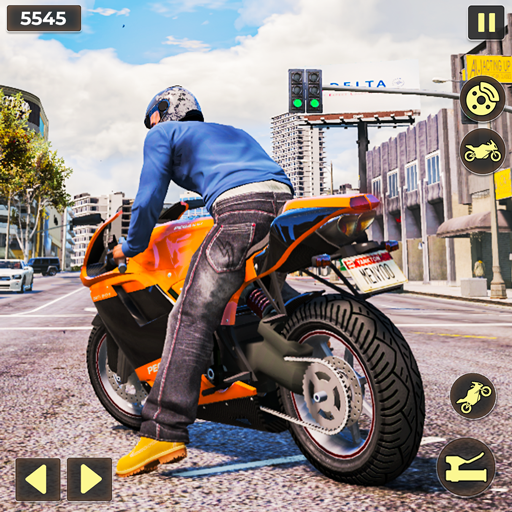
Step into the asphalt jungle with Urban Bike Racing: Gangster Bike Race 3D, a high-octane mobile experience that transforms your screen into a neon-drenched playground of speed, crime, and rebellion. This isn’t just a racing game—it’s a full-throttle sandbox where you unlock and upgrade high-performance motorcycles, dominate street races, and evade law enforcement with cinematic flair. The open-world design gives you unfettered freedom to roam, turning every corner into a potential chase, heist, or head-to-head duel under city lights.
Performance-wise, the game thrives on adrenaline, not realism. The physics lean toward arcade-style handling, making bikes easy to control even during wild drifts and mid-air stunts. Missions are varied—racing, combat, escape sequences—keeping gameplay fresh and intensely engaging. While the graphics won’t rival console titles, they’re crisp and dynamic on mobile, with smooth frame rates that make high-speed pursuits feel responsive. However, the lack of realistic bike mechanics or authentic riding feedback means serious simulation fans will feel shortchanged—this is about fun, not finesse.
Compared to more grounded racing experiences like real BMX simulations or cycling apps, Gangster Bike Race 3D is in a category of its own: pure entertainment. It’s the anti-thesis of technical precision, favoring over-the-top action and customization over authenticity. Ideal for casual gamers or teens craving a dopamine rush, it’s the ultimate digital escape for those who want to live the outlaw biker fantasy. When measured against real-world bikes like the Mongoose Title Pro, it offers no physical skill development—but for zero cost and maximum thrills, it’s unbeatable.
cubsala 20 Inch BMX Race Bike

ADVANTAGES
LIMITATIONS
The cubsala Trident storms the budget BMX market with a no-nonsense, Hi-Ten steel frame built to take punishment from sidewalk sessions, park laps, and backyard jumps. Don’t let the price fool you—this 20-inch wheeler is surprisingly capable, offering a rugged platform for beginner to intermediate riders up to 6’2″, thanks to its scalable wheel size options and aggressive BMX styling. With 2 pegs included for grinds and tricks, it’s not just a race bike—it’s a gateway to freestyle, making it a versatile workhorse for riders who want to do it all.
On the track, the cubsala delivers solid, predictable performance without the fragility of lightweight alloys. The V-brake on the rear wheel provides dependable stopping power, though single braking limits control at higher speeds or on wet surfaces. The 20” tires grip well on pavement and packed dirt, but the steel frame adds noticeable heft—you feel every pound when launching off jumps or sprinting. Assembly is a breeze with 85% pre-built setup and included tools, making it ideal for parents or first-time buyers wary of complex builds.
Against the aluminum-framed Mongoose Title Pro, the cubsala trades speed and responsiveness for bulletproof durability and affordability. It won’t win sprints, but it will survive crashes, curb drops, and years of abuse that would wreck pricier bikes. For riders focused on trick progression and urban riding, not podium finishes, it’s a smarter long-term investment. While it lacks the refined drivetrain and sleek design of the Mongoose, it outshines it in versatility and value, especially for younger or budget-conscious riders.
Race Bike Comparison
| Product | Best For | Frame Material | Wheel Size | Brake Type | Rider Height | Assembly |
|---|---|---|---|---|---|---|
| Mongoose Title Pro BMX Race Bike | Best Overall | Aluminum | 20″ | Linear Pull | 5’3″ – 5’8″ | Some Assembly Required |
| cubsala 20 Inch BMX Race Bike | Best Budget Friendly | Hi-Ten Steel | 20″, 24″, 26″ | V-Brake | 4’0”-6’2” | 85% Pre-assembled |
| Urban Bike Racing Gangster Bike Race 3D | Best Virtual Racing Experience | N/A (Virtual) | N/A (Virtual) | N/A (Virtual) | N/A (Virtual) | N/A (Virtual) |
How We Evaluated Race Bikes
Our recommendations for the best race bikes are based on a data-driven approach, combining extensive research with analysis of key performance indicators. We prioritize objective factors like frame material (aluminum, steel – assessing stiffness and weight as detailed in our buying guide), drivetrain components (3-piece cranks, single-speed setups), and wheelset quality.
We analyzed specifications from leading manufacturers, cross-referencing them with user reviews and professional racer feedback found on BMX racing forums and publications. Comparative analyses focused on geometry – head tube angle, chainstay length – to determine suitability for different riding styles and skill levels.
While comprehensive physical testing of every race bike isn’t feasible, we leveraged publicly available test data from cycling publications and independent reviewers. We also considered the impact of components like braking systems (linear pull vs. gyro) and tire tread patterns on track performance, aligning these with the terrain considerations outlined in the buying guide. Finally, sizing recommendations and fit data were scrutinized to ensure accessibility for various rider heights. We aim to provide informed recommendations based on a blend of technical specifications, rider experience and available data on BMX race bikes.
Choosing the Right Race Bike: A Buyer’s Guide
Frame Material & Geometry
The frame is arguably the most important part of a race bike. Aluminum frames (like the Mongoose Title Pro) are lightweight and stiff, offering excellent power transfer for speed. Steel frames (like the cubsala) are more affordable and durable, but generally heavier. Frame geometry – the angles and lengths of the tubes – dictates how the bike handles. More aggressive geometry (steeper head tube angle) offers quicker steering, ideal for tight race tracks. Consider your skill level and the type of racing you’ll be doing. A beginner might prefer a more stable geometry, while experienced racers will appreciate a more responsive feel.
Drivetrain & Gearing
The drivetrain affects how efficiently you transfer power to the wheels. Look for a 3-piece crankset (like on the Mongoose Title Pro) as these are stronger and more responsive than 1-piece or 2-piece cranks. The chainring size and freewheel cog determine your gearing. Lower gearing (smaller chainring/larger cog) is better for acceleration and climbing, while higher gearing (larger chainring/smaller cog) is better for top speed on flat tracks. Most race bikes use a single-speed drivetrain for simplicity and weight savings.
Wheelset & Tires
The wheelset impacts both speed and handling. Lighter wheels accelerate faster, but may be less durable. Aluminum rims (common in both featured bikes) offer a good balance of weight and strength. Tires are crucial for grip and rolling resistance. Look for BMX race-specific tires with a smooth tread pattern for hard-packed dirt tracks. Tire pressure also plays a role – lower pressure provides more grip, while higher pressure rolls faster.
Braking System
Reliable braking is essential for safety and control. Linear pull brakes (featured on the cubsala) are common and effective for BMX racing. Ensure the brake levers are easily reachable and provide good modulation (control over braking force). Consider the type of terrain you’ll be racing on; some riders prefer gyro brakes for advanced tricks, but these add weight and complexity.
Sizing and Fit
Proper fit is paramount. A bike that’s too large or too small will be uncomfortable and difficult to control. Use the manufacturer’s height recommendations as a starting point (e.g., Mongoose suggests 5’3” – 5’8” for the Title Pro). It’s best to test ride a bike if possible, or consult with a knowledgeable bike shop to determine the correct size.
Other Features: Handlebar and Fork Material Seat and Post Material Pedals Material Bottom Bracket Type Headset Type
The Bottom Line
Ultimately, the best race bike for you depends on your budget, experience level, and racing style. The Mongoose Title Pro stands out as a strong all-around performer, while the cubsala offers an excellent entry point for budget-conscious riders.
Remember to prioritize a comfortable fit and consider the terrain you’ll be racing on when making your decision. With the right bike and proper preparation, you’ll be ready to hit the track and experience the thrill of BMX racing!
