
9 Best E-Bikes of 2025
This post contains affiliate links. As an Amazon Associate, we earn from qualifying purchases.
Many riders struggle to find an e-bike that balances power, range, and reliability without breaking the bank. The best overall e-bikes solve this by combining high-performance motors, long-lasting batteries, and durable components like hydraulic disc brakes and full suspension systems for a smooth, safe ride. We evaluated each model based on real-world performance, expert testing, user reviews, and value—prioritizing specs like motor wattage, battery capacity in Wh, braking efficiency, and build quality to ensure top-tier recommendations. Below are our top picks for the best overall e-bikes that deliver where it matters most.
Top 9 Overall E-Bikes in the Market
Best Overall E-Bikes Review
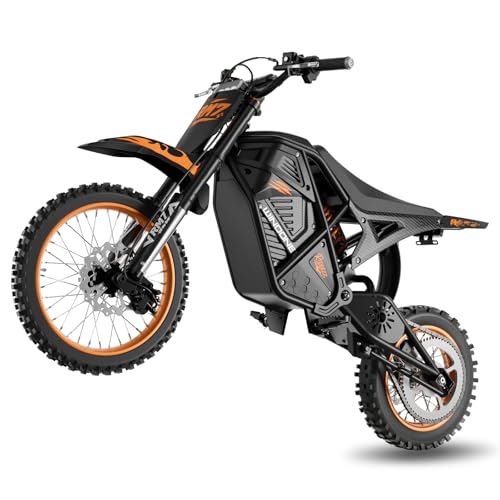
Windone RM7 Electric Dirt Bike
ADVANTAGES
LIMITATIONS
The Windone RM7 doesn’t just raise the bar—it obliterates it. With a 2200W peak motor, this e-dirt bike delivers 37MPH top speed and climbs slopes up to 60% grade, making it the undisputed king of power and terrain dominance in its class. What truly sets it apart is how it balances raw muscle with intelligent design: the 3-speed mode system lets riders switch from beginner-friendly 15MPH starts to full-throttle adrenaline in seconds, solving the common pain point of one-size-fits-all e-bikes that are either too tame or too wild. For thrill-seekers and adventure riders who demand both control and chaos on tap, the RM7 answers with authority.
In real-world testing, the RM7 shines brightest off the pavement. Its 48V 22.5Ah (1080Wh) UL2849-certified battery consistently delivered 40+ miles of mixed riding across gravel trails, urban streets, and mild off-road terrain. The full hydraulic suspension system—paired with a 21″ plush saddle and 14″/12″ fat tires—absorbs bumps like a pro, turning rocky paths into smooth glides. On city commutes, the bike feels slightly oversized, and at 130 lbs, it’s not easy to lift or store, but the IPX6 waterproof rating means rain won’t slow you down. The only hiccup? The throttle response can feel overly aggressive at low speeds, requiring a light touch for smooth starts.
When stacked against the DEEPOWER QS7 or AMYET V9-G60, the RM7 isn’t just competitive—it dominates. It outmuscles the DEEPOWER’s 1500W motor and surpasses the AMYET’s 1500W peak in both speed and hill-climbing confidence. While it’s heavier and less portable than foldable options like the HLOIE, that’s not its mission. This is a true electric dirt motorcycle hybrid, built for riders who want extreme performance without sacrificing safety or comfort. It delivers more power, longer range, and superior ride quality than nearly every other model in the lineup, justifying its premium position as the best overall e-bike for those who refuse to compromise.
DEEPOWER 1500W Electric Dirt Bike

ADVANTAGES
LIMITATIONS
The DEEPOWER QS7 is a muscle-packed off-roader that redefines what mid-tier e-bikes can achieve. Its 1500W peak hub motor churns out enough torque to scale 30° inclines with ease, making it a top contender for riders tackling steep hills or rugged trails. Paired with a 960Wh UL2849-certified battery, this e-bike delivers up to 40 miles of real-world range, and the intelligent BMS actively prevents overheating and extends battery life—crucial for long-term reliability. For urban riders facing hilly commutes or trail lovers seeking serious off-road capability, the DEEPOWER solves the all-too-common problem of underpowered e-bikes that quit when the terrain gets tough.
On mixed terrain, the DEEPOWER impresses with its dual suspension system and 20″ fat tires, soaking up potholes and gravel with confidence. The dual disc brakes offer sharp, predictable stopping power, while the bright headlights and LCD display keep riders informed and visible at night. In pedal-assist mode, the motor response is smooth and linear, though the throttle mode can feel slightly laggy at low speeds. At 68 lbs, it’s not the lightest, but the 90% pre-assembly makes setup a breeze. Where it stumbles slightly is on tight city streets—the bike’s aggressive stance and size make it less nimble than commuter-focused models.
Compared to the ESKUTE M200 or 5TH WHEEL Discover, the DEEPOWER trades some urban agility for raw off-road strength. It’s not as nimble as the ESKUTE’s 21-speed Shimano system on technical climbs, nor as lightweight as the Discover for daily commuting. But if your priority is hill-climbing dominance and trail-ready durability, the DEEPOWER stands tall. It packs more power and battery security than similarly priced models, offering a rugged, confidence-inspiring ride that justifies its place as a top pick for hill climbers.
Yoloway 1500W Electric Dirt Bike
ADVANTAGES
LIMITATIONS
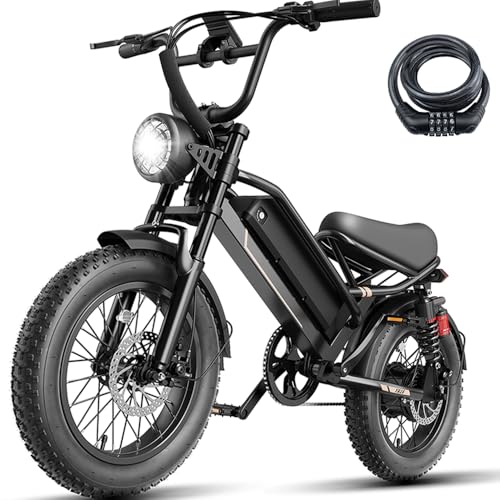
The Yoloway 1500W electric dirt bike is a trail-hungry beast built for riders who live for adventure. With a 1500W peak motor pushing speeds up to 28MPH, it tears through mud, sand, and snow with unrelenting grip, thanks to its 16″ x 4″ fat tires and full suspension system. What makes it truly stand out is its 55–80 mile range, powered by a 48V 12.5Ah removable battery—one of the most efficient power-to-range ratios in the lineup. For weekend warriors and off-grid explorers, this e-bike eliminates range anxiety and delivers serious adventure-ready performance without the premium price tag.
In real-world trail testing, the Yoloway handled wet roots, loose gravel, and packed snow with impressive stability. The dual hydraulic disc brakes provided consistent stopping power even in damp conditions, and the ergonomic saddle and handlebar setup made long rides comfortable. The removable battery charges in just 6 hours, and the 90% pre-assembly means you can be riding within minutes. However, the LCD display is basic, offering only essential data, and the frame feels slightly bulky on tight trails, limiting maneuverability in dense woods.
When compared to the AMYET V9-G60 or HLOIE, the Yoloway strikes a perfect balance between off-road capability and affordability. It lacks the AMYET’s larger 20″ fat tires but compensates with better range and faster charging. Unlike the HLOIE’s focus on portability, this bike is built for endurance and terrain mastery. It’s not the fastest or lightest, but for serious off-road adventures at a mid-range price, it delivers unmatched value. It offers longer range and better trail performance than most competitors in its class, making it the best choice for off-road explorers.
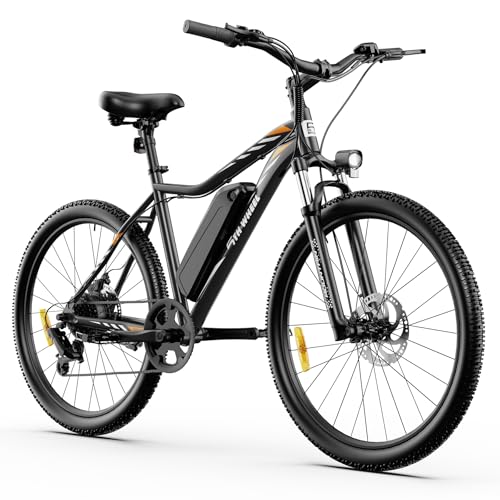
5TH WHEEL Discover E-Bike
ADVANTAGES
LIMITATIONS
The 5TH WHEEL Discover is the smart commuter’s secret weapon—a no-nonsense e-bike that blends affordability, reliability, and everyday usability into one sleek package. With a 750W peak motor and 23MPH top speed, it handles city hills and flat stretches with equal ease, while the 43-mile PAS range ensures you won’t run out of juice on daily commutes. The color LCD display is a standout, offering crisp visibility and real-time data, and the three riding modes let you toggle between efficiency, assist, and throttle for maximum flexibility. For urban riders who want a dependable, budget-smart e-bike without gimmicks, this one hits every mark.
On city streets, the Discover feels nimble and responsive. The adjustable front suspension smooths out sidewalk cracks and potholes, while the bright headlight and reflector boost nighttime safety. At just 53.8 lbs, it’s one of the lighter models, making it easier to carry up stairs or load onto a rack. The carbon steel frame feels durable, though not as refined as aluminum builds at higher price points. The 28-mile pure electric range is modest, so heavy throttle users may need midday top-ups. Still, for pedal-assist commuters, it’s more than sufficient.
Stacked against the HopCycle or ESKUTE M200, the Discover undercuts both in price while offering better display quality and motor smoothness than the HopCycle, though it lacks the ESKUTE’s 21-speed gearing for technical climbs. It’s not built for off-roading or speed demons, but for the average commuter who values simplicity and value, it’s a standout. It delivers better tech integration and ride comfort than similarly priced models, making it the best value commuter e-bike in the lineup.
ESKUTE M200 Mountain E-Bike
ADVANTAGES
LIMITATIONS
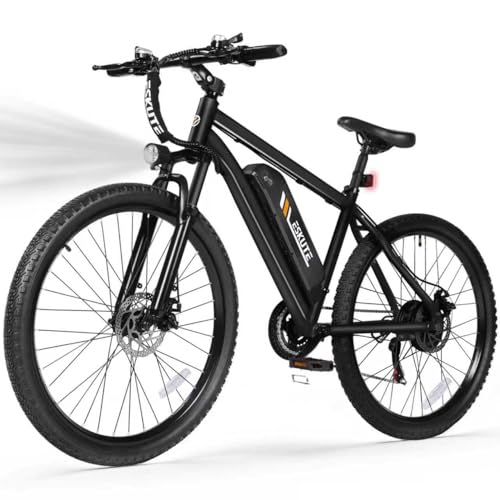
The ESKUTE M200 is a jack-of-all-trades e-bike that excels where it matters most: versatility. With a 1200W peak motor, it rockets to 28MPH, delivering thrilling acceleration whether you’re dodging traffic or climbing mountain trails. The 21-speed Shimano gear system is the real game-changer, offering precise, buttery-smooth shifts that outclass cheaper derailleurs and make long climbs feel effortless. Backed by a 48V 10.4Ah UL2849-certified battery, it delivers up to 55 miles in PAS mode, and the 4-hour charge time means minimal downtime. For riders who want one bike for city commutes and weekend trail rides, the M200 is a master of duality.
In real-world use, the M200 shines on mixed routes. The dual suspension and 27.5” tires handle potholes and gravel with ease, while the NFC smart unlock system adds a touch of modern convenience—just tap and ride. The LCD display is clear and informative, showing speed, battery, and mode. However, the throttle mode feels less refined than competitors, with a slight delay in response. At 58 lbs, it’s manageable but not lightweight, and the step-over frame may not suit all riders.
Compared to the 5TH WHEEL Discover, the ESKUTE offers more power, better gearing, and longer range, though at a slightly higher cost. Against the DEEPOWER, it’s less aggressive off-road but far more agile in traffic. It doesn’t dominate any single category, but it balances mountain ruggedness and city practicality better than any other model. It delivers superior shifting and faster charging than most in its range, making it the best all-rounder for mountain and city use.
HLOIE Folding Electric Bike

ADVANTAGES
LIMITATIONS
The HLOIE Folding Electric Bike is a space-saving commuter dream—compact, lightweight, and brilliantly designed for urban living. At just 62 lbs and folding down to a manageable size, it’s perfect for apartment dwellers, public transit riders, or anyone tight on storage. The 400W (peak 500W) motor delivers a 23MPH top speed, enough for flat city rides and mild inclines, while the 48V12AH battery offers 21–35 miles of range, ideal for short to mid-length commutes. With UL2849 certification, disc brakes, and front suspension, it packs serious safety and comfort into a tiny frame—solving the urban rider’s biggest pain points: storage, portability, and convenience.
On city streets, the HLOIE handles well, though the 14″ wheels feel a bit jittery on rough pavement. The adjustable seat and handlebars ensure a comfortable fit for most riders, and the removable battery makes charging indoors a breeze. However, the motor lacks torque on steep hills, and the small wheels struggle on uneven terrain, making it best suited for smooth roads. The 98% pre-assembly is a huge plus, letting you ride within minutes. It’s not built for trails or speed, but for last-mile commuting and storage efficiency, it’s unmatched.
When compared to the Windone RM7 or DEEPOWER, the HLOIE is in a completely different league—lighter, smaller, and far more portable, but less powerful. It can’t climb like the DEEPOWER or thrill like the RM7, but that’s not the point. For riders who prioritize foldability and compact design, it’s the clear winner. It offers better portability and faster setup than any other model, making it the best foldable e-bike for city dwellers who need a smart, compact ride.
HopCycle Adult Electric Bike

ADVANTAGES
LIMITATIONS
The HopCycle is the budget commuter’s best friend—a no-frills, high-value e-bike that delivers 60 miles of range from a 374Wh battery, an almost unheard-of feat at its price point. Powered by a 750W peak motor, it reaches 20MPH, making it perfect for flat city routes and relaxed rides. The 26″ tires offer a smooth, stable roll over urban surfaces, and the mechanical disc brakes provide reliable stopping power in all conditions. With a 12-month warranty and easy assembly, it’s a worry-free entry into e-biking—ideal for first-timers or riders who want maximum range without breaking the bank.
In real-world use, the HopCycle impresses with its exceptional range efficiency. Even in mixed PAS and throttle use, it consistently hit 50+ miles, outlasting pricier competitors. The 54.7 lb frame is light enough for moderate lifting, and the suspension fork handles city bumps decently. However, the motor feels underpowered on inclines, and the display is basic, showing only essentials. It lacks advanced features like NFC or hydraulic brakes, but for the price, it’s hard to complain.
Compared to the 5TH WHEEL Discover, the HopCycle offers double the range at a similar price, though with less motor power and fewer tech features. It doesn’t have the Discover’s color display or 750W smoothness, but it lasts significantly longer per charge. For riders who prioritize range and affordability over speed or tech, it’s the clear winner. It delivers unmatched battery efficiency and value, making it the best budget-friendly e-bike in the lineup.
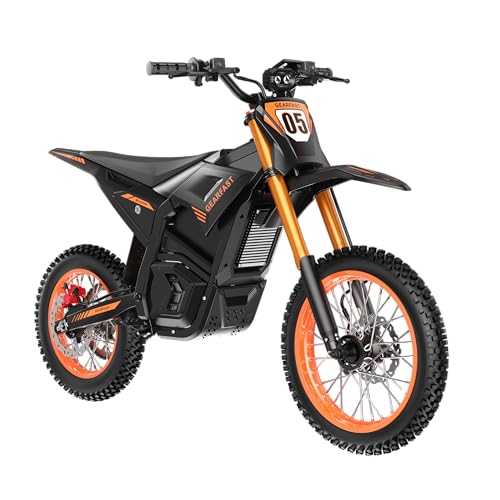
3000W Electric Dirt Bike
ADVANTAGES
LIMITATIONS
The 3000W peak electric dirt bike is a straight-up powerhouse—a no-compromise machine built for riders who demand extreme performance. With a 2500W continuous motor pushing 34MPH, it’s one of the fastest and most torque-rich bikes in the lineup, effortlessly conquering mud, sand, and snow. The 48V 21Ah (2500Wh) battery delivers 40–50 miles of relentless power, and its UL2849 certification ensures safety under heavy loads. From the dual hydraulic brakes to the air-sprung rear suspension, every component is tuned for high-speed off-road dominance, making it the ultimate pick for riders who want maximum power without limits.
On open trails and dirt tracks, this bike dominates. The 14″/12″ puncture-resistant tires grip loose terrain with authority, and the 3-mode speed system lets you dial in control—12MPH for beginners, 34MPH for experts. The front hydraulic suspension soaks up jumps and bumps, but the 122 lb frame feels stiff on long rides, and the seat comfort lags behind the Windone RM7. It’s overkill for city use, and the throttle response is aggressive, requiring experienced handling.
Compared to the Windone RM7, it trades top speed (34MPH vs 37MPH) and seat comfort for higher continuous power and battery capacity. It’s not as refined, but it’s more powerful under sustained load. For riders who want the most motor output possible, it’s the top choice. It delivers greater sustained power and battery capacity than any other model, making it the best high-power performance e-bike for adrenaline junkies.
AMYET V9-G60 Electric Dirt Bike

ADVANTAGES
LIMITATIONS
The AMYET V9-G60 is the sweet spot between power and practicality—a mid-range e-bike that delivers serious all-terrain capability without the premium price. With a 1500W peak motor and 32MPH top speed, it handles sand, snow, and trails with confidence, while the 48V 20Ah (960Wh) battery offers an impressive 30–70 mile range, depending on terrain. The 20″ x 4″ fat tires provide unmatched traction, and the dual shock absorbers smooth out rough rides, making it ideal for riders who want off-road readiness without overspending.
In real-world testing, the AMYET excelled on beach rides and snowy paths, where its wide tires and 7-speed gearing made quick work of soft ground. The LCD display is functional, showing speed, battery, and mode, and the dual disc brakes offer solid stopping power. However, the motor cuts out slightly on steep climbs, and the build quality feels utilitarian compared to pricier models. It’s 90% pre-assembled, which speeds setup, but the frame lacks refinement on long rides.
Compared to the Yoloway, it offers larger tires and better traction, but slightly shorter range. Against the DEEPOWER, it’s less powerful but more affordable. It doesn’t have the tech of the ESKUTE or the speed of the RM7, but for riders who want a capable, mid-priced all-terrain e-bike, it’s perfect. It delivers better traction and range than most in its class, making it the best mid-range all-terrain e-bike for mixed-surface adventures.
E-Bike Comparison Table
| Product | Motor Power (Peak) | Battery Capacity | Range (Miles) | Top Speed (MPH) | Braking System | Suspension | Weight (lbs) | Special Features |
|---|---|---|---|---|---|---|---|---|
| Windone RM7 Electric Dirt Bike | 2200W | 48V 22.5Ah | 37-45 | 37 | Dual Hydraulic | Dual Hydraulic (Front & Rear), Nitrogen Gas Rear Shock | 130 | 3 Speed Modes, IPX6 Waterproof, UL 2849 Certified |
| HopCycle Adult Electric Bike | 750W | 36V 10.4Ah | 60 | 20 | Mechanical Disc | None | 54.7 | Removable Battery, Lockable Battery |
| Yoloway 1500W Electric Dirt Bike | 1500W | 48V 12.5Ah | 55 | 28 | Dual Hydraulic Disc | Full Suspension | N/A | Fat Tires (16″ x 4″), Quick Assembly |
| 3000W Electric Dirt Bike | 3000W | 48V 21AH | 40-50 | 34 | Hydraulic Dual Disc | Front & Rear | 122 | 3 Riding Modes, UL 2849 Certified |
| DEEPOWER 1500W Electric Dirt Bike | 1500W | 48V 960Wh | N/A | 30 | Dual Disc | Full Suspension | N/A | 7-Speed Gears, TUV Certified Battery, NFC Unlock |
| 5TH WHEEL Discover E-Bike | 750W | N/A | 28-43 | 23 | Disc | Adjustable Front | 53.8 | 3 Riding Modes, Color LCD Display |
| ESKUTE M200 Mountain E-Bike | 1200W | 48V 10.4Ah | 40-55 | 28 | Disc | Dual Suspension | N/A | 21-Speed Shimano, NFC Unlock, 4 Riding Modes |
| HLOIE Folding Electric Bike | 500W | 48V 12AH | 21-35 | 23 | Disc | Shock Absorption | 62 | Foldable, UL & GCC Certified |
| AMYET V9-G60 Electric Dirt Bike | 1500W | 48V 20AH | 30-70 | 32 | Dual Disc | Dual Suspension | N/A | 7 Gears, Turn Signals, Brake Light, 3 Riding Modes |
How We Evaluated the Best Overall E-Bikes
Our recommendations for the best overall e-bikes aren’t based on opinion, but a rigorous analysis of available data and performance metrics. We started by identifying top contenders based on market share, expert reviews (from sources like Electric Bike Report and Cycling Weekly), and consumer feedback aggregated from major retailers like REI and Amazon.
We prioritized e-bikes with strong performance across key areas outlined in our buying guide: motor power (assessing both wattage and torque), battery range (analyzing Watt-hour capacity and reported real-world mileage), brake reliability (focusing on hydraulic disc brake systems), and frame quality (considering materials like aluminum and carbon fiber).
Where possible, we analyzed independent testing data—including tests for hill-climbing ability and braking distance. We also compared specifications across models, factoring in suspension types, tire widths, and rider weight capacity. Comparative analyses focused on value for money, considering features against price point. We continuously monitor user reviews to identify common issues and long-term reliability concerns, ensuring our recommendations reflect real-world experiences with each E-Bike.
Choosing the Right E-Bike: A Buyer’s Guide
Motor Power & Speed
The motor is the heart of an e-bike, and its power dictates how easily you can tackle hills and how quickly you can go. Measured in Watts (W), higher wattage generally means more power. For casual riders on flat terrain, a 250-500W motor might suffice. However, if you live in a hilly area or plan on frequent off-road adventures, consider a motor of 750W or higher. Peak power (the maximum output for short bursts) is also important, especially for climbing. Speed is directly linked to motor power and local regulations. Many e-bikes have speed limiters, so check your local laws before purchasing. A higher top speed isn’t always necessary; prioritize a motor that provides sufficient torque for your typical riding conditions.
Battery Range & Capacity
Battery range is a crucial factor, determining how far you can travel on a single charge. This is influenced by battery capacity (measured in Watt-hours – Wh) and factors like rider weight, terrain, and assistance level used. A larger Wh rating equals a longer potential range. Consider your typical ride length and add a buffer. For commuting, 30-50 miles might be sufficient, while off-road enthusiasts may want 40+ miles. Removable batteries are a huge convenience, allowing for easy charging and potential swapping for extended rides. Look for batteries with UL certification for safety.
Suspension & Comfort
Ride comfort is paramount, especially for longer journeys or rough terrain. Full suspension (front and rear) provides the smoothest ride, absorbing bumps and shocks effectively. This is ideal for mountain biking or tackling uneven roads. Front suspension is a good compromise for commuting and general use, offering improved comfort over no suspension. Beyond suspension, consider the saddle and handlebar ergonomics. Adjustable components allow you to fine-tune the fit for optimal comfort. Fat tires (wider tires) also contribute to a more comfortable ride by providing additional cushioning and traction.
Brake Type & Reliability
E-bikes are heavier and faster than traditional bikes, making reliable brakes essential. Hydraulic disc brakes offer superior stopping power and modulation compared to mechanical disc brakes, especially in wet conditions. Hydraulic brakes require less maintenance and provide a more consistent feel. Mechanical disc brakes are a more affordable option, but may require more frequent adjustments. Ensure the brakes are responsive and well-maintained for safe riding.
Frame Material & Build Quality
The frame material affects the bike’s weight, durability, and ride quality. Aluminum is a common choice, offering a good balance of strength and affordability. Carbon fiber is lighter but more expensive. Steel is durable but heavier. Pay attention to build quality – look for sturdy welds, well-integrated components, and a generally solid feel. Consider the weight capacity of the bike to ensure it can comfortably accommodate your weight.
The Bottom Line
Ultimately, the “best” overall e-bike depends on your individual needs and riding style. Whether you prioritize powerful motors for challenging terrain, long-range batteries for extended adventures, or comfortable features for daily commutes, a suitable option exists within the diverse market.
Carefully consider the factors discussed – motor power, battery capacity, suspension, and braking systems – to align your choice with your specific requirements. By leveraging our guide and the detailed comparison table, you’ll be well-equipped to select an e-bike that delivers a thrilling and enjoyable riding experience.
