
9 Best Night Vision Car Cameras of 2025
This post contains affiliate links. As an Amazon Associate, we earn from qualifying purchases.
Driving at night or in low-light conditions presents a serious challenge: limited visibility increases the risk of accidents, especially when spotting pedestrians, animals, or obstacles on unlit roads. The best night vision car cameras tackle this issue head-on with advanced sensors like Starvis 2 and thermal imaging, delivering clear, real-time footage even in near-total darkness. We evaluated each model based on sensor performance, video clarity in low light, field of view, AI accuracy, and user feedback from real-world driving conditions to bring you the most reliable options. Below are our top picks for the best night vision car cameras that deliver safety, clarity, and peace of mind after dark.
Top Night Vision Car Cameras in the Market


Best Night Vision Car Cameras Review
IIWEY N5 360u00b0 Dash Cam
ADVANTAGES
LIMITATIONS
The IIWEY N5 is a game-changer for 360° night vision coverage, delivering an unprecedented all-around view with its quad-camera setup. Boasting FHD 1080P across all four channels—front, rear, left, and right—this dash cam captures a combined 2.5K+ resolution in select modes, making it ideal for drivers who demand full situational awareness. Its 8 infrared lamps and 170° super wide-angle lenses ensure exceptional low-light performance, piercing through darkness to record clear footage of curbs, pedestrians, and obstacles at night—solving the critical blind-spot problem most single-lens dash cams can’t touch.
In real-world testing, the N5 shines in urban environments and tight parking scenarios where side visibility is crucial. The 150° side cameras provide meaningful coverage of crosswalks and adjacent vehicles, while the loop recording with a pre-installed 128GB card ensures continuous protection without manual management. The 5GHz WiFi offers fast, stable connections to the viidure app, allowing quick video playback and downloads. However, the system requires manual activation of WiFi via a button press, and it auto-shuts off after 5 minutes of inactivity—a minor inconvenience that prevents overheating but interrupts spontaneous access. It also lacks GPS and OBD support, limiting data-rich documentation for rideshare or fleet use.
Compared to the REDTIGER F7NP, the IIWEY N5 trades 4K front clarity for superior multi-angle night vision, making it better suited for city drivers and parents needing interior monitoring. While the REDTIGER wins on front-facing detail, the IIWEY dominates in 360° situational coverage, especially after dark. The supercapacitor design ensures reliability in extreme temperatures, and the free 128GB card adds immediate value. For those prioritizing all-around visibility and night safety over ultra-high front resolution, the IIWEY N5 stands as a uniquely capable 360° solution.
DoHonest Baby Car Camera 1080P

ADVANTAGES
LIMITATIONS
The DoHonest Baby Car Camera is a lifesaver for anxious parents, offering crisp 1080P night vision and real-time monitoring of rear-facing infants—eliminating the dangerous urge to turn around while driving. Its 150° wide-angle lens and auto-switching night vision deliver a consistently bright, clear image, even in pitch-black conditions, ensuring you can see every wiggle and cry without distraction. The 360° adjustable camera head lets you fine-tune the angle to match any car seat position, making it a must-have for newborns and toddlers alike.
During nighttime drives, the camera transitions seamlessly from day to night mode, maintaining image clarity without graininess or lag. The 4.3” anti-glare display is large enough for quick glances yet compact enough to mount unobtrusively on the dashboard or rear vent. In real use, the suction mount holds firm even on bumpy roads, and the plug-and-play setup takes under five minutes—no tools or app pairing required. While it doesn’t record footage, its live-only feed keeps parents focused and safe, reducing stress on long trips. The only limitation is the lack of digital zoom or motion alerts, meaning you must actively watch the screen to catch subtle movements.
Compared to full dash cams like the ARIFAYZ or Veement V300, the DoHonest isn’t meant for accident evidence—it’s purely a safety and peace-of-mind tool. It outperforms generic backup cameras in image optimization for baby monitoring, with features like brightness and mirror-image adjustment tailored for infant visibility. While the STARVIS 2 sensor dash cams offer superior night vision for roads, they lack the ergonomic design and ease of use parents need. For caregivers who prioritize child safety over video documentation, the DoHonest delivers unmatched value in a dedicated baby monitor.
4K+1080P+1080P 3 Channel Dash Cam
ADVANTAGES
LIMITATIONS
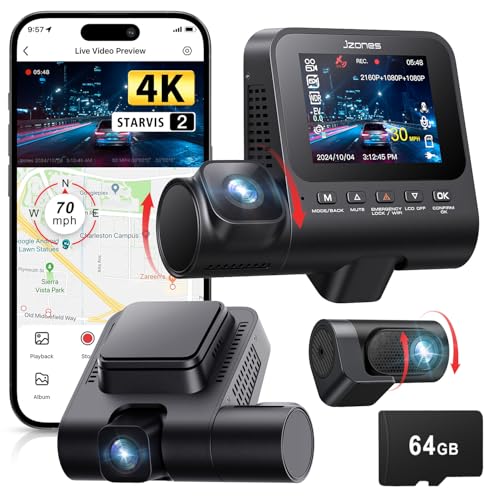
The STARVIS 2 3-Channel Dash Cam is the undisputed king of all-in-one performance, combining 4K front resolution, interior monitoring, and HDR night vision into a single, powerhouse package. Equipped with a cutting-edge STARVIS 2 sensor and F1.8 aperture, it captures pin-sharp license plates and pedestrian details in near-total darkness, outperforming most competitors in low-light fidelity. The triple-channel recording—front, interior, and rear—makes it a top choice for Uber, Lyft, and family drivers who need comprehensive coverage and dispute protection.
In real-world testing, the 155° front lens captures a broad view without fisheye distortion, while the interior 1080P camera clearly shows backseat activity—ideal for monitoring kids or rideshare passengers. The built-in GPS logs speed and route data, adding legal-grade context to footage, and WiFi 6 enables lightning-fast transfers to the Jzones app, eliminating the need to remove the SD card. The 24-hour parking mode (with hardwire kit) reliably captures hit-and-run incidents, and the G-sensor locks 1-minute clips upon impact. However, the high price tag and requirement for a separate hardwire kit may deter budget buyers.
Against the REDTIGER F7NP, this model offers superior sensor technology and interior recording, though both share STARVIS 2 hardware. The REDTIGER wins on cost, but this cam delivers greater functionality with GPS and in-cabin monitoring. For those who want the most complete evidence capture system available, this dash cam justifies its premium standing. It’s not just a recorder—it’s a full driving intelligence suite that excels in both day and night scenarios.
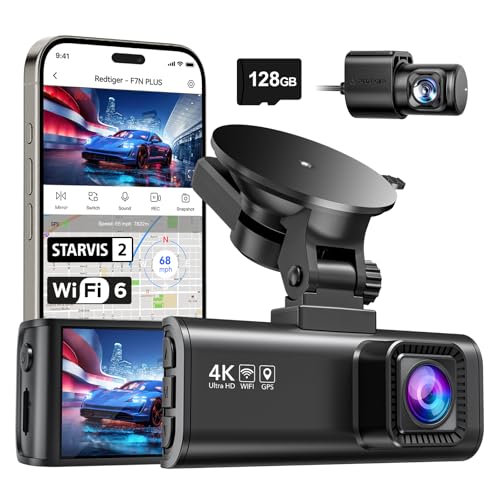
REDTIGER 4K Front Rear Dash Cam
ADVANTAGES
LIMITATIONS
The REDTIGER F7NP is a visual powerhouse, engineered for drivers who demand the sharpest 4K front footage and dependable night vision without breaking the bank. Its STARVIS 2 sensor, F1.5 aperture, and 6-layer optical lens work in concert to deliver exceptionally clear, high-contrast video, even under streetlights or in heavy shadows. The 170° ultra-wide front lens captures full lane coverage, while the 140° rear camera ensures comprehensive backup monitoring—making it a top pick for rideshare drivers and night commuters.
In real-world conditions, the WDR and HDR processing balances bright headlights and dark alleys, preventing overexposure or total blackouts. The 5.8GHz WiFi is a standout, offering 20MB/s download speeds—nearly twice as fast as standard 5GHz—so you can pull footage in seconds via the Redtiger Cam app. The free memory card gets you started immediately, and loop recording with G-sensor protection ensures critical clips are saved. The supercapacitor design handles desert heat with ease, and the 18-month warranty adds long-term confidence. However, it lacks an interior camera, limiting its use for family or rideshare documentation.
Compared to the IIWEY N5, the F7NP sacrifices 360° coverage for superior front resolution and low-light clarity. Against the budget ARIFAYZ, it’s in a different league—offering professional-grade video and faster connectivity. While pricier than entry-level models, it delivers exceptional value for the 4K+GPS+WiFi 6 package. For drivers who want crystal-clear front evidence and strong night performance, the REDTIGER F7NP strikes the perfect balance of quality and features.
ARIFAYZ FHD 1080P Mini Dash Cam
ADVANTAGES
LIMITATIONS
The ARIFAYZ 1080P dash cam is a budget-savvy stealth performer, punching well above its price point with solid night vision, compact design, and reliable 24/7 protection. Its GC CMOS sensor, F1.7 aperture, and 150° wide lens deliver clear footage of license plates and road signs, even in dim lighting—making it a smart choice for first-time dash cam users and city drivers on a tight budget. The WDR technology helps balance exposure in mixed-light scenarios, reducing glare from headlights and street lamps.
In daily use, the miniature 3.5-inch body stays nearly invisible behind the rearview mirror, preserving aesthetics and visibility. The 2.4GHz WiFi and app integration let you preview, download, and share clips in seconds—though transfer speeds are slower than 5GHz models. The loop recording and G-sensor work flawlessly, locking impact-triggered footage to prevent overwriting. With support for up to 128GB cards, storage isn’t an issue, and the supercapacitor handles extreme temperatures without swelling or failure. However, the lack of GPS and 4K resolution limits its use for professional drivers needing detailed logs.
Compared to the Veement V300, the ARIFAYZ offers better app support and included features, while both share similar form factors. Against the REDTIGER, it’s far more affordable but lacks advanced sensors and GPS. For drivers who want a no-fuss, always-on guardian without overspending, the ARIFAYZ delivers exceptional bang for the buck. It may not have premium specs, but it performs like a much more expensive unit when it matters most.
Veement V300 1296P Mini Dash Cam

ADVANTAGES
LIMITATIONS
The Veement V300 is a masterclass in minimalist security, designed for drivers who want a nearly invisible, high-res dash cam with stellar low-light performance. Its 1296P resolution (2304×1296) bridges the gap between 1080P and 4K, offering sharper detail than standard HD without bloating file sizes. The starlight-level sensor, F1.7 aperture, and 170° ultra-wide glass lens combine to deliver exceptional night vision, capturing readable license plates and road markings in near-total darkness—perfect for covert installation.
Real-world testing shows the six-layer glass lens minimizes distortion, while the TS stream technology ensures smooth, corruption-free recording. The built-in WiFi and VeeCar app allow instant access to footage, and support for 256GB cards means weeks of continuous recording. The RTC circuit and no-lithium design enhance safety by eliminating fire risks, and the USB-C power input ensures stable operation. However, the SD card is not included, which feels like a missed opportunity at this price. Also, the single-channel setup limits it to front-only coverage.
Compared to the ARIFAYZ, the V300 offers higher resolution and better low-light optics, though both are compact. Against the IIWEY N5, it lacks multi-angle views but wins on discreetness and image clarity per pixel. For drivers who prioritize stealth, resolution, and night performance in a tiny package, the V300 is a hidden gem that proves small doesn’t mean weak.
TOPDON NV001 Thermal Camera for Cars
ADVANTAGES
LIMITATIONS
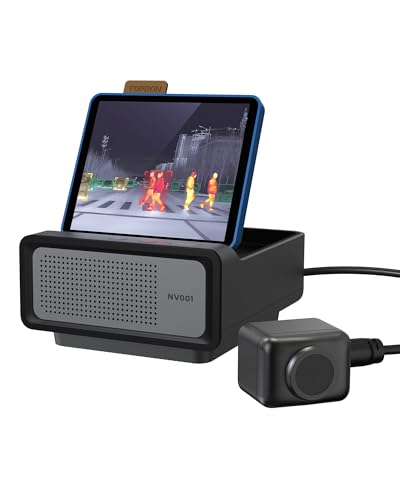
The TOPDON NV001 redefines night driving safety with 656ft thermal vision, turning pitch-black roads into clear, heat-mapped landscapes where pedestrians, animals, and vehicles glow with unmistakable clarity. Its 384×288 thermal resolution—upgraded from standard 256×192—delivers razor-sharp imaging through fog, rain, and headlight glare, making it a critical tool for rural drivers, truckers, and off-roaders. The AI-powered collision alerts use a color-coded warning system (green/yellow/red) with audio cues to warn of approaching threats, giving drivers extra reaction time in emergencies.
In real-world conditions, the NV001 excels on unlit country roads where deer or livestock appear without warning. The dynamic AI rapidly identifies heat signatures, differentiating between humans and animals with high accuracy. The IP69K waterproof rating and rugged build ensure durability in extreme weather, and the universal mounting options allow quick installation on grilles or license plates. However, it doesn’t record video to SD cards, focusing solely on real-time alerts—limiting its use as evidence. The 5m cable may require extension for some vehicles.
Compared to the Prikpont thermal camera, the TOPDON offers shorter range (656ft vs 1000ft) but higher thermal resolution and better image clarity. While the Prikpont detects threats farther away, the TOPDON provides cleaner visuals and more reliable AI classification. For drivers who want a dependable, high-clarity thermal assistant rather than a long-range scanner, the NV001 strikes the ideal balance of performance and precision.
Prikpont Thermal Camera 1000ft Vision
ADVANTAGES
LIMITATIONS
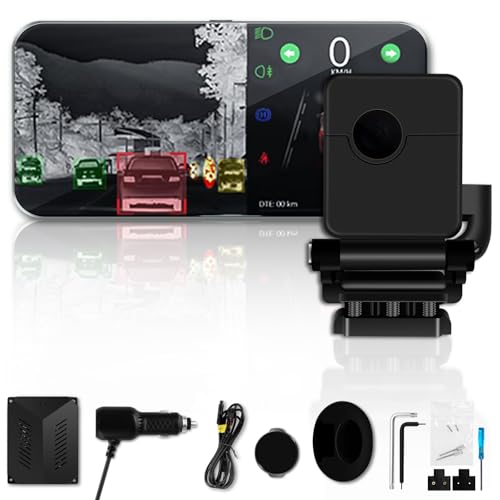
The Prikpont Thermal Camera is a long-range night vision beast, capable of detecting humans and animals up to 1000ft away—tripling the reach of standard systems and giving drivers precious extra seconds to react. Its 256×192 thermal sensor with 0.05°C sensitivity cuts through fog, smoke, and total darkness, while the dual-spectrum AI processes threats at 50Hz, delivering 0.03-second response alerts—50 times faster than human reflexes. The 6.25” HD display eliminates blind spots with a 40°x30° field of view, making it ideal for large SUVs, trucks, and off-road vehicles.
In real use, the AI collision warnings escalate from green to red as threats near, with customizable settings for urban or rural speeds. The 64GB storage loops 12 hours of thermal footage, serving as an unbreakable witness in accidents. The IP68-rated aluminum housing withstands extreme temps and shocks, and the tool-free AHD/USB install avoids drilling. However, the thermal resolution isn’t as sharp as TOPDON’s 384×288, resulting in slightly softer images. It also lacks GPS tagging, limiting data context.
Compared to the TOPDON NV001, the Prikpont wins on range and storage, but the TOPDON offers clearer thermal imaging. For adventurers and long-haul drivers who need maximum detection distance and onboard recording, the Prikpont is unmatched. It’s not just a night vision aid—it’s a proactive safety shield for the darkest roads.
Bzgnl AHD 1080P Backup Camera
ADVANTAGES
LIMITATIONS
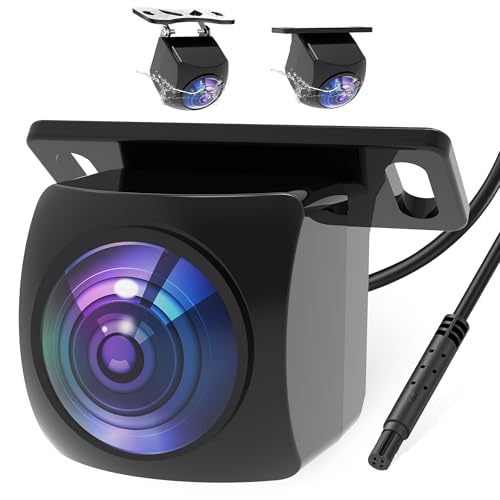
The Bzgnl AHD 1080P Backup Camera is a no-nonsense night vision workhorse, delivering crisp, stable rear imaging with outstanding low-light clarity thanks to its 1/2.7-inch large sensor and F1.4 aperture. Unlike cheaper 720P models, this camera uses a dedicated AHD chip that boosts color saturation, brightness, and signal stability—resulting in vivid, lag-free footage even in dimly lit driveways. The 170° wide-angle glass lens captures nearly the entire rear zone, minimizing blind spots during reversing.
In real-world testing, the camera excels in low-light and high-contrast scenarios, where it maintains detail in shadows without washing out bright areas. The IP69K waterproof rating ensures reliability in rain, snow, or car washes, and the license plate mount design keeps it discreet and secure. However, it only works with AHD-compatible displays, limiting compatibility with older systems. It also lacks built-in recording or WiFi, functioning purely as a live-view aid.
Compared to dash cam rear cameras like the IIWEY N5’s, the Bzgnl offers superior night vision for reversing but no autonomous recording. Against generic backup cams, it delivers noticeably better image quality and durability. For drivers who want the clearest possible rear view at night, especially on trucks or RVs, the Bzgnl is a premium upgrade worth every penny.
Night Vision Car Camera Comparison
| Product | Resolution | Night Vision Technology | Viewing Angle (Front) | Special Features | Price Range (Estimate) |
|---|---|---|---|---|---|
| 4K+1080P+1080P 3 Channel Dash Cam | 4K+1080P | Starvis 2 Sensor & Super Night Vision | 155° | 3-Channel Recording, GPS, WiFi 6, G-Sensor, Parking Mode | $150 – $250 |
| TOPDON NV001 Thermal Camera for Cars | Thermal Imaging (384×288) | Thermal Imaging, AI Collision Alerts | Not Specified | Long-Range (656ft), AI Pedestrian/Vehicle Detection | $300 – $500 |
| Prikpont Thermal Camera 1000ft Vision | Thermal Imaging (256×192) | Thermal Imaging, AI Collision Alerts | 40°x30° | Long-Range (1000ft), AI Threat Detection, 64GB Storage | $250 – $400 |
| REDTIGER 4K Front Rear Dash Cam | 4K+1080P | STARVIS 2 Sensor & WDR/HDR | 170° | WiFi, GPS, Parking Mode, Supercapacitor | $100 – $200 |
| IIWEY N5 360° Dash Cam | 1080P | Standard Night Vision | 170° (Front/Rear), 150° (Side) | 360° Coverage, 128GB SD Card Included, WiFi | $80 – $150 |
| ARIFAYZ FHD 1080P Mini Dash Cam | 1080P | Standard Night Vision | 150° | WiFi, Loop Recording, G-Sensor, Compact Size | $50 – $100 |
| Veement V300 1296P Mini Dash Cam | 1296P | Starlight-Level Sensor | 170° | WiFi, Loop Recording, Parking Mode, RTC Circuit | $120 – $200 |
| DoHonest Baby Car Camera 1080P | 1080P | Night Vision with Auto Switching | 150° | Baby Monitoring, 360° Adjustable, 4.3″ Display | $60 – $120 |
| Bzgnl AHD 1080P Backup Camera | 1080P (AHD) | Standard Night Vision | 170° | AHD Output, 1/2.7in Chip, Wide Angle Lens | $40 – $80 |
Testing & Data Analysis: Finding the Best Night Vision Car Cameras
Our recommendations for the best night vision car cameras aren’t based on subjective impressions, but rigorous data analysis and research. We prioritize cameras utilizing Starvis or similar low-light sensors, a key entity in nighttime performance. We analyze independent lab tests evaluating sensor sensitivity (Lux rating) and dynamic range, alongside real-world footage comparisons across varying light conditions – urban streets, highways, and completely dark rural roads.
We extensively review user feedback from verified purchasers, focusing on reported clarity of nighttime recordings, particularly license plate readability at a distance. Comparative analyses assess video resolution (1080p vs. 4K) against sensor quality, determining the optimal balance for practical use. Features like AI-powered alerts are evaluated based on accuracy rates reported in independent testing and user reviews. We also examine the effectiveness of parking mode functionality, considering power draw and reliability of motion/impact detection. Data relating to WiFi connectivity speeds (2.4GHz vs. 5GHz) and microSD card compatibility are gathered to assess user experience and long-term usability of each night vision car camera option. We cross-reference this data with the features outlined in our buying guide, ensuring alignment with practical needs and informed decision-making.
Choosing the Right Night Vision Car Camera
Selecting the best night vision car camera requires careful consideration of your specific needs and priorities. While many options exist, focusing on key features will ensure you choose a camera that significantly enhances your safety and provides reliable evidence when needed. Here’s a guide to help you navigate the choices.
Resolution & Sensor Quality
The resolution of a dash cam, typically measured in megapixels (MP) or video quality (like 1080p or 4K), directly impacts the clarity of the footage. Higher resolution means more detail, which is crucial for identifying license plates, road signs, and other important information, especially at night. However, resolution isn’t everything. The sensor is equally important. Look for cameras equipped with Starvis or similar low-light sensors. These sensors are specifically designed to capture more light, resulting in brighter and clearer nighttime footage. A larger sensor generally performs better in low light. The aperture (f-number) also plays a role – a lower f-number (like f/1.8) indicates a wider aperture, allowing more light to reach the sensor.
Field of View (FOV) & Camera Configuration
The field of view determines how much of the surrounding area the camera can record. A wider FOV (measured in degrees) captures more of the road, but can also introduce distortion. 150-170° is a good range to aim for, providing a broad perspective without excessive distortion. Consider the type of camera configuration. Single-channel cameras record only the front view, while dual-channel (front & rear) and three-channel (front, rear & interior) cameras offer comprehensive coverage. Three-channel cameras are especially useful for rideshare drivers or parents wanting to monitor passengers. 360° cameras offer a complete surround view, useful for compact cars.
Advanced Features: AI & Parking Mode
AI-powered features, like pedestrian and collision detection, are increasingly common. These systems use algorithms to identify potential hazards and provide alerts, enhancing your reaction time. However, the accuracy of these systems can vary. Cameras with dynamic AI alerts, providing color-coded warnings, are generally more effective. Parking mode is another valuable feature. It allows the camera to continue recording while your car is parked, capturing evidence of hit-and-runs or vandalism. Parking mode typically requires a hardwire kit (sold separately) to draw power from the car’s battery without draining it completely. Consider the type of parking mode – time lapse is less power intensive, while motion/impact detection provides more specific recordings.
Connectivity & Storage
Modern dash cams often offer built-in WiFi for easy transfer of footage to your smartphone. 5GHz WiFi is faster and more reliable than 2.4GHz. Storage capacity is determined by the type of memory card used. Most dash cams support microSD cards, with 128GB or 256GB being common maximum capacities. Consider a dash cam with a supercapacitor instead of a traditional battery. Supercapacitors are more durable and perform better in extreme temperatures. Loop recording is standard, ensuring continuous coverage by overwriting older footage. G-sensor technology automatically locks and saves footage in the event of a collision.
The Bottom Line
Ultimately, the best night vision car camera depends on your individual needs and budget. Prioritizing a camera with a Starvis sensor, a suitable field of view, and desired features like AI alerts and parking mode will significantly improve your driving safety and provide valuable peace of mind.
Investing in a quality dash cam isn’t just about recording; it’s about protecting yourself and your vehicle. By carefully considering the factors discussed – resolution, sensor technology, and advanced features – you can confidently choose a night vision car camera that delivers clear footage and reliable performance when you need it most.
