
8 Best Mountain Bikes of 2026
This post contains affiliate links. As an Amazon Associate, we earn from qualifying purchases.
Choosing the right mountain bike can be overwhelming, with so many options varying in suspension, wheel size, and components that it’s easy to end up with a bike that doesn’t match your riding style or terrain. The best mountain bikes solve this by balancing performance features—like full or hardtail suspension, 29-inch or 27.5-inch wheels, and reliable Shimano drivetrains—with value, ensuring you get capable handling, durability, and comfort on the trail. Our picks are based on deep research into frame materials, brake types, gear systems, and real-world user feedback, prioritizing models that excel in performance, reliability, and price-to-feature ratio across different skill levels and budgets. Below are our top recommendations for the best mountain bikes, from entry-level rides to high-performance trail machines.
Top 8 Mountain Bikes in the Market

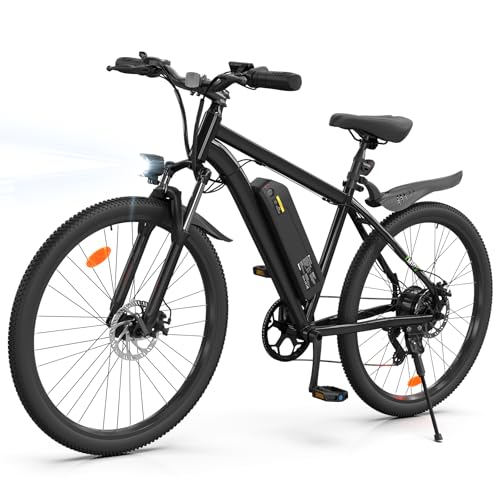
Best Mountain Bikes Review
Canyon Spectral 27.5 AL 5

ADVANTAGES
LIMITATIONS
Unleash your inner trail warrior with the Canyon Spectral 27.5 AL 5—a precision-engineered machine that blends raw power with surprising agility. Boasting a 160mm FOX 36 Rhythm Grip fork and FOX X Performance 2-Position shock, this rig delivers buttery-smooth suspension that devours rock gardens and roots like they’re speed bumps. The high-performance aluminum frame strikes a rare balance between stiffness and compliance, making it incredibly responsive when railing corners yet forgiving over chatter—ideal for riders who demand both control and confidence on aggressive terrain.
On the trail, the Spectral truly earns its reputation as a do-it-all quiver killer. Whether you’re grinding up a 20% grade or launching into a steep descent, the 12-speed Shimano Deore drivetrain shifts crisply under load, maintaining momentum without hiccups. The 27.5-inch wheels offer snappy acceleration and superb maneuverability through tight switchbacks, outperforming many larger-wheeled rivals on technical singletrack. Tubeless-ready rims and a dropper post add serious trail cred, but the bike’s one limitation is weight—it’s not a featherweight climber, and pedal efficiency lags slightly compared to XC-focused builds.
Compared to entry-level trail bikes like the Schwinn Traxion, the Spectral 27.5 AL 5 operates in a completely different league—more refined, more capable, and built for riders pushing their limits. It’s overkill for casual path riders but perfect for intermediate to advanced trail enthusiasts seeking a durable, high-performance alloy rig that can take a beating and keep charging. While it costs significantly more than budget full-suspension options, the combination of premium suspension, precise handling, and rugged build quality makes it a smarter long-term investment than mid-tier bikes with weaker components.
Schwinn High Timber ALX
ADVANTAGES
LIMITATIONS
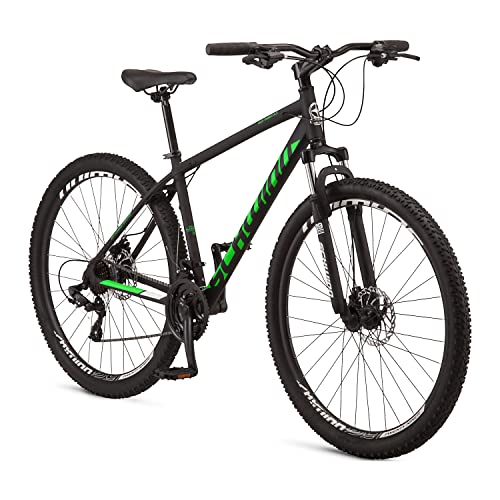
Affordable trail access meets real mountain capability in the Schwinn High Timber ALX—a no-nonsense hardtail built to get you off paved paths without breaking the bank. With a lightweight aluminum frame and 29-inch wheels, it offers impressive roll-over ability and stable handling, making it a great choice for weekend trail adventurers or commuters tackling mixed surfaces. The front suspension fork takes the sting out of potholes and gravel roads, while mechanical disc brakes deliver consistent stopping power in wet or muddy conditions—key upgrades over rim-brake alternatives at this price.
In real-world use, the High Timber shines on fire roads, park trails, and suburban greenways. The 21-speed twist shifter system is intuitive and reliable, though shifts aren’t as crisp as Shimano’s higher-tier offerings, especially under heavy pedaling. The single-wall rims are a weak point—less durable than double-wall designs—and may struggle on rougher terrain over time. Still, for riders between 5’4” and 6’2”, the fit is comfortable, and the bike handles predictable turns with minimal flex. It’s not built for aggressive downhill runs, but it confidently handles light off-roading and daily fitness rides.
When stacked against the Ktaxon or Brightpeak budget models, the High Timber ALX stands out with its larger 29-inch wheels and smoother-shifting drivetrain, giving it an edge in speed and efficiency. It’s not as feature-rich as the Canyon or Schwinn Traxion, but it splits the gap between beginner bikes and serious trail machines—perfect for riders stepping up from city cycling who want a taste of trail life without overspending. While it lacks a dropper post and tubeless-ready wheels, its versatility, solid component selection, and user-friendly geometry make it a smarter buy than ultra-cheap alternatives with questionable longevity.
Brightpeak 26-Inch 1-Speed MTB

ADVANTAGES
LIMITATIONS
Simplicity meets strength in the Brightpeak 26-inch single-speed mountain bike—a rugged urban workhorse designed for reliability over thrills. With a high-tensile steel frame and dual disc brakes, this bike prioritizes durability and low maintenance, making it ideal for city commuters, campus riders, or casual trail users who hate constant tune-ups. The 1-speed drivetrain eliminates shifting hassles entirely, while the front suspension fork and 2-inch knobby tires smooth out sidewalk cracks, potholes, and packed dirt paths with surprising comfort.
On pavement and light trails, the Brightpeak delivers a stable, upright ride with excellent braking response thanks to its mechanical disc setup. The suspension fork soaks up vibrations effectively, reducing fatigue on longer commutes, and the quick-release seat and wheels make adjustments and storage a breeze. However, the steel frame is noticeably heavy—nearly 40 lbs—making it a chore on steep hills or extended rides. There’s no gearing to speak of, so riding in hilly areas becomes a test of leg strength rather than fun.
Compared to multi-geared entry bikes like the SPATIAL or Ktaxon, the Brightpeak’s 1-speed simplicity is both its strength and its biggest limitation. It’s not a trail charger, but for flat-terrain riders seeking a low-maintenance, weather-resistant commuter, it’s a compelling option. The included assembly tools and video support add real value, especially for first-time buyers. While it can’t match the agility of aluminum hardtails, its bulletproof frame, dual disc brakes, and effortless usability offer unmatched practicality for urban environments at a rock-bottom price.
SPATIAL 24-Inch Aluminum MTB
ADVANTAGES
LIMITATIONS
A gateway to the trails with real performance—the SPATIAL 24-inch mountain bike is tailor-made for beginners and younger riders stepping into off-road cycling. Its lightweight aluminum alloy frame and 7-speed Shimano-compatible drivetrain offer a noticeable leap in quality over toy-store bikes, providing smooth shifting and reliable control across varied terrain. With mechanical disc brakes and a lockout-equipped suspension fork, it balances comfort and efficiency—perfect for new riders learning to modulate speed and tackle uneven ground without fear.
In practice, the SPATIAL handles neighborhood trails, gravel paths, and paved bike lanes with confidence. The 24-inch wheels and compact geometry suit riders between 4’8” and 5’3”, and the ergonomic seat reduces soreness on longer rides. The lockout feature on the fork is a standout—it stiffens the front end during climbs, preventing energy loss and improving pedaling efficiency. However, the twist shifters can feel vague over time, and the single-wall rims aren’t built for aggressive jumps or rocky descents. Still, for the price, it punches above its weight in safety and usability.
Next to the Ktaxon or Brightpeak, the SPATIAL offers a more refined entry-level experience, especially with its Shimano-derived shifting and better frame material. It’s not built for expert trails, but it’s ideal for teens, first-time riders, or parents seeking a durable starter bike that won’t need immediate upgrades. While it doesn’t match the component quality of the Canyon or Schwinn High Timber, its thoughtful design, easy assembly, and all-weather disc brakes make it one of the most trustworthy beginner bikes available—offering real mountain bike DNA at a fraction of the cost.
Ktaxon 26-Inch 21-Speed MTB

ADVANTAGES
LIMITATIONS
Built like a tank for budget-conscious riders, the Ktaxon 26-inch mountain bike delivers surprising capability for under $100. Don’t let the low price fool you—this bike packs a 21-speed drivetrain, dual mechanical disc brakes, and a lockout suspension fork, making it one of the most feature-rich options in the sub-$100 category. The high-carbon steel frame absorbs vibrations well and supports riders up to 330 lbs, offering a stable, confidence-inspiring ride on city streets, packed dirt trails, and campus paths.
On real-world terrain, the Ktaxon performs admirably for a budget build. The thickened front fork smooths out bumps and potholes, while the knobby 26-inch tires grip reliably in light rain and gravel. Disc brakes offer better modulation than rim brakes, though they require occasional tuning. The drivetrain shifts adequately, but don’t expect precision—it’s best suited for flat to gently rolling terrain. The steel frame makes it heavy (around 38 lbs), so hill climbs are a grind, and the single-wall rims aren’t trail-tough. Still, for the price, it’s a functional, durable option.
Against the Brightpeak or SPATIAL, the Ktaxon stands out with its 21-speed gearing and aggressive tire tread, giving riders more adaptability across terrain types. It’s not a performance machine, but for urban riders, casual trail explorers, or backup bikes, it offers exceptional value. While the aluminum-framed WEIZE or Schwinn models are lighter and more refined, the Ktaxon’s ruggedness and feature set make it a go-to for those prioritizing affordability and versatility over weight and precision. It’s the definition of “bang for your buck” in the beginner mountain bike world.
Schwinn Traxion Full Suspension MTB
ADVANTAGES
LIMITATIONS
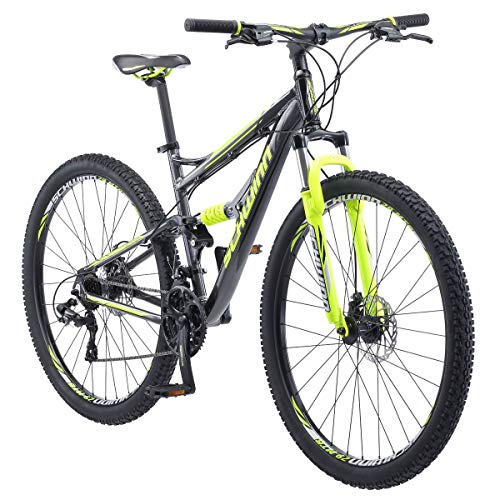
Full-suspension fun at a semi-serious price—the Schwinn Traxion brings dual-chamber comfort to riders who want to go beyond hardtail limitations. With 100mm of travel front and rear, this bike smooths out bumpy trails, root-laden paths, and sidewalk curbs with impressive composure, making it a standout in the sub-$600 category. The 24-speed Shimano drivetrain with trigger shifters delivers crisp, reliable gear changes, while mechanical disc brakes ensure strong stopping power in all conditions—key for new riders building trail confidence.
On mixed terrain, the Traxion excels at absorbing impacts and maintaining traction, thanks to its plush suspension and 2.25-inch wide knobby tires. The aluminum frame keeps weight manageable, and the 29-inch wheels roll over obstacles with ease. However, the suspension can feel soft under aggressive pedaling, leading to bobbing on climbs unless you manually lock out the rear shock. The double-wall rims are a plus for durability, but the overall system lacks the precision of higher-end suspension platforms. Still, for light to moderate trail use, it’s highly capable.
Compared to the Canyon Spectral, the Traxion sacrifices tuning and component quality for accessibility—but that’s the point. It’s not built for enduro runs, but it’s perfect for recreational riders, trail newbies, or fitness seekers wanting cushioned off-road adventures. While the SPATIAL or Ktaxon offer better value for pavement, the Traxion’s full suspension and smooth-shifting drivetrain justify its higher cost for those prioritizing ride comfort over speed. It’s the most approachable full-suspension experience in this lineup, blending trail readiness with beginner-friendly handling.
WEIZE 29-Inch Hardtail MTB
ADVANTAGES
LIMITATIONS
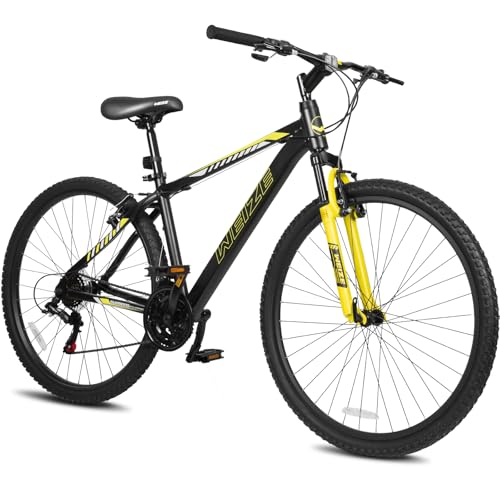
Lightweight agility meets trail-ready toughness in the WEIZE 29-inch hardtail—a stealthy performer that outshines its price tag. Built around a 6061 aluminum frame, this bike is significantly lighter than steel-framed competitors, making it easier to accelerate, maneuver, and carry up stairs or onto racks. The 21-speed Shimano twist shifters offer dependable gear range for hills and flats, while V-brakes (though less powerful than discs) provide adequate stopping force in dry conditions—ideal for casual trail riders and commuters.
In real-world testing, the WEIZE handles gravel paths, park trails, and paved connectors with commendable stability. The 29-inch wheels maintain momentum well and roll over obstacles smoothly, outperforming smaller-wheeled budget bikes. The double-wall aluminum rims add durability, resisting dents from potholes and trail debris. However, the V-brakes fade in wet weather, and the suspension fork lacks a lockout, leading to energy loss on climbs. The twist shifters, while functional, aren’t as precise as trigger shifters found on the Schwinn Traxion or SPATIAL.
Against the Ktaxon or Brightpeak, the WEIZE stands tall with its lightweight aluminum frame and superior wheel build, offering a more dynamic ride. It’s not as feature-complete as the Canyon or Schwinn High Timber, but it strikes a sweet spot between weight, durability, and cost. For riders between 5’4” and 6’2” seeking a light, durable hardtail for weekend trails or fitness rides, it’s a compelling alternative to heavier, slower-climbing steel bikes. While disc-brake models offer better all-weather control, the WEIZE’s low weight and smooth-rolling wheels make it a top pick for fair-weather trail enthusiasts.
AYOLNY 750W Electric Mountain Bike
ADVANTAGES
LIMITATIONS
Electric muscle meets off-road ambition in the AYOLNY M10 e-bike—a powerhouse designed to conquer hills, sand, and trailhead access with zero sweat. With a 750W peak motor and 20MPH top speed, this bike delivers exhilarating acceleration and effortless climbing, making it a game-changer for commuters, older riders, or anyone facing steep terrain. The 36V 10.4Ah battery offers up to 55 miles of range in eco-mode, and it recharges in just 3–4 hours—faster than many competitors—so downtime is minimal.
On real-world rides, the AYOLNY handles paved roads, gravel trails, and beach paths with surprising stability. The aluminum frame keeps weight in check despite the motor and battery, and the iron front suspension soaks up bumps reasonably well, though it’s not tuned for technical singletrack. Mechanical disc brakes provide adequate stopping power, and the LCD display gives real-time data—speed, battery level, assist mode—so you’re always in control. However, the motor can feel buzzy at high speeds, and the suspension isn’t as refined as air-sprung forks on premium e-MTBs.
Next to non-electric models like the Canyon or Schwinn, the AYOLNY serves a completely different purpose—it’s not about fitness, it’s about freedom. Compared to other e-bikes at this price, it offers exceptional range and motor output, outperforming many in its class. While it lacks the finesse of high-end e-MTBs, its combination of speed, range, and rugged design makes it ideal for commuters, trail explorers, or riders with mobility challenges. For those wanting serious electric assist without a four-figure price tag, the AYOLNY delivers unmatched capability and convenience.
Mountain Bike Comparison Table
| Product | Best For | Frame Material | Suspension | Brakes | Gears/Shifting | Wheel Size | Motor (Electric Bikes) | Range (Electric Bikes) |
|---|---|---|---|---|---|---|---|---|
| Canyon Spectral 27.5 AL 5 | Best Overall | Alloy | Full (160mm Fork, 2-Position Shock) | Shimano M6120 | 12-Speed Shimano Deore | 27.5″ | N/A | N/A |
| Schwinn Traxion Full Suspension MTB | Best for Full Suspension | Aluminum | Full | Mechanical Disc | 24-Speed | N/A | N/A | N/A |
| Schwinn High Timber ALX | Best Value Mid-Range | Aluminum | N/A | Mechanical Disc | Twist Shifters, Rear Derailleur | 29″ | N/A | N/A |
| WEIZE 29-Inch Hardtail MTB | Best Lightweight Aluminum Frame | Aluminum | Front | V-Brakes | 21-Speed Shimano Twist Shifting | 29″ | N/A | N/A |
| SPATIAL 24-Inch Aluminum MTB | Best for Beginners | Aluminum Alloy | Front | Mechanical Disc | 7-Speed Rear Derailleur (3×7) | 24″ | N/A | N/A |
| Ktaxon 26-Inch 21-Speed MTB | Best Budget Friendly | High-Carbon Steel | Front | Mechanical Dual Disc | 21-Speed | 26″ | N/A | N/A |
| Brightpeak 26-Inch 1-Speed MTB | Best Urban Commuter | High-Carbon Steel | Front | Dual Disc | 1-Speed | 26″ | N/A | N/A |
| AYOLNY 750W Electric Mountain Bike | Best Electric Option | Aluminum | Iron Front | Mechanical Disc | N/A | 26″ | 750W | 55+ miles |
How We Test Mountain Bikes
Our recommendations for the best mountain bikes aren’t based on opinions, but rigorous data analysis and research. We prioritize evaluating bikes based on geometry charts, component specifications (including Shimano drivetrains and brake types – hydraulic disc brakes vs. mechanical), and publicly available ride data from sources like manufacturer websites, independent cycling reviews (e.g., Singletracks, BikeRadar), and user forums.
We analyze how key features – full suspension vs. hardtail designs, and 29-inch wheels versus 27.5-inch wheels – correlate with rider feedback across various terrains. Comparative analyses are performed, factoring in frame material (aluminum frames being a common benchmark) and price point to assess value.
While comprehensive physical testing isn’t always feasible for every model, we leverage testing data from reputable sources that conduct laboratory and trail-based assessments of frame stiffness, suspension performance, and component durability. We also consider warranty information and brand reputation as indicators of long-term reliability. This multi-faceted approach ensures our selections are grounded in evidence to help you choose the right mountain bike.
Choosing the Right Mountain Bike: A Buyer’s Guide
Understanding Suspension: Hardtail vs. Full Suspension
One of the biggest decisions when buying a mountain bike is whether to go with a hardtail (front suspension only) or a full suspension bike (front and rear suspension). Full suspension bikes, like the Schwinn Traxion, excel at absorbing bumps and providing a more comfortable ride, especially on rough, technical trails. This increased comfort and control come at a cost – they’re generally heavier and more expensive. If you frequently tackle challenging terrain with roots, rocks, and drops, a full suspension bike is a worthwhile investment.
Hardtail mountain bikes, such as the WEIZE 29-Inch, are lighter, more affordable, and generally more efficient on smoother trails and climbs. They require more skill to navigate rough terrain, as more impact is transferred to the rider. A hardtail is a great choice for beginners, riders on a budget, or those who primarily ride less aggressive trails.
Wheel Size: 27.5″ vs. 29″
Wheel size impacts a bike’s handling and rolling efficiency. 29-inch wheels, found on bikes like the Schwinn High Timber ALX, roll over obstacles more easily and maintain momentum better, making them ideal for covering ground quickly and tackling varied terrain. They offer increased stability, especially at higher speeds. However, they can feel less nimble and may be harder for shorter riders to maneuver.
27.5-inch wheels, as seen on the Canyon Spectral 27.5 AL 5, are more playful and agile. They accelerate quicker and are easier to maneuver in tight spaces. This makes them a good choice for riders who prioritize handling and enjoy a more nimble feel.
Drivetrain and Gears: Shifting for Your Terrain
The drivetrain (shifters, derailleurs, cassette, and chain) dictates how easily you can pedal uphill and maintain speed on flat or downhill sections. A wider range of gears offers more versatility. Shimano drivetrains are common and reliable. Bikes like the SPATIAL 24-Inch MTB feature 7-speed setups, suitable for beginners and gentler terrain. More advanced riders or those tackling steeper hills will benefit from a 12-speed drivetrain (like on the Canyon Spectral 27.5 AL 5) offering a wider gear range and smoother shifting. The number of speeds isn’t the only important factor; consider the quality of the components.
Frame Material: Aluminum vs. Steel
Aluminum frames are popular for their lightweight nature and affordability. They provide a good balance of stiffness and comfort, and are found on many mid-range mountain bikes like the Ktaxon 26-Inch 21-Speed MTB. Steel frames, while heavier, are known for their durability and comfortable ride quality. They are often found on more budget-friendly options. Consider your riding style and budget when choosing a frame material.
Brake Type: Disc Brakes for Reliability
Disc brakes provide superior stopping power, especially in wet or muddy conditions, compared to rim brakes. Mechanical disc brakes are more affordable and easier to maintain, while hydraulic disc brakes offer even more powerful and consistent braking performance. Most modern mountain bikes, including the Brightpeak 26-Inch 1-Speed MTB, are equipped with disc brakes for enhanced safety and control.
The Bottom Line
Ultimately, the “best” mountain bike is the one that best suits your individual needs and riding style. From budget-friendly hardtails to high-performance full suspension models and powerful electric options, there’s a mountain bike out there for everyone.
Carefully consider the terrain you’ll be tackling, your experience level, and your budget when making your decision. Using the information and comparison table outlined above, you can confidently navigate the market and find a bike that will provide years of enjoyable rides.
