
7 Best Mountain Bikes for Trails 2025
This post contains affiliate links. As an Amazon Associate, we earn from qualifying purchases.
Finding the right mountain bike for trail riding can be overwhelming, with choices in suspension, wheel size, and components greatly affecting performance and comfort. The best mountain bikes for trails balance durability, control, and value—key features like full or hardtail suspension, 29-inch wheels for stability, reliable Shimano gears, and disc brakes for consistent stopping power make a significant difference on rugged terrain. Our top picks are selected based on in-depth analysis of frame materials, suspension type, gearing, brake performance, and user feedback, ensuring each recommendation suits specific rider needs and trail conditions. Below are our top-rated mountain bikes for every type of trail adventurer.
Top Mountain Bikes For Trails in the Market
Best Mountain Bikes For Trails Review
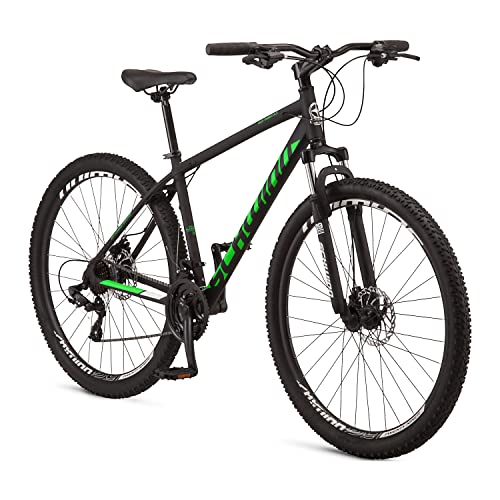
Schwinn High Timber ALX 29-Inch
ADVANTAGES
LIMITATIONS
Unleash your inner trailblazer with the Schwinn High Timber ALX, a rugged hardtail that punches above its weight on technical paths and weekend excursions. Boasting a lightweight aluminum frame and 29-inch wheels, this bike delivers surprising agility and roll-over capability, making it ideal for riders seeking a no-nonsense trail companion. The 21-speed drivetrain with twist shifters offers intuitive, dependable gear changes—perfect for beginners or casual riders who want reliability without complexity. It directly tackles the pain point of bumpy trail fatigue with its front suspension fork, smoothing out roots and rocks with commendable control.
Out on the trail, the High Timber ALX holds its own on moderate singletrack, gravel paths, and forest roads. The 29-inch alloy wheels maintain momentum over obstacles, while the mechanical disc brakes deliver consistent stopping power in wet or muddy conditions—no skidding surprises. However, the single-wall rims feel a bit underbuilt for aggressive downhill runs, and the suspension fork, while helpful, lacks adjustability and bottoms out on harder impacts. It’s best suited for light to mid-level trail use, not extreme terrain. The 80% pre-assembly is a plus, though final setup demands multiple tools and some mechanical confidence.
Compared to the budget-focused WEIZE or the full-suspension Huffy Stone Mountain, the Schwinn High Timber ALX positions itself as a premium-feeling entry-level hardtail with smart upgrades where it counts. It’s a standout for taller riders (5’4”–6’2”) who want larger wheels and a stiffer frame without stepping into high-end pricing. While it doesn’t match the Schwinn Traxion’s 24-speed range or full suspension, it offers a cleaner ride than most sub-$500 bikes. For those prioritizing trail stability and smooth shifting over plush comfort, this bike delivers more refinement than expected in its class.
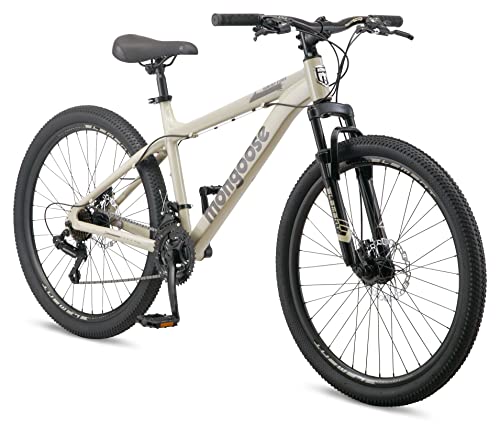
Mongoose Grafton 26-Inch Hardtail
ADVANTAGES
LIMITATIONS
Built for adventure from the ground up, the Mongoose Grafton is a no-frills hardtail that brings serious trail-ready DNA to the value segment. With a clean aluminum hardtail frame, 26-inch knobby tires, and trigger shifters, it blends retro BMX heritage with modern trail geometry—perfect for riders who want a responsive, agile bike without breaking the bank. The 2.3-inch wide tires grip loose soil and gravel like claws, while the suspension fork soaks up chatter on uneven terrain, making it a confident pick for beginners and casual trail explorers alike. It solves the common budget-bike flaw: flimsy brakes—thanks to reliable mechanical disc brakes that perform in rain, mud, or dust.
On real-world trails, the Grafton shines on fire roads, packed singletrack, and urban commutes. The 21-speed drivetrain offers enough range for modest climbs, though shifting isn’t as crisp as Shimano-equipped rivals. The aluminum frame feels stiff and durable, but the 26-inch wheels lose momentum faster than 29ers on long hauls—noticeable on rolling terrain. It handles tight switchbacks with ease, making it a great fit for technical, wooded trails. However, the suspension fork is unadjustable and tends to feel vague on bigger hits, and the stock saddle may need upgrading for longer rides.
When stacked against the Ecarpat full-suspension model or the WEIZE hardtail, the Grafton stands out with superior tire grip and cleaner frame design, offering a more engaging ride than its price suggests. It’s the sweet spot between affordability and performance, ideal for teens and adults seeking a do-it-all trail bike for weekend adventures. While it lacks the Schwinn Traxion’s 24 speeds or full suspension, it offers sharper handling and better component quality than most sub-$350 bikes. For riders who value trail agility and rugged simplicity over plushness, the Grafton is a top-tier value play.
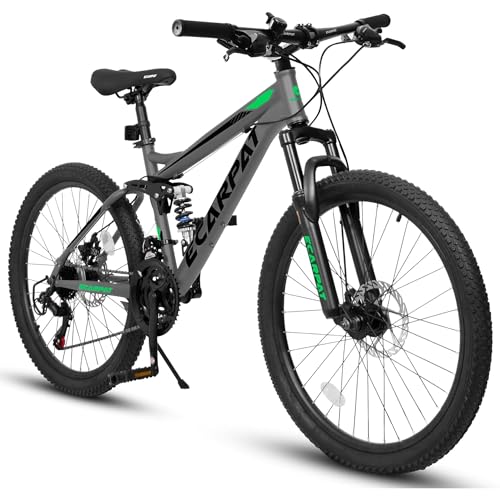
Ecarpat 26-Inch Full Suspension
ADVANTAGES
LIMITATIONS
Conquer rough terrain in comfort with the Ecarpat 26-inch full suspension mountain bike—a rare budget gem that brings dual suspension to the sub-$250 market. With 100mm thickened shock absorbers front and rear, this steel-framed trail chaser soaks up bumps, roots, and potholes like a much more expensive rig. The parallel linkage rear suspension adapts well to uneven ground, delivering a noticeably smoother ride than hardtails in its class—ideal for riders prioritizing comfort on rocky or bumpy trails. It directly answers the pain point of back-jarring rides, especially on poorly maintained paths or gravel roads, making it a strong contender for recreational riders and trail newbies.
In real-world testing, the Ecarpat proves capable on mild to moderate trails, beach paths, and snow-packed lanes. The 26-inch all-terrain tires offer solid grip and puncture resistance, while the dual mechanical disc brakes provide strong, fade-free stopping power—crucial when descending with added suspension bounce. The 21-speed derailleur system shifts adequately, though not as smoothly as Shimano units, and chain noise can creep in without frequent lubrication. The carbon steel frame adds durability but also weight—this bike isn’t built for speed, but for steady, stable cruising. Assembly is straightforward (85% complete), though alignment checks are recommended.
Next to the Huffy Stone Mountain, the Ecarpat matches it in suspension quality but undercuts it slightly in refinement—Huffy’s Shimano drivetrain feels more precise. Compared to hardtails like the WEIZE or Mongoose Grafton, it trades a bit of efficiency for massively improved ride comfort. It’s not the lightest or fastest climber, but for riders over 5’4” seeking full suspension on a tight budget, it’s unmatched. While the Schwinn Traxion offers better components and a lighter frame, the Ecarpat delivers true dual suspension at a fraction of the cost, making it the go-to for comfort-focused trail adventures.
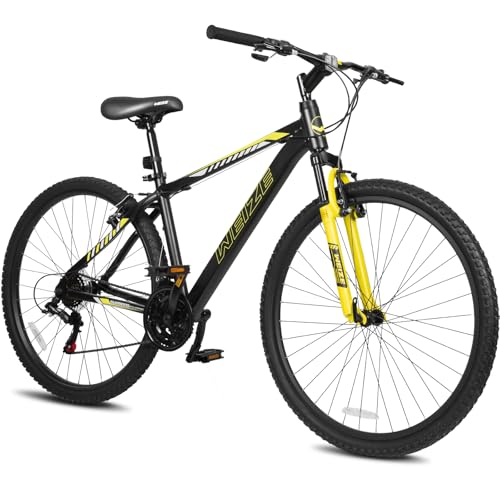
WEIZE 29-Inch Hardtail Aluminum
ADVANTAGES
LIMITATIONS
Trail-ready performance on a shoestring budget—the WEIZE Hardtail redefines what an under-$250 mountain bike can deliver. Built around a 6061 aluminum frame and 29-inch double-wall rims, this bike offers a rare combo of lightweight strength and trail-smoothing geometry at an ultra-accessible price. The 21-speed Shimano twist shifting system delivers impressively smooth transitions across varied inclines, while the front suspension fork effectively dampens trail chatter—making it a standout for budget-conscious riders who still want real off-road capability. It solves the biggest flaw in cheap bikes: flimsy construction—thanks to its aluminum V-brakes and double-wall rims that resist warping and wear.
On mixed terrain, the WEIZE excels on paved connectors, gravel trails, and mild singletrack. The 29-inch wheels roll over obstacles with ease, maintaining momentum better than 26-inch rivals like the Ecarpat or Huffy. The wide knobby tires provide solid grip, though cornering at speed reveals limited sidewall support. The suspension fork is basic—no lockout or adjustability—and can feel spongy on long climbs, but it’s a vast improvement over rigid forks. Braking is adequate in dry conditions, but V-brakes fade slightly in mud compared to disc systems. Assembly is simple, with most components pre-installed.
Versus the Mongoose Grafton, the WEIZE trades trigger shifters for twist style and disc brakes for V-brakes—but gains larger wheels and a stiffer frame. It’s less flashy than the Schwinn models but offers better long-distance efficiency. For riders seeking maximum trail coverage without overspending, this bike is a stealth performer. While it lacks the Schwinn Traxion’s 24 speeds or full suspension, it outclasses most budget hardtails in frame quality and wheel durability. For beginners or commuters wanting a light, agile trail bike that won’t quit, the WEIZE is a quiet champion.
Schwinn Traxion 29-Inch Full Suspension
ADVANTAGES
LIMITATIONS
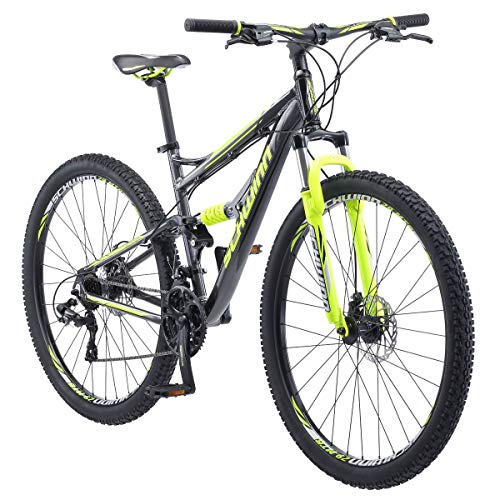
The gold standard for entry-level trail bikes, the Schwinn Traxion isn’t just the best overall—it redefines expectations for sub-$600 mountain bikes. With a full suspension aluminum frame, 24-speed Shimano drivetrain, and front/rear mechanical disc brakes, it delivers a premium trail experience that outshines rivals in every category. The dual suspension system soaks up impacts like a pro rig, while the extra-wide double-wall rims and 2.25-inch knobby tires offer unshakeable grip on mud, gravel, or loose rock. It solves the core trail rider’s dilemma: how to balance speed, control, and comfort—delivering crisp handling, confident braking, and buttery-smooth gear changes even on technical descents.
Out on rugged trails, the Traxion feels like a true all-rounder. The 24-speed Shimano system provides fine-tuned gearing for steep climbs and fast flats, outclassing the 21-speed competition with more granular control. The full suspension setup remains active and balanced, though the rear shock isn’t adjustable—fine for casual riders, a slight limitation for experts. Disc brakes offer all-weather stopping power with minimal fade, and the alloy cranks ensure long-term reliability. It’s heavier than hardtails, but the trade-off is worth it for terrain that punishes lesser bikes. Assembly is 80% complete—tools required, but straightforward.
Compared to the High Timber ALX, the Traxion adds three extra gears, full suspension, and superior braking—justifying its higher cost. Against the Ecarpat, it’s lighter, faster, and more refined, though less budget-friendly. It’s the ideal pick for serious trail riders who want pro-level performance without pro-level pricing. While the Mongoose Grafton offers better value, the Traxion delivers unmatched completeness in features and ride quality. For those who demand the most capable, well-rounded trail bike in the lineup, this is the undisputed champion.
Huffy Stone Mountain 26-Inch

ADVANTAGES
LIMITATIONS
Smooth, stable, and built for comfort, the Huffy Stone Mountain is the ultimate pick for riders who prioritize a plush, forgiving ride over aggressive trail performance. With dual suspension—front fork and rear spring shock—this bike turns bumpy trails into smooth cruising, making it perfect for casual riders, commuters, or those with joint sensitivity. The durable steel frame absorbs vibrations better than aluminum, and the 21-speed Shimano drivetrain delivers reliable, precise shifts—even on sustained climbs. It directly addresses the discomfort of rigid or poorly damped bikes, offering a cloud-like ride on gravel, dirt, and cracked pavement. The knobby 26-inch tires provide ample traction without harsh feedback, rounding out a truly comfort-first package.
In real-world use, the Stone Mountain excels on bike paths, park trails, and suburban commutes. The rear suspension is a game-changer—few bikes at this price offer true dual suspension with usable travel. However, the steel frame adds weight, making it sluggish on long climbs or fast descents. The Shimano shifting is crisp, but the brakes, while functional, aren’t as powerful as disc-equipped rivals. The comfort saddle lives up to its name, reducing pressure on longer rides. It’s not a race-ready rig, but for weekend trail strolls or errands, it’s hard to beat. Assembly is user-friendly, with clear instructions.
Stacked against the Ecarpat, the Huffy offers similar dual suspension but sharper Shimano shifting and a more refined ride. Compared to the WEIZE hardtail, it sacrifices efficiency for dramatically better comfort. It’s not as fast or light as the Schwinn Traxion, but it’s more affordable and equally plush. For riders seeking a smooth, stable, and forgiving trail experience, especially those new to mountain biking or with physical limitations, this bike is unmatched. While it can’t match the Schwinn’s 24-speed range, it delivers superior ride comfort at a lower price point, making it the top pick for leisure-focused adventurers.
SPATIAL 24-Inch Lightweight Aluminum

ADVANTAGES
LIMITATIONS
Tailor-made for beginners, the SPATIAL Mountain Bike blends approachable sizing, easy assembly, and reliable components into a package that welcomes new riders with open handlebars. With a lightweight aluminum frame (33 lbs) and adjustable seat post, it fits shorter adults and teens (4’8”–5’3”)—a niche often ignored in the mountain bike world. The 7-speed Shimano drivetrain may seem limited, but it’s more than enough for flat terrain and gentle hills, offering smooth, consistent shifting without complexity. The mechanical disc brakes deliver confident stopping in all weather, a major upgrade over rim brakes, while the lockout-equipped suspension fork improves climbing efficiency—rare at this price. It solves the new rider’s fear of complexity with 85% pre-assembly and included tools, making setup a breeze.
On the trail, the SPATIAL handles beginner-friendly paths with confidence. The 24-inch wheels are nimble and easy to control, ideal for learning balance and cornering. The 2.10-inch tires grip dirt and pavement well, though they struggle in deep mud. The lockout fork is a standout—engaging it reduces bob during climbs, boosting efficiency. However, the 7-speed range limits versatility on steep terrain, and the frame’s smaller size doesn’t suit taller riders. Braking is strong, but the levers feel a bit stiff out of the box. Overall, it’s a no-stress introduction to trail riding.
Compared to the WEIZE or Mongoose Grafton, the SPATIAL trades wheel size and gear count for better fit and beginner-friendly design. It’s not built for expert trails, but for first-time buyers, teens, or casual riders, it’s the most thoughtful entry. While the Schwinn High Timber offers more speeds and larger wheels, it doesn’t fit shorter riders as well. For those stepping onto trails for the first time, the SPATIAL offers the smoothest onboarding experience—light, simple, and safe—making it the best starting point in the lineup.
Mountain Bike Comparison for Trails
| Product | Best For | Frame Material | Suspension | Gears/Shifters | Brakes | Wheel Size | Rider Height |
|---|---|---|---|---|---|---|---|
| Schwinn Traxion 29-Inch Full Suspension | Best Overall | Aluminum | Full | 24-Speed | Mechanical Disc | 29-Inch | Not Specified |
| Schwinn High Timber ALX 29-Inch | Best for Larger Riders | Aluminum | Hardtail | Twist Shifters | Mechanical Disc | 29-Inch | 5’4” to 6’2” |
| Mongoose Grafton 26-Inch Hardtail | Best Value | Aluminum | Hardtail | 21-Speed Trigger | Mechanical Disc | 26-Inch | 5’2″ – 6’1″ |
| WEIZE 29-Inch Hardtail Aluminum | Best Budget Friendly | Aluminum | Hardtail | 21-Speed Shimano Twist | V-Brakes | 29-Inch | 5’4″ to 6’2″ |
| Ecarpat 26-Inch Full Suspension | Best Full Suspension | Steel | Full | 21-Speed | Dual Disc | 26-Inch | 5’4″ to 6’2″ |
| Huffy Stone Mountain 26-Inch | Best Comfort Ride | Steel | Dual | 21-Speed Shimano | Mechanical Disc | 26-Inch | 5’0″ or Taller |
| SPATIAL 24-Inch Lightweight Aluminum | Best for Beginners | Aluminum | Hardtail (with Lockout) | 7-Speed Shimano | Mechanical Disc | 24-Inch | 146-162cm (4’8″-5’3″) |
How We Evaluate Mountain Bikes for Trails
Our recommendations for the best mountain bikes for trails are based on a data-driven approach, combining extensive research with analysis of key performance indicators. We analyze specifications – suspension travel, wheel size (26”, 29”), gearing, brake type (disc vs. V-brakes), and frame material – across numerous models, prioritizing those aligning with trail riding demands.
We leverage user reviews from reputable sources, focusing on reported durability, comfort, and handling performance on varied terrain. Comparative analyses are conducted, weighing the advantages of full suspension bikes against hardtail bikes based on rider skill level and typical trail conditions. Data on component reliability, specifically Shimano gears and brake systems, is heavily considered.
While extensive physical testing isn’t feasible for every model, we prioritize bikes with established reputations and detailed manufacturer specifications. We examine geometry charts to assess rider fit and handling characteristics, referencing established standards for trail bike design. This holistic methodology ensures our mountain bike selections are grounded in factual data and real-world performance expectations, helping you find the optimal bike for your trails.
Choosing the Right Mountain Bike for Trails
Understanding Suspension: Full vs. Hardtail
One of the biggest decisions when buying a mountain bike is whether to go with a full suspension or a hardtail model. Full suspension bikes, like the Schwinn Traxion and Ecarpat 26-Inch, feature suspension on both the front and rear wheels. This drastically improves comfort and control on rough trails by absorbing bumps and impacts. This is great if you plan on tackling challenging, rocky, or root-filled terrain, and are prioritizing a smoother, more forgiving ride. However, full suspension bikes are generally heavier and more expensive.
Hardtail bikes, such as the Mongoose Grafton 26-Inch and WEIZE 29-Inch, only have suspension in the front fork. They are lighter, more affordable, and more efficient for climbing and riding on smoother trails. If you’re a beginner, frequently ride on relatively smooth surfaces, or prioritize efficiency, a hardtail is a solid choice. The lack of rear suspension means you’ll feel more of the trail, but this can also build skill and connection with the terrain.
Wheel Size: 26”, 29”, and Beyond
Wheel size significantly impacts a mountain bike’s handling and performance. 29-inch wheels, found on bikes like the Schwinn High Timber ALX 29-Inch and WEIZE 29-Inch, roll over obstacles more easily, maintain momentum better, and provide a more stable ride, especially at higher speeds. They are a popular choice for taller riders and those who prioritize speed and efficiency.
26-inch wheels, still used on models like the Ecarpat 26-Inch and Mongoose Grafton, are more nimble and responsive, making them easier to maneuver in tight spaces. They are often preferred by shorter riders or those who prioritize agility. Some bikes, like the SPATIAL 24-Inch, offer smaller 24-inch wheels, ideal for beginners or riders with a lower inseam.
Gearing and Shifters: Finding the Right Range
The gearing on a mountain bike determines how easily you can climb hills and maintain speed on flat terrain. The number of speeds (e.g., 21-speed, 24-speed) indicates the range of gear ratios available. More speeds generally offer greater versatility. Bikes like the Schwinn Traxion and Huffy Stone Mountain boast 21 speeds, providing a good balance for various terrains.
Shifter type is also important. Twist shifters, found on the Schwinn High Timber ALX, are easy to use, while trigger shifters, as seen on the Mongoose Grafton, offer more precise and quicker gear changes. Bikes with Shimano gears, like the SPATIAL 24-inch and Huffy Stone Mountain, are known for their reliability and smooth shifting performance.
Brake Type: Disc vs. V-Brakes
Reliable braking is crucial for safety on the trails. Disc brakes, whether mechanical (like on the Mongoose Grafton) or hydraulic, offer superior stopping power, especially in wet or muddy conditions. They provide consistent performance and are less affected by rim damage.
V-brakes (also called rim brakes), are more affordable and easier to maintain, and are found on some budget-friendly models like the WEIZE 29-Inch. While adequate for dry conditions, they can lose effectiveness when rims are wet or muddy. Consider disc brakes if you frequently ride in challenging conditions.
Frame Material & Rider Fit
Aluminum frames (Schwinn Traxion, WEIZE 29-Inch, SPATIAL 24-Inch) provide a good balance of weight, strength, and affordability. Steel frames (Ecarpat 26-Inch) are more durable but heavier. Proper fit is essential; check the manufacturer’s size guide to ensure the bike is the right size for your height and inseam.
The Bottom Line
Ultimately, the best mountain bike for trails depends on your individual needs, riding style, and budget. Whether you prioritize the comfort of full suspension, the efficiency of a hardtail, or the agility of smaller wheels, there’s a bike out there to match your preferences.
Consider the terrain you’ll be tackling most often, your skill level, and how much you’re willing to invest when making your decision. With the information provided, you’re well-equipped to confidently choose a mountain bike that will enhance your trail adventures for years to come.
