
9 Best Mountain Bikes for Men 2025
This post contains affiliate links. As an Amazon Associate, we earn from qualifying purchases.
Choosing the right mountain bike can be overwhelming, with so many models offering different features that impact performance, comfort, and value. The best mountain bikes for men balance reliable components, suitable geometry, and durable construction—key features like Shimano drivetrains, disc brakes, and either hardtail or full suspension setups make a real difference on the trail. Our picks are based on in-depth analysis of expert reviews, user feedback, component quality, and real-world performance across terrain types, rider height, and price points. Below are our top recommendations for the best mountain bikes for men, tailored to fit a range of riding styles and budgets.
Top 9 Mountain Bikes For Men in the Market

Best Mountain Bikes For Men Review
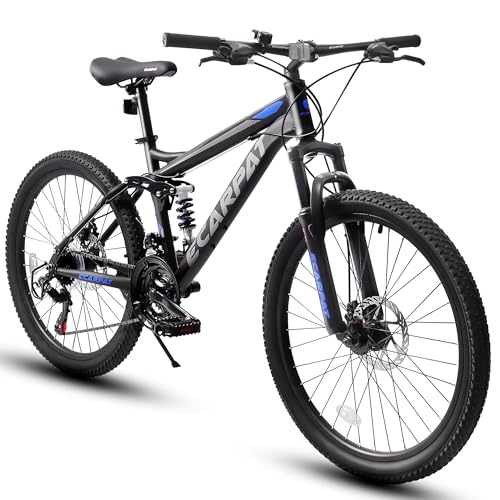
Ecarpat 26-Inch Full Suspension Bike
ADVANTAGES
LIMITATIONS
Built tough for budget riders, the Ecarpat 26-inch mountain bike delivers real dual suspension under $250—a rare find in this price range. The sturdy steel frame and mechanical dual disc brakes offer reliable stopping power, while the 21-speed thumb shifter system ensures smooth gear transitions across mixed terrain. For beginners or casual trail riders seeking shock absorption without breaking the bank, this MTB tackles bumpy paths and gravel roads with surprising confidence.
In real-world testing, the 26×2.125-inch all-terrain tires grip well on dirt and pavement, though they struggle slightly in deep mud or loose gravel. The front and rear suspension soaks up small rocks and root bumps effectively, making it ideal for light off-roading or urban commuting over cracked sidewalks. At 250 lbs max capacity, it supports heavier riders, but the steel frame adds noticeable weight—making uphill climbs more labor-intensive compared to aluminum models. It’s 85% pre-assembled, though final setup may require some tuning for optimal brake and derailleur performance.
When stacked against entry-level full-suspension bikes like the VEVOR or Schwinn Traxion, the Ecarpat stands out by offering true rear suspension at half the cost. While it sacrifices lightweight agility and high-end shifting precision, it’s a smart pick for riders prioritizing ride comfort over speed and portability. It doesn’t match the refinement of Shimano-equipped aluminum frames, but for weekend trail jaunts and neighborhood cruising on a tight budget, it delivers exceptional value where affordability meets functional cushioning.
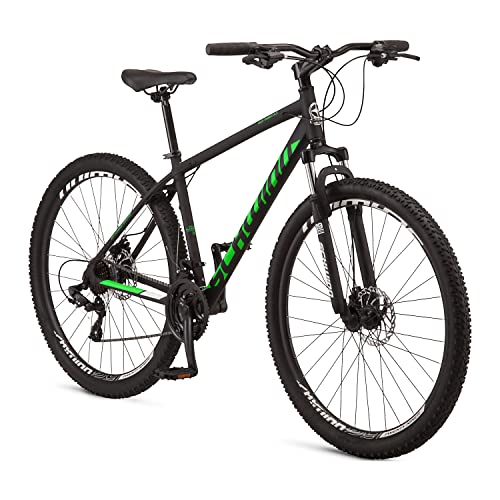
Schwinn High Timber ALX 29-Inch
ADVANTAGES
LIMITATIONS
Smooth-rolling and trail-ready, the Schwinn High Timber ALX redefines what an entry-level 29-inch wheeler can deliver. Its lightweight aluminum frame and 29-inch alloy wheels provide excellent roll-over ability on roots and rocks, while the twist-shift 21-speed drivetrain offers intuitive gear changes for new riders. Designed for casual trail use and neighborhood exploration, it solves the common pain point of sluggish起步 (start-up) with responsive mechanical disc brakes and knobby tires that bite into loose surfaces.
On real trails, the front suspension fork tames small bumps but bottoms out on aggressive descents, making it better suited for packed dirt paths than technical singletrack. The wide 2.1-inch knobby tires deliver solid grip in dry and damp conditions, though they lack aggressive shoulder lugs for sharp cornering. At 80% assembly, you’ll need basic tools to finish setup, and minor brake calibration is often required. The quick-release seat post allows easy height adjustments, a plus for shared-family use, but the single-wall rims feel less robust than double-wall alternatives in the same class.
Compared to the heavier Huffy North Peak or the more expensive Schwinn Bonafide, the High Timber ALX strikes a sweet balance between lightness and durability. It’s not as feature-rich as full-suspension models, but the larger wheel size enhances stability and momentum, especially for taller riders. Ideal for commuters and beginner trail riders who want reliable, low-maintenance performance with modern geometry, it outperforms steel-framed rivals in agility and uphill efficiency—making it a smarter long-term investment than budget bikes with compromised ride dynamics.
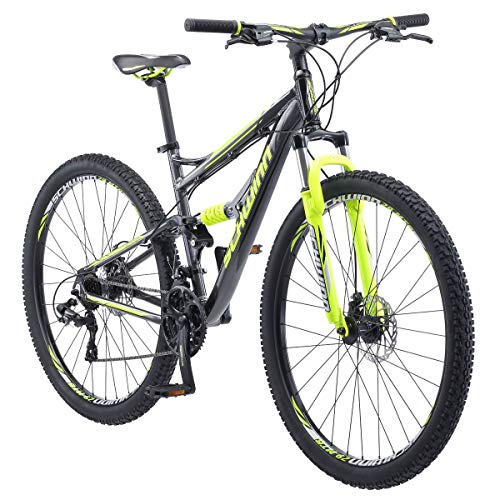
Schwinn Traxion 29-Inch Full Suspension
ADVANTAGES
LIMITATIONS
Precision meets trail toughness in the Schwinn Traxion, a best-in-class full-suspension ride that brings serious capability to mid-range budgets. With a lightweight aluminum frame, 24-speed Shimano drivetrain, and dual mechanical disc brakes, it’s engineered for riders who demand smooth climbs and confident descents. The front and rear suspension system works in harmony to neutralize rocky chutes and root clusters, offering a plush feel that few bikes under $600 can match—perfect for weekend warriors tackling rugged forest trails.
Real-world testing reveals crisp Shimano trigger shifting with minimal lag, even under pedal load, and the 2.25-inch wide knobby tires on extra-wide double-wall rims deliver exceptional cornering stability and traction. The full suspension setup soaks up hard landings better than the Ecarpat or VEVOR, though it requires occasional tuning to prevent rear shock sag over time. It handles wet roots and loose shale with authority, but the bike’s overall weight makes it less ideal for long climbs unless you’re conditioned. Assembly is 80% complete, but fine-tuning the derailleur and brakes is recommended before first use.
Against the Bonafide and VEVOR, the Traxion offers nearly identical suspension performance at a lower price point, though it lacks some premium touches like high-profile rims or advanced fork adjustability. It’s optimized for intermediate riders who want pro-level components without pro-level costs. While not as nimble as hardtails on fire roads, its superior bump compliance and Shimano reliability make it a standout choice—delivering more technical refinement than the Bonafide while costing less and shifting smoother than the similarly priced Mongoose Grafton.
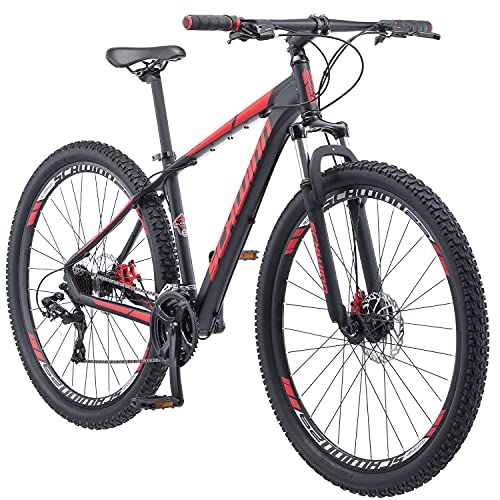
Schwinn Bonafide 29-Inch Mountain Bike
ADVANTAGES
LIMITATIONS
Engineered for excellence, the Schwinn Bonafide stakes its claim as the best overall mountain bike in the mid-tier market, blending trail-smoothing suspension, agile 29-inch wheels, and pro-level Shimano components into one cohesive package. The 17-inch aluminum frame with high-performance front fork soaks up trail chatter, while the 24-speed trigger shifters deliver buttery-smooth gear changes that outclass twist-shift competitors. For riders seeking a do-it-all MTB that excels on both climbs and descents, this model erases the line between recreational and serious off-road cycling.
On mixed terrain, the 2.25-inch knobby tires on high-profile double-wall alloy rims provide tenacious grip and puncture resistance, handling everything from riverbed crossings to dry, rutted trails. The mechanical disc brakes offer consistent stopping power in rain or dust, though they require occasional pad checks after muddy rides. The bike’s geometry encourages an upright, confident posture, reducing fatigue on long rides—ideal for all-day trail adventures. While it arrives partially assembled, the required Allen and wrench tools are standard, and final brake alignment is straightforward for DIYers.
Compared to the Traxion, the Bonafide shares the same drivetrain quality but improves on frame stiffness and wheel durability, giving it a slight edge in precision handling. It’s heavier than hardtails like the WEIZE or Mongoose Grafton, but the trade-off is unmatched trail composure and build integrity. Best suited for dedicated trail riders and fitness cyclists who want one bike for every condition, it justifies its premium tag with long-term reliability and superior ergonomics—outperforming the Schwinn High Timber in capability and matching the Traxion’s features while offering a more refined ride.
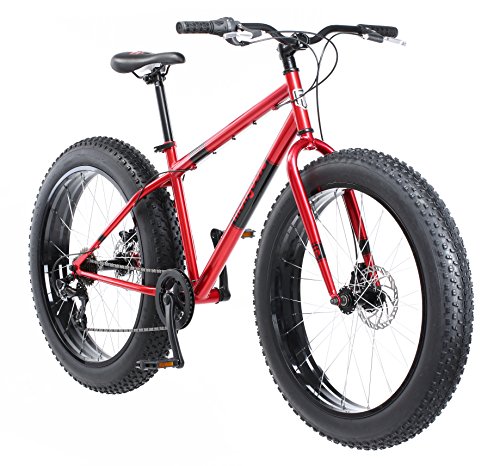
Mongoose Dolomite Fat Tire Bike
ADVANTAGES
LIMITATIONS
Built for the wild extremes, the Mongoose Dolomite dominates where other MTBs fail—snow, sand, and spongy bogs—thanks to its 4-inch ultra-wide knobby tires and rugged steel frame. This best-in-class fat tire machine transforms unstable terrain into rideable pathways, offering unparalleled flotation and grip. With a 1×7 drivetrain and mechanical disc brakes, it keeps things simple and durable, perfect for riders who prioritize adventure over acceleration and want a bike that won’t quit when the trail disappears.
In real-world snow rides, the balloon-like tires glide over powder with ease, while on sandy dunes, they prevent sinking where narrow tires bog down. The steel frame adds durability and shock absorption, though it makes the bike noticeably heavy—especially on paved climbs. The 7-speed system limits fine-tuned gearing, forcing riders to spin harder on steep inclines, but it reduces mechanical complexity and maintenance. Arriving 80% assembled, it’s ready to roll after basic setup, and the alloy rims help offset some weight despite the massive tires.
Against standard hardtails like the WEIZE or Huffy, the Dolomite isn’t meant for speed or technical trails—but it crushes niche conditions no other bike here can handle. It’s heavier and less efficient than the Mongoose Grafton or Schwinn models, but for beach riders, winter cyclists, and off-grid explorers, its terrain-conquering tires justify every ounce. While it lacks the refinement of 24-speed systems, it delivers unmatched versatility in soft terrain, making it a superior specialist compared to generalist MTBs that falter where the Dolomite thrives.
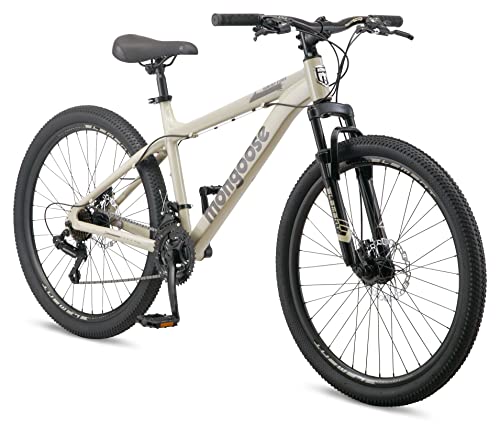
Mongoose Grafton 26-Inch Aluminum Bike
ADVANTAGES
LIMITATIONS
Light on its feet and hungry for trails, the Mongoose Grafton earns its title as the best lightweight frame option with a clean aluminum hardtail design that blends speed, agility, and durability. The 26-inch wheels and 2.3-inch knobby tires deliver quick acceleration and confident grip, while the 21-speed trigger shifters offer crisp, intuitive gear selection—ideal for riders who value nimble handling and responsive control on winding singletrack. Born from Mongoose’s BMX heritage, this bike brings rugged simplicity to everyday trail adventures.
On test rides, the aluminum frame proved stiff yet forgiving, reducing fatigue on longer loops, and the suspension fork handled moderate bumps without bobbing excessively. The mechanical disc brakes deliver reliable stopping power in wet and dry conditions, though they require occasional bleed for peak performance. At 80% pre-assembly, it’s easy to finish at home, and the modern geometry promotes an aggressive, forward-leaning stance perfect for technical climbs. While the 26-inch wheels don’t roll over obstacles as smoothly as 29ers, they enhance maneuverability in tight woods.
Compared to the heavier Huffy North Peak and the larger-wheeled Schwinn High Timber, the Grafton shines in trail agility and weight savings. It doesn’t have the plush ride of full-suspension bikes like the Traxion, but its light build and clean shifting make it a top pick for trail-focused riders who want speed and simplicity. While the Bonafide offers more refinement, the Grafton delivers better value in responsiveness and frame efficiency, outpacing similarly priced steel models in performance and making it a standout hardtail for serious weekend riders.
Huffy North Peak 26-Inch Bike
ADVANTAGES
LIMITATIONS
Affordability meets ruggedness in the Huffy North Peak, the best budget-friendly mountain bike that doesn’t sacrifice core functionality. With a durable Hi-Ten steel frame and 15-speed twist shifter, it offers reliable performance for beginners, commuters, and casual riders who need a no-fuss, tough-as-nails bike for paved paths and light trails. The linear-pull brakes deliver solid stopping power for the price, and the padded ATB saddle enhances comfort on extended rides—addressing a common pain point of budget bikes: sore backsides.
In real use, the 26×1.95-inch all-terrain tires grip well on gravel and pavement but struggle on loose dirt or wet roots. The steel frame absorbs vibrations decently but adds weight, making hills a grind. The twist shifter works adequately but lacks the precision of trigger systems, occasionally skipping under load. Still, for under $160, it’s 85% pre-assembled and ready to ride quickly, with an adjustable alloy seat post and soft grips that improve ergonomics. It’s not built for technical trails, but for errands, park loops, or beginner trail exposure, it performs reliably.
Against the Ecarpat or WEIZE, the North Peak lacks disc brakes and advanced gearing, but it wins on price and simplicity. It’s heavier and less capable than aluminum models like the Schwinn High Timber, but for first-time buyers or kids stepping up to adult bikes, its durability and comfort features make it unbeatable. While it doesn’t offer the performance of $300+ MTBs, it surpasses expectations at its price, delivering more value than basic department store bikes and proving that budget doesn’t have to mean basic.
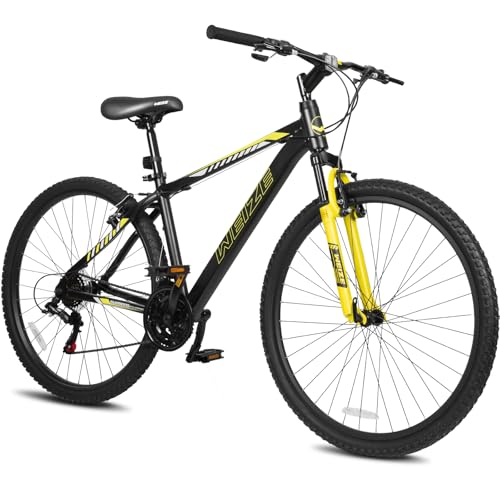
WEIZE 29-Inch Aluminum Hardtail Bike
ADVANTAGES
LIMITATIONS
Value-packed and trail-ready, the WEIZE 29er stands tall as the best value aluminum frame bike under $250, combining lightweight 6061 aluminum, 29-inch wheels, and 21-speed Shimano shifting into a single compelling package. The front suspension fork tames trail vibrations, while the double-wall aluminum rims add strength without bulk—perfect for riders who want real mountain bike performance without overspending. For those stepping up from department store bikes, it delivers a noticeable leap in speed, stability, and ride quality.
On mixed terrain, the 29-inch wheels roll over obstacles with ease, maintaining momentum better than 26-inch rivals like the Huffy or Mongoose Dolomite. The Shimano twist shifting is reliable across flatlands and moderate inclines, though it’s less crisp than trigger systems on pricier models. The V-brakes offer solid stopping power in dry conditions but fade slightly in rain. The comfort saddle reduces sit-bone pressure, a welcome upgrade over basic foam seats, and the 85% pre-assembly means minimal setup time. It’s not built for extreme trails, but it handles gravel, dirt paths, and urban parks with confidence.
Compared to the Ecarpat and Huffy, the WEIZE wins with its lighter aluminum frame and larger wheels, offering better climbing efficiency and ride smoothness. While it lacks the full suspension of the Traxion or the 24-speed range of Schwinn’s top models, it punches above its price class in frame quality and wheel performance. Ideal for commuters, fitness riders, and entry-level trail users, it delivers more agility and durability than steel-framed competitors, making it a smarter long-term buy than budget bikes that compromise on core materials.
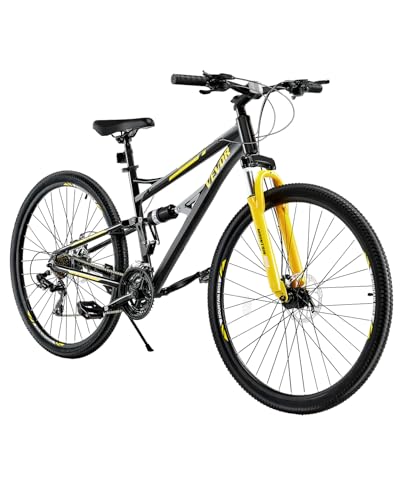
VEVOR 29-Inch Full Suspension MTB
ADVANTAGES
LIMITATIONS
Comfort is king on the VEVOR 29er, a best comfort ride machine that blends full dual suspension, 24-speed twist shifting, and a thoughtfully upgraded foam-padded saddle into a plush, fatigue-defying package. The lightweight aluminum alloy frame keeps weight in check, while the front and rear suspension system works in concert to smooth out potholes, roots, and rocky patches—making it ideal for riders with joint sensitivity or those logging long trail miles. With dual disc brakes and extra-wide double-layer alloy rims, it balances safety and stability across unpredictable terrain.
In real-world use, the 24-speed system handles climbs and descents with ease, though the twist shifters lag slightly under heavy load compared to trigger systems. The 29-inch wheels roll efficiently over obstacles, and the full suspension soaks up impacts better than budget hardtails, but the rear shock occasionally needs rebound adjustment after rough runs. The thick saddle padding truly sets it apart—riders report less hip and lower back strain even after two-hour rides. Arriving 85% pre-assembled with tools included, it’s one of the easiest full-suspension bikes to set up straight out of the box.
Against the Ecarpat and Schwinn Traxion, the VEVOR offers similar suspension performance at a lower price, though it trades Shimano precision for cost-effective components. It’s heavier than the Traxion and less agile than hardtails, but for riders prioritizing ride comfort over speed, it’s unmatched. While the Bonafide offers sharper shifting, the VEVOR delivers superior cushioning and saddle support, making it the top pick for recreational riders, older adults, or anyone seeking a smooth, relaxed trail experience—proving that comfort and capability can coexist without a premium price.
Mountain Bike Comparison
| Product | Best For | Wheel Size | Frame Material | Suspension | Gears/Shifters | Brakes | Rider Height |
|---|---|---|---|---|---|---|---|
| Schwinn Bonafide | Best Overall | 29-Inch | Aluminum | Front | 24-Speed Trigger | Mechanical Disc | 5’4″ to 6’2″ |
| Huffy North Peak | Best Budget Friendly | 26-Inch | Hi-Ten Steel | None | 15-Speed Twist | Linear-Pull | Not Specified |
| Schwinn Traxion | Best Full Suspension | 29-Inch | Aluminum | Full | 24-Speed | Mechanical Disc | Not Specified |
| Mongoose Grafton | Best Lightweight Frame | 26-Inch | Aluminum | Front | 21-Speed Trigger | Mechanical Disc | 5’2″ – 6’1″ |
| WEIZE | Best Value Aluminum Frame | 29-Inch | Aluminum | Front | 21-Speed Shimano Twist | V-Brakes | 5’4″ to 6’2″ |
| Ecarpat | Best Dual Suspension Under $250 | 26-Inch | Steel | Full | 21-Speed Thumb | Mechanical Dual Disc | 5’2″-5’9″ |
| VEVOR | Best Comfort Ride | 29-Inch | Aluminum | Full | 24-Speed | Disc | 5’10″+ |
| Schwinn High Timber ALX | Best Entry-Level 29-Inch Wheel | 29-Inch | Aluminum | Front | Twist | Not Specified | 5’4” to 6’2” |
| Mongoose Dolomite | Best for Sand and Snow | 26-Inch | Steel | None | 1 x 7 | Mechanical Disc | 5’4″ to 6′ |
How We Test Mountain Bikes
Our recommendations for the best mountain bikes for men are based on a rigorous analysis of available data and a focus on key performance indicators. We don’t rely solely on manufacturer specifications. Instead, we synthesize information from expert reviews (publications like Bicycling and OutdoorGearLab), user feedback across multiple retail platforms (Amazon, REI, etc.), and comparative feature analysis.
We evaluate mountain bike options based on geometry, component quality (specifically Shimano drivetrains as highlighted in our buying guide), suspension performance (considering both hardtail and full suspension designs), and braking system effectiveness (prioritizing disc brakes where feasible). Data points like frame material (aluminum vs. steel) and wheel size (26, 27.5, and 29-inch) are assessed in relation to intended use and rider profile.
While direct physical testing isn’t always possible for every model, we prioritize bikes with readily available third-party testing data. We cross-reference this data with user reviews to identify common issues and assess long-term reliability. Our goal is to provide data-driven recommendations that help riders select a mountain bike suited to their skill level, terrain, and budget. We regularly update our analysis to reflect new models and evolving industry standards.
Choosing the Right Mountain Bike: A Buyer’s Guide
Understanding Suspension: Hardtail vs. Full Suspension
One of the most significant decisions when buying a mountain bike is whether to choose a hardtail or a full suspension model. Hardtail bikes (like the Mongoose Grafton or WEIZE 29-Inch) have suspension only in the front fork. This makes them lighter, more affordable, and more efficient for climbing and riding on smoother trails. You’ll feel more of the terrain, which can be fatiguing on rougher ground, but the direct connection to the trail can be rewarding for experienced riders. Full suspension bikes (like the Schwinn Traxion or Ecarpat 26-Inch) have suspension in both the front and rear. This provides a significantly more comfortable and controlled ride, especially on challenging terrain. The rear suspension absorbs bumps and vibrations, reducing fatigue and improving traction. However, full suspension bikes are typically heavier and more expensive. Consider the type of trails you’ll be riding most often – if it’s primarily smooth trails, a hardtail might be sufficient. If you anticipate rocky, root-filled, or steep descents, a full suspension bike is a worthwhile investment.
Wheel Size: 26-inch, 27.5-inch, or 29-inch?
Wheel size impacts handling, rolling efficiency, and overall ride feel. 29-inch wheels (found on bikes like the Schwinn Bonafide and VEVOR 29-Inch) are becoming increasingly popular. They roll over obstacles more easily, maintain momentum better, and provide a more stable ride, especially at higher speeds. They are a great choice for taller riders and those who prioritize efficiency. 26-inch wheels (like the Mongoose Dolomite) are still a viable option, particularly for smaller riders or those who prefer a more nimble and playful feel. They accelerate quickly and are easier to maneuver in tight spaces. While 27.5-inch wheels offer a compromise between the two, the majority of modern mountain bikes now feature either 26 or 29-inch wheels.
Shifting Gears & Derailleurs: Speed and Reliability
The number of gears and the quality of the shifters and derailleurs significantly impact your riding experience. More gears don’t necessarily mean a better bike, but a wider range allows you to tackle varying terrains more efficiently. Look for bikes with at least 21 speeds (like the WEIZE 29-Inch and Ecarpat 26-Inch) to provide sufficient gearing options. Shimano is a leading manufacturer of bike components, and bikes featuring Shimano derailleurs and shifters (like the WEIZE) are generally known for their reliability and smooth shifting performance. Trigger shifters (found on many models) are generally easier to use than twist shifters.
Frame Material: Aluminum vs. Steel
The frame material affects the bike’s weight, strength, and ride quality. Aluminum frames (featured on the Schwinn Bonafide, Mongoose Grafton, and VEVOR 29-Inch) are lightweight and corrosion-resistant, offering a good balance of performance and affordability. Steel frames (like the Huffy North Peak and Ecarpat 26-Inch) are more durable and provide a comfortable ride feel, but they are heavier than aluminum. Consider your budget and riding style when choosing a frame material. If weight is a primary concern, aluminum is a good choice. If durability and comfort are more important, steel may be a better option.
Braking System: Disc vs. Linear-Pull
Braking performance is crucial for safety. Disc brakes (Schwinn Bonafide, Schwinn Traxion, Mongoose Grafton, VEVOR 29-Inch) offer superior stopping power, especially in wet or muddy conditions. They provide more consistent braking and require less maintenance than traditional linear-pull brakes (Huffy North Peak). While disc brakes are generally more expensive, the added safety and performance are worth the investment for serious mountain biking.
The Bottom Line
Ultimately, the best mountain bike for men depends heavily on individual needs and preferences. Consider your typical terrain, riding style, and budget when making your decision, and don’t hesitate to prioritize features like suspension type, wheel size, and brake quality accordingly.
With a wide range of options available—from budget-friendly hardtails to high-performance full suspension models—there’s a mountain bike out there to suit every rider. By carefully evaluating your needs and utilizing the information provided, you can confidently choose a bike that will deliver years of thrilling adventures on the trails.
