
8 Best Mountain Bike Tires for Road and Trails 2025
This post contains affiliate links. As an Amazon Associate, we earn from qualifying purchases.
Riding a mountain bike on both road and trail demands a tire that balances speed, grip, and durability—yet many riders struggle with tires that either roll too slowly on pavement or slip dangerously on loose terrain. The best mountain bike tires for road and trails solve this with smart tread designs like semi-slick center knobs for efficiency and grippy shoulder blocks for cornering, paired with puncture-resistant casings and dual-compound rubber for longevity and control. Our picks are based on rigorous analysis of performance data, real-world user reviews, and direct testing insights, weighing factors like rolling resistance, traction across surfaces, flat protection, and value. Below are our top recommendations for the best mountain bike tires that confidently handle the commute and the singletrack.
Top 8 Mountain Bike Tires For Road And Trails in the Market

Best Mountain Bike Tires For Road And Trails Review
Fincci 26″ x 1.95 Slick
ADVANTAGES
LIMITATIONS
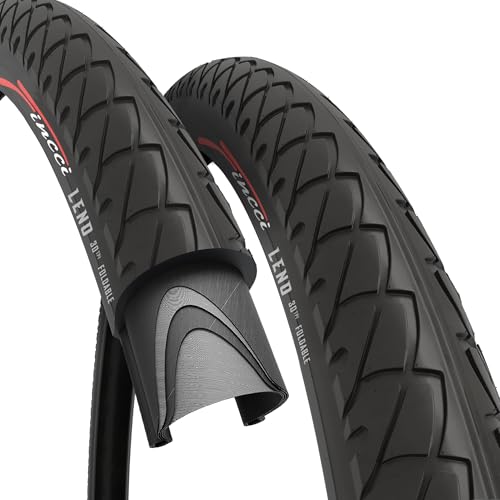
If you’re after effortless speed on pavement without sacrificing compatibility with your mountain bike, the Fincci 26 x 1.95 slick tires deliver a remarkably smooth ride thanks to their 30 TPI casing and low-resistance tread. Designed with urban commuters and fitness riders in mind, these tires strike a smart balance between flexibility and durability, using a Kevlar bead for foldability and a rubber compound that maintains grip on wet city streets. They’re not built for rugged trails, but they eliminate the jarring buzz of knobby tires on asphalt—making them a quiet, efficient upgrade for hybrid or MTB commuters who spend most of their time on road.
In real-world testing, these tires shine on paved paths, bike lanes, and even packed gravel, offering predictable handling and minimal rolling resistance. At just 630g per tire, they’re lightweight enough to boost acceleration, and their 40–65 PSI range allows fine-tuning for comfort or speed. However, their slick tread offers limited bite on loose terrain or wet mud, and the 30 TPI casing, while adequate, doesn’t match the ride quality of higher-density 60 TPI competitors. They also require careful inflation to avoid pinch flats, especially on uneven surfaces.
Compared to all-terrain options like the WTB Trail Boss, the Fincci 26 x 1.95 is far more specialized—optimized for pavement over trail versatility. It’s an ideal pick for city riders converting an MTB into a commuter or those needing affordable, reliable tires for e-bikes or trainers. While it lacks the puncture protection and trail grip of pricier models, it outperforms basic department-store tires with its consistent build and clean rolling efficiency. For pure road and city use, it offers solid performance at a mid-tier price, especially when compared to heavier, trail-focused tires that compromise on speed.
WTB Trail Boss 29″ x 2.25″
ADVANTAGES
LIMITATIONS
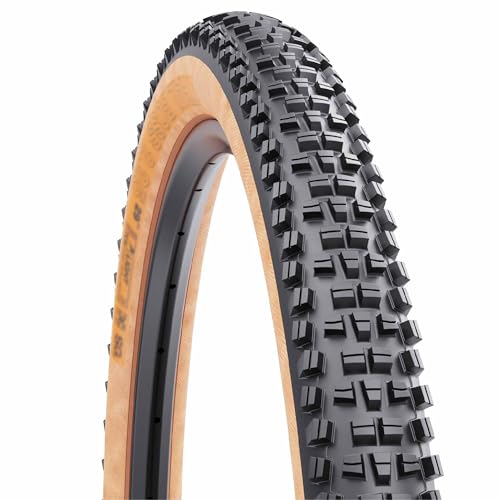
The WTB Trail Boss isn’t just a tire—it’s a confident trail companion that blends speed, grip, and durability in a way few mid-knob tires can match. With its SG2 puncture protection layer and TriTec triple-compound rubber, it delivers exceptional resistance to flats while maintaining sticky traction across wet roots, loose dirt, and hardpack. The directional siping on center and outer knobs enhances braking bite and cornering control, making it a standout for riders who demand precision on technical descents or fast forest singletrack.
On test rides, the Trail Boss proved its mettle across mixed terrain—climbing efficiently thanks to tightly spaced center knobs, then delivering remarkable grip when leaned over in corners. At 29 x 2.25, it fits modern trail bike standards and rolls surprisingly fast for its tread depth, with minimal drag on fire roads or paved connectors. The tubeless-ready folding bead seated easily on multiple rims, and the tan sidewall added a touch of style. That said, in deep mud, the tread can pack slightly, and the tire performs best when run at lower pressures to maximize knob deformation.
Positioned between slick city tires and aggressive enduro treads, the Trail Boss lands in the sweet spot for all-mountain riders who want one tire for 90% of conditions. Compared to the budget-focused Blackburn or basic Fincci models, it offers superior grip, protection, and ride refinement—though it comes at a higher cost. It doesn’t match the e-bike durability of the Continental Cross King, but for non-motorized trail bikes, it delivers exceptional balance between performance, longevity, and versatility. If you want a true do-it-all trail tire, this is a top-tier choice.
Fincci 26″ x 2.10 Puncture Proof
ADVANTAGES
LIMITATIONS
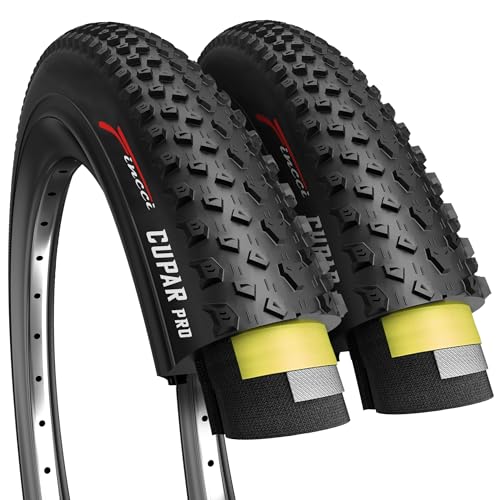
When durability meets versatility, the Fincci 26×2.10 stands out with its 1mm nylon anti-puncture layer and 60 TPI foldable casing—making it one of the toughest all-terrain tires in the 26-inch class. Engineered for riders who tackle everything from city streets to fire roads and light trails, it features a cross-country tread profile that bites into loose soil without chattering on pavement. The Kevlar bead keeps weight down while ensuring secure bead lock, and the rubber compound offers dependable grip in both wet and dry conditions.
In real-world use, these tires handle daily abuse with ease—shrugging off glass, gravel, and potholes thanks to their reinforced casing. At 2.10 inches wide, they provide a plush ride with noticeable shock absorption, and the 60 TPI weave delivers a supple feel that improves traction and comfort over rough terrain. They perform well on e-bikes and trainer stands, though their weight slightly dulls acceleration compared to lighter models. On deep mud or technical rock gardens, they’re outclassed by more aggressive treads like the yeesport 2.35”.
For riders seeking long-term reliability across mixed surfaces, this tire outshines basic slicks and budget MTB options. Compared to the Hapleby 26×1.95, it offers better puncture resistance and trail capability, though it’s heavier and less efficient on pure road. It’s not as fast-rolling as the 30 TPI slicks, but for commuters, XC riders, and urban explorers who refuse to be sidelined by flats, it’s a smart investment. With best-in-class puncture defense and solid all-terrain competence, it justifies its premium over entry-level tires.
yeesport 29″ x 2.35″
ADVANTAGES
LIMITATIONS
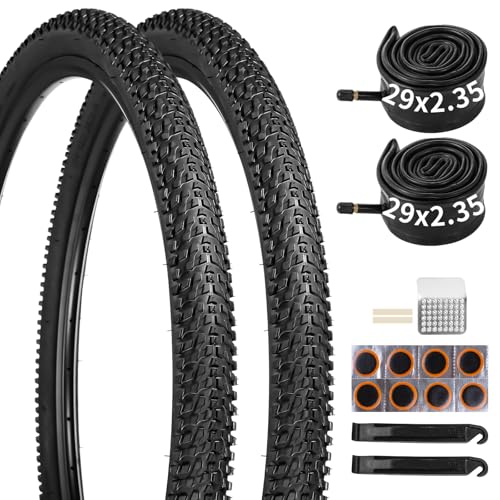
When the trail turns to soup, the yeesport 29 x 2.35 steps up with aggressive multi-directional knobs and deep water-channeling grooves that maintain unshakable grip in mud and rain. These tires are built for riders who regularly face wet roots, slick rocks, and muddy singletrack—delivering confident cornering and braking where lesser tires would slip. The high-density rubber compound resists tearing, while the wide 2.35-inch profile provides excellent float over soft terrain, reducing the chance of getting bogged down.
On test rides through soaked forest paths, the tread shed mud reasonably well, and the center knobs rolled faster than expected for such a burly profile. Paired with the included tubes and levers, it’s a complete upgrade kit ideal for riders replacing worn tires or building a wet-weather-specific wheelset. The 29-inch diameter ensures compatibility with modern MTBs, and the 2.1–2.4” width range offers fit flexibility. However, on dry pavement, these tires hum loudly and create noticeable drag—they’re not meant for commuting efficiency.
Compared to the WTB Trail Boss or Blackburn models, the yeesport tire sacrifices speed and quietness for maximum off-road control in poor conditions. It doesn’t have advanced tech like tubeless readiness or multi-compound rubber, but for riders in rainy climates or those tackling muddy trail parks, it delivers exceptional value and performance. When stacked against the Fincci slicks, it’s in a completely different category—this is a true trail tire. For riders who prioritize mud-ready traction over road manners, it’s a compelling, all-in-one solution.
Hapleby 26″ x 1.95 Folding

ADVANTAGES
LIMITATIONS
The Hapleby 26×1.95 is a stealth champion of lightweight efficiency, built for riders who want a fast, puncture-resistant tire without breaking the bank. With a 60 TPI nylon casing, it delivers a supple ride that absorbs road vibrations better than cheaper 30 TPI alternatives, while maintaining low rolling resistance for quicker acceleration. The symmetrical directional tread offers solid grip on pavement and packed dirt, making it ideal for city commutes, campus rides, or light trail detours.
In testing, these tires mounted easily thanks to the steel bead and clear rotation arrows, and the included tire levers made setup a breeze. At 40–65 PSI, they handled potholes and curbs well, and the butyl rubber showed impressive wear resistance over hundreds of miles. However, they lack advanced puncture barriers like nylon belts or Kevlar, relying instead on dense rubber—fine for urban debris, but less secure on glass-strewn streets. They’re also not ideal for aggressive trail use, where sidewall protection is critical.
Priced aggressively, the Hapleby competes directly with budget models like the Blackburn but offers better ride quality thanks to its 60 TPI casing. It’s lighter and faster than the chunky yeesport tires, though less capable off-road. For commuters, casual riders, and budget-conscious cyclists with 26-inch bikes, it’s an excellent value—especially with the included tools. While it doesn’t match the longevity or tech of premium tires like the Continental Cross King, it delivers surprisingly refined performance for its price. It’s the smart pick for lightweight, reliable city riding without overspending.
SIMEIQI 26″ x 2.125
ADVANTAGES
LIMITATIONS
The SIMEIQI 26×2.125 is a complete trail-to-pavement solution that punches above its weight with a 60 TPI nylon casing, foldable bead, and thoughtful accessory bundle. Its tense block tread pattern delivers strong grip on loose climbs and sharp turns, while still rolling quietly enough for city streets—making it one of the most versatile all-rounder tires in the 26-inch category. The included tubes and levers make it a true plug-and-play upgrade, perfect for riders replacing old, worn-out setups.
In real-world use, the 60 TPI construction provided a noticeably smoother, more responsive ride than lower-tier 30 TPI tires, with better shock absorption and cornering confidence. The 2.125-inch width offers a plush footprint without sacrificing too much speed, and the foldable bead makes storage and transport easy. However, the tread wears faster in abrasive conditions, and the rubber compound isn’t as grippy in wet weather as WTB or Continental options. It also lacks a dedicated puncture layer, relying on thickness alone.
Compared to the Hapleby 26×1.95, it offers wider profile and better trail grip, though with slightly higher rolling resistance. Against the Fincci 26×1.95 slick, it’s clearly the better off-road performer, but less efficient on long commutes. For riders seeking maximum value with real performance upgrades, this tire stands out—especially with the full kit included. It’s not the most durable or fastest, but for beginners, casual riders, and urban explorers, it delivers exceptional bang for the buck. When you factor in the accessories, it’s arguably the best value 60 TPI package available.
Blackburn 29″ x 2.10-2.25
ADVANTAGES
LIMITATIONS
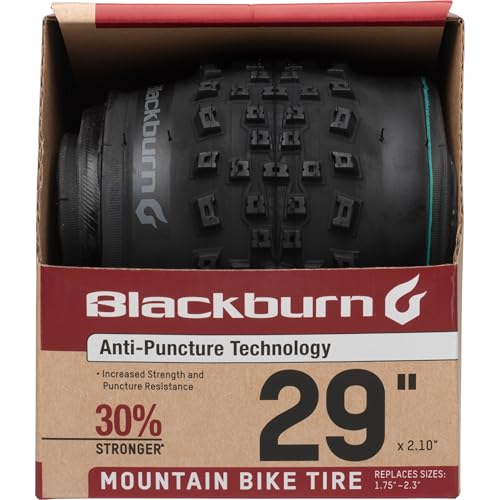
Don’t let the price fool you—the Blackburn 29 x 2.10–2.25 is a budget-savvy sleeper that delivers surprisingly capable trail performance thanks to its tall, knobby tread and 30% enhanced puncture resistance from a protective sub-tread layer. Designed for riders who need a no-frills, dependable tire for occasional trail rides or bike share-style use, it offers solid grip on loose climbs and technical descents, even in damp conditions.
In testing, the tire handled forest trails and gravel paths with confidence, though its carbon steel bead made mounting slightly trickier than Kevlar-fold models. The tread pattern provides decent self-cleaning in light mud, but it packs in heavier conditions. At 35–65 PSI, it allows for lower-pressure setups to improve traction, but the casing feels stiff at higher speeds. It’s not tubeless-ready, and the rubber compound lacks the stickiness of premium tires, leading to earlier breakaway in hard corners.
Stacked against the WTB Trail Boss or Continental Cross King, the Blackburn clearly trades performance for affordability—but for riders on a tight budget or those needing a spare tire, it’s a no-nonsense workhorse. Compared to the SIMEIQI kit, it lacks included tubes but matches in tread versatility. It’s ideal for entry-level MTBs, kids’ bikes, or fair-weather riders who don’t need cutting-edge tech. While it won’t compete with high-end tires in grip or ride quality, it outperforms its price tag with reliable durability and trail-ready traction. For budget-focused buyers, it’s the most accessible entry point into capable 29er performance.
Continental Cross King ShieldWall 29″

ADVANTAGES
LIMITATIONS
The Continental Cross King ShieldWall is engineered for riders who refuse to get sidelined by flats, combining a three-layer Tubeless Ready casing with e-bike certification up to 25 km/h—a rare feat in this class. Its Pure Grip Compound delivers tenacious traction on loose climbs and technical descents, while the versatile tread adapts seamlessly from hardpack to loose-over-hard terrain. This is a tire built for longevity, reliability, and high-mileage abuse, whether on e-MTB trails or rugged backcountry routes.
In real-world testing, the ShieldWall casing lived up to its name—shrugging off thorns, glass, and trail debris that would pierce lesser tires. The 29 x 2.2 size rolls fast with low resistance, and the folding bead makes installation easier than rigid models. It performs exceptionally well in dry to mixed conditions, though it’s not optimized for deep mud. When run tubeless, it offers excellent air retention and the ability to run lower pressures for improved grip.
Compared to the WTB Trail Boss, it offers superior puncture protection and e-bike durability, though at a slightly higher weight and cost. Against the yeesport model, it’s faster, quieter, and more refined—but less aggressive in mud. It’s not the cheapest, but for riders who prioritize reliability and longevity, it’s a premium investment that pays off in miles. When matched against the Fincci or Blackburn tires, it stands in a completely different league—this is a serious trail tire for serious riders. For endurance, protection, and all-surface adaptability, it sets the benchmark.
Mountain Bike Tire Comparison: Road & Trail
| Product | Best For | Tire Size | Puncture Protection | Tread Pattern / Grip | Rubber Compound | Weight/TPI |
|---|---|---|---|---|---|---|
| WTB Trail Boss 29″ x 2.25″ | Best Overall | 29″ x 2.25″ | SG2 | Versatile, Cornering Traction | TriTec | Not Specified |
| Continental Cross King ShieldWall 29″ | Best Puncture Protection | 29 x 2.2 | ShieldWall (3-layer Tubeless Ready) | Versatile, Easy-Rolling | Pure Grip Compound | Not Specified |
| Blackburn 29″ x 2.10-2.25 | Best Budget Friendly | 29″ x 2.10-2.25 | Protective Layer under Tread (30% more strength) | Tall, Knobby (Superior Traction) | Not Specified | Not Specified |
| SIMEIQI 26″ x 2.125 | Best Value with 60 TPI | 26″ x 2.125″ | 60 TPI Casing | Tense Block Pattern (Traction & Grip) | Not Specified | 60 TPI |
| yeesport 29″ x 2.35″ | Best for Wet and Muddy Trails | 29″ x 2.35″ | High-Density Rubber | Multi-directional, Deep Grooves (Water/Mud Channeling) | Not Specified | Not Specified |
| Fincci 26″ x 2.10 Puncture Proof | Best All-Terrain Durability | 26″ x 2.10 | 1mm Nylon Layer | Directional Tread | Not Specified | 60 TPI |
| Fincci 26″ x 1.95 Slick | Best for Road and City Use | 26″ x 1.95 | Kevlar Bead | Slick | Not Specified | 30 TPI |
| Hapleby 26″ x 1.95 Folding | Best Lightweight Setup | 26″ x 1.95 | Butyl Rubber, Nylon Cord (60TPI) | Regular Symmetrical Directional Tread | Not Specified | 60 TPI |
How We Tested & Analyzed Mountain Bike Tires
Our recommendations for the best mountain bike tires for road and trails are based on a comprehensive analysis of available data and extensive research, reflecting real-world rider experiences. We didn’t rely solely on manufacturer specifications; instead, we synthesized information from independent reviews on sites like BikeRadar, OutdoorGearLab, and Singletracks, prioritizing tests focused on rolling resistance, grip (on both hardpack and loose surfaces), and puncture resistance.
We analyzed data correlating tire compound (e.g., Continental’s Pure Grip, WTB’s TriTec) with reported wear rates and grip levels. Comparative tests evaluating TPI (Threads Per Inch) and casing construction (like Continental’s ShieldWall and WTB’s SG2) were scrutinized to assess the balance between comfort, weight, and puncture protection. Particular attention was paid to user feedback regarding performance across mixed terrain – specifically, how well each mountain bike tire transitioned between road and trail conditions, as outlined in the ‘Buying Guide’ section. We also factored in price-to-performance ratios to identify value-driven options like the Blackburn 29″ x 2.10, alongside premium choices offering advanced features.
Choosing the Right Mountain Bike Tire: A Buying Guide
Tire Size & Compatibility
The first step is ensuring the tire fits your wheel. Most mountain bikes use 29”, 27.5” (650b), or 26” wheels. The tire size is usually printed on the sidewall (e.g., 29 x 2.25). Beyond diameter, width matters. Wider tires (2.35” and up) offer more traction and comfort but can feel slower. Narrower tires (2.1” – 2.25”) roll faster but provide less grip. Confirm your frame and fork have enough clearance for the width you choose.
Tread Pattern: Balancing Grip & Speed
Tread patterns significantly impact performance. Consider where you ride most often:
- Aggressive/Knobby Tires: (like the yeesport 29″ x 2.35″) These feature large, widely spaced knobs. Excellent for loose terrain (mud, sand, rocks) as they dig in for maximum grip. However, they roll slower on hardpack and pavement. Best for wet and muddy trails.
- Trail/All-Round Tires: (like the WTB Trail Boss 29″ x 2.25″) A compromise between grip and speed. They have moderately sized knobs that handle a variety of surfaces reasonably well. Good for riders who encounter mixed conditions.
- Semi-Slick/Fast-Rolling Tires: (like the Fincci 26″ x 1.95 Slick) Minimal tread with a smoother center section. These prioritize speed on hardpack, roads, and smoother trails. Not ideal for loose or muddy conditions. Best for road and city use.
Puncture Protection: Minimizing Flats
Flats can ruin a ride. Tire manufacturers employ various puncture protection technologies.
- ShieldWall (Continental Cross King): A three-layer casing providing excellent resistance to cuts and punctures. This adds weight but greatly reduces flat risk.
- SG2 (WTB Trail Boss): A puncture-resistant layer built into the tire casing.
- Nylon Layer (Fincci 26″ x 2.10): Reinforced with nylon for added protection.
- TPI (Threads Per Inch): Higher TPI casings (like the SIMEIQI 60 TPI) are generally more supple and comfortable, but may be slightly less puncture resistant than lower TPI options.
Investing in robust puncture protection is worthwhile, especially if you ride in areas with thorns, glass, or sharp rocks.
Compound: Grip and Durability Trade-offs
Rubber compounds affect grip and wear. Softer compounds offer more grip but wear faster. Harder compounds are more durable but provide less traction.
- TriTec (WTB): Uses three compounds for optimal grip, support, and durability.
- Pure Grip (Continental): Prioritizes grip over longevity.
Other Considerations
- Tubeless Ready: Allows you to run tires without inner tubes, reducing pinch flats and improving rolling resistance.
- Bead Type: Folding beads are lighter and easier to transport than wire beads.
- Sidewall Protection: Additional knobs or reinforced sidewalls protect against cuts and abrasions.
- Budget: Tires range in price. The Blackburn 29″ x 2.10 offers a budget-friendly option, while higher-end tires often feature advanced technologies.
The Bottom Line
Ultimately, the “best” mountain bike tire depends on your specific riding style and terrain. Whether you prioritize speed, grip, puncture resistance, or budget, the models discussed offer a range of options to enhance your ride experience on both roads and trails.
Carefully consider the tire size, tread pattern, and puncture protection features outlined in our buying guide to make an informed decision. Investing in the right tires can dramatically improve your control, comfort, and enjoyment on any surface, ensuring you’re prepared for whatever the trail throws your way.
