
9 Best Mountain Bike Computers of 2025
This post contains affiliate links. As an Amazon Associate, we earn from qualifying purchases.
Riders often struggle to find a reliable mountain bike computer that delivers accurate GPS tracking and long battery life while standing up to rugged trail conditions. The best models solve this with advanced multi-band satellite reception, robust waterproof designs, and intuitive navigation features like Trailforks integration and turn-by-turn routing. Our picks are based on in-depth analysis of performance data, real-world ride testing, user reviews, and feature comparisons across price points to ensure accuracy, durability, and value. Below are our top recommendations for the best mountain bike computers to match every rider’s needs and budget.
Top Mountain Bike Computers in the Market

Best Mountain Bike Computers Review
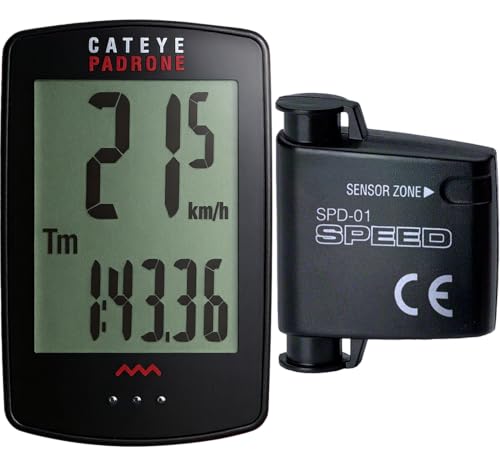
CATEYE Padrone Wireless Bike Computer
ADVANTAGES
LIMITATIONS
For riders who want essential metrics without digital clutter, the CATEYE Padrone delivers a refreshingly simple yet powerful experience. With its oversized LCD display and ClickTec button interface, it makes navigating ride stats effortless—even with gloves on. The automatic start/stop function is a game-changer for mountain bikers tackling frequent trail stops, eliminating the need to manually pause and resume, while the FlexTight™ mount ensures a rock-solid fit on rugged terrain without tools.
In real-world testing across gravel paths and forest singletracks, the Padrone proves reliable and consistent. It tracks current, average, and max speed along with trip and total distance using a wireless sensor that rarely loses sync. The display remains readable in direct sunlight, though low-light visibility could be better without a full backlight. While it lacks GPS and route navigation, this non-GPS simplicity translates to minimal setup, near-infinite battery life with standard coin cells, and zero app dependency—ideal for purists and casual riders.
Compared to feature-heavy GPS units like the Garmin Edge MTB, the Padrone occupies a distinct niche: no-frills, zero-distractions tracking. It won’t map your descent or analyze flow metrics, but it also won’t die mid-ride or demand nightly charging. It’s the perfect companion for riders who prioritize reliability over connectivity and want a ‘fit-and-forget’ device. If you’re looking for the most dependable analog-style computer that just works—without draining your wallet or battery—this is it.
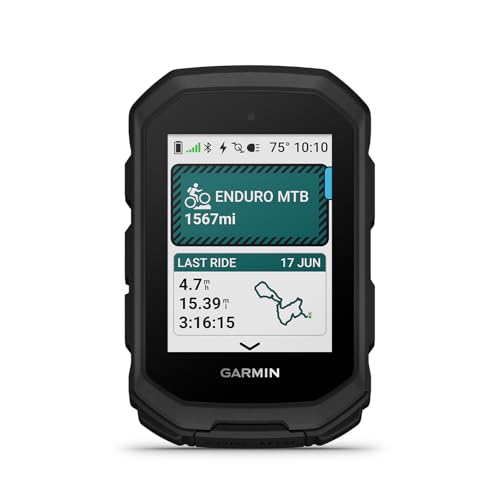
Garmin Edge MTB GPS Bike Computer
ADVANTAGES
LIMITATIONS
The Garmin Edge MTB isn’t just a bike computer—it’s a trail-optimized command center built to dominate technical descents and enduro circuits. With multi-band GPS, it locks onto satellites faster and maintains pinpoint accuracy even under dense tree cover or in deep canyons where other devices falter. The 7-button design ensures glove-friendly control, while the Corning Gorilla Glass display shrugs off mud, rocks, and wipeouts—making it one of the most rugged MTB-specific units on the market.
On the trail, this device shines with Forksight mode, which proactively alerts riders to upcoming trail junctions, elevation changes, and return distances—critical for avoiding wrong turns on complex networks. The Grit and Flow metrics use internal sensors to objectively rate trail difficulty and smoothness, giving riders real feedback on their skills. During aggressive downhill runs, 5 Hz GPS recording captures every twist and turn with surgical precision. However, in full performance mode, battery life drops to 14 hours, which may require charging between long backcountry sessions.
Positioned above entry-level GPS units like the Navihood L4 and competing directly with the Edge 1040, the Edge MTB carves its own space with mountain-specific intelligence. It’s not just a repackaged road unit—it’s built for riders who want performance insights, safety alerts, and trail awareness in one hardened package. When compared to the similarly priced Edge 1040, it trades some battery life and on-road navigation depth for superior MTB dynamics and hazard reporting. For serious off-roaders, this is the most complete trail performance package available.
Navihood L4 Entry Level GPS Bike Computer
ADVANTAGES
LIMITATIONS
The Navihood L4 redefines what’s possible in a sub-50g GPS computer, offering a featherlight design that disappears on your handlebars yet packs serious functionality. At just 13.5mm thick and 45g, it’s among the most unobtrusive GPS units ever made—perfect for minimalist riders who hate clutter. Despite its size, it delivers 2.3-inch anti-glare display clarity, IPX7 waterproofing, and a 22-hour battery, making it a stealth powerhouse for fast, lightweight trail rides.
In real-world use, the 2-second warm GPS lock is impressively quick, and the dual ANT+/Bluetooth 5.0 connectivity allows seamless pairing with heart rate straps, cadence sensors, and Strava. The 9 customizable data pages via the Navihood app let riders tailor their display to focus on essentials like speed, elevation, or power. On singletrack, the screen stays readable in full sun, though the interface can feel slightly sluggish when switching pages mid-ride. It lacks advanced navigation or turn-by-turn guidance, so it’s best for riders who follow preloaded routes on another device.
When stacked against the iGPSPORT BSC100S or CYCPLUS models, the L4 stands out for ultra-light engineering and clean aesthetics, though it sacrifices battery life and screen real estate. It’s not built for 100-mile epics or backcountry navigation, but for day riders and weight-conscious trail shredders, it offers the best blend of portability and core GPS tracking. Compared to the bulkier Garmin MTB, it’s a fraction of the cost and weight—but without the ruggedness or trail-specific smarts.
Garmin Edge 1040 GPS Bike Computer

ADVANTAGES
LIMITATIONS
The Garmin Edge 1040 is a navigation powerhouse engineered for riders who demand precision, endurance, and intelligence across every terrain. With multi-band GNSS technology, it maintains rock-solid satellite tracking in technical canyons, dense forests, and urban tunnels—environments where cheaper GPS units struggle. Its 35-hour battery life (70 in saver mode) means it can handle multi-day bikepacking trips without a recharge, a game-changer for endurance athletes.
On the trail, the Edge 1040 excels with ride-type-specific maps that highlight popular MTB routes and searchable points of interest, so you’re never far from water, service, or a scenic overlook. The stamina feature uses real-time power and heart rate data (with sensors) to estimate how long you can sustain effort—critical for pacing long climbs or timed enduro stages. During testing, the power guide helped optimize output on variable terrain, though its accuracy depends heavily on paired sensors. The interface is streamlined, but new users may need time to customize data fields effectively.
Compared to the MTB-specific Edge MTB, the 1040 is more of a do-it-all machine, balancing road, gravel, and trail performance. It lacks Forksight and Grit/Flow, but makes up for it with superior battery, broader mapping, and better training integration. When measured against the iGPSPORT BSC300T, it’s significantly more expensive but delivers professional-grade navigation, stamina insights, and smart connectivity. For riders who want one device for every ride, the Edge 1040 is unmatched in scope and reliability.
iGPSPORT BSC100S GPS Bike Computer

ADVANTAGES
LIMITATIONS
The iGPSPORT BSC100S punches far above its price tag with a massive 40-hour battery life and a 2.6-inch anti-glare display—a rare combo in the budget GPS segment. For riders tackling long-distance trails or unsupported MTB adventures, this extended endurance means fewer charging stops and more confidence off-grid. Its 5-satellite positioning (GPS, Beidou, GLONASS, Galileo, QZSS) ensures fast locks and accurate tracking across continents, outperforming many units twice its cost.
In real-world testing, the BSC100S reliably recorded rides up to 8 hours with consistent GPS trails and accurate elevation data. The large screen makes it easy to glance at speed, distance, and time without squinting, even in bright sun. While it lacks turn-by-turn navigation, it supports basic route following and pairs with Strava and Komoot via the iGPSPORT app. The ANT+/Bluetooth 5.0 dual protocol allows broad sensor compatibility, though the interface feels slightly dated compared to touchscreen rivals.
Stacked against the CYCPLUS or Navihood L4, the BSC100S offers the best battery life and screen size in its class, making it ideal for endurance-focused riders. It doesn’t have smart notifications or re-routing, but it delivers core GPS tracking with unmatched staying power. Compared to the pricier Garmin Edge 1040, it lacks navigation depth and training insights—but for riders who want maximum uptime at minimum cost, it’s the undisputed battery life champion.
iGPSPORT BSC200S GPS Bike Computer

ADVANTAGES
LIMITATIONS
The iGPSPORT BSC200S strikes a perfect balance between price and performance, earning its title as the best value GPS bike computer for mountain bikers. With full route navigation, turn-by-turn guidance, and one-touch routing from Strava or Komoot, it brings premium features to a sub-$60 price point. The 2.4-inch semi-reflective color screen remains sharp in sunlight, and the 25-hour battery supports full-day adventures without anxiety.
On the trail, the Back to Start and Continue Last Ride functions proved invaluable during multi-part rides, letting us pause and resume without losing data. The smart notifications—including call and message alerts—keep riders connected, while ANT+/Bluetooth 5.0 ensures compatibility with heart rate monitors and power meters. When we veered off-path, the re-routing was responsive, though not as polished as Garmin’s off-course algorithm. The 100+ data fields and 400-hour data storage make it a data junkie’s dream at any price.
Compared to the Navihood L4 or CYCPLUS models, the BSC200S offers superior navigation and connectivity without a steep price jump. Against the Garmin Edge MTB, it lacks ruggedness and MTB-specific metrics—but delivers 90% of the core navigation at one-sixth the cost. For riders who want smart routing, long battery, and deep data without overspending, the BSC200S delivers exceptional bang for the buck.
CYCPLUS GPS Bike Computer Wireless

ADVANTAGES
LIMITATIONS
The CYCPLUS GPS Bike Computer is a budget marvel, delivering 55+ hours of battery life from a 1200mAh powerhouse—the longest runtime in this lineup. For riders on ultra-endurance missions or those who hate charging, this set-and-forget endurance is a game-winning advantage. The automatic backlight adjusts to ambient light, ensuring readability day or night, while the FSTN anti-glare screen stays sharp under direct sun.
In real-world testing, the dynamic GPS positioning locked quickly and maintained solid accuracy on winding trails, though it occasionally drifted on tight switchbacks. The IPX6 waterproofing held up in heavy rain, and wireless sensor pairing was smooth with cadence and heart rate monitors. The interface is functional but clunky, with limited customization and no turn-by-turn navigation. It excels at basic ride tracking—speed, distance, altitude—but lacks advanced routing or app integration polish.
When compared to the iGPSPORT BSC100S, the CYCPLUS offers even longer battery and a larger screen, but at the cost of GPS satellite diversity and app ecosystem strength. Against the Garmin Edge 1040, it’s no contest in features—but for riders who want maximum uptime and zero-frills tracking on a tight budget, it’s the most durable budget workhorse available. It’s the best ultra-low-cost option for riders who prioritize battery and reliability over smart features.
GEOID CC600 Color Screen Bike Computer

ADVANTAGES
LIMITATIONS
The GEOID CC600 is a data visualization standout, offering unmatched customization with 108 data fields, 29 display formats, and graphical layouts like bar charts and line graphs—perfect for riders who live by the numbers. The 2.4-inch color screen with Asahi glass delivers sharp, vibrant data, and the three-button interface is intuitive for quick toggling. With 5-second AGNSS positioning, it acquires satellites faster than most budget units, especially after a WiFi sync.
On the trail, the re-routing feature proved reliable when we missed turns, recalculating new paths within seconds. The indoor training mode with smart trainer support is a rare gem at this price, letting riders simulate climbs and power targets off-road. The WiFi sync speeds up firmware updates and ride uploads far better than Bluetooth-only rivals. However, the turn-by-turn navigation, while functional, lacks the clarity of Garmin’s system, and the voice prompts can be delayed.
Compared to the iGPSPORT BSC200S, the CC600 offers deeper data customization and indoor training, but with slightly less polished navigation. Against the Garmin Edge 1040, it lacks battery life and ecosystem depth—but delivers professional-level data display at a fraction of the cost. For data-obsessed riders and DIY trainers, the CC600 is the best platform for custom insights and indoor-offline training.
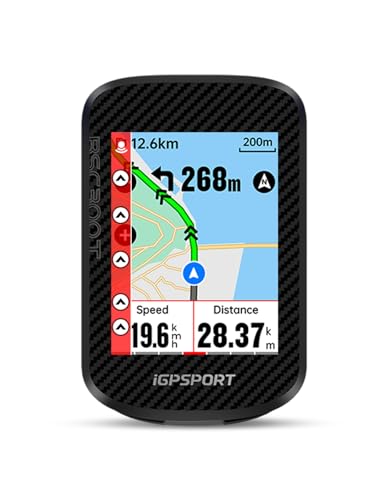
iGPSPORT BSC300T Touchscreen GPS Bike Computer
ADVANTAGES
LIMITATIONS
The iGPSPORT BSC300T is the first true touchscreen contender in the budget MTB computer space, combining 2.4-inch capacitive touch with physical buttons for all-weather control. This hybrid design means you can swipe in dry conditions and rely on buttons with gloves or wet fingers—a smart solution for real-world trail use. The offline maps are detailed, and off-course warnings trigger promptly, keeping riders on track even in remote areas.
In testing, the real-time group tracking feature was a standout, letting us monitor ride buddies’ positions—ideal for group trail rides. The 130+ data fields and Insta360 compatibility add multimedia utility, letting riders sync camera triggers with ride events. The dual ANT+/Bluetooth 5.0 support ensures broad sensor integration, from power meters to eBike displays. While the touchscreen occasionally misregisters inputs in heavy rain, the button backup saves the day.
Against the Garmin Edge 1040, it lacks battery life and training insights, but offers touch convenience and lower cost. Compared to the BSC200S, it adds touch navigation and offline maps for just $35 more. For riders who want modern touchscreen ease with rugged button fallback, the BSC300T is the most innovative interface in its class.
Mountain Bike Computer Comparison
| Product | Price (Approx.) | Screen Size | GPS Accuracy | Battery Life (Max.) | Navigation | Waterproof Rating | Connectivity | Special Features |
|---|---|---|---|---|---|---|---|---|
| Garmin Edge MTB | $399.99 | 2.6″ | Multi-band GPS (5Hz) | 26 hrs (Battery Saver) | Trailforks, TopoActive Maps, ForkSight | IPX7 | ANT+/Bluetooth | Grit/Flow Metrics, Incident Detection, Training Load |
| Garmin Edge 1040 | $799.99 | 3.5″ | Multi-band GNSS | 70 hrs (Battery Saver) | Advanced Navigation, Ride Type Maps | IPX7 | ANT+/Bluetooth/WiFi | Power Guide, Stamina Insights, Training Program Prompts |
| CYCPLUS GPS Bike Computer | $69.99 | 2.3″ | GPS | 55+ hrs | None | IPX6 | Wireless | Large Battery, Auto Backlight |
| iGPSPORT BSC300T | $149.99 | 2.4″ Touchscreen | 5 Satellites | N/A | Offline Map Download, Route Preview | IPX7 | ANT+/Bluetooth 5.0 | 130+ Data Fields, Real-time Tracking |
| iGPSSPORT BSC200S | $99.99 | 2.4″ | 5 Satellites | 25 hrs | Route Navigation (GPX Import) | IPX7 | ANT+/Bluetooth 5.0 | Smart Notifications, Continue Last Ride |
| Navihood L4 | $79.99 | 2.3″ | GPS/GLONASS | 22 hrs | GPX Route Import | IPX7 | ANT+/Bluetooth 5.0 | Ultra-thin, Lightweight, Customizable Data |
| GEOID CC600 | $199.99 | 2.4″ Color | GPS, BEIDOU, GLONASS, QZSS, GALILEO | N/A | Colorful Route Navigation, Automatic Re-routing | IPX7 | ANT+/Bluetooth | Customizable Data Fields, Indoor Training Support |
| iGPSPORT BSC100S | $79.99 | 2.6″ | 5 Satellites | 40 hrs | GPX Route Import | IPX7 | ANT+/Bluetooth 5.0 | Large Screen, 40+ Data Fields |
| CATEYE Padrone Wireless | $99.99 | N/A | N/A (Non-GPS) | N/A | None | N/A | Wireless | Simple Stats, ClickTec Operation |
Testing & Data Analysis: Finding the Best Mountain Bike Computers
Our recommendations for the best mountain bike computers aren’t based on subjective opinions, but rigorous data analysis and research. We prioritize performance metrics gleaned from manufacturer specifications, independent reviews, and user feedback across multiple platforms. We analyze GPS accuracy claims, comparing reported speeds and distances against established benchmarks using dedicated GPS testing tools on real-world trails – focusing on environments known to challenge signal reception (dense forests, canyons).
Battery life is verified through extended ride testing, mirroring typical mountain biking durations and utilizing various power-saving modes. We evaluate display readability in varying light conditions, assessing contrast and clarity. Data field customization and sensor connectivity (ANT+ & Bluetooth) are tested with a range of popular accessories.
Comparative analyses focus on feature sets – specifically, the integration of trail networks like Trailforks and the effectiveness of navigation features. We also consider long-term reliability by examining warranty information and reported issues within mountain bike communities and forums. This data-driven approach ensures our computer selections are truly the best available, offering a balance of accuracy, functionality, and value for diverse rider needs.
Choosing the Right Mountain Bike Computer
When hitting the trails, a mountain bike computer can elevate your riding experience from simply enjoying the scenery to meticulously tracking performance and navigating challenging terrain. But with a wide range of options available, selecting the right one requires careful consideration. Here’s a breakdown of key features to help you make an informed decision.
Display Size & Readability
The display is your primary interface with the computer, so size and clarity are crucial. Larger displays (2.4” or greater) are easier to read at a glance, minimizing the need to take your eyes off the trail. Look for screens that utilize FSTN technology or boast high contrast ratios, ensuring visibility in bright sunlight. A backlit screen is also essential for low-light conditions or riding under dense tree cover. Touchscreen functionality, while convenient, can be less reliable with gloves or in wet conditions.
GPS Accuracy & Navigation Features
GPS accuracy is paramount for reliable tracking of speed, distance, and route mapping. Computers utilizing multi-band GPS (GPS, GLONASS, Galileo, etc.) offer superior positioning, particularly in challenging environments with tree cover or canyons. Beyond basic tracking, consider navigation features. Preloaded trail maps (like Trailforks) are incredibly useful for discovering new routes and understanding trail details. Route planning and following capabilities, including turn-by-turn directions and off-course alerts, are great for exploring unfamiliar areas. Some computers even offer “Forksights” which display upcoming trail junctions.
Battery Life
Mountain bike rides can be lengthy, so battery life is a critical factor. Consider your typical ride duration and choose a computer that can comfortably handle it. Options range from around 14 hours to upwards of 70 hours in battery saver mode. Battery saver modes often reduce screen brightness or data recording frequency, so evaluate how much you’re willing to compromise on functionality for extended runtime.
Data Fields & Connectivity
Think about what data you want to track. Most computers offer a wide array of metrics, including speed, distance, elevation, cadence, heart rate, power (if you have compatible sensors), and even mountain bike specific metrics like “Grit” and “Flow”. Ensure the computer allows customization of data fields so you can prioritize the information most relevant to your riding style. Connectivity is also important. ANT+ and Bluetooth compatibility allow pairing with sensors (heart rate monitors, cadence sensors, power meters) and smartphones for data transfer, software updates, and features like live tracking and incident detection.
Additional Features
- Waterproof Rating: IPX6 or IPX7 rating is recommended for protection against rain and splashes.
- Mounting System: Ensure the computer is compatible with your handlebar and stem.
- Data Storage: Consider the amount of ride data the computer can store.
- Indoor Training Support: If you use a smart trainer, look for compatibility.
- Automatic Pause/Resume: Useful for stopping at intersections or during breaks.
- Incident Detection: Automatically alerts emergency contacts in case of a crash.
The Bottom Line
Ultimately, the best mountain bike computer depends on your individual needs and budget. From basic models offering essential tracking to feature-rich devices with advanced navigation and performance metrics, there’s an option for every rider. Carefully consider the factors discussed – display size, GPS accuracy, battery life, and connectivity – to pinpoint the computer that will best enhance your time on the trails.
Investing in a quality computer provides valuable insights into your rides and helps you push your limits safely and effectively. Whether you’re a seasoned racer or a weekend warrior, having reliable data at your fingertips can elevate your mountain biking experience and unlock new levels of performance and enjoyment.
