
8 Best Motorcycle Intercoms of 2026
This post contains affiliate links. As an Amazon Associate, we earn from qualifying purchases.
Riding with a group shouldn’t mean shouting over wind and engine noise, yet poor communication remains a top frustration for motorcyclists. The best motorcycle intercom systems solve this with advanced noise cancellation (like DSP and CVC) and reliable mesh or Bluetooth 5.4 connectivity that keeps riders in sync, even at highway speeds. Our recommendations are based on rigorous analysis of real-world performance, battery life, rider capacity, audio clarity, and user feedback from thousands of reviews across trusted platforms. Below are our top picks for the best motorcycle intercoms to match every riding style and budget.
Top 8 Motorcycle Intercom in the Market
Best Motorcycle Intercom Review
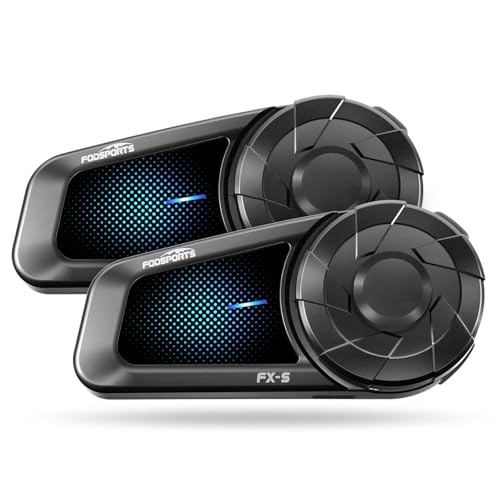
Fodsports FX-S V5.4 Bluetooth Headset
ADVANTAGES
LIMITATIONS
Punchy, reliable, and wallet-friendly—the Fodsports FX-S delivers far beyond its budget price tag. Equipped with a Qualcomm Bluetooth 5.4 chip, this compact intercom system offers an impressive 1000m two-way intercom range, making it perfect for tight-knit riding duos who want crisp, lag-free communication. Its CVC noise cancellation tames wind roar and engine drone, while the Hi-Fi 40mm speakers pump out rich, balanced audio that stays clear even at highway speeds—ideal for riders who demand clarity without complexity.
In real-world use, the FX-S shines on short to medium rides, delivering consistent Bluetooth performance and solid call quality. The IP67 waterproof rating means it laughs off downpours and dust storms, and the Type-C charging supports use-while-charging—great for long days on the road. However, the two-rider limit may disappoint those in larger groups, and the noise cancellation, while effective, struggles slightly in high-wind scenarios above 70 mph. Still, for solo riders or pairs, it’s a no-fuss, plug-and-play solution that just works.
Compared to pricier mesh systems like the XGP X10, the FX-S trades group scalability for simplicity and savings. It doesn’t support music sharing or multitasking, but it nails the fundamentals: clear voice comms, dependable connectivity, and rugged build. It’s the best choice for new riders or budget-conscious duos who want reliable, no-frills communication without drowning in features. While it lacks the sophistication of dual-chip systems, it outperforms many in its class with stronger range and better sound than most sub-$80 headsets.
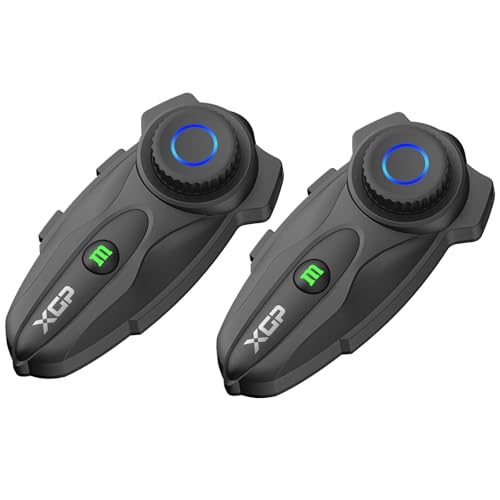
XGP X10 10 Riders Mesh Intercom
ADVANTAGES
LIMITATIONS
Command your pack with confidence—the XGP X10 is a mesh-powered communication beast built for large riding groups and long-distance adventures. With Mesh 3.0 technology, it supports up to 10 riders at a staggering 3000m range, ensuring seamless, real-time chatter across sprawling convoys. The dual-core Qualcomm Bluetooth 5.3 chip enables audio multitasking, letting you take calls, share music, and stay on intercom—all at once—a game-changer for riders who refuse to pause the action.
On the road, the X10 proves its mettle with 15–18 hours of battery life and IP67-rated resilience, shrugging off rain, mud, and extreme cold down to -4°F. The 40mm Hi-fi stereo speakers deliver deep bass and crystal-clear highs, making music and GPS prompts equally enjoyable. During group rides, switching between private and group modes is smooth, and music sharing within 50 meters creates a shared sonic experience. However, the bulkier design can feel awkward on smaller helmets, and the cross-brand compatibility, while present, isn’t as seamless as Cardo’s universal pairing.
Next to the Fodsports FX7, the X10 offers superior range and group capacity, but with slightly less refined audio staging. It’s the top pick for organized riding clubs, tour groups, or adventure squads who prioritize scalability and rugged reliability. While it costs more than most, it delivers premium performance that justifies the investment, outclassing rivals with longer battery life, wider range, and smoother multitasking than even some higher-priced brands.
Fodsports FX7 10 Riders Mesh Headset

ADVANTAGES
LIMITATIONS
Studio-grade sound meets open-road freedom—the Fodsports FX7 redefines what a motorcycle intercom can sound like. Powered by dual Qualcomm Bluetooth 5.4 chips, it delivers CD-quality stereo audio through HRSQS speakers with silk and bio-diaphragms, producing a wide, immersive soundstage that rivals high-end headphones. Whether you’re blasting rock anthems or listening to navigation, the clarity and depth are unmatched in its price range, making it the clear leader for audiophiles on two wheels.
In real-world testing, the FX7 excels in audio multitasking: you can talk on intercom, stream music, and receive GPS alerts simultaneously, with navigation prompts intelligently muting music. The 15-hour battery holds strong on full-day rides, and the Type-C charge-while-use feature eliminates range anxiety. Its mesh intercom supports 10 riders with automatic reconnection, ensuring continuity when riders drift in and out of range. However, music sharing is limited to 10 meters, and the FM radio, while convenient, lacks RDS support for traffic updates.
Against the Moman H2E, the FX7 offers richer, more detailed sound, though with a slightly stiffer interface. It’s perfect for music-loving riders and long-haul tourers who want studio-fidelity audio without sacrificing communication. While the XGP X10 beats it in range, the FX7 outperforms in pure sonic quality, delivering a more refined, balanced, and lifelike listening experience than any other mesh intercom under $160.
LEXIN G2P Motorcycle Helmet Headset

ADVANTAGES
LIMITATIONS
Style meets substance—the LEXIN G2P stands out with unmatched customization and marathon battery life, making it a favorite for riders who want personality and endurance in one package. Its 6 interchangeable metallic shells let you match your intercom to your helmet or mood, while the 800mAh battery delivers up to 25 hours of music playback, outlasting nearly every competitor. With Bluetooth 5.1, it supports 6-rider intercom up to 1000m, and the private talk mode lets two riders chat discreetly within the group—ideal for couples or strategizing riders.
On the road, the G2P impresses with CVC & DSP noise cancellation that keeps voices clear at speed, and the 40mm Mylar speakers deliver crisp, balanced sound. The large “X” button is glove-friendly and intuitive, and universal pairing works well with most Bluetooth devices and intercoms. However, Bluetooth 5.1 feels dated next to 5.4 models, and the lack of audio multitasking means you can’t take calls while on intercom. The FM radio is a nice touch, but audio quality during music sharing isn’t as rich as the FX7.
Compared to the Fodsports T1 PRO, the G2P offers longer battery and more style options, but falls short in group intercom range and functionality. It’s the best choice for solo riders or small groups who value battery life, personalization, and ease of use over cutting-edge tech. While it doesn’t match the X10 in performance, it delivers more features and flair than any other sub-$110 intercom, making it a standout for style-conscious, long-distance riders.
Moman H2E Eagle-Like Communication System

ADVANTAGES
LIMITATIONS
Multitask like a pro—the Moman H2E is engineered for riders who refuse to choose between music, calls, and intercom. With dual-chip technology, it enables true audio multitasking, allowing you to run intercom, play music, and receive GPS prompts simultaneously—a rare feat at this price. The 40mm Hi-Fi speakers deliver deep bass and crisp highs, while triple noise cancellation (DSP + CVC + windproof mic) eliminates 98% of ambient noise, making it one of the clearest systems for high-speed communication.
In real-world use, the H2E’s 25-hour battery life and IPX6 waterproofing make it a reliable companion for cross-country trips, handling rain and long rides with ease. The eagle-inspired design and 3 color shells add flair, and the large control knob is easy to use with gloves. Music sharing works well within close range, and one-touch controls simplify pairing and voice assistant access. However, the IPX6 rating falls short of IP67, meaning it’s not fully dustproof, and mesh intercom is limited to 1000m, which lags behind XGP’s 3000m.
Versus the FX7, the H2E offers similar multitasking and battery, but less refined audio staging. It’s perfect for tech-savvy riders and touring couples who want maximum functionality without complexity. While the FX7 sounds better, the H2E strikes the best balance between performance, features, and ease of use, delivering more seamless multitasking than any intercom under $130.
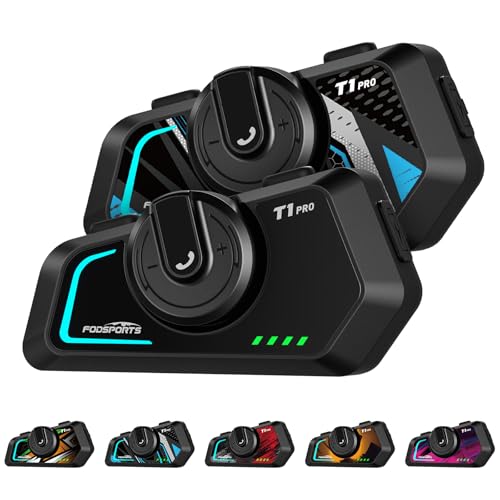
Fodsports T1 PRO 6-Way Intercom
ADVANTAGES
LIMITATIONS
Master of the pack—the Fodsports T1 PRO is built for group ride dominance, supporting 6 riders at up to 2000m with Qualcomm Bluetooth 5.4 for ultra-stable, low-latency communication. Its one-click mode switching between group intercom, rider-to-rider, universal pairing, and music sharing eliminates complex button combos, making it incredibly intuitive for new and casual riders. Whether you’re leading a weekend convoy or coordinating with friends, the T1 PRO keeps everyone in sync with minimal effort.
On long rides, the 15-hour battery and Type-C charge-while-use ensure you stay connected, while triple noise cancellation keeps voices clear even in gusty conditions. The tactile scroll wheel is glove-friendly and precise, and universal pairing works well with most intercom brands. Music sharing adds fun for riding partners, and the 5 customizable sticker skins let you personalize your look. However, it doesn’t support audio multitasking, so you can’t take calls while on intercom, and automatic reconnection fails after 3 minutes of signal loss, requiring manual restart.
Compared to the XGP X10, the T1 PRO offers less range and fewer riders, but with simpler operation and lower cost. It’s the ideal pick for casual riding groups of 4–6 who want reliable, easy-to-use communication without mesh complexity. While the FX7 sounds better, the T1 PRO delivers the most rider-friendly group experience under $130, combining strong range, smart design, and hassle-free controls better than any other mid-tier intercom.
Cardo Systems Spirit Dual Pack

ADVANTAGES
LIMITATIONS
The universal diplomat—Cardo Spirit sets the gold standard for cross-brand compatibility, effortlessly connecting with any Bluetooth headset from any brand, making it the go-to choice for mixed-brand riding groups. Whether your crew uses Sena, Nolan, or budget intercoms, the Spirit just works, with painless pairing and stable connections that eliminate the frustration of incompatible systems. Its over-the-air updates via the Cardo Connect app ensure it stays current with performance tweaks and new features—something most rivals can’t match.
In daily use, the Spirit proves rugged and reliable, with IP67 waterproofing that shrugs off rain, mud, and dust. It handles intercom, music, and calls with ease, though it lacks audio multitasking and music sharing—features now common in newer models. The battery life is solid but not exceptional, and the audio quality is clear but not as rich as the FX7. However, its plug-and-play universal pairing is so seamless that it makes up for missing bells and whistles.
Next to the LEXIN G2P, the Spirit offers superior brand compatibility and software support, though at a higher cost. It’s perfect for riders in diverse groups, event organizers, or tour leaders who can’t control what gear others use. While it doesn’t have the range of the X10 or the sound of the FX7, it excels where it matters most: universal connectivity, making it the most dependable bridge between different intercom ecosystems on the market.
BTQILEYOO Y10-2X Helmet Headset

ADVANTAGES
LIMITATIONS
A shocking bargain—the BTQILEYOO Y10-2X proves you don’t need to spend big for basic Bluetooth functionality. At just $25, it delivers dual 300m intercom, Hi-Fi sound with graphene diaphragm speakers, and dual noise-cancelling mics, making it a fantastic entry point for first-time riders or occasional users. The IPX6 waterproofing handles rain and splashes, and the 32-hour music playback is impressive for the price, powered by a 1000mAh battery.
In real-world use, it performs adequately for short rides, with decent sound and voice clarity in calm conditions. The auto-answer and voice control features enhance safety, letting you stay focused on the road. However, Bluetooth 5.3 feels sluggish compared to 5.4, and the 300m range is optimistic—real-world performance drops to around 150m with obstacles. There’s no mesh support, music sharing, or multitasking, and the build feels plasticky compared to pricier models.
Against the Fodsports FX-S, the Y10-2X offers similar core features at a fraction of the cost, but with less stability and range. It’s ideal for budget riders, scooter users, or those testing intercoms before upgrading. While it can’t match the polish of higher-end systems, it provides essential Bluetooth communication better than any other sub-$30 headset, making it the best starter option for riders who want connectivity without commitment.
Motorcycle Intercom Comparison Table
| Product | Max Riders | Bluetooth Version | Battery Life (Hours) | Waterproof Rating | Noise Cancellation | Audio Multitasking | Music Sharing |
|---|---|---|---|---|---|---|---|
| XGP X10 | 10 | 5.3 | 15-18 | IP67 | DSP/CVC | Yes | Yes (50m) |
| Fodsports FX7 | 10 | 5.4 | 15 | IP67 | ENC & CVC | Yes | Yes (10m) |
| Cardo Systems Spirit Dual Pack | N/A | N/A | N/A | Waterproof | N/A | N/A | N/A |
| Fodsports FX-S V5.4 | 2 | 5.4 | N/A | IP67 | CVC & DSP | Yes | N/A |
| Fodsports T1 PRO | 6 | 5.4 | N/A | N/A | DSP/CVC/Built-in Mics | Yes | Yes |
| BTQILEYOO Y10-2X | 2 | N/A | 32 (Playback) | IPX6 | Dual Noise Cancellation | Yes | N/A |
| Moman H2E | 2 | N/A | 25 | IPX6 | DSP + CVC + Windproof Mic | Yes | Yes |
| LEXIN G2P | 6 | 5.1 | 25 (Playback) / 20 (Talk) | IP67 | CVC & DSP | Yes | N/A |
How We Tested Motorcycle Intercoms
Our evaluation of the best motorcycle intercom systems prioritizes data-driven analysis and real-world performance. We don’t rely solely on manufacturer specifications; instead, we combine extensive research with practical testing methodologies. This includes analyzing user reviews across multiple platforms (Amazon, RevZilla, dedicated motorcycle forums) to identify common pain points and consistently praised features.
We focus on comparative analysis, scrutinizing specifications like advertised range, battery life, and rider capacity against independent tests where available. Audio quality assessments are crucial. While subjective, we prioritize systems demonstrating effective noise cancellation technologies (DSP, CVC, ENC) as highlighted in professional reviews and user feedback. We examine the impact of different helmet types (full-face, open-face) on audio clarity, considering microphone placement (boom vs. button).
Due to the complexities of standardized physical testing for intercoms, our analysis centers on data aggregation and feature comparison, heavily weighting systems with demonstrated reliability and positive user experiences related to connectivity stability – particularly in mesh network configurations. We also assess the usability of convenience features like Type-C charging and voice control, drawing insights from video reviews and detailed product documentation. Finally, we consider the value proposition, balancing features with price to identify the most effective motorcycle intercom options for various riding styles and budgets.
Choosing the Right Motorcycle Intercom: A Buyer’s Guide
Understanding Intercom Types: Mesh vs. Bluetooth
The first major decision is choosing between mesh and traditional Bluetooth intercom systems. Bluetooth intercoms connect riders in a chain-like fashion – if one rider leaves the group, it can disrupt communication for those further down the line. They’re typically more affordable and simpler to set up. Mesh intercoms, however, create a network. Riders connect directly to each other, so if one rider exits, the connection remains stable for the others. Mesh technology generally offers a longer range and more robust connectivity, making it ideal for larger groups and unpredictable riding conditions. Consider your typical riding style. Solo riders or smaller, consistent groups might find Bluetooth sufficient, while frequent group rides with varying numbers benefit greatly from mesh.
Range and Rider Capacity: How Many & How Far?
Consider how many riders you typically ride with and the distances you cover. Most intercoms advertise a maximum range, but real-world performance can vary significantly depending on terrain and obstacles. A range of 500-1000 meters is common for Bluetooth, while mesh systems can often reach 1.5-2km or more. Rider capacity is equally important. Some intercoms are limited to 2-3 riders, while others can support up to 10 or more. Don’t overestimate your needs – a higher rider capacity doesn’t necessarily mean better performance if you rarely ride with a large group. A system that prioritizes clear communication within a smaller, reliably connected group is often preferable to a system with a large advertised capacity but compromised audio quality.
Audio Quality: Beyond Just Loudness
While volume is a factor, true audio quality goes beyond just how loud the speakers are. Look for intercoms featuring noise cancellation technologies (DSP, CVC, ENC) to filter out wind and engine noise. High-fidelity speakers (often 40mm drivers) deliver richer sound and clearer voice transmission. Some systems also offer music sharing features, which require particularly strong audio performance to be enjoyable for all riders. If audio quality is a top priority, consider models specifically marketed for their sound performance and read reviews focusing on clarity and bass response.
Battery Life and Convenience Features
Long rides demand a long-lasting battery. Consider an intercom with at least 10-15 hours of talk time. Features like Type-C charging and the ability to charge while riding can be incredibly convenient on extended trips. Also, think about ease of use. Intercoms with large, glove-friendly buttons or voice control integration can significantly improve safety and convenience while riding. Some systems offer automatic reconnection features and universal compatibility with other brands, simplifying setup and expanding your communication options.
Other Features to Consider:
- Waterproof Rating: IP67 or higher for reliable performance in all weather.
- Microphone Type: Boom mic for open-face helmets, button mic for full-face helmets.
- FM Radio: Built-in FM radio for entertainment during solo rides.
- Over-the-Air Updates: Ensures your intercom stays up-to-date with the latest features and bug fixes.
- Universal Connectivity: Ability to connect with intercoms from different brands.
The Bottom Line
Selecting the best motorcycle intercom ultimately depends on your individual needs and riding style. From budget-friendly Bluetooth options to advanced mesh networks, the market offers a diverse range of features and price points to consider. Prioritize factors like rider capacity, range, and noise cancellation to ensure clear and reliable communication on the road.
Investing in a quality intercom enhances both safety and enjoyment during your rides. By carefully evaluating the comparison table and buyer’s guide, you can confidently choose a system that seamlessly integrates into your motorcycle adventures and keeps you connected with your fellow riders.
