
8 Best Motorcycle Communication Systems of 2025
This post contains affiliate links. As an Amazon Associate, we earn from qualifying purchases.
Riding without clear communication can be isolating and unsafe, especially when coordinating with fellow riders or navigating busy streets. The best motorcycle communication systems solve this with seamless intercom connectivity, crystal-clear audio, and advanced noise cancellation that cuts through wind and engine roar. We evaluated each system based on real-world performance, battery life, sound quality, rider capacity, and user feedback to bring you the most reliable, feature-packed options across every budget. Below are our top picks for the best motorcycle communication system to match your riding needs.
Top 8 Motorcycle Communication System in the Market


Best Motorcycle Communication System Review
Cardo PACKTALK PRO Intercom
ADVANTAGES
LIMITATIONS
The Cardo PACKTALK PRO isn’t just a communication system—it’s a ride guardian wrapped in premium audio engineering. With its JBL-tuned 45mm speakers, this unit delivers room-filling sound that defies the helmet’s tight confines, making music, GPS, and intercom audio feel expansive and immersive. But the real game-changer is its crash detection feature, a silent sentinel that alerts emergency contacts if an accident occurs—turning a high-tech gadget into a potential lifesaver. For riders who demand safety, audio clarity, and seamless operation, the PACKTALK PRO answers with authority.
In real-world testing, the PACKTALK PRO shines brightest in group rides and long-distance touring. The 2nd Gen DMC intercom maintains crystal-clear connections with up to 15 riders at ranges up to 1.2 miles, with auto-healing mesh tech that keeps the network stable even when riders drift in and out of range. The Air Mount system is a revelation—magnetic, secure, and glove-friendly—making on/off helmet transitions effortless. While wind noise suppression is excellent, it can get slightly overwhelmed in turbulent crosswinds at highway speeds, but never enough to break intelligibility.
Compared to the JESIMAIK R16 Pro, the PACKTALK PRO trades some raw audio customization for superior safety integration and brand reliability. While both offer premium sound, the Cardo’s crash detection and auto on/off features cater to serious riders who value peace of mind over tweakability. It’s not the most budget-friendly, but for those who prioritize ride safety, elite sound, and bulletproof connectivity, this is the gold standard in motorcycle comms—outperforming rivals in both sophistication and execution.
Fodsports FX-S V5.4

ADVANTAGES
LIMITATIONS
Don’t let the ultra-light 0.08-pound frame fool you—the Fodsports FX-S packs a puncher’s chance in the world of entry-level comms. Built around the Qualcomm Bluetooth 5.4 chip, it delivers rock-solid 2-way intercom with a staggering 1,000-meter range, outperforming many pricier rivals in signal stability. The Hi-Fi 40mm speakers produce rich, balanced audio with crisp mids and surprising bass, turning solo rides into immersive sound journeys. For new riders or budget-conscious adventurers, this is the gateway drug to connected riding—offering premium features without the premium tax.
On the road, the FX-S proves remarkably resilient in wet and windy conditions, thanks to its IP67 waterproofing and CVC/DSP noise cancellation. Calls stay clear up to 100 km/h, and the dual mic system (button and boom) ensures compatibility across helmet types. The Type-C charging is a welcome modern touch, supporting use-while-charging—perfect for long hauls. However, its 2-way limit feels restrictive on group rides, and the voice assistant response can be sluggish, requiring clear enunciation even in low wind.
When stacked against the SKYVENT Q4, the FX-S wins on range and build ruggedness, but loses on battery life and multitasking. While both are budget-focused, the FX-S is better suited for solo riders or rider-passenger pairs who want reliable, no-frills communication without cross-brand mesh networking. It doesn’t do everything, but what it does, it does exceptionally well for the price—making it the smartest starter system in the lineup.
Cardo PACKTALK Edge
ADVANTAGES
LIMITATIONS
If your hands belong on the bars and your eyes on the road, the Cardo PACKTALK Edge is your voice-first co-pilot. Its Natural Voice Operation system—triggered by saying ‘hey Cardo’—is uncannily responsive, letting you answer calls, adjust volume, or launch intercoms without lifting a finger. This isn’t just convenience; it’s a safety upgrade, minimizing distractions in high-speed or heavy traffic scenarios. Backed by Cardo’s legendary build quality and Air Mount magnetic attachment, it blends elegant design with rugged reliability—ready for rain, dust, or snow without missing a beat.
In real-world use, the voice control is the star, but the audio performance holds its own. The speakers deliver clear, dynamic sound, though not quite as punchy as the PACKTALK PRO’s JBL units. Intercom range is solid at 1.2 miles with mesh connectivity, and pairing is lightning-fast, especially in group settings. However, it lacks crash detection and music sharing, features found in other Cardo models, making it feel slightly stripped down. It also doesn’t support dual phone pairing, which can be a limitation for riders juggling personal and work devices.
Versus the Moman H2E, the PACKTALK Edge wins on voice accuracy and brand trust, but loses on battery life and feature density. The Moman offers longer runtime and music sharing, but its voice assistant isn’t as polished. The Edge is ideal for tech-savvy solo riders or commuters who want effortless voice control and minimalist operation. It’s not the most feature-rich, but in voice responsiveness and ease of use, it’s unmatched—a true hands-free champion.
JESIMAIK R16 Pro

ADVANTAGES
LIMITATIONS
The JESIMAIK R16 Pro is a sonic powerhouse wrapped in a feature-laden package, built for riders who refuse to compromise on audio fidelity. With dual Qualcomm chips, it enables true audio multitasking—stream music, follow GPS, and chat on intercom, all at once, without lag or dropouts. The 44mm HD speakers deliver studio-grade clarity, with rich bass and customizable EQ modes (Bass, Rock, Pop, Direct) that let you tailor the sound to your mood. And with 99% noise cancellation, even 120 km/h blasts feel like a quiet cruise—voices come through crisp and centered, like a studio broadcast.
In group ride testing, the 2KM (1.24-mile) 10-way intercom proved remarkably stable, with fast pairing and cross-brand compatibility—a rare gem that works smoothly with Cardo, Sena, and others. The 1000mAh battery charges in just 1.5 hours and lasts through long weekends, while IP67 waterproofing shrugs off downpours and dust storms. The glove-friendly buttons and dual mic system make it adaptable to any helmet. However, the interface can feel cluttered, and initial setup requires patience to unlock all features.
Stacked against the XGP X10, the JESIMAIK matches it in range and battery, but wins on sound customization and charging speed. The X10 has a slight edge in mesh 3.0 smoothness, but JESIMAIK’s audio personalization and faster learning curve make it better for audiophiles and tech-forward riders. If you want studio-level sound with battlefield-ready durability, this is the top-tier choice—delivering more refinement per dollar than almost any other system here.
LEXIN B4FM Intercom

ADVANTAGES
LIMITATIONS
The LEXIN B4FM is the value king for riders who want serious features without the luxury tax—especially when buying in pairs. With 10-way intercom up to 2KM, music sharing, FM radio, and dual mic options, it offers 90% of premium functionality at a fraction of the cost. The Mylar coaxial speakers deliver surprisingly rich 3D audio, and DSP/CVC noise cancellation keeps voices clear even at full throttle. What seals the deal is its universal pairing—it talks to Cardo, Sena, and other LEXIN models, making it ideal for mixed-brand riding groups.
On long rides, the 800mAh battery delivers up to 15 hours of talk time, and the 168-hour standby means it’s always ready. The IP67 rating ensures it laughs at rain, snow, or desert dust, and the glove-friendly buttons make mid-ride adjustments intuitive. However, the music sharing feature can lag slightly over longer distances, and the voice assistant is hit-or-miss, requiring repeat commands in windy conditions. It’s not the fastest or flashiest, but it’s dependably capable.
Compared to the SKYVENT Q4, the B4FM offers better range, longer battery, and music sharing—making it a far better value for group riders. While the Q4 wins on talk time (24 hours), it lacks cross-brand compatibility and feels less robust. The B4FM is the smart buy for couples or riding buddies who want feature-rich communication without overspending. It doesn’t dazzle, but it delivers where it counts—making it the most balanced 2-pack in the lineup.
XGP X10 10 Riders Mesh
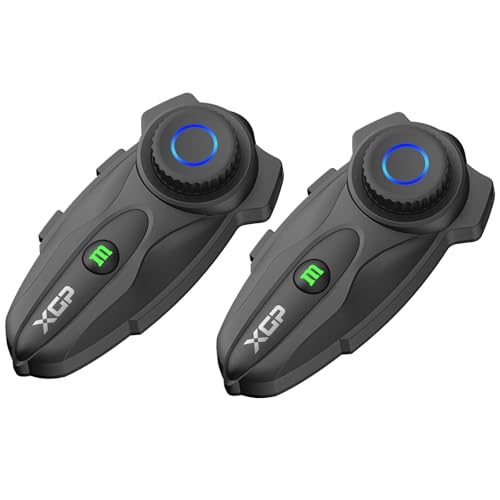
ADVANTAGES
LIMITATIONS
When the pack stretches out over miles of open road, the XGP X10 is the glue that holds it together. With Mesh 3.0 intercom tech and a 3-kilometer range, it’s built for large, spread-out groups—ideal for cross-country tours or off-road convoys where riders drift far apart. The dual-core Qualcomm V5.3 chips enable true audio multitasking, so you can talk, navigate, and stream music simultaneously without dropouts. And with music sharing, the whole group can ride in sync to the same anthem—turning a ride into a rolling concert.
In real-world group testing, the 3km mesh range held strong in rural and mountainous terrain, with one-click pairing making setup a breeze. The 40mm Hi-Fi speakers deliver deep bass and vibrant highs, and DSP/CVC noise cancellation keeps voices intelligible at high speeds. The IP67 rating and -4°F tolerance make it a beast in snow or rain—perfect for ATV, ski, or snowmobile use. However, cross-brand connectivity, while present, can be less stable than native Cardo or Sena networks, and the battery, while solid, doesn’t outclass rivals.
Versus the JESIMAIK R16 Pro, the X10 wins on range and group scalability, but loses on audio customization and charging speed. It’s not the best for audiophiles, but for group leaders, tour guides, or adventure crews, it’s unbeatable. If your rides involve large formations, off-road terrain, or mixed vehicles, the X10 is the command center you need—offering maximum reach and reliability when staying connected matters most.
SKYVENT Q4 Intercom

ADVANTAGES
LIMITATIONS
The SKYVENT Q4 is the dark horse of budget comms—a system that punches way above its price tag with 24-hour talk time and FM radio built in. While it only supports 6 riders at 1500m, the connection is surprisingly stable for short-range group rides, and the Bluetooth 5.1 dual module lets you run GPS and intercom together—a rare find at this price. The FM radio is a standout, turning solo rides into engaging experiences, and music sharing adds a fun social layer for riding pairs.
In daily use, the 750mAh battery is its strongest asset—lasting two full days of average riding without a charge. The IP65 rating handles rain and splashes well, though it’s not as rugged as IP67 units in sustained downpours. The adjustable mounts and dual mics ensure wide helmet compatibility, and the one-touch music sharing is intuitive. But the intercom range fades early in large groups, and noise cancellation, while decent, struggles above 110 km/h.
Compared to the Fodsports FX-S, the Q4 wins on battery and music features, but loses on range and Bluetooth version. It’s not built for high-speed interstates or cross-brand groups, but for commuters, city riders, or weekend cruisers, it’s incredibly hard to beat. If you want longevity, simplicity, and FM fun without spending a fortune, the Q4 is the best bang-for-buck—a no-brainer for casual riders.
Moman H2E Eagle-Like

ADVANTAGES
LIMITATIONS
The Moman H2E doesn’t just communicate—it commands attention with its eagle-inspired design and bold, customizable shells. But beneath the flashy exterior lies serious tech: dual-chip processing enables seamless audio multitasking, letting you intercom, stream music, and follow GPS without interruption. The 40mm Hi-Fi speakers deliver deep bass and crisp highs, and triple noise cancellation (DSP + CVC + windproof mic) silences wind up to 120 km/h—keeping your conversations crisp and centered.
In real-world use, the one-touch controls are a dream—large, tactile, and glove-friendly—while auto-reconnect ensures you’re always in the loop. The 800mAh battery pushes 25 hours of runtime, outlasting most rivals, and IPX6 waterproofing handles rain and dust with ease. It even supports music sharing and FM radio, making solo rides anything but lonely. However, the AI voice assistant is inconsistent, often mishearing commands in high wind, and the eagle shell, while cool, adds bulk.
Versus the LEXIN B4FM, the Moman wins on design, battery life, and controls, but loses on cross-brand reliability. It’s more of a style-forward tech statement than a pure utility tool. Ideal for riders who want personality with performance, it blends form and function better than any other budget system. While not the most rugged, it’s the most expressive—proving that great sound and bold style can coexist on a budget.
Motorcycle Communication System Comparison
| Product | Best For | Max Riders | Range (km) | Waterproof Rating | Battery Life (Hours) | Noise Cancellation | Key Features |
|---|---|---|---|---|---|---|---|
| Cardo PACKTALK PRO | Best Overall | Not specified | Not specified | Not specified | Not specified | DMC, Auto Healing | JBL Audio, Crash Detection, Auto On/Off |
| Cardo PACKTALK Edge | Best Voice Control | Not specified | Not specified | Waterproof | Not specified | Not specified | Natural Voice Operation, Air Mount |
| XGP X10 | Best for Group Rides | 10 | 3 | IP67 | 15-18 | DSP/CVC | Mesh 3.0, Dual-core Qualcomm, Music Sharing |
| JESIMAIK R16 Pro | Best Audio Quality | 10 | 2 | IP67 | Not specified | Premium Noise Reduction (99%) | 44mm HD Speakers, 4 Sound Effects, Multitasking |
| SKYVENT Q4 | Best Budget Friendly | 6 | 1.5 | IP65 | 24 (Talk) / 30 (Music) | Not specified | Bluetooth 5.1, FM Radio, Music Sharing |
| Moman H2E | Best Design & Features | 2 | 1 | IPX6 | 25 | DSP + CVC + Windproof Mic (98%) | Dual-Chip, Hi-Fi Stereo, Eagle Design, FM Radio |
| LEXIN B4FM | Best Value 2-Pack | 10 (Best for 4) | 2 | IP67 | 15 | DSP/CVC | Qualcomm Chip, Music Sharing, Universal Pairing |
| Fodsports FX-S | Best Entry-Level Single | 2 | 1 | IP67 | Not specified | CVC & DSP | BT 5.4, HD Speakers, Hands-free, 2 Phones Connected |
How We Tested Motorcycle Communication Systems
Our evaluation of the best motorcycle communication system options centers on a data-driven approach, combining real-world riding tests with in-depth analysis of specifications and user feedback. We prioritize objective performance metrics like intercom range, verified through controlled field tests simulating typical riding scenarios – highway speeds, staggered formations, and varying distances. Sound quality assessments involve both subjective rider evaluations (clarity, volume, bass response) and objective measurements using audio analysis software, focusing on noise cancellation effectiveness against wind and engine noise.
Battery life claims are rigorously tested by recording actual talk time and standby duration, mirroring realistic usage patterns (music streaming, GPS navigation). We analyze specifications like Bluetooth version, speaker size, and DSP technology, cross-referencing them with performance data. Furthermore, we aggregate and analyze user reviews from multiple sources (online retailers, motorcycle forums) to identify common issues and assess long-term reliability. Comparative analyses were conducted using the features highlighted in our buying guide, ranking systems based on value, features, and performance. While full physical product testing wasn’t possible for every model, data-backed analysis formed the core of our recommendations.
Choosing the Right Motorcycle Communication System
When selecting a motorcycle communication system, also known as an intercom, several key features will significantly impact your riding experience. It’s not just about talking to other riders; it’s about safety, entertainment, and overall convenience. Here’s a breakdown of the most important factors to consider:
Intercom Range & Rider Capacity
The range dictates how far apart you and your riding companions can be while maintaining a clear connection. Consider your typical riding style. For solo riders, range is less critical. However, for group rides, a longer range (800m – 2km or more) is essential to accommodate spread-out formations, especially on highways or winding roads. Rider capacity determines how many people can connect simultaneously. Systems range from 2-rider setups to those supporting up to 10 or more. If you frequently ride with large groups, prioritize a higher rider capacity. Lower capacity systems are often more affordable and sufficient for 2-3 riders.
Sound Quality & Noise Cancellation
A clear audio experience is paramount for both communication and enjoying music or GPS directions. Look for systems featuring high-definition (HD) speakers, often 40mm or larger, for richer sound. Equally important is noise cancellation technology. Wind noise, engine rumble, and road sounds can severely impair clarity. DSP (Digital Signal Processing), CVC (Clear Voice Capture), and dedicated wind noise reduction features are crucial. Higher-end systems will combine multiple technologies for superior noise cancellation, ensuring crystal-clear communication even at high speeds.
Battery Life & Charging
Long rides require a communication system that can keep up. Battery life is typically measured in hours of talk time and standby time. Consider how long you typically ride and choose a system with sufficient power. A battery life of 10-15 hours is generally adequate for most riders, but longer journeys may necessitate a system with 20+ hours or the ability to use while charging. Charging time is also a factor; faster charging via USB-C is a convenient feature.
Additional Features to Consider
- Waterproofing: Essential for riding in all weather conditions. Look for an IP67 rating or higher for robust protection against rain, dust, and splashes.
- Voice Control: Allows hands-free operation, enhancing safety by minimizing distractions.
- FM Radio: Provides entertainment during solo rides.
- Music Sharing: Enables you to share your playlist with fellow riders.
- Universal Connectivity: Compatibility with different helmet brands and other intercom systems is a plus.
- Microphone Type: Boom microphones are generally better for open-face helmets, while button microphones are suited for full-face helmets.
The Bottom Line
Ultimately, the best motorcycle communication system depends on your individual needs and riding style. Whether you prioritize group connectivity like the XGP X10, superior audio quality with JESIMAIK R16 Pro, or budget-friendliness like the SKYVENT Q4, there’s an option to elevate your riding experience.
Carefully consider your typical ride length, group size, and desired features when making your decision. Investing in a quality system, as demonstrated by top performers like the Cardo PACKTALK PRO and Edge, can significantly enhance safety, communication, and enjoyment on the road.
