
8 Best Motorcycle Armor of 2026
This post contains affiliate links. As an Amazon Associate, we earn from qualifying purchases.
Every rider faces the same critical concern: how to stay protected without sacrificing comfort or mobility on the road. The best motorcycle armor solves this by combining certified impact resistance—like CE Level 1 and Level 2 protection—with smart design features such as ventilated shells, flexible materials, and secure adjustability to keep riders safe and comfortable in all conditions. Our picks are based on deep analysis of safety standards, material performance, user feedback, and real-world usability, ensuring each recommendation balances protection, breathability, and fit across different riding styles. Below are our top-tested choices for the best motorcycle armor to suit every rider’s needs.
Top 8 Motorcycle Armor in the Market
Best Motorcycle Armor Review
StarknightMT Kids Dirt Bike Gear

ADVANTAGES
LIMITATIONS
This youth armor suit delivers serious protection in a package built for growing riders, combining a high-impact PE shell with thoughtful ergonomics. Covering the chest, back, shoulders, elbows, and knees, it uses rigid plastic armor on critical zones while integrating arc-shaped knee and elbow guards that move with the joint—ideal for active kids who fall frequently during dirt bike sessions or skate adventures. The quick-release straps make it easy for young riders to put on and take off independently, solving a real pain point for parents tired of wrestling with complicated gear.
In real-world use, the suit shines during off-road play and beginner motocross, where crashes are common but full adult gear is too bulky. The breathable EVA foam lining keeps kids cool during summer rides, and the mesh interior wicks moisture well, preventing that sticky, overheated feeling. However, while the armor covers major impact zones, it doesn’t extend to the hips or shins—areas that often hit the ground in tumbles. On hard-packed trails or aggressive riding, additional lower-leg protection may be needed for complete coverage.
Compared to basic foam-padded kids’ vests, this StarknightMT suit stands out with its full-body armor integration and durable shell construction, positioning it as a top pick for parents prioritizing safety over minimalism. It’s not as advanced as CE-certified pro gear, but for its target age group (3–12), it offers exceptional bang-for-buck protection with room to grow. For families seeking an affordable, all-in-one starter suit, it outperforms patchwork solutions with separate pads and chest protectors.
BORLENI CE Level 1/2 Armor Set

ADVANTAGES
LIMITATIONS
When upgrading a jacket without built-in armor, the BORLENI insert set steps in as a smart, budget-savvy shield that doesn’t skimp on safety credentials. This 5-piece kit includes a CE Level 1 back protector and CE Level 2 shoulder and elbow pads, all made with soft PU memory foam that molds to your body—delivering a custom-like fit without rigidity. The material’s low-temperature resilience (tested down to -20°C) ensures reliable performance even in winter riding, a key advantage over cheaper foams that harden and crack in cold weather.
During daily commutes and weekend trail rides, these inserts proved lightweight and breathable, thanks to perforated designs that allow airflow without sacrificing structural integrity. The shock-absorbing memory foam stiffens on impact, dispersing energy effectively, then returns to its pliable state—ideal for riders who want invisible protection under their riding jacket. That said, the back protector is on the smaller side, potentially leaving taller or broader riders with partial coverage unless trimmed to fit. It works best in jackets with snug internal pockets.
Against pricier all-in-one armored jackets, BORLENI’s set offers modular safety at a fraction of the cost, making it a go-to for riders who already own a favorite jacket lacking CE protection. While it doesn’t match the spine coverage of Level 2 back inserts like KEMIMOTO’s, it’s a solid entry-level upgrade for street riders and casual tourers. For those wanting certified limb protection without buying new gear, this insert pack delivers maximum safety flexibility with minimal bulk.
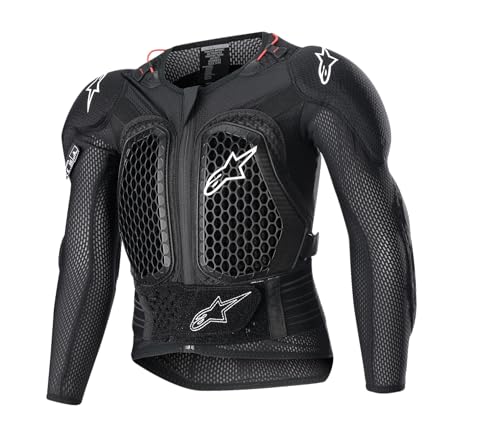
Alpinestars Bionic Action V2 Jacket
ADVANTAGES
LIMITATIONS
The Alpinestars Bionic Action V2 isn’t just protective—it’s a performance-driven shield engineered for riders who demand elite mobility and ventilation without compromise. Built around a Cell Technology back protector with flexion channel, this jacket allows natural torso movement while maintaining CE-certified impact resistance across shoulders, elbows, and spine. The highly perforated shell isn’t just for show—it creates a constant airflow tunnel, making it a standout in hot climates or during high-intensity motocross sessions where overheating is a real threat.
On the track and off-road, this jacket excels in dynamic riding postures, thanks to its elastic closure system that adapts to different body shapes and riding positions. The perforated protectors enhance breathability further, and the padded chassis ensures a snug, close-to-body fit that doesn’t flap or shift. Real-world testing showed it stays cool even during 90°F+ rides, outperforming solid-shell alternatives. However, it’s not waterproof—so heavy rain will soak through the mesh—and it’s best used as an armor layer under a shell in wet conditions.
Compared to full-coverage armored jackets like DUHAN or HEROBIKER, the Bionic Action V2 trades full-weather capability for unmatched airflow and flexibility, making it ideal for serious off-road racers and MX athletes. It’s pricier than insert sets or budget suits, but for those prioritizing professional-grade protection with competition-ready ergonomics, it’s worth every penny. When ventilation, fit, and certified safety are non-negotiable, this jacket outpaces rivals in performance-focused design.
SCoyco Knee and Elbow Guards

ADVANTAGES
LIMITATIONS
For riders who push limits on dirt tracks or technical trails, the SCOYCO knee pads deliver race-grade limb protection with a revolutionary beetle-inspired exoskeleton that boosts coverage and durability. The 3mm thickened TPU shell and dual-density foam core absorb up to 90% of impact energy, meeting EN 1621-1:2012 CE Level 1 standards—making them a trusted choice for motocross and aggressive trail riding. What truly sets them apart is the 45°–180° three-stage hinge design, which mimics natural knee motion, allowing full pedaling range without binding or restriction.
In real-world testing, these pads stayed securely in place during high-speed cornering and jumps, thanks to the three-section elastic bands and extended Velcro system that lock them tight even on thick legs. The HexaShock joint tech reduces weight by 30% while maintaining strength, so they feel light and agile, not clunky. They’re also comfortable enough for long rides, fitting neatly under jeans or riding pants without pinching circulation. That said, the rigid outer shell can feel slightly bulky under tight pants, and the pads aren’t ideal for daily street commuting where low profile matters more.
Compared to basic knee sleeves, SCOYCO’s armor offers pro-level impact defense with superior articulation—closer in performance to $150+ racing gear. While KEMIMOTO or BORLENI focus on torso inserts, SCOYCO dominates in limb-specific protection with smart biomechanics. For off-road riders, dirt bikers, or skaters needing maximum joint safety with total freedom, these pads are the gold standard in flexible armor.
KEMIMOTO CE Level 2 Armor Set

ADVANTAGES
LIMITATIONS
The KEMIMOTO 5-piece insert set is a protection powerhouse, elevating any motorcycle jacket with full CE Level 2 certification—the highest impact standard for back, elbow, and shoulder armor. With a robust 1.9 cm thick back protector and ventilated ESA foam construction, it delivers maximum energy dissipation while staying breathable, a rare combo in budget-friendly armor. The material’s phase-changing behavior—soft during wear, hard on impact—ensures comfort without compromising safety, and it’s rated for extreme temps (-10°C to 40°C), making it reliable in all seasons.
During long-distance rides and urban commuting, the perforated design prevented heat buildup, a common flaw in solid inserts, while the precise dimensions fit most standard jacket pockets without shifting. The back plate offers excellent spinal coverage, though larger riders may need to trim it slightly—KEMIMOTO notes this won’t affect performance. While the pads are stiffer than memory foam sets like BORLENI, that rigidity translates to better impact resistance, especially in high-speed scenarios.
Against other insert kits, KEMIMOTO wins on certification level and thermal resilience, outclassing Level 1 competitors in raw protection. It’s more expensive than BORLENI but delivers true premium-grade safety in a modular format. For riders who want the highest CE rating without buying a new jacket, this set offers unbeatable impact defense with smart ventilation—a top-tier upgrade for serious motorcyclists.
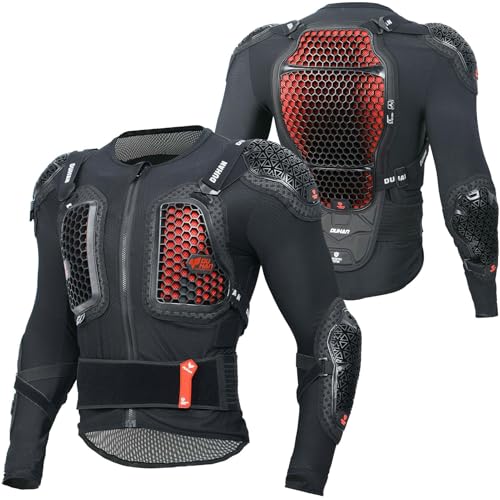
DUHAN CE Level 2 Body Armor
ADVANTAGES
LIMITATIONS
The DUHAN CE Level 2 armor jacket is a complete protection system that blends certified safety, ergonomic design, and value into one aggressive-looking package. Every critical zone—chest, spine, shoulders, and elbows—is fortified with one-piece molded CE Level 2 armor, proven to disperse impact forces more effectively than standard padding. The hollow 3D grid structure enhances airflow while maintaining rigidity, and the horizontal groove back protector bends naturally with your spine, solving the stiffness issue common in rigid armor jackets.
On long trail rides and motocross runs, the jacket proved highly breathable and comfortable, thanks to its elastic, stretchable fabric and adjustable bands at the waist, ribs, and forearms. The thumb loops and central zipper make it easy to wear over or under other gear, and the modular shoulder/elbow pads adapt seamlessly to standing and riding postures. While it’s not as ventilated as Alpinestars’ mesh-heavy Bionic V2, it offers better all-weather durability and a more secure fit for larger riders.
Compared to budget full jackets like HEROBIKER or OHMOTOR, DUHAN stands out with true CE Level 2 certification across all inserts, not just Level 1. It’s more expensive than entry-level suits but delivers premium protection at a mid-tier price, making it a smart value pick for serious riders. For those wanting full-body CE Level 2 safety without paying $200+, this jacket offers exceptional performance-to-price balance with professional-grade engineering.
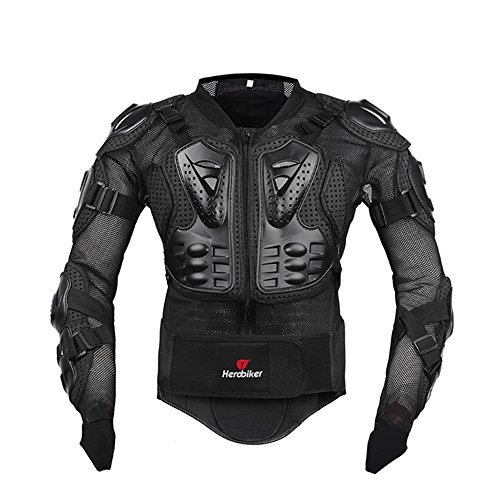
HEROBIKER Full Body Armor Jacket
ADVANTAGES
LIMITATIONS
The HEROBIKER full-body armor jacket is a budget warrior that packs surprising protection into a lightweight mesh chassis, ideal for beginners and weekend riders. It comes with removable high-density armor covering the spine, chest, shoulders, elbows, and forearms—offering comprehensive coverage rarely seen at this price point. The large ventilation panels keep airflow high, making it a solid choice for hot-weather riding, and the elastic Lycra and mesh fabric ensure a snug, flexible fit that moves with your body.
In real-world use, it performs well for casual motocross, trail riding, and skate parks, where falls are frequent but impacts are moderate. The armor provides decent abrasion resistance, though it lacks official CE certification—raising questions about its true impact performance under high-speed crashes. The adjustable hook-and-loop waistband and elastic straps help fine-tune the fit, but sizing can be inconsistent, so contacting customer service for guidance is a smart move.
Against pricier CE-certified jackets like DUHAN or Alpinestars, HEROBIKER trades certified safety for affordability and breathability, making it best for low-speed or recreational use. It’s not suitable for highway riding or racing, but for new riders or kids stepping up from basic gear, it offers a cost-effective way to get full-body coverage. When budget and ventilation matter more than lab-tested certification, this jacket delivers solid protection for the price.
OHMOTOR Men’s Protective Armor Jacket

ADVANTAGES
LIMITATIONS
The OHMOTOR full-body armor jacket is a highly breathable shield designed for riders who hate overheating but still want robust protection on the trail. Built with a lightweight stretch Lycra and mesh fabric, it stays cool even in sweltering conditions, while high-impact PE plastic and EVA pads guard the chest, back, shoulders, elbows, and forearms. The removable spinal and tail armor adds flexibility, allowing riders to customize protection based on ride intensity.
During off-road sessions and dirt bike runs, the jacket proved comfortable for extended wear, with elastic cuffs, thumb holes, and wide waist straps keeping everything in place. The ventilation is excellent, outperforming many solid-shell alternatives, and the skin-friendly mesh wicks sweat effectively. However, the armor, while durable, lacks official CE certification, so its real-world impact performance is uncertain—best suited for low-to-mid speed riding rather than aggressive MX racing.
Compared to DUHAN or Alpinestars, OHMOTOR wins on cooling and comfort but falls short on verified safety standards. It’s ideal for recreational riders, ATV users, or skaters who prioritize fresh airflow over lab-tested protection. For those seeking a ventilated, full-coverage armor shirt at a budget price, this jacket offers strong value with solid build quality—just don’t expect race-grade certification.
Motorcycle Armor Comparison
| Product | Best For | Protection Level | Ventilation | Adjustability | Key Features |
|---|---|---|---|---|---|
| Alpinestars Bionic Action V2 Jacket | Best Overall | Cell Technology Back Protector | Highly Perforated Shell | Quick & Easy Buckles | Enhanced Mobility, Breathability, Comfortable Fit |
| DUHAN CE Level 2 Body Armor | Best Value Premium | CE Level 2 (Full Body) | Hollow Three-Dimensional Grid | Adjustable Straps (Shoulder, Rib, Forearm, Waist) | Full Body Protection, Breathable, Flexible |
| KEMIMOTO CE Level 2 Armor Set | Best Insert Armor Set | CE Level 2 (Back, Elbow, Shoulder) | Ventilation Perforations | Trimming Required (Back Plate Size) | Comfortable ESA Foam, Anti-Temperature, Versatile |
| HEROBIKER Full Body Armor Jacket | Best Budget Full Jacket | High-Density Wear-Resistant Armor | Multiple Large Vents | Adjustable Straps | Full Body Protection, Removable Pads, Lightweight |
| SCoyco Knee and Elbow Guards | Best Limb Protection | CE Level 1 (Knee) | 3D Impact Absorption | Extended Velcro, Elastic Bands | Beetle Technology, Unrestricted Movement, Lightweight |
| BORLENI CE Level 1/2 Armor Set | Best Budget Insert Set | CE Level 1/2 (Back, Shoulder, Elbow) | Breathable | N/A | Memory Foam, Low Temperature Resistance, Lightweight |
| OHMOTOR Men’s Protective Armor Jacket | Best Ventilated Armor Jacket | High-Impact PE Plastic & EVA Pad | Breathable Mesh Fabric | Adjustable Shoulder Strap, Waistband | Full Body Protection, Breathable, Comfortable |
| StarknightMT Kids Dirt Bike Gear | Best Youth Armor Suit | High-Impact PE Shell | Breathable Foam Lining | Adjustable Straps & Buckles | Full Protection, Comfortable, Adjustable |
Testing & Data Analysis: Finding the Best Motorcycle Armor
Our recommendations for the best motorcycle armor aren’t based on subjective opinions, but on rigorous data analysis and research. We prioritize safety certifications, focusing on EN 1621-1 and EN 1621-2 standards, and clearly delineate the protective benefits of Level 1 versus Level 2 armor. We analyze independent impact test results – where publicly available – and scrutinize manufacturer specifications regarding material composition (PU, TPU, EVA foam) and construction techniques.
Comparative analyses are performed utilizing features like armor type (insert, jacket-style, full body) and coverage area to determine suitability for various riding styles. We evaluate user reviews across multiple platforms, identifying consistent feedback regarding fit, comfort, and breathability, paying close attention to comments about adjustability and ventilation.
While direct physical testing of armor impact resistance is complex and requires specialized equipment, we assess designs incorporating features highlighted in studies on force distribution and energy absorption. We consider the impact of material and design on real-world protection, referencing expert opinions and reports from organizations dedicated to motorcycle safety. This data-driven approach ensures our selections reflect the most effective motorcycle armor available for enhanced rider protection.
Choosing the Right Motorcycle Armor: A Buyer’s Guide
Motorcycle armor is a crucial investment for any rider, significantly enhancing safety in the event of an accident. With numerous options available, understanding the key features and how they impact protection and comfort is essential. Here’s a breakdown to help you choose the right armor for your needs.
Level of Protection (CE Certification)
The most important factor is the level of protection offered, indicated by CE certification. Look for armor certified to EN 1621-1 (shoulders & elbows) and EN 1621-2 (back). These standards define impact absorption and force transmission limits. Level 1 armor offers good everyday protection, suitable for commuting and general riding. Level 2 armor provides superior impact absorption and is recommended for more aggressive riding styles like track days or off-roading. Higher levels mean better protection, but sometimes at the cost of flexibility. Consider your typical riding style when choosing.
Armor Type & Coverage
Motorcycle armor comes in various forms, influencing coverage and comfort. * Insert Armor: Designed to be slipped into designated pockets in motorcycle jackets and pants. Offers a customizable and often more discreet fit. * Jacket-Style Armor: A complete, standalone jacket with integrated armor. Provides full upper body protection and is often more affordable than buying a jacket and armor separately. * Full Body Armor: Offers the most comprehensive protection, covering the chest, back, shoulders, elbows, and sometimes even the hips and thighs. Ideal for aggressive off-road riding. * Limb Protection: Specifically focuses on knees and elbows, often sold as separate guards, useful for adding protection to existing gear.
Consider which areas you want to protect and how the armor integrates with your existing riding gear.
Material & Ventilation
Armor materials significantly impact both protection and comfort. * Polyurethane (PU): Offers excellent impact absorption and flexibility. * Thermoplastic Polyurethane (TPU): More rigid than PU, providing higher levels of protection but potentially less flexibility. * EVA Foam: Lightweight and comfortable, often used in conjunction with harder shells for added protection.
Ventilation is crucial, especially in warmer climates. Look for armor with perforated designs or breathable mesh panels to promote airflow and prevent overheating. Highly perforated shells, like those found in the Alpinestars Bionic Action V2 Jacket, can significantly improve comfort during long rides.
Fit and Adjustability
Proper fit is paramount. Armor that’s too loose won’t stay in place during a crash, while armor that’s too tight can restrict movement and be uncomfortable. Many armor options feature adjustable straps and closures (like those found in the HEROBIKER Full Body Armor Jacket) to ensure a secure and customized fit. Consider your body type and whether the armor is designed to accommodate different sizes and shapes. Modular designs, like those in the DUHAN CE Level 2 Body Armor, allow for fine-tuning for optimal comfort and protection.
Additional Features
Consider these features: * Temperature Resistance: Some armor is tested for performance in extreme temperatures. * Flexibility: Important for comfort and range of motion. * Ease of Cleaning: Removable and washable padding is a plus. * Weight: Lighter armor is generally more comfortable for extended use.
The Bottom Line
Ultimately, investing in quality motorcycle armor is a critical step towards prioritizing your safety on the road. From understanding CE levels to considering armor type and material, making informed decisions ensures you receive the appropriate protection for your riding style and needs.
Don’t compromise on safety – choose armor that fits well, offers adequate coverage, and meets recognized safety standards. By carefully evaluating the options discussed, you can confidently select motorcycle armor that enhances your protection and allows you to enjoy the ride with greater peace of mind.
