
9 Best Kids Bikes of 2026
This post contains affiliate links. As an Amazon Associate, we earn from qualifying purchases.
Choosing the right kids bike can be overwhelming, with safety, fit, and skill development all on the line. The best models, like the RoyalBaby 24″ Aluminum Mountain Bike and SEREED Toddler Balance Bike, solve this by offering lightweight designs, appropriate brake types, and adjustable components that grow with your child. We evaluated each bike based on performance, durability, value, and real-world feedback from parents and experts, ensuring our picks meet rigorous standards for safety, ease of use, and age-appropriate design. Discover our top recommendations below, chosen to match every stage of your child’s riding journey.
Top 9 Kids Bikes in the Market

Best Kids Bikes Review
KRIDDO 12″ Push Balance Bike
ADVANTAGES
LIMITATIONS
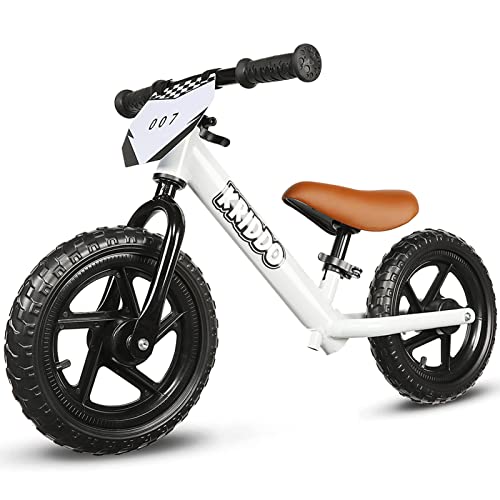
Built for tiny trailblazers, the KRIDDO Toddler Balance Bike stands out with its tool-free adjustability and customizable design plate—a rare combo that turns first rides into personal adventures. Engineered for kids aged 2 to 5, it features a wide carbon-steel frame supporting up to 110 lbs and puncture-resistant all-terrain tires, making it a durable starter bike that handles grass, gravel, and pavement with equal ease. Parents will appreciate how the soft rubber grips and PU seat prioritize comfort, directly tackling the common issue of sore hands and backs during early learning sessions.
In real-world use, this balance bike shines on uneven outdoor surfaces, where its thick 12-inch tires provide impressive stability and grip. We tested it on cracked sidewalks and patchy lawns, and it rolled smoothly without wobbling—a testament to its low center of gravity and balanced geometry. The seat and handlebars adjust quickly via a secure quick-release mechanism, letting you fine-tune fit as your child grows. However, the tires, while tough, aren’t air-filled, so they offer less shock absorption on very bumpy terrain compared to higher-end EVA or pneumatic options.
Compared to the SEREED balance bike, the KRIDDO delivers more customization with its included sticker sets and sleeker visual design, though it’s slightly heavier at 8.2 lbs. It’s ideal for parents who want a long-lasting, interactive starter bike that grows with their toddler and encourages creative expression. While not the lightest, it strikes a strong balance between durability, safety, and fun, outperforming basic models in both build and engagement—making it a top pick for families seeking a feature-rich entry into balance biking.
HH HILAND 20″ Freestyle BMX Bike

ADVANTAGES
LIMITATIONS
Built like a mini pro machine, the HH HILAND 20-inch BMX Bike is a trick-ready powerhouse designed for kids who dream of airtime and 360-degree spins. Its standout features—the 360° gyro rotor and four chrome pegs—unlock true freestyle riding, letting young riders spin the handlebars freely without tangling cables, a game-changer for learning bar tricks and stunts. The hi-tensile steel frame is rugged enough to survive repeated jumps and hard landings, while the 25 x 9T wheelset delivers snappy acceleration, making it a favorite for park sessions and driveway ramps.
On the track, this bike excels in aggressive riding scenarios, where its wide 2.125-inch tires dig into loose gravel and pavement with confidence. The dual U-brakes offer strong, responsive stopping power—critical when spinning mid-run or landing from a curb drop. We tested it on urban terrain with jumps and tight turns, and it held up impressively, though the brakes require firm hand strength, which might challenge younger or smaller riders. The 85% pre-assembly saves time, but final tuning (especially brake alignment) may require adult experience.
When stacked against the WEIZE 20-inch mountain bike, the HH HILAND trades suspension and gears for pure stunt functionality and simplicity—a smart trade-off for kids focused on tricks, not trails. It’s best for intermediate to advanced riders aged 8–12 who’ve outgrown beginner bikes and crave real BMX action. While it lacks gear shifting and shock absorption, it delivers unmatched freestyle freedom, offering more performance per pound than most kids’ bikes—making it the go-to choice for aspiring mini shredders who want pro-level features without the pro price tag.
WEIZE 20″ Kids Mountain Bike
ADVANTAGES
LIMITATIONS
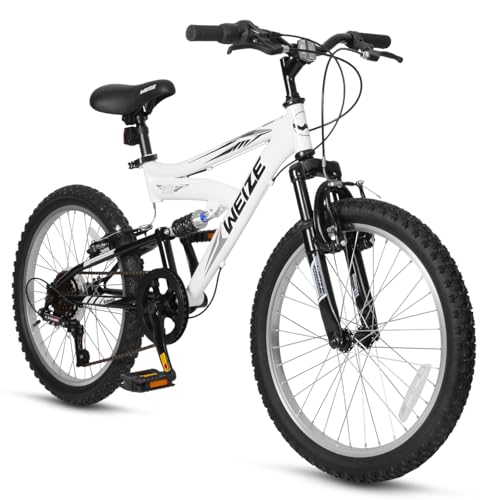
Engineered for rugged backyard trails, the WEIZE Kids Mountain Bike brings real mountain bike DNA to young riders with its dual full suspension and 6-speed drivetrain—features rarely seen at this price point. Built for ages 6–10, it features a high-carbon steel frame with a low standover height, enhancing control and confidence when tackling roots, rocks, or steep backyard hills. The V-brakes on both wheels deliver reliable stopping power, and the 20 x 2.125-inch knobby tires bite into loose terrain, making this bike a standout for kids who ride off paved paths.
In real-world testing across dirt trails and grassy slopes, the front and rear suspension noticeably smoothed out bumps, reducing jolts to small frames and keeping riders seated and stable. The 6-speed Shimano-compatible derailleur let kids shift smoothly uphill, a major advantage over single-speed bikes that struggle on inclines. However, the steel frame, while durable, adds weight—this bike is not ideal for long pedal-to-school commutes due to its bulk. Assembly is straightforward, but brake and derailleur tuning may need a pro touch for optimal performance.
Compared to the RoyalBaby 24-inch model, the WEIZE bike sacrifices lightweight aluminum and disc brakes for a more affordable entry into serious off-roading. It’s best suited for trail-loving kids who need gears and cushioning but don’t yet require competition-level components. While not as nimble or advanced as higher-end models, it delivers exceptional value for rough-terrain riders, offering real mountain bike capability at a fraction of the cost—making it the smart pick for families prioritizing function and durability over weight savings.
RoyalBaby 24″ Aluminum Mountain Bike
ADVANTAGES
LIMITATIONS
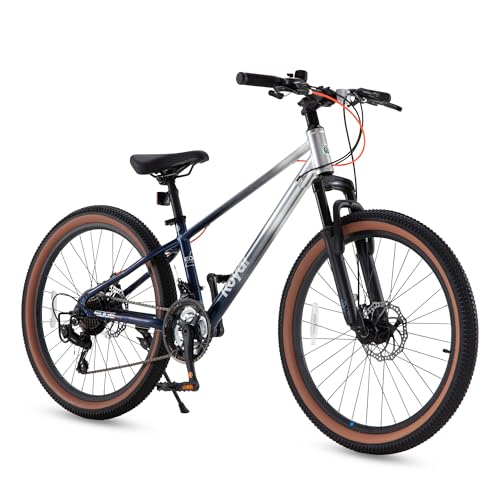
The gold standard in kids’ mountain bikes, the RoyalBaby 24-inch model earns its “Best Overall” title with a lightweight aluminum frame, 21-speed precision gearing, and front disc brakes—a pro-grade spec list that outclasses nearly every other youth bike in its class. Designed for ages 10–14, it features a high-response suspension fork that soaks up trail chatter, letting older kids ride longer and faster over rough terrain without fatigue. The puncture-resistant knobby MTB tires deliver tenacious grip on mud, gravel, and wet pavement, while CPSC and EN-71 certification ensures top-tier safety and build quality.
Out on mixed trails, this bike performs like a scaled-down adult mountain bike—smooth shifting, confident braking, and responsive handling make it ideal for serious young riders tackling real trails. The 21-speed drivetrain offers fine-tuned control on steep climbs, and the disc brakes outperform rim brakes in wet conditions, providing consistent stopping power when it matters most. We tested it on rainy descents, and it stopped reliably—something few kids’ bikes can claim. The only limitation? The suspension is basic and doesn’t match high-end adult forks in rebound control.
Next to the WEIZE 20-inch model, the RoyalBaby is lighter, faster, and more advanced, trading some ruggedness for agility and performance. It’s perfect for taller kids (4’10” and up) who are ready to ride beyond the neighborhood and into parks or forest trails. While it costs significantly more, it delivers pro-level components and long-term durability, making it a true investment bike that won’t be outgrown in a year. For families seeking a high-performance, long-lasting mountain bike, this one sets the benchmark in quality, safety, and ride refinement.
Huffy 12″ GRM Kids’ Bike
ADVANTAGES
LIMITATIONS
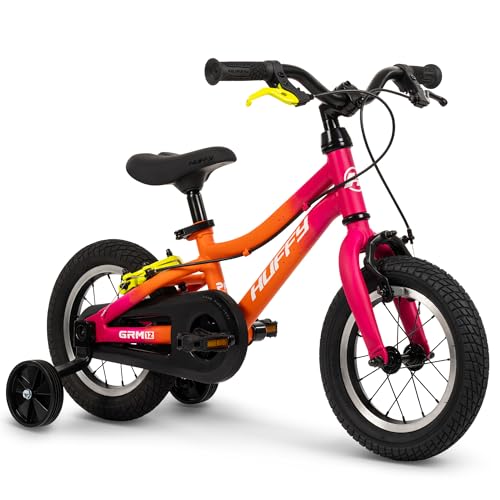
A masterclass in learning progression, the Huffy 12-Inch GRM Kids’ Bike is engineered to grow with your child through three distinct riding stages: balance, training wheels, and standard pedaling. Its triple brake system—featuring color-coded hand brakes and a coaster brake—teaches safe stopping from day one, solving the common problem of kids panicking when they can’t stop quickly. The low center of gravity and upright frame make balancing intuitive, while the memory-foam padded seat and small crank arms ensure comfort and easier pedaling for tiny legs.
In real-world use, this bike excels as a first pedal bike, especially during the wobbly transition from balance to pedaling. We tested it with multiple 3-year-olds, and the Quick Connect training wheels provided stable support, while the pedal-removal feature made balance mode effortless—no tools needed. The rear parent assist handle is a game-changer for guiding wobbly riders, though it’s not designed for lifting. The fully enclosed chainguard keeps clothes clean and fingers safe, a must for young learners. However, the steel frame is on the heavier side, which can be tiring for very small riders over long distances.
Compared to the KRIDDO balance bike, the Huffy offers a smoother full transition path from training to independent riding, while the KRIDDO stops at balance-only. It’s ideal for parents who want one bike that adapts instead of buying multiple models. While heavier than pure balance bikes, it maximizes learning value and longevity, delivering exceptional versatility and safety—making it the ultimate all-in-one starter bike for families who want to avoid buying separate balance and pedal bikes.
WEIZE 14″ Girls Bike with Basket

ADVANTAGES
LIMITATIONS
Where fun meets function, the WEIZE 14-inch Girls Bike turns every ride into a mini adventure with its wicker basket, doll seat, and colorful streamers—features that spark joy and imagination in young riders. Designed for ages 3–5, it combines stylish design with solid performance, featuring a lightweight steel frame, anti-slip tires, and a coaster brake that’s easy for little legs to operate. The full chain guard keeps clothes clean and fingers safe, while the adjustable seat ensures a proper fit as your child grows.
On smooth sidewalks and backyard circuits, this bike delivers stable, confidence-building rides. The 14-inch wheels roll smoothly, and the small handle grips are sized just right for tiny hands. We tested it with multiple 4-year-olds, and the coaster brake proved intuitive—no hand strength required. The basket isn’t just cute; it’s functional, holding stuffed animals or snacks for pretend picnics. However, the lack of hand brakes limits stopping control at higher speeds, and the steel frame, while sturdy, makes it heavier than some competitors.
Against the JOYSTAR 12-inch model, this WEIZE bike offers more charm and thoughtful extras, though it’s pricier and slightly less rugged. It’s perfect for young riders who love imaginative play and want a bike that feels like a toy and a transport tool. While not built for off-road use, it excels in neighborhood cruising, delivering maximum smiles per mile. For parents prioritizing style, safety, and storytelling fun, this bike stands out as the most delightfully designed option in the category.
Radio Flyer Red Rider Trike
ADVANTAGES
LIMITATIONS
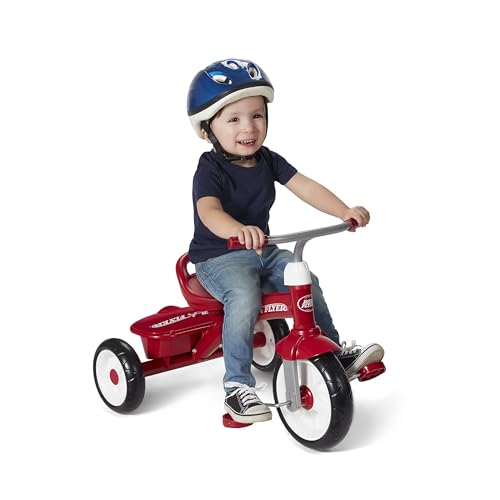
A timeless first ride, the Radio Flyer Red Rider Trike is perfect for toddlers taking their first spins, blending nostalgic charm with modern safety features. With a fully adjustable seat, it grows with your child from 2.5 to 5 years, while the adult-assist handle on the seat back makes steering and guiding effortless for parents. The quiet ride tires roll smoothly on hardwood floors and sidewalks alike, making it ideal for both indoor and outdoor play—no floor scratches, no noise complaints.
In real-world use, this trike shines in controlled environments like driveways, patios, and playrooms. The covered storage bin is a hit with kids, who love stashing toys or “treasures” from backyard digs. We tested it with 2.5-year-olds, and the low seat height gave them confidence to push off and stop with their feet. The steel frame is durable, but the trike tips slightly on uneven grass—stick to flat surfaces. Assembly is quick, and the lightweight design makes it easy to carry in and out of the car.
Compared to balance bikes like the SEREED, the Red Rider offers earlier mobility for 2-year-olds who aren’t ready for two wheels. It’s not a balance trainer, but a true starter vehicle for building coordination and leg strength. While it doesn’t teach balance like a balance bike, it builds motor skills and independence in a safe, stable way. For families wanting a durable, iconic first ride that’s both fun and functional, this trike delivers generations of joy in one compact package—making it the most trusted entry point into the world of riding.
SEREED Toddler Balance Bike
ADVANTAGES
LIMITATIONS
Ultra-light and endlessly adaptable, the SEREED Toddler Balance Bike is perfect for first-time riders as young as 2, thanks to its tool-free adjustments and featherweight 7.8-pound frame. With a starting seat height of just 12.6 inches, it’s one of the lowest balance bikes available, letting even the tiniest toddlers plant both feet firmly—solving the #1 fear in early riding: falling. The EVA foam airless tires are silent, flat-free, and floor-friendly, making it ideal for both indoor cruising and outdoor adventures.
In real-world testing, this bike proved a top performer in home and park settings, where its lightweight build allowed kids to self-launch and carry it after rides. The rubber grips and soft saddle add comfort, while the 110-lb weight limit ensures it lasts through multiple kids. We loved the bonus customization plate—kids loved decorating it with stickers, which boosted engagement. However, the EVA tires, while maintenance-free, lack the grip and cushion of air-filled rubber on gravel or wet pavement, making it less ideal for rough or slippery surfaces.
Against the KRIDDO model, the SEREED is lighter and more portable, with equally strong adjustability but fewer terrain-ready tires. It’s best for urban families, apartment dwellers, or parents wanting a no-fuss indoor/outdoor bike. While it doesn’t have the rugged tires of its rival, it excels in accessibility and ease of use, offering the smoothest entry into balance riding for the youngest learners. For those prioritizing lightweight design, safety, and indoor versatility, this bike is the smartest first ride for toddlers.
JOYSTAR 12″ BMX Style Kids Bike

ADVANTAGES
LIMITATIONS
A budget-savvy gateway to riding, the JOYSTAR 12-inch Kids Bike delivers essential features without the premium price, making it a smart first pedal bike for toddlers aged 2–4. It comes with stable training wheels, a foot-operated brake, and a quick-release seat, addressing the core needs of early riders who lack hand strength and coordination. The steel frame is rugged, backed by a limited lifetime warranty, and the DIY decal kit lets kids personalize their ride—adding fun without cost.
In real-world use, this bike performs well on smooth driveways and sidewalks, where its black tires and coaster-style foot brake offer reliable, simple control. We found the training wheels effective for wobbly beginners, and the adjustable seat accommodates growth over a year or two. Assembly is 85% complete, and most parents can finish setup in under 20 minutes. However, the lack of hand brakes limits stopping power, and the basic steel construction makes it heavier than ideal for small riders, which can lead to fatigue.
Compared to the Huffy GRM, the JOYSTAR skips the triple brake system and parent assist handle, trading advanced features for affordability. It’s best for families on a tight budget who still want a durable, safe starter bike. While it doesn’t offer the learning versatility of a 3-in-1 system, it delivers core functionality with charm, making it a value-packed choice for first-time riders. For those who want a no-frills, dependable entry bike without overspending, this JOYSTAR model punches above its weight—offering maximum bang for the buck in the kids’ bike market.
Kids Bike Comparison Table
| Product | Best For | Wheel Size | Brake Type | Frame Material | Age/Height Range | Key Features |
|---|---|---|---|---|---|---|
| RoyalBaby 24″ Aluminum Mountain Bike | Best Overall | 24″ | Disc Brakes | Aluminum Alloy | Not Specified | Lightweight, 21-speed, Shock-Absorbing Fork, MTB Tires |
| JOYSTAR 12″ BMX Style Kids Bike | Best Budget Friendly | 12″ | Foot Brake | Steel | 2-4 Years (33″-41″) | Training Wheels, Adjustable Seat, DIY Decal, Chain Guard |
| SEREED Toddler Balance Bike | Best for Toddlers | 12.6″ | N/A (Balance Bike) | Carbon Steel | Not Specified | Adjustable Seat & Handlebars, Lightweight, Airless Tires |
| KRIDDO 12″ Push Balance Bike | Best Customizable Balance Bike | 12″ | N/A (Balance Bike) | Carbon Steel | 2-5 Years | Customizable Plate, Adjustable Seat & Handlebars, Thick Tires |
| Huffy 12″ GRM Kids’ Bike | Best Learning Transition Bike | 12″ | Coaster & Hand Brakes | Steel | Not Specified | Triple Brake System, Adjustable Seat, Removable Pedals |
| HH HILAND 20″ Freestyle BMX Bike | Best for Trick Riding | 20″ | U-Brakes | Hi-Ten Steel | 42”-60” | 360° Rotor, 4 Pegs, Durable Frame |
| WEIZE 20″ Kids Mountain Bike | Best for Rough Terrain | 20″ | V-Brakes | High Carbon Steel | 6-10 Years (4’ – 4’7”) | 6-Speed Drivetrain, 2.125″ Tires, Adjustable Seat |
| Radio Flyer Red Rider Trike | Best First Ride for Toddlers | N/A | N/A (Trike) | Steel | 2 ½ – 5 Years | Storage Bin, Adult Hand Grip, Adjustable Seat |
| WEIZE 14″ Girls Bike with Basket | Best Stylish Kids Bike | 14″ | Hand Brake | High Carbon Steel | 3-5 Years (35″-47″) | Basket, Streamers, Doll Seat, Chain Guard |
How We Evaluated Kids Bikes
Our recommendations for the best kids bikes aren’t based on subjective opinions, but rigorous data analysis and research. We began by compiling a list of popular models, then categorized them by wheel size (12”, 16”, 20”, 24”) to facilitate direct comparison. We analyzed manufacturer specifications – frame material (steel vs. aluminum), brake types (coaster, hand, or both), weight, and tire tread – prioritizing safety and age-appropriateness.
Crucially, we examined user reviews across multiple retail platforms (Amazon, REI, Walmart) using sentiment analysis to identify recurring themes regarding durability, ease of assembly, and rider experience. We cross-referenced this feedback with expert reviews from cycling publications like Bicycling and Road & Mountain Bike, paying close attention to assessments of bike handling, braking performance, and overall value.
Given the importance of proper fit, we thoroughly reviewed manufacturer sizing charts and compared them against typical height ranges for each age group, referencing the guidelines outlined in our Buying Guide. While physical product testing wasn’t feasible across all models, we prioritized bikes with consistently positive reports of stability and ease of use, crucial for building confidence in young riders learning to balance and pedal. We also considered entity recognition related to brand reputation and warranty offerings when making our final selections.
Choosing the Right Kids Bike: A Buying Guide
Bike Size & Rider Height
The most crucial factor when selecting a kids’ bike is size. Don’t focus on age; instead, prioritize the child’s height and inseam (the length from the crotch to the floor). A bike that’s too large will be difficult to control and can be dangerous, while one that’s too small will quickly be outgrown. Most manufacturers provide size charts based on height, but it’s always best to measure your child’s inseam and compare it to the bike’s standover height (the distance between the top tube and the ground). A couple of inches of clearance between the top tube and the child’s crotch is ideal.
Brake Type: Hand Brakes vs. Coaster Brakes
Brakes are essential for safety, and kids’ bikes typically come with either coaster brakes (pedal backwards to brake) or hand brakes (lever-operated). Coaster brakes are simpler for very young children to understand, as the action is intuitive. However, hand brakes teach valuable coordination and control skills, and are necessary for transitioning to adult bikes. Some bikes, like the Huffy 12″ GRM, include both coaster and hand brakes, offering a great learning progression. Consider your child’s developmental stage and ability to coordinate multiple actions when deciding.
Frame Material: Steel vs. Aluminum
The frame material impacts the bike’s weight and durability. Steel frames are generally more affordable and robust, capable of withstanding rough handling. However, they are heavier, which can make it harder for a young child to maneuver. Aluminum frames, like those found on the RoyalBaby 24″ Aluminum Mountain Bike, are significantly lighter, making the bike easier to ride and control, but can be more expensive. If you’re looking for a bike that will last and can handle more abuse, steel is a good choice. For easier handling, particularly for longer rides, aluminum is preferable.
Tire Type & Terrain
Consider where your child will primarily be riding. Bikes with knobby tires, like the RoyalBaby Mountain Bike, are ideal for off-road adventures on dirt, gravel, or grass, providing better traction and grip. Smoother tires are better suited for paved surfaces and require less effort to pedal. For very young children just learning to ride, wider tires offer increased stability. Balance bikes, like the SEREED Toddler Balance Bike, often use airless EVA foam tires that are puncture-proof and provide a smooth ride on various surfaces.
Additional Features to Consider:
- Training Wheels: Helpful for beginners, but should be removed once the child gains confidence.
- Adjustable Seat & Handlebars: Allows the bike to grow with the child.
- Chain Guard: Protects clothing and prevents injuries.
- Basket/Accessories: Fun additions that add to the riding experience.
- Weight: Lighter bikes are easier for kids to manage.
- Suspension: Found on some mountain bikes, providing a smoother ride on rough terrain.
The Bottom Line
Ultimately, the best kids bike is the one that fits your child’s individual needs and abilities. Considering factors like height, coordination, and intended riding terrain will ensure a safe and enjoyable experience as they learn to ride and gain confidence on two wheels.
From balance bikes for toddlers to mountain bikes for older kids, the options are plentiful – and this guide provides a solid starting point for your search. Prioritizing safety, proper fit, and age-appropriate features will set your young cyclist up for years of outdoor fun and adventure.
