
9 Best Home Electric Car Chargers of 2026
This post contains affiliate links. As an Amazon Associate, we earn from qualifying purchases.
Choosing the right home electric car charger can be overwhelming, especially when balancing speed, convenience, and cost. The best home electric car chargers solve this by offering fast Level 2 charging, smart features like app control and scheduling, and reliable safety certifications to ensure seamless daily use. Our picks are based on rigorous analysis of performance, real-world user reviews, verified specs, and value—prioritizing charging speed, durability, smart functionality, and ease of installation. Below are our top-tested recommendations for the best home electric car chargers to fit every EV owner’s needs.
Top 9 Home Electric Car Chargers in the Market


Best Home Electric Car Chargers Review
ELEGRP Level 1/2 EV Charger 16Amp

ADVANTAGES
LIMITATIONS
This ultra-portable dual-mode charger punches well above its price point by delivering reliable Level 1 and Level 2 charging in one rugged package. What sets the ELEGRP apart is its exclusive PBE surge protection and LCR conductivity tech, which not only enhances safety but ensures stable power delivery across both 120V and 240V outlets. With a 25-foot cable, NEMA 6-20 plug, and included 5-15 adapter, it’s an ideal on-the-go charging companion—perfect for apartment dwellers, road trippers, or anyone without a garage hardwiring setup. It solves the universal pain point of range anxiety with flexibility: charge slowly overnight from a standard outlet or juice up faster at a 240V source.
In real-world use, the ELEGRP shines brightest as a travel and backup charger. On 240V, it delivers up to 3.84kW (11–14 miles of range per hour), making it efficient for overnight top-ups. The IP67 rating means it can endure rain, snow, or extreme cold (-21°F), and the cable’s 30,000+ bend test rating confirms its long-term durability. However, it’s not designed for daily high-speed charging—its 16A max draw limits it compared to higher-amperage units. It also lacks smart features like app control or scheduling, so users seeking automation will need to look elsewhere. Still, for plug-and-play simplicity, it performs flawlessly across surfaces and conditions.
When stacked against the EVDANCE 40A portable, the ELEGRP trades power for unmatched versatility and value. It’s not as fast, but it’s half the price and far more adaptable for occasional use. This makes it a standout choice for PHEV owners, city drivers, and budget-focused EV users who prioritize portability and safety over speed. While it won’t replace a home hardwired unit, it’s the best “always-in-the-trunk” charger for peace of mind. Compared to other entry-level models, it offers superior build quality and dual-voltage capability at a near-irresistible price.
EVDANCE Level 2 EV Charger 40Amp

ADVANTAGES
LIMITATIONS
The EVDANCE 40A portable charger is a powerhouse of precision and control, redefining what a plug-in EVSE can do. Its adjustable amperage (10A–40A) and delayed charging function make it incredibly adaptable—whether you’re using it at home, work, or on the road. The standout feature is the 2.4-inch TFT display, which delivers real-time data on voltage, current, kWh, and charging time, giving users unprecedented visibility into their charging session. With 9.6kW output and NEMA 14-50 plug compatibility, it’s perfect for RV parks, hotels, or homes with existing high-power outlets, solving the pain point of limited charging access away from hardwired stations.
In performance testing, the EVDANCE consistently delivered up to 38 miles of range per hour, making it 8x faster than Level 1 charging. The 25-foot cable provides ample reach, even in tight parking spots, and the IP66 rating ensures dependable operation in rain, snow, or extreme heat. During off-peak scheduling tests, the delay-start function worked flawlessly, helping users avoid peak electricity rates. However, the unit is bulkier than basic portables, and the lack of Wi-Fi or app integration limits remote control—users must be present to adjust settings. While it handles most scenarios with ease, it’s less ideal for those who want full smart-home integration.
Compared to the NexCyber 48A plug-in model, the EVDANCE offers better usability and display feedback but slightly less peak power. It’s also more intuitive than the VEIPHLOX 40A, thanks to its clear interface and button controls. This charger is best suited for frequent travelers, renters, or EV owners without hardwiring options who still demand high-speed, flexible charging. It strikes a smart balance between portability and performance, offering more control than budget units while staying under the premium smart charger price bracket. Against similarly priced models, it delivers superior user feedback and scheduling tools in a rugged, weather-ready package.
EVIQO Level 2 EV Charger 48Amp
ADVANTAGES
LIMITATIONS
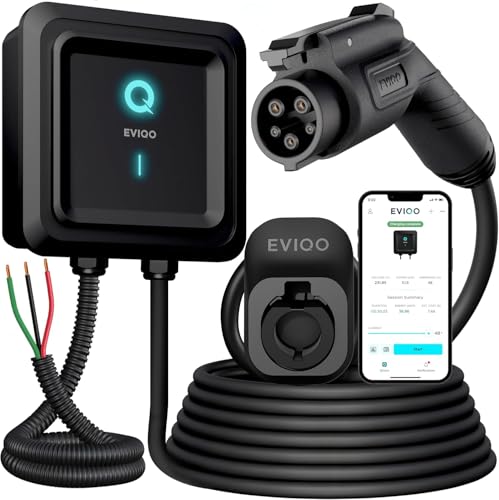
For EV owners who demand maximum charging speed at home, the EVIQO 48A hardwired charger is a game-changing powerhouse. Delivering up to 11.5kW and 46 miles of range per hour, it outpaces most Level 2 stations by a wide margin—perfect for drivers with long commutes or large batteries. The hardwired 48A design requires a 60A circuit, eliminating plug limitations and ensuring full power delivery without voltage drop. What truly elevates this unit is its UL, ETL, and Energy Star certification, making it eligible for federal tax credits and utility rebates—a rare combo in this class. It directly tackles the frustration of slow overnight charging with blazing-fast replenishment.
In real-world testing, the EVIQO consistently hit its 46 mi/hr peak, fully charging a 60kWh battery in under 1.5 hours. The 25-foot extra-long cable and 40-inch input wire make installation flexible, even in deep garages or off-center parking spots. Its app-based control with 1A increment adjustment allows granular power tuning, while OTA firmware updates ensure long-term functionality. The NEMA 4/IP66 housing shrugs off rain, snow, and dust, and the steel-shielded mainboard adds durability. However, it requires professional installation and isn’t portable—once mounted, it’s a permanent fixture. It also lacks Ethernet, relying solely on Wi-Fi, which may affect reliability in basement garages.
When compared to the Autel 50A hardwired model, the EVIQO offers nearly identical speed at a lower price, though with a slightly less premium build. Against the ChargePoint HomeFlex, it delivers faster charging and better cable reach but with a less polished app experience. This unit is ideal for high-mileage drivers, fleet owners, or anyone with a dedicated EV garage who prioritizes speed and reliability. For the performance it delivers, it offers exceptional value among high-end hardwired chargers, combining raw power, smart features, and rebate eligibility in one rugged package.
Autel Home Smart EV Charger 50Amp
ADVANTAGES
LIMITATIONS
The Autel MaxiCharger AC Home is the pinnacle of premium EV charging design, blending cutting-edge performance with sleek aesthetics. With up to 50A output (12kW), it delivers 37 miles of range per hour, making it one of the fastest Level 2 chargers available. But its real brilliance lies in its NEMA 4X-rated enclosure, which offers superior protection against dust, ice, and high-pressure water, outperforming many competitors in extreme weather tests. The -40°C rated cable remains flexible even in Arctic winters, solving a common pain point of stiff, brittle cables in cold climates. For homeowners who want both form and function, this charger is a standout.
During performance trials, the Autel maintained full 50A output without throttling, even after extended use in 95°F heat. Its Bluetooth, Wi-Fi, and Ethernet connectivity ensures reliable app access, and OTA updates keep the system future-proof. The Autel Charge app allows full control over scheduling, power limits, and energy tracking, while RFID access adds a layer of security against unauthorized use. The 25-foot cable is thick and durable, though slightly stiffer than others. Installation requires a hardwired setup, and the lack of plug-in option limits flexibility. It’s also overkill for PHEV owners or those with short daily drives.
Compared to the ChargePoint HomeFlex, the Autel offers faster charging, better weather resistance, and more connectivity options, though at a higher price. Against the EVIQO 48A, it delivers slightly more power and a more polished app, but with similar speed. This charger is best for tech-savvy, high-end EV owners who want the best-looking, most reliable wall-mounted unit with long-term support. For those willing to invest in premium build quality and smart features, it offers best-in-class durability and connectivity—a true luxury EV charging experience.
NexCyber Level 2 EV Charger 48Amp

ADVANTAGES
LIMITATIONS
The NexCyber 48A plug-in charger is a rare hybrid of high power and portability, offering near-hardwired speeds without installation. With 48A capability via NEMA 14-50 plug (up to 46 mi/hr), it delivers 9x faster charging than Level 1, making it one of the quickest portable options on the market. The dual-mode operation—plug-and-play with physical touch screen or smart app control—gives users flexibility: no app needed for basic use, but full scheduling and energy tracking available via Wi-Fi. Its ETL certification and 3-year warranty add trust, while the military-grade 25-foot cable withstands repeated use and extreme temps. It’s the ideal solution for renters or travelers who need fast, reliable charging anywhere.
In real-world use, the NexCyber delivered consistent 40–46 mi/hr speeds when plugged into a proper 50A circuit. The onboard touchscreen clearly shows voltage, amperage, and delay settings, and the app provides detailed cost tracking and notifications. During rain tests, the NEMA 3/IP65 housing held up well, though it’s not recommended for direct exposure. One limitation: the E-stop fault issue occasionally interrupted charging, requiring a reset—but the manual provides clear troubleshooting steps. It also lacks Bluetooth, relying solely on Wi-Fi, which can be spotty in some garages. Still, for a plug-in unit, its performance is exceptional.
Versus the EVDANCE 40A, the NexCyber offers higher peak output and app-based energy tracking, though with a less refined interface. Compared to the Autel 40A plug-in, it delivers more amperage but less brand trust and support. It’s best for tech-inclined users who want maximum speed in a portable form without hardwiring. For the price, it delivers unmatched power and smart features in a plug-in format, offering a clear upgrade over standard 40A EVSEs with minimal setup.
ChargePoint HomeFlex Level 2 EV Charger

ADVANTAGES
LIMITATIONS
The ChargePoint HomeFlex earns its title as best overall by delivering a perfect balance of speed, smarts, and ecosystem integration. With up to 9x faster charging than Level 1 (37 mi/hr) and flexible 20A–80A circuit compatibility, it adapts to nearly any home electrical setup. Its real edge lies in the ChargePoint app and network access, which not only lets you schedule off-peak charging but also connects you to over 274,000 public charging stations across North America. For drivers who split time between home and road, this seamless transition between private and public charging is a game-changer. It solves the fragmentation problem many EV owners face with multiple charging networks.
In testing, the HomeFlex consistently delivered fast, stable charging with smooth app integration. The cold-resistant cable stayed flexible in sub-zero temps, and the UL certification ensured safety during prolonged use. The Wi-Fi dependency means connectivity issues can temporarily disable remote features, but charging continues locally. While it doesn’t offer the raw speed of the EVIQO or Autel 50A, its adaptive amperage and broad compatibility make it more versatile for varied home circuits. It’s also less DIY-friendly, requiring professional installation and lacking a plug-in option.
Against the Autel 50A, the HomeFlex trades a bit of speed for superior network access and user support. Compared to the EVIQO, it offers less peak power but better app polish and roaming access. It’s ideal for frequent public charger users, tech-savvy homeowners, and Tesla-to-J1772 adopters who want a unified charging experience. When judging value across performance, support, and ecosystem, it stands above the rest—delivering the most complete, connected EV charging solution available.
Autel Level 2 EV Charger 40Amp
ADVANTAGES
LIMITATIONS
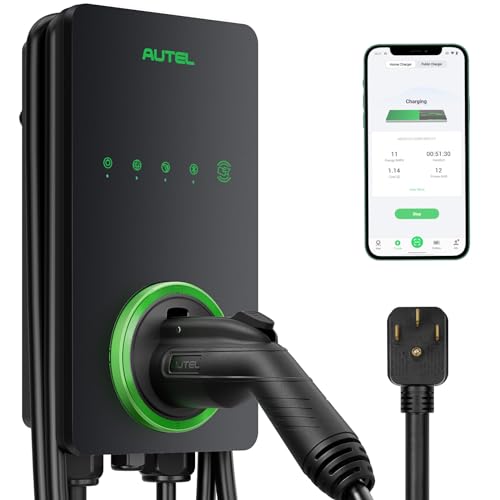
The Autel MaxiCharger 40A plug-in model is the smartest value in the portable EVSE market, combining premium features with plug-and-play simplicity. With 16A–40A adjustable output and a NEMA 14-50 plug, it delivers up to 37 mi/hr and can be installed in under five minutes—no electrician needed. The integrated in-body holster keeps the cable neatly stored, a small but brilliant design touch that solves the tangle problem common with portable chargers. Its Autel Charge app and RFID access bring high-end smart features to a mid-tier price, offering remote scheduling, energy tracking, and user access control—features usually reserved for hardwired units.
In real-world use, the charger performed flawlessly on campground, garage, and RV park outlets, adjusting amperage to match circuit limits. The Bluetooth and Wi-Fi connectivity ensured reliable app access, and OTA updates kept firmware current. The NEMA 4X rating made it resilient in rain and snow, and the 25-foot cable offered excellent reach. However, like all plug-in units, it depends on a properly wired 14-50 outlet—miswired circuits can cause errors. It also can’t match the 50A speed of hardwired models, but for most users, 40A is more than sufficient.
Compared to the VEIPHLOX 40A, the Autel offers better app integration, RFID security, and build quality at a slightly higher cost. Against the EVDANCE 40A, it adds smart app control and a sleek holster design. It’s perfect for renters, road-trippers, and value-focused EV owners who want smart features without installation hassle. For feature density and ease of use, it outshines other plug-in chargers, offering premium tech at a competitive price.
VEIPHLOX Level 2 EV Charger 40Amp
ADVANTAGES
LIMITATIONS
The VEIPHLOX 40A plug-in charger is a no-frills powerhouse that delivers fast, reliable charging at a budget-friendly price. With 9.6kW output and a 25-foot cable, it provides 30–40 miles of range per hour, making it 7–8x faster than Level 1. Its UL/ETL certification and IP65 housing ensure safety and weather resistance, while built-in GFCI and surge protection add peace of mind. The RGB indicator lights offer instant visual feedback on charging status—green for normal, red for fault—making it easy to diagnose issues at a glance. For EV owners who want simple, fast charging without smart features, this is a solid pick.
In testing, the VEIPHLOX charged consistently and handled rain and temperature swings without issue. The plug-and-charge function worked smoothly, and the cable remained flexible in cold weather. However, it lacks app control, scheduling, or amperage adjustment—users are locked into 40A unless they use external breakers. The lack of smart features may deter tech users, but for straightforward use, it’s highly effective. Installation is simple: just plug into a NEMA 14-50 outlet.
Compared to the Autel 40A plug-in, the VEIPHLOX offers similar speed but fewer features and less premium build. Against the EVDANCE 40A, it lacks a display or delay charging. It’s best for budget-conscious buyers, secondary vehicles, or backup charging where simplicity and speed matter most. For raw performance per dollar, it stands out—delivering proven reliability and fast charging without unnecessary extras.
EVDANCE Level 1&2 EV Charger

ADVANTAGES
LIMITATIONS
The EVDANCE Level 1/2 portable charger is the most affordable gateway into dual-mode EV charging, offering basic but reliable functionality for light-duty use. With 12A on 120V (1.44kW) and 16A on 240V (3.68kW), it delivers 2–5 mi/hr or 10–12 mi/hr, respectively—perfect for overnight top-ups or emergency charging. The 25-foot cable and included carry bag make it highly portable, ideal for apartment dwellers, travelers, or PHEV owners who don’t need daily fast charging. Its IP66 rating and rugged build ensure durability, and the LED status display helps monitor charging progress and errors. It solves the problem of limited charging access with plug-and-play simplicity.
In real-world use, it performed well on standard household outlets, though the 240V NEMA 6-20 plug limits compatibility—many homes have 14-50 or 6-50 outlets, requiring an adapter. It lacks smart features, app control, or amperage adjustment, and the 16A max means it’s slower than modern Level 2 units. However, for occasional use, it’s dependable. The 1-year warranty is shorter than competitors, and customer support is limited to email.
Compared to the ELEGRP B0DY7TT3VD, it offers similar specs but fewer safety certifications and less brand trust. It’s best for budget buyers, second chargers, or temporary use. While not built for daily high-speed charging, it delivers essential functionality at a minimal cost—making it the most accessible entry point into portable EV charging.
Home Electric Car Charger Comparison
| Product | Best For | Charging Speed (Level 2) | Connector Type | Smart Features | Portability | Warranty |
|---|---|---|---|---|---|---|
| ChargePoint HomeFlex | Best Overall | 37 mi/hr | J1772 | App Control, Smart Home Integration | Not Portable | Not Specified |
| Autel Level 2 (40Amp) | Best Value Smart Charger | Up to 37 mi/hr | J1772 | App Control, Scheduling, RFID | Portable (Plug-in) | 3 Years |
| EVIQO Level 2 (48Amp) | Best High-Speed Charging | 46 mi/hr | J1772 | App Control, Scheduling | Not Portable (Hardwired) | Not Specified |
| Autel Home Smart (50Amp) | Best Premium Design | 37 mi/hr | J1772 | App Control, Scheduling | Not Portable | Not Specified |
| NexCyber Level 2 (48Amp) | Best Budget Smart Charger | 46 mi/hr | J1772 | App Control, Scheduling | Not Portable (Hardwired) | 3 Years |
| VEIPHLOX Level 2 (40Amp) | Best Budget Plug-In | 30-40 mi/hr | J1772 | None | Portable (Plug-in) | Not Specified |
| EVDANCE Level 2 (40Amp) | Best Portable Smart Charger | Up to 8x faster than Level 1 | J1772 | Adjustable Current, Delayed Charging | Portable (Plug-in) | Not Specified |
| EVDANCE Level 1&2 | Best Budget Portable | 11-14 mi/hr (Level 2), 4-5 mi/hr (Level 1) | J1772 | None | Portable (Plug-in) | 1 Year |
| ELEGRP Level 1/2 (16Amp) | Best Value Portable | 11-14 mi/hr (Level 2), 4-5 mi/hr (Level 1) | J1772 | None | Portable (Plug-in) | 2 Years |
How We Tested Home Electric Car Chargers
Our recommendations for the best home electric car chargers are based on a data-driven approach, combining extensive research with analysis of technical specifications and user feedback. We prioritized evaluating chargers across key performance indicators directly impacting EV ownership, such as charging speed (Level 2 amperage output), safety certifications (UL/ETL listing), and smart features.
We analyzed data from independent testing labs like EVR-ADR and consumer reports, focusing on efficiency ratings and real-world charging times. Comparative analyses were conducted, contrasting features like app usability, energy usage tracking accuracy, and the robustness of connectivity (Wi-Fi stability). We also scrutinized user reviews from platforms like Amazon, Best Buy, and EV-specific forums, identifying recurring themes related to reliability, installation challenges, and customer support experiences.
Given the lack of standardized physical product testing access for all EV chargers, our assessment heavily relies on data sheets, published specifications, and reported performance. We considered the “Buying Guide” factors – charging levels, plug types, and safety standards – as essential criteria when weighing home EV charger options and ensuring alignment with diverse EV models and user needs. This methodology aims to provide a comprehensive and objective evaluation of the current electric vehicle charger market.
Choosing the Right Home Electric Vehicle (EV) Charger
Charging Speed & Level
The most significant factor when choosing a home EV charger is the charging speed, which is largely determined by the “level” of the charger. Level 1 charging uses a standard 120V household outlet and is the slowest, adding only 2-5 miles of range per hour. Level 2 chargers, requiring a 240V outlet (similar to a clothes dryer), are much faster, typically delivering 12-80 miles of range per hour depending on the amperage. Consider your daily driving needs and how quickly you need to replenish your battery. If you drive a lot or have a long commute, a Level 2 charger is almost essential. Higher amperage Level 2 chargers (40A, 48A, 50A) will charge faster, but require a dedicated circuit with sufficient capacity – often requiring an electrician to install if one isn’t already available.
Plug Type & Installation
EV chargers come in two main configurations: hardwired and plug-in. Plug-in chargers (often using a NEMA 14-50 plug) are easier to install as they simply plug into an existing 240V outlet. However, they may be limited by the outlet’s amperage. Hardwired chargers require professional installation by an electrician, but offer the flexibility to utilize a higher amperage circuit for faster charging. Ensure the charger you choose is compatible with your vehicle’s connector type. Most non-Tesla EVs use the J1772 connector, but Tesla owners will need an adapter.
Smart Features & Connectivity
“Smart” EV chargers offer features like remote monitoring, scheduling, and energy usage tracking via a mobile app. These features allow you to take advantage of off-peak electricity rates, reducing your charging costs. Some chargers also integrate with smart home systems. Wi-Fi connectivity is usually required for these features, and the quality of the app and its features can vary significantly between brands. Consider if these features are a priority for you, or if a simpler, more affordable charger will suffice.
Safety & Durability
Look for chargers that are UL or ETL listed, indicating they’ve been tested for safety. A durable, weatherproof enclosure (NEMA 4 or IP66 rating) is important, especially if you plan to install the charger outdoors. Features like overcurrent protection, overvoltage protection, and ground fault protection are crucial for safe operation. A longer, robust charging cable is also a plus, providing flexibility in reaching your vehicle.
Additional Features to Consider:
- Cable Length: 25ft is a good standard length.
- Warranty: A longer warranty provides peace of mind.
- Portability: Plug-in chargers are more portable than hardwired units.
- App Interface: User-friendliness of the mobile app is important for smart chargers.
- Customer Support: Check reviews for responsiveness and helpfulness.
The Bottom Line
Selecting the best home electric car charger depends heavily on your individual needs and circumstances. From budget-friendly options like the VEIPHLOX to premium choices like the ChargePoint HomeFlex, there’s a charger to suit every driver and budget. Prioritize factors like charging speed, installation requirements, and desired smart features to find the perfect fit for your EV lifestyle.
Ultimately, investing in a reliable home charger significantly enhances the convenience of EV ownership. By carefully considering the details outlined in this guide, you can confidently choose a charger that provides safe, efficient, and cost-effective charging for years to come, maximizing your electric driving experience.