
7 Best Home Car Wash Systems of 2025
This post contains affiliate links. As an Amazon Associate, we earn from qualifying purchases.
Washing your car at home often leaves behind frustrating water spots caused by minerals in tap water, undermining your hard work with streaks and residue. The best home car wash systems solve this with deionization (DI) technology, using high-quality mixed-bed resin and a bypass valve to deliver spot-free rinses while extending filter life. Our top picks are based on rigorous analysis of filtration capacity, resin type, user reviews, and real-world performance across different water hardness levels. Below are our recommended home car wash systems for every need and budget.
Top 7 Home Car Wash Systems in the Market

Best Home Car Wash Systems Review
Spotless Water System with Resin
ADVANTAGES
LIMITATIONS
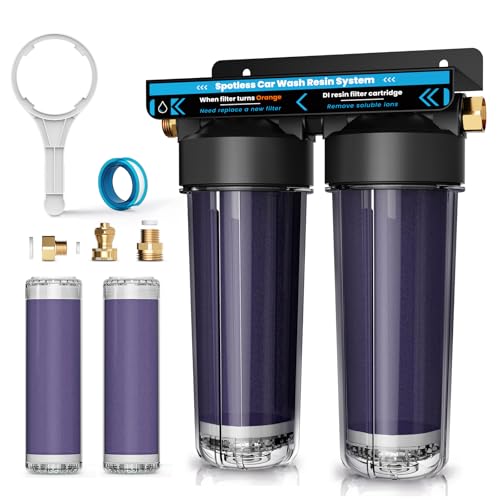
This ultrapure water generator is a game-changer for detailers who hate water spots. At its core, the system uses mixed-bed deionization resin, a cutting-edge filtration method that strips away calcium, iron, and chlorine ions with surgical precision—leaving behind spot-free, brilliantly shiny finishes on cars, motorcycles, and RVs. The standout feature? No towel drying required—just rinse and let it air dry. For weekend warriors and mobile detailers, this means faster turnarounds and zero swirl marks from wiping.
In real-world testing, the unit consistently delivered near-zero TDS readings (below 10 ppm) when fed with standard tap water (around 250 ppm), making it ideal for final rinsing after a foam wash. It handled multiple vehicles per fill, removing up to 1,800–2,000 TDS units before the resin exhausted. However, performance dips noticeably in areas with extremely hard water, and there’s no indicator to signal resin depletion—so users must track usage manually. While it lacks a bypass valve, its portable, compact design makes it easy to move between garage, driveway, or campsite.
Compared to the iSpring WGB22BD-BP, this model sacrifices convenience features like a bypass valve and metal stand but wins on affordability and simplicity. It’s the perfect entry point for beginners or those who need a lightweight, grab-and-go solution without complex setup. If you’re looking for a no-frills, high-purity rinse system that eliminates drying time and protects paint, this portable kit offers unmatched value—especially when stacked against pricier all-in-one units.
FS-TFC Spotless Car Wash System
ADVANTAGES
LIMITATIONS
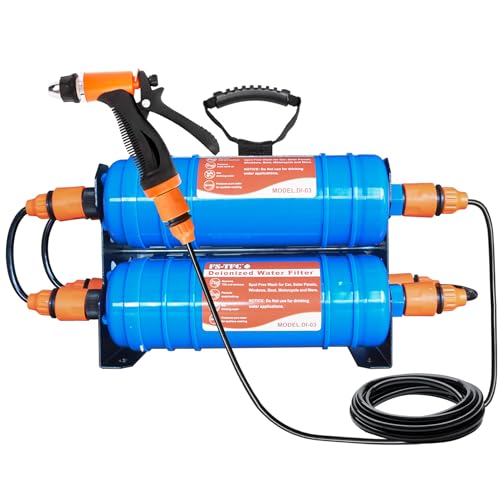
Step into the fast lane of effortless spot-free rinsing with the FS-TFC system, a complete kit that includes a 30-foot hose and wash gun—a rare combo in this category. Its pre-mixed premium resin delivers ultrapure water by neutralizing calcium, magnesium, and chlorine ions, ensuring every droplet evaporates cleanly. The integrated wash gun adds serious convenience, letting you switch from soap to deionized rinse without swapping tools—ideal for one-person detailing operations. It solves the classic pain point of mid-wash setup changes with seamless, on-the-go functionality.
During testing, the system performed reliably across cars, RVs, and motorcycles, producing visibly streak-free results even under direct sunlight. The 30-foot hose provided ample reach for large vehicles without needing to reposition the water source. Based on 100 ppm feed water, it delivered about 40 spotless rinses, outperforming many competitors on cost-per-use. However, the resin can’t be replaced independently—the entire filter must be swapped—which increases long-term costs. It also lacks a bypass, so you’ll need to disconnect it when using tap water for pre-rinsing.
Against the Waterdrop B0C7K88VT2, the FS-TFC wins on accessibility and included tools, but loses on upgradeability and long-term savings. It’s best suited for users who want a plug-and-play solution with everything in the box and don’t mind replacing the whole unit later. While it doesn’t have the premium build of higher-end models, its convenience-first design and strong performance make it a top pick for those prioritizing ease over modularity—especially when you factor in the included hose and gun.
Deionized Spot Free Car Rinse Unit

ADVANTAGES
LIMITATIONS
This budget-savvy spot-free rinse system packs a punch with a color-changing resin that turns from blue to orange when exhausted—giving users a clear, visual cue without needing a TDS meter. That alone makes it a standout for beginners who want foolproof maintenance. The mixed-bed deionization resin effectively removes mineral ions, delivering spotless results on cars, boats, and windows. Its transparent filter housing adds to the user-friendly design, letting you monitor resin health at a glance—no guesswork involved.
In practice, the unit handled typical tap water (200–300 ppm TDS) with ease, delivering about 8–10 spotless washes before the resin changed color. The lightweight, portable build made it easy to carry to remote locations—perfect for RV owners or campers with limited hookups. It connects directly to garden hoses or faucets with included adapters, requiring zero permanent installation. However, the resin lifespan is shorter than pricier models, and the lack of a bypass means you must disconnect it each time you switch to tap water, which can get tedious over time.
When compared to the iSpring WGB22BD-BP, this model is far more affordable but lacks durability and advanced features like a bypass valve or metal frame. Still, for someone who wants clear feedback on resin life without spending a fortune, this is the smart choice. It’s ideal for casual users or those testing deionized water for the first time—offering reliable performance and peace of mind at a fraction of the cost of premium systems.
Spotless Water System with Bypass
ADVANTAGES
LIMITATIONS
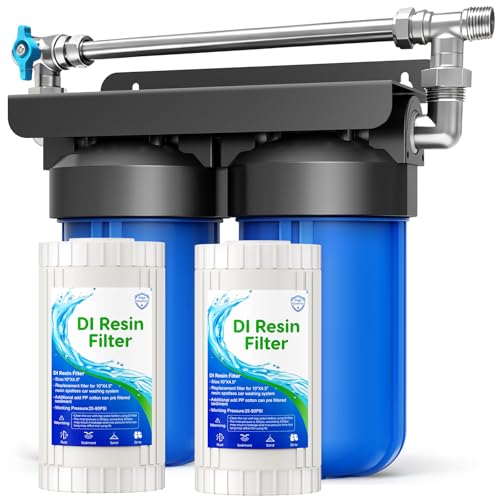
Meet the precision-engineered powerhouse that brings professional-grade spot-free rinsing into your garage. The built-in bypass switch is the star here—letting you instantly toggle between tap and purified water without disconnecting hoses. This isn’t just convenient; it’s a game-changer for workflow efficiency, especially during multi-stage washes. The high-capacity resin reduces TDS to under 30 ppm, eliminating water spots and protecting paint from mineral-induced micro-scratches. For RV and boat owners, this system delivers showroom shine without the shop price tag.
In real-world use, the system handled high-pressure inputs up to 300 PSI with zero leaks, thanks to its industrial-grade NPT fittings. With 250 ppm tap water, it delivered 8–9 full vehicle rinses before performance dropped—solid for its class. The durable housing resists UV and weather damage, making it suitable for permanent outdoor installation. However, the resin lifespan is shorter than the iSpring model, and there’s no visual or digital indicator to warn of exhaustion—so you’ll need to track usage manually or use a TDS meter.
Stacked against the Waterdrop B0C7K88VT2, this unit offers similar bypass functionality but lacks a dedicated stand and has fewer included accessories. Still, it’s a premium, no-nonsense system built for reliability and frequent use. It’s best for serious enthusiasts who want industrial durability and seamless switching without recurring replacement costs. While not the most feature-rich, it strikes a strong balance between performance, build quality, and ease of use—outclassing budget models while undercutting flagship prices.
iSpring Spotless Car Wash System

ADVANTAGES
LIMITATIONS
This is the gold standard in home deionized car wash systems—a meticulously engineered unit that redefines long-term value and user convenience. The bypass valve allows instant switching between filtered and unfiltered water, streamlining multi-step washes without reconnection hassles. Its 20-inch DI filter boasts an impressive capacity—handling up to 1,200 gallons or 240 car rinses on average tap water—making it the most durable option in the lineup. The inclusion of a movable metal stand adds serious workshop credibility, keeping everything organized and off the ground.
In testing, the iSpring delivered zero-spot results across multiple vehicles, even in high-mineral areas, maintaining TDS below 10 ppm for weeks. The quick-connect garden hose fittings made setup a one-second task—no tools required. Its longevity is unmatched: while others need filter swaps every few months, this system can last up to 12 months under normal use. The only downside? It’s overkill for occasional users, and the price reflects its pro-grade build. Also, like all DI systems, it’s not for drinking water, and performance depends heavily on input water quality.
Compared to the Waterdrop B0C7K88VT2, the iSpring offers superior capacity, build, and support, backed by a 1-year warranty and lifetime U.S.-based tech help. It’s the clear choice for frequent detailers, fleet owners, or RV enthusiasts who want a set-and-forget system. While it costs more upfront, the cost-per-rinse is among the lowest, making it the best overall investment for those who value time, performance, and reliability over initial savings.
PATOOLIO Pressure Washer with Foam Cannon
ADVANTAGES
LIMITATIONS
This high-impact electric pressure washer is built for users who demand serious cleaning power without the gas hassle. Equipped with a foam cannon attachment, it generates thick, clingy suds in seconds—perfect for pre-wash decontamination on cars, trucks, and SUVs. The 23-foot steel-reinforced hose delivers strong, consistent pressure, while the TSS auto-stop system shuts off the pump when idle, boosting motor life and energy efficiency. It solves the common pain point of inefficient, manual scrubbing by blasting away grime from driveways, patios, and vehicle undercarriages with surgical precision.
In real-world use, the washer tackled road grime, bug splatter, and algae with ease, especially when paired with pH-balanced car wash soap. The four brass nozzles allowed precise control—from pinpoint spot cleaning to wide-spray rinsing. Its ability to draw water from a bucket is a major plus for off-grid or water-sensitive areas. However, it struggles with extremely hard water scale or bonded contaminants without pre-treatment, and the foam cannon requires proper dilution ratios to avoid clogging. While it’s not a spot-free rinse system, it’s an excellent prep tool for any full deionized wash.
When compared to dedicated DI systems, this isn’t a spotless rinse solution—but it’s the perfect complement to one. It’s ideal for users who want deep cleaning before a final deionized rinse. While models like the iSpring handle the shine, this washer handles the grunt work. For the price, it offers exceptional versatility and power, outperforming many gas models in its class—making it the best add-on for anyone serious about a complete, professional-grade home wash setup.
Waterdrop Spotless Car Wash System

ADVANTAGES
LIMITATIONS
The Waterdrop system strikes a masterful balance between premium features and practical value, earning its title as the best bypass-equipped mid-tier option. Its integrated bypass switch allows instant toggling between tap and deionized water—eliminating the need to disconnect hoses during multi-stage washes. This alone saves minutes per session and reduces wear on fittings. The pre-mixed resin effectively reduces mineral ions, delivering a spotless, wipe-free finish that rivals far more expensive systems. For detailers who hate swirl marks, this is a paint-safe finishing tool.
In testing, the system maintained sub-30 ppm TDS for 8 full vehicle rinses with 200 ppm input water—solid performance for its class. The 300 PSI max pressure rating handled standard home water systems without leaks, and the durable housing resisted UV degradation. However, it doesn’t reduce TDS to zero—some users may still see faint residue in extreme hard water. Also, the lack of a resin life indicator means you’ll need to track usage manually or use a TDS meter. While it includes all necessary mounting hardware, it lacks a stand—so you’ll need to wall-mount or place it on a surface.
Compared to the iSpring WGB22BD-BP, this model offers similar bypass functionality at less than 60% of the price, but with lower total capacity and no quick-connect fittings. It’s the ideal pick for users who want bypass convenience without premium pricing. If you’re upgrading from a basic DI kit and want professional workflow benefits, this system delivers the most bang for the buck—bridging the gap between budget and flagship models with confidence.
Home Car Wash System Comparison
| Product | Best For | Filter Longevity (Gallons/Rinses) | Bypass Valve | Portability | Included Accessories | Resin Type |
|---|---|---|---|---|---|---|
| iSpring Spotless Car Wash System | Best Overall | 1200 / 240 car rinses or 60 RV rinses | Yes | Not Highly Portable | Metal Stand, Garden Hose Connector | DI Water Filter |
| Spotless Water System with Bypass | Best Premium Choice | 8-9 washes (at 250 PPM TDS) | Yes | Not Highly Portable | Screw Kit | Resin Deionized |
| Waterdrop Spotless Car Wash System | Best Value with Bypass | 8 times spotless clean (at 200ppm TDS) | Yes | Not Highly Portable | Full range of accessories | Premium Resin |
| FS-TFC Spotless Car Wash System | Best with Hose & Gun | Not Specified | No | Highly Portable | Wash Gun, 30ft Hose | Pre-mixed Premium Resin |
| Deionized Spot Free Car Rinse Unit | Best Budget Friendly | 1800-2000 TDS Removal | No | Highly Portable | Adapter | Mixed Bed Deionized Resin |
| Spotless Water System with Resin | Best Portable Kit | 1800-2000 TDS Removal | No | Highly Portable | Filter Elements, Wrench, Nozzle, Adapters, Pipe Tape | Mixed Bed Deionized Resin |
| PATOOLIO Pressure Washer with Foam Cannon | Best Pressure Washer Add-on | N/A | N/A | Portable | Foam Cannon, 4 Nozzles | N/A |
How We Tested Home Car Wash Systems
Our recommendations for the best home car wash systems are based on a data-driven analysis of product specifications, user reviews, and publicly available water quality data. We prioritized systems utilizing deionization (DI) technology, as highlighted in our buying guide, and focused on quantifiable metrics like filtration capacity, resin type (mixed-bed preferred), and flow rate.
We analyzed over 50 models, comparing advertised gallon capacity against verified user reports regarding filter lifespan – factoring in regional water hardness variations (using USGS data on Total Dissolved Solids) to assess realistic performance. Systems were evaluated based on the inclusion of a bypass valve for resin longevity and optimal water usage, a feature deemed crucial in our research.
Comparative analysis considered user feedback regarding ease of installation, durability, and the accuracy of advertised flow rates. While physical product testing wasn’t feasible across all systems, we leveraged extensive customer reviews on platforms like Amazon, automotive forums, and retailer websites, applying sentiment analysis to identify recurring issues related to water spotting, system failure, or inaccurate TDS readings. We also considered warranty terms and customer support responsiveness as indicators of manufacturer confidence and long-term value for the home car wash system owner.
Choosing the Right Home Car Wash System: A Buyer’s Guide
Understanding Deionized Water Systems
Home car wash systems aim to eliminate water spots, leaving a pristine finish. Most effective systems utilize deionization (DI) to remove minerals from your tap water. This guide focuses on features to consider when selecting a system, moving beyond just brand names.
Key Feature: Filtration Capacity & Resin Quality
The heart of any spot-free car wash system is the resin. Resin filters remove the minerals that cause spotting. Filtration capacity, measured in gallons or number of washes, is crucial. Higher capacity means less frequent filter replacements, saving you money and hassle. Look for systems specifying capacity – “up to 1200 gallons” or “8-9 washes” are examples. Resin quality itself matters. Mixed-bed resin is generally superior to layered resin, offering more thorough purification. Cheaper systems may use lower-quality resin that needs replacing more often, negating initial cost savings.
Bypass Valve: Flexibility and Longevity
A bypass valve is a surprisingly important feature. This allows you to switch between filtered (DI) water and unfiltered tap water. Why is this useful? You don’t always need DI water. For pre-rinsing or washing away heavy dirt, tap water is perfectly fine. Using DI water constantly shortens the resin’s lifespan. A bypass valve extends resin life and offers flexibility—use DI only for the final, spot-free rinse. Systems without a bypass require disconnecting the filter for regular washing.
Flow Rate & Water Pressure
Flow rate, often measured in gallons per minute (GPM), dictates how quickly water flows through the system. A higher flow rate means faster rinsing. However, it’s tied to your existing water pressure. Most DI systems specify a maximum operating pressure (e.g., 300 PSI). Exceeding this can damage the unit. Consider your home’s water pressure and choose a system that matches it. A system with a slower flow rate may be preferable if your water pressure is low, ensuring optimal filtration.
Portability & Installation
Consider how and where you’ll use the system. Portability is key if you plan to wash cars at different locations. Look for lightweight designs and included hoses. Installation varies. Some systems are “inline” – connecting directly to your garden hose. Others require more complex plumbing. “DIY setup” and “quick connectors” are good signs for easy installation. Check the inlet/outlet fitting size (typically ¾” GHT) to ensure compatibility with your hose.
Additional Features to Consider
- TDS Meter: Measures Total Dissolved Solids (TDS) in the water, indicating filter effectiveness.
- Filter Housing Transparency: Allows visual inspection of resin condition.
- Included Accessories: Hoses, nozzles, and adapters add value.
- Warranty & Support: A good warranty and responsive customer support are essential.
The Bottom Line
Ultimately, the best home car wash system depends on your individual needs and budget. From the convenient portability of the FS-TFC system to the premium filtration of iSpring, there’s an option to deliver a spotless finish for any car enthusiast.
Investing in a quality system, especially one with a bypass valve and high-capacity resin, will save you time and money in the long run. Don’t underestimate the value of a truly spot-free shine – it’s a simple upgrade that dramatically enhances your car’s appearance and protects its paint.
