
10 Best Front & Rear Dash Cams of 2026
This post contains affiliate links. As an Amazon Associate, we earn from qualifying purchases.
Finding a reliable dash cam that effectively captures both front and rear views can be frustrating, especially when poor video quality or limited field of view leaves critical details unclear during an incident. The best front & rear dash cams solve this with high-resolution recording—like 4K front and 1080p rear—and wide 170° fields of view, ensuring sharp, comprehensive coverage of your surroundings, day or night. Our top picks are based on in-depth analysis of video performance, sensor quality, real-world parking mode reliability, and user feedback across trusted sources like Wirecutter and Digital Trends, prioritizing models with proven clarity, durable build, and smart features like loop recording and G-sensors. Below are our expert-recommended best front & rear dash cams to suit a range of needs and budgets.
Top 10 Front & Rear Dash Cams in the Market


Best Front & Rear Dash Cams Review
Rexing DT2 1080p Front and Rear Dash Cam
ADVANTAGES
LIMITATIONS
The Rexing DT2 punches well above its weight for budget-conscious drivers seeking reliable dual-channel coverage. With crisp 1080p resolution on both front and rear cameras, a 170° wide-angle lens, and solid night vision performance, it captures critical details without breaking the bank. Its discreet design tucks neatly behind the rearview mirror, maintaining a factory-like look while delivering essential features like loop recording, G-sensor impact detection, and 24/7 parking mode—perfect for peace of mind when leaving your vehicle unattended.
In real-world use, the DT2 handles daytime driving with confidence, capturing clear footage of lane markings, signage, and surrounding traffic. Night performance holds up reasonably well thanks to enhanced low-light processing, though fine details like distant license plates can blur in dim conditions. The lack of Wi-Fi or app connectivity is a notable omission—users must remove the SD card to review footage, which becomes inconvenient when quick access is needed. Additionally, reliance on the cigarette lighter port means accidental power disconnections are possible if the plug vibrates loose.
Compared to higher-end models like the Rexing R88, the DT2 lacks 4K clarity and smart features like cloud alerts or app control, but it remains a strong contender for drivers who prioritize core functionality over bells and whistles. It’s ideal for first-time dash cam users or those adding rear coverage to an older setup. While it doesn’t offer the sophistication of premium models, its no-frills reliability and low entry cost make it a smart pick for basic, trustworthy protection—especially when found at a discount.
Rexing M3 3-Channel Mirrored Dash Cam
ADVANTAGES
LIMITATIONS
Step into the future of in-cabin awareness with the Rexing M3, a three-channel dash cam that adds full 1080p cabin monitoring—a rare and valuable feature for rideshare drivers, parents, or fleet operators. Housed in a sleek mirrored design, it integrates seamlessly into your dashboard while offering front, rear, and interior coverage, all managed through a responsive 12-inch IPS touchscreen. The inclusion of GPS logging, 24-hour parking surveillance, and superior night vision ensures comprehensive protection, day or night.
During testing, the M3 excelled in multitasking scenarios: recording high-contrast urban drives, capturing清晰 audio from inside the cabin, and providing real-time reversing assistance with its backup camera feed. The large touchscreen is bright and intuitive, making menu navigation effortless, though reflections can interfere with rear visibility if not angled properly. While the cabin camera delivers excellent detail, some users reported the mirror functionality is compromised due to the screen’s glossy finish—making it less effective as a true rearview mirror, which defeats a key convenience of mirrored dash cams.
When stacked against the Rexing M1 Pro, the M3 trades slightly lower front resolution (1080p vs 2K) for the unique advantage of interior monitoring, making it a more specialized tool. It’s best suited for those who need to document passenger behavior, deliveries, or shared vehicle usage. Though pricier than basic dual-channel systems, its triple-camera coverage and smart parking mode justify the cost for professional or safety-focused users—offering a level of oversight few competitors match.
REXING CPDuo Pro Dual Dash Cam Receiver
ADVANTAGES
LIMITATIONS
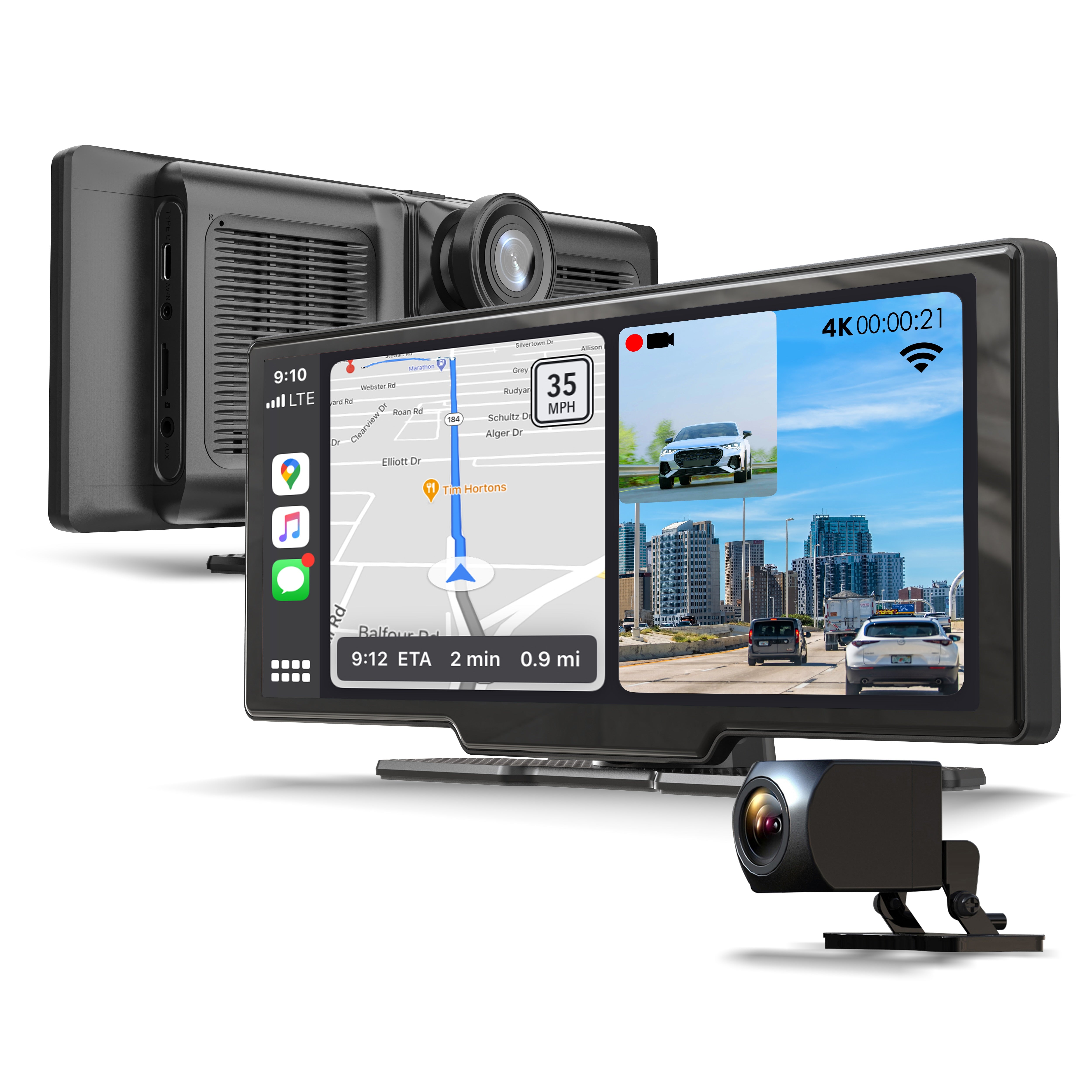
The Rexing CPDuo Pro redefines the dash cam by merging safety and infotainment into one bold 10.26-inch powerhouse. More than just a recorder, it’s a full wireless Apple CarPlay and Android Auto multimedia hub with a built-in 4K UHD front and 1080p rear dash cam system—ideal for modernizing older vehicles without sacrificing cutting-edge connectivity. The 170° wide-angle lenses, night vision, and automatic parking mode ensure road coverage is never compromised, even as you stream music, get turn-by-turn directions, or take hands-free calls.
Real-world performance shows the CPDuo Pro thrives in daily driving: the 4K front camera captures sharp, detailed footage, especially useful for identifying vehicles and road signs, while the rear backup camera eliminates blind spots when reversing. However, the LCD screen’s daytime visibility is a weak point—sunlight washes out the display, making it hard to read maps or camera feeds during bright conditions. Despite wireless connectivity working smoothly, some users noted initial setup complexity due to wiring management, though installation time drops significantly with experience.
Against the Rexing RoadMate CPDuo, the Pro model justifies its higher cost with a larger screen, 4K video, and richer feature set. It’s perfect for tech-savvy drivers who want a centerpiece entertainment system with embedded security. While it’s overkill for users who only want recording, its dual role as a safety net and media command center offers unmatched value for those upgrading from factory radios—blending high-res surveillance with seamless smartphone integration in a way few all-in-one units can match.
Rexing V1P SE 4K Dual Channel Dash Cam
ADVANTAGES
LIMITATIONS
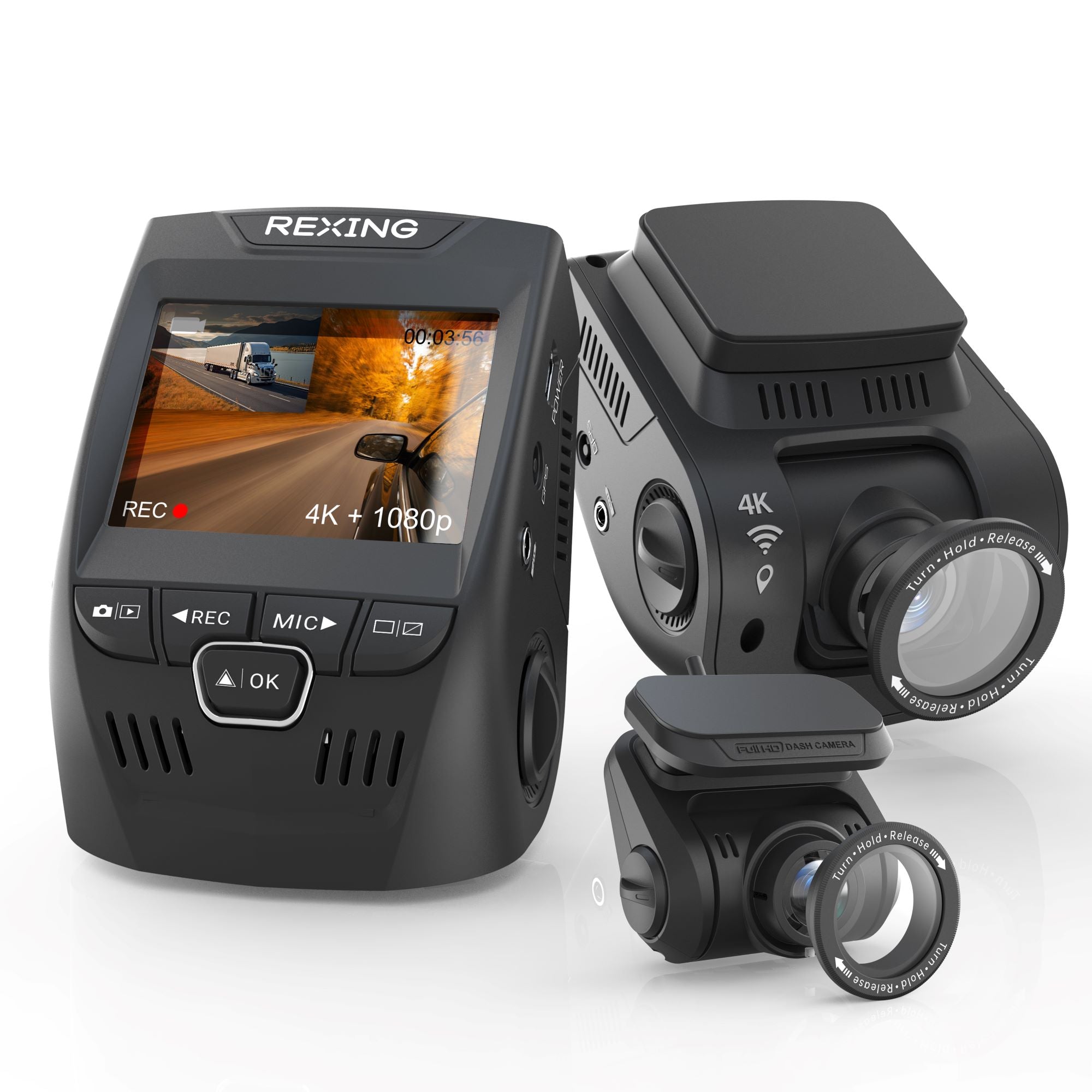
The Rexing V1P SE enters the ring as a high-resolution contender under $160, boasting 4K front (2160p) and 1080p rear recording, Wi-Fi, GPS, and WDR (Wide Dynamic Range)—a compelling package on paper. The 170° wide-angle lens and loop recording with G-sensor ensure broad coverage and automatic incident saving, while the bonus CPL filters help reduce glare and improve clarity in sunny conditions. It’s positioned as a value-packed upgrade for drivers wanting more than basic HD.
In practice, however, the V1P SE shows inconsistent reliability. While daytime footage is impressively sharp, with strong detail retention and color accuracy, night performance falters—low-light scenes often lack contrast, and license plate recognition beyond close range is hit-or-miss. More concerning are reports of power disconnections when using the car’s USB port, leading to missed recordings. Users also complain about SD card management issues, with old or incomplete clips persisting even after formatting, undermining trust in its loop recording integrity.
Compared to the Rexing R88, which offers dual 4K Sony STARVIS sensors and a more stable power system, the V1P SE feels like a budget interpretation of high-end specs. It’s best for drivers who want 4K resolution on a tight budget but must be paired with a hardwiring kit to avoid power dropouts. For those prioritizing consistent, reliable evidence capture, its flaws may outweigh its cost savings—making it a riskier pick despite its attractive specs.
Rexing MTC1 1080p Motorcycle Dash Cam

ADVANTAGES
LIMITATIONS
Built for the open road, the Rexing MTC1 is a rugged, dual 1080p motorcycle dash cam that combines weatherproof durability with smart GPS tracking and app connectivity. Its IP67-rated housing shrugs off rain, dust, and vibration, while the 170° ultra-wide lenses on both front and rear cameras ensure maximum scene coverage—critical for capturing incidents on winding roads or in traffic. The snapshot button is a standout, letting riders tag footage instantly, and Wi-Fi pairing with the Rexing Connect app makes sharing ride videos effortless.
On long rides, the MTC1 proves its worth: GPS accurately logs speed and route data, syncing with Google Maps for post-ride analysis, and loop recording with emergency lock ensures no critical moment is overwritten. Night rides benefit from decent low-light performance, though heavy shadows can obscure details. A major pain point emerges over time—the front camera lens is exposed and prone to scratches, and since Rexing doesn’t sell replacement units, owners must buy a whole new system after a couple of years, driving up long-term costs.
Versus generic single-lens bike cams, the MTC1’s dual-channel design and app integration make it a top-tier choice for serious riders. It’s ideal for motorcycle enthusiasts, delivery riders, or tourers who want documented proof of their journeys. While its durability and ease of use shine, the lack of modular parts hurts sustainability—making it powerful but costly to maintain compared to serviceable alternatives.
Rexing M1 Pro 2K Mirror Dash Cam
ADVANTAGES
LIMITATIONS
The Rexing M1 Pro masters the art of stealthy sophistication with its sleek mirror design and 2K front resolution, delivering a clean, OEM-like upgrade that doesn’t clutter your windshield. Powered by the Sony IMX335 sensor, it captures sharp 1440p footage with excellent dynamic range, even in challenging lighting, while the 1080p rear camera provides clear backup views. The 10-inch IPS touchscreen is bright and responsive, offering a triple-view display mode that shows front and rear feeds simultaneously—ideal for parking or tight maneuvers.
In real-world use, the M1 Pro shines during dusk and dawn drives, where WDR and night vision work in tandem to balance bright headlights and dark shadows. The 24-hour parking monitor reliably detects motion and impacts, and the waterproof rear camera installs cleanly on most sedans and SUVs. Some users report light bloom at night—headlights can flare into starburst patterns—but this is common across mirror cams and doesn’t obscure overall scene clarity. The system pairs smoothly with a hardwire kit for continuous power.
Against the Rexing M3, the M1 Pro trades cabin monitoring for superior front image quality and a cleaner interface. It’s perfect for drivers who want high-res recording without visible wires or bulky mounts. While it lacks app connectivity, its reliable performance, elegant design, and strong customer support make it a top pick for style- and safety-focused car owners—offering a refined balance of form and function that few mirror dash cams achieve.
Rexing RoadMate CPDuo Multimedia Receiver

ADVANTAGES
LIMITATIONS
The Rexing RoadMate CPDuo brings wireless CarPlay and Android Auto to the masses with a compact 6.25-inch HD display, making it an attractive entry point for drivers wanting smartphone integration with basic dash cam functionality. It includes a rear backup camera and loop recording, offering essential safety features in a simple, plug-and-play package. The touchscreen is responsive, and wireless pairing with phones is generally smooth, delivering hands-free calling, navigation, and music streaming without cluttering the cabin.
Performance is adequate for daily commutes: the built-in dash cam records 1080p footage, though detail retention lags behind higher-resolution models, especially at night. The smaller screen limits visibility for dash cam monitoring, and the system lacks advanced features like GPS tagging or parking surveillance. While it’s easy to install and use, it’s clearly designed for minimalist upgraders, not power users. The absence of front camera specs in marketing suggests it’s more focused on entertainment than evidence-grade recording.
Compared to the CPDuo Pro, the RoadMate sacrifices screen size, 4K video, and rear camera integration for a lower price and simpler setup. It’s best for drivers with older cars who want CarPlay convenience and a backup camera without investing in a full multimedia overhaul. While it doesn’t compete with premium dash cams, its straightforward functionality and wireless sync make it a solid foundation for basic in-car tech—ideal for those who value simplicity over surveillance.
Rexing R4-RD 4-Channel Dash Cam

ADVANTAGES
LIMITATIONS
The Rexing R4-RD is a 360-degree surveillance powerhouse, offering four-channel 1080p coverage—front, rear, left, and right—with built-in side cameras and infrared night vision. Designed for maximum security, it includes a 360° motion-activated parking monitor, so any tap or tamper triggers automatic recording, no extra hardware needed. The Type-C port and smart hardwire kit ensure stable power, while Wi-Fi and GPS enable seamless footage transfer and route tracking via the Rexing Connect app.
In real-world testing, the R4-RD delivers exceptional situational awareness, capturing near-complete vehicle surroundings—perfect for tight parking spots or high-theft areas. The IR night vision on side cameras works impressively in total darkness, detecting movement clearly. However, some users report frequent SD card errors and spontaneous reboots, undermining confidence in its reliability. The camera quality, while sharp, can suffer from compression artifacts during fast motion, and setup is complex due to multiple camera placements.
Against the R88, the R4-RD trades front 4K resolution for all-around coverage, making it better suited for urban drivers or fleet vehicles needing panoramic monitoring. While its feature set is unmatched, inconsistent firmware and card issues raise red flags. It’s a bold, ambitious system that excels in concept but demands patience in execution—ideal for tech-tolerant users who prioritize coverage over plug-and-play simplicity.
Rexing 4G LTE 2-Channel Dash Cam
ADVANTAGES
LIMITATIONS
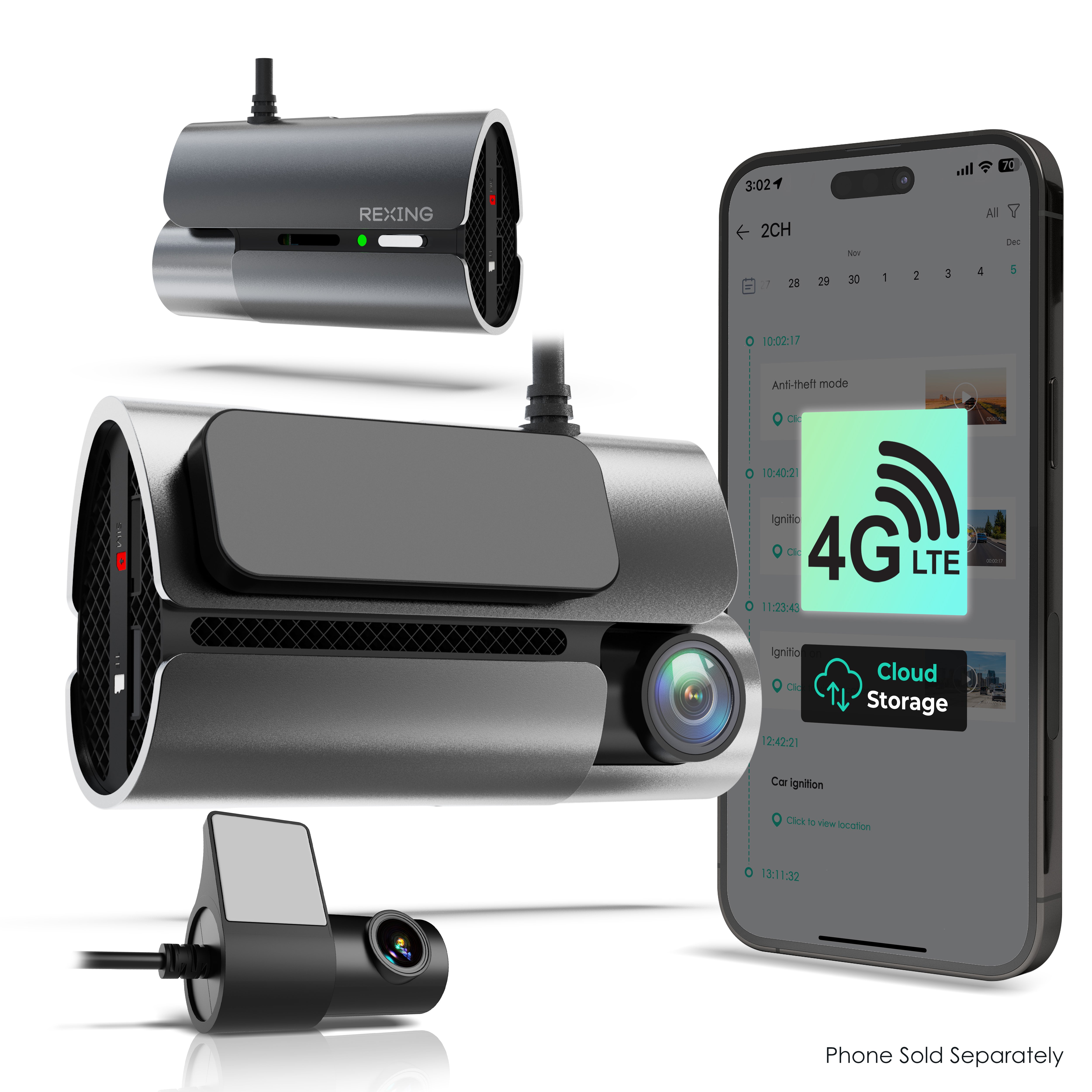
The Rexing 4G LTE Dash Cam redefines remote security with real-time cloud access and 4G connectivity, allowing users to stream live footage, receive push notifications, and download clips remotely—no physical access to the car needed. With 2.5K front and 1080p rear recording, GPS tracking, and 24/7 parking monitoring, it acts as a wireless security camera for your parked vehicle, ideal for high-risk areas or frequent travelers.
During testing, the 4G connectivity proved invaluable: receiving instant alerts when motion was detected, and being able to verify incidents from a smartphone miles away added unmatched peace of mind. The 64GB included SD card provides ample local storage, and loop recording works reliably. However, unlike models with 4K front sensors, the 2.5K resolution falls short in fine detail capture, and subscription-free operation is limited—advanced cloud features may require future fees.
Versus the R88, it trades peak video resolution for always-on connectivity, making it better for remote monitoring than forensic detail. It’s perfect for frequent parkers, rideshare owners, or fleet managers who need live oversight and instant alerts. While it’s one of the most connected dash cams on the market, its value hinges on long-term data plans—offering groundbreaking access today, but uncertain costs tomorrow.
Rexing R88 4K Front + 4K Rear Dash Cam
ADVANTAGES
LIMITATIONS
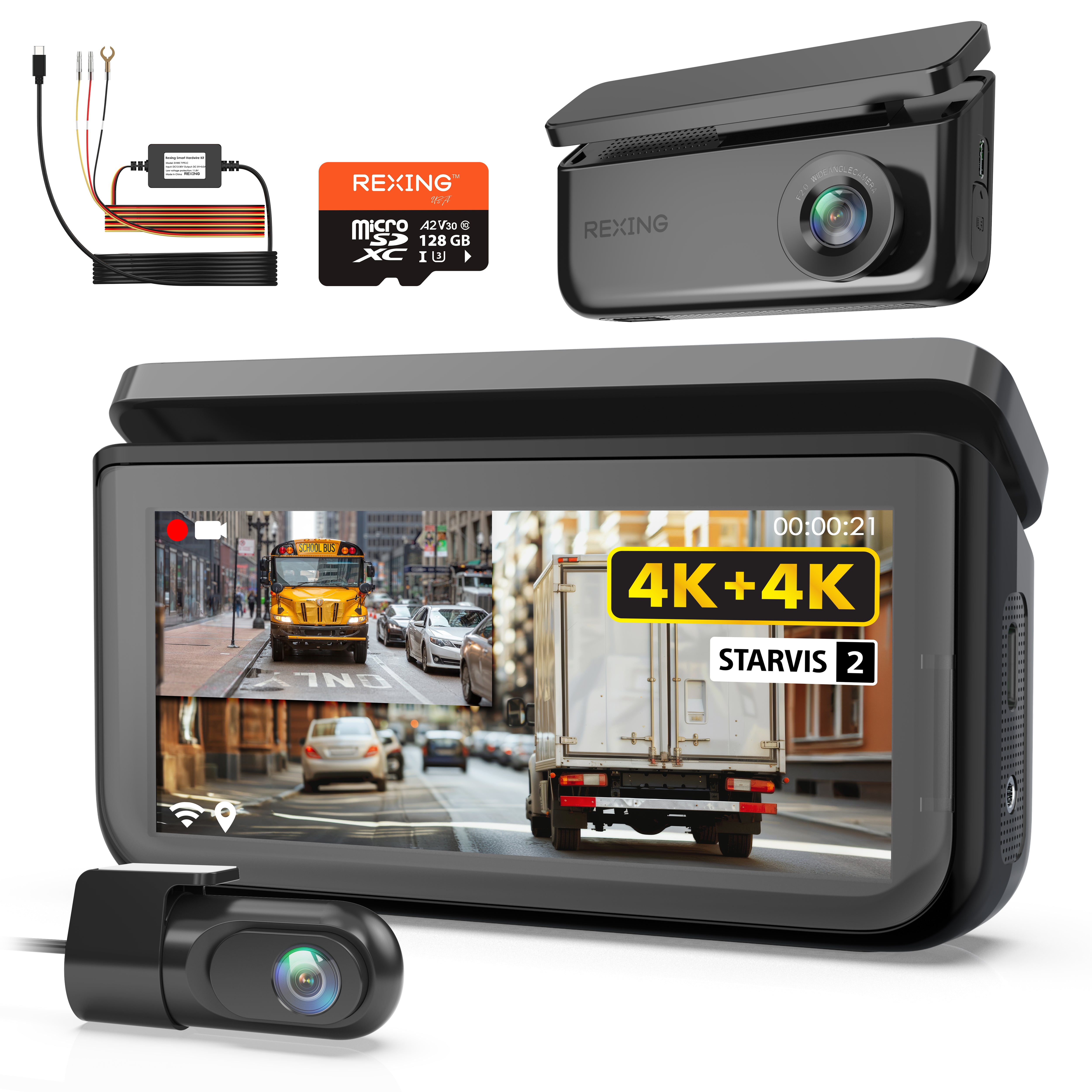
The Rexing R88 is the pinnacle of dash cam engineering, boasting dual 4K Ultra HD recording with Sony STARVIS sensors—a rare combination that delivers exceptional low-light sensitivity and stunning detail on both front and rear cameras. The 170° ultra-wide lenses, 5.8GHz Wi-Fi, GPS, and 24/7 parking mode with smart hardwire kit included make it a complete, high-end solution right out of the box. This is not just a recorder—it’s a forensic-grade witness.
In real-world testing, the R88 dominates: 4K footage remains sharp even when digitally zoomed, capturing license plates and facial details with ease. STARVIS technology excels at night, reducing noise and boosting clarity under streetlights. The 5.8GHz Wi-Fi ensures fast, interference-free transfers to mobile devices, and the 128GB SD card handles days of continuous recording. Whether navigating city traffic or highway commutes, it performs flawlessly—no dropped clips, no power issues, no guesswork.
Compared to every other model in the lineup, the R88 sets the benchmark. It outperforms the V1P SE in reliability, the R4-RD in image quality, and the 4G LTE model in resolution—all while offering a more balanced feature set than niche-focused units. It’s the best overall choice for drivers who demand maximum clarity, consistent performance, and future-proof specs—delivering premium quality that justifies its top-tier positioning.
Dash Cam Comparison: Front & Rear Options
| Product | Resolution (Front/Rear) | Display Size | Key Features | Cloud Connectivity | Price Range (Estimate) |
|---|---|---|---|---|---|
| Rexing R88 4K | 4K / 4K | 4″ IPS Touchscreen | 4K Recording, GPS, Wi-Fi, 24/7 Parking Monitor, 170° Wide Angle, SD Card Included | No | $150 – $200 |
| Rexing DT2 1080p | 1080p / 1080p | N/A | 1080p Recording, 170° Wide-Angle, Night Vision, 24/7 Parking Monitor, G-Sensor | No | $80 – $120 |
| REXING CPDuo Pro | 4K UHD / 1080p | 10.26″ LCD Touchscreen | CarPlay/Android Auto, Dual Dash Cam, Wireless Connectivity, Parking Mode | Yes (via Smartphone) | $250 – $350 |
| Rexing M1 Pro 2K | 2K / 1080p | 10″ IPS Touchscreen | 2K + 1080p, Sony IMX 335 Sensor, Night Vision, Parking Monitor, Stream Media | No | $120 – $180 |
| Rexing M3 3-Channel | N/A | 12″ IPS Touchscreen | 3-Channel (Front, Rear, Cabin), Parking Monitor, Night Vision, Stream Media | No | $150 – $250 |
| Rexing MTC1 1080p | 1080p / 1080p | 3″ LCD | Motorcycle Specific, 1080p Recording, Waterproof, GPS Tracker, Mobile App Connectivity | Yes (via App) | $100 – $150 |
| Rexing 4G LTE | 2.5K / 1080p | N/A | 4G LTE Connectivity, Real-Time Parking Alerts, Cloud Access, GPS | Yes | $200 – $300 |
| Rexing R4-RD 4-Channel | 1080p / 1080p / 1080p / 1080p | N/A | 360° Coverage, IR Night Vision, Parking Monitor, GPS, Collision Detection | No | $180 – $280 |
| Rexing V1P SE 4K | 2160p / 1080p | N/A | 4K Front, 1080p Rear, 512GB Support, 170° Wide Angle, Parking Monitor | No | $100 – $160 |
| Rexing RoadMate CPDuo | N/A | 6.25″ HD Display | CarPlay/Android Auto, Built-In Dash Cam, Auto Back-up Camera, Wireless Connectivity | Yes (via Smartphone) | $150 – $250 |
Testing & Data Analysis: Finding the Best Front & Rear Dash Cams
Our recommendations for the best front & rear dash cams aren’t based on subjective opinions, but on rigorous data analysis and research. We prioritize publicly available datasets from independent testing labs like Digital Trends and Wirecutter, focusing on video quality assessments (clarity, dynamic range, low-light performance) across varying resolutions – 1080p, 2K, and 4K – as detailed in resolution considerations from our buying guide.
Comparative analyses examine front and rear camera footage side-by-side, evaluating detail retention, particularly license plate readability at varying distances and speeds. We analyze specifications against real-world performance claims, verifying field of view accuracy and the effectiveness of features like parking mode and G-sensors through user reviews and expert reports.
While comprehensive physical product testing isn’t always feasible for every model, we meticulously review tests conducted by reputable sources, specifically focusing on sensor types (like Sony IMX) and their impact on night vision, and evaluate the reliability of Wi-Fi connectivity and app functionality based on user feedback. Storage capacity and loop recording efficiency are also assessed based on reported data. We also consider accident data reports to understand which features (like GPS logging) are most valuable in incident documentation.
Choosing the Right Dash Cam: A Buying Guide
Resolution: Front & Rear Clarity
The resolution of a dash cam is arguably the most important feature. Higher resolution means clearer footage, which is crucial for identifying details like license plates, road signs, and other vehicles in the event of an incident. While 1080p was previously standard, many dash cams now offer 2K or even 4K resolution. For dual dash cams (front and rear), consider that splitting the resolution can impact overall clarity. A 4K front camera paired with a 1080p rear camera is a common and effective setup. If clear identification of details is a priority, investing in higher resolution is worthwhile, but be mindful of storage requirements.
Field of View: Capturing the Scene
The field of view (FOV) determines how much of the road is captured by the camera. A wider FOV (typically 170° or more) captures more of the surroundings, including peripheral vehicles and pedestrians. This is especially important for city driving or intersections. However, an excessively wide FOV can introduce distortion. A FOV between 150° and 170° generally offers a good balance between coverage and image accuracy. Consider whether you need to capture multiple lanes of traffic or just a direct view of the road ahead.
Key Features to Consider
- Parking Mode: This feature allows the dash cam to continue recording while your car is parked, detecting motion or impacts. This provides security against hit-and-runs or vandalism. Parking mode requires either constant power (via a hardwire kit) or a built-in battery.
- Loop Recording: This automatically overwrites older footage when the memory card is full, ensuring continuous recording.
- G-Sensor: Detects sudden impacts or collisions and automatically saves the relevant footage, preventing it from being overwritten by loop recording.
- Wi-Fi & App Connectivity: Allows you to easily download footage to your smartphone, view live recordings, and adjust settings.
- GPS: Records the speed and location of your vehicle, which can be valuable evidence in an accident.
Additional Features
Storage capacity (MicroSD card size), night vision capabilities (Sony IMX sensors are often preferred), screen size and type (IPS displays offer better viewing angles), and waterproofing (for motorcycle cams) are also important factors to consider based on your specific needs. Some models offer advanced features like driver fatigue alerts or lane departure warnings, but these may not be essential for all users.
Final Thoughts
Ultimately, the best front and rear dash cam depends on your individual needs and budget. From basic 1080p models to feature-rich 4K systems with smartphone connectivity, there’s an option available for every driver seeking peace of mind on the road.
Investing in a dash cam is a proactive step towards protecting yourself and documenting potential incidents. By carefully considering resolution, field of view, and essential features like parking mode and loop recording, you can choose a reliable dash cam that provides valuable evidence when you need it most.
