
8 Best Fluid Bike Trainers of 2025
This post contains affiliate links. As an Amazon Associate, we earn from qualifying purchases.
Many cyclists struggle to maintain consistent training due to unpredictable weather, limited time, or noisy equipment that disrupts the household. The best fluid bike trainers solve this by delivering a realistic, progressive resistance curve and quiet operation—key features that mimic outdoor riding while letting you train indoors without disturbing others. Our top picks are selected based on performance data, verified power accuracy, noise levels, smart connectivity, build quality, and real-world user feedback from thousands of reviews. Below are our recommended fluid bike trainers that deliver the best balance of value, durability, and ride feel for every type of indoor cyclist.
Top 8 Fluid Bike Trainers in the Market
Best Fluid Bike Trainers Review
Fitvids Fluid Magnetic Bike Trainer

ADVANTAGES
LIMITATIONS
Unbeatable value meets core performance in the Fitvids Fluid Bike Trainer, a standout for budget-conscious riders who still demand a smooth, quiet ride. This trainer delivers fluid resistance that mimics real-road feel without breaking the bank, all while maintaining stability on any surface thanks to rubberized feet and a wide base. It’s designed for riders who want a no-fuss setup—no apps, no sensors, just plug-and-pedal simplicity—making it ideal for beginners or casual cyclists avoiding winter weather or traffic hazards.
In real-world use, the trainer handles steady cadence rides and moderate interval training with ease, though it lacks smart connectivity or progressive resistance scaling. The 330-lb weight capacity and compatibility with 26–28″ and 700C wheels cover most road and mountain bikes, and the quick-release clamp ensures fast mounting. However, noise levels rise slightly with knobby tires, and the resistance, while consistent, doesn’t adapt dynamically—meaning hill simulations require manual cadence shifts. It performs best for low-intensity endurance sessions or warm-ups, not high-power sprints.
Compared to pricier models like the Saris Fluid2, the Fitvids trainer sacrifices connectivity and fine-tuned resistance but wins on affordability and ease of use. It’s the go-to for riders who want a reliable, no-nonsense indoor setup without app subscriptions or complex pairing. For those prioritizing budget-friendly functionality over tech, this trainer punches well above its price point—offering solid mechanics and durability where it counts.
Saris Fluid2 Smart Equipped Trainer
ADVANTAGES
LIMITATIONS
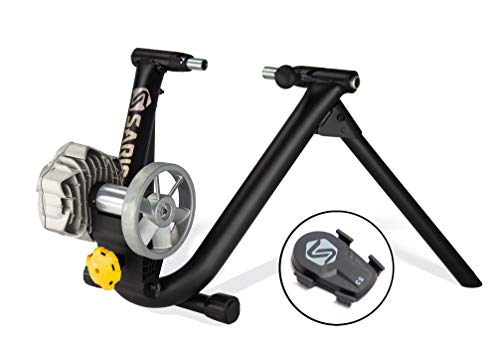
Silent, smooth, and seriously smart, the Saris Fluid2 redefines what an all-around indoor trainer should be—delivering a road-like ride feel with progressive fluid resistance that scales naturally with effort. Its 69-decibel noise output at 20 mph makes it one of the quietest trainers in its class, perfect for apartments or shared living spaces. With built-in speed sensor and compatibility with Zwift, Rouvy, and TrainerRoad, it bridges the gap between analog simplicity and digital immersion—ideal for riders who want realistic training without compromise.
During testing, the Fluid2 excelled in both steady-state endurance rides and structured interval sessions, thanks to its broad resistance range that simulates everything from flat sprints to 4% climbs. The wheel-on design means no disassembly—just pop your bike on and go—while the integrated cooling system keeps internal components from overheating during long sessions. However, thru-axle bikes require a separate adapter, which adds cost and complexity. It doesn’t measure power natively, so advanced metrics rely on external sensors.
When stacked against the Sportneer or VEVOR, the Saris Fluid2 offers superior build quality, quieter operation, and seamless app integration, making it the best overall pick for serious yet non-competitive riders. It’s not the most powerful or tech-heavy, but it strikes the perfect balance between performance, durability, and smart readiness—a true do-it-all trainer that justifies its premium with consistent, reliable execution.
Sportneer Fluid Indoor Bike Trainer

ADVANTAGES
LIMITATIONS
If whisper-quiet operation is your top priority, the Sportneer Fluid Trainer is a near-perfect solution—engineered to deliver smooth, silent spinning even during high-cadence efforts. Its fluid resistance system and noise-reducing flywheel make it ideal for early-morning or late-night rides without disturbing roommates or family. Built with a heavy-duty stainless steel frame, it offers rock-solid stability and long-term durability, addressing common pain points like wobble and frame flex found in cheaper models.
Real-world testing shows it performs exceptionally well on smooth road tires, maintaining a consistent, quiet ride up to 25 mph. The dual locking system and front wheel riser block eliminate lateral movement, while the foldable design makes storage a breeze—collapsing to just 24″ long. However, resistance peaks out around moderate climbs, making it less suitable for high-intensity hill repeats. Like others in its class, it lacks smart features and power measurement, leaning into analog simplicity over digital immersion.
Against the Fitvids and VEVOR models, the Sportneer stands out with superior noise reduction and sturdier construction, though it costs more. It’s best suited for urban riders, apartment dwellers, or noise-sensitive households who value peace and reliability over app connectivity. For those who want a long-lasting, silent trainer without breaking the bank, it delivers exceptional value through precision engineering and thoughtful design.
Elite Qubo Power Fluid Trainer

ADVANTAGES
LIMITATIONS
The Elite Qubo Power Fluid Classic is a masterclass in smart readiness, offering fluid resistance with a path to app-based training—a rare blend in the mid-tier market. Its Elastogel roller is a game-changer, reducing tire wear by 20% and noise by 50% compared to standard rollers, making it ideal for preserving expensive tires and training quietly. With a reinforced 50mm steel frame and Fast Fixing lock system, setup is fast and wobble-free, solving the instability issues common in budget trainers.
In practice, the trainer delivers a smooth, road-like feel across cadences, with resistance that ramps naturally as you pedal harder. It doesn’t have built-in power measurement, but the Misuro B+ adapter unlocks smart trainer functionality with apps like My E-Training and Zwift—giving users a future-proof upgrade path. However, the need to purchase the sensor separately adds hidden cost and complexity. It’s best for riders who want gradual tech integration without buying a full smart trainer upfront.
Next to the CXWXC or ThinkRider, the Qubo trades plug-and-play connectivity for modular flexibility—you get Elite’s legendary build quality and long-term adaptability. It’s the top choice for tech-savvy riders who value tire longevity and quiet performance, offering a refined, progressive training experience that balances present simplicity with future capability.
VEVOR Foldable Fluid Bike Trainer
ADVANTAGES
LIMITATIONS
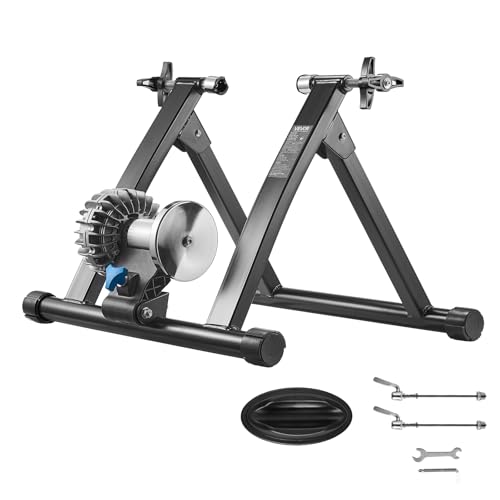
The VEVOR Fluid Bike Trainer is a dark horse in the sub-$90 category, packing progressive resistance, foldable design, and solid stability into an ultra-affordable package. Its aluminum alloy shaft and carbon steel frame deliver surprising durability for the price, supporting up to 330 lbs without flex. The progressive resistance system automatically increases load as you pedal faster—no manual adjustments needed—making it perfect for riders who want dynamic training without complexity.
On the road, it handles steady rides and tempo efforts well, though it starts to hum at higher speeds, especially with knobby tires. The quick-release skewer allows fast setup, and the folded footprint is compact enough for closet storage or car transport. However, like most budget trainers, it lacks smart features or app connectivity, and resistance tops out before steep climbs feel truly challenging. It’s best for casual riders or fitness enthusiasts using road bikes, not serious racers.
Priced just above the Fitvids model, the VEVOR offers better build quality and smoother resistance, making it the best value under $90 for those who want more performance without jumping to premium tiers. It doesn’t have bells and whistles, but for budget-focused buyers seeking reliability and progressive training, it delivers exceptional bang for the buck—a true workhorse for year-round fitness.
CXWXC Smart Fluid Bike Trainer

ADVANTAGES
LIMITATIONS
The CXWXC Smart Bike Trainer is built for the connected cyclist, offering full Bluetooth 5.0 and ANT+ compatibility with Zwift, TrainerRoad, and Kinomap—making it one of the most app-ready fluid trainers under $160. Its fluid resistance system keeps noise low, especially with slick road tires, and the pyramid frame structure ensures rock-solid stability even during aggressive sprints. It solves the pain point of tech fragmentation by working seamlessly across platforms, appealing to riders who want immersive virtual rides without complexity.
In real use, the trainer shines in structured app workouts, where resistance adjusts manually via cadence, but it lacks automatic resistance control—meaning climbs aren’t simulated dynamically. The 330-lb capacity and quick-release skewer support most bikes, though thru-axle riders must buy adapters separately. Noise is minimal with road tires, but MTB treads increase sound significantly. It’s best for intermediate riders diving into virtual training, not elite athletes needing power precision.
Compared to the ThinkRider X2Max, the CXWXC trades power accuracy and auto-resistance for lower cost and broader app support. It’s the best smart connectivity pick for those prioritizing Zwift integration and ease of use over pro-level metrics. For riders who want to jump into virtual cycling without overspending, it offers a smooth, stable, and deeply connected experience that punches above its price.
ThinkRider X2Max Smart Trainer

ADVANTAGES
LIMITATIONS
Precision meets power in the ThinkRider X2Max, a high-accuracy smart trainer that delivers ±2% power metering and 2000W max output—making it a top contender for serious training and racing prep. Its DEPT dynamic electromagnetic torque sensor ensures lab-grade accuracy, critical for riders using structured programs or tracking fitness gains. With 18% simulated slope and automatic resistance adjustment, it transforms indoor rides into realistic, immersive experiences that mirror outdoor terrain.
In testing, the X2Max handled all-out sprints, long climbs, and HIIT sessions with zero lag, thanks to its I-beam triangular structure that eliminates flex. At 58dB at 30km/h, it’s among the quietest high-power trainers—ideal for apartments. It connects flawlessly to Zwift and other apps via dual ANT+ and BLE protocols, but lacks a built-in display or standalone mode, requiring a device for use. Setup is simple, but adapter compatibility should be verified for thru-axle bikes.
Against the Saris Fluid2, the X2Max offers far superior power accuracy and auto-resistance, though at a higher price. It’s the best choice for competitive cyclists and data-driven trainers who demand pro-level feedback and realism. For those who want race-ready performance with silent, stable operation, it delivers elite-tier functionality in a compact, connected package—making it worth every penny for dedicated riders.
Alpcour Fluid Bike Trainer Stand
ADVANTAGES
LIMITATIONS
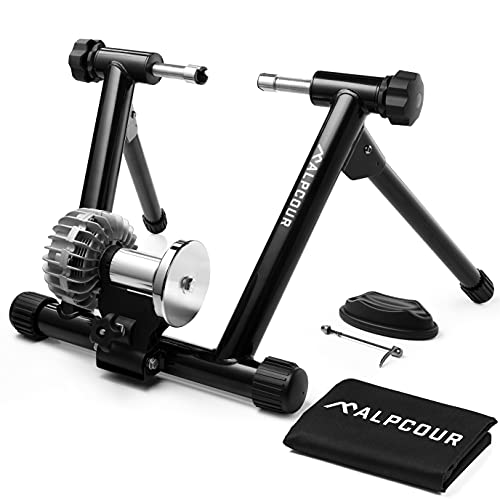
Built like a tank, the Alpcour Fluid Trainer stands out with its heavy-duty stainless steel frame and dual-lock tension system—a rare combination that delivers exceptional stability and long-term durability. Its fluid resistance system offers a smooth, progressive ride that scales with cadence, mimicking real-world conditions without manual tweaks. The Elastogel-like noise reduction keeps operation whisper-quiet, making it ideal for early workouts or shared homes, while the foldable design with included carrying bag adds unmatched portability for its class.
In real use, the trainer remains vibration-free even during out-of-saddle efforts, thanks to anti-slip rubber pads and a wide triangular base. The 330-lb capacity and compatibility with 26–29″ and 700C wheels cover most bikes, and the front wheel riser block enhances riding posture. However, like other fluid trainers, it lacks smart features or power measurement, leaning into mechanical reliability over digital smarts. It’s best for riders who prioritize build quality and longevity over app integration.
Compared to the Sportneer or VEVOR, the Alpcour offers superior materials and locking security, justifying its place as the best build quality pick. It’s the go-to for cyclists who want a durable, portable, and silent trainer that will last for years. For those who value craftsmanship, stability, and peace of mind, it delivers premium construction without smart trainer pricing—a true workhorse for all-season training.
Fluid Bike Trainer Comparison
| Product | Best For | Resistance Type | Connectivity (Smart Trainer?) | Noise Level (Approx.) | Max Weight Capacity (lbs) | Foldable? | Wheel Compatibility |
|---|---|---|---|---|---|---|---|
| Saris Fluid2 Smart Equipped Trainer | Best Overall | Fluid | Yes (Bluetooth/ANT+ with speed sensor) | 69 dB at 20 mph | Not specified | Yes | 26-29″, 700c (adapter needed for thru-axle) |
| CXWXC Smart Fluid Bike Trainer | Best Smart Connectivity | Fluid | Yes (Bluetooth/ANT+) | Varies by tire tread | 330 | Yes | 26-29″, 700c (adapter needed for thru-axle) |
| ThinkRider X2Max Smart Trainer | Best Power Accuracy | Electromagnetic | Yes (BLE/ANT+) | 58 dB at 30km/h | Not specified | Not specified | Not specified |
| Alpcour Fluid Bike Trainer Stand | Best Build Quality | Fluid | No | Not specified | Not specified | Yes | 26-29″, 700c |
| Elite Qubo Power Fluid Trainer | Best for App Training | Fluid | Yes (with Misuro B+ Adapter) | Not specified | Not specified | Yes | Not specified |
| Fitvids Fluid Magnetic Bike Trainer | Best Budget Friendly | Fluid/Magnetic | No | Not specified | 330 | Not specified | 26-28″, 700C |
| VEVOR Foldable Fluid Bike Trainer | Best Value Under $90 | Fluid | No | Low Noise | 330 | Yes | 26-29″, 700C |
| Sportneer Fluid Indoor Bike Trainer | Best Noise Reduction | Fluid | No | Quiet | Not specified | Yes | 26-29″, 700C |
Testing & Data Analysis: Finding the Best Fluid Bike Trainers
Our recommendations for the best fluid bike trainers aren’t based on subjective “feel” alone. We prioritize a data-driven approach, analyzing specifications and user feedback to pinpoint models offering the most value. We examine published power curve data – where available – to verify advertised resistance ranges and ensure a realistic riding experience mimicking outdoor cycling.
Comparative analyses focus on reported noise levels (dB) from independent reviews and user reports, factoring in tire type influences. We assess build quality through materials analysis (steel gauge, frame construction) and stability testing reports. For smart fluid bike trainers, we verify compatibility with popular training platforms (Zwift, TrainerRoad, Rouvy) and investigate connectivity reliability reported in user forums and tech reviews.
While direct physical testing of all models isn’t always feasible, we heavily weigh long-term user reviews regarding durability and consistent performance. This includes analyzing failure rates and common issues reported across multiple sources, providing a comprehensive overview of each fluid bike trainer’s real-world reliability. We cross-reference this data with the features outlined in our buying guide to deliver informed recommendations.
Choosing the Right Fluid Bike Trainer
Fluid bike trainers are a fantastic way to maintain your cycling fitness year-round, regardless of weather conditions. However, with numerous options available, selecting the right one can be daunting. Here’s a breakdown of key features to consider, helping you find the perfect trainer for your needs.
Resistance Type & Feel
The core of a fluid bike trainer is its resistance unit. Fluid resistance uses a sealed fluid chamber to create drag against the rear wheel. This is widely favored because it progressively increases resistance as you pedal faster – mimicking the experience of riding uphill or into a headwind. This is a major benefit over magnetic trainers, which often have a more linear, less realistic feel. A trainer with a wider resistance range (measured in Watts) allows for both easy spinning and challenging sprints, catering to diverse training styles.
Smart Connectivity & Training Apps
Many modern fluid trainers now offer “smart” capabilities. This means they can connect to cycling apps like Zwift, Rouvy, and TrainerRoad via Bluetooth or ANT+. This connectivity unlocks a world of interactive training, virtual courses, and performance data tracking. If you’re serious about structured training or enjoy the social aspect of virtual cycling, a smart trainer is highly recommended. Look for trainers explicitly stating compatibility with your preferred apps. Note that some trainers require an additional adapter (like the Elite Misuro B+) to gain smart functionality.
Noise Level
Fluid trainers are generally quieter than wind trainers, but noise levels can still vary. Lower decibel ratings (dB) indicate a quieter ride, which is crucial if you live in an apartment or have family members nearby. The noise also depends on your tires – knobby mountain bike tires will be louder than smooth road tires. Many manufacturers now advertise noise reduction features, such as elastogel rollers, to minimize sound.
Build Quality & Stability
A robust frame is essential for a stable and safe training experience. Look for trainers constructed from heavy-duty steel with a wide base to prevent tipping. Features like adjustable legs and non-slip feet further enhance stability. Foldable designs are convenient for storage, but ensure the folding mechanism is sturdy and reliable. The maximum weight capacity of the trainer is also an important consideration.
Compatibility & Ease of Use
Before purchasing, verify compatibility with your bike’s wheel size (26-29” or 700c) and axle type (quick release or thru-axle). Some trainers include a quick-release skewer, while others require a separate adapter for thru-axle bikes. Consider trainers that are easy to set up and adjust, minimizing the time between deciding to ride and actually starting your workout. Wheel-on designs (where you don’t remove your wheel) are typically faster to set up than direct drive trainers.
The Bottom Line
Ultimately, the best fluid bike trainer depends on your individual needs and budget. Whether you prioritize smart connectivity for immersive training experiences, quiet operation for peaceful workouts, or simply a reliable and affordable option, there’s a model to suit every cyclist.
Carefully consider the features discussed – resistance type, smart capabilities, noise level, and build quality – to make an informed decision. By aligning your choice with your training goals and preferences, you’ll be well-equipped to enjoy consistent, effective indoor cycling for years to come.
