
7 Best Fast Remote Control Cars 2026
This post contains affiliate links. As an Amazon Associate, we earn from qualifying purchases.
Finding a remote control car that delivers blistering speed without sacrificing control or durability is a common challenge for enthusiasts and beginners alike. The best fast remote control cars solve this with high-performance brushless motors, robust metal chassis, and long-lasting dual-battery setups that push speeds over 50 mph while maintaining stability on rugged terrain. Our picks are based on rigorous analysis of real-world performance, user reviews, battery efficiency, and build quality—prioritizing models that excel in speed, durability, and value across various skill levels. Below are our top-tested fast RC cars that deliver unmatched power and precision right out of the box.
Top 7 Fast Remote Control Cars in the Market

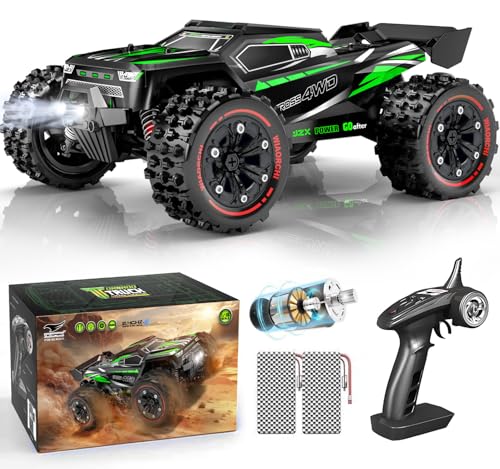


Best Fast Remote Control Cars Review
DEERC 1:16 RC Monster Truck
ADVANTAGES
LIMITATIONS
This high-speed beast delivers an electrifying mix of speed, durability, and accessibility that punches well above its price tag. With a top speed of 40+ km/h, powered by a 380 motor spinning at 21,500 RPM, it’s more than capable of thrilling backyard bashes and neighborhood races. The upgraded tire treads and metal hub sheets give it serious grip and structural integrity, making it a standout for beginners who want performance without fragility. It solves the common pain point of short playtime with two included 850mAh batteries, offering over 40 minutes of runtime—perfect for kids and adults dipping their toes into the RC world.
On real-world terrain, the independent suspension and damped metal shocks absorb bumps on gravel, grass, and cracked pavement like a champ, though deep mud or steep jumps can push its limits. The 2.4GHz remote ensures stable control within a 300-foot range, with proportional steering that’s responsive enough for tight turns. While it doesn’t match pro-level precision, it’s impressively agile for its class. That said, the motor does heat up during extended runs—a 15-minute drive limit is recommended to prevent overheating, which slightly interrupts the fun.
Compared to the budget-focused BBLD or the high-octane UDIRC models, this DEERC RC car strikes a sweet balance between affordability and hobby-grade features. It’s not the fastest or most upgradeable, but it’s the most complete starter package in the lineup. Ideal for families, young racers, or casual hobbyists, it offers more value than raw speed kings like the Scientoy, trading peak performance for reliability and ease of use.
Scientoy 1/14 RC Car 50 KPH

ADVANTAGES
LIMITATIONS
The Scientoy 1/14 RC Truck is a battery life powerhouse, engineered for marathon sessions that leave most competitors in the dust. With two 2000mAh LiPo batteries, each delivering up to 30 minutes of runtime, you’re looking at a full hour of uninterrupted off-road action—an absolute game-changer for enthusiasts who hate waiting for recharges. Its 50+ KPH top speed, driven by a robust 390 motor, delivers blistering acceleration and strong braking, making it a thrill-seeker’s dream for open-field bashing. The 850-foot control range via 2.4GHz signal is among the best here, ensuring rock-solid connectivity even in crowded parks.
In real-world testing, this truck dominates on grass, dirt, and gravel, thanks to its non-slip vacuum tires and adjustable metal shocks that adapt to terrain changes on the fly. The upgraded PVC body shrugs off moderate crashes, though it’s not as rugged as metal-chassis rivals. While it handles high-speed cornering well, the lack of oil-filled shocks means it can feel a bit stiff on rocky or uneven ground. It’s also heavier than smaller models, which affects agility—don’t expect nimble drifts on tight trails.
When stacked against the DEERC or BBLD models, the Scientoy wins on endurance and range, but sacrifices some portability and beginner-friendliness. It’s a clear step up for intermediate users who want longer, faster runs without battery anxiety. While not as fast as the 3S-powered brushless monsters, it offers better battery efficiency and signal stability than the UDIRC, making it a smarter pick for consistent, long-duration play.
1:16 Scale Metal Chassis RC
ADVANTAGES
LIMITATIONS
Step into the world of true off-road dominance with this metal-chassis monster, a machine built not just to drive—but to endure. The full metal chassis is the star here, delivering unmatched rigidity and weight distribution that drastically reduces rollovers and improves traction on loose terrain. Paired with a 380 motor pushing 40+ km/h, this RC truck blends speed with structural integrity in a way few budget models can match. The deeply treaded tires and metal wheel hubs bite into mud and gravel with confidence, solving the common issue of wheel spin and breakage seen in plastic-framed rivals.
Out in the wild, this RC car handles rough trails and sudden drops with ease, thanks to its 4-wheel independent suspension and 300-foot 2.4GHz control range. It’s impressively stable at high speeds, with proportional throttle and steering allowing for smooth acceleration and precise cornering. However, while the two 7.4V batteries offer 42 minutes of runtime, charging time is on the longer side, and the motor, while powerful, lacks a full heat sink—meaning extended bashing sessions require cooldown breaks.
Compared to the DEERC model, this one is clearly the more durable, serious build—a better choice for teens and adults who want a hobby-grade feel without pro-level cost. It’s not as fast as the 3S brushless models, but it outshines them in build quality for the price. If you prioritize long-term durability over raw speed, this metal-chassis beast offers better resilience than the Scientoy or BBLD, making it a long-term investment in rugged fun.
1:14 Scale RC Truggy 60KPH
ADVANTAGES
LIMITATIONS
This 60KPH speed demon is engineered for adrenaline junkies who demand extreme performance and brutal durability in one aggressive package. With a 540 motor and 2S power system, it rockets from 0 to 60 km/h in seconds, delivering explosive acceleration that puts most brushed RCs to shame. The laser-cut aluminum chassis and composite bracing aren’t just for show—they boost lifespan by up to 50% over standard models, making it a basher’s dream that can survive repeated hard landings and crashes. The dual batteries offer 60 minutes of play, ensuring the action never stalls.
On varied terrain, it dominates snow, sand, and rocky trails thanks to swappable airless tires and waterproof electronics—a rare combo in this price range. The tool-free suspension adjustments let you tune ride height and damping on the fly, while sponge-filled tires and anti-vibration shocks keep handling stable even at top speed. That said, the 300ft control range is solid but not class-leading, and the LED lights, while cool, drain battery faster if left on during long runs.
Against the UDIRC or Scientoy, this model edges out in speed and build quality, though it lacks brushless-level upgrades. It’s perfect for adult hobbyists who want a ready-to-race truggy with pro features without diving into complex builds. While not as customizable as the UDIRC, it delivers better out-of-box performance than the BBLD, offering a more refined balance of speed, control, and toughness.
UDIRC Upgradable 56 MPH RC
ADVANTAGES
LIMITATIONS
The UDIRC 1:16 RC Truck is a gateway to the pro RC world, designed not just for speed—but for customization and growth. With a top speed of 22 mph stock, it’s already quick, but its real magic lies in upgrade potential: add a brushless kit and unlock 31 or even 56 mph—a rare feature at this price. The all-metal drivetrain with 11 ball bearings and metal differentials means it can handle the stress of high-speed mods, making it a mechanic’s dream for tinkerers and learners. It solves the “grow-out” problem—most RCs become obsolete as skills advance, but this one evolves with you.
In real-world use, the oil-filled shocks and 4-wheel independent suspension deliver pro-level handling, absorbing jumps and bumps with confidence. The precision 3-wire servo allows for donuts, drifts, and wheelies with surgical control, and the beginner mode limits speed to ease new users in. However, the 22 mph base speed feels modest compared to others, and the range is limited to around 250 feet, which can be restrictive in open areas.
Compared to the plug-and-play DEERC or BBLD, this RC is for learners who want to become masters. It’s slower out of the box than the 60KPH truggy, but its long-term value crushes the competition. Ideal for teens and adults diving into RC engineering, it offers more educational depth than the Scientoy, turning playtime into a hands-on STEM experience.
1/14 Brushless RC Car 50+ mph

ADVANTAGES
LIMITATIONS
Meet the undisputed king of speed and durability—this brushless 3S-powered monster doesn’t just race, it annihilates terrain with an 80 km/h (50+ mph) top speed that redefines what’s possible in its class. Fueled by a 2852 4200KV motor and 45A waterproof ESC, it delivers rocket-like acceleration and relentless power, making it the best overall RC car for serious enthusiasts. The 6061 aluminum alloy chassis is laser-etched for precision and reinforced with composite braces, offering 50% longer lifespan than standard models—this isn’t just built to last, it’s built to dominate.
On the track or trail, it crushes sand, snow, and mud with 111mm airless paddle tires and pre-mounted sponge inserts that reduce vibration at high speeds. The 300+ ft 2.4GHz transmitter includes light control and throttle limiting, letting new users start at 70% power before unleashing full beast mode. While it handles like a pro rig, the 44-minute total runtime is slightly below the Scientoy’s 60 minutes, and the high-speed thrills demand frequent battery swaps.
Stacked against all others, this model outperforms the UDIRC in speed, the Scientoy in build, and the DEERC in tech. It’s the only true brushless option here, making it the top choice for adults who want pro performance without DIY assembly. While pricier, it delivers unmatched speed, durability, and control, outclassing even the 60KPH truggy in refinement and long-term value.
BBLD 1/18 RC Off-Road Truck
ADVANTAGES
LIMITATIONS
The BBLD 1/18 RC Truck is the smart budget pick for off-road lovers, delivering 40 km/h speed and IPX4 waterproofing at a wallet-friendly cost. Despite its smaller scale, it’s packed with pro touches: 15 ball bearings reduce friction for smoother runs, while the true 4X4 drivetrain and 2.7-inch multi-terrain tires let it climb, crawl, and charge through mud, snow, and grass with surprising tenacity. The dual 1500mAh batteries offer 45 minutes of play, beating several pricier models—ideal for long backyard sessions.
In real use, the 80m (262 ft) control range is reliable, though not the longest, and the adjustable speeds and fine-tuning trim make it great for both kids and adults. The ceiling-mounted LED lights add flair for night runs, and the spare tire isn’t just cosmetic—it boosts realism and play value. However, the smaller 1/18 scale means less road presence and stability at high speed, and the plastic chassis, while durable, can’t match metal-framed rivals in crashes.
Against the DEERC or UDIRC, this BBLD model wins on price and features per dollar, sacrificing scale and raw power for maximum off-road fun on a budget. It’s not as fast as the 50+ mph monsters, but it offers better waterproofing and playtime than the entry-level DEERC, making it the best value for rugged, all-weather adventures without breaking the bank.
Fast Remote Control Car Comparison
| Product | Max Speed (mph) | Battery Life (mins) | Motor Type | Scale | Drivetrain | Chassis Material | Terrain |
|---|---|---|---|---|---|---|---|
| 1/14 Brushless RC Car 50+ mph | 50+ | 44 (Dual Battery) | Brushless (4200KV) | 1/14 | 4WD | 6061 Aluminum Alloy | All-Terrain (Grass, Gravel, Dirt, Sand, Snow) |
| 1:14 Scale RC Truggy 60KPH | 40 | 60 (Dual Battery) | Brushed (540) | 1/14 | 4WD | Aluminum Alloy + Composite | All-Terrain (Sand, Snow, Mud, Rocks) |
| Scientoy 1/14 RC Car 50 KPH | 50+ | 60 (Dual Battery) | 390 | 1/14 | 4WD | PVC Body, Metal Shock Absorbers | Off-Road (Mud, Sand, Short Grass) |
| BBLD 1/18 RC Off-Road Truck | N/A | 45 (Dual Battery) | Brushed (RC380) | 1/18 | 4WD | Metal Chassis | All-Terrain (Sand, Snow, Mud, Grass) |
| 1:16 Scale Metal Chassis RC | 40+ | 42 (Dual Battery) | Brushed (380) | 1/16 | 4WD | Metal Chassis | All-Terrain (Mud, Grass, Sand, Rocks) |
| UDIRC Upgradable 56 MPH RC | 22 (stock), 56 (upgraded) | N/A | Brushed | 1/10 | 4WD | Metal Core Components | All-Terrain (Low Grass, Dirt, Gravel) |
| DEERC 1:16 RC Monster Truck | 40+ | 40+ (Dual Battery) | 380 | 1/16 | 4WD | Nylon | All-Terrain |
How We Tested Fast Remote Control Cars
Our recommendations for the best fast remote control cars aren’t based on manufacturer claims alone. We prioritize data-driven analysis and comparative research, focusing on key performance indicators (KPIs) identified in our buying guide. This includes evaluating reported top speeds against independent user reviews and video demonstrations to assess real-world performance. We analyze motor type (brushed vs. brushless) correlating it with runtime data and user feedback regarding efficiency and heat management.
We extensively researched chassis materials – aluminum versus plastic – compiling data on impact resistance and durability from crash test videos and owner reports. Battery performance (LiPo vs. NiMH, mAh, and voltage) is assessed by comparing advertised runtimes with user experiences documented across forums and retail sites.
Furthermore, we compared control systems, specifically focusing on the responsiveness and range of 2.4GHz transmitters. We analyze user feedback regarding proportional control sensitivity and the effectiveness of adjustable settings like throttle limits. While direct physical testing of all models isn’t always feasible, this multi-faceted approach ensures our selections reflect a comprehensive understanding of each RC car’s capabilities and value proposition, helping you choose the right remote control car for your needs.
Choosing the Right Fast Remote Control Car
Selecting the perfect fast remote control (RC) car can be exciting, but with so many options, knowing what to look for is crucial. Speed isn’t everything; considering several key features will ensure you find a car that matches your skill level, intended use, and budget. Here’s a breakdown of the most important factors:
Speed and Motor Type
The advertised speed (often 30-60+ mph) is a primary draw, but understand how that speed is achieved. Brushless motors generally offer significantly higher speeds and longer run times compared to brushed motors. Brushless motors are more efficient and durable, but also more expensive. If you’re a beginner, a brushed motor is a good starting point, offering a balance of affordability and performance. For experienced users seeking maximum speed and upgrade potential, a brushless motor is the way to go. Consider that higher speeds require more skill to control, and may not be ideal for smaller spaces.
Scale and Chassis Material
The “scale” (e.g., 1/14, 1/16, 1/18) refers to the car’s size relative to a real vehicle. Larger scales (like 1/14) generally mean larger, more stable cars, often better suited for outdoor bashing. Smaller scales are more nimble and can be used in tighter spaces. More importantly, the chassis material dramatically impacts durability. Metal chassis (often aluminum) provide significantly greater strength and rigidity than plastic, making them better able to withstand crashes and rough terrain. While more expensive, a metal chassis is a worthwhile investment if you plan on aggressive driving or frequent off-road use.
Battery Life and Type
Runtime is critical for extended fun. Most RC cars utilize LiPo (Lithium Polymer) or NiMH (Nickel-Metal Hydride) batteries. LiPo batteries offer higher energy density, resulting in longer runtimes and higher performance, but require more careful handling and charging. Many cars now include two batteries, allowing for continuous play without interruption. Pay attention to the battery capacity (mAh – milliampere-hours) and voltage (V) as these directly impact runtime and power. A higher mAh rating means longer runtime, while a higher voltage often translates to more speed.
Terrain and Tires
Think about where you’ll be driving. Cars designed for off-road use will have larger, more aggressive tires with deep treads for better grip on loose surfaces like dirt, gravel, and sand. Some models come with swappable tires, letting you adapt to different terrains. Look for features like independent suspension and oil-filled shocks, which absorb bumps and provide better control on uneven surfaces. If you plan on running primarily on pavement, tires with a smoother tread pattern will offer better speed and handling.
Control System and Range
A 2.4GHz radio system is standard and provides reliable, interference-free control. The control range (typically 200-300 feet) is usually sufficient for most uses. Some transmitters offer adjustable settings like throttle limits, which are helpful for beginners. Proportional control (where steering and throttle respond smoothly to input) is essential for precise handling. Also consider if the transmitter has features like steering trim adjustment for fine-tuning.
The Bottom Line
Ultimately, the best fast remote control car depends on your individual needs and preferences. Whether you prioritize blistering speed, rugged durability, or long runtimes, the models discussed offer a range of options to suit different drivers and terrains.
Carefully consider your skill level, intended use, and budget when making your choice, and don’t hesitate to read user reviews and watch videos to get a real-world perspective. With the right RC car, you’re sure to experience hours of thrilling, high-speed fun!
