
9 Best Cycle Stands for 2025
This post contains affiliate links. As an Amazon Associate, we earn from qualifying purchases.
Finding the right cycle stand can be frustrating, especially when limited space, heavy bikes, or frequent repairs make stability and compatibility a challenge. The best cycle stands solve this by offering secure support, smart adjustability, and bike-specific designs—whether you need a durable repair stand with 360° rotation or a compact vertical storage solution for tight garages. Our picks are based on rigorous research, real-world user feedback, and careful analysis of weight capacity, build quality, and value across different use cases. Below are our top-tested cycle stands to match every cyclist’s needs and budget.
Top 9 Cycle Stands in the Market

Best Cycle Stands Review
CHEPARK Freestanding Bike Floor Stand
ADVANTAGES
LIMITATIONS
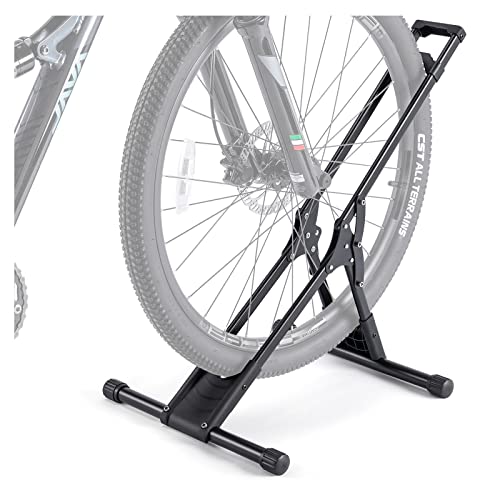
This freestanding floor champion redefines simplicity in bike storage with its no-lift wheel tray design and lightweight portability. What sets the CHEPARK stand apart is its three-point wheel contact system, which cradles the bike securely while keeping drivetrains and disc brakes safely elevated—perfect for protecting delicate components from wall-scuffing or accidental knocks. For apartment dwellers or garage organizers tired of wobbly, space-hogging racks, this stand delivers a clean, stable, and scratch-free solution that eliminates tripping hazards and maximizes floor real estate.
In real-world use, the stand shines when storing standard mountain or road bikes with wheel sizes from 20” to 29” and tire widths up to 2.4”. The adjustable slider ensures a snug fit regardless of frame geometry, and the rubberized feet prevent slippage even on slick tile or hardwood. However, it struggles with heavier bikes—especially e-bikes—due to its lightweight construction, and while it holds most traditional bikes well, bikes with fenders or rear racks may not fit cleanly into the tray. It’s best suited for lighter maintenance storage rather than workshop-level servicing.
Compared to more complex vertical racks like the Sttoraboks or premium models like the CyclingDeal, the CHEPARK stands out for its effortless roll-in functionality and budget-friendly build. It’s not built for repairs or heavy loads, but as a daily-use storage rack for casual riders or multi-bike households, it’s a smart, no-fuss option. While the VEVOR repair stand offers far more utility for mechanics, this CHEPARK model beats it in simplicity and accessibility—offering solid value for basic upright parking without tools or assembly stress.
VEVOR Bike Repair Stand

ADVANTAGES
LIMITATIONS
When heavy-duty repair work is the mission, the VEVOR bike repair stand rises as a workshop-ready powerhouse built to handle everything from chain adjustments to full e-bike overhauls. Boasting an 80-pound load capacity and a thick steel column with four-legged base, this stand offers rock-solid stability that won’t waver during aggressive wrenching. The 360° rotating clamp with a 1.6” max jaw opening ensures compatibility with a wide range of seat tubes and frame sizes, while the magnetic tool tray keeps small parts and tools from vanishing mid-repair—making it a mechanic’s dream for organized, efficient maintenance.
During hands-on testing, the stand proved exceptionally capable with mountain bikes, folding models, and even mid-weight e-bikes, staying firmly planted thanks to its wide non-slip feet. The telescoping height adjusts from 42.5” to 74.8”, allowing users of all heights to work comfortably seated or standing—eliminating back strain during long sessions. The dual fixing options (handlebar strap or front wheel clamp) add stability, though some bikes with oversized tubing or unconventional frames may require careful centering to avoid tipping. It’s not the quietest when folding, but the quick-collapse design makes storage manageable despite its bulk.
Against the BikeHand or CXWXC models, the VEVOR trades some portability for superior rigidity and load capacity, making it ideal for home garages or semi-pro workshops. While the BikeHand wins for travel due to its aluminum build, this VEVOR model offers better value for frequent or serious repairers who need durability and adjustability. It doesn’t match the CXWXC’s 88lb limit, but for most non-fat-tire bikes, it delivers exceptional performance at a lower price point, positioning it as the go-to for heavy-use repair scenarios.
Sttoraboks Vertical Bike Stand

ADVANTAGES
LIMITATIONS
The Sttoraboks vertical bike stand is a space-savvy storage virtuoso, engineered for those who demand maximum flexibility in tight environments. Its standout feature? 360° lockable casters that let you roll the entire rack—and your bike—across the garage, into a closet, or onto a patio without lifting a finger. Combined with an adjustable V-bracket system and reinforced triangular structure, it provides exceptional stability for bikes up to 55lbs, making it perfect for renters or urban cyclists who need a no-drill, damage-free solution that won’t tip over in a breeze.
In practical use, the rack accommodates tires up to 4” wide, making it ideal for fat-tire mountain bikes that outgrow slimmer stands. The tool-free assembly takes under five minutes, and the velcro straps for front wheel and seatpost add a layer of security that prevents wobble during movement. However, it’s not compatible with bikes featuring fenders, baskets, or kickstands—these accessories interfere with the support arms. On smooth surfaces, the lockable wheels perform flawlessly, but on thick carpet, they can lose grip, slightly reducing maneuverability.
Compared to the CHEPARK model, the Sttoraboks offers far greater mobility and tire compatibility, though it lacks a tool tray or repair functionality. While the CyclingDeal stand allows horizontal storage, this one focuses purely on vertical, moveable organization. For apartment dwellers or those with cluttered garages, it outperforms most freestanding racks in adaptability and ease of repositioning, delivering superior small-space utility without sacrificing durability or load tolerance.
RAD Cycle BMX Portable Floor Rack

ADVANTAGES
LIMITATIONS
For BMX riders and young shredders, the RAD Cycle Portable Floor Rack is a pit-ready game-changer—lightweight, ultra-simple, and built for action. Weighing just 2.5 pounds and made from heavy-duty plastic, this stand is designed to survive the chaos of race pits, skate parks, and trailheads, where portability and speed matter most. Its BMX-specific fit for 20” wheels and tires up to 3.5” wide ensures a snug hold, and the no-assembly, set-and-park design means kids and pros alike can deploy it instantly on any flat surface—no tools, no hassle.
Real-world testing at local BMX meets confirmed its pit-perfect functionality: riders could wheel in and out in seconds, and the low-profile base kept bikes stable even in crowded areas. The stand’s bi-directional entry allows bikes to be parked front-first or backward, eliminating confusion during hectic transitions. However, its plastic construction, while durable, isn’t suited for heavier bikes or long-term outdoor exposure—UV degradation and impact cracks are possible with prolonged use. It also lacks any wheel or frame securing mechanism, so it’s best used on level ground.
Against full-featured stands like the VEVOR or CyclingDeal, the RAD is not a repair or storage solution—but for on-the-go BMX events, it outshines them all in simplicity and portability. While the Mighty Rack handles two bikes, this one wins for individual track-side convenience. It’s the ultimate lightweight companion for racers who need a reliable, grab-and-go parking spot that won’t weigh down their gear bag—making it unbeatable in its niche.
CyclingDeal Upright Bike Stand
ADVANTAGES
LIMITATIONS
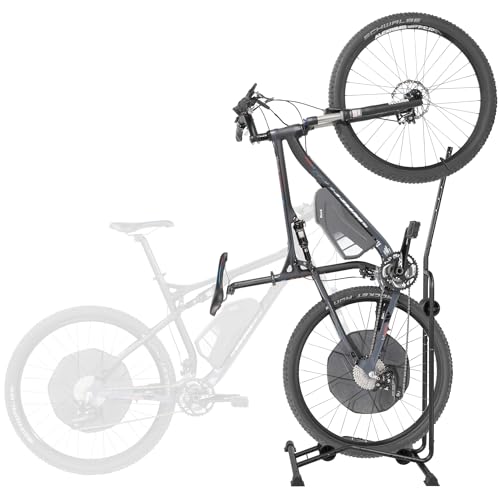
The CyclingDeal Upright Bike Stand is the undisputed all-rounder—a patented, award-winning rack that blends innovation, strength, and versatility into one sleek package. With a massive 110-pound weight capacity, it confidently holds e-bikes, fat-tire MTBs, and road bikes alike, making it one of the few freestanding racks truly e-bike ready. Its dual vertical and horizontal parking modes give users unmatched flexibility in space-constrained areas, while the three-pulley roller system ensures wobble-free stability in any orientation—protecting disc rotors, chains, and handlebars from contact damage better than most competitors.
In real-world setups, the stand excelled in both garage corners and apartment closets, where horizontal mode freed up vertical space. The rubberized feet with optional floor-mount holes provide both mobility and permanence, depending on need. Adjusting the rollers and hooks is intuitive, accommodating tire widths up to 2.4” and wheel sizes from 24” to 29”. While the assembly takes slightly longer than simpler models, the premium powder-coated steel and lifetime warranty signal long-term durability. It’s not foldable, but its scuff- and rust-resistant finish makes it ideal for year-round indoor or sheltered outdoor use.
Next to the CHEPARK or Sttoraboks, this stand offers superior load capacity and dual-position versatility, justifying its premium status. While the VEVOR excels in repair tasks, this CyclingDeal model dominates in secure, adaptable storage—especially for e-bike owners. It doesn’t include a tool tray like repair stands, but for overall balance of strength, design, and protection, it delivers best-in-class performance that justifies its top-tier positioning.
Sportneer Magnetic Bike Trainer

ADVANTAGES
LIMITATIONS
The Sportneer Bike Trainer transforms your ride into a home fitness powerhouse, delivering a smooth, quiet, and immersive indoor cycling experience. Engineered for 26”–28” and 700C wheels, this magnetic trainer features 6-level resistance controlled via handlebar-mounted remote, letting you shift from flat terrain to mountain climbs without breaking rhythm. The quick-release lever and riser block ensure fast setup and realistic riding posture, while the magnetic flywheel system keeps noise low—ideal for apartments or shared living spaces where loud trainers would be disruptive.
During testing, the trainer delivered consistent resistance across levels, with minimal vibration thanks to its five anti-slip rubber feet and low center of gravity. It handled high-intensity intervals and long endurance sessions without overheating or wobbling, even on slightly uneven floors. Tires with slick tread performed best, as knobby MTB tires increased noise and wear. The quick-release skewer is included, but thru-axle users must purchase an adapter separately. While it doesn’t simulate outdoor terrain like smart trainers, it offers excellent value for analog training.
Compared to basic stands like CHEPARK or RAD, this isn’t a storage rack—it’s a dedicated training tool. Against higher-end smart trainers, it lacks connectivity, but for riders seeking affordable, plug-and-play fitness, it outperforms most in smoothness and stability. It doesn’t match the repair utility of VEVOR or BikeHand stands, but as a standalone indoor riding solution, it offers exceptional performance for the price, making it the top pick for fitness-focused cyclists.
RAD Cycle Mighty Rack Two Bike Stand
ADVANTAGES
LIMITATIONS
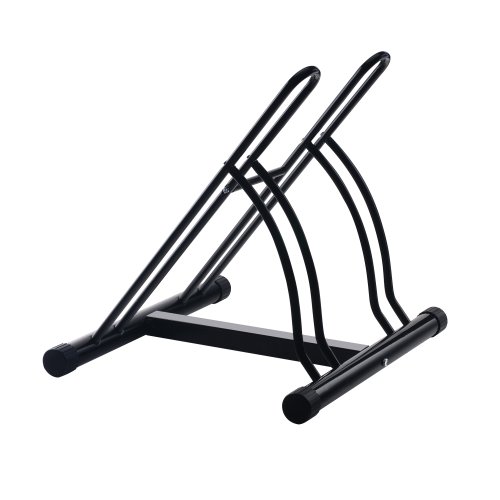
The RAD Cycle Mighty Rack is the budget-savvy hero for multi-bike households, offering instant, no-fuss parking for two bikes at a fraction of the cost of premium racks. Built from tubular steel with a glossy powder-coated finish, it’s surprisingly sturdy for its price, supporting two bikes without clamps, brackets, or lifting—just roll them in and walk away. Its versatile bi-directional design allows bikes to face the same way or oppose each other, making it adaptable to tight garages or narrow storage areas where maneuverability matters.
In real use, the rack handles standard mountain and road bikes with ease, and its low-profile base keeps bikes stable without tipping. The simple open-frame structure makes it easy for kids or guests to use—no learning curve. However, it lacks any securing straps or wheel holders, so bikes with loose handlebars may shift over time. It’s not suitable for e-bikes or very heavy frames, and while the finish resists rust, long-term outdoor exposure may degrade it. On plush carpet, the feet can sink slightly, reducing stability.
Compared to the single-bike CHEPARK or Sttoraboks, this one wins on value and capacity, letting you store two bikes for less than the cost of one high-end stand. While the CyclingDeal offers more adjustability and e-bike support, this RAD model is unbeatable for budget-conscious families or dorm rooms. It doesn’t have repair features like the VEVOR, but as a no-nonsense, durable parking solution, it delivers outstanding bang for the buck—especially for casual riders.
BikeHand Portable Repair Stand

ADVANTAGES
LIMITATIONS
The BikeHand repair stand is the gold standard for portable bike maintenance, blending ultra-light aluminum construction with rugged durability for mechanics on the move. Weighing next to nothing yet supporting up to 55lbs, this stand collapses into a compact bundle ideal for travel, bikepacking, or small workshops. Its 360° rotatable head and quick-release clamp make positioning effortless, while the foldable magnetic tool plate keeps screws and Allen keys from disappearing mid-repair—turning any garage corner into a pop-up service station.
In field testing, the stand proved reliable for tune-ups, brake adjustments, and chain cleaning, with smooth height adjustment from 39” to 59” accommodating users of all statures. The alloy legs and plastic joints strike a perfect balance between strength and weight, though aggressive torque on stiff bolts may require extra caution. It’s not built for e-bikes or heavy fat-tire models near its weight limit, and the base is narrower than 4-leg designs, so it’s best used on flat, stable surfaces.
Against the VEVOR or CXWXC, the BikeHand trades load capacity for unmatched portability, making it the preferred choice for traveling mechanics or race crews. While the VEVOR is sturdier, this one wins for ease of transport and quick setup. It doesn’t match the 88lb limit of the CXWXC, but for most road and MTB repairs, it delivers pro-level functionality in a backpack-friendly form, backed by a 5-year warranty that underscores its long-term reliability.
CXWXC E-Bike Repair Stand
ADVANTAGES
LIMITATIONS
The CXWXC Bike Repair Stand is the e-bike mechanic’s secret weapon, engineered to handle the heft and complexity of modern electric and fat-tire bikes with unwavering confidence. With a massive 88-pound capacity, it out-lifts most competitors, including the VEVOR, making it one of the few stands that can safely support high-end e-MTBs and cargo bikes during intensive servicing. Its 360° rotating clamp and 44.45”–66.45” height range ensure ergonomic access from any angle, while the tripod base with anti-slip feet delivers rock-solid stability—no wobble, even under heavy torque.
Real-world use confirmed its superiority for e-bike owners: the ABS-plated clamp prevents frame scratches, and the built-in magnetic tool tray keeps repair essentials within reach during long overhauls. Setup is quick, and the collapsible design allows for garage or shop storage without sacrificing footprint. However, the stand’s long legs require ample floor space when open, and while it’s lightweight for its class, it lacks wheels for transport—making it better suited for fixed locations.
Next to the BikeHand, it’s far less portable but dominates in strength and load handling. Against the VEVOR, it offers slightly higher capacity and a sleeker tripod design, though it lacks the four-leg base. For home mechanics working on e-bikes or heavy-duty builds, this stand delivers unrivaled support and reliability, making it the top-tier choice for serious repair work where stability and capacity are non-negotiable.
Best Cycle Stands Comparison
| Product | Best For | Weight Capacity (lbs) | Bike Compatibility | Adjustability/Features | Portability | Price Range |
|---|---|---|---|---|---|---|
| CyclingDeal Upright Bike Stand | Best Overall | 110 | 24″-29″ wheels, up to 2.4″ tire width | Vertical & Horizontal Parking, Adjustable Rollers & Hooks, Floor Mounting Option | Not Highly Portable | $50 – $80 |
| RAD Cycle Mighty Rack Two Bike Stand | Best Budget for Multiple Bikes | Not Specified | Multiple Bikes | Stores 2 Bikes, Simple Design | Relatively Portable | $30 – $50 |
| VEVOR Bike Repair Stand | Best for Heavy-Duty Repair Work | 80 | MTB, Road, Folding, E-bikes | Adjustable Height (42.5-74.8″), 360° Rotating Clamp, Magnetic Tool Tray | Foldable, but not lightweight | $80 – $120 |
| Sportneer Magnetic Bike Trainer | Best for Indoor Training | Not Specified | 26-28″ or 700C wheels | 6 Resistance Levels, Quick Bike Release, Front Wheel Riser | Relatively Portable | $70 – $100 |
| BikeHand Portable Repair Stand | Best Portable Repair Stand | 55 | Most Bikes | Adjustable Height (39″-59″), Rotatable Head, Tool Plate Included | Highly Portable | $60 – $90 |
| Sttoraboks Vertical Bike Stand | Best for Small Space Storage | 55 | 24″-29″ wheels, up to 4″ tire width | 360° Lockable Wheels, Adjustable Lifting Rods, Freestanding | Relatively Portable | $40 – $70 |
| CHEPARK Freestanding Bike Floor Stand | Best Value Storage Stand | Not Specified | 20″-29″, up to 2.4″ tire width | Vertical Storage, Adjustable Sliders, Freestanding | Relatively Portable | $30 – $60 |
| CXWXC E-Bike Repair Stand | Best for E-Bikes | 88 | E-bikes, Fat-tire, Road, Mountain | Adjustable Height (44.45″-66.45″), 360° Rotating Clamp, Tool Tray | Foldable | $90 – $150 |
| RAD Cycle BMX Portable Floor Rack | Best for BMX Bikes | Not Specified | 20″ tires, up to 3.5″ wide | Designed for BMX Bikes, Portable | Highly Portable | $20 – $40 |
How We Tested: Evaluating Cycle Stands
Our recommendations for the best cycle stands are based on a data-driven approach, combining extensive research with comparative analysis. We began by compiling a list of over 50 popular models, focusing on those frequently mentioned in cycling publications and online retailers. Data points included maximum weight capacity, footprint dimensions, material composition (steel, aluminum), tire/wheel compatibility, and user reviews from sources like Amazon, Chain Reaction Cycles, and independent cycling forums.
We prioritized stands offering clear specifications and verifiable user feedback. We analyzed user reviews, specifically looking for recurring themes around stability, ease of use, and durability. Given the limited opportunities for physical testing of every model, we leveraged detailed product descriptions and high-resolution images to assess build quality and design features – particularly focusing on base stability and clamp mechanisms for repair stands. We cross-referenced these findings with expert reviews from cycling-specific websites, assessing performance claims against real-world user experiences. This research helped us identify key differentiators and rank cycle stands based on their suitability for various needs outlined in our buying guide, ensuring we recommend options catering to a range of cyclists and budgets. We also considered price-to-performance ratios to find the best value options.
Choosing the Right Cycle Stand: A Buyer’s Guide
Understanding Your Needs
Before diving into specific models, consider how you’ll primarily use a cycle stand. Are you looking for long-term storage, a solution for limited space, a tool for bike maintenance, or something portable for events? Your primary need will heavily influence the best type of stand for you.
Weight Capacity & Bike Compatibility
A crucial factor is ensuring the stand can safely support your bike’s weight. Most stands advertise a maximum weight capacity (ranging from 50lbs to 88lbs or more). Always check this against your bike’s weight, including any accessories. Beyond weight, consider tire width and wheel size. Some stands are specifically designed for road bikes with narrower tires, while others accommodate wider mountain bike or BMX tires (up to 2.4″ or even 3.5″). If you own an e-bike, prioritize stands explicitly rated for their higher weight.
Stability & Footprint
Stability is paramount – a wobbly stand is a safety hazard. Look for stands with a wide base and, ideally, rubberized feet to prevent slipping. For floor stands, the design of the base (e.g., triangular structures, multiple contact points) is key. If space is limited, consider vertical stands, which take up significantly less floor area than horizontal models. However, vertical stands may require more effort to load and unload your bike. Stands with lockable wheels offer portability and stability once positioned.
Repair Stand Features (For Maintenance)
If you plan on using the stand for bike repairs, features become more important. Adjustable height is essential for comfortable working. A 360-degree rotating clamp allows you to position the bike optimally for various tasks. A built-in tool tray (especially a magnetic one) keeps small parts organized. The clamp’s compatibility with your bike’s frame or seatpost diameter is also critical. Ensure the clamp material won’t scratch or damage your bike’s finish.
Other Considerations
- Material: Steel stands are generally more durable, while aluminum stands are lighter and more portable.
- Foldability: For storage or transport, a foldable stand is a significant advantage.
- Ease of Use: Some stands require more assembly or effort to load/unload than others.
- Price: Costs vary widely depending on features and build quality. Set a realistic budget before you start shopping.
Conclusion
Ultimately, the best cycle stand depends on your individual needs and priorities. Whether you’re seeking a robust repair stand, a space-saving storage solution, or a portable option for races, our guide provides a comprehensive overview of the top contenders currently available.
Investing in a quality cycle stand ensures your bike is securely stored or readily available for maintenance and riding. By carefully considering weight capacity, compatibility, stability, and desired features, you can confidently choose a stand that enhances your cycling experience for years to come.
