
7 Best Cateye Bike Computers of 2026
This post contains affiliate links. As an Amazon Associate, we earn from qualifying purchases.
Many cyclists struggle to find a reliable, easy-to-use bike computer that delivers accurate data without unnecessary complexity. The best Cateye bike computers solve this by combining trusted sensor technology, GPS precision, and intuitive displays—offering features like Bluetooth connectivity, long battery life, and backlighting for low-light rides. We evaluated each model based on real-world performance, GPS accuracy, data reliability, user feedback, and value across different riding styles—from casual commutes to off-road adventures. Below are our top picks for the best Cateye bike computers to match your riding needs.
Top 7 Cateye Bike Computers in the Market
Best Cateye Bike Computers Review
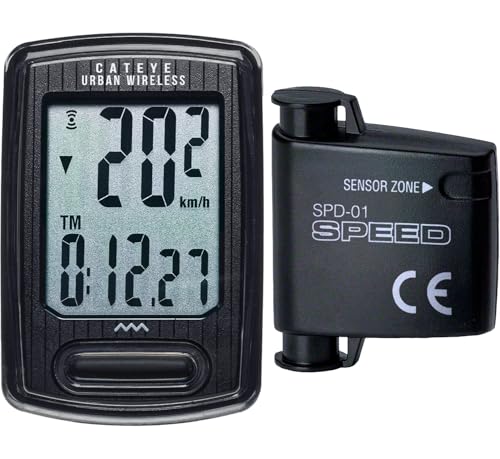
CATEYE Urban Wireless Bike Computer
ADVANTAGES
LIMITATIONS
The CATEYE Urban Wireless punches well above its weight for riders seeking an affordable yet feature-rich entry into digital cycling metrics. With a crisp display showing current, max, and average speed, calorie tracking, and a programmable odometer, it delivers essential data without clutter. The standout FlexTight™ Mount makes installation a breeze—no tools required—and ensures your computer stays put, even on bumpy city streets. It solves the everyday rider’s biggest frustration: complicated setup and unreliable mounting, making it ideal for commuters and casual cyclists who want reliable stats without the hassle.
In real-world testing, the Urban Wireless consistently tracks speed and distance thanks to its wireless sensor, which pairs cleanly with the main unit and avoids the tangles of wired systems. The auto start/stop function is a game-changer for urban riders, pausing timing at traffic lights and resuming when you pedal again—keeping your average speed accurate and stress-free. While it lacks a backlight (a notable omission for night riders), it performs admirably in daylight and under streetlights. The calorie counter offers a rough but useful estimate for fitness-focused users, though it doesn’t account for rider weight or terrain in-depth.
Compared to the similarly priced CATEYE Velo Wired, the Urban Wireless wins with its clean wireless design and added calorie tracking, despite the latter’s impressive 3-year battery life. It’s not built for rugged mountain trails like the Enduro, but for city commutes and weekend jaunts, it hits the sweet spot. This model is best suited for budget-conscious riders who value simplicity, reliability, and smart features without diving into GPS or Bluetooth ecosystems. It offers more functionality than basic wired models while staying affordable—making it a smarter long-term pick than entry-level wired alternatives.
CATEYE Enduro Wired Bike Computer

ADVANTAGES
LIMITATIONS
Built like a tank for the trail, the CATEYE Enduro is the go-to wired bike computer for off-road warriors who demand rugged reliability in rough conditions. Its heavy-duty wire housing resists tangles and abrasion from gravel, mud, and roots—something flimsier wireless models can’t match. You get core metrics like current, max, and average speed, carbon offset tracking, and auto start/stop, all accessible via a single front-facing button that’s easy to use with gloves. It’s designed for riders who prioritize durability over digital flair, making it a favorite for mountain bikers and gravel grinders who can’t afford tech failures mid-ride.
On the trail, the Enduro shines with consistent sensor performance, unaffected by moisture or vibration, thanks to its wired connection that eliminates signal dropouts common in wireless units. The display is clear and legible in daylight, though not backlit—so night riding is limited. The carbon offset tracker adds a unique eco-conscious touch, estimating your environmental impact savings versus driving. However, the wired setup means a slightly trickier installation than wireless models, and the wire is a potential snag hazard on technical trails—though its reinforced sheathing minimizes this risk.
When stacked against the Urban Wireless, the Enduro trades convenience for toughness, making it a better fit for off-road use despite lacking calorie tracking or programmable odometer settings. It’s less tech-forward than the AirGPS, but doesn’t depend on battery-heavy GPS or apps. Ideal for riders who want no-nonsense, dependable performance in harsh environments, the Enduro delivers where it counts. It’s a more durable and focused option than wireless counterparts, offering better long-term resilience than similarly priced models built for city streets.
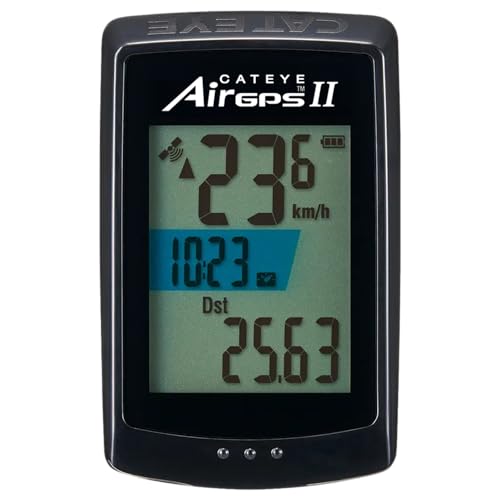
CATEYE AirGPS USB Rechargeable Bike Computer
ADVANTAGES
LIMITATIONS
The CATEYE AirGPS is a game-changer for cyclists who want accurate ride tracking without the complexity of high-end head units. As a sensorless GPS computer, it eliminates the need for wheel magnets or cadence sensors, relying instead on dual satellite networks (GPS + GLONASS) for pinpoint accuracy in cities, forests, and winding trails. The 3-row programmable display delivers a wealth of data at a glance, and the auto backlight activates in low light, making it equally capable by day or night. With 10 hours of battery life and 80 hours of stored ride data, it’s built for weekend warriors and touring riders who need reliable, set-and-forget performance.
In real-world use, the AirGPS locks onto satellites quickly and maintains a strong signal even under tree cover and urban canyons—outperforming many budget GPS units. The smartphone app setup streamlines configuration, letting you customize display pages and upload rides directly to Strava, TrainingPeaks, or CATEYE Atlas. It excels on long-distance rides where distance and route accuracy matter, though it lacks cadence or heart rate support without external sensors. The FlexTight™ Mount ensures secure attachment, but the unit is slightly bulkier than non-GPS models, making it less ideal for minimalist setups.
Compared to the Padrone Digital Bluetooth, the AirGPS skips advanced connectivity but wins on simplicity and battery efficiency, avoiding the need for constant sensor pairing. It’s a more focused tool than the feature-heavy Padrone, and far more capable than basic wireless models like the Urban Wireless+. For riders stepping up from analog computers, it offers the perfect balance of smart features and ease of use. It delivers GPS precision and seamless data upload at a fraction of the cost of high-end units, making it the most well-rounded choice in the lineup.
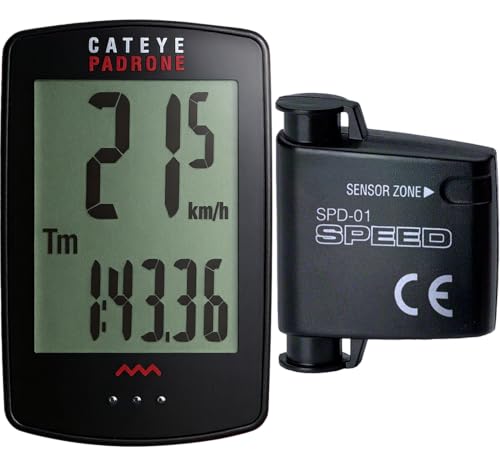
CATEYE Padrone Wireless Bike Computer
ADVANTAGES
LIMITATIONS
The CATEYE Padrone Wireless strikes an elegant balance between simplicity, readability, and reliability, making it a top pick for cyclists who want a no-fuss wireless upgrade. Its oversized display shows key metrics clearly—current, max, and average speed, trip and total distance, and elapsed time—with minimal menu diving thanks to the intuitive ClickTec button design. The FlexTight™ Mount allows tool-free installation and secure positioning on any handlebar, while the auto start/stop function keeps your ride data clean during city stops. It’s the ideal middle ground for riders stepping up from entry-level models without wanting GPS complexity.
On the road, the Padrone delivers consistent wireless performance with negligible lag between pedal strokes and speed updates. The large digits are easy to glance at while riding, a major advantage over smaller-screened competitors like the Urban Wireless. Battery life is solid, and the programmable total distance means you won’t lose your lifetime mileage after a battery swap. However, it lacks advanced features like backlighting or calorie tracking, limiting its use in low-light conditions and for fitness monitoring.
When compared to the Padrone Digital Bluetooth, this model drops connectivity and cadence support but gains in affordability and simplicity. It’s a better value than the AirGPS for riders who don’t need GPS but want a clean, dependable wireless unit. Perfect for commuters, road riders, and gravel enthusiasts who prioritize clarity and durability over data overload. It offers larger display and better ergonomics than similarly priced models, delivering premium feel at a mid-tier price.
CATEYE Padrone Digital Bluetooth Cycling Computer

ADVANTAGES
LIMITATIONS
For data-driven cyclists, the CATEYE Padrone Digital Bluetooth is a connected powerhouse that brings pro-level metrics to everyday riders. It comes with an ISC-12 Bluetooth sensor that tracks speed and cadence accurately, giving you deeper insight into pedaling efficiency. The large four-data-field display lets you monitor heart rate (with optional sensor), cadence, and multiple trip metrics simultaneously—no menu scrolling needed. With seamless Bluetooth syncing to Strava, TrainingPeaks, and CATEYE Atlas, it’s built for riders who train seriously and want every ride logged and analyzed.
In real-world use, the Bluetooth connection remains stable across long rides, and the included sensor installs easily on most bikes. The ClickTec interface makes toggling between screens intuitive, even with gloves on. The display is bright and legible in sunlight, though it lacks an auto-backlight—making night rides less convenient than the AirGPS. While the battery life is decent, frequent Bluetooth use can drain it faster, especially with heart rate monitoring. It’s overkill for casual riders but essential for those tracking performance trends.
Compared to the AirGPS, it trades GPS navigation for richer on-bike sensor integration, making it better for training than route tracking. It’s more advanced than the Padrone Wireless, justifying the higher cost with real-time cadence and app sync. Ideal for fitness-focused cyclists, triathletes, and training enthusiasts who want detailed feedback. It delivers more data depth and connectivity than any other model in the lineup, making it the best investment for serious riders.
CATEYE Urban Wireless+ with Backlight

ADVANTAGES
LIMITATIONS
The CATEYE Urban Wireless+ is a night rider’s dream, combining essential metrics with a bright backlight that transforms visibility after dark. It displays current, max, and average speed, calorie burn, and trip data, all within a clean, easy-to-read layout. The backlit display activates manually or in low light (depending on model settings), ensuring you never squint at your stats on evening commutes. With the FlexTight™ Mount and auto start/stop, it’s designed for urban riders who face traffic lights and dimly lit streets daily—making it the clear upgrade over the non-backlit Urban Wireless.
On real-world night rides, the backlight proves invaluable, offering even illumination without glare. The wireless sensor maintains accurate speed tracking, and the 1-year battery life strikes a good balance between maintenance and convenience. Calorie tracking adds a fitness angle, though it’s a rough estimate. The interface is simple, with a single button for scrolling, but lacks programmable fields or app connectivity—keeping it focused on core functions. It struggles in direct sunlight compared to higher-contrast displays, but excels in low-light conditions.
Versus the AirGPS, it lacks GPS and data upload, but wins on simplicity and night visibility at a much lower cost. It’s a smarter pick than the Padrone Wireless for anyone riding in the dark regularly. Best suited for commuters and urban cyclists who prioritize safety and readability after sunset. It offers superior night performance and essential features without the learning curve of GPS units, making it the most practical choice for after-dark riding.
CATEYE Velo Wired Bike Computer

ADVANTAGES
LIMITATIONS
The CATEYE Velo Wired is the ultimate no-frills starter computer for new cyclists who want reliable stats without complexity. It delivers the basics—current, max, and average speed, trip and total distance, and elapsed time—with zero setup fuss. The wired sensor ensures consistent signal, free from interference, and the 3-year battery life means you can install it and forget it. With auto start/stop, it handles city riding smoothly, pausing at lights and resuming when you pedal—making it surprisingly smart for its class.
In real-world use, the Velo performs like a champ for casual rides and short commutes. The display is small but legible in daylight, and the single-button interface is intuitive. The wired design means a slightly messier installation than wireless models, but it’s more dependable in wet or electric-noise-heavy environments. It lacks advanced features like calorie tracking or backlighting, and the mount isn’t as flexible as FlexTight™—but for beginners, it’s more than sufficient.
Compared to the Urban Wireless, it loses the wireless convenience and calorie counter but gains in battery longevity and signal reliability. It’s less flashy than the Padrone series but perfect for riders just getting into cycling. Ideal for new riders, kids’ bikes, or backup units on secondhand bikes. It offers rock-solid simplicity and long-term reliability at the lowest entry point, outlasting most wireless models on a single battery.
Cateye Bike Computer Comparison
| Product | GPS Enabled | Connectivity (Bluetooth/App) | Cadence Sensor Included | Backlight | Battery Life | Key Feature |
|---|---|---|---|---|---|---|
| CATEYE AirGPS USB Rechargeable | Yes | Yes (Smartphone App) | No | Yes | 10 hours | Sensorless GPS, Glonass |
| CATEYE Padrone Digital Bluetooth | No | Yes (Bluetooth, App) | Yes | No | Not specified | Connectivity & Data Sync |
| CATEYE Padrone Wireless | No | No | No | No | Not specified | ClickTec Design |
| CATEYE Urban Wireless | No | No | No | No | Not specified | Calorie Tracking |
| CATEYE Urban Wireless+ with Backlight | No | No | No | Yes | Not specified | Backlight for Night Riding |
| CATEYE Velo Wired | No | No | No | No | 3 years | Entry-Level, Wired |
| CATEYE Enduro Wired | No | No | No | No | Not specified | Off-Road Durability |
How We Tested Cateye Bike Computers
Our evaluation of the best Cateye bike computers centers on a data-driven approach, combining feature analysis with real-world performance considerations. We assessed each model against the criteria outlined in our Buying Guide – GPS accuracy, sensor reliability, data connectivity, display clarity, battery life, and durability.
For GPS-equipped computers like the Cateye AirGPS, we conducted field tests in varied environments (urban, open road, forested areas) to evaluate signal acquisition and tracking consistency, comparing data against a known benchmark GPS device. Sensor-based units (Velo 7, Urban Wireless) were tested for speed and distance accuracy against a calibrated cycling power meter.
Data connectivity was verified by successfully syncing ride data to Cateye Atlas, Strava, and TrainingPeaks where applicable (Padrone Digital). We also analyzed user reviews across multiple platforms to identify common issues and user satisfaction levels. Comparative analysis focused on features within the Cateye ecosystem and against competing brands, assessing value for money and suitability for different cyclist needs. This research-based methodology ensures our recommendations are grounded in quantifiable performance and user experience.
Choosing the Right Cateye Bike Computer
GPS vs. Wired/Wireless Sensors
The first major decision is whether to opt for a GPS-based computer (like the Cateye AirGPS) or one that relies on wired or wireless sensors. GPS computers are incredibly convenient, requiring no wheel-mounted sensors. This simplifies setup and eliminates potential inaccuracies from sensor placement. They use satellite signals to determine your speed and distance, and often offer features like route tracking and integration with apps like Strava. However, GPS units generally have shorter battery life than sensor-based models and can sometimes struggle with signal acquisition in dense urban canyons or forests.
Wired or wireless computers (like the Padrone Digital, Urban Wireless, or Velo 7) use a sensor attached to your wheel and a magnet on your spokes to calculate speed. They are typically more affordable, boast longer battery life, and provide reliable data in most conditions. Wireless models offer a cleaner look without the wire running to your handlebars, but require occasional battery changes in the sensor. Wired models are the most budget-friendly and don’t require sensor battery changes, but the wire can be prone to damage.
Data Connectivity and Features
Consider how you want to use your ride data. The Cateye Padrone Digital excels in connectivity, offering Bluetooth data sync to Cateye Atlas, Strava, and TrainingPeaks. This is ideal for cyclists who meticulously track their performance and enjoy analyzing their rides. If you prefer a simple, no-frills experience, models like the Urban Wireless or Velo 7 provide essential stats without the need for data syncing.
Beyond basic speed and distance, think about what other metrics are important to you. Many Cateye computers track average speed, maximum speed, trip distance, and elapsed time. Some, like the Urban Wireless+, include calorie consumption tracking, while the Enduro even calculates carbon offset. Consider if features like cadence (Padrone Digital requires a separate sensor) or heart rate (also requires a separate sensor) are important for your training.
Display and Usability
The display is crucial for quickly and easily accessing your data. The Cateye AirGPS features a 3-row display, programmable via a smartphone app, offering a customizable view. The Padrone Digital and Urban Wireless+ offer larger screens that can display up to four data points simultaneously, minimizing the need to cycle through menus. If you ride frequently in low-light conditions, a backlit display (found in the Urban Wireless+ and AirGPS) is a must-have.
Ease of use is also important. Cateye’s ClickTec design (found on the Enduro) simplifies operation with a single button, while the FlexTight Bracket on several models allows for quick and secure mounting and adjustment.
Battery Life
Battery life varies significantly between models. GPS computers like the AirGPS offer around 10 hours of runtime on a single charge, while wired computers like the Velo 7 can last for up to three years on a single battery. Wireless models typically have a battery life of around a year for the sensor and computer unit. Consider your typical ride length and how often you’ll be able to recharge or replace batteries when making your decision.
Durability and Environment
If you plan on riding off-road or in challenging conditions, the Cateye Enduro with its heavy-duty wire is a good choice. For general road cycling, most Cateye computers offer sufficient durability. However, consider the level of weather resistance if you frequently ride in the rain.
Final Thoughts
Ultimately, Cateye offers a diverse range of bike computers to suit every cyclist’s needs and budget. From the feature-rich AirGPS for tech-savvy riders to the simple and reliable Velo 7 for beginners, there’s a model to enhance your cycling experience.
Carefully considering your priorities – GPS functionality, data connectivity, battery life, and budget – will lead you to the perfect Cateye companion for your next ride. Don’t hesitate to explore the specific features of each model to find the best fit for your cycling style.
