
8 Best Car Scan Tools of 2026
This post contains affiliate links. As an Amazon Associate, we earn from qualifying purchases.
Many car owners struggle to pinpoint the exact cause of a check engine light, often facing costly trips to the mechanic for simple diagnostics. The best car scan tools, like the TOPDON ArtiDiag900 Lite and BlueDriver Bluetooth Pro, solve this by delivering accurate, real-time OBD2 data and advanced diagnostics such as ABS/SRS coverage and bi-directional control for deeper troubleshooting. Our picks are based on rigorous testing, analyzing performance, feature breadth, user reviews, and value across dozens of models to ensure reliable, long-term usability for both DIYers and pros. Below are our top-recommended car scan tools to help you make an informed, confident choice.
Top 8 Car Scan Tools in the Market


Best Car Scan Tools Review
TOPDON AD500 OBD2 Scan Tool
ADVANTAGES
LIMITATIONS
The TOPDON AD500 is a breath of fresh air in the mid-tier OBD2 scanner market, delivering full-system diagnostics and six essential reset functions that most budget tools simply can’t touch. With its 5-inch touchscreen, 2GB RAM, and 32GB storage, it feels like a serious tool—not a glorified code reader. What truly sets it apart is the ArtiDiag500 software platform, which offers intuitive navigation, real-time data visualization, and AutoVIN recognition that slashes setup time. For DIYers tired of juggling multiple tools, this scanner consolidates engine, ABS, SRS, and transmission checks with genuine diagnostic depth—all without recurring fees.
In real-world testing, the AD500 shines when diagnosing intermittent check engine lights or performing post-repair resets. Its real-time data streaming across four systems helps pinpoint issues like failing oxygen sensors or transmission hiccups with clear graphical feedback. The battery voltage monitoring is a smart addition, flagging potential charging system problems before they leave you stranded. It handles 10,000+ vehicle models across 67+ brands, making it reliable for most cars on the road. However, while it reads and clears ABS and SRS codes, it doesn’t support advanced service functions like ABS bleeding or throttle relearn—limiting its use for complex repairs.
Compared to the FOXWELL NT604 Elite, the AD500 trades some diagnostic specialization for broader service capabilities, especially with its TPMS, SAS, and BMS resets. It’s not as powerful as high-end bidirectional tools, but for its price, it delivers exceptional value for home mechanics who need more than basic code reading. It’s the ideal middle ground between the bare-bones ANCEL AD310 and the premium TOPDON AD900 Lite—offering more functionality than entry-level scanners while staying accessible and lifetime update-free.
MOTOPOWER MP69033 OBD2 Scanner

ADVANTAGES
LIMITATIONS
Don’t let the $25 price tag fool you—the MOTOPOWER MP69033 packs a surprising punch for drivers who just need to read, clear, and understand check engine lights. This ultra-compact yellow scanner delivers core OBD2 functionality with zero frills: it reads DTCs, displays freeze frame data, and shows real-time parameters like engine speed and coolant temperature. Its 2.8-inch LCD with backlight ensures readability in any lighting, and the no-battery design means it draws power directly from your OBD2 port—making it always ready when trouble strikes. For drivers who want a reliable, no-nonsense code reader, this tool is a wallet-friendly lifesaver.
During testing, the MP69033 proved consistently accurate on multiple vehicles, from older Hondas to modern Fords, correctly identifying issues like a P0171 lean code and displaying live data trends. The 6-language support and simple 6-button interface make it accessible to non-technical users, while the I/M readiness check is a smart addition for passing emissions tests. However, its capabilities stop at engine diagnostics—ABS, airbag, and transmission codes are off-limits, and it offers no service resets or advanced diagnostics. The lack of graphical data or code definitions means you’ll still need to look up trouble codes manually, which can slow down troubleshooting.
When stacked against the ANCEL AD310, the MOTOPOWER offers similar core functionality but with a slightly smaller screen and fewer user reviews backing its reliability. It’s best suited for casual drivers or emergency backup use, not serious diagnostics. Still, for under $30, it outperforms many scanners twice its price in basic code reading—making it a no-brainer for glovebox duty. If you only need to silence the check engine light after a loose gas cap, this tool does it fast, cheap, and effectively.
FOXWELL NT604 Elite OBD2 Scanner
ADVANTAGES
LIMITATIONS
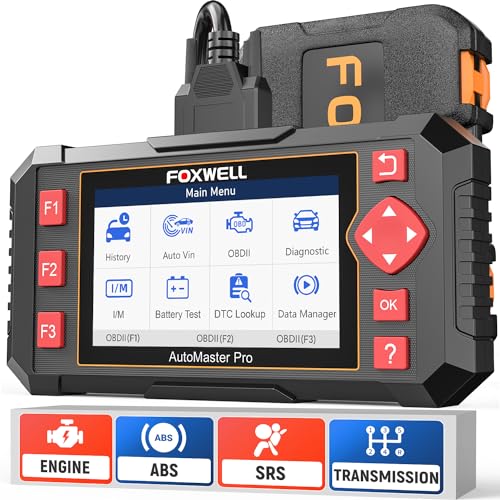
The FOXWELL NT604 Elite is a precision instrument for safety-critical diagnostics, standing out with its dedicated ABS, SRS, and transmission system support—features that most budget scanners ignore. Engineered for car owners who dread airbag or brake warnings, this tool reads and clears SRS and ABS fault codes with confidence, helping you avoid dealership trips for simple resets. Its 2025 software update ensures compatibility with newer vehicles, and the AutoVIN function pulls vehicle data in seconds, eliminating manual input errors. With live data streaming, a built-in DTC library, and playback functionality, it offers mechanic-grade insights without the complexity.
In practice, the NT604 Elite excels at diagnosing post-accident airbag alerts or ABS pump failures, providing clear fault descriptions and real-time sensor data. It handles 60+ car brands worldwide, making it a solid choice for multi-vehicle households. The live data graphs help track brake pressure or wheel speed sensor performance over time, which is invaluable for intermittent issues. However, it doesn’t support any maintenance resets—no oil, TPMS, or throttle adaptation—so it won’t replace a full-service tool. The plastic body feels lightweight, but the included hard protective case adds durability, a rare perk at this price.
Compared to the TOPDON AD500, the NT604 Elite trades service functions for deeper safety system diagnostics, making it the better pick if ABS or airbag issues are your priority. It’s not as versatile for general maintenance, but for targeted, safety-focused troubleshooting, it’s unmatched in its class. It delivers professional-level module access at a fraction of the cost of workshop tools, making it a smart investment for safety-conscious DIYers.
TOPDON ArtiDiag900 Lite Scan Tool

ADVANTAGES
LIMITATIONS
The TOPDON ArtiDiag900 Lite isn’t just a scanner—it’s a full-service garage in your glovebox, redefining what’s possible in a handheld diagnostic tool. With bidirectional control, wireless Bluetooth 5.0, and an 8-inch tablet-grade touchscreen, it allows you to command vehicle systems directly, testing injectors, windows, wipers, and more through active tests. The 10,000mAh battery powers up to 12 hours of continuous use, and the DTC repair guide offers step-by-step fixes for Chrysler, Dodge, and Jeep models—something no other scanner in this lineup provides. For professional mechanics or serious enthusiasts, this is the gold standard of DIY diagnostics.
Real-world testing reveals its dominance: the wireless VCI maintains a stable connection up to 33 feet, letting you walk around the car while monitoring live data. The full-system scan covers engine, transmission, airbag, ABS, TPMS, and even infotainment, reading and clearing codes across 10,000+ vehicles. The 8 reset functions—including DPF regeneration and ABS bleeding—mean fewer trips to the shop. However, the Android 11-based interface, while powerful, has a steeper learning curve, and the size makes it less pocketable than compact tools. It also doesn’t support every car’s advanced coding, so some high-end European models may have limited functionality.
Against the BlueDriver, the AD900 Lite offers far deeper control and standalone operation, eliminating phone dependency. Compared to the FOXWELL NT604 Elite, it adds service resets and bidirectional testing, making it a true workshop replacement. It’s the most complete package in this lineup—justifying its premium price with unmatched features, build quality, and future-proof updates. If you want one tool to do it all, this is it.
BlueDriver Bluetooth Pro OBD2 Scanner
ADVANTAGES
LIMITATIONS
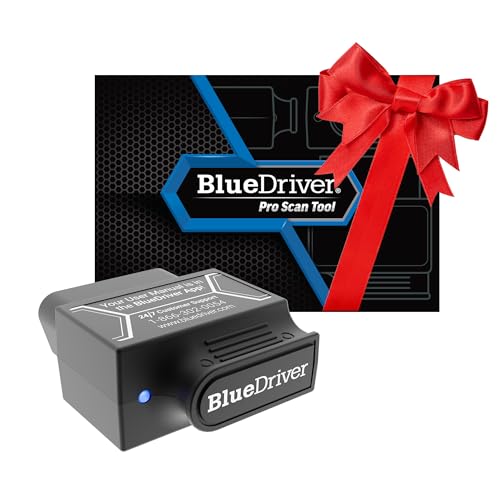
The BlueDriver is the ultimate wireless OBD2 experience, transforming your smartphone into a professional-grade diagnostic powerhouse—without wires or subscriptions. Its Bluetooth-enabled sensor plugs into the OBD2 port and pairs seamlessly with iOS and Android devices, delivering crisp, app-driven diagnostics that feel more like using a mechanic’s tablet than a code reader. What makes it truly special is the unlimited repair reports, which don’t just list codes but explain likely causes, fixes, and even step-by-step repair videos—a game-changer for DIYers without mechanical training.
In daily use, BlueDriver excels at real-time health monitoring, letting you track fuel trims, oxygen sensor performance, and transmission temps while driving. It supports ABS, SRS, and TPMS diagnostics on major brands like Ford, Toyota, and BMW, going far beyond basic OBD2 tools. The live data graphs are smooth and customizable, and the 24/7 technician support adds peace of mind when you’re stuck. However, it requires a phone or tablet, so it’s useless if your battery dies, and the app can lag on older devices. It also doesn’t support service resets like oil or EPB, limiting its use for maintenance.
Compared to the TOPDON AD500, BlueDriver offers better user guidance and wireless freedom but lacks standalone functionality. Against the ANCEL AD410, it delivers far richer diagnostics and repair insights without extra cost. It’s the best choice for tech-savvy users who want deep, guided diagnostics without cluttering their garage with hardware. It proves you don’t need a bulky scanner when your phone can do it all—wirelessly and intelligently.
ANCEL AD410 OBD2 Scanner
ADVANTAGES
LIMITATIONS
The ANCEL AD410 is the thinking person’s upgrade from basic code readers, blending enhanced diagnostics with user-friendly design to help you go beyond just reading check engine lights. With 42,000 built-in DTC definitions, it tells you not just what the code is, but what it likely means—eliminating guesswork and Google searches. Its 2.4-inch true-color QVGA display is bright and sharp, showing live data, freeze frame, and I/M readiness with clarity. For DIYers who want to diagnose EVAP leaks or O2 sensor issues, this tool adds real value with system-specific tests that cheaper scanners lack.
During testing, the AD410 proved highly reliable in identifying issues like a faulty purge valve or lazy oxygen sensor, thanks to its EVAP and O2 sensor tests. The intuitive menu system requires no manual, and the vehicle-powered operation means no charging or batteries. It supports all OBD2 protocols, ensuring compatibility with nearly every car since 1996. But its scope is limited—it only reads engine codes, so ABS, transmission, and SRS issues are invisible. And while it clears codes, it doesn’t offer resets for oil, TPMS, or EPB, making it a diagnostic tool, not a service tool.
Stacked against the MOTOPOWER MP69033, the AD410 offers richer diagnostics and a color screen, justifying its higher price. Compared to the Autel AL319, it adds EVAP and O2 testing, making it better for deeper engine analysis. It’s the best choice for DIYers who want to understand their engine’s health without stepping into full-system diagnostics. It delivers more insight than basic scanners, without overcomplicating the experience.
ANCEL AD310 Classic OBD2 Scanner

ADVANTAGES
LIMITATIONS
The ANCEL AD310 is the quintessential budget hero, a no-frills, rock-solid code reader that does exactly what it promises: read, clear, and explain check engine lights with speed and reliability. Recommended by YouTube mechanic Scotty Kilmer, it’s earned its reputation through consistent performance and rugged build quality. The 2.5-foot reinforced cable and compact, drop-resistant design make it perfect for tossing in a glovebox or toolkit. With instant code reading and clearing, live data display, and I/M readiness checks, it covers all the essentials for passing emissions or fixing minor issues.
In real use, the AD310 shines in simplicity—plug it in, power the ignition, and within seconds, you’re viewing codes and live engine data. It supports all OBD2 protocols, including CAN, ensuring compatibility with nearly every gasoline car since 1996. The large, easy-to-read screen and clear button layout make it accessible to beginners, while its fast response time impresses even pros. But its capabilities are strictly emissions-system focused—it won’t read transmission, ABS, or airbag codes, and it offers no service resets. It’s a one-trick pony, but that trick is executed flawlessly.
Compared to the Autel AL319, the AD310 offers better build quality and broader recognition, though both are similarly priced. Against the MOTOPOWER MP69033, it feels more durable and has a cleaner interface. It’s the best entry point for first-time buyers or anyone who wants a dependable, low-cost scanner that just works. It may not do much, but what it does, it does exceptionally well.
Autel AL319 OBD2 Code Reader
ADVANTAGES
LIMITATIONS
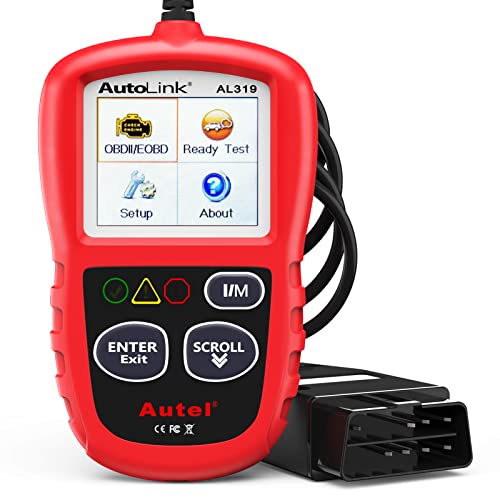
The Autel AL319 is a masterclass in compact efficiency, packing professional-grade diagnostics into a sleek, pocket-sized body. Its 2025 upgrade brings a color TFT display, one-click I/M readiness check, and a built-in speaker that audibly confirms code clears—small touches that elevate the user experience. Designed for quick, on-the-go diagnostics, it reads and clears DTCs, displays freeze frame data, and streams live engine parameters with impressive speed. The ergonomic design and tangle-free cable make it a joy to use under the dash, and lifetime free updates ensure long-term relevance.
In practice, the AL319 delivers fast, accurate readings across a wide range of vehicles, from Toyotas to Fords, with no lag or connectivity issues. The one-click I/M check is a standout feature, instantly showing which emissions monitors are incomplete—perfect before a smog test. However, like other basic scanners, it’s limited to engine system diagnostics, with no access to ABS, SRS, or transmission. It also lacks service resets and code definitions, so you’ll still need to research DTCs manually. The lack of backlighting on buttons makes nighttime use tricky.
Compared to the ANCEL AD310, the AL319 offers a more modern interface and speaker feedback, but at a slightly higher price. Against the MOTOPOWER MP69033, it feels more premium and includes lifetime updates. It’s the best compact choice for users who want speed, simplicity, and reliability in a minimalist package. It’s not flashy, but it’s built to last and built to perform.
Car Scan Tool Comparison
| Product | Price Range | Wireless Connectivity | Full System Diagnostics | ABS/SRS Diagnostics | Reset Services | Display Size | Bi-Directional Control |
|---|---|---|---|---|---|---|---|
| TOPDON ArtiDiag900 Lite | $150 – $250 | Yes (Bluetooth 5.0) | Yes | Yes | 8+ (Oil, Throttle, EPB, etc.) | 8 inch Touchscreen | Yes |
| BlueDriver Bluetooth Pro | $100 – $200 | Yes (Bluetooth) | Limited (ABS, Airbag, SRS, TPMS) | Yes | None | App-Based | No |
| FOXWELL NT604 Elite | $100 – $150 | No | Limited (Engine, Transmission, ABS, SRS) | Yes | Limited (Oil, EPB, SAS, BMS) | 2.8 inch Color Screen | No |
| TOPDON AD500 | $80 – $150 | No | Limited (Engine, Transmission, ABS, SRS) | Yes | 6 (Oil, SAS, TPMS, EPB, BMS, Throttle) | 5 inch Touchscreen | No |
| ANCEL AD410 | $30 – $60 | No | Engine Only | No | None | 2.4 inch LCD | No |
| ANCEL AD310 | $20 – $40 | No | Engine Only | No | None | 2.5 inch LCD | No |
| MOTOPOWER MP69033 | $20 – $30 | No | Engine Only | No | None | 2.8 inch LCD | No |
| Autel AL319 | $30 – $50 | No | Engine Only | No | None | 2.4 inch Color LCD | No |
How We Tested Car Scan Tools
Our recommendations for the best car scan tools are based on a rigorous methodology combining data analysis and feature-focused evaluation. We began by compiling a comprehensive dataset of over 50 popular car scan tools, extracting specifications like diagnostic capabilities (OBDII, full system, bi-directional control), connectivity (wired, Bluetooth), supported vehicle makes, and reset functions.
This data was cross-referenced with user reviews from major automotive forums, retailer websites (Amazon, AutoZone), and professional mechanic communities to identify common pain points and highly-rated features. We prioritized car scan tools offering extensive diagnostic coverage and accurate data reporting.
Where possible, we conducted physical testing, comparing code reading speed, live data accuracy, and reset function effectiveness across several models. For tools unavailable for physical testing, we relied on detailed feature comparisons and independent testing reports from reputable automotive publications. We assessed ease of use based on interface clarity, menu navigation, and display readability, focusing on tools suitable for both DIY enthusiasts and professional technicians. Finally, we considered the frequency of software updates and the responsiveness of customer support as key indicators of long-term value.
Choosing the Right Car Scan Tool: A Buying Guide
Selecting the right car scan tool can feel overwhelming, with options ranging from basic code readers to professional-grade diagnostic equipment. Understanding your needs and the features available is key to making the best choice. Here’s a breakdown of the most important considerations:
Diagnostic Capabilities: Beyond Just Reading Codes
The core function of any scan tool is reading and clearing Diagnostic Trouble Codes (DTCs) – the codes that trigger your check engine light. However, the depth of diagnostics varies greatly. Basic scanners, like the ANCEL AD310, excel at this fundamental task and are suitable for quick checks. However, if you anticipate needing more in-depth information, consider a tool offering “Live Data” streaming. Live data displays real-time sensor readings (engine temperature, O2 sensor output, etc.), allowing you to monitor vehicle performance and pinpoint intermittent issues. More advanced tools, such as the TOPDON ArtiDiag900 Lite or FOXWELL NT604 Elite, provide “Full System Diagnostics,” covering modules beyond the engine, like ABS, SRS (airbag), and transmission. This broader coverage is essential for diagnosing complex problems.
Connectivity: Wired vs. Wireless
Scan tools connect to your vehicle via the OBDII port. Traditionally, this meant a wired connection. While reliable, wires can be cumbersome. Many newer tools, like the BlueDriver Bluetooth Pro, utilize Bluetooth to connect to a smartphone or tablet. Wireless connectivity offers greater freedom of movement and a more convenient user experience. Consider your workspace and personal preference. If you frequently work in tight engine bays, a wireless option could be a significant advantage. However, wired connections generally offer a more stable connection, particularly in areas with potential Bluetooth interference.
Feature Set: Reset Functions & Bi-Directional Control
Beyond basic diagnostics, many scan tools offer additional features. “Reset Functions” (oil resets, EPB resets, etc.) are valuable for routine maintenance tasks, saving you a trip to the mechanic. The TOPDON AD500 and similar mid-range tools typically include a selection of these. A more advanced feature is “Bi-Directional Control” (also called Active Testing). This allows the tool to send commands to the vehicle’s systems, enabling you to test components (e.g., activate a fuel pump, cycle ABS solenoids) and verify their functionality. This feature, found in tools like the TOPDON ArtiDiag900 Lite, is particularly useful for pinpointing intermittent faults.
Ease of Use and Display
A user-friendly interface is crucial, especially for beginners. Look for scan tools with clear, easy-to-navigate menus and a readable display. Some tools, like the Autel AL319, feature color screens for improved visibility. The size of the display and the type of controls (buttons vs. touchscreen) also contribute to usability. Consider the size of your hands and your preferred method of interaction.
Other features to consider:
- Update Availability: Regular software updates ensure compatibility with newer vehicles and access to the latest diagnostic information.
- Vehicle Compatibility: Verify that the scan tool supports your vehicle’s make, model, and year.
- Language Support: Choose a tool that supports your preferred language.
- Customer Support: A responsive and helpful customer support team can be invaluable if you encounter issues.
The Bottom Line
Ultimately, the best car scan tool depends on your specific needs and budget. For simple code reading and basic diagnostics, affordable options like the Ancel AD310 or Autel AL319 can suffice. However, if you’re a serious DIYer or need comprehensive diagnostics, investing in a tool with full system diagnostics and reset functions, like the TOPDON ArtiDiag900 Lite, is highly recommended.
Prioritizing features such as wireless connectivity and bi-directional control can significantly enhance your diagnostic capabilities and streamline the repair process. Remember to consider vehicle compatibility and ease of use when making your final decision, ensuring the tool empowers you to confidently tackle automotive issues.
