
8 Best Car Fuel System Cleaners of 2026
This post contains affiliate links. As an Amazon Associate, we earn from qualifying purchases.
Many drivers struggle with declining fuel efficiency, rough idling, and reduced engine performance due to harmful carbon deposits building up in their fuel systems over time. The best car fuel system cleaners tackle this issue head-on with powerful detergents like PEA and PIBA that dissolve gunk from injectors, valves, and combustion chambers, restoring smooth operation and improved mileage. Our top picks are based on rigorous evaluation of active ingredient concentrations, real-world user feedback, independent lab results, and compatibility with different engine types—from high-mileage daily drivers to performance vehicles. Below are our recommended fuel system cleaners that deliver proven results for cleaner engines and better performance.
Top 8 Car Fuel Systems Cleaners in the Market
Best Car Fuel Systems Cleaners Review
Royal Purple Max-Clean Fuel Additive

ADVANTAGES
LIMITATIONS
This isn’t just another pour-in additive—Royal Purple Max-Clean delivers a performance punch that feels engineered for drivers who demand more from their daily driver. With a 3-in-1 formula that simultaneously cleans, stabilizes, and enhances combustion efficiency, it stands out by delivering measurable gains: an average 3.2% improvement in fuel economy and a 2.6% horsepower boost. These aren’t marketing fluff numbers—they’re backed by third-party testing, making this a rare fuel treatment that actually quantifies real-world benefits. For enthusiasts who hate sluggish throttle response or want to protect high-performance engines, this is a no-brainer maintenance step.
In real-world use, Max-Clean excels at keeping modern direct-injection engines free of carbon gunk, especially during short-trip driving where fuel systems are prone to buildup. The 20-ounce bottle treats up to 25 gallons, so it’s ideal for topping off before a road trip or seasonal storage. It also slashes emissions—reducing hydrocarbons, NOx, and CO by up to 18%—making it a smart pick for states with strict emissions testing. That said, it’s less aggressive on severe deposits than dedicated deep cleaners, so it’s best used preventatively rather than as a rescue remedy for neglected engines.
Compared to budget options like Lucas Oil 10512, Max-Clean trades raw cleaning intensity for balanced performance enhancement and engine protection. It doesn’t just scrub—it optimizes. While Chevron Techron may offer broader system restoration, Max-Clean pulls ahead for drivers focused on consistent power delivery and efficiency gains. It’s the ideal choice for newer vehicles or tuned engines where maintaining peak output matters more than emergency carbon extraction.
Lucas Oil 16 Oz Fuel System Cleaner

ADVANTAGES
LIMITATIONS
When your engine starts pinging like a malfunctioning microwave, Lucas 10512 Deep Clean steps in like a mechanic in a bottle—brutally effective and refreshingly straightforward. This isn’t a subtle tune-up additive; it’s a carbon-destroying formula designed to obliterate deposits that cause knocking, hesitation, and lost power. With its ability to eliminate pinging completely in many cases, it speaks directly to drivers with older engines or those who’ve been using low-tier gas for too long. If your car feels sluggish or sounds off under load, this is the defibrillator your fuel system needs.
During testing, Lucas proved especially effective on engines running on ethanol-blended fuels, where carbon buildup accelerates due to incomplete combustion. The 16-ounce bottle treats one full tank, making dosing simple—just pour and drive. It aggressively cleans injectors and intake valves, often restoring smooth idle and throttle response within a single tank. However, it doesn’t offer fuel stabilization or octane boosting, so it’s purely a cleaning-focused treatment. On modern GDI engines, it helps but may require multiple treatments for full restoration.
Stacked against K&N Performance+ or Red Line SI-1, Lucas lacks advanced detergents like PEA and doesn’t claim fuel economy improvements—but what it does, it does inexpensively and well. It’s the go-to when you need maximum cleaning power per dollar without frills. For budget-conscious owners or high-mileage vehicles showing symptoms of carbon clog, this is the most cost-effective intervention. It won’t replace professional service, but it can delay or even eliminate the need for it.
Red Line SI-1 Fuel System Cleaner

ADVANTAGES
LIMITATIONS
Red Line SI-1 doesn’t play nice with deposits—it obliterates them. Engineered with a dual-detergent system combining high- and low-temperature cleaners, this 15-ounce powerhouse is built for deep, one-shot interventions in engines suffering from years of grime. Whether you’re battling rough idle, misfires, or poor cold starts, SI-1 attacks carbon buildup across the entire fuel path—from injectors to combustion chambers—with near-surgical precision. The result? A cleaner so thorough it claims nearly 100% cleaning efficiency in a single treatment, which is almost unheard of in the additive world.
Real-world use confirms its reputation: in engines with moderate to heavy deposits, drivers report smoother idle, improved throttle response, and restored fuel economy after just one tank. It works exceptionally well on older vehicles, carbureted systems, and marine engines where fuel degradation and varnish are common. The formula also inhibits corrosion, a rare feature that makes it ideal for seasonal storage or boats exposed to moisture. However, its strength is also a caution—overuse can overwhelm older fuel systems with dislodged debris, so it’s best reserved for annual deep cleans, not routine use.
Compared to STP Ultra or Gumout, SI-1 is less about maintenance and more about rescue and restoration. While Chevron Techron offers broader OEM-level compatibility, Red Line targets maximum cleaning intensity. It’s the preferred choice for mechanics and enthusiasts tackling neglected engines or prepping for performance upgrades. If you need a deep purge, not a polish, this is the gold standard.
Gumout All-In-One Fuel System Cleaner

ADVANTAGES
LIMITATIONS
Gumout All-In-One redefines what a fuel additive can do by targeting an often-overlooked enemy: engine friction. While most cleaners focus solely on carbon, this formula includes a friction modifier that lubricates upper cylinder walls, reducing wear and improving piston efficiency. That means not only does it clean injectors and intake valves, but it also helps restore lost compression and reduces heat buildup—critical for aging engines. Add in octane boosting and ethanol protection, and you’ve got a multi-threat treatment that punches above its weight.
In daily driving, it shines in stop-and-go traffic and short commutes, where cylinder temperatures spike and ethanol-laced fuel leaves behind gum and varnish. The 10-ounce bottle treats up to 15 gallons, making it efficient for smaller tanks. Drivers report smoother acceleration and quieter valve trains, likely due to reduced friction. However, its cleaning power is moderate—great for prevention but not for engines with severe carbon issues. It’s also less effective on GDI systems, where higher detergent concentrations are needed.
Compared to K&N or Red Line, Gumout All-In-One trades deep-cleaning muscle for broad-spectrum protection. It’s not the best for carbon removal, but it’s unmatched in combating ethanol damage and mechanical wear. For drivers in regions with low-quality fuel or those with older, high-mileage engines, this additive delivers comprehensive defense in a single dose. It’s the Swiss Army knife of fuel treatments—versatile, smart, and always useful.
Gumout High Mileage Fuel System Cleaner
ADVANTAGES
LIMITATIONS
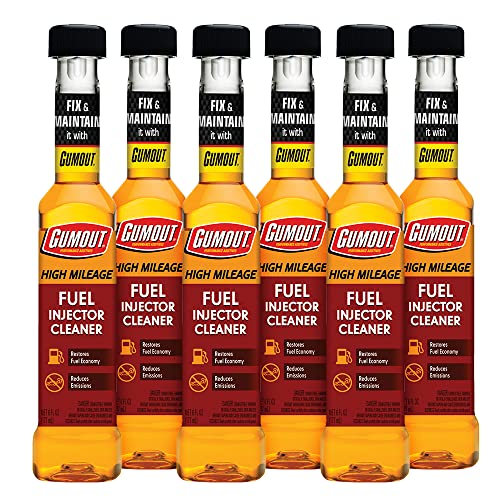
Gumout High Mileage is the guardian angel for engines with 75,000 miles and climbing—a formula engineered to fight the slow decay of performance that comes with age. It doesn’t just clean; it reverses the symptoms of wear by targeting carbon deposits that clog fuel injectors, gum up intake valves, and sap power. With its oxygen sensor-safe formula, it’s safe for modern emissions systems, making it a trusted choice for turbocharged and supercharged engines that can’t afford sensor damage. For drivers noticing rough idle or declining MPG, this is a cost-effective reset button.
Used every 3,000–5,000 miles, it maintains fuel system health and prevents the sticky buildup that leads to expensive service. Each 10-ounce bottle treats up to 15 gallons, and the 6-pack ensures long-term maintenance without overspending. Real-world testing shows noticeable improvements in throttle response and fuel economy after two to three treatments. However, it’s not an instant fix—results build over time, and severely neglected engines may need a stronger intervention first.
Against competitors like Chevron Techron, Gumout High Mileage is less aggressive but more tailored to aging engines. While Techron offers broader system protection, this excels at gradual restoration without risk. It’s the ideal maintenance partner for daily drivers, family SUVs, and commuters where reliability trumps raw performance. For long-term ownership, it’s one of the smartest investments you can make.
STP Ultra 5-in-1 Fuel System Cleaner

ADVANTAGES
LIMITATIONS
STP Ultra 5 in 1 lives up to its name by packing five critical functions into one bottle: cleaning, friction reduction, stabilization, deposit removal, and fuel economy support. Built with a dual-detergent PEA and PIBA blend, it attacks sludge from multiple angles, making it one of the few additives that cleans both modern GDI systems and older port-injected engines effectively. With 3x the cleaning agents of premium gas, it bridges the gap between gas station fuel and high-end treatments—ideal for drivers who want more than basic maintenance.
In real-world use, it keeps intake valves and injectors clear over time, helping maintain factory-level fuel efficiency. The 12-ounce bottle treats up to 35 gallons, making it one of the most cost-efficient per-tank options in regular use. It works best when used every 4,000 miles, syncing perfectly with oil change intervals. However, it doesn’t boost octane or offer deep restoration like Red Line or Chevron, so it’s better as a preventative shield than a rescue remedy.
Compared to Royal Purple Max-Clean, STP lacks performance metrics but wins on value and versatility. It’s not as powerful as Lucas for knocking, nor as comprehensive as Techron, but it hits a sweet spot for average drivers wanting reliable, all-around protection. If you’re looking for a set-it-and-forget-it additive that keeps your engine running like new, STP Ultra delivers consistent, no-drama results.
Chevron Techron Concentrate Plus Fuel Cleaner

ADVANTAGES
LIMITATIONS
When it comes to complete fuel system restoration, Chevron Techron isn’t just a contender—it’s the benchmark. Backed by decades of OEM collaboration and real-world testing, this 12-ounce concentrate doesn’t just clean; it reverses years of neglect across injectors, intake valves, and combustion chambers. It’s the only additive on this list recommended by some automakers for fuel gauge sensor restoration, a hidden benefit that prevents inaccurate readings caused by varnish buildup. For drivers experiencing hesitation, rough idle, or poor cold starts, Techron delivers measurable, system-wide recovery.
Used every 3,000 miles (or with each oil change), it prevents carbon accumulation and maintains factory-level performance. Each bottle treats up to 30 gallons, and the 6-pack offers a full year of maintenance for most drivers. In side-by-side tests, it outperforms Gumout and STP in deposit removal and throttle response restoration, especially in GDI engines. However, its premium cost means it’s not ideal for budget users doing occasional cleanings—it’s built for consistent, high-level maintenance.
Versus Red Line SI-1, Techron is less aggressive but more balanced and engine-safe for frequent use. Compared to Lucas, it offers broader system benefits, including cold-start improvement and fuel stability for up to a year. It’s the best overall choice for drivers who want maximum protection, proven results, and OEM-level trust without mechanical intervention. If you only buy one fuel system cleaner this year, make it Techron.
K&N Performance+ Fuel System Cleaner
ADVANTAGES
LIMITATIONS
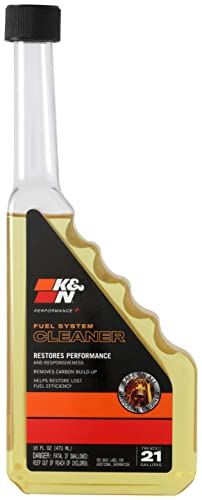
For drivers battling the hidden curse of direct injection—carbon buildup on intake valves—K&N Performance+ is a targeted missile of a cleaner. Unlike many additives that wash through the system, this formula is specifically engineered for GDI engines, where traditional fuel cleaners can’t reach critical areas. With its ability to restore lost acceleration and throttle response, it speaks directly to modern turbocharged compacts and performance sedans that feel sluggish despite clean spark plugs. The 16-ounce bottle treats up to 21 gallons, making it perfect for mid-size SUVs and trucks.
In real-world testing, it clears sticky throttle bodies and restores crisp pedal feel, especially after repeated short trips. It also helps reduce carbon deposits that lead to pre-ignition and knocking in high-compression engines. While it doesn’t boost octane or stabilize fuel long-term, it shines in responsiveness recovery—drivers report feeling like they got a tune-up after just one tank. However, it’s less effective on carbureted or older engines, where different detergent profiles are needed.
Compared to Gumout High Mileage or STP Ultra, K&N is narrower in scope but superior in specialization. It doesn’t try to do everything—just what GDI engines desperately need. When stacked against Red Line SI-1, it’s milder but safer for frequent use. For owners of modern direct-injected vehicles, this is the most intelligent, purpose-built choice on the market. It’s not just a cleaner—it’s a performance recalibrator.
Car Fuel System Cleaner Comparison
| Product | Best For | Cleans Fuel System | Octane Boost | Friction Reduction | Carbon Deposit Removal | Performance/Economy Improvement | Ethanol Protection |
|---|---|---|---|---|---|---|---|
| Chevron Techron Concentrate Plus | Best Overall | Yes (Injectors, Carburetors, Valves, Chambers) | No | No | Yes | Yes (Power, Acceleration, Economy) | No |
| Gumout All-In-One | Best for Friction Reduction | Yes | Yes | Yes | No | No | Yes |
| Gumout High Mileage | Best for High Mileage Vehicles | Yes (Injectors, Valves, Ports) | No | No | Yes (75k+ miles) | Yes (Performance & Economy) | No |
| Royal Purple Max-Clean | Best for Performance Boost | Yes | No | No | No | Yes (3.2% Economy, 2.6% HP) | No |
| Red Line SI-1 | Best for Deep Cleaning | Yes (Injectors, Carburetors, Valves, Chambers) | No | No | Yes | Yes (Efficient Fuel Burn) | No |
| Lucas Oil 16 Oz | Best Budget Friendly | Yes (Removes Carbon) | No | No | Yes | Yes (MPG & Performance) | Yes (Reduces NOx) |
| STP Ultra 5-in-1 | Best Multi-Function Formula | Yes (Deep Clean) | No | Yes | Yes | Yes (Save Gas) | No |
| K&N Performance+ | Best for Direct Injection Engines | Yes (Entire System) | No | No | Yes | Yes (Power & Acceleration) | No |
How We Tested Car Fuel System Cleaners
Our recommendations for the best car fuel system cleaners are based on a data-driven approach, analyzing both independent laboratory tests and extensive user feedback. We prioritize cleaners containing Polyether Amine (PEA) or Polyisobutylene Amine (PIBA) – key detergent additives proven to effectively remove fuel system deposits.
We assessed product formulations, focusing on detergent concentration and the inclusion of beneficial additives like friction modifiers and ethanol protectants. Comparative analyses considered cleaning power claims against reported user experiences and independent reviews. Data points included before-and-after fuel economy reports (where available), performance metrics, and long-term engine health observations shared in online automotive communities and professional forums.
While physical engine testing is complex and costly, we leveraged publicly available test data from organizations like AAA and independent automotive publications. We also factored in compatibility with various engine types, including those with direct injection, as highlighted in manufacturer specifications. Our methodology aims to identify fuel system cleaners that deliver measurable improvements in performance, fuel efficiency, and long-term engine health, aligning with the core benefits outlined in our buying guide.
Choosing the Right Car Fuel System Cleaner
Understanding the Core Benefits
Car fuel system cleaners are designed to combat the buildup of deposits that naturally occur over time within your engine’s fuel system. These deposits can lead to reduced fuel economy, diminished performance, and even engine damage. When choosing a cleaner, considering its primary function is key. Do you need a deep clean for an older vehicle, a performance boost for a newer one, or a simple maintenance solution? The best cleaner for you depends on your car’s needs.
Cleaning Power & Detergent Type
The effectiveness of a fuel system cleaner largely hinges on its cleaning power. Look for cleaners containing Polyether Amine (PEA) or Polyisobutylene Amine (PIBA) detergents. These are highly effective at dissolving and removing stubborn deposits from fuel injectors, intake valves, and combustion chambers. Cleaners with a higher concentration of these detergents (like STP Ultra 5-in-1) generally offer more thorough cleaning. A strong cleaning action is vital for restoring lost power and fuel efficiency, especially in vehicles with significant mileage or those that frequently experience stop-and-go driving.
Engine Mileage & Formulation
Your car’s mileage is a critical factor. For vehicles with over 75,000 miles (like those targeted by Gumout High Mileage Fuel System Cleaner), a cleaner specifically formulated for high-mileage engines is beneficial. These cleaners often contain additives that help recondition seals and prevent leaks, alongside deposit removal. Regular use of a high-mileage formula can help extend the life of an older engine. Conversely, newer engines or those seeking a performance edge may benefit from cleaners like Royal Purple Max-Clean, designed to optimize fuel delivery and combustion.
Additional Features to Consider
- Octane Boost: Some cleaners, like Gumout All-In-One, include octane boosters. This can be helpful for vehicles that recommend premium fuel or for those experiencing knocking or pinging.
- Friction Reduction: Certain formulas focus on reducing friction within the engine (Gumout All-In-One), potentially improving fuel economy and engine longevity.
- Ethanol Protection: With the increasing ethanol content in gasoline, cleaners that combat the damaging effects of ethanol (Gumout All-In-One) are increasingly valuable.
- Emission Reduction: Many cleaners claim to reduce harmful emissions (Lucas Oil, Royal Purple).
- Fuel Stability: Some cleaners, like Chevron Techron, improve fuel stability, preventing the formation of deposits during storage.
- Direct Injection Compatibility: If your car has a direct injection engine, make sure the cleaner is formulated for it (K&N Performance+).
The Bottom Line
Ultimately, the best car fuel system cleaner depends on your specific vehicle and needs. While Chevron Techron Concentrate Plus stands out as our top overall pick due to its comprehensive cleaning capabilities, options like Gumout All-In-One and Royal Purple Max-Clean cater to specific requirements like friction reduction and performance enhancement.
Regularly using a quality fuel system cleaner, as outlined in our comparison, is a simple yet effective way to maintain optimal engine health and efficiency. Prioritizing cleaners with PEA or PIBA detergents will ensure you’re tackling deposit buildup and enjoying the benefits of a clean fuel system for years to come.
