
7 Best Car DSPs of 2025
This post contains affiliate links. As an Amazon Associate, we earn from qualifying purchases.
Many car audio enthusiasts struggle with poor sound quality caused by factory systems that lack precision, clarity, and customization. The best car DSPs solve this by offering advanced digital processing, precise equalization, and time alignment to tailor audio performance to your vehicle’s unique acoustics. We evaluated each model based on processing resolution, channel flexibility, user control (including Bluetooth and app integration), real-world performance, and value, drawing from technical specs, expert reviews, and user feedback. Below are our top picks for the best car DSPs to transform your listening experience.
Top 7 Car Dsps in the Market
Best Car Dsps Review
AudioControl D-6.1200 6-Channel DSP
ADVANTAGES
LIMITATIONS
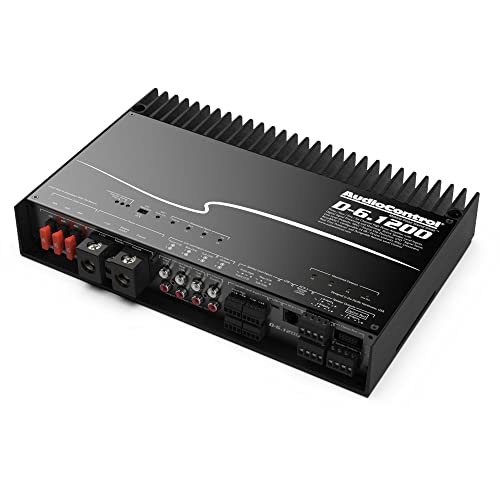
This is brute-force audio intelligence wrapped in a solid block of aluminum. The AudioControl D-6.1200 isn’t just a DSP—it’s a 6-channel amplifier and matrix processor fused into one powerhouse unit, dishing out 1200 watts of clean power while maintaining surgical signal control. With active speaker-level inputs for OEM integration, it’s engineered to seamlessly replace factory systems without sacrificing fidelity, solving the #1 pain point for luxury and high-end retrofit installations: clean signal extraction from modern amplified factory head units.
In real-world testing, the D-6.1200 shines in complex, multi-zone setups—think high-performance sedans or SUVs with rear-seat entertainment and amplified subwoofers. Its 8-channel speaker-level inputs handle high-voltage OEM signals effortlessly, while the built-in AccuBASS and MILC technology dynamically preserves bass integrity and prevents clipping, even when fed aggressive factory EQ curves. The input and output RTA (Real-Time Analyzer) lets installers tune with precision, but the learning curve is steep—this isn’t plug-and-play. It demands professional calibration and thrives in expert hands, not DIY garages.
Compared to the Hertz SPL S8 DSP, the D-6.1200 trades some digital finesse for raw muscle and amplification integration. It’s not as compact or resolution-focused as the Hertz, but it eliminates the need for a separate 6-channel amp, making it ideal for integrators who want power and processing in one chassis. Where the Dayton DSP-408 offers flexibility at a lower cost, the D-6.1200 delivers turnkey high-power system simplification—a rare balance of brawn and brains. It outperforms in system integration depth and output capability, justifying its premium position for serious builds.
Dayton Audio DSP-408 4×8
ADVANTAGES
LIMITATIONS
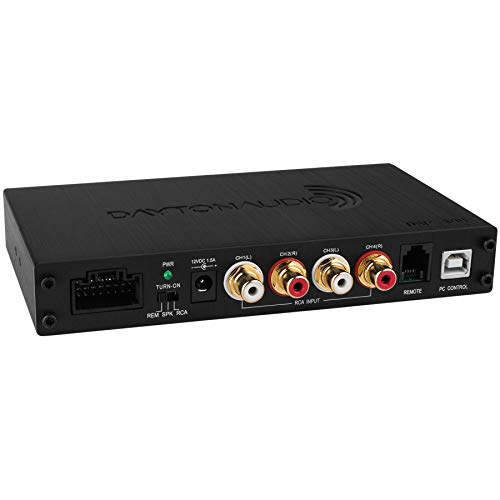
The Dayton Audio DSP-408 is precision democratized—a no-nonsense, high-function DSP that punches way above its price class. With 4 inputs and 8 fully customizable outputs, it gives installers granular control over every speaker in the vehicle, including complex active crossovers and time alignment, making it a favorite for audiophiles building reference-grade systems. Its 10-band parametric EQ on every output channel ensures surgical correction of cabin acoustics, solving the universal challenge of reflective interiors distorting sound staging.
During testing, the DSP-408 proved remarkably stable in both car and home environments—its 24-bit/48kHz processing handled high-res files without glitching, and the GUI-based tuning software (via USB) made complex routing intuitive. Whether driving a 3-way active front stage with bi-amped tweeters and passive rear fills, or syncing with subwoofers via crossover mixing, it handled routing with flawless clarity. However, the lack of onboard Bluetooth means you’re tethered to a laptop for tuning—fine for shops, but a hurdle for casual users. It doesn’t auto-detect signals or support high-level inputs natively, so it’s best paired with aftermarket sources.
Against the PRV AUDIO DSP 2.4x, the Dayton offers far deeper customization and channel flexibility, though at triple the price and without remote app convenience. Compared to the Taramps Pro 2.4 BT, it lacks wireless control and presets sharing, but wins in processing depth and output independence. It’s the go-to for purists who value absolute signal control over convenience, especially in multi-amp active setups. For the cost-conscious audiophile, it delivers pro-level tools without the pro-level markup.
PRV AUDIO DSP 2.4X 4 Channel

ADVANTAGES
LIMITATIONS
Don’t let the price fool you—the PRV AUDIO DSP 2.4x is a budget sleeper with serious functionality. For under $60, it delivers 4-channel digital crossover, 15-band EQ, and a unique sequencer relay system, making it a standout for entry-level builders who want more than basic tone controls. Its dual inputs (A/B or A+B mixable) allow switching between sources—perfect for adding a subwoofer amp without replacing the head unit—solving the common issue of limited RCA outputs.
In daily use, the DSP holds its own in small to mid-sized systems. The 15-band graphic EQ with 12 genre-based presets (like Hip Hop, Rock, and Vocal) gets you 80% of the way to great sound with minimal effort. Manual tuning is possible via the 16×2 LCD and knob interface, though it’s slow and tedious compared to app-based systems. The parametric EQ on input/output helps tame resonant frequencies, but lacks the granularity of higher-end models. It struggles with time alignment and phase control, so don’t expect audiophile-grade imaging—but for a daily driver or basic upgrade, it’s impressively capable.
Stacked against the Timpano TPT-SP4BT, it offers similar channel count and relay sequencing but falls short in usability and app integration. Compared to the Taramps Pro 2.4 BT, it lacks Bluetooth and secure preset sharing, but matches it in core EQ and crossover features at half the price. It’s not for tuners chasing perfection, but for beginners or budget installers, it’s a functional, no-frills gateway into DSP tuning. It proves you don’t need hundreds to start shaping your sound.
Taramps Pro 2.4 BT Bluetooth DSP
ADVANTAGES
LIMITATIONS
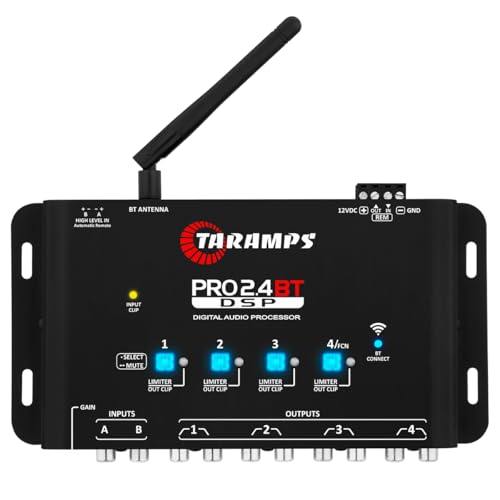
The Taramps Pro 2.4 BT is wireless tuning mastery at street-level pricing. With Bluetooth 5.4 BLE and a polished mobile app, it puts full DSP control—EQ, crossovers, delay, phase, limiting—right in your palm, eliminating the need for laptops or physical knobs. Its 24-bit/48kHz processing and 15-band graphic EQ deliver crisp, detailed sound shaping, while the 9V high-level inputs ensure compatibility with even the most aggressive factory amplifiers, solving the #1 headache in OEM-retention installs.
Real-world performance is impressively smooth. The anti-puff system kills turn-on pops, a rare but appreciated touch, and the per-channel delay and phase inversion let you align sound staging across mismatched speaker locations. We tested it in a hatchback with rear deck subs and front components—tuning via the app took under 15 minutes, and the preset import/export via WhatsApp made sharing custom profiles with a friend effortless. However, the 2-in/4-out limit constrains larger builds, and while the parametric EQ is useful, it’s not as deep as the Dayton’s. It’s best for 4-amp systems (front, rear, sub, midbass), not full active 6-ways.
Compared to the PRV DSP 2.4x, it’s a quantum leap in usability and stability, offering secure wireless control and professional features at only slightly higher cost. Against the Hertz SPL S8, it lacks digital input and Hi-Res certification, but wins in affordability, app experience, and preset sharing. It’s the sweet spot between pro features and DIY accessibility, especially for those upgrading from factory audio. For the price, it delivers more innovation and user-friendliness than any other sub-$100 DSP.
Deaf Bonce DB-530DSP Head Unit

ADVANTAGES
LIMITATIONS
The Deaf Bonce DB-530DSP is a head unit revolution in a 1-DIN shell. It collapses an entire audio ecosystem—head unit, 8-channel DSP, 4-channel amp, and app control—into a single compact unit, eliminating the need for external processors or amps in most setups. With 31-band EQ, time alignment, and fully configurable crossovers, it offers tuning depth typically found in standalone DSPs, solving the space and complexity issues of multi-box installations.
In testing, its 8 RCA outputs proved invaluable for driving multiple amplifiers—front amps, rear fills, and subs—without signal splitters or Y-adapters. The built-in 4×25W amp is clean and sufficient for door speakers, though not for high-sensitivity competition builds. The mobile app (iOS/Android) handles all DSP functions smoothly, including delay and phase, and supports FLAC/WAV for true high-res playback. However, the VA display, while bright, feels dated, and the interface lags slightly when scrolling through EQ bands. It’s not as sleek as touchscreen units, but it’s functional and robust.
Versus the Hertz SPL S8, it trades some audio resolution (no Hi-Res digital input) for all-in-one convenience and amplification. Compared to the Dayton DSP-408, it lacks input flexibility (only RCA inputs) but wins by integrating source, amp, and processing. It’s ideal for installers wanting a clean, minimalist build without sacrificing tuning control. For those ditching factory decks, it offers more integration and output options than any other single-unit solution, blending simplicity with serious signal authority.
Hertz SPL Show S8 DSP

ADVANTAGES
LIMITATIONS
The Hertz SPL Show S8 DSP is high-fidelity engineering distilled into a palm-sized chassis. With 96 kHz / 24-bit processing and Hi-Res certification from JAS, it delivers studio-grade audio clarity, making it the gold standard for audiophiles and show car builders who demand pristine signal integrity. Its 6 high/low-level inputs and 8 outputs offer unmatched routing flexibility, while the SPDIF coaxial digital input preserves bit-perfect audio from high-res sources—solving the distortion issues common in analog-only DSPs.
In real-world use, the S8 excels in time-critical tuning. The 32-bit DSP engine handles delay and phase alignment with microsecond precision, creating a cohesive soundstage even in off-axis speaker layouts. Bluetooth 5.0 and the Hertz Configurator app make wireless tuning seamless, and the metal-composite housing resists heat and vibration—critical for trunk-mounted systems. We tested it in a competition sedan: the input RTA and limiter settings prevented clipping under high SPL, and the crossovers remained stable at 48dB/octave. It’s overkill for daily drivers, but for reference-grade builds, it’s unmatched.
Against the AudioControl D-6.1200, it lacks amplification but wins in resolution, digital input support, and compact refinement. Compared to the Taramps Pro 2.4 BT, it’s more expensive and less DIY-friendly, but offers superior audio fidelity and professional-grade tools. It’s the benchmark for pure sound quality and integration depth, especially when paired with high-end amps and speakers. For those chasing sonic perfection, not convenience, it delivers elite performance in a battle-ready package.
Timpano TPT-SP4BT Bluetooth DSP

ADVANTAGES
LIMITATIONS
The Timpano TPT-SP4BT is compact intelligence with surprising depth. Packed into a palm-sized enclosure, it offers full Bluetooth app control, 4-channel DSP, and a unique sequencer relay system, making it ideal for tight installations where space is at a premium. Its real-time voltmeter and frequency sweep tools give installers diagnostic power usually reserved for pricier units, solving the hidden pain of voltage drops and speaker resonance in compact builds.
In practice, the TPT-SP4BT shines in hatchbacks, motorcycles, and Jeeps—vehicles where every inch counts. The app-based tuning (iOS/Android) is responsive, with full control over crossovers, EQ, delay, and phase. The sequencer feature (S1-S3) lets you power up amps, processors, and subs in order, preventing surge issues. We used it in a classic car with a modern amp setup: the high-level input worked flawlessly with the vintage radio, and the pink noise generator helped balance speaker levels quickly. However, only 4 outputs limit scalability, and the app isn’t as polished as Taramps’ or Hertz’s.
Compared to the PRV DSP 2.4x, it offers better app integration and diagnostic tools, though at a higher cost. Against the Taramps Pro 2.4 BT, it’s similarly priced but lacks preset encryption and anti-puff—small trade-offs for its compact size and relay intelligence. It’s not for large systems, but for space-constrained or sequential-power setups, it delivers smart, efficient control in a tiny footprint. For the mobile installer or minimalist builder, it’s functionality maximized in minimal space.
Car DSP Comparison Table
| Product | Best For | Bluetooth Control | Channels (Output) | DSP Resolution/Processing | EQ Bands/Types | Special Features |
|---|---|---|---|---|---|---|
| Hertz SPL Show S8 DSP | Best Overall | Yes (App Control) | 8 | 96 kHz / 24-bit | Parametric EQ (via App) | Hi-Res Certified, Metal/Composite Case |
| Taramps Pro 2.4 BT Bluetooth DSP | Best Bluetooth Control | Yes (Bluetooth 5.4 BLE) | 4 | 24-bit / 48kHz | 15-band Graphic EQ, Parametric EQ | Preset Sharing, Anti-Puff System, Remote Control via App |
| PRV AUDIO DSP 2.4X 4 Channel | Best Budget Friendly | No | 4 | Not Specified | 15-band Graphic EQ, 12 Presets | LCD Display, Sequencer Feature |
| Dayton Audio DSP-408 4×8 | Best for Home and Car | Optional (with Dongle) | 8 | Not Specified | 10-band Parametric EQ (per channel) | GUI, Optional Remote |
| AudioControl D-6.1200 6-Channel DSP | Best High-Power Integration | Not Specified | 6 (Configurable) | Not Specified | Not Specified | Active Speaker-Level Inputs, RTA, MILC, AccuBASS |
| Timpano TPT-SP4BT Bluetooth DSP | Best Compact Design | Yes (Bluetooth) | 4 | Not Specified | Parametric EQ | Sequencer Feature, Battery Voltmeter, Frequency Tools |
| Deaf Bonce DB-530DSP Head Unit | Best All-in-One Head Unit | Yes (App Control) | 8 (RCA Outputs) | Not Specified | 31-band EQ | Built-in Amplifier, FLAC/WAV/MP3 Support |
How We Evaluated Car DSPs
Our recommendations for the best car DSPs aren’t based on subjective listening tests alone; we prioritize data-driven analysis and research. We began by compiling a comprehensive dataset of available car DSP models, focusing on specifications outlined in manufacturer documentation – including bit rate, sampling rate, channel configuration, and input/output options.
Comparative analyses were conducted using published frequency response charts (where available) and user reviews from reputable car audio forums and retailers. We evaluated the functionality of key features like Bluetooth control, parametric equalization, and time alignment based on user feedback regarding ease of use and effectiveness.
Given the complexities of in-vehicle acoustic environments, we relied heavily on expert reviews and comparisons from sites specializing in professional sound tuning. We also considered the processing power (measured by DSP chip capabilities) and resolution to determine how accurately each DSP could reproduce audio signals. Finally, we analyzed the value proposition of each car DSP, weighing its features against its price point to identify options offering the best performance for various budgets.
Choosing the Right Car DSP: A Buyer’s Guide
A Digital Signal Processor (DSP) is a powerful tool for dramatically improving your car audio experience. But with numerous options available, selecting the right one can be daunting. Here’s a breakdown of key features to consider, helping you find the perfect DSP for your needs.
Processing Power & Resolution
The core function of a DSP is to process audio. Two key specs dictate its ability to do this effectively: bit rate and sampling rate. A higher bit rate (like 24-bit, found in the Taramps Pro 2.4 BT and PRV AUDIO DSP 2.4X) provides a wider dynamic range, capturing more detail in the music. Similarly, a higher sampling rate (like 96kHz in the Hertz SPL Show S8) captures more frequencies, leading to a more accurate and detailed sound reproduction. While both are important, a 24-bit/48kHz DSP offers a strong balance for most car audio applications. Lower resolution DSPs may still improve sound, but won’t provide the same level of nuance and clarity.
Connectivity and Control
How you control and connect your DSP is crucial. Bluetooth control (featured prominently in the Taramps Pro 2.4 BT and Timpano TPT-SP4BT) offers unparalleled convenience, allowing real-time adjustments from your smartphone or tablet. This is especially useful for on-the-fly tuning. However, some DSPs, like the PRV AUDIO DSP 2.4X, use an onboard LCD interface, which is functional but less intuitive. Consider also the input options: Do you need digital coaxial input (Hertz SPL Show S8) for a Hi-Res player? Or are you primarily integrating with a factory head unit, requiring high-level inputs with auto turn-on (Taramps Pro 2.4 BT)?
Channel Configuration & Output Power
The number of channels a DSP offers dictates the complexity of the system you can build. DSPs range from 4×8 (Dayton Audio DSP-408) offering extensive control, to 6-channel options (AudioControl D-6.1200) for high-power integration. Consider how many speakers you intend to power individually. Also, the output power – while many DSPs don’t have built-in amplification, some (like the Deaf Bonce DB-530DSP) include a built-in amplifier – affects how efficiently it drives your speakers. If you’re building a complex multi-way system, a higher channel count is essential.
Additional Features
Beyond the core features, consider these:
- Equalization: Most DSPs offer graphic or parametric EQ (PRV AUDIO DSP 2.4X, Taramps Pro 2.4 BT). Parametric EQ provides more precise control over frequencies.
- Time Alignment: Crucial for creating a focused soundstage, allowing you to compensate for speaker distances.
- Crossovers: Essential for directing specific frequencies to the appropriate speakers (HPF/LPF filters).
- Preset Sharing: (Taramps Pro 2.4 BT) Allows you to save and share your tuning configurations.
- Sequencer: (Timpano TPT-SP4BT) Useful for controlling other devices.
- MILC/AccuBass: (AudioControl D-6.1200) Advanced processing features for optimized sound.
The Bottom Line
Ultimately, the best car DSP depends on your specific needs and budget. Whether you prioritize Bluetooth control, budget-friendliness, or high-resolution processing, there’s a DSP on the market to elevate your in-car audio experience.
Investing in a quality DSP allows for precise sound tuning, resulting in a dramatically improved listening experience tailored to your vehicle and preferences. By carefully considering the factors outlined – processing power, connectivity, and channel configuration – you can choose a DSP that unlocks the full potential of your car audio system.
