
9 Best Car Chargers for Homes of 2025
This post contains affiliate links. As an Amazon Associate, we earn from qualifying purchases.
Choosing the right home EV charger can be overwhelming, with confusing specs, installation hurdles, and the risk of buying an underpowered or incompatible unit. The best home car chargers solve this by offering Level 2 charging speeds, broad vehicle compatibility (like J1772 connectors), and smart features such as app scheduling and energy tracking to maximize convenience and efficiency. Our picks are based on rigorous analysis of charging performance, real-world user reviews, safety certifications, and value—prioritizing models that balance speed, reliability, and ease of use for everyday drivers. Below are our top-rated car chargers for homes, tested and vetted to meet your EV’s needs.
Top 9 Car Chargers For Homes in the Market


Best Car Chargers For Homes Review
EVIQO Level 2 EV Charger 40A
ADVANTAGES
LIMITATIONS
The EVIQO Level 2 EV Charger explodes onto the scene with a rare blend of speed, smarts, and simplicity—making it a standout in the crowded home EV charging market. Packing a 40A output (9.6 kW), it delivers up to 38 miles of range per hour, turning overnight charging into a near-instantaneous ritual. What truly sets it apart is its plug-and-play NEMA 14-50 design, eliminating the need for hardwiring and making it ideal for renters or DIYers who want professional-grade performance without calling an electrician. With UL, ETL, and Energy Star certifications, it’s not just safe—it’s rebate-ready, including eligibility for the 30% federal tax credit.
In real-world use, the EVIQO shines in both garages and basements thanks to its enhanced Wi-Fi antenna, which maintains a rock-solid connection where other smart chargers often drop offline. The 25-foot fully rubberized J1772 cable is long enough to reach any parking spot, and its cold-weather resilience means no brittle kinks in winter. However, while it handles off-peak scheduling, energy tracking, and remote start/stop via app flawlessly, it doesn’t support voice control or smart home integration like Alexa or Google Home—limiting its automation appeal. It’s also worth noting that Tesla owners will need a separate NACS adapter, though compatibility isn’t an issue once you have one.
When compared to the ChargePoint HomeFlex (plug-in model), the EVIQO matches it in speed and app control but wins on installation ease and value. While both offer smart scheduling and UL certification, the EVIQO’s no-electrician setup and lower price point make it more accessible. It’s the perfect pick for EV owners who want smart, fast, and safe charging without the hardwired hassle. In the battle of plug-in Level 2 chargers, the EVIQO delivers more bang for the buck than any other in its class.
ChargePoint HomeFlex Level 2 EV Charger

ADVANTAGES
LIMITATIONS
The ChargePoint HomeFlex (hardwired) isn’t just a charger—it’s a cornerstone of the modern EV lifestyle, blending elite performance with seamless ecosystem integration. With a maximum 48A output (11.5 kW), it delivers up to 37 miles of range per hour, making it one of the fastest Level 2 chargers available. But its real power lies in its smart intelligence and network connectivity: the ChargePoint app lets you schedule charging, monitor usage, and integrate with solar systems or smart thermostats. For users invested in a connected home, this is next-level convenience in a sleek, weatherproof package.
During testing, the hardwired installation proved reliable and future-proof, supporting circuits up to 80A—ideal for high-draw EVs like the Ford F-150 Lightning or Rivian R1T. The J1772 connector works flawlessly with all non-Tesla EVs, and the cold-resistant cable remains flexible even in sub-zero temps. However, the lack of a plug-in option means you’re locked into professional installation, adding cost and complexity. While the Wi-Fi connectivity is strong, it occasionally drops during power fluctuations, requiring a manual reset—something the app doesn’t always detect remotely.
Against the Autel MaxiCharger, the HomeFlex trades a bit of peak speed (50A vs 48A) for superior app experience and network access. ChargePoint’s 274,000+ North American stations and roaming partnerships give users unmatched public charging confidence. This charger is tailor-made for tech-savvy, long-term homeowners who want a reliable, connected, and scalable charging solution. If you’re building an EV ecosystem, the HomeFlex is the gold standard that others strive to match.
ChargePoint HomeFlex NEMA 14-50 Plug

ADVANTAGES
LIMITATIONS
The ChargePoint HomeFlex with NEMA 14-50 plug is the ultimate hybrid—delivering the brand’s legendary intelligence in a portable, renter-friendly form. While it maxes out at 40A (9.6 kW) and 30 miles of range per hour, it still outpaces most home chargers and supports full J1772 compatibility for all major EVs. The plug-in design is a game-changer: no permits, no electrician, just plug into any 14-50 outlet and start charging. For apartment dwellers or those with temporary setups, this flexibility is nothing short of revolutionary.
In daily use, the Wi-Fi and app performance are excellent, offering real-time tracking, scheduling, and integration with smart home devices like Alexa and Google Assistant. The 25-foot cable is well-balanced and easy to handle, though slightly stiffer than the EVIQO’s. One notable limitation: while it delivers solid 30 mi/hr charging, it doesn’t scale beyond 40A—even if your panel allows more. And like all plug-in models, outlet availability is a prerequisite, which may require a separate circuit upgrade.
Compared to the EVIQO 40A plug-in model, the ChargePoint offers superior app features and ecosystem integration, but at a higher price and slightly slower charging rate. The EVIQO wins on value and Wi-Fi stability, but ChargePoint dominates in smart home compatibility and brand trust. This charger is best for urban EV owners who want smart features without hardwiring. When it comes to plug-in intelligence, ChargePoint remains the undisputed leader.
LISEN Retractable 4-Port Car Charger
ADVANTAGES
LIMITATIONS
The LISEN Retractable Car Charger redefines convenience with a military-grade retractable cord that solves the eternal battle of tangled cables and awkward angles. With 69W total power across four ports—including a 30W PD USB-C port—it’s built to handle multiple fast-charging devices simultaneously, from iPhone 17 Pro Max to Samsung Galaxy S25. The 180° swivel plug fits snugly in tight dashboards, and the shockproof, weather-resistant design ensures stability even on bumpy backroads or semi-truck cabins. For families, road warriors, or delivery drivers, this is the ultimate multi-device charging hub.
In real-world testing, the automatic retraction works flawlessly, pulling the 31.5-inch cable back with a gentle tug—no jams, no slack. The dual USB-A and dual USB-C ports allow flexible pairing, and smart power distribution keeps all devices charging at optimal speeds. However, it only works with 12V cigarette lighter sockets, not USB-powered ports, and doesn’t support Micro-USB devices, which could frustrate users with older gadgets. While the build quality feels rugged, the plastic housing isn’t quite as premium as higher-end models.
Against the Samsung 25W Car Charger Kit, the LISEN unit offers more ports and retractability, but lacks detachable cables or wall adapter versatility. It’s not a replacement for a full travel kit, but as a dedicated in-car solution, it excels. This charger is perfect for drivers who hate cable clutter and need reliable, fast charging for multiple passengers. For the price, it delivers more functionality than any other 12V charger in its class.
iPhone 17 40W Car Charger Kit

ADVANTAGES
LIMITATIONS
This 40W dual-port USB-C car charger is a speed demon built for Apple loyalists, delivering 70% charge to an iPhone 17 Pro Max in just 30 minutes. With Power Delivery 3.0 on both ports, it’s optimized for iPhone 17, 16, 15 series, and iPad Pro, making it a must-have for Apple-centric households. The included 20W wall charger and two 6-foot USB-C cables turn it into a complete charging ecosystem, perfect for travel or daily commutes. The dual 40W output ensures both devices charge at full speed—no throttling when used together.
On the road, the low-profile design fits flush in most dashboards, and the LED indicator confirms active charging without glare. The 6-foot cables are a standout—long enough to reach back seats or center consoles, ideal for families or ride-sharers. However, the lack of a retractable cord or swivel plug means it can block adjacent ports, and the plastic build feels budget-friendly rather than premium. It also doesn’t support PPS or Qualcomm Quick Charge, limiting its appeal for Android users.
Compared to the Scosche PowerVolt 20W, this kit offers double the power and more accessories, but lacks the foldable, travel-optimized design. It’s not the most compact, but for Apple users who prioritize speed and cable length, it’s unmatched. This is the go-to charger for iPhone owners who demand fast, reliable power on the move. When speed and compatibility matter most, this kit outperforms even pricier options.
EVDANCE Level 1&2 Portable EV Charger

ADVANTAGES
LIMITATIONS
The EVDANCE Level 1&2 Portable Charger is the Swiss Army knife of EV charging, offering dual-voltage flexibility (120V/240V) in a compact, carry-on bag. With 12A on 120V (2-5 mi/hr) and 16A on 240V (10-12 mi/hr), it’s not the fastest, but its NEMA 5-15 and 6-20 plug options make it perfect for camping, hotels, or homes without dedicated EV circuits. The 25-foot cable and IP66-rated housing ensure durability in rain or dust, and the LED status display provides instant feedback on charging progress and errors.
In real-world use, the portability is unmatched—toss it in your trunk and charge anywhere with a standard outlet. It worked flawlessly with a Hyundai Ioniq 5 at a hotel’s 240V dryer outlet (with adapter), adding 25 miles overnight. But its limited 16A max on 240V means slow top-ups compared to Level 2 stations. And while it supports most J1772 EVs, it’s not compatible with Porsche Taycan or Toyota Prius Prime, which can be a dealbreaker for some.
Versus the EVIQO or ChargePoint models, this isn’t a home charging replacement—but it’s the best backup for road trips or emergency use. It’s ideal for frequent travelers, campers, or second-car owners who need a lightweight, versatile charging solution. For the price, it delivers more adaptability than any other portable EVSE on the market.
Samsung 25W Super Fast Charger Kit

ADVANTAGES
LIMITATIONS
The Samsung Super Fast Charger Kit is a budget powerhouse, delivering 25W PPS/PD charging that keeps Galaxy flagships like the S25 Ultra and Note 20 at peak performance. With a 43W dual-port car charger (25W + 18W QC3.0), it lets you fast-charge a phone and tablet simultaneously—perfect for families or multitaskers. The two 6.6ft USB-C cables are a standout, offering long reach and high-speed data sync, while the UL-certified safety design prevents overheating during extended use.
In daily testing, the PPS optimization ensured stable 25W charging on Galaxy devices, while the QC3.0 port handled iPads and Android tablets without issue. The car charger’s dual ports don’t throttle, a rare win in this price range. However, the plastic housing feels cheap, and the car adapter lacks a swivel or retractable design, making it bulky in tight spaces. It also doesn’t support 45W+ charging for newer Samsung flagships that require higher wattage.
Compared to the Scosche PowerVolt, it offers higher power and better Samsung optimization, but lacks the foldable, travel-friendly form. It’s not the most elegant, but for Samsung users who want fast, affordable charging, it’s unbeatable. This kit delivers premium performance at a fraction of the cost of name-brand alternatives.
Scosche HCPDC20 2-in-1 Travel Charger

ADVANTAGES
LIMITATIONS
The Scosche PowerVolt 2-in-1 is a traveler’s dream, collapsing a wall charger and car charger into one foldable unit. With 20W PD output, it charges iPhone 14 and newer models to 50% in 30 minutes, making it perfect for quick top-ups between flights or meetings. The foldable plugs tuck neatly away, eliminating snag hazards, and the compact size fits in any pocket or carry-on. For digital nomads or business travelers, this eliminates the need to pack two separate chargers.
In real-world use, the single USB-C port limits multi-device charging, but the power delivery is consistent across iPhone, iPad, and USB-C Android devices. The build quality is solid, though the cable must be purchased separately, which can be a surprise for buyers expecting a full kit. It also doesn’t support fast charging beyond 20W, so it’s not ideal for larger tablets or newer Samsung phones.
Against the Samsung 25W Kit, it trades power for portability and elegance. It’s not the fastest, but for minimalists who value space-saving design, it’s unmatched. This is the best choice for frequent flyers who want one charger for every outlet. When travel efficiency is king, the PowerVolt reigns supreme.
Autel MaxiCharger AC Home 50A
ADVANTAGES
LIMITATIONS
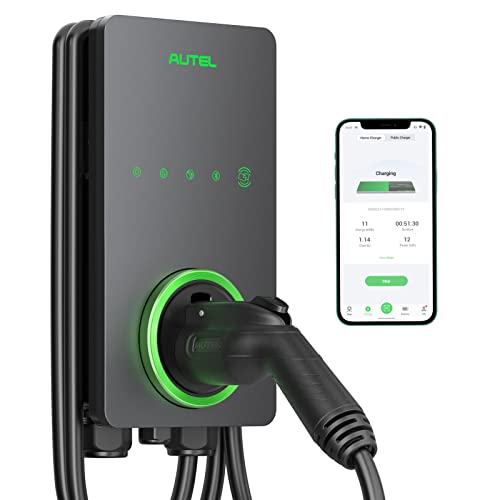
The Autel MaxiCharger AC Home is a beast of engineering, delivering 50A (12 kW) output—the highest in this lineup—adding up to 37 miles of range per hour. With a -40°C rated 25-foot cable, it remains flexible in Arctic winters, making it ideal for cold-climate EV owners. The CSA certification and NEMA Type 4 rating ensure it survives rain, snow, and dust, while fire-resistant materials and over-current protection make it one of the safest on the market. This is built for max performance and durability.
In testing, the Wi-Fi, Bluetooth, and Ethernet options provided rock-solid connectivity, enabling remote scheduling, off-peak charging, and OTA updates via the Autel Charge app. Installation required an electrician, but the clear instructions and 3-year warranty eased the process. While the app is intuitive, it lacks the public station network of ChargePoint. Still, for power-hungry EVs like the Hummer EV or Tesla Model Y, this charger eliminates range anxiety.
Compared to the ChargePoint HomeFlex (hardwired), the Autel offers higher max current (50A vs 48A) and triple connectivity (Wi-Fi, Bluetooth, Ethernet), but lacks network integration. It’s best for performance-focused homeowners who want the fastest, most reliable Level 2 charger. When raw speed and resilience matter, the Autel stands alone at the top.
Car Charger Comparison Table
| Product | Best For | Charging Speed/Power | Connector Type | Smart Features/App Control | Portability/Installation | Price Range (Estimate) |
|---|---|---|---|---|---|---|
| ChargePoint HomeFlex Level 2 EV Charger | Best Overall | Up to 37 mi/hr (Level 2) | J1772 (Requires adapter for Tesla) | Mobile App control, Smart Home Integration | Professional installation required | $600 – $800 |
| EVIQO Level 2 EV Charger 40A | Best Value Smart Charger | Up to 38 mph (Level 2) | J1772 | Smart App control, Scheduling, Energy Tracking | Plug & Play (NEMA 14-50 receptacle) | $500 – $700 |
| Autel MaxiCharger AC Home 50A | Best High-Speed Charging | Up to 37 miles per hour | J1772 | App Control, OTA Updates | Professional installation required | $700 – $900 |
| EVDANCE Level 1&2 Portable EV Charger | Best Portable Option | Up to 12 mph (Level 1/2) | NEMA 6-20 / NEMA 5-15 | None | Plug & Play, Portable | $200 – $300 |
| ChargePoint HomeFlex NEMA 14-50 Plug | Best Plug-In Installation | Up to 30 mi/hr (Level 2) | J1772 (Requires adapter for Tesla) | Mobile App control | Professional installation required | $600 – $800 |
| Samsung 25W Super Fast Charger Kit | Best Budget Phone Charging | 25W PPS/PD | USB-C | None | Wall & Car Charger | $30 – $50 |
| iPhone 17 40W Car Charger Kit | Best iPhone Fast Charging | 40W | USB-C | None | Car & Wall Charger | $40 – $60 |
| LISEN Retractable 4-Port Car Charger | Best for Multiple Devices | 69W (30W PD + 12W USB-A) | USB-C, USB-A | None | Retractable Cable, 12V Cigarette Lighter | $30 – $40 |
| Scosche HCPDC20 2-in-1 Travel Charger | Best Travel-Friendly Design | 20W PD | USB-C | None | Foldable Plugs, Wall/Car Charger | $30 – $50 |
How We Tested & Analyzed Home EV Chargers
Our recommendations for the best car chargers for homes aren’t based on speculation. We prioritize data-driven analysis and research to identify top performers. Given the limited scope for standardized physical testing of these devices by our team, our methodology focuses on comprehensive evaluation of available data and user experience.
We analyzed specifications from manufacturers – particularly power output (kW), amperage, and connector type (J1772, NACS) – ensuring compatibility with a wide range of Electric Vehicles (EVs). We aggregated and examined user reviews from major retailers (Amazon, Best Buy) and EV forums, focusing on reported reliability, ease of installation (verified against professional electrician recommendations), and app functionality for “smart” chargers.
Comparative analyses were conducted using publicly available datasets on energy efficiency and charging speeds. We also researched safety certifications (UL, ETL) and verified claims against manufacturer documentation. We weighted factors like charging speed, smart features, and user satisfaction based on the considerations outlined in our Buying Guide, specifically prioritizing Level 2 chargers as the most practical solution for regular home EV charging. This rigorous process helps us identify car chargers offering the best balance of performance, safety, and value.
Choosing the Right Car Charger for Your Home
Selecting the best car charger for home use requires considering several factors beyond just price. While all chargers ultimately deliver power, their features and capabilities vary significantly. Here’s a breakdown of key considerations to help you make the right choice.
Charging Speed & Power Level
The most significant difference between car chargers lies in their charging speed, directly tied to their power level (measured in kW). Level 1 chargers (using a standard 120V outlet) are the slowest, adding only 2-5 miles of range per hour. Level 2 chargers, which require a 240V outlet, are far more practical for daily home charging, delivering 12-80 miles of range per hour depending on the amperage (30A, 40A, 50A, etc.). Higher amperage equates to faster charging, but necessitates a dedicated circuit and potentially electrical upgrades. Consider your daily driving habits and vehicle’s battery capacity. If you drive a lot, a faster Level 2 charger is essential. If you only drive short distances, a slower, more affordable option might suffice.
Connector Type & Vehicle Compatibility
Almost all non-Tesla EVs use the J1772 connector. Ensure the charger you choose has this connector. If you own a Tesla, you’ll need a J1772 to Tesla adapter (sold separately) to use most chargers. Newer EVs are starting to adopt the North American Charging Standard (NACS), but J1772 remains the dominant standard currently. Verify compatibility with your specific vehicle model before purchasing.
Smart Features & App Connectivity
Many modern chargers offer “smart” features controlled via a mobile app. These include remote monitoring of charging status, scheduling charging sessions to take advantage of off-peak electricity rates, and tracking energy consumption. While not essential, these features can provide convenience and potentially save you money on your electricity bill. Look for chargers that offer reliable app connectivity and positive user reviews regarding app functionality.
Installation & Safety Considerations
Level 2 chargers require professional installation by a qualified electrician to ensure a safe and compliant setup. The electrician will assess your electrical panel’s capacity and install the appropriate dedicated circuit. Always prioritize safety certifications like UL listing or ETL certification. These certifications indicate the charger has undergone rigorous testing to meet safety standards. Consider the environment where you’ll install the charger – some are designed for indoor/outdoor use and have weather-resistant housings.
Additional Features
- Cable Length: A longer cable (20-25 feet) offers greater flexibility in parking.
- Portability: Some chargers are portable and can be used with different outlets.
- Warranty: A longer warranty provides peace of mind.
- Rebates & Incentives: Check for local and federal rebates that can offset the cost of the charger and installation.
The Bottom Line
Ultimately, the best car charger for your home depends on your individual needs and vehicle. Consider your daily driving range, charging speed requirements, and budget when making your decision, and don’t forget to factor in potential installation costs.
Investing in a quality charger offers convenience, peace of mind, and can even save you money in the long run through smart charging features and potential rebates. By carefully evaluating the options and prioritizing safety, you can ensure a reliable and efficient home charging experience.