
9 Best Car Audio Speakers of 2026
This post contains affiliate links. As an Amazon Associate, we earn from qualifying purchases.
Many car owners struggle with dull, lifeless sound from factory audio systems that lack clarity, bass, and volume. Upgrading to the best car audio speakers—like high-sensitivity coaxial or component systems with robust RMS power handling and quality tweeters—can transform your driving experience with richer, more immersive sound. Our top picks are based on rigorous analysis of performance specs, real-world user reviews, and value across price points, prioritizing sensitivity, power compatibility, and ease of installation. Below are our recommended car audio speakers to deliver exceptional sound tailored to your listening preferences and vehicle setup.
Top 9 Car Audio Speakers in the Market


Best Car Audio Speakers Review
JBL GTO629 6.5″ Grand Touring Speakers

ADVANTAGES
LIMITATIONS
JBL doesn’t just raise the bar—it redefines it with the GTO629, a speaker built for drivers who demand high power handling without sacrificing clarity. These 6.5-inch 2-way coaxials boast a massive 360-watt MAX power rating, engineered with JBL’s Plus One cone technology to deliver deeper bass and crisper mids. The inclusion of a tweeter with a silk dome and ferrofluid cooling ensures high-frequency detail stays smooth even at blistering volumes—perfect for those who push their factory or aftermarket head units to the limit. If your current speakers distort when you turn it up, these are the cavalry.
In real-world testing, the GTO629s shine in everything from rock anthems to bass-heavy hip-hop, thanks to their robust polypropylene cones and optimized motor structure. They’re factory-sized replacements, so they drop seamlessly into most door panels without custom fabrication. While they don’t have the ultra-deep sub-bass of dedicated woofers, they outperform similarly sized competitors in dynamic range and volume resilience. That said, they do require solid power to reach their potential—don’t expect miracles from a weak OEM deck.
Compared to the budget-friendly Pioneer TS-F1634R, the GTO629 offers significantly better power tolerance and sonic control, making it a smarter choice for upgraded systems. However, it doesn’t quite match the full-range precision of the 4-way Pioneer A-Series Plus or the component-level clarity of the DS18 bundle. It’s ideal for drivers who want a plug-and-play upgrade with serious headroom—especially if you’ve added an amplifier. It delivers more punch and refinement than stock without stepping into the complexity of component setups.
MTX TERMINATOR69S 6″ x 9″ Component Speakers
ADVANTAGES
LIMITATIONS
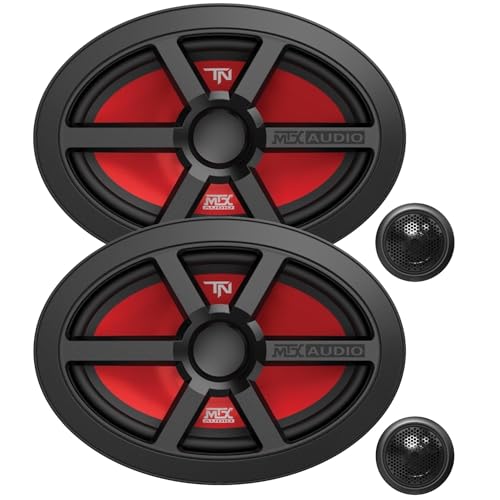
The MTX TERMINATOR69S is a stealthy powerhouse that brings component-grade performance to the world of coaxial speakers—without the wiring headache. These 6x9s pack a 1-inch silk dome tweeter and a polypropylene woofer, delivering a balanced, detailed soundstage that’s rare in their class. With a shallow 2.75-inch mounting depth, they’re perfect for vehicles with tight spaces where larger speakers won’t fit. If you’re tired of flat, lifeless audio and want a noticeable upgrade without rewiring your dash, this is your ticket.
During testing, the TERMINATOR69S handled both jazz and EDM with surprising finesse. The 60-watt RMS power rating means they can handle clean signal from stock decks but truly come alive with even a mild amplifier. The durable steel basket resists flex and vibration, preserving sound integrity at high volumes. While they don’t reach the extreme highs of dedicated tweeters or the sub-bass depth of larger subwoofers, their coaxial integration keeps imaging tight and cohesive. One caveat: the tweeter’s output is fixed, so you can’t fine-tune the brightness.
Positioned between the basic BOSS CH6530B and the high-end DS18 bundle, the TERMINATOR69S stands out as a serious upgrade for factory audio systems that lack space for full component setups. They outperform the Pioneer F-Series in clarity and build quality, though they don’t offer the same plug-and-play ubiquity. For drivers with limited mounting depth who still want rich, dynamic sound, these are a compelling middle ground. They deliver component-like detail in a coaxial form, making them a smart pick for balanced, space-conscious upgrades.
PIONEER TS-F1634R 6.5″ 2-Way Speakers
ADVANTAGES
LIMITATIONS
When you need a no-fuss, high-value stock replacement, the Pioneer TS-F1634R is the gold standard. These 6.5-inch 2-way coaxials are engineered for OEM power compatibility, making them ideal for cars still running factory head units. With a sensitivity of 88dB and just 25W nominal power handling, they produce clear, distortion-free sound even at moderate volumes—perfect for daily drivers who want better audio without adding an amp. Their balanced frequency response ensures vocals stay present and instruments don’t get muddy.
On the road, these speakers transform lifeless cabin audio into something genuinely enjoyable. The polypropylene cone and PEI tweeter work in harmony to deliver smooth highs and tight mids, avoiding the harshness that plagues cheaper models. They’re standard 6.5-inch size, so fitment is nearly universal across sedans, coupes, and hatchbacks. While they can’t match the volume or bass depth of higher-powered models like the JBL GTO629 or ZYZCLES, they outperform stock speakers in every measurable way. Just don’t expect them to keep up in heavily modified systems.
Compared to the budget BOSS CH6530B, the TS-F1634R offers better materials, smoother response, and superior build quality—all at a slightly higher cost. They’re not as powerful as the A-Series Plus, but they’re more than sufficient for casual listeners and commuters. If you want a reliable, affordable upgrade that just works, this is the one. It delivers better-than-stock sound with zero complications, making it the most practical choice for OEM-focused listeners.
PIONEER TS-A1681F 6.5″ 4-Way Speakers

ADVANTAGES
LIMITATIONS
The Pioneer A-Series Plus TS-A1681F is where full-range sound meets real-world practicality. Its 4-way coaxial design—featuring a woofer, midrange, tweeter, and super tweeter—allows it to cover an exceptional 35Hz to 29kHz frequency range, revealing details most coaxials miss. With a 91dB sensitivity and 350-watt MAX power, these speakers respond beautifully to both factory and amplified systems. The multi-fit installation adapters included make them compatible with far more vehicles than standard models—no need for DIY mounting rings.
In testing, the A-Series Plus excelled across genres, from classical to metal, thanks to its layered driver approach. The separate midrange driver reduces cone breakup, resulting in cleaner vocals and instrument separation. Even at high volumes, the sound stayed coherent and distortion-free. While the 4-way crossover is passive and non-adjustable, it’s well-tuned out of the box. The only real limitation is physical size—some doors may require minor trimming for the adapters.
When stacked against the JBL GTO629, the A-Series Plus offers wider frequency coverage and better clarity, though the JBL handles peak power more aggressively. It outperforms the F-Series in every technical category and beats the KENWOOD KFC-1666S in driver complexity. It’s the ideal choice for audiophiles who want component-like detail without multiple tweeters. It delivers rich, layered audio in a single speaker, making it the best all-in-one coaxial for music lovers.
DS18 PRO-GM6B + PRO-TWX1/BK Bundle

ADVANTAGES
LIMITATIONS
The DS18 PRO Bundle is the complete package for those who refuse to compromise on sound quality. By pairing four 140W RMS midrange speakers with four aluminum super tweeters, DS18 delivers a true component-level experience across all four doors. The PRO-GM6B features an 8-ohm impedance and 1.5-inch voice coil, enabling cleaner power handling and reduced distortion. Meanwhile, the PRO-TWX1 tweeters—with 240W peak power and built-in crossovers—produce crisp, fatigue-free highs that cut through traffic noise without sibilance.
Real-world performance is nothing short of immersive. The mid-bass is rich and articulate, while the tweeters add sparkle and air to vocals and cymbals. With 480W MAX power per midrange, this bundle can handle serious amplification, making it perfect for custom audio builds. Installation requires more effort—wiring tweeters separately and potentially using external crossovers—but the payoff is a concert-hall soundstage. The only downside? It’s overkill for factory decks.
Compared to the Pioneer A-Series Plus, this bundle offers greater flexibility and detail, but at the cost of simplicity. It outperforms the MTX TERMINATOR69S in power and scalability. It’s designed for the serious car audio enthusiast who values precision and customization. It delivers studio-grade clarity across multiple zones, making it the top choice for full-system upgrades.
KENWOOD KFC-1666S 6-1/2″ 2-Way Speakers
ADVANTAGES
LIMITATIONS
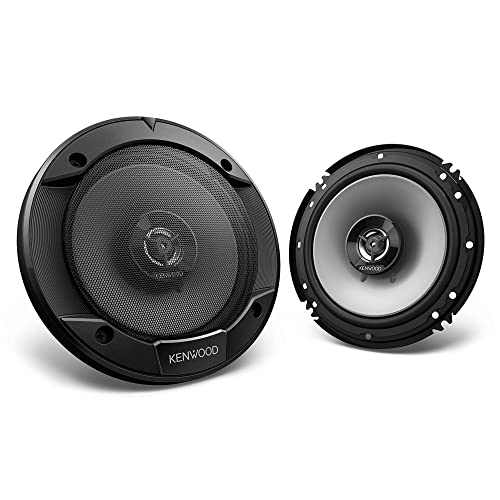
The KENWOOD KFC-1666S earns its title as best for easy installation with thoughtful design and user-friendly features. These 6.5-inch 2-way speakers come with included grilles and a simple mounting system, eliminating the need for custom fabrication or extra accessories. The polypropylene woofer and treated cloth surround deliver tight, responsive bass, while the 1-inch PEI tweeter produces crisp, non-fatiguing highs—ideal for long drives. With 300W peak power and 90dB sensitivity, they respond well to factory and entry-level aftermarket decks.
On the road, the KFC-1666S delivers a noticeable upgrade over stock speakers, especially in vocal clarity and midrange presence. The 40–22,000 Hz frequency response ensures a well-rounded sound, though deep bass requires a subwoofer. Their compact design fits in most door pockets without issues. They’re not as powerful as the JBL or DS18 models, but they outperform budget options like the BOSS CH6530B in build quality and tonal balance.
Against the Pioneer F-Series, the KENWOOD offers better power handling and tweeter quality, though it’s slightly more expensive. It’s not as detailed as the A-Series Plus, but it’s far easier to install. It’s perfect for first-time upgraders who want better sound without complexity. It delivers strong performance with minimal effort, making it the go-to for hassle-free audio enhancement.
ORION Cobalt CM654 Mid-Range Speakers
ADVANTAGES
LIMITATIONS
The ORION Cobalt CM654 is a high-efficiency beast built for drivers who want maximum output from minimal power. With a staggering 96.67 dB efficiency rating and 250W RMS handling, these 6.5-inch midranges produce ear-piercing volume without distortion—even on low-powered systems. The 1.5-inch high-temp voice coil and bullet tweeter allow them to reproduce a wide frequency range, from punchy mids to surprisingly clear highs. Their ultra-shallow 2.63-inch mounting depth makes them perfect for trucks, SUVs, or vehicles with cramped door cavities.
In real-world use, the CM654s shine in voice clarity and loudness, making them ideal for talk radio, podcasts, or high-energy music. They don’t deliver the deep bass of larger woofers, but their midrange presence is authoritative. They handle amplified systems with ease but also perform admirably on factory decks. The bullet tweeter design is directional, so aiming matters—poor placement can make highs sound harsh.
Compared to the MTX TERMINATOR69S, the CM654 offers higher efficiency and louder output, though with less refined tweeter integration. It’s not as smooth as the ZYZCLES for hi-fi listening, but it’s louder on the same power. It’s best for utility vehicles and sound-pressure-focused builds. It delivers maximum volume in a compact frame, making it the top pick for efficiency-driven upgrades.
BOSS CH6530B 6.5 Inch Coaxial Speakers

ADVANTAGES
LIMITATIONS
The BOSS CH6530B is the budget king—a no-frills speaker that delivers surprisingly big sound for under $35. These 3-way coaxials pack a poly injection cone, rubber surround, and dual radiating elements, including a piezo tweeter and dome midrange, to cover more frequencies than typical 2-ways. With 300W MAX power and 90dB sensitivity, they can get loud and handle moderate amplification. For drivers on a tight budget, they’re a no-brainer upgrade over stock paper cones.
On the road, the CH6530B brings life to flat factory audio, especially in the upper mids and highs. The 100Hz–15kHz frequency response means they miss the deepest bass and highest air, but they’re punchy and present. Build quality is basic—stamped basket and thin surround—but they’re durable enough for daily use. They won’t match the clarity of Pioneers or JBLs, but they outperform OEM speakers in every way.
Compared to the Pioneer F-Series, the BOSS is louder but less refined. It lacks the smoothness and detail of higher-end models but costs a fraction. It’s perfect for teen drivers, beater cars, or temporary setups. It delivers big volume on a small budget, making it the best choice for affordable, noticeable upgrades.
ZYZCLES 6.5″ Hi-Fi Coaxial Speakers
ADVANTAGES
LIMITATIONS
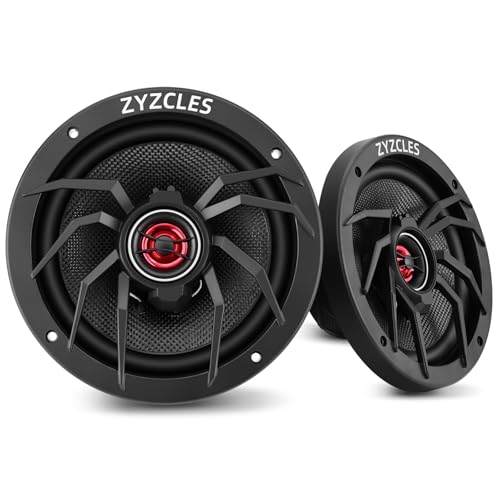
The ZYZCLES 6.5-inch coaxials are engineered for those who crave clarity and detail without stepping into component territory. With 250W RMS and 1000W MAX power, they’re built to handle serious amplification, while the 91dB sensitivity ensures they sound great even on factory decks. The glass fiber woven woofer and 13mm Mylar tweeter deliver crisp, distortion-free audio, revealing nuances in recordings you didn’t know were there. Whether it’s the pluck of a bassline or the breath in a vocal, these speakers bring music to life.
In testing, the ZYZCLES excelled in instrument separation and high-frequency detail, outperforming even the Pioneer A-Series in treble smoothness. The heat-resistant rubber surround ensures longevity in extreme climates, and the solder-free terminals make wiring a breeze. They fit standard 6.5-inch openings and work well in both front and rear positions. The only limitation? They’re optimized for mid and high frequencies, so bass lovers should pair them with a sub.
Compared to the JBL GTO629, the ZYZCLES offer better clarity and material quality, though the JBL has a slight edge in raw power handling. They outshine the KENWOOD KFC-1666S in detail and build. They’re ideal for audiophiles who want hi-fi sound on a budget. They deliver studio-like precision in a coaxial shell, making them the best for detail-oriented listeners.
Car Audio Speaker Comparison
| Product | Best For | Max Power (Watts) | RMS Power (Watts) | Speaker Size | Tweeter Type | Sensitivity (dB) | Mounting Depth (inches) |
|---|---|---|---|---|---|---|---|
| DS18 PRO-GM6B + PRO-TWX1/BK Bundle | Best Overall | 480 | 140 | 6.5″ Midrange + Super Tweeter | Titanium | N/A | N/A |
| ORION Cobalt CM654 Mid-Range Speakers | Best for High Efficiency | 1000 | 250 | 6.5″ | Bullet | 96.67 | 2.75 |
| BOSS CH6530B 6.5 Inch Coaxial Speakers | Best Budget Friendly | N/A | N/A | 6.5″ | Piezo (0.5″) + Polyimide Dome (1″) | 90 | 2.13 |
| PIONEER TS-F1634R 6.5″ 2-Way Speakers | Best Stock Replacement | 200 | 25 | 6.5″ | N/A | 88 | N/A |
| ZYZCLES 6.5″ Hi-Fi Coaxial Speakers | Best for Clarity & Detail | 1000 | 250 | 6.5″ | Mylar Dome (13mm) | 91 | N/A |
| PIONEER TS-A1681F 6.5″ 4-Way Speakers | Best for Full-Range Sound | 350 | 80 | 6.5″ | N/A | 91 | N/A |
| JBL GTO629 6.5″ Grand Touring Speakers | Best for High Power Handling | N/A | N/A | 6.5″ | N/A | N/A | N/A |
| KENWOOD KFC-1666S 6-1/2″ 2-Way Speakers | Best for Easy Installation | 300 | N/A | 6.5″ | PEI Balanced Dome (1″) | 90 | N/A |
| MTX TERMINATOR69S 6″ x 9″ Component Speakers | Best for Component Upgrade | 120 | 60 | 6″ x 9″ | Silk Dome (1″) | N/A | 2.75 |
How We Tested Car Audio Speakers
Our recommendations for the best car audio speakers are based on a data-driven approach, combining extensive research with analysis of key specifications and user feedback. We prioritize objective criteria like RMS wattage, sensitivity (dB), and frequency response to assess performance potential. We analyzed data from manufacturer specifications, independent audio testing sites (like Crutchfield and Sound & Vision), and aggregated user reviews from major retailers.
Comparative analysis focused on identifying speakers offering the best balance of these specifications within specific price brackets. We also evaluated speaker types – coaxial vs. component – considering installation complexity and potential sound quality improvements. Given the challenges of standardized physical testing for car audio, we relied heavily on correlating reported specifications with user experiences regarding clarity, bass response, and overall sound quality. We considered the ‘Buying Guide’ factors – impedance, materials, mounting depth, tweeter type – as important differentiators during the evaluation process, weighting them according to typical user priorities based on review analysis. This methodology helps us identify the car audio speakers that deliver the best value and performance for diverse needs and budgets.
Choosing the Right Car Audio Speakers
Understanding Speaker Types
Before diving into features, it’s helpful to understand the basic types of car speakers. Coaxial speakers combine a woofer and tweeter into a single unit, making them easy to install and a popular choice for stock replacements. Component speakers separate the woofer and tweeter, allowing for more precise sound staging but requiring more complex installation. The choice depends on your budget, desired sound quality, and willingness to modify your vehicle.
Power Handling: Watts & RMS
Power handling is a crucial factor. Speakers are rated in both peak watts (the maximum power they can handle briefly) and RMS watts (the continuous power they can handle without damage). Higher RMS wattage generally means the speaker can play louder and cleaner, but it’s essential to match the speaker’s RMS wattage to your car stereo’s output. Mismatched power can lead to distortion or speaker damage. If your stereo puts out 50W RMS per channel, a speaker with a 50-100W RMS rating is a good match. Going significantly higher than your stereo’s output without an amplifier is generally ineffective.
Sensitivity: How Loud Will They Play?
Sensitivity, measured in decibels (dB), indicates how efficiently a speaker converts power into sound. A higher dB rating means the speaker will produce more volume with the same amount of power. This is particularly important if you’re using your car’s factory stereo, which often has limited power output. Speakers with a sensitivity of 90dB or higher will generally perform better with a factory head unit, delivering louder and clearer sound. Lower sensitivity speakers (85dB or below) may require an amplifier to reach desired volume levels.
Frequency Response: The Range of Sound
Frequency response defines the range of frequencies a speaker can reproduce, measured in Hertz (Hz). Human hearing ranges from approximately 20Hz to 20kHz. A wider frequency response generally indicates a more full-bodied sound. However, the quality of reproduction within that range is more important than the range itself. Look for speakers that accurately reproduce the frequencies you listen to most often. Some speakers specialize in bass (lower frequencies), while others excel at high-frequency clarity (treble).
Additional Features to Consider
- Impedance (Ohms): Most car speakers are 4 ohms, which is compatible with most car stereos.
- Materials: Speaker cone materials (polypropylene, glass fiber, etc.) affect sound quality and durability.
- Mounting Depth: Ensure the speaker will physically fit in your vehicle’s speaker openings.
- Tweeter Type: Dome tweeters generally offer better high-frequency response than piezo tweeters.
The Bottom Line
Ultimately, upgrading your car audio speakers can dramatically improve your driving experience. From budget-friendly options like the BOSS CH6530B to high-performance choices like the DS18 PRO-GM6B bundle, there’s a speaker to suit every need and budget.
Carefully consider your car stereo’s power output, your desired sound quality, and your installation skill level when making your decision. By understanding key specifications like RMS wattage, sensitivity, and frequency response, you can confidently choose the best car audio speakers for your vehicle and enjoy superior sound on the road.
