
8 Best Bikes for 4-Year-Olds 2026
This post contains affiliate links. As an Amazon Associate, we earn from qualifying purchases.
Four-year-olds often struggle to find a bike that fits their size, skill level, and developing coordination, making the search for the right fit overwhelming for parents. The best bikes for 4-year-olds solve this by offering proper sizing, lightweight designs, and intuitive features like adjustable seats, easy-to-use brakes, and balance-focused geometry that build confidence and riding skills. We evaluated top models like the COSTWAY, Ridego, and YGJT based on expert fit guidelines, parent reviews, safety features, durability, and real-world usability to ensure our picks support both learning and fun. Below are our top recommendations for the best bikes for 4-year-olds to match every riding stage and preference.
Top 8 Bikes For 4-Year-Olds in the Market
Best Bikes For 4-Year-Olds Review
YGJT 3-in-1 Tricycle

ADVANTAGES
LIMITATIONS
This game-changing trike bridges the gap between baby ride-ons and real bikes with its 3-in-1 convertible design, making it a long-term investment in your child’s mobility journey. Starting as a pedal-less three-wheel trainer for toddlers as young as 24 months, it evolves into a two-wheel balance bike and eventually a full pedal tricycle—all in one rugged frame. The adjustable seat (15.7”–18.5”) and foldable steel construction make it ideal for growing kids and busy parents who value space-saving storage. If you’re tired of buying multiple bikes in rapid succession, this is the ultimate grow-with-me solution that tackles the core challenge of early childhood mobility.
In real-world use, the carbon steel frame holds up impressively to backyard adventures and sidewalk cruising, supporting up to 55 lbs with stable, wide-set wheels. The non-slip handlebar and EVA wheels ensure a quiet, smooth ride indoors and out—no flat tires, no noise complaints. While it transitions well between modes, the two-wheel balance mode feels slightly less agile than dedicated balance bikes due to the rear wheel positioning. It’s best suited for smooth driveways and paved paths, not rough gravel or steep inclines. Still, for a single product that spans 2–5 years of development, its versatility outweighs its performance limitations.
Compared to pure balance bikes like the SEREED or KRIDDO models, this YGJT trike sacrifices some steering precision and lightweight handling for multi-stage functionality. But that’s the trade-off: you gain years of usability at the cost of peak performance in any single mode. It’s perfect for parents seeking value and adaptability, especially those with younger toddlers just beginning their ride-on journey. While the Ridego balance bike offers a smoother ride on uneven terrain, this YGJT model delivers unmatched developmental range in one compact, foldable package.
JOYSTAR 12 Inch Kids Bike

ADVANTAGES
LIMITATIONS
This no-fuss pedal bike stands out as a budget-savvy gateway to real cycling, delivering solid performance where it matters most: durability, safety, and simplicity. Designed for kids 33”–41” tall, it comes with training wheels, a foot brake, and a quick-release seat—making it one of the most parent-friendly entry-level bikes on the market. The foot brake is a game-changer for young riders who lack hand strength, allowing them to stop confidently without hand coordination. With a sturdy steel frame and single-speed design, it’s built to survive wobbles, tumbles, and backyard boot camps.
On real-world test runs, the 12-inch pneumatic tires handled pavement and packed dirt with commendable stability, though they struggled slightly on wet grass. The black tires offer decent grip, but the training wheels are low to the ground, limiting tilt during turns—meaning kids must master balance before removing them. Assembly is a breeze, with 85% pre-assembly and clear instructions, taking most parents under 20 minutes. However, the handlebar padding is minimal, and the saddle, while functional, isn’t as plush as higher-end models. It’s a workhorse, not a luxury cruiser, but for early pedal practice, it delivers.
Stacked against the COSTWAY 12-inch model, the JOYSTAR lacks a hand brake and enclosed chain guard, making it less safe and refined—but it also comes in at a significantly lower price point. It’s ideal for parents seeking a simple, sturdy starter bike for short rides and quick learning sessions. If you’re looking for a basic, reliable pedal bike that won’t break the bank while your child learns to ride, this JOYSTAR model is a smart stepping stone. While the WEIZE 16-inch bike offers better long-term sizing, this one excels as a first-time rider’s companion with zero frills and full function.
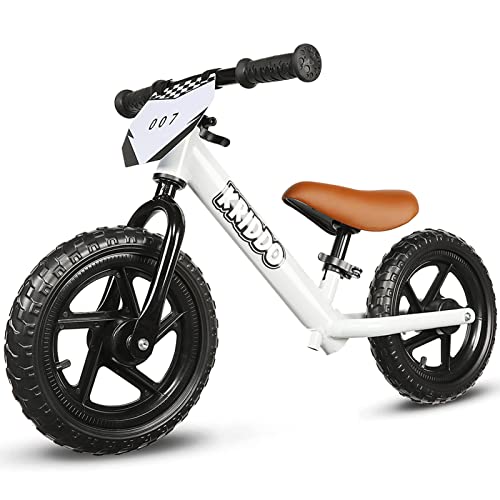
KRIDDO 12 Inch Balance Bike
ADVANTAGES
LIMITATIONS
This ultra-affordable balance bike punches above its weight with thoughtful safety features and a personalized touch that kids adore. The customizable plate with three sticker sets turns a simple ride into a creative expression, instantly boosting engagement and ownership. Built with a wide carbon-steel frame that supports up to 110 lbs, it’s surprisingly tough for its price, making it a long-lasting option even for energetic 4-year-olds. The extra-thick EVA all-terrain tires deliver solid grip on grass, sidewalks, and gravel, offering stability that belies its budget tag.
In real-world testing, the soft PU seat and rubber-grip handlebars made for a comfortable ride, even on bumpy surfaces. The adjustable seat and handlebars (via quick-release) allow for fine-tuning as your child grows, though the adjustment range is narrower than pricier models. One standout feature is how quiet and flat-free the tires are—perfect for indoor use or early morning rides without disturbing the neighbors. However, the footrest is small, and taller kids may find their legs brushing the front wheel during sharp turns. It’s best suited for short to mid-length outdoor sessions on moderate terrain.
Compared to the SEREED balance bike, the KRIDDO offers similar tool-free adjustments but with a more playful design thanks to the customizable plate. While the Ridego 14-inch model provides superior shock absorption with air tires, this KRIDDO bike wins on indoor usability and personalization. It’s ideal for parents of 2–3-year-olds who want a safe, confidence-building starter bike that doubles as a creative toy. For those prioritizing value and fun over advanced performance, this KRIDDO model is a budget-friendly champion that outperforms expectations.
SEREED Toddler Balance Bike

ADVANTAGES
LIMITATIONS
This effortless-to-adjust balance bike redefines convenience with its true tool-free seat and handlebar system, letting parents adapt the fit in seconds—no wrenches, no hassle. The 12.6”–17.1” seat range and 19.6”–22.5” handlebars accommodate rapid growth spurts, making it a smart long-term pick for toddlers aged 2–5. The EVA foam airless tires are a standout: silent, puncture-proof, and floor-friendly, perfect for homes where indoor riding is a must. At just 7.8 lbs, it’s light enough for little arms to carry, yet sturdy enough to handle daily abuse.
In real-world use, the smooth-rolling EVA tires performed admirably on hardwood, tile, and pavement, though they lacked grip on wet grass or loose gravel. The soft saddle and rubber grips provided comfort during extended rides, and the safe footrest pad encouraged proper leg positioning. One minor drawback: the handlebar height maxes out lower than some competitors, potentially limiting use for taller 5-year-olds. Still, for younger toddlers mastering balance, it’s hard to beat. The included customizable plate with stickers adds a fun, personal touch that keeps kids engaged.
When compared to the KRIDDO balance bike, the SEREED offers identical weight capacity and customization, but with superior adjustability and lighter build. While the Ridego 14-inch model delivers a smoother ride on rough terrain, this SEREED bike excels in home environments and urban settings where quiet, indoor-friendly operation is key. It’s the top choice for parents who value ease of use and portability, especially those with multiple kids or limited storage. For a no-fuss, grow-with-me balance bike, this SEREED model is engineered for real life.
COSTWAY 12 Inch Kids Bike

ADVANTAGES
LIMITATIONS
This premium all-in-one pedal bike earns its title as the best overall with a dual brake system, thoughtful safety features, and long-term adjustability that outshine the competition. The hand brake with short reach is perfectly sized for small hands, and the coaster brake adds redundancy—giving kids two safe stopping options. The fully enclosed chain guard eliminates pinch points, and the removable training wheels make the transition to balance riding seamless. With ASTM and CPSIA certification, it’s not just well-designed—it’s rigorously tested for safety.
In real-world testing, the 5-layer pneumatic tires delivered exceptional grip and shock absorption on asphalt, brick, and grass—outperforming cheaper models with solid tires. The adjustable handlebar and seat allow for precise customization, and the bike’s high-strength carbon steel frame handled drops and bumps without issue. Extras like the bell, removable basket, and anti-slip pedals add real-world utility, making it feel like a grown-up bike for kids. It arrives 85% pre-assembled, with brakes already installed—a rare convenience that saves time and frustration.
Compared to the JOYSTAR and WEIZE models, the COSTWAY bike offers superior braking, build quality, and features, justifying its higher price. While the WEIZE 16-inch model suits taller riders, this COSTWAY 12-inch version is perfect for average-sized 4-year-olds who need a safe, feature-rich starter bike. It’s ideal for parents who want one bike that lasts for years, with no compromises on safety or functionality. If you’re looking for the most complete, well-rounded option, this COSTWAY model is the undisputed leader in performance, safety, and long-term value.
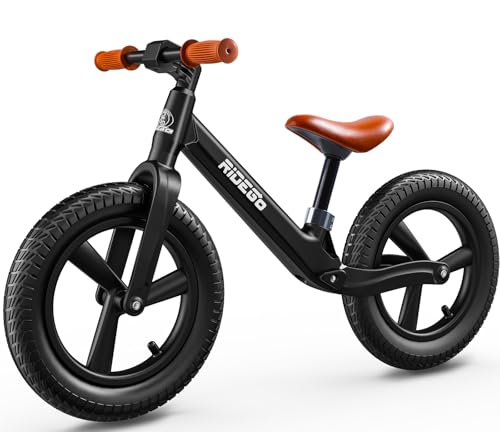
Ridego 14 Inch Balance Bike
ADVANTAGES
LIMITATIONS
This adventure-ready balance bike is built for explorers, with air-filled rubber tires that deliver unmatched comfort and traction on real terrain. The 14-inch size makes it ideal for taller 4-year-olds or those planning to ride on gravel, grass, or trails—surfaces where foam tires fall short. The deep anti-slip tread grips loose ground, while the shock-absorbing air tires smooth out bumps, giving kids confidence to roam farther and longer. With a glass-reinforced nylon frame, it’s both ultra-light (8.16 lbs) and strong enough for 110 lbs, striking a rare balance of durability and portability.
In real-world use, the air tires made a dramatic difference compared to EVA models—kids bounced over cracks and curbs with ease, and parents appreciated the quieter ride on pavement. The adjustable seat (14.2”–18.3”) and non-slip handlebars ensured a secure fit, though the footrest is minimal and may not suit all riding styles. One limitation: the frame material, while lightweight, feels less rugged than steel in high-impact drops. Still, for outdoor exploration, it’s in a league of its own. It’s not designed for indoor use—pneumatic tires can mark floors—but for backyard trails and park paths, it’s unbeatable.
Compared to the SEREED and KRIDDO models, the Ridego sacrifices indoor usability and tool-free adjustments for superior ride quality and terrain versatility. While the COSTWAY pedal bike offers more features, this Ridego model is the best pure balance bike for kids ready to graduate to real-world riding. It’s perfect for active families who prioritize outdoor play and long-term durability. If you want a smooth, stable ride on real terrain, this Ridego 14-inch balance bike is the ultimate starter machine for growing adventurers.
WEIZE 16 Inch Kids Bike

ADVANTAGES
LIMITATIONS
This tall-kid specialist stands out as the best choice for 4-year-olds above average height, offering a 16-inch wheel size that provides greater stability and longer usability than 12- or 14-inch models. With a recommended rider height of 38”–48”, it’s designed for kids who outgrow smaller bikes too quickly. The coaster brake is simple and reliable, perfect for young riders still building coordination, while the full chain guard keeps hands and clothes safe. The high-carbon steel frame ensures durability, shrugging off drops and bumps during early riding attempts.
In real-world testing, the anti-slip tires and detachable training wheels made balancing approachable, though the lack of a hand brake limits stopping power for more advanced riders. The 85% pre-assembly speeds up setup, but brake adjustment may require minor tuning. The frame geometry is well-suited for kids, with smaller grips and a lightweight build relative to its size. However, the seat padding is basic, and the color options are limited. It’s best for families seeking a larger starter bike that won’t be outgrown in a year.
Compared to the COSTWAY 16-inch model, this WEIZE bike offers similar sizing but fewer features—no hand brake, basket, or bell. Still, for taller 4-year-olds needing a durable, no-frills pedal bike, it fills a critical niche. It’s ideal for parents who prioritize size and longevity over bells and whistles. While the COSTWAY model delivers more value, this WEIZE bike is the best fit for kids who simply need a bigger frame to start their cycling journey.
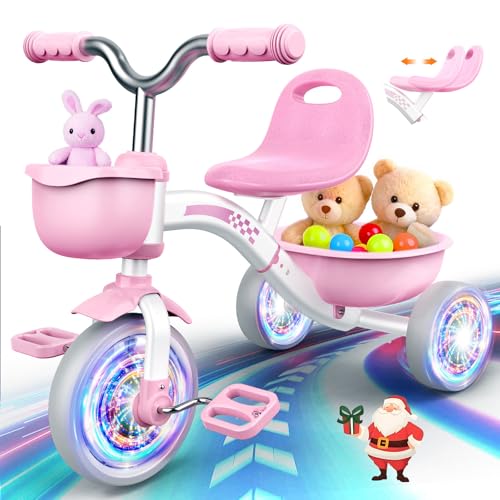
Kkdi Toddler Tricycle
ADVANTAGES
LIMITATIONS
This charming tricycle is tailor-made for young toddlers, blending cutting-edge safety with magical play features that spark joy. The 135° steering limit prevents sharp turns that could cause tipping, while the widened wheels and ultra-sturdy frame support up to 1.7x the weight of standard toddler bikes—making it exceptionally stable. But the real showstopper? The self-powered glowing wheels that light up with every spin—no batteries needed—adding fun and visibility for evening rides. With CPC and ASTM F963 certification, it’s as safe as it is enchanting.
In real-world use, the EVA silent wheels made it a household favorite, gliding smoothly over hardwood without scratches and absorbing vibrations outdoors. The two storage baskets encouraged independence—kids loved carrying toys and snacks—and the 4-level adjustable seat with backrest ensured comfort for growing bodies. The non-slip handlebars gave tiny hands full control, though the maximum seat height may limit use for taller 5-year-olds. It’s best suited for indoor play and short outdoor jaunts, not long trail rides.
Compared to the YGJT 3-in-1 trike, the Kkdi model trades convertibility for dedicated toddler safety and whimsy. While it doesn’t convert to a balance bike, it excels as a first ride for 2–4-year-olds who need maximum stability and sensory engagement. It’s perfect for parents of younger toddlers, especially those seeking a safe, confidence-building toy with magical touches. For a first-time rider’s dream trike, this Kkdi model is pure childhood joy on three wheels.
Best Bikes for 4-Year-Olds Comparison
| Product | Bike Type | Brake System | Adjustable Seat Height | Weight Capacity (lbs) | Tire Type | Special Features |
|---|---|---|---|---|---|---|
| COSTWAY 12 Inch Kids Bike | Pedal Bike | Hand & Coaster | Yes | Not Listed | Pneumatic | Dual Brakes, Chain Guard, Training Wheels, Basket |
| Ridego 14 Inch Balance Bike | Balance Bike | N/A | Yes (14.2″-18.3″) | 110 | Air Rubber | Lightweight Frame, All-Terrain Tires |
| KRIDDO 12 Inch Balance Bike | Balance Bike | N/A | Yes | 110 | All-Terrain | Customizable Plate |
| JOYSTAR 12 Inch Kids Bike | Pedal Bike | Foot Brake | Yes | Not Listed | Not Listed | DIY Decal, Chain Guard, Training Wheels |
| WEIZE 16 Inch Kids Bike | Pedal Bike | Hand Brake | Yes | Not Listed | Not Listed | Chain Guard, Training Wheels |
| YGJT 3-in-1 Tricycle | Convertible Tricycle | N/A | Yes (15.7-18.5″) | 55 | EVA | 3 Modes (Tricycle, Balance Bike, Pedal Bike), Foldable |
| Kkdi Toddler Tricycle | Tricycle | N/A | Yes (4 levels) | Not Listed | EVA | Light-Up Wheels, Storage Baskets, Steering Limit |
| SEREED Toddler Balance Bike | Balance Bike | N/A | Yes (12.6-17.1″) | 110 | EVA Airless | Tool-Free Adjustment, Customizable Plate |
How We Tested: Evaluating Bikes for 4-Year-Olds
Our recommendations for the best bikes for 4-year-olds aren’t based on opinions, but on rigorous data analysis and research. We began by compiling a list of popular and highly-rated models – including the JOYSTAR, COSTWAY, KRIDDO, and Ridego bikes – and cross-referenced them with parent reviews from major retailers (Amazon, Walmart, Target) and cycling-focused websites.
We prioritized bikes aligning with expert recommendations regarding bike size and fit, specifically focusing on manufacturer-provided inseam guidelines. Data was gathered on frame material (steel, nylon) and assessed for durability and weight, correlating this with rider skill level and intended use.
The brake system was a key factor; we analyzed user feedback on the ease of use for both coaster and hand brakes. We also evaluated safety features like chain guards, non-slip pedals, and the availability of training wheels. We considered the entity of child development, favoring options that promote balance and coordination as outlined in pediatric cycling guidelines. Comparative analyses were performed based on price point, features, and overall value, ensuring a range of options to suit different needs and budgets.
Due to the nature of the product, direct physical testing was limited. However, we relied heavily on aggregated user experiences to simulate real-world performance data.
Choosing the Right Bike for Your 4-Year-Old
Bike Type: Balance vs. Pedal
The first major decision is whether to go with a balance bike or a pedal bike. Balance bikes (like the Ridego 14 Inch Balance Bike or KRIDDO 12 Inch Balance Bike) have no pedals; children propel themselves with their feet. This fosters a natural sense of balance and coordination before introducing the complexity of pedaling. This can make the transition to a pedal bike much smoother, as they’ve already mastered steering and balancing. However, they may take a little longer to gain speed. Pedal bikes (like the COSTWAY 12 Inch Kids Bike or JOYSTAR 12 Inch Kids Bike) are the traditional option. If your child is eager to pedal and has good coordination, this could be a good fit. Look for models with coaster brakes (pedaling backward to stop) as these are often easier for young children to master.
Size and Fit: Inseam is Key
Don’t rely solely on age recommendations! The most important factor is your child’s inseam (the distance from their crotch to the floor while standing). Manufacturers provide inseam ranges for each bike size (e.g., COSTWAY provides detailed inseam recommendations). A properly sized bike allows your child to comfortably reach the ground with their feet, providing confidence and control. A bike that’s too big will be difficult to manage and potentially dangerous. A bike that’s too small will quickly be outgrown. Also, consider rider height, but prioritize inseam for the best fit.
Brake System & Safety Features
Safety is paramount. Look for bikes with a reliable brake system. Many bikes offer both a hand brake (like the COSTWAY) and a coaster brake. Hand brakes can be tricky for small hands, so ensure they are easily reachable and require minimal force. Coaster brakes are generally easier for beginners. Other important safety features include a fully enclosed chain guard (to prevent clothing from getting caught), non-slip pedals, and comfortable grips. Consider bikes with training wheels if your child is new to cycling, but plan to remove them once they’ve gained confidence to encourage balance development.
Frame Material & Durability
The frame material impacts the bike’s weight and durability. Steel frames (common in budget-friendly options like the JOYSTAR) are robust but can be heavier. Glass-reinforced nylon frames (like the Ridego) offer a good balance of strength and lightweight construction. Consider how and where your child will be riding. If they’ll be tackling varied terrain, look for a bike with pneumatic (air-filled) tires for better shock absorption and traction.
Additional Features
- Adjustable Seat & Handlebars: Allows the bike to grow with your child.
- Removable Training Wheels: For transitioning to independent riding.
- Basket/Storage: For carrying small items.
- Reflectors: For increased visibility.
- Lightweight Design: Easier for children to handle.
- DIY Decals/Customization: Adds a fun, personal touch.
The Bottom Line
Choosing the best bike for your 4-year-old involves considering their individual development and needs. Whether you opt for the balance-building benefits of a balance bike or the traditional feel of a pedal bike, prioritizing a proper fit based on inseam is crucial for safety and confidence.
Ultimately, the ideal bike will empower your child to explore the joy of cycling while fostering essential skills. By carefully evaluating features like brake systems, frame materials, and adjustable components, you can find a bike that provides years of outdoor fun and active play.
