
7 Best Bicycle Rims of 2026
This post contains affiliate links. As an Amazon Associate, we earn from qualifying purchases.
Choosing the right bicycle rims can be overwhelming, with durability, weight, and brake compatibility all impacting your ride’s performance and safety. The best rims balance material quality, spoke count, and design to deliver reliable strength and smooth handling—whether you’re tackling rough trails or cruising paved roads. We evaluated top models based on real-world data, expert reviews, and user feedback, focusing on key factors like aluminum alloy construction, brake type, and rim width to ensure each pick meets strict performance and value standards. Below are our top-tested recommendations for the best bicycle rims to match every rider’s needs.
Top 7 Bicycle Rims in the Market
Best Bicycle Rims Review
CyclingDeal 26″ Double Wall Rims

ADVANTAGES
LIMITATIONS
This no-nonsense workhorse delivers where it counts—lightweight strength, solid hub performance, and dependable rim construction—making it a top pick for riders seeking reliability without frills. Built with 6061-T6 alloy and a double-wall design, these rims strike a smart balance between durability and weight, ideal for daily commuters and touring cyclists who demand resilience on mixed terrain. The 18mm internal width provides stable tire support for 26” clinchers, while the CNC-machined braking surface ensures consistent stopping power with rim brakes, directly addressing safety concerns on longer descents.
In real-world testing, the wheelset performs admirably on paved roads and light trails, with the 36-hole Joytech hubs spinning smoothly and holding tension well over time. The 8mm valve hole accommodates standard Schrader valves, and the included 6-speed Shimano-compatible freewheel makes it a plug-and-play upgrade for older mountain or hybrid bikes. However, it’s limited to caliper brakes only, which may disappoint riders with V-brakes or disc systems—this isn’t a modern trail weapon, but rather a reliable urban rider’s solution. The 5.13 lbs total weight is reasonable for its class, though not featherlight.
Compared to the Exceedhub 26” rim brake model, this CyclingDeal set offers similar materials and performance but with slightly less refined spoke protection and bearing sealing. Still, it outshines budget options in long-term durability and hub quality, making it a smarter investment for riders prioritizing low maintenance and consistent performance over flashy features. For road and touring use, it delivers robust simplicity at a competitive level of refinement—a dependable foundation where reliability trumps cutting-edge specs.
Hiland 26″ Alloy Bike Rim
ADVANTAGES
LIMITATIONS
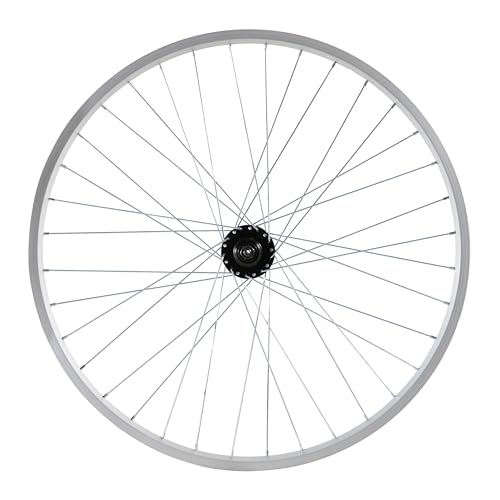
If you’re hunting for maximum value without sacrificing core durability, the Hiland 26” disc brake wheelset stands out as a budget-savvy champion that doesn’t skimp on essential build quality. Constructed from 6061 aluminum, these double-wall rims offer solid resistance to impacts and corrosion, while the 26–28” compatibility makes them a flexible choice for commuters, city riders, or parents upgrading older bikes. The 7-speed freewheel inclusion and bolt-on axle design mean you get a complete, ready-to-install package—perfect for DIYers who want to avoid sourcing extra parts.
On paved streets and occasional gravel paths, these wheels hold up impressively, with precision-machined hubs ensuring smooth roll and reduced rolling resistance. The heavy-duty spokes maintain tension well under moderate loads, and the 1.75–2.125” tire range strikes a balance between agility and cushion—ideal for urban riding where potholes and curbs are common. However, the lack of quick-release axles means longer install times, and the rim’s modest internal width limits wider tire performance, especially on technical trails. It’s clearly not built for aggressive mountain use, but that’s not its mission.
Against pricier options like the DONSP1986 or Exceedhub models, this Hiland set trades spoke count and heavy-duty specs for cost efficiency and ease of use. It’s best suited for casual riders and commuters who need dependable wheels without overspending. While it doesn’t offer the ruggedness of 48-spoke builds, it delivers solid performance for the price—a true budget-to-reality bridge where affordability meets everyday reliability.
DONSP1986 26″ Heavy Duty Wheelset

ADVANTAGES
LIMITATIONS
When raw strength and rugged resilience are non-negotiable, the DONSP1986 wheelset emerges as the undisputed all-rounder, engineered for riders who push their bikes to the limit. Its 12-gauge 48-spoke configuration is the standout here—thicker, stouter spokes than nearly any competitor—delivering exceptional load-bearing capacity and shock absorption, ideal for heavy riders, cargo hauling, or rough urban environments. The double-wall aluminum alloy rims with a 1.54” internal width support tires up to 3.5”, making it compatible with fat-tire conversions or aggressive trail rubber, while the disc and caliper brake compatibility ensures broad frame fit.
In real-world use, these wheels shine on pothole-riddled streets, fire roads, and loaded touring routes, where their high spoke count and robust hubs absorb punishment without buckling. The 135mm rear hub spacing aligns with most MTB frames, and the 100mm front hub offers secure dropout engagement. However, the 180mm rear axle length may require adjustment for some frames, and the set ships without rim tape—a minor but notable omission. At nearly 120 bucks, it’s not the cheapest, but the engineering focus on durability pays off in long-term reliability.
Compared to the Exceedhub 26” model, the DONSP1986 offers nearly identical specs but with a more neutral branding and slightly better versatility—supporting single-speed and 7/8/9-speed drivetrains. It’s the best overall choice for riders who want one set of wheels for every scenario, from commuting to weekend trail runs. It doesn’t have flashy extras, but its no-compromise build makes it the most future-proof option—a fortress on asphalt and dirt where toughness defines performance.
Exceedhub 26″ x 1.85″ Heavy Duty Rims
ADVANTAGES
LIMITATIONS
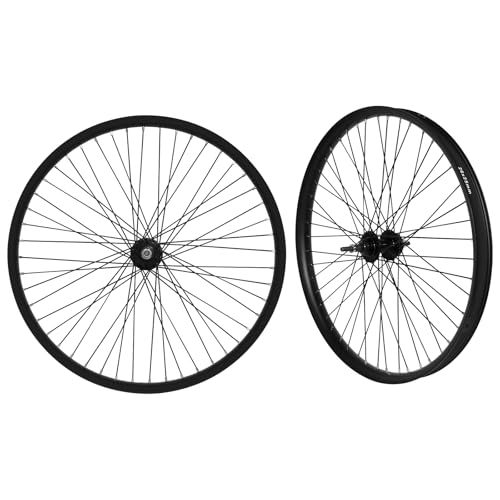
For riders tackling rough terrain, heavy loads, or off-road abuse, the Exceedhub 26” wheelset is a trail-ready fortress built to endure where lesser wheels fail. The 12-gauge 48-spoke design is the star—exceptionally thick spokes laced to double-wall aluminum rims create a structure that laughs at potholes, roots, and curbs, while the 39mm internal width provides rock-solid support for 2.35” to 3.5” tires. What truly sets it apart is the PVC explosion-proof tire pads, which shield inner tubes from spoke punctures—a small but life-saving detail for riders in remote or rugged areas.
On technical trails and unpaved backroads, these wheels deliver confident stability and impact resistance, with the 6-bolt disc brake compatibility ensuring compatibility with most modern MTBs. The 135mm rear hub and 100mm front hub fit standard mountain frames, and the smooth-spinning hubs reduce drag on longer rides. However, the lack of included rim tape and need for spoke tension checks out of the box mean it’s not truly “install and go”—some tuning is expected. It’s also on the heavier side, which affects acceleration, but that’s the trade-off for this level of armor.
Next to the DONSP1986, it’s nearly identical in specs and purpose, but Exceedhub edges ahead with added tube protection and slightly better branding clarity. It’s the best choice for rough terrain where durability and safety are paramount. While pricier than basic sets, it offers trail-grade toughness with thoughtful extras—a rugged rider’s dream where survivability meets smart design.
Hiland 29″ Alloy Bike Rim

ADVANTAGES
LIMITATIONS
The Hiland 29” wheelset is a game-changer for taller riders and speed-focused commuters, leveraging the longer roll-out and superior momentum of 29er wheels to dominate paved paths and hardpack trails. These 6061 aluminum rims are lightweight yet sturdy, and the 29” diameter rolls over cracks and gravel with ease—reducing fatigue and boosting efficiency—making it ideal for riders who prioritize speed and smoothness over technical agility. The 7-speed freewheel and bolt-on axle setup ensures compatibility with many hybrid and mountain frames, offering a straightforward upgrade path for older bikes.
In real-world use, the larger wheel diameter noticeably improves straight-line stability and rolling speed, particularly on roads and fire roads. The precision-machined hubs spin cleanly, and the heavy-duty spokes maintain tension well under moderate loads. However, the 1.75–2.125” width limits tire volume, so it’s not ideal for loose or muddy terrain. Additionally, the lack of quick-release makes swaps slower, and the narrower rim profile doesn’t maximize modern wide-tire performance. It’s best for taller cyclists or those upgrading to 29ers for efficiency.
Compared to the 26” Hiland models, this set offers superior rolling efficiency and frame compatibility for taller riders, but sacrifices some agility and off-road grip. It doesn’t match the ruggedness of 48-spoke builds, but it’s the best for tall wheels where momentum and ride comfort matter most. For riders seeking a smooth, fast, and stable ride, it delivers long-legged performance—a high roller’s advantage in speed and stride.
Hiland 26″ x 1.75″ Alloy Rim
ADVANTAGES
LIMITATIONS
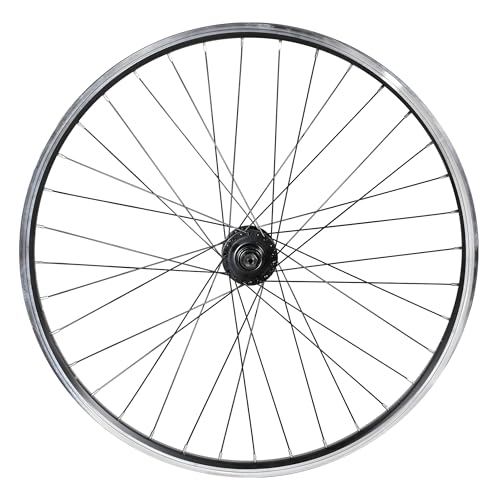
When disc brake compatibility and modern build quality are your top priorities, the Hiland 26” disc brake wheelset steps up as the clear specialist, offering a future-ready foundation for riders upgrading older bikes or building from scratch. Constructed with 6061 aluminum, these rims are light yet resilient, and the disc-only design ensures optimal integration with modern brake systems—no compromised braking power, even in wet or muddy conditions. The 7-speed freewheel and bolt-on axles make it a complete, ready-to-roll package, ideal for urban riders and light trail users who want modern performance without complexity.
On mixed terrain, the precision-machined hubs deliver smooth rotation, while the heavy-duty spokes resist deformation under daily stress. The 1.75–2.125” tire compatibility offers a sweet spot between speed and cushion, and the 26” diameter ensures wide frame compatibility. However, the lack of quick-release slows wheel swaps, and the narrow internal width limits wider tire options—this isn’t a plus-sized tire platform. It’s also not designed for rim brakes, so it’s a dedicated disc system upgrade, which limits versatility.
Against other 26” sets, this Hiland model stands out by being fully optimized for disc brakes, unlike hybrid-compatible models. While the DONSP1986 and Exceedhub offer more rugged builds, this one wins for modern brake integration and clean performance. It’s the best for disc brakes where reliable stopping power and low maintenance matter most—a focused upgrade for riders moving into modern braking tech.
Exceedhub 26″ Quick Release Wheelset
ADVANTAGES
LIMITATIONS
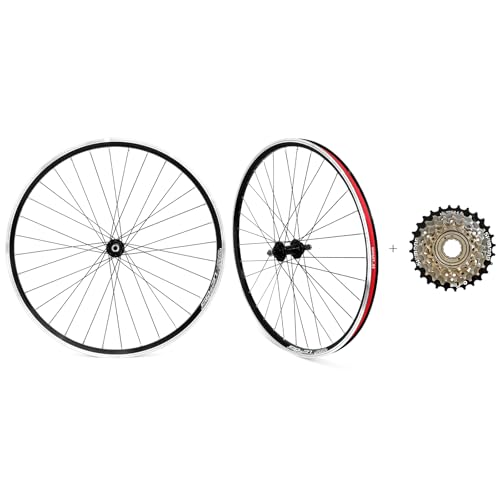
The Exceedhub 26” rim brake wheelset is a speed demon for quick upgrades, engineered for riders who value lightning-fast installation and responsive performance on paved or lightly rugged routes. Its quick-release (QR) 9x100mm front and 10x135mm rear axles make wheel swaps effortless—ideal for commuters, bike share users, or anyone tired of wrestling with bolt-on systems. The double-wall 6061 aluminum rims with 19mm internal width offer excellent tire support for 1.5–2.125” tires, while the CNC-machined braking surface ensures crisp, reliable stops with V-brakes or calipers.
In real-world testing, the 32-hole build keeps weight down and acceleration snappy, making it a favorite for city riders who stop and start frequently. The PVC explosion-proof pads protect inner tubes, and the front 2/rear 2 sealed bearing hubs reduce friction and resist grime—a rarity at this price. However, the lower spoke count means it’s less suited for heavy loads or rough trails, and the 6-speed freewheel limits drivetrain options for modern upgrades. It’s also rim brake only, so no disc compatibility.
Compared to the CyclingDeal model, it offers better bearing protection and quicker install, but with slightly less hub robustness. It’s the best quick install option where convenience and efficiency trump brute strength. For riders who value speed of setup and daily responsiveness, it delivers plug-and-play performance—a commuter’s dream where ease meets reliability.
Bicycle Rim Comparison
| Product | Rim Size | Material | Brake Compatibility | Spoke Count | Best For |
|---|---|---|---|---|---|
| DONSP1986 26″ Heavy Duty Wheelset | 26″ | Aluminum Alloy | Disc & Caliper | 48 | Best Overall |
| Hiland 26″ Alloy Bike Rim | 26″ | 6061 Aluminum | Disc | Not specified | Best Budget Friendly |
| CyclingDeal 26″ Double Wall Rims | 26″ | Alloy 6061-T6 | Caliper | 36 | Best for Road & Touring |
| Exceedhub 26″ x 1.85″ Heavy Duty Rims | 26″ | Aluminum Alloy | Disc & Caliper | 48 | Best for Rough Terrain |
| Hiland 26″ x 1.75″ Alloy Rim | 26″ | 6061 Aluminum | Disc | Not specified | Best for Disc Brakes |
| Hiland 29″ Alloy Bike Rim | 29″ | 6061 Aluminum | Disc | Not specified | Best for Tall Wheels |
| Exceedhub 26″ Quick Release Wheelset | 26″ | Aluminum Alloy | Caliper | 32 | Best Quick Install |
Testing & Data Analysis: Finding the Best Bicycle Rims
Our recommendations for the best bicycle rims aren’t based on opinion, but rigorous data analysis and research. We prioritize independent testing data from sources like Cycling Weekly, BikeRadar, and user reviews aggregated from major retailers. We analyze rim specifications – material (aluminum alloy, carbon fiber), internal/external width, spoke hole count, and brake compatibility – comparing them against established performance benchmarks.
For carbon fiber rims, we scrutinize lay-up schedules and resin types, assessing their impact on stiffness-to-weight ratio and impact resistance. While direct physical testing of every rim is impractical, we evaluate results from accredited testing facilities assessing rim strength, fatigue life, and trueness.
Aluminum bicycle rims are evaluated based on alloy composition, welding quality (where applicable), and manufacturing processes. We examine user feedback regarding durability, dent resistance, and long-term performance in varied conditions. We also conduct comparative analyses, contrasting rim features with price points to identify the best value options across different riding disciplines – from road cycling to mountain biking – ensuring our recommendations align with diverse rider needs and budgets. We consider compatibility with common tire sizes and braking systems as outlined in our buying guide to ensure practical usability.
Choosing the Right Bicycle Rims: A Buyer’s Guide
Bicycle rims are a crucial component affecting your ride’s performance, safety, and overall enjoyment. Selecting the right set can be daunting, with numerous options available. This guide breaks down the key features to consider when making your purchase.
Rim Material: Aluminum Alloy vs. Carbon Fiber
The material of your rim significantly impacts its weight, strength, and cost. Aluminum alloy is the most common choice, offering a good balance of durability and affordability. It’s suitable for a wide range of riding styles. Carbon fiber rims are lighter and can offer improved aerodynamics, but come at a higher price point. They’re often preferred by serious cyclists focused on performance. Consider your budget and riding intensity – aluminum is generally sufficient for recreational use, while carbon fiber suits competitive cycling.
Rim Size & Tire Compatibility
Rims are sized to match your tire diameter. Common sizes include 26”, 27.5” (650b), and 29”. Ensure the rim diameter matches your existing or intended tire size. Beyond diameter, rim width (internal and external) is critical. A wider internal width supports wider tires, offering increased comfort and traction, especially on rough terrain. However, excessively wide rims with narrow tires can negatively affect handling. Check the rim specifications to confirm compatible tire widths – usually a range is provided (e.g., 1.75-2.125 inches).
Brake Compatibility: Disc vs. Rim Brakes
This is a fundamental consideration. Disc brake rims feature a different hub design and braking surface compared to rim brake rims. Disc brakes offer superior stopping power, especially in wet conditions, but require disc brake-compatible frames and forks. Rim brakes are simpler and lighter, but less effective in adverse weather. You must choose rims compatible with your bike’s braking system. Trying to use the wrong type is simply not possible.
Spoke Count & Gauge
The number and thickness (gauge) of spokes contribute to wheel strength and stiffness. Higher spoke counts (36 spokes) generally provide greater durability, ideal for heavier riders or rough terrain. Lower spoke counts (28 or 32 spokes) can reduce weight, suitable for lighter riders and smoother surfaces. Spoke gauge (measured by a number – lower numbers mean thicker spokes) also impacts strength; a lower gauge (e.g., 12 gauge) is stronger than a higher gauge (e.g., 14 gauge).
Hub Quality & Features
The hub is the central part of the wheel, impacting its smoothness and durability. Look for hubs with sealed bearings, which provide better protection against dirt and water and require less maintenance. Quick-release skewers are convenient for wheel changes, while thru-axles offer increased stiffness and security. Consider the hub’s axle spacing to ensure compatibility with your bike frame.
The Bottom Line
Ultimately, selecting the best bicycle rims depends on your individual needs and riding style. Whether you prioritize budget-friendliness, rough terrain durability, or quick installation, our detailed comparison provides a solid foundation for making an informed decision.
Investing in quality rims significantly enhances your cycling experience, improving performance and safety. By carefully considering material, size, brake compatibility, and spoke count, you can find the perfect set to elevate your ride and enjoy countless miles on the road or trail.
