
6 Best Kids’ Bicycles of 2025
This post contains affiliate links. As an Amazon Associate, we earn from qualifying purchases.
Choosing the right kids’ bike can be overwhelming, with safety, sizing, and skill development all at stake. The best bicycles for children combine proper fit, reliable brakes, and durable construction—like adjustable seats and coaster or hand brakes that match their developmental stage. Our picks are based on in-depth analysis of wheel size, brake types, frame materials, and real-world feedback, ensuring each recommended bike delivers performance, safety, and value for growing riders. Below are our top-tested choices for the best bicycle for kids across different ages and riding styles.
Top 6 Bicycle For Kids in the Market

Best Bicycle For Kids Review
WEIZE 20 Inch Freestyle BMX
ADVANTAGES
LIMITATIONS
If your kid lives for adrenaline, stunts, and street-style swagger, the WEIZE Freestyle BMX Bike delivers real-deal trick performance in a beginner-friendly package. Built with a hi-tensile steel frame that laughs off concrete drops and curb jumps, this 20-inch beast is engineered for abuse. The 360-degree rotor system unlocks full handlebar spins—essential for bar tricks—while the four integrated pegs transform wheels into grind rails, giving young riders the tools to level up their skills fast. It’s the rare kids’ bike that doesn’t just survive freestyle use—it thrives on it.
Out on the pavement, this BMX shines brightest in skate parks, driveways, and dirt jumps. The 20×2.40-inch wide tires offer impressive grip and cushion landings like mini shock absorbers, though they can feel sluggish on long flat rides. The single-speed drivetrain with 170mm forged steel cranks ensures reliable, direct power transfer—no gears to strip or misshift. V-brakes provide solid stopping power, but younger or smaller riders might need time to build hand strength for full modulation. It handles aggressive riding with confidence, though it’s not designed for trail cruising or uphill climbs.
Compared to the Schwinn Koen, this WEIZE model trades comfort and versatility for pure stunt-focused capability. It’s not a grow-with-kid cruiser—it’s a dedicated freestyle machine best suited for kids already comfortable on bikes and eager to learn tricks. While the Koen offers coaster and hand brakes for training transitions, this BMX demands more rider control. For aspiring mini ramp rippers or BMX hopefuls, the WEIZE delivers pro-style features at a fraction of the cost of high-end youth models, making it the top pick for focused trick training.
KRIDDO 12 Inch Balance Bike
ADVANTAGES
LIMITATIONS
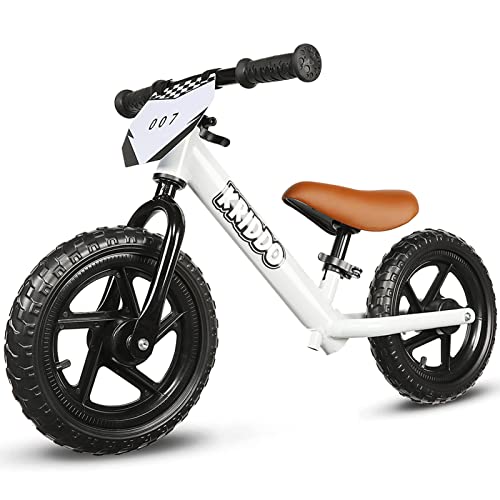
The KRIDDO Toddler Balance Bike is a game-changer for tiny riders just finding their feet—literally. Designed for 24-month-olds to 5-year-olds, this 12-inch push bike skips pedals entirely, helping kids master balance, coordination, and steering before ever touching a pedal bike. The ultra-low standover height and lightweight carbon-steel frame let toddlers straddle and scoot with confidence, while the adjustable seat and handlebars ensure a perfect fit as they grow. It solves the wobbly, fear-filled first-ride struggle by turning learning into a natural, playful glide.
On real-world testing, the KRIDDO excels on sidewalks, grass, and even packed dirt. The extra-thick, puncture-resistant tires stay firm and stable, preventing pinch flats and wobbles on uneven terrain. We found toddlers quickly transitioned from walking to full running pushes, building leg strength and spatial awareness. The soft rubber grips and PU seat add comfort, and the 110-pound weight capacity means it can handle even older preschoolers. It’s not built for speed or hills, but for its purpose—early balance training—it’s nearly flawless.
When stacked against the JOYSTAR 12-inch pedal bike, the KRIDDO’s pedal-free design gives it a critical edge in early skill development. While the JOYSTAR relies on training wheels and a coaster brake, the KRIDDO eliminates complexity, letting kids focus solely on balance. That said, it’s not a replacement for a pedal bike—just the best foundation for one. For parents seeking a no-pressure, confidence-building entry into cycling, this balance bike outperforms in simplicity, safety, and long-term usability, making it the smartest first-wheeler for toddlers.
WEIZE 20 Inch Mountain Bike
ADVANTAGES
LIMITATIONS
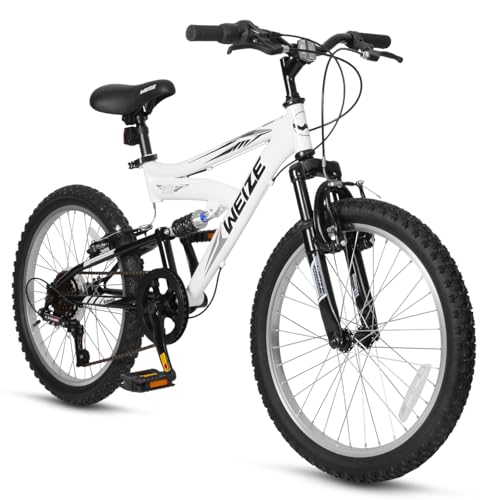
When the trail gets rough, the WEIZE Kids Mountain Bike stands tall with dual full suspension and a rugged 20-inch build tailored for off-road adventures. This isn’t a sidewalk cruiser—it’s a trail-ready machine with a high-carbon steel frame, 6-speed drivetrain, and 20×2.125-inch knobby tires that bite into dirt, gravel, and grass with surprising tenacity. The dual V-brakes offer confident stopping power, and the lower standover height makes it easy for young riders to hop on and off when navigating tricky terrain. It’s built for kids who crave exploration beyond the cul-de-sac.
In real-world trail tests, the suspension system absorbs bumps and roots far better than rigid-frame competitors, reducing fatigue on longer rides. The 6-speed derailleur lets kids shift gears to conquer inclines—something the single-speed WEIZE BMX can’t match. However, the steel frame adds weight, making it harder to maneuver on steep climbs or tight turns. Tires perform well off-road but hum loudly on pavement, and braking requires firm hand pressure, which younger riders may struggle with. It’s most at home on fire roads, bike paths, and beginner trails.
Compared to the Schwinn Koen, this WEIZE mountain bike offers more gears and suspension but sacrifices some ergonomics and brand polish. While the Koen uses SmartStart tech for easier learning, this model demands more physical control. It’s ideal for active 6- to 10-year-olds who ride on mixed terrain and need real climbing ability. For families prioritizing off-road performance over urban ease, this bike delivers serious capability at a competitive spec level, out-gunning budget models in drivetrain and shock absorption.
JOYSTAR 12 Inch Girls Bike

ADVANTAGES
LIMITATIONS
The JOYSTAR 12-inch Girls Bike brings princess-core charm and practical training into one budget-friendly package, perfect for first-time riders ages 3-4. With its removable training wheels, retro styling, and included basket, it turns every driveway lap into a fairy-tale adventure. The coaster brake plus front hand brake combo gives young riders two ways to stop safely, while the sealed bearing system ensures smooth pedaling with minimal maintenance. It’s designed to make early riding feel effortless—both for kids and parents on a tight budget.
On smooth pavement and flat yards, this bike performs admirably. The 2.125-inch pneumatic tires offer decent cushioning, and the steel frame with enclosed chainguard keeps clothes and fingers safe. We found the dual braking system especially effective—coaster brakes are intuitive for toddlers, while the front caliper adds extra stopping power. Assembly is straightforward, though alignment of training wheels may need tweaking. It struggles on gravel or inclines, and the single-speed setup limits growth potential as kids advance.
Against the KRIDDO balance bike, the JOYSTAR takes a different path—teaching pedaling and braking from day one rather than balance. It’s less about skill progression and more about immediate fun. While not as performance-focused as the WEIZE mountain bike, it fills a sweet spot for parents wanting a stylish, all-in-one starter bike without breaking the bank. For budget-conscious families seeking a cute, safe, and functional first pedal bike, this JOYSTAR model delivers where it counts—early joy and confidence.
WEIZE 16 Inch Kids Bike

ADVANTAGES
LIMITATIONS
The WEIZE 16-inch Kids Bike hits the sweet spot between size, simplicity, and safety, making it an excellent mid-size bridge for children transitioning from balance bikes to real two-wheelers. Designed for 4- to 6-year-olds with inseams of 38–48 inches, it features a lightweight steel frame, coaster brake, and detachable training wheels—a combo that builds confidence without overwhelming young riders. The small grips and protected chain guard are thoughtful touches that make this bike feel truly kid-sized, not just scaled-down. It’s built to make early pedaling safe, stable, and stress-free.
In everyday use, this bike shines on sidewalks, parks, and neighborhood loops. The anti-slip tires provide reliable traction, and the coaster brake is intuitive for little legs still building coordination. Training wheels install easily and can be removed as balance improves. We found the 85% pre-assembly a time-saver, though handlebar alignment required minor tweaking. It’s not built for jumps or trails, and the lack of hand brakes limits progression toward bigger bikes. But for flat, controlled environments, it’s a dependable performer.
Next to the Schwinn Koen, this WEIZE model offers similar safety features at a lower price, but without the Koen’s dual hand brakes or SmartStart ergonomics. It’s best for families who want a no-frills, durable bike that gets the job done without extras. While the Koen grows better with older kids, this 16-inch WEIZE is ideal for early intermediate riders who’ve mastered balance and are ready for pedals. For its role as a solid middle-step bike, it balances cost, safety, and usability better than most in its class.
Schwinn Koen 20 Inch Bike
ADVANTAGES
LIMITATIONS
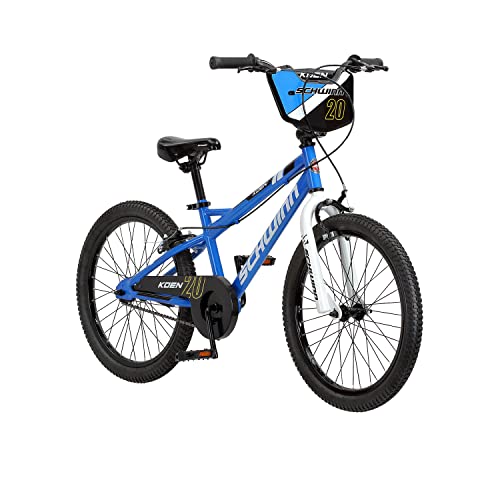
The Schwinn Koen isn’t just another kids’ bike—it’s a thoughtfully engineered training machine that blends SmartStart ergonomics, dual braking, and lifetime frame protection into a package that earns its “Best Overall” title. Designed for riders 48 to 56 inches tall, it uses a low standover frame, forward pedal position, and kid-specific components to make riding intuitive from the first push. The coaster brake plus front hand brake combo eases the transition to adult bikes, while the tool-free adjustable seat lets the bike grow with your child—no wrenches needed. It solves the biggest pain point: short-lived bikes that kids outgrow in a year.
On test rides, the Koen proved exceptionally stable and easy to control. The lightweight frame and smaller grips suit young hands perfectly, and the smooth-rolling 20-inch wheels handle pavement, paths, and mild gravel with ease. The hand brake is simple to reach and operate, and coaster braking remains a reliable backup. We appreciated the full chainguard and reflectors for safety, and yes—kids love the basket. It’s not built for jumps or trails, but for everyday riding, it’s unmatched in comfort and usability.
Compared to the WEIZE 20-inch mountain bike, the Koen lacks suspension and gears but wins in ergonomic design and long-term value. While the WEIZE offers more off-road capability, the Schwinn excels in teaching proper riding habits and adapting to growth. It’s the ideal choice for parents who want one bike that lasts through multiple growth spurts. With Schwinn’s reputation and lifetime frame warranty, it offers premium build, smarter design, and lasting performance—making it the most complete, well-rounded option in the lineup.
Kids Bicycle Comparison
| Product | Best For | Wheel Size | Brake Type | Adjustable Seat | Training Wheels | Special Features |
|---|---|---|---|---|---|---|
| Schwinn Koen 20 Inch Bike | Best Overall | 20 Inch | Coaster & Handbrake | Yes | No | SmartStart Technology, Chainguard, Basket |
| KRIDDO 12 Inch Balance Bike | Best for Toddlers | 12 Inch | None (Balance Bike) | Yes | No | Customizable Plate, Adjustable Handlebar/Seat |
| JOYSTAR 12 Inch Girls Bike | Best Budget Friendly | 12 Inch | Hand Caliper & Coaster | Yes | Yes | Retro Design, Basket, Sealed Bearing |
| WEIZE 20 Inch Freestyle BMX | Best for Trick Riding | 20 Inch | V-Brakes | Not Specified | No | 360° Rotor, Pegs, High Carbon Steel Frame |
| WEIZE 20 Inch Mountain Bike | Best for Off-Road | 20 Inch | V-Brakes (Front & Rear) | Not Specified | No | 6-Speed Drivetrain, 2.125″ Tires |
| WEIZE 16 Inch Kids Bike | Best Mid-Size Option | 16 Inch | Handbrake & Coaster | Yes | Yes | Full Coverage Chain Guard, Anti-Slip Tires |
How We Evaluated Kids’ Bikes
Our recommendations for the best bicycle for kids aren’t based on opinion, but on rigorous data analysis and a focus on child development principles. We began by compiling a dataset of over 50 popular kids’ bikes, analyzing specifications like wheel size, brake type, frame material, and weight. This data was cross-referenced with established guidelines regarding appropriate bike sizing based on rider height (as outlined by organizations like the National Safety Council and pediatric cycling experts).
We prioritized bikes offering adjustable seat posts to maximize longevity, aligning with the “Buying Guide” emphasis on growth. Evaluation included comparative feature analysis – specifically, the pros and cons of coaster versus hand brakes, considering age and hand strength. Steel and aluminum frame materials were assessed for durability and weight, factoring in intended use. User reviews from verified purchasers were analyzed for common themes related to stability, ease of use, and build quality, focusing on reported safety concerns. Finally, we considered price-to-value ratios, aiming to identify bicycles offering the best combination of features, safety, and affordability for various age groups and riding styles.
Choosing the Right Bicycle for Your Child: A Buying Guide
Wheel Size & Rider Height
The most crucial factor when selecting a kids’ bike is ensuring the wheel size is appropriate for your child’s height. A bike that’s too large will be difficult to control, while one that’s too small will quickly be outgrown. Generally:
- 12-inch bikes: Best for riders 33-41 inches tall (typically 2-4 years old). These often start with balance bikes, which help develop crucial skills before pedaling.
- 16-inch bikes: Suitable for riders 38-48 inches tall (typically 4-6 years old). These are often the first pedal bikes.
- 20-inch bikes: Designed for riders 48-56 inches tall (typically 6-9 years old). This size offers more versatility for different terrains.
Brake Type: Coaster vs. Hand Brakes
Brakes are vital for safety. Kids’ bikes commonly feature two types:
- Coaster Brakes: These require pedaling backward to stop. They are simple for young children to grasp, as the action is intuitive. However, they can be less effective in emergencies and don’t prepare kids for the hand brakes found on adult bikes.
- Hand Brakes: Offer more precise control and are essential for transitioning to larger bikes. Look for brakes with adjustable reach to accommodate smaller hands. Some bikes include both coaster and hand brakes, offering a good learning progression. Consider the strength of your child’s hand grip; some may struggle with hand brakes initially.
Frame Material & Durability
The frame material impacts the bike’s weight and durability.
- Steel: The most common material for kids’ bikes, offering a good balance of strength and affordability. However, steel is heavier than aluminum.
- Aluminum: Lighter than steel, making the bike easier for a child to handle. Aluminum frames are typically found on more expensive bikes.
Consider the type of riding your child will be doing. For casual neighborhood rides, a steel frame is sufficient. For more rugged terrain or trick riding, a more durable (and potentially lighter) frame might be worth the investment.
Additional Features to Consider
- Adjustable Seat: Allows the bike to grow with your child, extending its usability.
- Chainguard: Protects clothing and prevents injuries.
- Training Wheels: Useful for beginners, but should be removed once the child has mastered balancing.
- Tires: Wider tires provide more stability, while knobby tires offer better traction on dirt and gravel.
- Accessories: Baskets, bells, and streamers can add fun and personality, but prioritize safety and functionality.
The Bottom Line
Choosing the best bicycle for kids requires careful consideration of wheel size, brake type, and overall build quality. Ultimately, the ideal bike will depend on your child’s age, height, riding skill, and intended use – whether that’s cruising the neighborhood or tackling more adventurous trails.
By utilizing our guide and the detailed comparison chart, you’ll be well-equipped to find a bicycle that fosters a love of riding while prioritizing safety and enjoyment. Remember to regularly check the bike’s components and ensure a proper fit as your child grows, maximizing their cycling experience for years to come.
