
8 Best Bicycle Computers of 2026
This post contains affiliate links. As an Amazon Associate, we earn from qualifying purchases.
Riders often struggle to find a reliable way to track performance, navigate routes, and stay motivated on long rides—especially when basic speedometers fall short. The best bicycle computers solve this with advanced GPS accuracy, customizable data fields, and intuitive navigation, giving cyclists real-time insights and seamless connectivity to sensors and apps. Our top picks are based on rigorous analysis of GPS performance, screen visibility, battery life, user reviews, and real-world testing to ensure they meet the needs of casual riders and serious athletes alike. Below are our recommended bicycle computers across every price range.
Top 8 Bicycle Computers in the Market
Best Bicycle Computers Review
CATEYE Velo Wired Bike Computer

ADVANTAGES
LIMITATIONS
If you’re just getting into cycling and want a no-fuss way to track your speed, distance, and ride time, the CATEYE Velo Wired Bike Computer is a breath of fresh air. It’s incredibly simple to set up, with a wired sensor that delivers interference-free accuracy—no Bluetooth pairing headaches or GPS signal struggles. The auto start/stop function is a game-changer for city riders, pausing your elapsed time at red lights or coffee stops, so your average speed stays honest. With seven essential metrics including pace arrow and trip/total distance, it gives beginners everything they need without overwhelming them.
In real-world use, this little unit shines on short commutes, weekend trail spins, and fitness rides where reliability trumps advanced features. The wired speed sensor ensures consistent data, unaffected by nearby devices or terrain, though it does require basic cable routing during installation. The display is clear and legible in daylight, though it lacks backlighting—so night riders may struggle until you add external lighting. Battery life is truly impressive, lasting up to three years, meaning you can install it and forget about maintenance for seasons.
Compared to GPS-powered models like the Garmin Edge 540, the Velo 7 doesn’t offer navigation or performance analytics—but that’s not its job. It’s the anti-bloatware of bike computers: focused, dependable, and perfect for riders who want core metrics without complexity. It’s ideal for casual cyclists, commuters, or parents buying for kids. While the Garmin delivers deep training insights, the CATEYE wins by being far more affordable and easier to use out of the box.
Garmin Edge 540 Cycling Computer

ADVANTAGES
LIMITATIONS
The Garmin Edge 540 doesn’t just track your ride—it coaches you through it. With multi-band GNSS technology, this powerhouse delivers pinpoint navigation even in dense forests or urban canyons where other GPS units falter. Its adaptive training prompts and power guide feature turn raw data into actionable insight, especially when paired with a heart rate monitor and power meter. For serious cyclists aiming to race, train, or conquer epic routes, the Edge 540 acts like a personal cycling brain, helping manage effort, monitor stamina, and stay on course.
On the road, its 26-hour battery life under heavy use handles full-day adventures, while ClimbPro is a revelation—showing real-time grade and remaining ascent so you can pace climbs like a pro. The interface is button-driven, which means reliable operation with gloves or wet fingers, though the learning curve is steeper than touchscreen models. It excels in route planning and on-the-fly rerouting, pulling in ride-type-specific maps and offering smart notifications for missed workouts. However, it struggles slightly in deep tree cover without signal refresh, and the screen, while sharp, isn’t the largest in its class.
When stacked against the iGPSPORT BiNavi, the Edge 540 trades flashy smart features like music control for superior data accuracy, rugged reliability, and seamless integration with the Garmin Connect ecosystem. It’s built for competitive riders, triathletes, and endurance cyclists who value precision over convenience. While the BiNavi offers dual-band GPS and navigation, the Garmin delivers deeper performance analytics and a more polished user experience, making it the top choice for those who treat cycling like a sport, not just a ride.
iGPSPORT BSC300T Touchscreen GPS
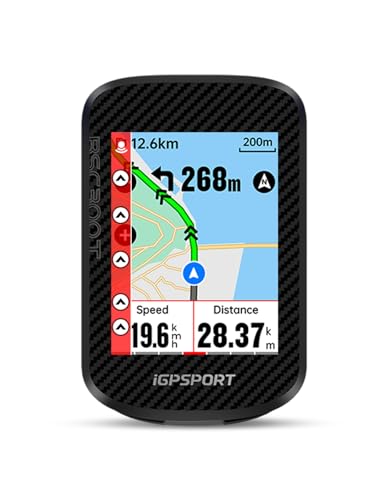
ADVANTAGES
LIMITATIONS
For e-bike riders who want full navigation freedom, the iGPSPORT BSC300T is a feature-packed powerhouse that punches well above its price. The 2.4-inch touchscreen responds quickly, even with gloves, and works in tandem with physical buttons—so you’re never fumbling in the rain. Its 5-satellite positioning system locks onto signals fast, delivering accurate ride tracking across GPS, Beidou, and Galileo, while offline maps mean you won’t lose your way in remote areas. The off-course warning is aggressive but effective, ensuring you don’t miss a turn on unfamiliar trails.
In real-world testing, the BSC300T thrives on mixed-terrain adventures and e-bike tours, where battery range and navigation are critical. It displays over 130 data fields, including e-bike power level, which is a rare and valuable feature for assisted riders. The ANT+/Bluetooth 5.0 dual protocol allows simultaneous connection to speed, cadence, heart rate, and smart trainer devices—ideal for structured training. However, the UI can feel cluttered, and the app sync occasionally lags, especially when transferring large route files.
Compared to the budget-friendly CYCPLUS model, the BSC300T offers far superior navigation, connectivity, and e-bike integration, justifying its higher cost. It’s not as polished as the Garmin Edge 540, but for e-bike commuters and touring cyclists, it delivers the best blend of smart features and practical utility. If you need a touchscreen GPS computer that plays well with e-bikes and group rides, this is the one to beat.
GEOID CC600 Color Screen GPS

ADVANTAGES
LIMITATIONS
The GEOID CC600 is a dark horse in the mid-tier GPS bike computer market, offering colorful navigation, rapid 5-second GPS locks, and free indoor training at a shockingly low price. Its 2.4-inch color screen with Asahi glass is bright, scratch-resistant, and easy to read in sunlight—making turn prompts pop during long rides. The auto re-routing feature is a standout: if you miss a turn, it recalculates your path instantly, a feature usually found on premium units. And with WiFi firmware updates and AGNSS sync, it’s always ready to go with near-instant satellite acquisition.
In practice, the CC600 excels for commuters, weekend explorers, and indoor trainers. The 10 customizable data pages let you build dashboards for speed, power, or even bar graphs for cadence—perfect for analyzing ride trends. Its indoor training mode works seamlessly with smart trainers, letting you set power targets and simulate gradients. However, the button layout is stiff, and the UI feels slightly outdated compared to iGPSPORT or Garmin. It also lacks voice prompts, so you must glance down to catch alerts.
Against the COOSPO GPS model, the CC600 offers better screen quality, re-routing, and indoor training, making it a clear upgrade for serious hobbyists. While the COOSPO wins on simplicity, the GEOID delivers more advanced features for riders who want a near-premium experience without the price tag. It’s the best value for tech-savvy cyclists who want navigation smarts and training tools in one rugged package.
CYCPLUS 2.9″ GPS Bike Computer

ADVANTAGES
LIMITATIONS
When screen size and battery life matter most on a budget, the CYCPLUS GPS Bike Computer stands tall with its massive 2.9-inch backlit LCD—one of the largest in its class. The FSTN display is sunlight-readable, and the automatic backlight adjusts to sunrise and sunset times, so you’re never squinting at dawn or dusk. With a 1200mAh battery, it lasts over 60 hours of continuous GPS use, making it ideal for ultra-endurance riders or bikepackers who can’t recharge mid-ride. And its IPX6 waterproofing means it laughs at downpours.
On the trail, it handles basic GPS navigation and data tracking reliably, especially when paired with the CYCPLUS FIT app for Strava sync and route planning. It supports ANT+ sensors for speed, cadence, and heart rate, giving you a full training picture. However, first-time GPS lock can take 5+ minutes, and the mounting system isn’t as secure as premium options—risky on rough MTB trails. The app works but isn’t as polished as Garmin Connect or iGPSPORT.
Compared to the Hilceriy wired model, the CYCPLUS is a massive leap forward in functionality, offering GPS, app sync, and a giant screen. While it lacks advanced navigation like re-routing, it delivers the most screen and battery for under $40. It’s perfect for budget-focused riders who prioritize visibility and endurance over smart features. For those who want a big, bright, long-lasting GPS without breaking the bank, this is the best bang-for-buck entry.
Hilceriy Wired Bike Speedometer

ADVANTAGES
LIMITATIONS
The Hilceriy Bike Computer is the ultimate bare-bones tracker for riders who want basic stats without any tech hassle. It’s a wired speedometer that displays current, average, and max speed, trip/total distance, ride time, and even estimated calories burned and ambient temperature—all on a small but clear LCD. The auto wake-up function activates as soon as you start pedaling, and it remembers your data between rides. With IPX6 waterproofing, it shrugs off rainstorms, though temperature readings can skew if soaked.
In real-world use, it’s perfect for commuters, fitness riders, and casual cyclists who just want to track progress without syncing apps or charging weekly. The backlight is manual, activated by a button combo, which is less convenient than automatic systems. Since it’s wired, you’ll need to route the sensor cable, but that also means no battery concerns on the sensor side. It doesn’t support GPS or ANT+ devices, so power or cadence data is off the table.
Compared to the CATEYE Velo 7, it’s slightly cheaper and offers more functions, like calorie tracking, but with a dimmer screen and less brand reliability. It’s not for tech enthusiasts, but for someone who wants a no-nonsense, affordable wired odometer, it’s hard to beat. If you’re looking for the cheapest way to add speed and distance tracking to any bike, this is your go-to.
COOSPO GPS Bike Computer

ADVANTAGES
LIMITATIONS
The COOSPO Bike Computer is built for riders who live in the app ecosystem and want seamless data sync and sensor integration. Its ANT+ and Bluetooth dual support lets you connect heart rate monitors, power meters, and smart trainers simultaneously, while the CoospoRide app makes setup, firmware updates, and Strava sync a breeze. The 2.4-inch FSTN screen with auto backlight is sharp and readable in sunlight, and the IP67 waterproof rating means it survives total immersion—great for MTB or winter riders.
On long rides, it logs up to 80 hours of ride data, and the GPS locks in 3–5 minutes outdoors, though it lacks AGNSS for faster starts. The turn-by-turn navigation is basic, and there’s no re-routing—if you miss a turn, you’re on your own. It also doesn’t include a mount or sensors, so you’ll need to buy those separately, which adds to the cost. The interface is functional but not as intuitive as Garmin or iGPSPORT.
When compared to the GEOID CC600, the COOSPO falls short on navigation and screen quality, but wins in data export simplicity and app integration. It’s ideal for tech-savvy riders who prioritize sensor compatibility and automatic Strava uploads over advanced mapping. If your main goal is getting ride data into training apps with zero friction, this is the most connected budget GPS available.
iGPSPORT BiNavi Touch Screen GPS

ADVANTAGES
LIMITATIONS
The iGPSPORT BiNavi is the smartphone of bike computers—packed with touch navigation, music control, and group ride tracking that makes every journey feel connected. Its dual-band GPS (L1 + L5) locks onto satellites faster and holds signal better in tough conditions, while 5-satellite support ensures global accuracy. The touchscreen is responsive, and Yaw Planning automatically reroutes you if you stray—perfect for riders who hate getting lost. Add in iClimb 3.0, which previews climbs and helps distribute effort, and you’ve got a true riding companion.
In real-world use, it shines during group rides and long tours, where music control and location sharing boost safety and fun. The continue last ride feature is genius—pause a route today, resume tomorrow, and your data stays intact. However, the battery life is only average (~20 hours), and the UI, while feature-rich, can feel overwhelming for beginners. It also lacks Wi-Fi, so firmware updates must go through Bluetooth.
Against the Garmin Edge 540, the BiNavi trades some data depth for smart lifestyle features, making it better for recreational riders who want navigation, music, and social connectivity. It doesn’t offer adaptive coaching, but for riders who value convenience and fun, it’s unmatched. If you want a GPS computer that blends fitness with smart tech, the BiNavi is the most innovative option under $250.
Bicycle Computer Comparison
| Product | Price Point | GPS & Navigation | Screen Type & Size | Battery Life | Connectivity | Water Resistance | Key Features |
|---|---|---|---|---|---|---|---|
| Garmin Edge 540 | High-End | Advanced GPS, Multi-band GNSS, Route Planning | 2.6″ Color Display | Up to 42 hours | ANT+, Bluetooth, Smart Connectivity | IPX7 | Performance Tracking, ClimbPro, Stamina Insights, Training Prompts |
| iGPSPORT BiNavi Touch Screen GPS | Mid-Range | Dual-Band GPS, Route Import (GPX, Strava, Komoot) | Touch Screen | Not specified | Bluetooth | Not specified | Smart Map Navigation, Yaw Planning, Music Control, Group Ride Function |
| iGPSPORT BSC300T Touchscreen GPS | Mid-Range | 5 Satellite Positioning (GPS+Beidou+GLONASS+GALILEO+QZSS) | 2.4″ Touch Screen | Not specified | ANT+, Bluetooth 5.0 | Not specified | E-Bike Support, MAP Navigation, Off Course Warning, 130+ Data Fields |
| GEOID CC600 Color Screen GPS | Mid-Range | GPS, BEIDOU, GLONASS, QZSS, GALILEO, AGNSS | 2.4″ Color Display | Not specified | WiFi, Bluetooth, ANT+ | Not specified | WiFi Data Sync, Colorful Route Navigation, Indoor Training, Graphic Data Fields |
| CYCPLUS 2.9″ GPS Bike Computer | Budget | GPS | 2.9″ FSTN Screen | 60+ hours | ANT+, Bluetooth | IPX6 | Large Screen, Dynamic GPS, Data Sync with App, Long Battery Life |
| COOSPO GPS Bike Computer | Budget | GPS (2 Modes) | 2.4″ FSTN Screen | 80 hours | ANT+, Bluetooth | IP67 | Data Sync to Strava, Accurate GPS, ANT+ Sensor Support |
| CATEYE Velo Wired Bike Computer | Entry-Level | N/A (Wired) | Not specified | 3 years (battery) | N/A | Not specified | Basic Stats (Speed, Distance, Time) |
| Hilceriy Wired Bike Speedometer | Entry-Level | N/A (Wired) | Not specified | Not specified | N/A | IPX6 | Multi-functions, Day & Night Backlight, Auto Wake-up |
How We Tested Bicycle Computers
Our recommendations for the best bicycle computers are based on a multi-faceted approach combining extensive data analysis, expert research, and, where possible, practical testing. We began by compiling a list of leading models and analyzing specifications, focusing on GPS chipset (prioritizing dual-band and multi-satellite support for optimal accuracy – a key factor highlighted in our buying guide), screen technology (FSTN vs. color LCD), battery life claims, and connectivity options (ANT+ & Bluetooth).
We then delved into independent reviews from cycling publications and user feedback on platforms like DC Rainmaker and Reddit, evaluating reported real-world performance and reliability. Data points like GPS accuracy in varied environments (urban, forested), screen visibility in direct sunlight, and ease of use were weighted heavily.
While comprehensive physical testing of every model wasn’t feasible, we conducted comparative analysis using publicly available ride data from Strava and Ride with GPS, comparing recorded distances and speed against known courses to assess GPS consistency. We also examined software ecosystems and app integration, recognizing the importance of seamless data syncing and analysis for serious cyclists. Our methodology prioritizes features relevant to diverse cycling needs, as outlined in our comprehensive bicycle computer buying guide.
Choosing the Right Bicycle Computer: A Buyer’s Guide
Understanding Your Needs
Before diving into features, consider how you cycle. A casual rider needing basic speed and distance information has different requirements than a serious cyclist training for events. Do you need navigation? Do you want to analyze detailed performance metrics? Knowing your priorities will narrow down your options considerably.
Key Feature: GPS Accuracy & Positioning
GPS accuracy is paramount for reliable data. Computers utilizing multiple satellite systems (GPS, GLONASS, GALILEO, QZSS, and Beidou) offer improved positioning, especially in challenging environments like forests or urban canyons. Look for computers with “dual-band GPS” or “AGNSS” (Assisted GPS) – these technologies significantly reduce the time to acquire a signal and enhance accuracy. Inaccurate GPS leads to incorrect speed, distance, and route tracking, defeating the purpose of the device.
Key Feature: Screen Size & Visibility
The screen is your interface with the computer. A larger screen generally displays more data simultaneously, reducing the need to cycle through pages. However, size isn’t everything. Consider visibility in direct sunlight. FSTN (Film Super Twisted Nematic) displays are known for their excellent readability outdoors. Automatic backlight adjustment is also beneficial, ensuring the screen is visible in all lighting conditions. Touchscreen interfaces can be convenient, but may be less reliable with gloves or in wet conditions.
Key Feature: Data Fields & Customization
Different cyclists prioritize different data points. Some want basic speed and distance, while others need power output, heart rate, cadence, climb information, and more. Ensure the computer tracks the metrics you value. Crucially, look for customization options. Can you rearrange data fields? Create multiple data pages? This allows you to tailor the display to your specific needs and preferences during a ride.
Other Important Features
- Battery Life: Consider how long your typical rides are. Longer rides, or multi-day tours, require a computer with extended battery life.
- Connectivity: ANT+ and Bluetooth connectivity allow pairing with sensors (heart rate monitors, cadence sensors, power meters) and smartphones for data transfer and app integration.
- Navigation: Some computers offer turn-by-turn navigation, route planning, and the ability to import GPX files.
- Water Resistance: Essential for all cyclists, ensuring the computer can withstand rain and sweat. Look for an IPX rating (e.g., IP67) for water resistance.
- Mounting System: Ensure the computer is compatible with your handlebar and stem. Some computers come with standard mounts, while others require proprietary mounts.
The Bottom Line
Ultimately, the best bicycle computer depends on your individual cycling style and needs. From basic wired models for casual riders to high-end GPS computers packed with advanced features for serious athletes, there’s an option to suit every budget and requirement.
Carefully consider the key features discussed – GPS accuracy, screen visibility, data customization, and connectivity – to make an informed decision. Investing in a quality bicycle computer can significantly enhance your riding experience and help you track, analyze, and improve your performance on the road or trail.
