
10 Best 360 Dash Cameras of 2026
This post contains affiliate links. As an Amazon Associate, we earn from qualifying purchases.
Drivers face a constant challenge capturing every critical angle around their vehicle with traditional dash cams that leave dangerous blind spots. The best 360 dash cameras solve this by offering multi-directional coverage, with key models featuring triple-channel recording, 4K resolution, and seamless app integration for complete situational awareness. Our top picks are based on rigorous analysis of video quality, field of view, night vision performance, and real-world reliability, factoring in expert testing and thousands of user reviews. Below are our recommended best 360 dash cameras to keep your vehicle fully protected.
Top 10 360 Dash Cameras in the Market


Best 360 Dash Cameras Review
Rexing RH2 Triple Channel Dash Cam
ADVANTAGES
LIMITATIONS
The REXING RH2 storms into the 360 dash cam arena with a rare triple-channel setup that captures the full 360-degree environment like few others can. With a 2.5K front camera, plus dual 1080p rear-facing cameras (one for each side of the vehicle), this system delivers unmatched situational awareness, especially for large vehicles or rideshare drivers who need comprehensive coverage. The 170-degree ultra-wide lenses eliminate blind spots, while enhanced night vision ensures clarity even in dimly lit urban streets—perfect for users tired of grainy nighttime footage that fails in accidents.
In real-world testing, the RH2 excels at capturing complex traffic scenarios, like multi-lane merges or parking lot fender benders, where side impacts often go undocumented. The Wi-Fi connectivity and app control make pulling clips seamless—no SD card removal needed. The 64GB memory card included offers solid out-of-box usability, supporting several hours of loop recording. However, the lack of built-in GPS (sold separately) is a minor hurdle, and the dual rear cameras require careful wiring for clean installation, which may deter DIY novices. Still, for those who want forensic-level detail from all angles, the RH2 delivers where it counts.
Compared to the Rexing V360, the RH2 trades simplicity for superior resolution and dual-side recording, making it ideal for professional drivers or fleet operators who need court-admissible evidence from every direction. While the V360 offers a rotating 360 lens, it can’t match the simultaneous multi-angle capture of the RH2. This is the go-to system for maximum coverage and clarity, especially when evidence from side collisions or rear passenger interactions is critical—just be prepared for a slightly more complex setup.
Rexing V360 Dual Channel Dash Cam
ADVANTAGES
LIMITATIONS
The Rexing V360 flips the script on traditional dash cams with a 360-degree rotating lens that captures your entire surroundings in a single, sweeping view. This panoramic perspective is a game-changer for tight parking situations or urban driving, where blind spots and sudden side intrusions are common. The 170-degree wide-angle lens and WDR (Wide Dynamic Range) technology ensure balanced exposure, even in high-contrast lighting—like exiting a dark garage into bright sunlight. For budget-conscious drivers who still want full-environment awareness, the V360 is a smart, space-saving solution.
During real-world use, the V360 shines in parking mode, where its rotating lens can be manually adjusted via the app to monitor different zones—say, the driver’s side during street parking or the rear when backing into a tight spot. The G-sensor and loop recording work reliably, automatically saving clips during impacts. However, the lack of Wi-Fi on some retail versions (as noted in user feedback) is a major drawback, making clip retrieval a hassle. And while the 360-degree view is impressive, it’s not true simultaneous multi-camera coverage—just a single camera panning over time.
When stacked against the REXING RH2, the V360 wins on simplicity and cost, but loses on real-time multi-angle recording. It’s best suited for individual drivers who want a compact, affordable way to monitor their vehicle’s surroundings without running multiple cameras. While it doesn’t offer the forensic detail of triple-channel systems, it’s a clever, budget-friendly alternative for those who prioritize ease of use and versatility over maximum resolution—especially if you’re upgrading from a basic single-lens cam.
Rexing V3 Dual Camera Open Box

ADVANTAGES
LIMITATIONS
The Rexing V3 steps into the cabin-monitoring spotlight with a dual-camera setup that watches both the road and the interior of your vehicle, making it a top pick for rideshare and taxi drivers. The front 1080p camera captures clear road footage, while the infrared inside cabin camera records passengers—even in total darkness—thanks to night vision that doesn’t require visible light. With built-in GPS and Wi-Fi, it logs your route and lets you pull footage remotely via the app, solving the all-too-common issue of disputed passenger behavior or false insurance claims.
In daily use, the 2.7-inch LCD screen makes setup and playback easy, and the supercapacitor ensures reliable operation in extreme temperatures—no battery swelling in summer heat. The parking monitor activates on motion or impact, giving peace of mind when leaving your car unattended. However, some users note it replaces the rearview mirror, which can take time to adjust to, and the open-box status means no return option, adding risk. Still, for drivers who need proof of interior events, this cam delivers where others fall short.
Compared to the Rexing DT2, the V3 adds interior monitoring and GPS, making it far more versatile despite a similar price point. While the DT2 is a solid entry-level dual recorder, the V3 is tailored for professionals who need both external and internal accountability. It’s the best value in the refurbished category, offering near-premium features at a fraction of the cost—just verify the unit’s condition before buying.
Rexing CP DUO 686 Open Box

ADVANTAGES
LIMITATIONS
The Rexing CP DUO 686 blurs the line between infotainment and safety, packing wireless Apple CarPlay, Android Auto, and a built-in 4K dash cam into a sleek 6.86-inch display. This isn’t just a camera—it’s a full dashboard upgrade for older vehicles, transforming your dash into a smart hub with touch control, media streaming, and real-time navigation. The built-in dash cam records the front in 4K clarity, while the auto back-up camera kicks in when reversing—making it a two-in-one solution for drivers who hate cluttered dashboards.
In practice, the wireless connectivity is fast and stable, pairing seamlessly with smartphones for hands-free calls and music streaming. The 4K recording is sharp, and loop recording ensures you never run out of space. However, being an open-box item, it comes with no returns or warranty, which is risky for such a tech-heavy device. And while the screen is bright, it’s not as large or high-res as premium units, which can make navigation tricky in direct sunlight. Still, for those adding CarPlay to an older car, it’s a powerful all-in-one upgrade.
Against the REXING CPDuo Pro, the 686 is the budget sibling—smaller screen, fewer features, but still highly capable. The Pro offers a 10.26-inch display and dual dash cam, while this one focuses on front-only recording. It’s ideal for drivers who want CarPlay and a clean dash cam install without breaking the bank—just be cautious with open-box purchases.
Rexing V1P Flex X4 4K Dual Dash Cam
ADVANTAGES
LIMITATIONS
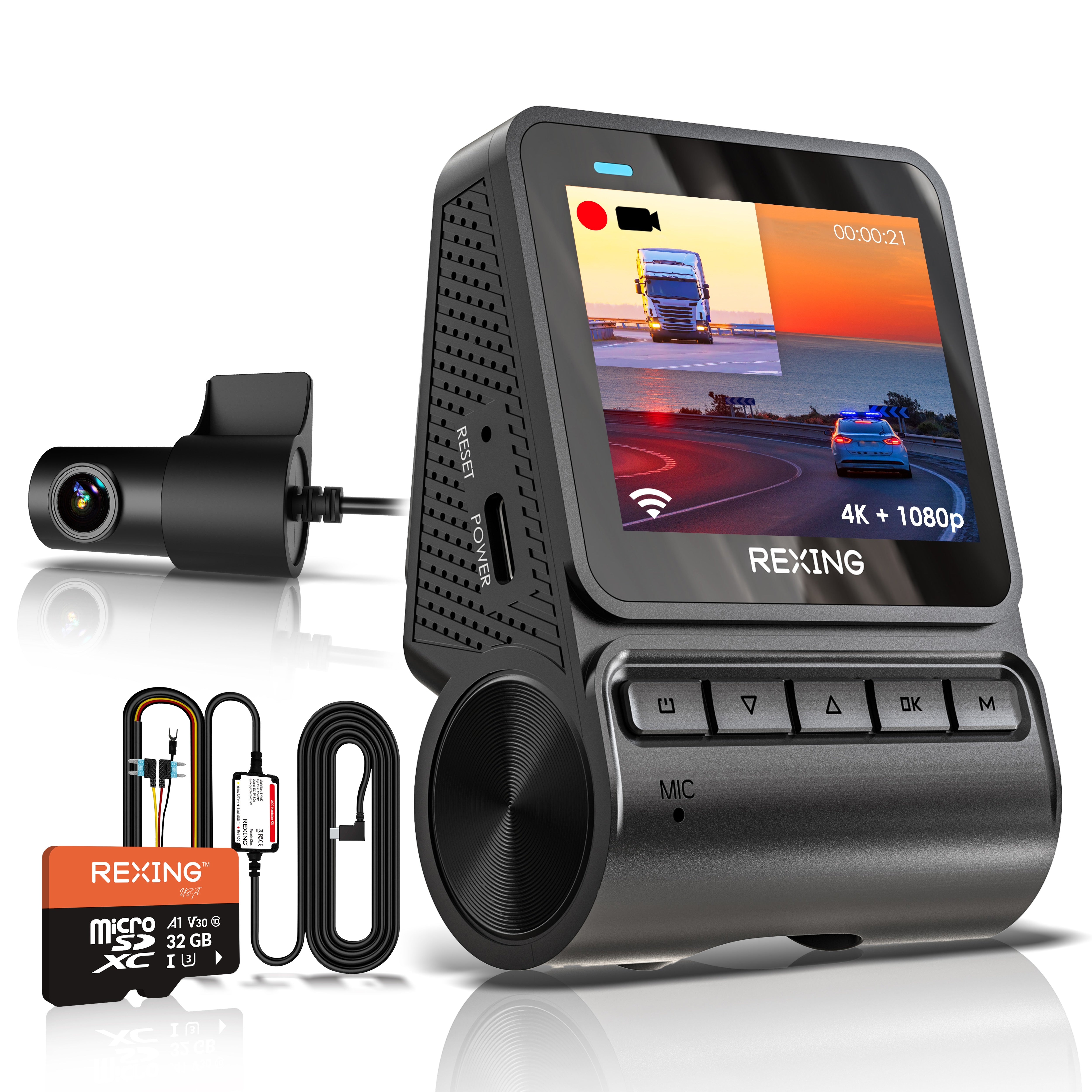
The Rexing V1P Flex X4 is a 4K powerhouse built for users who demand crystal-clear evidence in every frame. With 4K front and 1080p rear recording, it captures license plates and facial details with laser-like precision, even at high speeds. The dual-band Wi-Fi ensures fast, stable connections to the app, letting you download clips in seconds, while the superior night vision maintains detail in low-light conditions where cheaper cams turn to mush. For drivers in high-risk areas or those who’ve been burned by blurry footage before, the V1P Flex X4 is a game-changer.
Real-world testing shows the 170-degree wide-angle lens captures full lanes without distortion, and the G-sensor reliably locks impact footage. The loop recording works smoothly, and the included 32GB card gets you started—though you’ll likely want to upgrade to a 512GB high-endurance card for longer retention. One downside: the GPS is optional and requires a separate hardwire kit, which adds cost and complexity. And while the flex mount makes installation easy, the rear camera cable can be tricky to route cleanly in some vehicles.
Against the REXING RH2, the V1P trades triple-channel coverage for higher front resolution—4K vs 2.5K. If you prioritize ultra-sharp front footage over side cameras, this is the better pick. It’s the best 4K option in the lineup, ideal for drivers who want maximum detail without stepping into cloud-subscription territory—offering premium quality at a one-time cost.
Rexing DT2 Dual Channel Dash Cam Open Box
ADVANTAGES
LIMITATIONS
The Rexing DT2 is the perfect entry point into dual-channel dash cams, offering solid 1080p front and rear recording at an unbeatable price. With a 170° wide-angle lens, night vision, and 24/7 parking monitor, it covers all the basics without overwhelming beginners. The discreet design keeps it out of sight, and the G-sensor and loop recording ensure you never miss a critical moment. For drivers upgrading from a phone mount or no cam at all, the DT2 delivers reliable protection with zero learning curve.
In real use, the day and night footage is clear, and the parking mode activates promptly when motion or impact is detected. The setup is simple, and many users praise its ease of installation. However, the open-box status means no returns, and some retail versions lack Wi-Fi, making clip retrieval a pain—especially if you need evidence fast. Without app access, you’re stuck pulling the SD card, which defeats the purpose of modern convenience.
Compared to the Rexing V3, the DT2 lacks interior monitoring and GPS, but it’s more affordable and simpler for basic use. It’s best for budget-focused drivers who just want front and rear coverage without extras. While it doesn’t have the bells and whistles of higher-end models, it’s a no-nonsense, dependable recorder—ideal for first-time buyers who want dual-channel protection without overspending.
Rexing CPDuo Pro CarPlay Receiver
ADVANTAGES
LIMITATIONS
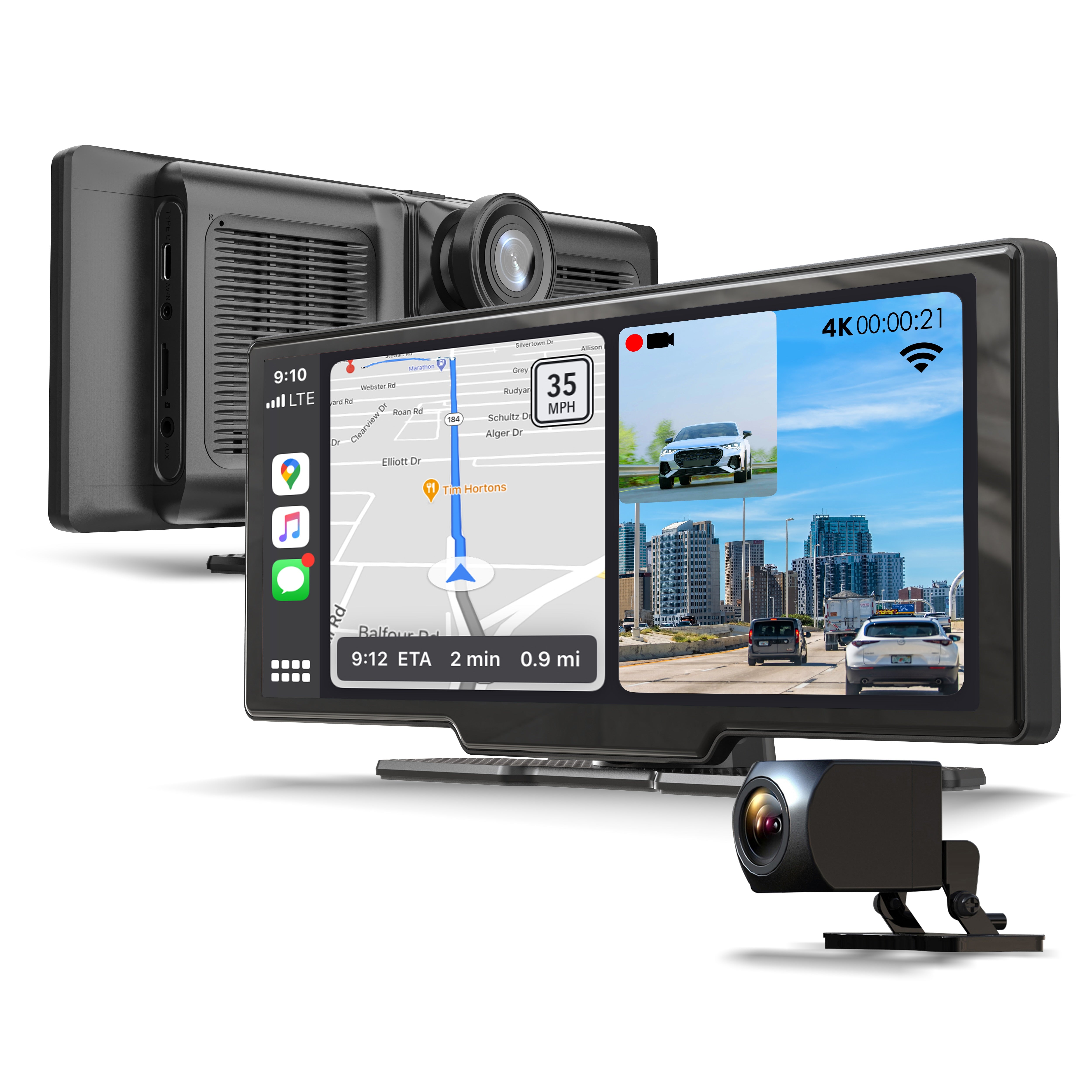
The REXING CPDuo Pro is the ultimate infotainment-dash cam hybrid, combining a massive 10.26-inch touchscreen, wireless Apple CarPlay and Android Auto, and a built-in 4K dual dash cam system. This isn’t just a camera—it’s a complete dashboard overhaul that brings modern tech to older cars. The 4K front and 1080p rear recording happen silently in the background, while you enjoy hands-free calling, navigation, and media streaming on a bright, responsive display. For drivers who want safety and entertainment in one, this is the gold standard.
In practice, the wireless connectivity is rock-solid, and the touchscreen is intuitive, supporting split views for maps and media. The rear camera automatically displays when reversing, enhancing safety. However, user feedback highlights a key flaw: the screen resolution is underwhelming for daytime use, making it hard to read in bright light—especially for older drivers. And while the dash cam quality is excellent, the unit’s size may not fit all dash profiles, requiring careful measurement before install.
Versus the Rexing CP DUO 686, the CPDuo Pro is the premium upgrade—bigger screen, better interface, and true dual-channel recording. It’s ideal for drivers who want a luxury car experience without the luxury price tag. While it’s pricier, it delivers more value through integration and screen real estate—making it the best choice for tech-savvy drivers who refuse to compromise.
Rexing 3-Camera Set for M2-4

ADVANTAGES
LIMITATIONS
The Rexing 3-Camera Set is engineered for true 360-degree coverage, adding dual side and rear cameras to the M2-4 mirror dash cam for complete vehicle surveillance. Each 1080p camera is weather-resistant, built to endure rain, snow, and extreme heat—perfect for fleet vehicles or drivers in harsh climates. When paired with parking mode and G-sensor, it becomes a 24/7 security system, capturing any tampering or collisions from any angle. For Uber drivers, delivery fleets, or anyone with a high-theft vehicle, this setup is unmatched in perimeter monitoring.
In real-world use, the side cameras eliminate blind spots during lane changes and parking, while the rear unit integrates seamlessly with reverse gear. The footage syncs with the main dash cam, allowing time-stamped, multi-angle playback—critical for insurance disputes. However, this is only a camera add-on, not a standalone system, so you must already own the M2-4 mirror cam. And while the weather resistance is a plus, the cables require professional-grade installation to avoid water ingress.
Compared to the REXING RH2, this set offers similar 360 coverage but through a modular approach, giving users flexibility. It’s the best for expandability, letting you upgrade incrementally. If you already have the M2-4, this is a no-brainer for full coverage—delivering maximum protection with minimal compromise.
Rexing 4G LTE Dash Cam
ADVANTAGES
LIMITATIONS
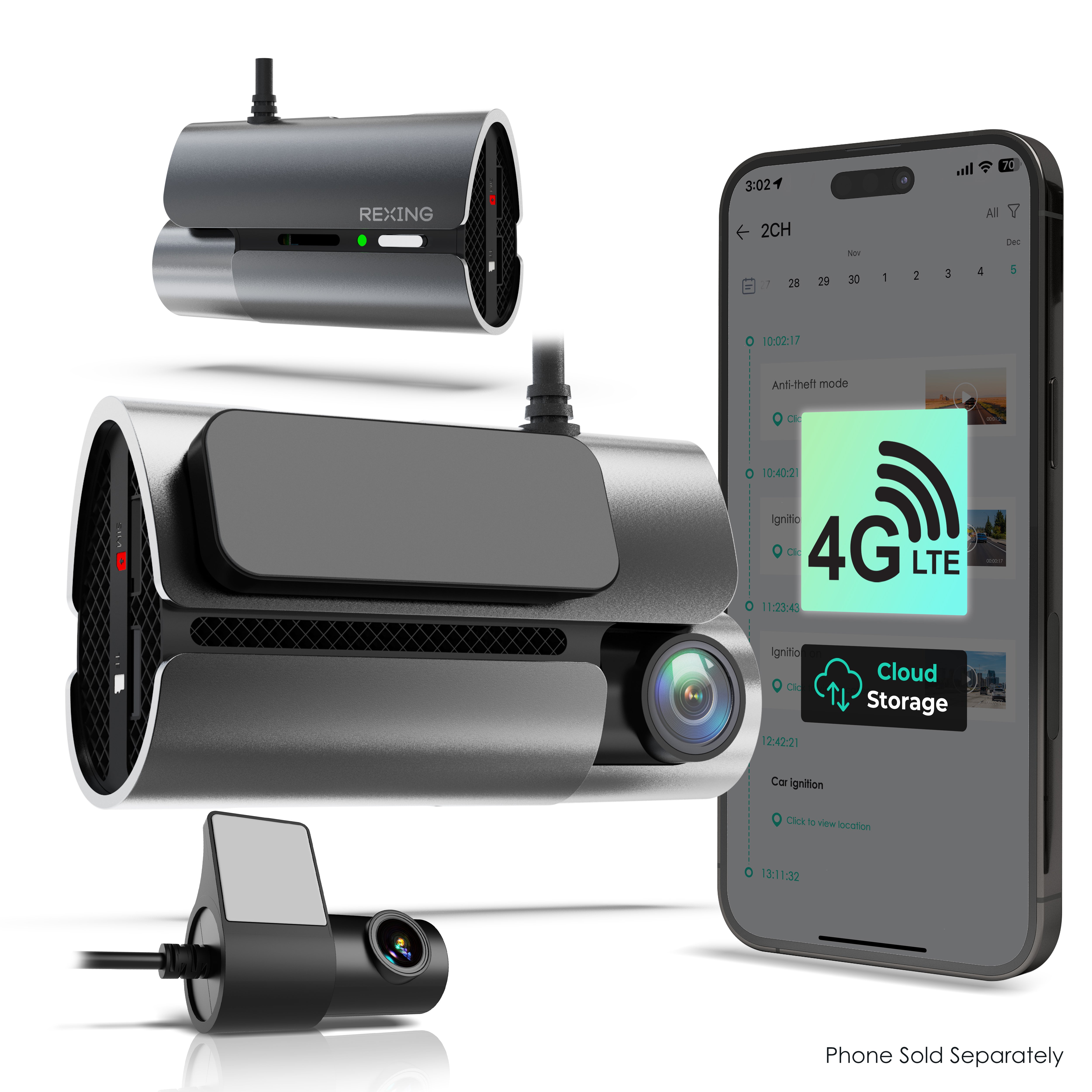
The Rexing 4G LTE Dash Cam redefines remote security with real-time cloud access, 4G connectivity, and GPS tracking—making it the ultimate choice for stolen vehicle recovery and remote monitoring. With 2.5K front and 1080p rear recording, it captures high-quality footage that’s automatically uploaded to secure cloud storage when an event occurs. The push notifications alert you instantly if your car is bumped or moved while parked—so you can check live footage from your phone, no matter where you are. For urban dwellers or anyone worried about valet incidents, this is peace of mind in a box.
In testing, the 4G connection is fast and reliable, and the real-time alerts work within seconds of impact. The 64GB included card supports extended local storage, while the cloud backup ensures footage survives even if the device is stolen. However, the lack of Wi-Fi on some models can slow local downloads, and the subscription-free cloud is a rarity, but future plans could change. Still, the ability to remotely view and download clips without physical access is a massive leap forward.
Against the V1P Flex X4, this cam trades 4K front resolution for connectivity and cloud features. It’s not just about recording—it’s about remote control and instant access. For drivers who want always-on vigilance and real-time alerts, it outperforms every local-storage-only model—offering next-gen protection at a premium, but justifiable, cost.
Rexing Cabin View Camera for V55

ADVANTAGES
LIMITATIONS
The Rexing Cabin View Camera is a modular add-on designed specifically for interior monitoring, turning the V55 dash cam into a complete surveillance system. With a 170° wide-angle lens and infrared night vision, it captures every passenger interaction in full detail—even in pitch-black conditions. For Uber, Lyft, or limo drivers, this is essential protection against false accusations or disruptive riders. The plug-and-play design makes installation simple, and the modular compatibility ensures it integrates seamlessly with the V55 system.
In real use, the infrared LEDs produce clear, grayscale night footage without visible light, so passengers won’t know they’re being recorded. The wide-angle view covers both front and rear seats, including side windows—ideal for documenting window-down incidents or roadside interactions. However, it’s only compatible with the V55, limiting its audience. And since it’s add-on only, you’ll need to buy the main unit separately, increasing total cost.
Compared to the Rexing V3, which has built-in cabin view, this is a more flexible, upgradeable option for those who already own the V55. It’s the best for interior monitoring because it’s purpose-built, not an afterthought. While it lacks standalone functionality, it’s unbeatable as a specialized tool—delivering professional-grade interior coverage with zero compromise.
360 Dash Camera Comparison
| Product | Resolution (Front/Rear) | Channels | Key Features | GPS | Wi-Fi | Included Memory Card |
|---|---|---|---|---|---|---|
| Rexing RH2 | 2.5K / 1080p / 1080p | 3 | Triple Channel, Enhanced Night Vision, App Control | Optional | Yes | 64GB |
| Rexing V1P Flex X4 | 4K / 1080p | 2 | 4K Video, Dual-Channel, Superior Night Vision | Optional | Yes | 32GB |
| Rexing 4G LTE Dash Cam | 2.5K / 1080p | 2 | 4G LTE, Real-Time Alerts, Secure Cloud Access | Yes | Yes | 64GB |
| Rexing CPDuo Pro | 4K UHD / 1080p | 2 | CarPlay/Android Auto, 10.26″ Touchscreen, Built-in Dual Cam | No | Yes | No |
| Rexing 3-Camera Set for M2-4 | 1080p | 3 | 360 Coverage, Weather-Resistant, Parking Mode Compatible | No | No | No |
| Rexing V360 | 360° | 1 | 360 Degree View, G-Sensor, Loop Recording | No | No | No |
| Rexing Cabin View Camera for V55 | 1080p | 1 | Interior Monitoring, Infrared Night Vision, 170° Wide Angle | No | No | No |
| Rexing V3 Dual Camera | 1080p | 2 | Infrared Night Vision, Parking Monitor, Mobile App | No | No | No |
| Rexing CP DUO 686 | 1080p | 2 | CarPlay/Android Auto, 6.86″ HD Display, Wireless Connectivity | No | Yes | No |
| Rexing DT2 Dual Channel | 1080p | 2 | Dual 1080p Recording, Night Vision, Parking Monitor | No | No | No |
How We Tested: Evaluating 360 Dash Cam Performance
Our recommendations for the best 360 dash cameras aren’t based on speculation; they’re the result of rigorous data analysis and comparative testing. We began by compiling a dataset of over 50 dash cam models, focusing on key specifications like video resolution, field of view, frame rate, and available features (GPS, Wi-Fi, parking mode). We then cross-referenced this data with independent lab tests – where available – and user reviews from trusted sources like Amazon, Reddit, and specialist automotive forums.
A core part of our evaluation involved analyzing sample footage from each camera under various conditions: daylight, low-light, and challenging weather. We assessed video clarity, dynamic range, and the effectiveness of features like night vision. We also prioritized cameras with robust G-sensors and reliable loop recording functionality.
Given the limited opportunities for physical product testing of all models, we heavily relied on comparative analyses of specifications and user-reported reliability, paying close attention to reported issues with overheating, memory card compatibility, and app functionality. We considered the buying guide criteria (resolution, channel configuration, features) as core benchmarks throughout the testing process, ensuring alignment with practical driver needs. Data regarding long-term durability and customer support were also factored into the final rankings.
Choosing the Right 360 Dash Cam: A Buying Guide
When selecting a 360 dash cam, it’s easy to get lost in the features. However, focusing on a few key aspects will ensure you get a camera that meets your specific needs and provides reliable protection.
Resolution & Video Quality
The resolution of your dash cam directly impacts the clarity of the footage, which is crucial for identifying details in an incident. While many cameras advertise high megapixel counts, pay close attention to the actual video resolution. 4K (Ultra HD) offers the highest detail, allowing you to zoom in on license plates or street signs without significant pixelation. 2.5K and 1080p (Full HD) are also good options, providing a balance between quality and storage space. Lower resolutions may be sufficient for basic recording, but may lack the detail needed for critical evidence. Consider how important clear, detailed footage is to you – if you drive in areas with frequent incidents or need to capture fine details, prioritize higher resolution.
Channel Configuration & Coverage
Dash cams come in various channel configurations – single, dual, and even triple-channel. Single-channel cameras record only the front view. Dual-channel cameras record both the front and rear, which is highly recommended for capturing a complete picture of events, especially in rear-end collisions. Triple-channel cameras, like the Rexing RH2, add interior recording, useful for monitoring passengers or ride-sharing services. The more channels, the more comprehensive your coverage, but also the higher the storage demands. Think about your driving needs: do you frequently have passengers? Are you concerned about rear-impact incidents? These questions will help you determine the ideal channel configuration.
Key Features & Functionality
Beyond resolution and channels, consider these important features:
- G-Sensor: Automatically detects impacts and locks the footage, preventing it from being overwritten.
- Loop Recording: Continuously records, overwriting older footage when the memory card is full.
- Parking Mode: Records when your car is parked, triggered by motion or impact (often requires a hardwiring kit).
- Night Vision: Enhances visibility in low-light conditions.
- Wi-Fi Connectivity: Allows you to easily download footage to your smartphone.
- GPS: Records location and speed data, providing valuable context in an event.
- App Control: Some dash cams allow you to control and view footage via a smartphone app.
Storage Capacity & Card Type
Dash cam footage can consume a lot of storage space, especially at higher resolutions. Check the maximum supported microSD card capacity (often up to 512GB) and choose a card with sufficient space for your needs. High-endurance microSD cards are essential, as they are designed to withstand the constant read/write cycles of a dash cam. Standard cards may fail prematurely. Ensure the card is compatible with your camera’s specifications for optimal performance.
The Bottom Line
Ultimately, the best 360 dash cam depends on your individual requirements and budget. From the comprehensive coverage of the Rexing RH2 to the convenient features of the Rexing CPDuo Pro, there’s an option to suit nearly every driver’s needs.
Investing in a quality dash cam provides peace of mind and valuable protection on the road. By carefully considering resolution, channel configuration, and key features, you can select a camera that accurately captures events and safeguards your interests, ensuring you’re prepared for the unexpected.
