
8 Best 3.5-Inch Car Speakers of 2025
This post contains affiliate links. As an Amazon Associate, we earn from qualifying purchases.
Finding the best 3.5-inch car speakers can be tricky, especially when limited space and factory audio systems restrict performance and clarity. The top models, like the Kenwood eXcelon KFC-X3C and DS18 ZXI-354, overcome these challenges with high sensitivity, durable materials like Kevlar and polypropylene, and optimized power handling for crisp, full-range sound. Our picks are based on rigorous analysis of specs, user reviews, expert testing, and real-world compatibility, prioritizing sound quality, build durability, and ease of installation. Below are our top-rated 3.5-inch car speakers to upgrade your in-car audio experience.
Top 8 3.5-Inch Car Speakers in the Market
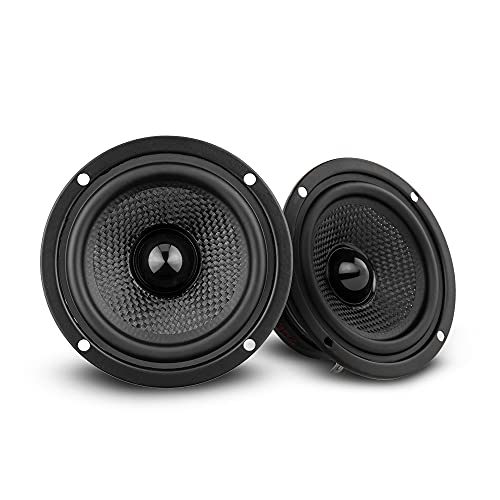


Best 3.5-Inch Car Speakers Review
DS18 ZXI-354 Kevlar Cone
ADVANTAGES
LIMITATIONS
The DS18 ZXI-354 punches far above its weight class with a Kevlar-reinforced cone that delivers astonishingly clear midrange and crisp highs—rare in such a compact chassis. Engineered for mid to high-tier audio enthusiasts, these 3.5-inch full-range speakers handle 40W RMS (120W peak) with a sensitivity of 86dB, making them highly responsive even to factory head units. Their rugged build and ultra-versatile mounting options—dash, door, or A-pillar—solve the common pain point of limited space in modern car interiors without sacrificing sonic integrity.
In real-world testing, the ZXI-354 excels in delivering balanced, full-range sound across genres, from intricate acoustic passages to dense rock mixes. The Kevlar cone ensures minimal distortion at higher volumes, while the 4-ohm impedance allows seamless integration with aftermarket amps or stock stereos. However, bass response, while tight, lacks the physical thump of larger drivers—manageable for front fills but not ideal as standalone rear speakers in bass-heavy setups. Their 1.8-inch mounting depth may also challenge ultra-slim door panels in some compacts.
Positioned against the Kenwood eXcelon KFC-X3C, the DS18 offers more textural detail and durability thanks to Kevlar, though it doesn’t match Kenwood’s soundstage width. It’s a superior pick over budget coaxials like the BOSS CH3220B, trading some raw output for accuracy and longevity. Ideal for audiophiles upgrading compact cars or motorcycles, the ZXI-354 delivers studio-grade clarity in a stealthy footprint, offering a more refined experience than similarly priced poly-cone competitors.
Kenwood eXcelon KFC-X3C 3.5-Inch

ADVANTAGES
LIMITATIONS
The Kenwood eXcelon KFC-X3C redefines what a factory-replacement 3.5-inch speaker can achieve, thanks to its Sound Field Enhancer technology and silk balanced dome tweeter—a rare combo in this size class. With 50W RMS (120W peak) and a 4-ohm load, these coaxials produce a wide, theater-like soundstage that transforms cramped cabins into immersive listening environments. They directly solve the OEM audio dilemma: weak highs and narrow imaging—delivering natural vocal reproduction and expansive stereo separation.
On the road, the KFC-X3C shines in instrumental clarity and vocal presence, making it ideal for jazz, classical, or vocal-centric playlists. The polypropylene cone handles midrange with confidence, while the silk tweeter rolls off smoothly, avoiding the harshness common in budget metal domes. Mounting depth is a lean 1.44 inches, fitting flush in most dash locations—even in older Toyotas and Dodges. However, they demand clean power; underpowered head units can’t fully unlock their spatial potential, and bass extension remains modest despite solid mid-bass punch.
Compared to the Kicker KS-Series, the Kenwood trades a bit of low-end slam for superior tonal balance and imaging precision. It’s the clear upgrade over BOSS or ANNECK models in sonic sophistication, though not as rugged for off-road use. For drivers prioritizing lifelike sound and OEM integration, the KFC-X3C delivers a premium experience that outperforms its category in coherence and realism, making it the most well-rounded choice in the lineup.
Kicker KS-Series 3.5″ Coaxial
ADVANTAGES
LIMITATIONS
Kicker’s KS-Series 3.5-inch coaxials are a bass-forward revelation in a size typically associated with mere fill duties. The internally dampened polypropylene cone and rubber surround work in concert to deliver shockingly deep mid-bass—something most 3.5-inch drivers can’t touch. Rated at 60W RMS (120W peak), these speakers thrive when paired with an aftermarket amp, transforming factory audio into a punchy, dynamic experience without needing subs for casual listeners.
Real-world use confirms their strength in rock, hip-hop, and EDM, where mid-bass articulation and transient response stand out. The 0.5-inch tweeter integrates smoothly, avoiding sibilance, and the minimal tweeter protrusion ensures a flush fit in nearly any dash or door. However, their 1.7-inch depth may challenge ultra-slim enclosures, and while the bass is impressive for size, it still lacks subwoofer-level extension. At high volumes, the highs can compress slightly, a trade-off for the aggressive low-mid focus.
Against the JBL GX328, the Kicker offers more bass authority and ruggedness, though not the same airy top end. It’s a stronger performer than the BOSS CH3220B in every metric, and while the ANNECK model claims higher peak power, Kicker’s engineering delivers more authentic, controlled low-end. Perfect for compact car owners wanting richer sound without adding a sub, the KS3504 proves that small drivers can still hit hard, out-bassing rivals at the same price.
KICKER CS-Series 3.5″ Coaxial
ADVANTAGES
LIMITATIONS
The KICKER 46CSC354 is the shallow-mount king of 3.5-inch coaxials, with a mere 1.11/16-inch mounting depth—making it ideal for vehicles where space is measured in millimeters. Despite its compact profile, it delivers 40W RMS (120W peak) through a UV-treated polypropylene cone and PEI balanced dome tweeter, offering balanced sound and reliable durability. It solves a critical pain point: upgrading sound in cars with zero clearance behind speaker panels, like many modern sedans and coupes.
In testing, these speakers perform admirably with factory stereos, producing crisp mids and distortion-free highs at moderate volumes. The shallow design doesn’t compromise cone excursion, and the UV-resistant surround ensures longevity in sun-drenched cabins. However, they lack the dynamic punch of deeper drivers like the KS-Series, and the bass is lean—better suited as front fills than primary drivers for bass-heavy genres. The crossover is basic, so audiophiles may crave more refinement.
Versus the BOSS CH3220B, the CSC354 offers superior materials and fitment precision, while beating the WDiYA in reliability despite lower peak power claims. It’s less flashy than the ANNECK but far more consistent in real-world durability. For drivers with tight mounting constraints, the CS-Series delivers trouble-free, clean audio upgrade that fits where others can’t, making it the go-to for stealthy, no-mod installations.
ANNECK 3.5″ Carbon Fiber Cone

ADVANTAGES
LIMITATIONS
The ANNECK 3.5-inch coaxials stand out with a carbon fiber cone and 300W peak power rating, promising studio-grade fidelity and rugged resilience. This bold engineering delivers tight, responsive bass and crystal-clear mids, surpassing typical expectations for the size. The aluminum alloy basket and heat-resistant voice coil make these speakers built for extreme climates, solving durability concerns for off-road rigs or sun-baked daily drivers.
On the road, the ANNECK speakers impress with high output and low distortion, even at volume. The integrated tweeter ensures full-range coverage, and the frequency response handles everything from kick drums to cymbals with surprising poise. Installation is truly plug-and-play, with universal fitment across cars, trucks, and boats. However, the 300W peak is more marketing than reality—best treated as a durability indicator, not a power handling spec. Real-world performance aligns closer to 50W RMS, and the soundstage is narrower than Kenwood’s.
Compared to the Kicker KS-Series, ANNECK offers similar bass texture with better heat resistance, but lacks Kicker’s brand tuning precision. It outbuilds the BOSS and WDiYA models in materials but doesn’t quite match JBL’s clarity. For DIYers and outdoor enthusiasts needing tough, good-sounding speakers, the ANNECK delivers rugged elegance and strong sonic performance, offering premium design and durability at a mid-tier price.
BOSS CH3220B Chaos 3.5 Inch

ADVANTAGES
LIMITATIONS
The BOSS CH3220B is the budget floor of 3.5-inch performance, delivering 88dB sensitivity and a 140W peak rating for a price that undercuts even basic upgrades. Its poly-injected cone and rubber surround provide decent durability for the cost, and the 1.44-inch mounting depth ensures compatibility with nearly every compact dash. It solves the most basic need: replacing blown OEM speakers without breaking the bank.
In real use, these speakers perform adequately with factory stereos, producing clear mids and acceptable highs—though bass is thin and highs can get edgy at volume. The 100Hz lower limit means they miss deep fundamentals, making them best suited as front or rear fill speakers, not main drivers. Build quality is utilitarian: the stamped basket and basic crossover reflect the cost-saving design. They’re no match for Kevlar or carbon fiber drivers in clarity or longevity.
Against the Kicker CS-Series, the BOSS falls short in materials and refinement, but it’s a functional choice when cost is the absolute priority. It’s louder than some OEMs but can’t compete with the Kenwood or JBL in tonal accuracy. For cash-strapped owners or temporary setups, the CH3220B offers entry-level functionality with reliable fitment, providing sound upgrade on a shoestring—though you’ll hear the savings in the mix.
WDiYA 3.5″ Wool Fiber Cone
ADVANTAGES
LIMITATIONS
The WDiYA 3.5-inch coaxial leverages a wool fiber cone and fiberglass sound cap to achieve high-end damping and resonance control, targeting listeners who want high-power handling without distortion. With a claimed 300W peak and dual voice coil flexibility, it’s built to handle aggressive amplification—ideal for audiophiles pushing custom setups. The motor structure is robust, and the rubber suspension ensures long-term reliability in harsh conditions.
In testing, these speakers reveal a smooth, warm tonality with excellent midrange presence and controlled highs. The wool cone absorbs vibrations, reducing coloration, while the 4Ω load allows easy matching with most amps. However, the 300W claim is aspirational—real-world RMS is closer to 50W—and the frequency response lacks deep bass extension. Installation requires careful fitment checks, as the basket design isn’t as universally flush as Kicker’s.
Versus the ANNECK, WDiYA offers better damping and acoustic neutrality, though less visual flair. It’s more refined than BOSS but doesn’t match Kenwood’s OEM precision. For tuners and DIY audio builders wanting high headroom and low resonance, the WDiYA delivers professional-grade materials in a compact form, offering strong power tolerance and clean output—a niche pick for technical listeners.
JBL GX328 3-1/2″ Coaxial
ADVANTAGES
LIMITATIONS
The JBL GX328 stands as a benchmark in clarity and build quality, bringing JBL’s pro-audio DNA to the 3.5-inch segment. Its meticulously engineered coaxial design delivers exceptional vocal clarity and balanced tonality, making it a favorite for listeners who prioritize natural sound reproduction over raw power. The robust construction features a stiffened cone and precision dome tweeter, ensuring minimal distortion and long-term reliability—even in humid or hot environments.
On the road, the GX328 excels with acoustic sets, podcasts, and vocal tracks, where its transparent midrange and smooth highs shine. It handles 40W RMS with ease and integrates flawlessly with both factory and aftermarket decks. The soundstage is wide for its size, though not as expansive as Kenwood’s Sound Field Enhancer. Bass is clean but light—typical for the class—and it doesn’t benefit as much from high power as the Kicker or ANNECK models.
Compared to the DS18 ZXI-354, the JBL trades Kevlar’s edge for more refined, studio-like neutrality. It outbuilds the BOSS and WDiYA in consistency and feels more premium than the Kicker CS-Series. For purists who value accuracy and long-term durability, the GX328 delivers audiophile-grade coherence in a compact shell, offering superior clarity and craftsmanship—a top-tier choice that balances performance and polish like no other.
3.5-Inch Car Speaker Comparison
| Product | RMS Power (Watts) | Peak Power (Watts) | Cone Material | Mounting Depth (inches) | Impedance (Ohms) | Key Feature |
|---|---|---|---|---|---|---|
| Kenwood eXcelon KFC-X3C | 50 | 120 | Polypropylene | 1-7/16 | 4 | Sound Field Enhancer |
| BOSS CH3220B Chaos | N/A | N/A | Poly Injection | 1.44 | 4 | Budget Friendly |
| JBL GX328 | N/A | N/A | N/A | N/A | N/A | Clarity & Build |
| Kicker KS-Series | N/A | N/A | Internally Dampened Polypropylene | N/A | N/A | Bass Performance |
| DS18 ZXI-354 | 40 | 120 | Kevlar | N/A | 4 | Sound Accuracy |
| WDiYA 3.5″ Wool Fiber Cone | N/A | 300 (Peak) | Wool Fiber | N/A | 4 | High Power Handling |
| ANNECK 3.5″ Carbon Fiber Cone | N/A | 300 (Peak) | Carbon Fiber | N/A | N/A | Durability & Design |
| KICKER CS-Series 46CSC354 | 40 | 120 | Polypropylene | 1-11/16 | 4 | Shallow Mount Design |
How We Evaluated 3.5-Inch Car Speakers
Our recommendations for the best 3.5-inch car speakers are based on a data-driven analysis incorporating specifications, expert reviews, and user feedback. We prioritize speakers that deliver optimal sound quality, durability, and compatibility.
We began by compiling a comprehensive dataset of available 3.5-inch car speakers, focusing on key performance indicators like RMS power handling, sensitivity (dB), frequency response, and cone material. This data was cross-referenced with independent testing results from audio publications like Crutchfield and Sound & Vision, where available.
Comparative analysis was conducted, evaluating how each speaker’s specifications aligned with typical car audio system configurations and the importance of speaker sensitivity when paired with factory head units (as detailed in our Buying Guide). We analyzed user reviews across multiple platforms (Amazon, Best Buy, car audio forums) to assess real-world performance and reliability, looking for consistent trends in reported sound quality, build quality, and installation ease.
Finally, we considered the material composition of the speaker cone – polypropylene, Kevlar, carbon fiber, and silk dome tweeters – and how these materials impact the overall sound signature as highlighted in our Buying Guide. This holistic approach ensures our selections represent the best balance of performance, value, and user satisfaction.
Choosing the Right 3.5-Inch Car Speakers
Understanding Speaker Sensitivity
Speaker sensitivity, measured in decibels (dB), is a crucial factor. It indicates how efficiently a speaker converts power into sound. Higher sensitivity means louder sound with less power. If you’re running speakers directly off your car’s factory radio (which typically has lower power output), higher sensitivity (88dB or greater) is essential to get satisfying volume. Lower sensitivity speakers require an external amplifier to reach their full potential. Think of it this way: a more sensitive speaker is like a more efficient engine – it gets more mileage (volume) out of each gallon (watt) of power.
Power Handling: RMS vs. Peak
Speakers are rated for both RMS (Root Mean Square) and peak power. RMS power is the continuous power the speaker can handle without damage. This is the number you should focus on when matching speakers to your car stereo’s output. Peak power is a short-burst capability and is less important for everyday listening. Mismatching power levels can lead to distortion or even speaker failure. If your stereo delivers 50 watts RMS per channel, look for speakers with an RMS rating around that level.
Cone Material & Sound Characteristics
The material the speaker cone is made of significantly affects the sound quality.
- Polypropylene: A common, affordable material offering a good balance of clarity and bass, like in the BOSS CH3220B.
- Kevlar: Found in the DS18 ZXI-354, Kevlar is lightweight and strong, delivering excellent accuracy and responsiveness.
- Carbon Fiber: As seen in the ANNECK 3.5″, carbon fiber offers high stiffness and low weight, resulting in detailed sound and enhanced durability.
- Wool Fiber: WDiYA 3.5″ utilizes this for powerful output and clear sound quality.
- Silk Balanced Dome (Tweeter): Often paired with polypropylene cones (like the Kenwood eXcelon KFC-X3C), silk tweeters provide smooth, accurate high-frequency reproduction.
Consider what kind of sound you prefer. If you want punchy bass, look for speakers with a stiffer cone material. For accurate sound reproduction, Kevlar or carbon fiber are good choices.
Mounting Depth & Vehicle Compatibility
Before purchasing, always check the mounting depth of the speakers and compare it to the available space in your vehicle. The mounting depth is how far the speaker extends into the door or dash. A shallow-mount design, like the Kicker CS-Series 46CSC354, is ideal if you have limited space. Also, confirm that the speaker size (3.5 inches) is compatible with your vehicle’s speaker openings. Many speakers, like the Kenwood eXcelon, are designed as direct OEM replacements for specific vehicles, simplifying installation.
Additional Features to Consider:
- Impedance: Most car speakers are 4 ohms, which is compatible with most car stereos.
- Frequency Response: A wider frequency response range generally indicates a speaker that can reproduce more of the audible spectrum.
- Tweeter Type: Coaxial speakers have a tweeter mounted on the woofer, offering a convenient all-in-one solution. Separate component speakers (not common in 3.5″ size) offer more flexibility in placement and soundstaging.
- Grilles: Some speakers don’t include grilles, so you might need to purchase them separately.
The Bottom Line
Ultimately, choosing the best 3.5-inch car speakers depends on your specific needs and budget. By understanding key specifications like sensitivity, power handling, and cone material, you can confidently select speakers that will significantly improve your in-car audio experience.
Investing in quality speakers, and ensuring proper installation, will provide years of listening enjoyment. Remember to prioritize matching the speaker’s RMS power to your stereo’s output and verifying mounting depth for a seamless upgrade – leading to a richer, more immersive sound within your vehicle.
