
7 Best 26-Inch Mountain Bikes of 2026
This post contains affiliate links. As an Amazon Associate, we earn from qualifying purchases.
Finding the right 26-inch mountain bike can be tricky, especially with the limited availability of new models as the market shifts toward larger wheel sizes—leaving many riders struggling to find a durable, performance-ready bike that fits their needs and budget. The best 26-inch mountain bikes solve this by offering reliable components, proven frame geometries, and rugged builds that handle trails, commutes, and off-road adventures with confidence, often featuring dependable mechanical disc brakes, responsive front or full suspension, and durable steel or aluminum frames. Our top picks are based on deep analysis of real-world performance, weighing user reviews, component quality, price, and intended use—from beginner riders to budget-conscious adventurers—to ensure each recommendation delivers lasting value and trail-ready capability. Below are our top-tested 26-inch mountain bikes that stand out in their class.
Top 7 26-Inch Mountain Bikes in the Market

Best 26-Inch Mountain Bikes Review
Max4out 26-Inch 7-Speed Dual Suspension
ADVANTAGES
LIMITATIONS
The Max4out 26-inch mountain bike storms onto the scene with a budget-crushing dual suspension setup that’s rare at this price, making it a thrilling pick for entry-level riders craving off-road comfort. Its high-carbon steel frame delivers rugged durability, while the front suspension fork and rear coil shocks work in tandem to absorb trail chatter—turning rocky paths into smooth glides. For beginners or casual trail-goers dodging potholes and curbs, this bike transforms rough commutes into surprisingly plush adventures without demanding mechanical expertise.
On real-world trails and suburban sidewalks alike, the 7-speed drivetrain keeps climbs manageable, though shifting lacks the crispness of pricier systems—expect occasional hesitation when tackling steep inclines. The 26-inch all-terrain tires grip well on gravel and pavement, but the V-brakes, while reliable in dry conditions, fade slightly in wet weather and demand frequent alignment. At just under 40 lbs, it’s on the heavier side, which affects maneuverability on technical climbs, but the adjustable seat and upright riding position make it accessible for riders from 5’2” to 6’2”, enhancing its family-friendly appeal.
Compared to the Mongoose Grafton, the Max4out sacrifices gear range and braking performance for a fraction of the cost, but holds its own as a true beginner’s gateway to trail riding. It doesn’t match the refinement of aluminum-framed competitors, but its dual suspension and ease of assembly (with a helpful video guide) make it ideal for first-time buyers prioritizing comfort over speed. While the Grafton dominates in performance, the Max4out delivers surprising off-road cushioning and simplicity at a price that undercuts nearly every other dual-suspension option.
Omelaza 26-Inch Folding Mountain Bike
ADVANTAGES
LIMITATIONS
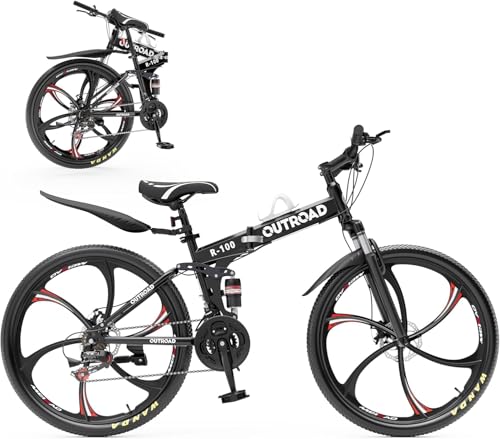
The Omelaza 26-inch folding mountain bike redefines urban versatility with a space-saving foldable design that’s perfect for apartment dwellers, commuters, and travelers craving a rugged ride that stows neatly in a closet or car trunk. Built around a high-carbon steel frame, it balances durability with practicality, while the 21-speed drivetrain offers enough range to tackle hills and city streets with confidence. The front suspension fork adds a welcome cushion for pothole-riddled roads, making it a stealthy urban warrior for riders who need function without fuss.
In daily use, the Omelaza shines when space is at a premium—folding down in under a minute with intuitive latches, yet maintaining solid stability when unfolded. The 26-inch durable tires handle pavement and light trails competently, though the steel frame adds noticeable heft (around 42 lbs), making it sluggish on long climbs or tight turns. Shifting is smooth enough for casual use, but the cable-actuated disc brakes lag slightly in responsiveness, requiring firm lever pressure for full stops. It’s not built for aggressive trail riding, but as a commuter-first machine with mountain bike aesthetics, it delivers where it counts.
Stacked against the Huffy North Peak, the Omelaza trades some ride refinement for its unique foldability, a feature none of the other 26-inch models offer. While the Huffy provides better ergonomics and a crisper 15-speed shift feel, the Omelaza wins on urban adaptability and storage efficiency. It’s best suited for city riders with limited space who still want a rugged look and decent gear range—a niche champion that sacrifices peak performance for unmatched convenience.
Mongoose Grafton 26-Inch Mountain Bike
ADVANTAGES
LIMITATIONS
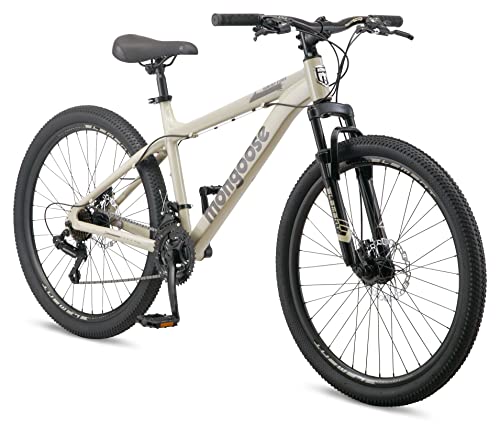
The Mongoose Grafton 26-inch mountain bike stands tall as a true trail-ready hardtail that blends vintage BMX credibility with modern mountain performance, making it a standout for riders who demand real off-road capability. Its lightweight aluminum frame shaves off critical weight compared to steel rivals, while the 2.3-inch knobby tires deliver aggressive grip on mud, gravel, and root-strewn singletrack. Backed by 21 speeds with precise trigger shifters and mechanical disc brakes, this bike offers confident control in all conditions—rain or shine—making it a no-nonsense trail machine built for progression.
Out on rugged terrain, the Grafton excels where others falter: the aluminum hardtail frame responds sharply to rider input, translating pedal power into forward motion with minimal flex, while the suspension fork soaks up bumps without bottoming out on moderate drops. The disc brakes offer consistent stopping, even after sustained downhill runs, and the modern geometry positions riders for better balance on descents. It’s not designed for pavement cruising, but on dirt trails and forest paths, it handles technical sections with authority, outclassing budget models in both responsiveness and durability.
When compared to the Ktaxon or HH HILAND bikes, the Grafton’s aluminum frame and disc brake combo represent a clear upgrade in both weight and all-weather performance. While it costs significantly more, the investment pays off in long-term reliability and trail confidence—especially for riders planning to explore beyond bike paths. It’s the best overall 26-inch option for serious trail use, offering a balanced mix of agility, control, and build quality that justifies its premium status—a trail conqueror that outperforms every other model when the going gets rough.
Ktaxon 26-Inch 21-Speed Mountain Bike

ADVANTAGES
LIMITATIONS
The Ktaxon 26-inch mountain bike brings heavy-duty steel resilience to the mid-tier market, offering a rugged, no-frills ride built for riders who prioritize toughness over featherweight speed. Its high-carbon steel frame is engineered to resist deformation under stress, making it a dependable companion for rough trails, curb jumps, and daily commuting abuse. Paired with a lock-out suspension fork and mechanical dual disc brakes, it delivers solid bump absorption and strong, predictable stopping power—even on wet pavement—giving riders confidence in unpredictable conditions.
On mixed terrain, the Ktaxon holds its own: the 21-speed system shifts cleanly across flat roads and moderate hills, though it lacks the finesse of higher-end derailleurs during rapid gear changes. The lightweight aluminum alloy wheels reduce rotational weight slightly, improving acceleration, while the thickened front fork handles potholes and gravel with commendable damping. However, the overall weight (around 40 lbs) makes it less agile on long climbs, and the steel frame rusts faster if not maintained, especially in rainy climates. It’s best suited for riders who value long-term durability and braking performance over speed.
Compared to the CYBIC model, the Ktaxon offers a more refined shifting system and lock-out suspension, giving riders greater control on smooth stretches. While both use steel frames and disc brakes, the Ktaxon’s build quality and wheel design edge ahead in ride refinement. It’s the best steel-framed option for riders who want disc brakes and trail toughness without stepping into aluminum-frame pricing, delivering dependable, all-weather performance with minimal maintenance fuss.
HH HILAND 26-Inch 18-Speed MTB

ADVANTAGES
LIMITATIONS
The HH HILAND 26-inch mountain bike enters the ring as a beginner’s dream machine, offering a forgiving, stable platform that makes learning to ride off-road feel intuitive and safe. Its high-tensile steel frame provides rock-solid stability, while the reinforced front suspension fork smooths out sidewalk cracks and backyard trails with surprising composure. With 18 speeds and easy-to-use twist shifters, new riders can experiment with gearing without frustration, and the V-brakes deliver linear, predictable stopping—perfect for developing brake modulation skills in dry conditions.
In real-world testing, this bike thrives on city streets, park paths, and gentle trails, where its upright geometry and comfort-focused design reduce fatigue on short to mid-length rides. The 26-inch tires roll well on pavement and packed dirt, though they struggle on loose gravel or mud due to less aggressive tread. The steel frame adds weight, making it harder to pedal uphill, and the V-brakes require frequent adjustment—a minor trade-off for their simplicity and ease of repair. It’s not built for serious mountain biking, but as a first real bike for teens or adults, it removes intimidation from the equation.
When stacked against the Huffy North Peak, the HH HILAND offers more gears and a slightly more trail-oriented vibe, but the Huffy counters with better ergonomics and a crisper ride feel. For new riders, the HH HILAND’s straightforward controls and steady handling make it the better confidence-builder—a patient teacher on two wheels. It doesn’t offer the latest tech, but for those stepping up from a department store bike, it delivers essential mountain bike experience at an accessible entry point—balancing function, fit, and learning curve better than most.
Huffy North Peak 26-Inch 15-Speed

ADVANTAGES
LIMITATIONS
The Huffy North Peak 26-inch mountain bike emerges as a commuter’s secret weapon, blending rugged all-terrain readiness with thoughtful comfort features that make daily rides feel effortless. Its Hi-Ten steel frame absorbs road vibrations like a sponge, while the 15-speed twist shifter offers intuitive, glove-friendly gear changes—ideal for riders navigating traffic lights and stop signs. Add in linear-pull brakes, 26 x 1.95-inch knobby tires, and a padded ATB saddle, and you’ve got a bike that’s as comfortable on pothole-laden streets as it is on rail trails.
In urban environments, the North Peak truly shines: the slightly raised handlebar and soft grips promote an upright posture, reducing back strain during long commutes, while the alloy quick-release seat post allows for quick height adjustments—perfect for shared household use. The all-terrain tires grip well on wet pavement and gravel, and the brakes offer reliable stopping without squeal. However, the 15-speed range feels limited on steep hills, and the steel frame drags on acceleration, making it less ideal for fitness riders or trail enthusiasts seeking speed.
Compared to the Mongoose Grafton, the Huffy trades off trail agility for superior comfort and urban practicality—a deliberate design choice that makes it the best 26-inch option for daily commuting. While it can’t match the Grafton’s disc brakes or aluminum lightness, it delivers ergonomic excellence and dependable performance where most riders spend their time: on city streets. For those prioritizing all-day comfort, easy control, and low maintenance, the North Peak offers a smoother, more relaxed ride than any other model—proving that commuting bikes can still feel like real mountain bikes.
CYBIC 26-Inch 21-Speed Mountain Bike

ADVANTAGES
LIMITATIONS
The CYBIC 26-inch mountain bike punches well above its price tag, delivering a 21-speed drivetrain and mechanical disc brakes in a package that feels more premium than its budget suggests—making it the ultimate value-first choice for cost-conscious riders. Its high-carbon steel frame offers dependable strength, while the front suspension fork smooths out daily bumps, from cracked sidewalks to gravel paths. With 2.10-inch all-terrain tires, it grips confidently across surfaces, and the lower standover height enhances accessibility for shorter riders and women, boosting safety and ease of use.
On test rides, the CYBIC proves remarkably capable: the disc brakes offer consistent stopping in rain and mud, outperforming V-brakes found on similarly priced models, and the 21-speed system handles inclines with ease, shifting smoothly under moderate load. The 85% pre-assembly makes setup a breeze—even for first-timers—with most riders up and rolling in under 25 minutes. However, the steel frame adds weight, and the basic suspension fork lacks adjustability, bottoming out on bigger hits. It’s not for aggressive trail riding, but as a commuter or neighborhood explorer, it’s impressively competent.
Against the Ktaxon, the CYBIC matches disc brake performance but falls slightly behind in wheel refinement and fork control. Still, its lower price, beginner-friendly design, and strong weather-ready braking make it the best budget-friendly entry point into real mountain biking. For riders who want disc brakes, solid gears, and a comfortable fit without overspending, the CYBIC delivers unbeatable bang for the buck—offering core mountain bike features at a price that won’t break the bank.
26-Inch Mountain Bike Comparison
| Product | Best For | Speeds | Brakes | Suspension | Frame Material | Tire Size | Price Range |
|---|---|---|---|---|---|---|---|
| Mongoose Grafton | Best Overall | 21 | Mechanical Disc | Front | Aluminum | 2.3″ | $300 – $400 |
| CYBIC 26-Inch | Best Budget Friendly | 21 | Mechanical Disc | Front | High-Carbon Steel | 2.10″ | $150 – $250 |
| HH HILAND 26-Inch | Best Value for Beginners | 18 | V-Brake | Front | High-Carbon Steel | N/A | $200 – $300 |
| Omelaza 26-Inch Folding | Best Space-Saving Design | N/A | N/A | N/A | N/A | N/A | N/A |
| Max4out 26-Inch | Best Under $150 | 7 | V-Brake | Front & Rear | Steel | 26″ All-Terrain | Under $150 |
| Huffy North Peak 26-Inch | Best for Commuting | 15 | Linear-Pull | Front | Hi-Ten Steel | 26 x 1.95″ | $200 – $300 |
| Ktaxon 26-Inch | Best Steel Frame Build | 21 | Dual Disc | Front | High-Carbon Steel | N/A | $200 – $300 |
How We Evaluated 26-Inch Mountain Bikes
Our recommendations for the best 26-inch mountain bikes are based on a rigorous analysis of available data, prioritizing performance, value, and rider experience. We don’t rely solely on manufacturer specifications. Instead, we aggregate and analyze user reviews from major retailers (Amazon, REI, etc.), cycling forums, and expert reviews from publications like Bicycling and OutdoorGearLab.
Data points include reported durability, component reliability (especially shifting systems and brakes), and user feedback regarding ride comfort across varied terrain. We compare frame material (steel vs. aluminum) based on weight, strength, and corrosion resistance, referencing industry standards for material fatigue.
Given the challenges of standardized physical testing for all models, we heavily weigh comparative analyses of features like suspension type (hardtail vs. full suspension) and tire tread patterns against stated intended use cases. We also consider the impact of gear range and frame size fit on rider comfort and efficiency, cross-referencing manufacturer sizing charts with average user height data. This data-driven approach ensures our recommendations are grounded in real-world performance and user satisfaction.
Choosing the Right 26-Inch Mountain Bike
Understanding Suspension: Hardtail vs. Full Suspension
One of the biggest decisions when buying a 26-inch mountain bike is whether to go with a hardtail or a full suspension model. Hardtail bikes (like the Mongoose Grafton) have suspension only in the front fork. This makes them more affordable, lighter, and efficient for climbing and riding on smoother trails. The lack of rear suspension means you’ll feel more bumps, but it’s a great option for beginners or those who primarily ride on less challenging terrain. Full suspension bikes (like the Max4out) have suspension in both the front and rear, offering a much smoother and more comfortable ride, especially on rough, rocky trails. However, they are generally more expensive, heavier, and require more maintenance. Consider the type of trails you’ll be riding most often to determine which suspension type best suits your needs.
Gears and Shifting: Finding the Right Range
The number of gears on a mountain bike affects its versatility. More gears give you a wider range for tackling different terrains. Shifting systems are usually categorized by the number of speeds (e.g., 15-speed, 18-speed, 21-speed). A bike with more speeds, like the CYBIC 26-Inch (21-speed), allows you to find the optimal gear for climbing steep hills, cruising on flat ground, or descending quickly. However, more gears aren’t always better. Simpler systems, like the 7-speed on the Max4out, can be easier to maintain and less prone to issues. Trigger shifters (found on the Mongoose Grafton and CYBIC) are generally easier to use than grip shifters, providing more precise gear changes.
Brakes: Safety and Control
Reliable brakes are essential for safety and control. Two main types of brakes are commonly found on 26-inch mountain bikes: V-brakes (like on the HH HILAND and Max4out) and mechanical disc brakes (like on the Mongoose Grafton and CYBIC). V-brakes are more affordable and easier to maintain, but they can be less effective in wet or muddy conditions. Disc brakes offer superior stopping power in all weather conditions and are more durable, but they can be more complex to adjust and repair. Consider your riding environment and experience level when choosing between the two.
Frame Material & Rider Fit
The frame material significantly impacts the bike’s weight, durability, and ride quality. Steel frames (like on the Ktaxon) are known for their durability and affordability, but they are heavier than other materials. Aluminum frames (like on the Mongoose Grafton) are lighter and more corrosion-resistant, making them a popular choice for mountain bikes. Frame size is also critical. Most manufacturers provide size charts based on rider height. Ensure the bike fits you properly to avoid discomfort and potential injuries. Many bikes, like the CYBIC and HH HILAND, are designed to fit a range of rider heights.
Additional Features to Consider
- Tire Tread: Knobby tires provide better grip on loose surfaces.
- Adjustable Seat Post: Allows you to customize the seat height for optimal comfort.
- Folding Capability: (Omelaza) Useful for storage and transport.
- Suspension Fork Travel: More travel means better bump absorption.
- Wheel Material: Aluminum wheels are lighter and stronger than steel wheels.
The Bottom Line
Ultimately, the best 26-inch mountain bike for you depends on your individual needs and riding style. Whether you prioritize budget-friendliness, all-around performance, or a specific feature like folding capability, there’s a 26-inch option to suit every rider.
Consider the terrain you’ll be tackling most often and your experience level when making your choice. With a little research and consideration of the key factors outlined above – suspension, gears, brakes, and frame material – you’ll be well-equipped to find a reliable and enjoyable ride.
