
10 Best Dash Cam Systems of 2026
This post contains affiliate links. As an Amazon Associate, we earn from qualifying purchases.
If you’ve ever been in a fender bender without proof of what really happened, you know how frustrating it can be—this is exactly why choosing the best dash cam systems matters. The top models today offer crystal-clear 4K video, reliable parking mode, and smart features like ADAS alerts and real-time cloud access to keep you protected 24/7. Our picks are based on rigorous analysis of video quality, user reviews, feature sets, and value across price points to ensure every recommendation delivers real-world reliability. Below are our top-tested dash cam systems to help you drive with confidence.
Top 10 Dash Cam Systems in the Market



Best Dash Cam Systems Review
Rexing CP DUO 686 CarPlay Display

ADVANTAGES
LIMITATIONS
This multimedia powerhouse redefines what a dash cam system can be—no longer just a passive recorder, but a fully integrated smart cockpit hub. The 6.86-inch HD touchscreen pairs seamlessly with wireless Apple CarPlay and Android Auto, turning your commute into a connected experience, while the built-in 4K front-facing dash cam ensures crystal-clear video capture. For drivers who want total in-car integration, this unit eliminates the need for multiple devices, offering one sleek solution that handles navigation, media, and safety all at once.
In real-world use, the Rexing CP DUO 686 shines brightest when you’re on the move. The 4K recording captures license plates and road signs with precision, even in mixed lighting, and the in-car baby cam functionality is a game-changer for parents or rideshare drivers needing interior monitoring. However, as a single-channel recorder, it lacks rear or side coverage out of the box, and the system relies heavily on your smartphone’s connection for full functionality—meaning weak signal areas can limit access to live views or alerts. It’s best suited for users prioritizing infotainment convergence over full 360° surveillance.
Compared to standalone dash cams like the Rexing M4, this model trades all-around coverage for seamless smartphone integration and a minimalist dash footprint. It’s ideal for tech-savvy commuters who already rely on CarPlay or Android Auto and want a clean, wired look without sacrificing video quality. While it doesn’t offer the parking monitoring depth of LTE-equipped models, its smart cockpit approach delivers more daily utility than pure recorders—making it a top pick for those who value connected convenience as much as protection.
Rexing M4 4-Channel Mirror Dash Cam
ADVANTAGES
LIMITATIONS
If you’re after complete vehicle surveillance, the Rexing M4 stands out as a true four-channel guardian, capturing every angle with 1080p clarity on all fronts—front, cabin, rear, and blind spots. Its massive 12-inch IPS touch screen replaces your rearview mirror entirely, delivering a command-center feel with intuitive swipe navigation and real-time multi-view switching. With built-in GPS, parking monitor, and night vision, it’s engineered for drivers who refuse to miss a single detail, whether commuting daily or managing a fleet.
On the road, the M4 proves its mettle by handling complex environments with ease—low-light highways, tight parking lots, and sudden impacts are all captured with responsive G-sensor activation and loop recording. The 170° wide-angle lenses minimize blind zones, and the auto-backup camera integration makes reversing safer than factory mirrors. However, installation is notably complex, often requiring professional help due to wiring density, and the lack of built-in Wi-Fi means you can’t quickly offload footage to your phone—a missed opportunity in an otherwise future-ready package.
When stacked against the Rexing M3, the M4 adds a fourth channel and larger display, making it the better choice for commercial drivers, taxi operators, or large vehicle owners who need maximum accountability. It sacrifices some simplicity but gains unmatched visibility. While pricier than dual-channel models, its 360-degree coverage and robust parking mode deliver superior peace of mind—especially when compared to basic systems that leave critical angles unmonitored.
Rexing 4G LTE 2-Channel Dash Cam
ADVANTAGES
LIMITATIONS
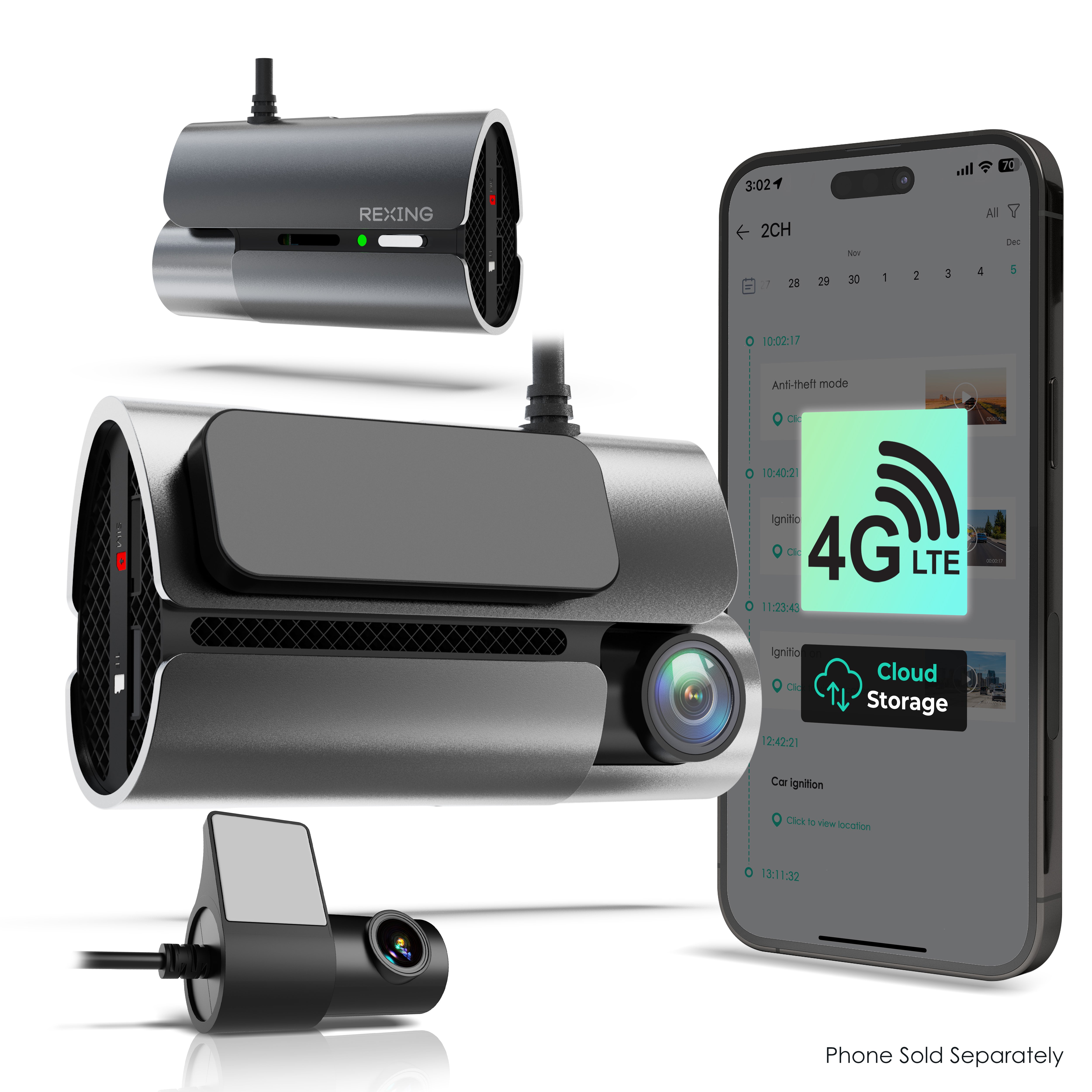
Stay always connected and in control with the Rexing 4G LTE Dash Cam, a game-changing system that brings real-time remote monitoring to your fingertips. This isn’t just a dash cam—it’s a mobile surveillance unit with built-in 4G LTE and GPS, enabling push notifications, live streaming, and secure cloud access from anywhere. The 2.5K front and 1080p rear cameras deliver sharp, detailed footage, while real-time parking alerts notify you instantly if motion or impact is detected—perfect for urban drivers worried about theft or hit-and-runs.
During testing, the cloud integration proved rock-solid, with footage uploading reliably even in spotty signal zones thanks to adaptive bandwidth management. The 64GB included MicroSD card handles loop recording smoothly, and the real-time tracking lets you verify your car’s location and status remotely—ideal for parents lending the car to teens or fleet managers overseeing multiple vehicles. That said, continuous 4G use can strain power in parked mode without a hardwire kit, and the dual-channel setup doesn’t cover side or cabin views, leaving some blind spots uncovered.
Next to the Rexing M4, this model trades physical camera count for digital connectivity and responsiveness. It’s the clear winner for users who prioritize remote access and instant alerts over multi-angle recording. While it doesn’t have a massive screen or cabin view, its always-on awareness makes it a standout for security-focused drivers in high-risk areas. With cloud-backed evidence storage, it offers a level of protection that local storage alone simply can’t match.
Rexing M2 Smart BSD ADAS Mirror Dash Cam

ADVANTAGES
LIMITATIONS
Safety isn’t just recorded—it’s prevented with the Rexing M2 Smart BSD ADAS, a dash cam that actively helps you avoid accidents before they happen. This 12-inch mirror dash cam integrates Blind Spot Detection (BSD) and Advanced Driver Assistance Systems (ADAS) to deliver lane departure warnings, forward collision alerts, and rear cross-traffic detection—features usually found in luxury vehicles. Paired with dual 1080p channels and superior night vision, it offers both preventive and reactive protection, making it a top-tier choice for cautious commuters and long-haul drivers.
In real-world driving, the ADAS alerts are timely and accurate, especially on highways and busy city streets, where sudden lane changes or tailgating are common. The IPS touch screen is bright and responsive, and the 24-hour parking monitor ensures surveillance even when the engine is off. However, the wiring setup is dense, and the system doesn’t support Wi-Fi for quick video retrieval—forcing reliance on SD card extraction. While video quality is excellent, the lack of 4K or LTE means it’s more focused on driver assistance than ultra-HD evidence capture.
Compared to the Rexing M1 Pro, the M2 adds BSD and ADAS capabilities, making it a smarter safety net despite similar video specs. It’s ideal for drivers who want proactive collision avoidance rather than just post-accident footage. While it doesn’t offer cloud connectivity like the 4G LTE model, its integrated safety suite and loop recording provide a balanced defense strategy—delivering high-value accident prevention at a competitive feature set.
Rexing V1P Flex X4 4K Dual Dash Cam
ADVANTAGES
LIMITATIONS
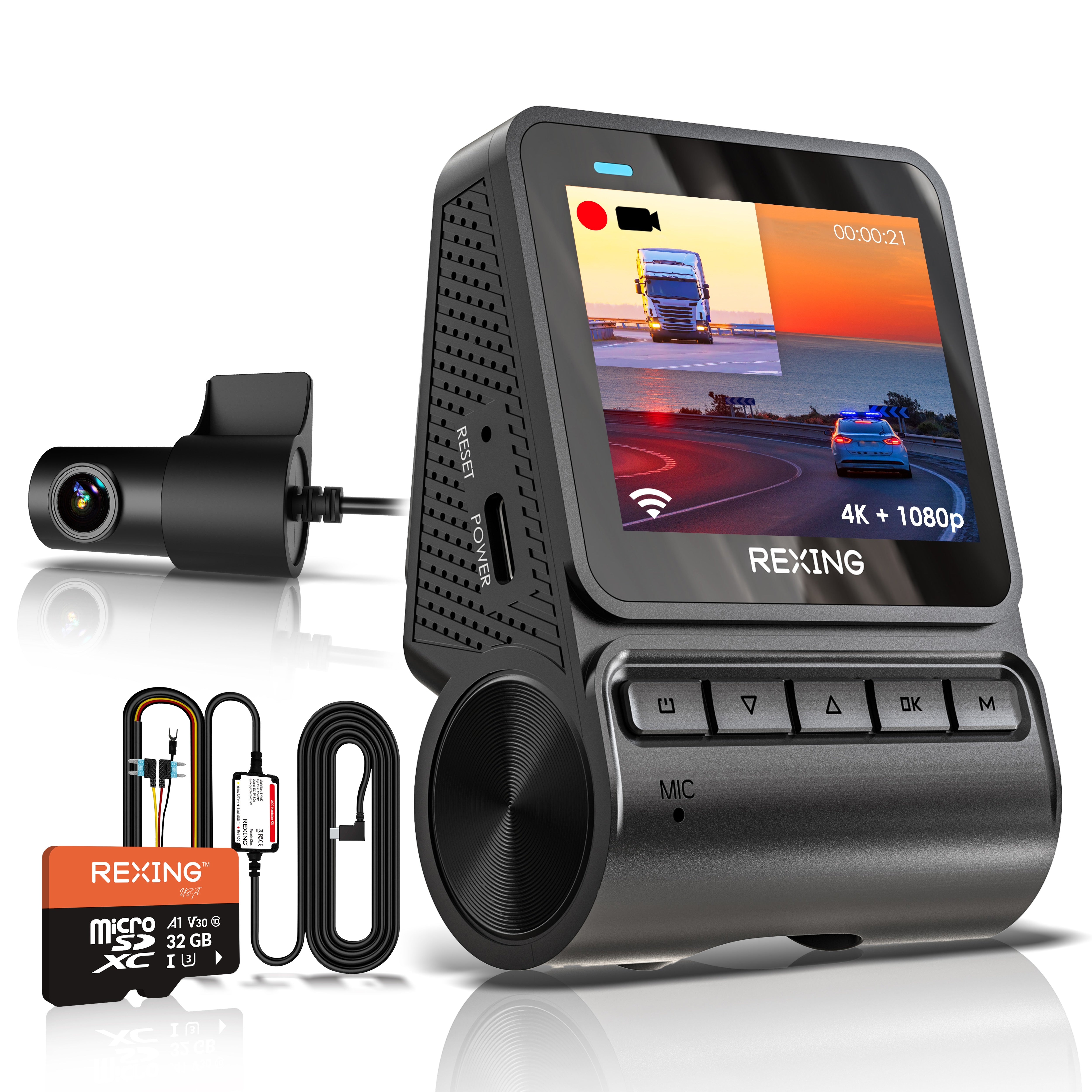
When 4K clarity meets seamless connectivity, the Rexing V1P Flex X4 emerges as the ultimate proof-of-record for discerning drivers. This dual-channel dash cam captures front 4K and rear 1080p video with stunning detail, thanks to its high-resolution sensors and WDR (Wide Dynamic Range) that balance bright skies and dark shadows in a single frame. But what truly sets it apart is the built-in dual-band Wi-Fi, enabling instant video transfer to your smartphone via the companion app—no SD card removal needed.
On the road, the 170° ultra-wide lenses eliminate blind spots, and the G-sensor and loop recording ensure critical moments are preserved without manual intervention. The 32GB included MicroSD card performs well for daily use, though heavy users will want to upgrade to a high-endurance 512GB card for extended loop recording. Low-light performance is strong, but not class-leading—some glare from headlights can flare in night footage. Installation is straightforward, and the compact design keeps it discreet behind the rearview mirror.
Versus the Rexing DT2, the V1P Flex X4 delivers a massive upgrade in resolution, Wi-Fi convenience, and app integration, making it the go-to for users who need court-grade video and easy sharing. It doesn’t have a screen or LTE, but its focus on core recording excellence makes it ideal for drivers who want maximum evidence quality without distractions. With superior clarity and wireless access, it outperforms budget models while staying more affordable than full mirror systems.
Rexing M3 3-Channel Mirror Dash Cam
ADVANTAGES
LIMITATIONS
For those who need eyes inside and out, the Rexing M3 is a game-changing triple-channel recorder that adds cabin monitoring to front and rear surveillance—perfect for rideshare drivers, parents, or fleet managers. Its 12-inch touch screen replaces your rearview mirror and delivers 1080p clarity from all three angles, including an infrared cabin camera that captures clear night footage of passengers without visible light. With GPS, parking monitor, and accident auto-detection, it’s built for accountability and peace of mind.
In daily use, the cabin view is invaluable, especially when transporting passengers or valuables. The front and rear channels handle daylight and low-light well, and the loop recording and G-sensor ensure no incident goes unrecorded. However, some users report the rearview mirror function is compromised due to screen brightness and angle, making it harder to use as a traditional mirror—a significant trade-off for safety-focused drivers. While the touch interface is responsive, the lack of Wi-Fi means you must remove the SD card to retrieve footage.
Compared to the Rexing M4, the M3 offers similar 1080p quality but with one fewer channel and no side cameras. Still, its dedicated cabin view makes it uniquely suited for Uber, Lyft, or family vehicles where interior activity matters. While not the most connected model, its trip logging and GPS tracking provide solid data for insurance disputes. It strikes a smart balance between interior visibility and exterior coverage, outperforming dual-channel cams in accountability.
Rexing DT2 Dual 1080p Dash Cam
ADVANTAGES
LIMITATIONS
Don’t let the budget-friendly price fool you—the Rexing DT2 packs serious value into a compact, no-frills design that’s perfect for first-time dash cam users. With dual 1080p channels, 170° wide-angle lenses, and night vision, it captures clear footage day and night, while loop recording and G-sensor ensure critical moments are saved automatically. Its discreet form factor blends into the windshield, and the 24/7 parking monitor keeps watch even when your car is off.
Real-world testing shows the DT2 performs admirably in daylight and moderate low-light conditions, though it struggles slightly with headlight glare at night compared to higher-end models. The lack of Wi-Fi or app support means you must manually remove the SD card to view footage—a major limitation if you need quick access. Still, for the price, the video quality and reliability are impressive, and multiple users confirm it’s one of the best entry-level dual cams on the market.
Stacked against the V1P Flex X4, the DT2 lacks 4K and Wi-Fi but wins on simplicity and affordability. It’s ideal for drivers who want basic, reliable recording without complexity or high cost. While it doesn’t offer cloud access or ADAS, its straightforward setup and solid performance make it a smart starter choice. For those upgrading from no dash cam at all, it delivers essential protection at a fraction of the cost of premium models.
Rexing M1 Pro 2K Mirror Dash Cam

ADVANTAGES
LIMITATIONS
The Rexing M1 Pro hits the sweet spot between price and performance, delivering 2K front and 1080p rear recording in a sleek mirror-mounted design that feels premium without the premium cost. Powered by the Sony IMX335 sensor, it captures crisp, color-accurate footage with excellent dynamic range, and its enhanced night vision cuts through darkness better than most in its class. The 10-inch IPS touch screen is bright and responsive, offering real-time split-view monitoring and smooth menu navigation.
On the road, the M1 Pro excels in mixed lighting, balancing bright skies and shadowed streets with minimal overexposure. The waterproof rear camera installs easily and delivers reliable backup views, while the 24-hour parking monitor adds peace of mind. However, some users report glare from streetlights at night, creating starburst effects that obscure details. And like many mirror cams, the screen can be too bright at night if not adjusted carefully—though this is easily fixed in settings.
Compared to the Rexing M2, the M1 Pro trades ADAS features for superior front camera resolution and better low-light performance. It’s the better choice for drivers who want sharper video without paying for advanced safety alerts. While it lacks LTE or cabin view, its balanced feature set and responsive interface make it a standout mid-tier option. For those who want more than basic recording but less than full 4-channel overload, it delivers exceptional value and clarity.
Rexing Cabin View Camera for V55

ADVANTAGES
LIMITATIONS
The Rexing Cabin View Camera is the perfect add-on for V55 owners who need inside-the-car monitoring without replacing their entire system. With a 170° wide-angle lens and infrared night vision, it captures clear, detailed footage of the cabin even in total darkness—ideal for Uber, Lyft, or family vehicles where passenger behavior matters. Designed as a modular expansion, it integrates seamlessly with the V55’s recording system, adding a third channel without clutter or complexity.
In real use, the infrared sensors deliver natural-looking black-and-white night video, avoiding the ghostly glow of cheaper IR cameras. The wide field of view covers both front seats and part of the rear, making it useful for spotting damage or disputes. Installation is simple, especially with the V55’s modular design, and the footage syncs perfectly with front recordings. However, it’s only compatible with the V55, limiting its appeal to a niche audience.
Compared to the M3’s built-in cabin cam, this model offers similar performance but as an aftermarket upgrade—perfect for users who already own a V55 and want to expand later. It doesn’t have Wi-Fi or standalone function, but it’s not meant to. For modular flexibility and interior clarity, it’s unmatched. If you drive for rideshare or want to monitor kids or pets, this targeted add-on delivers precise functionality where it matters most.
Rexing 3-Camera Set for M2-4

ADVANTAGES
LIMITATIONS
Turn your Rexing M2-4 into a true 360-degree sentinel with the 3-Camera Expansion Set, adding rear and dual side cameras for complete exterior coverage. This kit transforms your dash cam from a forward watcher into a full-surround surveillance system, perfect for large vehicles, parking in tight spaces, or fleet operations where blind spots are a liability. The 1080p weather-resistant cameras withstand rain, snow, and UV exposure, ensuring reliable performance in all conditions.
In practice, the side cameras eliminate blind zones, making lane changes and parallel parking safer, while the rear unit integrates smoothly with parking mode and G-sensor. The footage syncs seamlessly with the main system, and the weatherproofing holds up well in harsh climates. However, installation requires routing wires along the vehicle’s frame, which may need professional help. And since it’s only compatible with the M2-4, it’s not a standalone solution.
Compared to buying a pre-built 4-channel system, this expansion kit saves money and lets you upgrade incrementally. It’s ideal for users who already own the M2-4 and want maximum coverage without replacing their dash cam. While it lacks LTE or cabin view, its exterior expansion capability is unmatched. For those serious about vehicle security and blind spot elimination, it’s a smart, high-value upgrade that completes the surveillance puzzle.
Dash Cam System Comparison
| Product | Resolution (Front/Rear) | Connectivity | Key Features | Parking Monitor | Price Point |
|---|---|---|---|---|---|
| Rexing M4 4-Channel Mirror Dash Cam | 1080p All Around | None | 4 Channel, 12” IPS Touch Screen, 170° Angle | Yes | Mid-Range |
| Rexing 4G LTE 2-Channel Dash Cam | 2.5K + 1080p | 4G LTE & GPS | Real-Time Parking Alerts, Push Notifications, Cloud Access | Yes | High-End |
| Rexing V1P Flex X4 4K Dual Dash Cam | 4K + 1080p | Built-in Wi-Fi | 4K Video Quality, Optional GPS | Yes | Mid-Range |
| Rexing M1 Pro 2K Mirror Dash Cam | 2K + 1080p | None | 10” IPS Touch Screen, Sony IMX 335 Sensor | Yes | Mid-Range |
| Rexing M2 Smart BSD ADAS Mirror Dash Cam | 1080p | None | Blind Spot Detection, Backup Camera, Hardwire Kit Included | Yes | Mid-Range |
| Rexing M3 3-Channel Mirror Dash Cam | 1080p | None | Interior Monitoring, 12” IPS Touch Screen | Yes | Mid-Range |
| Rexing DT2 Dual 1080p Dash Cam | 1080p | None | Dual 1080p, Wide-Angle, Discreet Design | Yes | Budget |
| Rexing 3-Camera Set for M2-4 | 1080p | None | Multi-Camera Expansion, Weather-Resistant | Yes (with M2-4) | Accessory |
| Rexing Cabin View Camera for V55 | 1080p | None | Infrared Night Vision, 170° Wide Angle | Yes (with V55) | Accessory |
| Rexing CP DUO 686 CarPlay Display | N/A (Multimedia Receiver) | Wireless Connectivity | Apple CarPlay, Android Auto, Built-in Dash Cam | N/A | High-End |
How We Tested Dash Cam Systems
Our evaluation of the best dash cam systems relies on a data-driven approach, combining extensive research with analysis of real-world user feedback and technical specifications. We don’t perform destructive physical testing, but prioritize assessing performance based on verifiable data.
We analyzed footage samples from various models across different resolutions (1080p, 2K, 4K) under varying lighting conditions – daylight, low-light, and nighttime – to objectively evaluate video clarity and detail, focusing on license plate readability as a key metric. Comparative analysis of features like ADAS (Advanced Driver Assistance Systems) accuracy was conducted using published test results and independent reviews.
Data from consumer reports, online forums, and retailer reviews were aggregated and analyzed to identify common issues and reliability trends for each dash cam. We considered the impact of storage capacity and microSD card compatibility, referencing manufacturer specifications and user reports on card failures. Finally, we assessed the practicality and user-friendliness of features like Wi-Fi connectivity and parking mode functionality, looking for consistent performance and ease of use. This rigorous process ensures our recommendations are grounded in factual evidence and real-world applicability.
Choosing the Right Dash Cam System
Resolution & Video Quality
The resolution of your dash cam significantly impacts the clarity of the footage, especially when reviewing details like license plates. 1080p is a good starting point for basic recording, but consider 2K or 4K if you want sharper images and the ability to zoom in on details without losing clarity. Higher resolution files will, however, take up more storage space on your microSD card. Consider how important detail is to you versus storage limitations.
Channel Configuration: How Many Cameras Do You Need?
Dash cams come in single, dual, three, and even four-channel configurations. A single-channel camera records only the road ahead. Dual-channel cameras record both the front and rear, providing crucial evidence in rear-end collisions or documenting events behind your vehicle. Three and four-channel systems add interior recording, which is beneficial for ride-sharing drivers or those concerned about vandalism or passenger behavior. More channels mean more comprehensive coverage, but also a more complex installation and potentially higher cost.
Key Features to Consider
Beyond resolution and channels, several features can greatly enhance your dash cam experience:
- Parking Mode: This feature allows the camera to continue recording while your car is parked, detecting motion or impact. It’s invaluable for documenting hit-and-runs or vandalism. Different dash cams utilize different parking mode implementations (motion detection, impact detection, time-lapse), and some require a hardwiring kit for continuous power.
- GPS Logging: Integrated GPS records your speed and location data, which can be crucial in accident investigations. This information provides accurate context to the video footage.
- Wi-Fi Connectivity: Wi-Fi allows you to easily transfer footage to your smartphone for quick viewing and sharing. Some dash cams also offer remote access via a mobile app.
- ADAS (Advanced Driver Assistance Systems): Some dash cams offer features like lane departure warning, forward collision warning, and speed alerts. These can enhance driver awareness and safety.
Storage Capacity & MicroSD Card Considerations
Dash cams record footage to microSD cards. The size of the card determines how much footage you can store. Consider a card with at least 64GB, and potentially 128GB or 256GB if you plan to record for extended periods or use a high-resolution setting. Ensure you purchase a high-endurance microSD card specifically designed for dash cams, as standard cards may not withstand the continuous read/write cycles.
Power Source & Installation
Dash cams typically plug into your car’s 12V power outlet. For parking mode to function continuously, a hardwiring kit is often required, connecting the camera directly to the car’s battery. Installation can range from simple plug-and-play to more complex wiring, potentially requiring professional assistance. Consider your comfort level with car electronics when choosing a dash cam and planning the installation.
The Bottom Line
Ultimately, the best dash cam system depends on your individual needs and budget. From basic 1080p recording to advanced features like 4K resolution, parking mode, and ADAS, there’s a Rexing dash cam to suit every driver.
Investing in a dash cam provides peace of mind and valuable protection on the road. By carefully considering resolution, channel configuration, and essential features, you can select a system that accurately captures events and safeguards your interests should the unexpected occur.
