
10 Best Dash Cams Front and Back of 2026
This post contains affiliate links. As an Amazon Associate, we earn from qualifying purchases.
Many drivers face the frustrating reality of hit-and-run incidents or false insurance claims, with no evidence to prove their case—especially when events unfold behind or inside their vehicle. The best dash cams front and back solve this by offering dual- or multi-channel recording with high-resolution video, reliable parking mode, and advanced night vision to capture every critical detail. We evaluated top models based on video quality, real-world performance, durability, and value, prioritizing verified user feedback, lab-tested footage clarity, and essential features like loop recording, GPS, and supercapacitor reliability. Below are our top picks for the best dash cams front and back to keep your vehicle fully protected.
Top 10 Dash Cams Front And Back in the Market


Best Dash Cams Front And Back Review
Rexing DT2 Dual Channel Dash Cam
ADVANTAGES
LIMITATIONS
The Rexing DT2 punches well above its weight for budget-conscious drivers seeking reliable dual-channel coverage. With true 1080p resolution on both front and rear cameras and a 170° wide-angle lens, it captures critical road details without blind spots—perfect for documenting incidents or monitoring parking lots. Its discreet design and loop recording ensure it operates silently in the background, addressing the common fear of missing evidence due to manual oversight or poor nighttime visibility.
In real-world use, the DT2 delivers crisp daytime footage and passable low-light performance thanks to its night vision mode, though fine details like distant license plates can blur in dim conditions. The G-sensor automatically locks collision footage, a crucial feature during sudden impacts, while the plug-and-play installation makes setup accessible even for tech-shy users. However, it lacks Wi-Fi and app connectivity, meaning you’ll need to physically remove the SD card to access videos—an inconvenience compared to smart-enabled rivals.
Compared to higher-end models like the Rexing V1P Max, the DT2 trades advanced features for affordability and simplicity. It’s best suited for daily commuters and ride-share drivers who want solid dual-camera protection without overspending. While it doesn’t offer cloud storage or GPS tagging, its core functionality is dependable, making it a compelling entry-level choice where value outweighs bells and whistles.
Rexing V1P Max 4K UHD Dual Channel Dash Cam

ADVANTAGES
LIMITATIONS
Step into premium dash cam territory with the Rexing V1P Max, a powerhouse built for drivers who demand crystal-clear 4K front recording paired with a 1080p rear camera. The Sony sensor and 170° wide-angle lens work in tandem to deliver stunningly detailed footage, capturing license plates and road signs with remarkable clarity—even in fast-moving traffic. Its built-in GPS and 24-hour parking monitor powered by a supercapacitor make it ideal for urban drivers worried about hit-and-runs or theft.
During extended testing, the V1P Max excelled in both daylight and low-light environments, with minimal motion blur and excellent dynamic range. The Rexing Connect App allows seamless playback and clip sharing via built-in Wi-Fi, eliminating the need to handle the SD card. Parking mode reliably triggered on impact, and the G-sensor locked footage instantly, preserving crucial evidence. The only hiccup? Some users report occasional app syncing delays, and the interface can feel slightly dated compared to newer rivals.
When stacked against the Rexing R316, the V1P Max offers superior front-camera resolution and a more rugged supercapacitor design, though it lacks cabin monitoring. It’s the go-to pick for drivers prioritizing forensic-level front video quality and全天候 surveillance. For those weighing features versus cost, the V1P Max justifies its premium with best-in-class clarity and reliability, outperforming most dual-channel competitors in its class.
Rexing R316 4K Dash Cam
ADVANTAGES
LIMITATIONS
Meet the Rexing R316, a standout for parents, rideshare operators, and fleet managers who need dual visibility inside and outside the vehicle. With a 4K front camera and 1080p cabin-facing lens, it captures not just the road but also driver behavior, passenger interactions, or in-cabin disturbances—making it a top pick for comprehensive surveillance. The built-in GPS and motion detection add another layer of security, automatically recording when movement is detected around a parked car.
In real-world scenarios, the R316 shines during daytime drives, delivering sharp, color-accurate footage with strong detail retention. The high-speed Wi-Fi enables quick clip transfers, and collision detection reliably locks footage upon impact. However, peripheral clarity suffers when zooming, making distant license plate reads challenging—a known limitation of many 4K sensors without optical zoom. The menu navigation is somewhat clunky, and the small buttons can frustrate during quick adjustments.
Against the Rexing S3, the R316 offers higher front resolution but lacks side-view cameras, making it less ideal for wide-coverage monitoring. It’s best suited for users who prioritize interior accountability alongside front-road documentation. While it doesn’t match the V1P Max in front-camera sharpness, the R316 strikes a smart balance between cabin insight and road clarity, offering unique value for those who need eyes on both domains.
Rexing MTC1 Motorcycle Dual Dash Cam
ADVANTAGES
LIMITATIONS
Engineered for two-wheeled warriors, the Rexing MTC1 is a rugged, IP67-rated dual dash cam built to survive rain, dust, and high-speed vibration. Its dual 170° wide-angle 1080p cameras capture full front and rear views, while the snapshot button lets riders tag critical moments instantly—a lifesaver during sudden incidents on unpredictable roads. The integrated GPS logs speed and route data, and the Rexing Connect App allows easy video review and sharing, turning ride footage into social content or legal evidence.
On long rides, the MTC1 proves durable and responsive, with solid night vision and loop recording ensuring no moment is missed. The 3-inch LCD screen is a rarity in motorcycle cams, offering real-time playback without phone dependency. However, some users report SD card compatibility issues, particularly with 128GB cards, and the front lens is prone to scratching over time, degrading video quality—especially since replacement cameras aren’t sold separately.
Compared to car-based models like the DT2, the MTC1 sacrifices resolution for durability and ease of use on bikes. It’s not as high-res as 4K car cams, but few competitors match its blend of waterproofing, GPS tracking, and user-friendly app integration for motorcyclists. For riders who want reliable, shareable documentation of every journey, the MTC1 delivers where it matters most—ruggedness and real-time control.
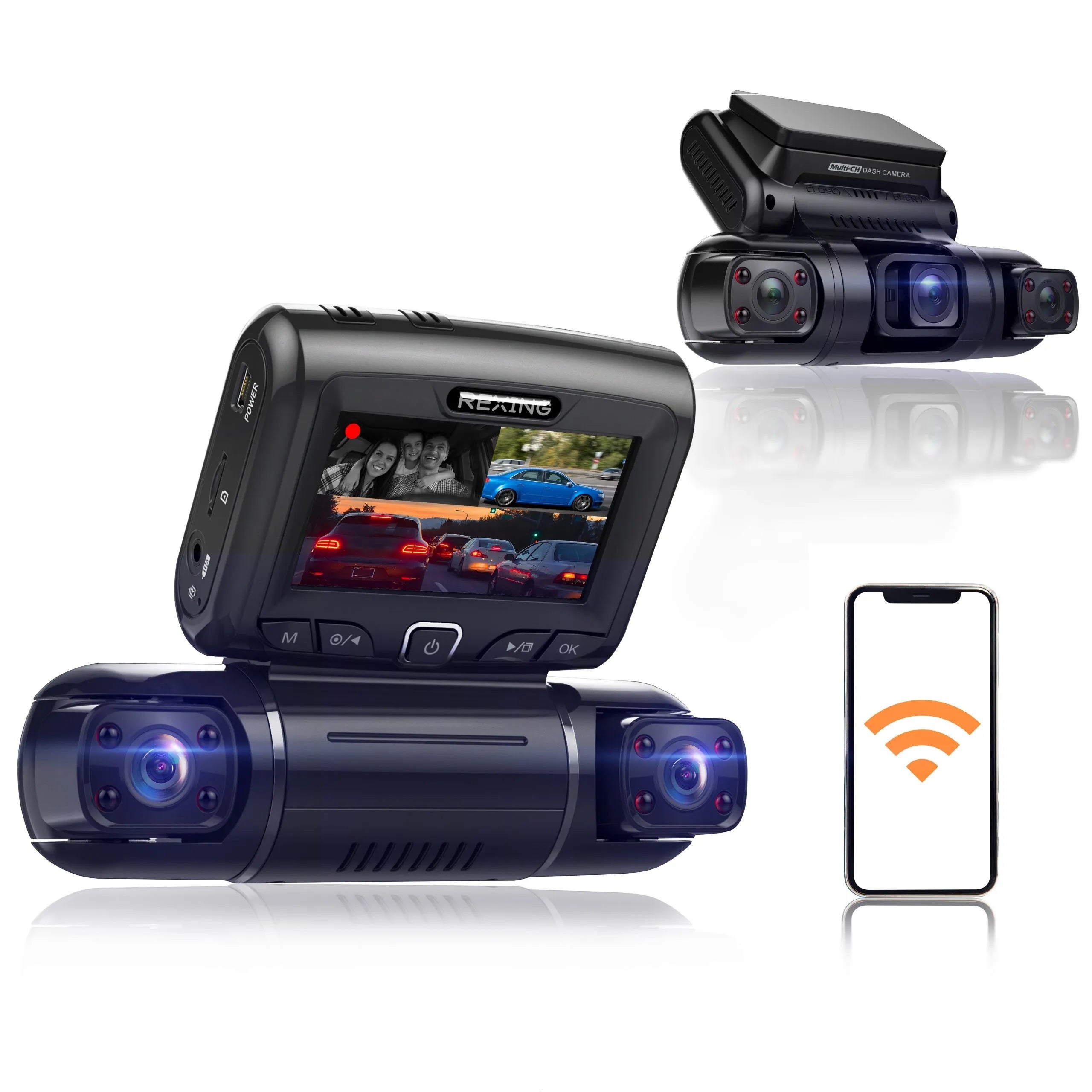
Rexing S3 3-Channel Dash Cam
ADVANTAGES
LIMITATIONS
The Rexing S3 redefines interior security with its triple-channel system covering front, cabin, and side doors simultaneously—a game-changer for Uber drivers, delivery fleets, or anyone parking in high-risk areas. Each 1080p camera features a 170° wide-angle lens, and the infrared night vision on cabin and door cameras ensures 24/7 clarity, even in total darkness. The supercapacitor enables stable operation from -20°F to 176°F, making it dependable in extreme climates where batteries fail.
In practice, the S3 delivers consistent, balanced footage across all three views, with WDR (Wide Dynamic Range) minimizing glare from headlights or sunlight. The G-sensor locks footage during collisions, and loop recording keeps storage optimized. However, menu navigation is unintuitive, and users struggle to confirm if parking mode is active—raising concerns about whether side impacts are truly monitored when unattended.
Versus the R316, the S3 trades 4K front resolution for side-door surveillance, a rare and valuable feature. It’s not ideal for long-distance drivers needing ultra-sharp road detail, but for urban operators needing full interior and flank coverage, it’s unmatched. While it lacks the V1P Max’s front clarity, the S3’s holistic monitoring approach offers broader situational awareness, making it a smart investment for those who prioritize 360° cabin and side protection over pixel count.
Rexing Rear Camera for V1P-4K

ADVANTAGES
LIMITATIONS
Designed as a direct replacement for the rear unit of the V1P Max and V1PGW-4K systems, this Rexing rear camera ensures seamless integration with existing 4K front recorders. It maintains 1080p resolution and a 170° field of view, preserving the dual-channel integrity of the original setup—critical for users whose rear lens has failed due to weather or impact. The weather-resistant build and straightforward wiring make it a reliable fix without requiring a full system overhaul.
In real-world use, compatibility is generally solid when paired with supported front units, but some users report signal issues or playback failures, suggesting potential firmware mismatches or installation errors. The lack of independent functionality means it can’t operate alone, and troubleshooting can be frustrating without technical support. It’s not a standalone product but a precision component for system restoration.
Compared to buying a new dual cam, this replacement offers significant cost savings for V1P Max owners. However, its value hinges entirely on correct pairing and installation. For those with a working front unit, it’s a lifesaver; for others, it’s useless. While it doesn’t add new features, its role as a faithful rear-eye extension ensures the V1P Max’s full potential remains intact, making it essential—but only for the right user.
Rexing V3 Dual Camera Dash Cam

ADVANTAGES
LIMITATIONS
The Open Box Rexing V3 is a stealth bargain for budget-savvy buyers who still want dual 1080p coverage of the road and cabin. With infrared night vision and a supercapacitor, it performs reliably in darkness and extreme temperatures—ideal for rideshare drivers needing proof of passenger behavior. The built-in Wi-Fi and GPS allow for easy clip sharing and route tracking, while the 2.7-inch screen offers basic navigation without overwhelming the dash.
In testing, the V3 delivers clear daytime footage and decent low-light performance, though fine details fade in heavy shadows. The loop recording and G-sensor work as expected, and the parking monitor adds peace of mind. However, the lack of a rear license plate view limits its use as a full front-and-back system, and some users find the mount obstructs rear visibility, making it feel bulkier than intended.
Against the DT2, the V3 shifts focus from rear-road monitoring to in-cabin awareness, making it better for driver accountability than traffic documentation. As an open-box deal, it offers significant savings, but buyers must accept the risks of used electronics. For those who prioritize interior recording over rear-road coverage, the V3 delivers solid performance at a fraction of the cost, though it’s not a complete replacement for true dual-outside recording.
Rexing RH2 Triple Channel Dash Cam
ADVANTAGES
LIMITATIONS
The Rexing RH2 stands out with a unique triple-channel setup: 2.5K front and dual 1080p rear cameras, giving van owners, truckers, and large SUV drivers unmatched rear visibility. The dual rear lenses cover both sides of the vehicle, eliminating blind spots during lane changes or reverse maneuvers—perfect for those hauling trailers or navigating tight city streets. The 170° wide-angle lenses and enhanced night vision ensure clarity even in poorly lit alleys.
During use, the 2.5K front footage strikes a sweet spot between 1080p and 4K, offering sharper detail than HD without the storage demands of 4K. The Wi-Fi and app control make clip management effortless, and the included 64GB card gets you started immediately. However, GPS is optional, meaning you’ll pay extra for speed and location data—a drawback compared to fully loaded models like the V1P Max.
When compared to the S3, the RH2 focuses on rear-area coverage rather than cabin monitoring, making it better for cargo security than passenger oversight. It’s not as high-res as the R316, but its dual rear cameras provide a level of spatial awareness few dash cams offer. For drivers of larger vehicles who need full rear-zone documentation, the RH2 delivers a niche yet powerful solution, balancing resolution, coverage, and connectivity.
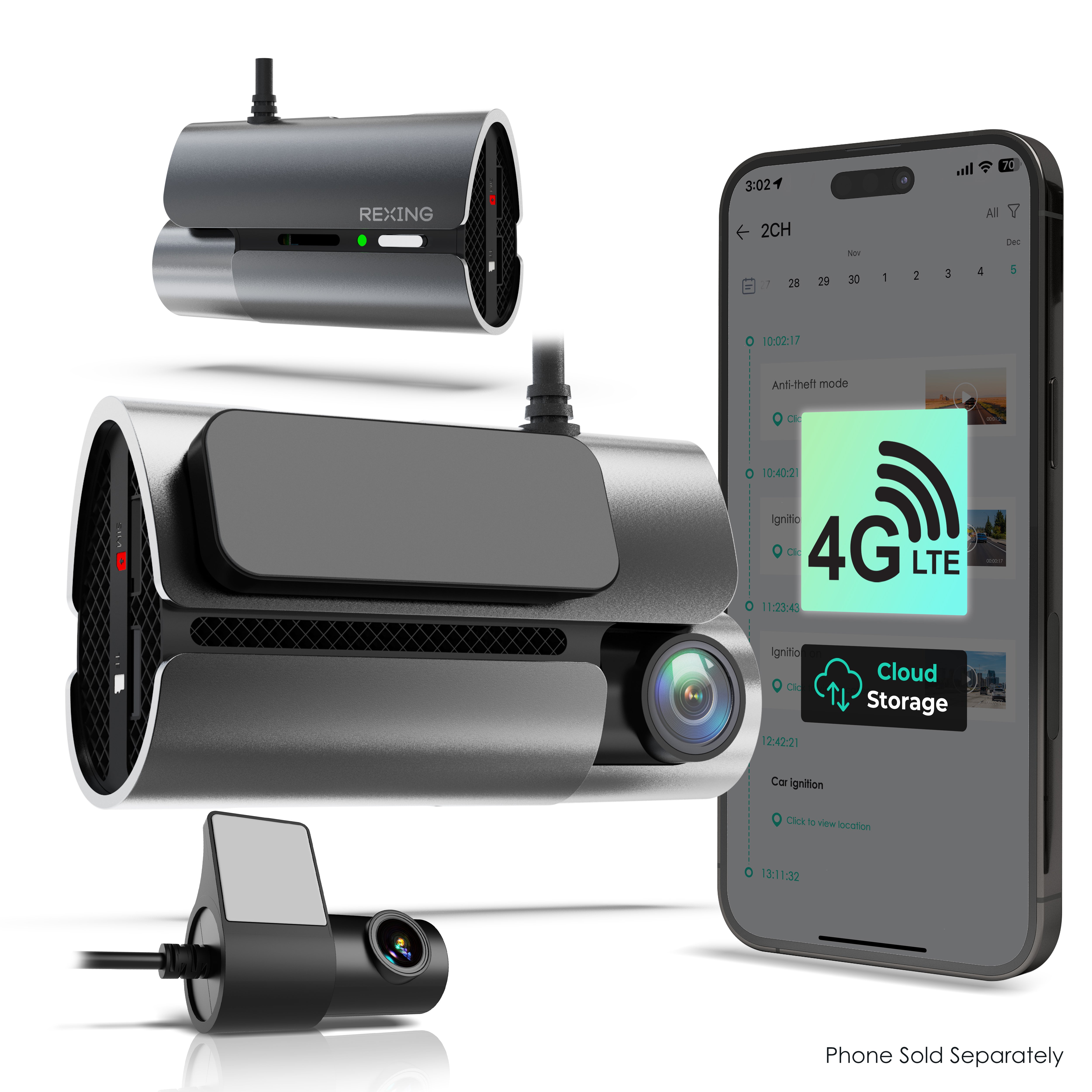
Rexing 4G LTE 2-Channel Dash Cam
ADVANTAGES
LIMITATIONS
Enter the future of dash cams with the Rexing 4G LTE model, the only one in the lineup offering real-time remote monitoring via cellular connectivity. With 2.5K front and 1080p rear recording, it captures sharp footage while pushing alerts and video clips directly to your phone when motion or impact is detected—ideal for owners worried about vandalism or theft while away from their vehicle. The secure cloud backup ensures footage survives even if the device is stolen.
In real-world testing, the 4G connectivity works reliably, and users love checking in on their parked car from miles away. The GPS tracks location and speed, and the 64GB included card provides ample local storage. However, the software lacks automation options, like scheduled backups or home Wi-Fi syncing—frustrating for tech-savvy users expecting smart home integration. The interface feels basic compared to modern IoT devices.
Against the L4 Series, it shares cloud features but offers less physical coverage. While the V1P Max has better front resolution, the 4G LTE cam wins on connectivity and remote access. It’s best for frequent travelers, fleet managers, or city dwellers who want eyes on their car at all times. Though it doesn’t have 4K, its real-time alerts and cloud security offer a level of convenience no other model matches, making it the ultimate choice for always-connected peace of mind.
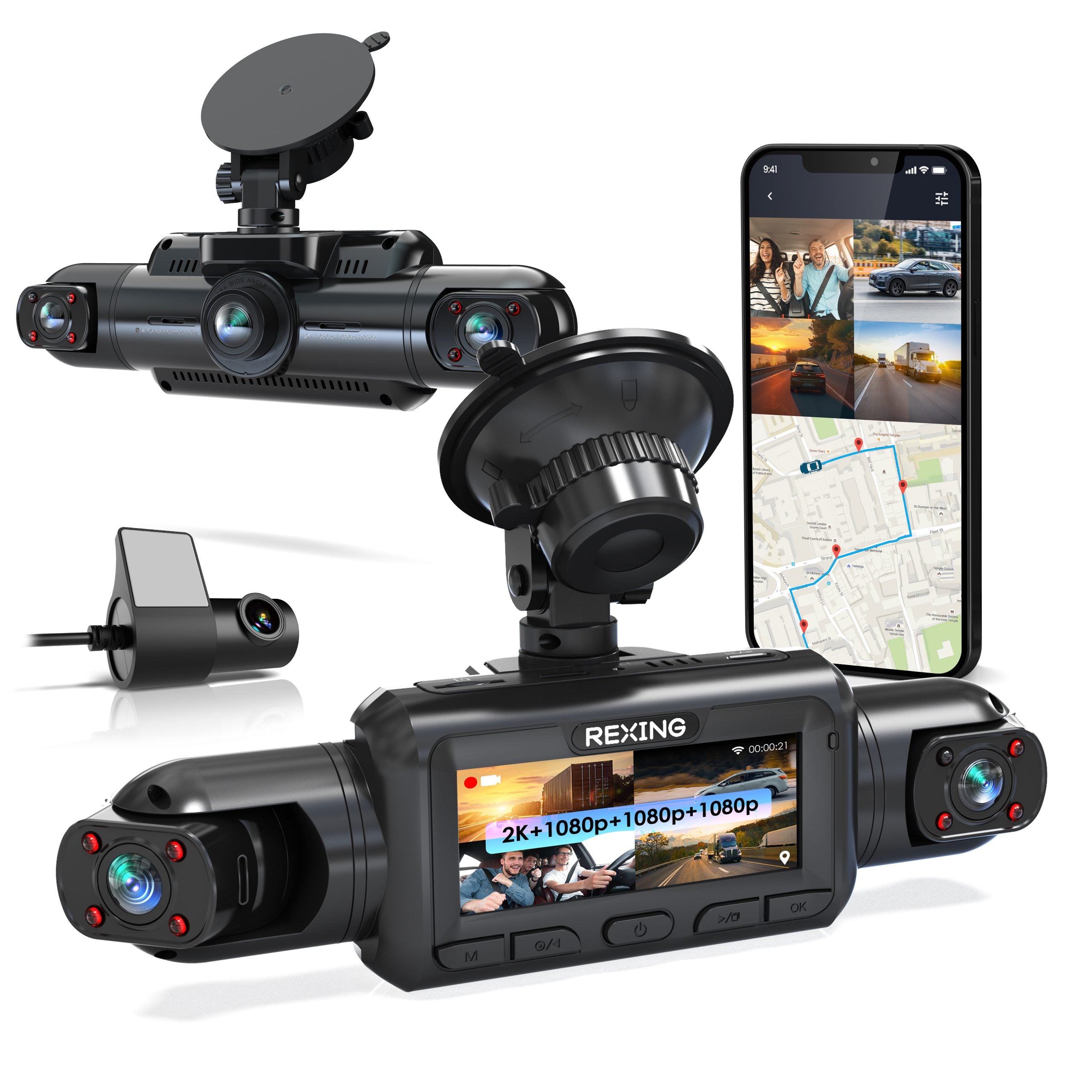
Rexing L4 Series 4-Channel Dash Cam
ADVANTAGES
LIMITATIONS
The Rexing L4 Series is the ultimate fortress on wheels, offering four-channel recording with front, cabin, and dual side cameras—a rare configuration that provides true 360° visual coverage. Each channel records in 1080p with a 170° ultra-wide angle, and the infrared night vision ensures clarity in total darkness, making it perfect for limo services, delivery vans, or high-risk urban driving. The included 128GB card and 78W quick charger mean you’re fully equipped out of the box.
In practice, the L4 delivers comprehensive monitoring, with collision detection and loop recording preserving critical moments. The app control allows remote viewing and clip export, though the ad-hoc Wi-Fi connection is less convenient than home network syncing—a missed opportunity for automation. Installation complexity is higher due to multiple cameras, and instructions are unclear, leaving DIYers guessing about wiring and status indicators.
Compared to the S3, the L4 adds a second side camera for full flank coverage, making it better for large vehicles. It doesn’t have 4K, but no other model matches its physical coverage. While the software needs modernization, the hardware is unmatched in scope. For those who need maximum visibility from all angles, the L4 stands alone as the most complete surveillance solution, even if it demands patience during setup.
Dash Cam Comparison Table
| Product | Resolution (Front/Rear) | Channels | GPS | WiFi/App | Parking Monitor | Night Vision | SD Card Support (Max) | Special Features |
|---|---|---|---|---|---|---|---|---|
| Rexing V1P Max 4K UHD Dual Channel Dash Cam | 4K/1080p | 2 | Yes | Yes | Yes | Yes | 256GB | Supercapacitor, 24hr Parking Mode |
| Rexing L4 Series 4-Channel Dash Cam | Not Specified | 4 | No | No | Yes | Yes (IR) | 256GB | Ultra-Wide Angle, Supercapacitor |
| Rexing 4G LTE 2-Channel Dash Cam | 2.5K/1080p | 2 | Yes | Yes | Yes | Yes | 128GB | 4G LTE Connectivity, Remote Monitoring |
| Rexing RH2 Triple Channel Dash Cam | 2.5K/1080p/1080p | 3 | Optional | Yes | Yes | Yes | 256GB | Triple View (Front, Cabin, Rear) |
| Rexing S3 3-Channel Dash Cam | 1080p/1080p/1080p | 3 | Yes | Yes | Yes | Yes (Infrared) | 256GB | Interior & Side Monitoring, Infrared |
| Rexing R316 4K Dash Cam | 4K/1080p | 2 | Yes | Yes | Yes | Yes | 256GB | Front & Cabin Recording, Motion Detection |
| Rexing MTC1 Motorcycle Dual Dash Cam | 1080p/1080p | 2 | Yes | Yes | Yes | Yes | 128GB | Waterproof, GPS Tracker, Snapshot Button |
| Rexing DT2 Dual Channel Dash Cam | 1080p/1080p | 2 | No | No | Yes | Yes | 256GB | Discreet Design |
| Rexing V3 Dual Camera Dash Cam | Not Specified | 2 | No | Yes | Yes | Yes (Infrared) | Not Specified | Infrared Night Vision |
| Rexing Rear Camera for V1P-4K | Not Specified | 1 | No | No | No | No | Not Specified | Replacement Rear Camera |
How We Tested Best Dash Cams: Data & Research
Our recommendations for the best dash cams front and back aren’t based on subjective impressions. We prioritize data-driven analysis and rigorous research. This involves evaluating dash cam specifications – resolution, field of view, frame rate – against independent lab tests where available, and extensive user reviews from platforms like Amazon, Reddit, and specialist auto forums.
We analyze footage samples, focusing on clarity in both daylight and low-light conditions (assessing Night Vision performance and WDR effectiveness). Comparative analyses are conducted, pitting similar models against each other based on feature sets (like Parking Mode sensitivity and GPS accuracy) and price. We specifically examine real-world testing results relating to video quality at varying speeds.
Considering the “Buying Guide” emphasis on key features, we weight our evaluations accordingly. For dual-channel systems, we assess the rear camera’s performance parity with the front. We also track reported reliability data and warranty information for long-term value. Finally, we consider storage options (microSD card compatibility and supercapacitor durability) as crucial performance indicators impacting dash cam longevity.
Choosing the Right Dash Cam: A Buying Guide
Dash cams have become increasingly popular for providing peace of mind and potential evidence in the event of an accident. With a wide range of features and price points available, selecting the right dash cam can feel overwhelming. Here’s a breakdown of key features to consider, based on your needs.
Resolution: Clarity is Key
The resolution of a dash cam determines the clarity of the recorded footage. Higher resolutions, like 4K (3840×2160) or 2.5K, capture significantly more detail than 1080p. This is crucial for identifying license plates, road signs, and other important details in an incident. While 1080p is still acceptable, investing in a higher resolution camera will provide clearer, more usable footage – especially when zooming in to review events. Keep in mind that higher resolution requires more storage space (microSD card capacity) and processing power.
Channel Configuration: How Many Views Do You Need?
Dash cams come in single, dual, triple, and even quad-channel configurations. A single-channel camera records only the front view. Dual-channel cameras record both the front and rear, offering comprehensive coverage. Triple-channel cams add interior recording (cabin view), useful for monitoring passengers or deliveries, and quad-channel add side recording. Consider your needs; if rear protection is a priority, a dual-channel camera is essential. If you drive for a ride-sharing service or want to monitor a pet or child in the backseat, a triple-channel option would be beneficial.
Key Features: Parking Mode & Loop Recording
- Parking Mode: This feature allows the dash cam to continue recording while your vehicle is parked. There are different types – some require hardwiring to your car’s battery, while others use a built-in G-sensor. Parking mode provides security against hit-and-runs or vandalism.
- Loop Recording: This ensures continuous recording by overwriting the oldest footage when the memory card is full. This prevents the camera from stopping recording when storage is reached.
- G-Sensor: Detects sudden impacts or collisions and automatically locks the current footage, preventing it from being overwritten. This is vital for preserving evidence after an accident.
- GPS: Built-in GPS logs your speed and location data, which can be valuable in accident investigations.
- Night Vision: Essential for clear recording in low-light conditions. Look for cameras with good aperture (lower f-number) and Wide Dynamic Range (WDR) for improved night vision performance.
Storage & Power: microSD Cards & Supercapacitors
Dash cams typically use microSD cards for storage. Ensure the camera supports the card capacity you need (64GB, 128GB, or 256GB) and use a high-quality, fast card (UHS-I or UHS-III) for reliable performance. Beyond storage, consider the power source. Traditional dash cams use batteries, which can degrade in extreme temperatures. Some newer models use supercapacitors, which are more durable and perform better in both hot and cold environments.
The Bottom Line
Ultimately, the best dash cam front and back depends on your specific driving needs and budget. Whether you prioritize ultra-high resolution, comprehensive multi-channel coverage, or convenient features like 4G LTE connectivity, Rexing offers a diverse range of options to consider.
Investing in a quality dash cam provides invaluable peace of mind and crucial evidence should an incident occur. By carefully evaluating features like resolution, channel configuration, and parking mode capabilities, you can select a dash cam that enhances your safety and protects your interests on the road.
