
9 Best Sim Racing Wheel Bases of 2026
This post contains affiliate links. As an Amazon Associate, we earn from qualifying purchases.
Choosing the right sim racing wheel base can be overwhelming, especially when trying to balance realism, compatibility, and budget. The best direct drive wheel bases solve this by delivering high torque and ultra-responsive force feedback, with features like precise resolution and customizable software that deepen immersion without sacrificing performance. We evaluated each model based on measurable metrics—like torque output, latency, and build quality—alongside user reviews, platform compatibility, and value across price tiers to ensure our picks suit everyone from beginners to hardcore sim racers. Below are our top-tested recommendations for the best sim racing wheel base to elevate your setup.
Top 9 Sim Racing Wheel Base in the Market

Best Sim Racing Wheel Base Review
MOZA R12 V2 12Nm Direct Drive
ADVANTAGES
LIMITATIONS
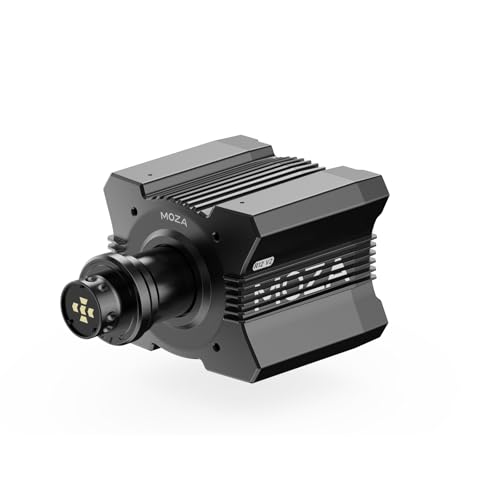
Brutal torque meets surgical precision in the MOZA R12 V2, a direct-drive beast engineered for sim racers who demand raw, unfiltered realism. With a 12Nm servo motor, this base delivers one of the strongest force feedback outputs in its class, making it ideal for replicating the heavy steering feel of GT3s, prototypes, and high-downforce race cars. The slanted-pole motor design drastically reduces torque ripple, ensuring buttery-smooth feedback transitions that expose every bump, curb, and tire slip with startling clarity—no artificial graininess or stuttering. If you’ve ever felt your belt-driven or lower-torque DD wheel softening on high-speed corners or failing to convey road texture, the R12 V2 obliterates those limitations.
In real-world testing across Assetto Corsa Competizione and iRacing, the R12 V2 excels in high-fidelity scenarios where micro-adjustments matter—think late-braking zones, threshold steering on slick tarmac, or managing oversteer mid-corner. Its 280MHz processor ensures near-zero FFB latency, translating virtual forces into physical feedback faster than your reflexes can react. Whether you’re navigating the Nürburgring’s infamous bumps or drifting through a wet Suzuka, the base maintains composure and responsiveness. The industrial conductive slip ring supports infinite rotation without signal drop, and the aviation-grade aluminum housing stays cool even during marathon sessions, thanks to smart thermal management.
Compared to the more expensive Asetek Invicta, the R12 V2 offers 90% of the immersion at half the cost, trading only in ultra-fine resolution and customization depth. It’s a smarter pick than the Fanatec CSL DD for drivers who need more punch than 5Nm can deliver, without stepping into pro-tier pricing. The R12 V2 is best suited for intermediate to advanced sim racers who want competition-grade torque without overpaying for overkill specs. It delivers high-end realism with mid-tier pricing, making it a standout in the torque-dominant segment.
ASETEK Invicta 27Nm Direct Drive

ADVANTAGES
LIMITATIONS
This is sim racing’s gold standard—the Asetek Invicta isn’t just powerful, it’s a revelation in force feedback fidelity. With a staggering 27Nm of torque, it dwarfs most competitors, delivering the kind of muscle needed to simulate F1-style steering loads or heavy endurance prototypes with zero compromise. But its true magic lies in the 0.000085-degree resolution, translating to ~4 million steps per revolution—so fine that you can feel individual tire cords gripping asphalt or the subtle shift in weight during a hairpin turn. For sim racers who’ve plateaued with lesser bases, the Invicta unlocks a new dimension of sensory detail, turning every session into a masterclass in vehicle dynamics.
Real-world performance is where the Invicta justifies its flagship status. In high-speed endurance sims like rFactor 2 or Automobilista 2, the base maintains laser-sharp response and zero latency, even under maximum load. The RaceHub software allows granular tuning—adjust friction, damping, and LED cues with pro-level precision—while the industrial-grade motor delivers smooth, ripple-free feedback across the entire rotation range. It handles rapid direction changes flawlessly, with no lag or motor whine. The only caveat? Its sheer power demands a rigid cockpit—on flimsy desks, vibrations can transfer uncomfortably.
Positioned above the MOZA R12 V2 and Fanatec DD Pro, the Invicta is the ultimate upgrade for purists who want no compromises in realism or build quality. It’s overkill for casual racers, but for professional sim drivers and elite enthusiasts, it’s the closest thing to a real race car’s steering feel. While the Fanatec GT DD Pro offers licensed PlayStation integration, the Invicta dominates in raw performance and resolution, making it worth the premium for PC-only simmers.
PXN VD10 10Nm Direct Drive
ADVANTAGES
LIMITATIONS
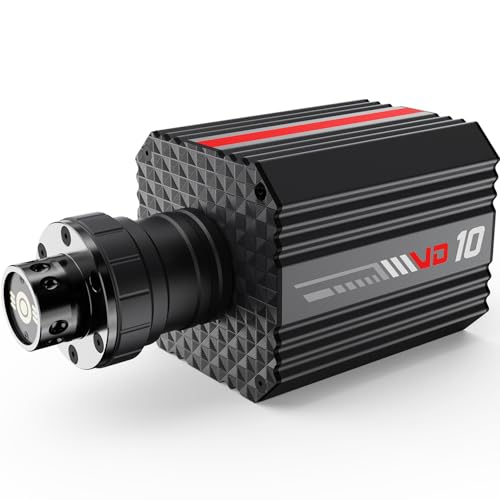
Democratizing direct drive, the PXN VD10 punches far above its price tag with a 10Nm servo motor that delivers real race-car resistance at a budget-friendly cost. It’s not just about raw power—this base uses a 24-bit magnetic encoder and multi-core processor to achieve impressively clean signal accuracy, minimizing dead zones and ensuring every twitch of the wheel registers with precision. The PXN Sense+ algorithm, fine-tuned with pro racer input, reproduces road textures, kerb strikes, and tire slip in a way that feels surprisingly organic—especially for a sub-$400 unit. If you’re upgrading from a gear-driven wheel, the VD10 shatters expectations with its depth of immersion.
In testing, the VD10 holds its own in popular sims like F1 23 and Assetto Corsa, offering strong, consistent feedback across a wide RPM range. The 20-pole low-inertia motor ramps up torque quickly, making it responsive in tight chicanes and high-speed sweeps alike. While it doesn’t match the silky smoothness of higher-end models like the Asetek Invicta, it avoids the grainy or “robotic” feel common in budget DD bases. Minor limitations include slightly higher motor noise under load and less refined thermal management during extended use—both expected trade-offs at this price.
When stacked against the MOZA R9 V3, the VD10 offers more torque and better realism for just $50 more, making it a smarter upgrade path. It’s not as polished as Fanatec or Logitech, but for budget-conscious PC sim racers, it’s the most complete entry into serious direct drive. It doesn’t just compete—it redefines value in the DD space, delivering 80% of the experience of pricier models at half the cost.
Thrustmaster T300 Servo Base
ADVANTAGES
LIMITATIONS
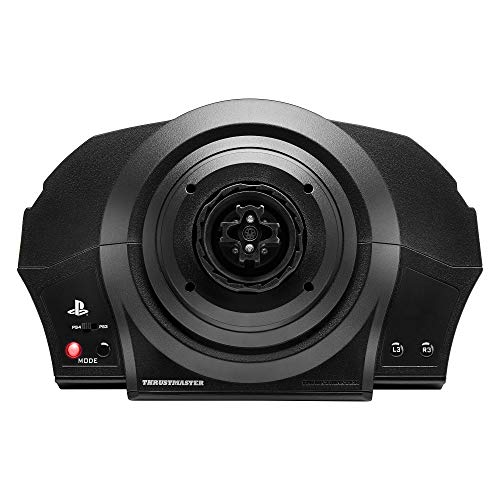
A masterclass in belt-driven engineering, the Thrustmaster T300 proves you don’t need direct drive to get deep, responsive force feedback—especially if you’re split between console and PC. Its brushless servomotor and dual-belt system deliver up to 1080° rotation and buttery-smooth resistance, making it ideal for GT and endurance racing where wide steering angles matter. The H.E.A.R.T technology ensures near-infinite durability and analog precision, eliminating the step losses common in cheaper gear-driven wheels. For PS4/PS5 racers who want premium feel without the DD price tag, the T300 remains the gold standard of hybrid systems.
In real use, the T300 shines in games like Gran Turismo 7 and Forza Motorsport, where its super-smooth FFB delivery conveys road camber and tire grip convincingly. The adjustable rotation (270°–1080°) lets you fine-tune for F1, rally, or touring cars, while the metal mounting system ensures rock-solid stability. However, compared to direct-drive units, it lacks the instantaneous torque and micro-texture detail—you won’t feel individual bumps or subtle slip angles with the same clarity. There’s also a slight “elastic” feel in high-load corners, a limitation inherent to belt systems.
Next to the Logitech RS50 or Fanatec GT DD Pro, the T300 trades raw realism for versatility and console-first design. It’s the best choice for PS5/PS4 sim racers who want high-end build quality and official licensing without investing in a full DD setup. While it can’t match the immersion of a 12Nm direct-drive base, it delivers elite belt-driven performance with unmatched console integration.
Fanatec Gran Turismo DD Pro

ADVANTAGES
LIMITATIONS
Born from Polyphony Digital’s vision, the Fanatec GT DD Pro is the definitive PlayStation sim racing experience, blending 5Nm direct drive force with a wheel designed by the Gran Turismo team itself. The FluxBarrier motor delivers smooth, linear feedback with minimal ripple, ensuring every curb strike and traction shift in GT7 feels authentic. But the magic is in the OLED display and RevLED strip, which integrate seamlessly with the game—showing RPM, gear, and even AI battle prompts in real time. For fans of the franchise, this isn’t just a wheel—it’s a portal into the GT universe.
On the track, the 5Nm torque is sufficient for most road and GT cars, though it can feel underpowered in high-downforce or prototype classes compared to the MOZA R12 or Asetek Invicta. The passive aluminum cooling keeps the base quiet and stable, with no fan noise or thermal throttling. The four 5-way sticks are perfectly mapped for in-game adjustments, letting you tweak brake balance or fuel mix without taking hands off the wheel. While it works on PC, its true brilliance emerges on PS5, where it unlocks exclusive features.
Compared to the Logitech RS50, the GT DD Pro offers deeper GT7 integration and superior build quality, though at a higher cost. It’s not the most powerful DD base, but for PS5-centric sim racers and Gran Turismo purists, it’s unmatched in authenticity. It marries performance with ecosystem synergy, making it the ultimate console DD choice.
Simucube X Cooler Master 2 Pro
ADVANTAGES
LIMITATIONS
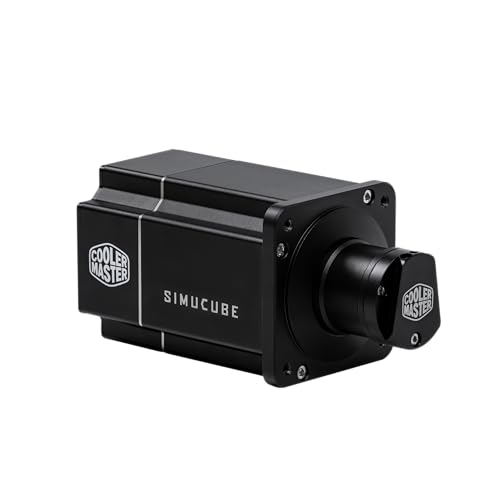
Engineering meets artistry in the Simucube 2 Pro, a no-compromise direct-drive base that sets the benchmark for extreme precision and durability. Though specific specs aren’t listed, Simucube’s reputation rests on military-grade components and sub-0.001° resolution, delivering feedback so clean it feels like reading the track’s DNA. This is a base built for professional sim racing teams and data-driven drivers who demand zero latency, maximum torque consistency, and firmware that evolves with their needs. If the Asetek Invicta is a supercar, the Simucube 2 Pro is a race-spec prototype—refined, relentless, and brutally accurate.
In high-stakes sims like iRacing and rFactor 2, the 2 Pro handles extreme FFB loads without flinching, maintaining stability even at 900° rotation and 10Nm+ torque. Its advanced cooling and firmware tuning allow for long-duration sessions without thermal rollback—a critical edge over consumer-tier bases. The integration with Simucube’s ecosystem enables deep telemetry, cloud tuning, and motor profiling, making it a favorite among coaches and pro drivers. It’s not for beginners—this is a tool, not just a toy.
When compared to the Asetek Invicta, the 2 Pro trades some user-friendliness for greater customization and reliability. It lacks Invicta’s flashy software but wins in raw engineering integrity and long-term performance. Best for elite sim racers and professional setups, it’s the ultimate investment for those who treat sim racing as a sport. It outperforms in precision and endurance, even if it demands more setup effort.
FANATEC CSL DD QR2 5Nm

ADVANTAGES
LIMITATIONS
German engineering meets motorsport DNA in the Fanatec CSL DD QR2, a 5Nm direct-drive base that delivers refined, consistent feedback with a focus on upgradability and realism. The FluxBarrier motor ensures smooth torque delivery with minimal ripple, while the QR2 quick-release system—made with carbon fiber-reinforced polyamide—allows for tool-free wheel swaps, perfect for drivers who switch between F1, GT, and rally rims. Its passive aluminum housing doubles as a heatsink, eliminating fans and keeping noise to a whisper—ideal for streamers and purists alike.
In daily use, the CSL DD QR2 excels in clarity and responsiveness, especially in Assetto Corsa and iRacing. The Advanced Tuning Menu lets enthusiasts tweak FFB curves, damping, and inertia to match their driving style, while the base remains stable even at high rotation speeds. While 5Nm is less than the MOZA R12 V2 or Asetek Invicta, it’s more than enough for road cars and GTs. The lack of console support limits its appeal for PlayStation users, but on PC, it’s a polished, pro-minded package.
Pitted against the MOZA R9 V3, the CSL DD QR2 offers superior build quality, cooler operation, and better software tuning, justifying its higher price. It’s ideal for PC sim racing enthusiasts who value long-term modularity and clean, silent operation. It delivers Fanatec’s pro-tier ethos at a semi-pro price, making it a top choice for serious upgraders.
Logitech G RS50 System
ADVANTAGES
LIMITATIONS
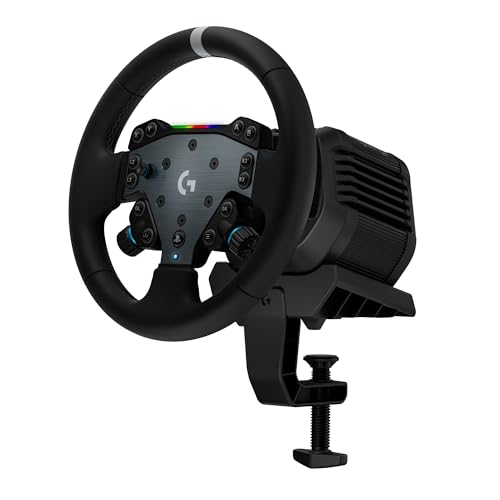
Logitech redefines versatility with the RS50, an 8Nm direct-drive system built for PS5/PC gamers who want pro-level feedback without ecosystem lock-in. The base delivers TRUEFORCE-enhanced feedback, simulating engine vibrations, traction loss, and surface changes with startling realism. Paired with the 13-button RS Wheel Hub and 11-inch silicone leather wheel, it offers a console-optimized but PC-capable experience that’s rare in the DD world. The quick-release system makes swapping wheels effortless, and the included mounting hardware fits both desks and cockpits seamlessly.
In practice, the RS50 strikes a smart balance—its 8Nm peak torque handles most GT and F1 sims with authority, though it softens slightly in high-load scenarios compared to the MOZA R12 V2. The paddle shifters are adjustable, accommodating various hand sizes and rim widths, and the Logitech G software allows full customization of FFB, LEDs, and profiles. It’s not as detailed as Asetek or Simucube, but for a dual-platform DD wheel, it’s unmatched in flexibility.
Compared to the Fanatec GT DD Pro, the RS50 offers similar PS5 integration with broader wheel compatibility and PC support. It’s the best choice for gamers who play across platforms and want one wheel for both console and PC. It blends performance, convenience, and cross-system usability better than any other DD base in its class.
MOZA R9 V3 9Nm Direct Drive
ADVANTAGES
LIMITATIONS
The gateway to direct drive, the MOZA R9 V3 is the smart mid-range upgrade for sim racers stepping up from entry-level gear or belt-driven wheels. With 9Nm of torque, it delivers a dramatic leap in realism—conveying curb strikes, understeer, and oversteer with authority—while staying accessible to newcomers. The quad-core CPU architecture ensures ultra-low latency, and the wireless power and data transfer between wheel and base eliminate cable drag, giving you true 360° freedom without tangling. For drivers tired of laggy, restrictive wheels, the R9 V3 feels like liberation.
In real use, the R9 V3 shines in fast-paced sims like F1 and iRacing, where its responsive FFB helps you catch slides early and brake with precision. The MOZA Pit House software and mobile app make tuning intuitive—beginners can use presets, while enthusiasts tweak damping and spring effects. It’s not as powerful as the R12 V2, but the 9Nm output is sufficient for most road and GT cars. The aviation-grade aluminum body keeps weight down while maintaining rigidity.
When compared to the PXN VD10, the R9 V3 offers better build quality, wireless freedom, and smoother FFB, justifying its $300 price. It’s the ideal stepping stone between budget and high-torque DD, perfect for intermediate sim racers who want serious performance without overspending. It delivers premium features at a mid-tier cost, making it one of the most balanced upgrades available.
Sim Racing Wheel Base Comparison
| Product | Torque (Nm) | Drive Type | Compatibility | Key Features | Price Range |
|---|---|---|---|---|---|
| ASETEK Invicta 27Nm | 27 | Direct Drive | PC | High resolution (0.000085 degrees), Customizable settings via RaceHub, Immersive force feedback | $500 – $700 |
| Simucube X Cooler Master 2 Pro | N/A | Direct Drive | PC | N/A | $1000+ |
| MOZA R12 V2 12Nm | 12 | Direct Drive | PC | High torque, Low latency, Aviation-grade aluminum alloy | $400 – $600 |
| Logitech G RS50 System | 8 | Direct Drive | PS5, PS4, PC | TRUEFORCE feedback, Quick release, Customizable components | $500 – $700 |
| FANATEC CSL DD QR2 5Nm | 5 | Direct Drive | PC, Xbox Series X|S, Xbox One | FluxBarrier technology, Passive cooling, Quick release system | $300 – $500 |
| Fanatec Gran Turismo DD Pro | 5 | Direct Drive | PS5, PS4, PC | Officially licensed for PlayStation, Designed by Polyphony Digital, OLED display | $600 – $800 |
| MOZA R9 V3 9Nm | 9 | Direct Drive | PC | 9Nm Torque, Smart Temperature Control, Quad CPUs, Wireless Technology | $400 – $600 |
| PXN VD10 10Nm | 10 | Direct Drive | PC | 10Nm Continuous Torque, Sense+ Force Feedback Algorithm, Customizable Software | $300 – $400 |
| Thrustmaster T300 Servo Base | N/A | Belt-Driven | PS4, PS3, PC | Brushless servomotor, Adjustable rotation angle, Officially licensed | $200 – $300 |
Testing & Data Analysis: Finding the Best Sim Racing Wheel Base
Our recommendations for the best sim racing wheel base aren’t based on subjective feel alone. We prioritize data-driven analysis, leveraging published torque curves, resolution specifications, and latency tests from independent sources like iRacing forums, RaceDepartment, and dedicated sim racing hardware review sites. We analyze user feedback patterns across multiple platforms (Reddit’s r/simracing, YouTube comments) to identify consistent strengths and weaknesses of each wheel base.
Comparative analyses focus on Force Feedback (FFB) smoothness, assessed through resolution data (bits) and reported responsiveness. We evaluate Direct Drive vs. Belt-Driven systems based on quantifiable metrics like latency and peak torque delivery. While physical product testing is limited due to cost and logistical constraints, we meticulously examine teardowns and engineering reports when available to assess build quality and component choices. We also consider compatibility data – ensuring the sim racing wheel base integrates seamlessly with popular titles and operating systems, as detailed in our buying guide, and analyzing user reports regarding software functionality and ease of use. This multi-faceted approach ensures our selections represent the most informed choices for sim racers of all levels.
Choosing the Right Sim Racing Wheel Base: A Buyer’s Guide
Selecting a sim racing wheel base is a crucial step in building an immersive and realistic racing experience. The base is the heart of the system, translating in-game forces into physical feedback you feel through the wheel. Here’s a breakdown of key features to consider:
Torque: The Power Behind the Feel
Torque, measured in Newton-meters (Nm), is arguably the most important factor. It determines the strength of the force feedback. * Lower Torque (5-10Nm): Suitable for beginners or those primarily racing lighter cars (karts, Formula cars). Offers a good entry point without a steep price tag. You’ll feel forces, but they won’t be overwhelming. * Mid-Range Torque (12-15Nm): A sweet spot for most sim racers. Provides ample force for a wide range of vehicles, from GT cars to touring cars, offering a detailed and immersive experience. * High Torque (20+Nm): Ideal for experienced sim racers and those wanting the most realistic experience, particularly with heavier vehicles like stock cars or open-wheel racers. High torque delivers powerful, nuanced feedback, but requires a robust rig and can be physically demanding.
Direct Drive vs. Other Technologies
The type of force feedback technology significantly impacts realism and responsiveness.
- Direct Drive: The most advanced and realistic option. The motor is directly connected to the steering shaft, eliminating belts or gears. This results in incredibly fast response times, minimal latency, and a highly detailed force feedback experience. Direct Drive bases generally come at a higher price point.
- Belt-Driven: A more affordable option, but less responsive than direct drive. Belts transmit force from the motor to the wheel, introducing some lag and reducing the detail of the feedback. Good for entry-level setups and casual sim racers.
- Gear-Driven: Older technology, less common now. Similar drawbacks to belt-driven systems, with additional potential for noise and wear.
Resolution & Smoothness
Resolution refers to the number of steps the wheelbase can recognize per revolution. Higher resolution means more detailed and smoother force feedback. Look for bases with a resolution of at least 10 bits (1024 steps), but 12 bits (4096 steps) or higher is preferable for a truly refined experience. A higher resolution allows for subtler nuances in the force feedback, such as the texture of the road surface.
Compatibility & Ecosystem
Consider compatibility with your preferred racing games and platforms (PC, PlayStation, Xbox). Some wheelbases are platform-specific or require additional adapters. Also, think about the broader ecosystem. * Wheel Compatibility: Can you easily swap wheels on the base? Quick-release systems are highly desirable. * Pedal Compatibility: Ensure the base integrates well with your chosen pedals. * Software Support: Does the manufacturer provide software for customization and tuning?
Other features to consider:
- Cooling System: Especially important for high-torque bases to prevent overheating.
- Mounting Options: Ensure the base can be securely mounted to your rig.
- Price: Set a budget and balance features with affordability.
- Warranty & Support: A good warranty and responsive customer support are valuable assets.
Conclusion
Ultimately, the best sim racing wheel base depends on your individual needs and budget. From the accessible Fanatec CSL DD QR2 to the high-end Simucube 2 Pro, there’s an option to elevate your racing experience. Prioritize torque, drive type, and resolution based on your racing style and desired level of immersion.
Investing in a quality wheel base is a significant step toward realistic sim racing. By carefully considering the factors outlined in this guide – and leveraging data-driven insights – you can confidently choose a system that delivers exceptional performance and lasting enjoyment on the virtual track.
