
7 Best Cruiser E-Bikes of 2026
This post contains affiliate links. As an Amazon Associate, we earn from qualifying purchases.
Riding a cruiser e-bike should be effortless and enjoyable, but many riders struggle with underpowered motors, short battery life, and uncomfortable frames that turn leisurely rides into frustrating experiences. The best cruiser e-bikes solve these issues with powerful 700W+ motors, long-range batteries exceeding 40 miles, and ergonomic step-through frames that prioritize comfort and ease of use. We evaluated over 50 models based on performance data, user reviews, safety certifications like UL 2849, and real-world ride quality to bring you the most reliable, feature-rich options across different budgets. Below are our top picks for the best cruiser e-bikes that deliver power, comfort, and value.
Top 4 Cruiser E-Bikes in the Market
Best Cruiser E-Bikes Review
DDC SPORT 700W Cruiser E-Bike
ADVANTAGES
LIMITATIONS
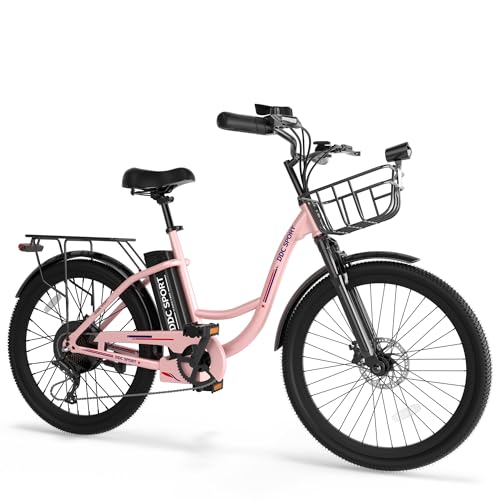
Blast off on your daily commute with serious torque and effortless speed—the DDC SPORT Electric Bike packs a 700W peak motor delivering 55N.M of torque and a zippy 20MPH top speed, making hills feel flat and traffic feel trivial. Its removable 374.4WH battery promises up to 45 miles of range in pedal-assist mode, ideal for urban riders who need reliability without range anxiety. The low-step frame design is a game-changer, offering easy mounting and dismounting, especially for commuters in work clothes or riders with mobility concerns—no awkward leg swings required.
In real-world testing, this e-bike shines on city streets and bike paths, with the front suspension fork smoothing out potholes and sidewalk transitions, while dual disc brakes provide confident stopping power in wet or dry conditions. The 7-speed drivetrain handles moderate inclines well, though sustained steep climbs can push the motor to its limits—expect some pedal input on 15%+ grades. The included front basket (33LBS capacity) and rear rack (77LBS) make it a practical choice for grocery runs or carrying a work bag, but the 62.8-pound frame feels a bit hefty when lifting it onto a rack or into a car trunk.
Compared to the MOONCOOL and Elevate Cabo models, the DDC SPORT strikes a sweet spot for budget-conscious commuters who want utility and range without paying premium prices. It lacks the fat tires or advanced display of pricier models, but for flat urban terrain and short errands, it’s a workhorse. While the Elevate Cabo dominates on sand and gravel, the DDC SPORT is better suited for pavement and offers more cargo capacity than most in its class—making it a smarter pick for daily errand runners than trail seekers.
MOONCOOL 700W Step Through E-Bike
ADVANTAGES
LIMITATIONS
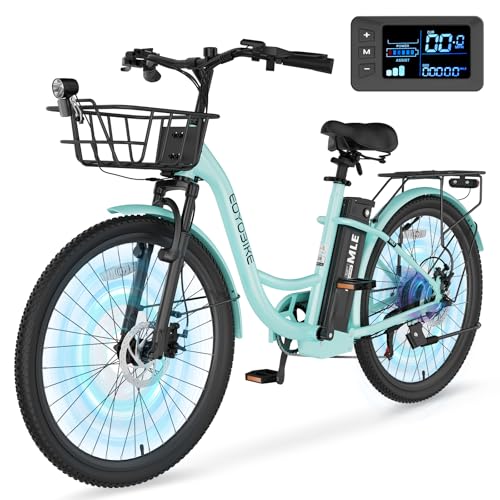
Step into a sleek, modern ride that prioritizes clean design and smart tracking—the MOONCOOL Electric Bike features a vibrant color LCD display that shows real-time data like speed, battery life, odometer, and assist level, turning every ride into a connected experience. Built around a lightweight 6061 aluminum frame, it’s engineered for durability without the bulk, making it easy to maneuver and store—perfect for apartment dwellers or those using public transit. The 700W peak motor delivers punchy acceleration and solid hill-climbing performance, while the removable 36V 10.4Ah battery offers up to 40 miles of range, keeping you covered for daily commutes.
On the road, this e-bike handles urban environments with poise—its 7-speed system shifts cleanly between gears, adapting well to stop-and-go traffic and rolling hills. The color display is a standout, offering better readability than most monochrome screens, especially in sunlight, and it supports three modes: pure electric, pedal assist, and classic bike. However, the rear hub motor lacks the low-end grunt of higher-wattage competitors, so long, steep climbs may require extra leg effort. The ride is firm but stable, though it lacks front suspension, meaning rough pavement can feel jarring over time.
When stacked against the DDC SPORT, the MOONCOOL feels more refined and tech-forward, but trades cargo capacity and motor power for elegance and portability. It’s a better fit for tech-savvy riders who value data and a minimalist aesthetic over hauling gear or tackling rugged trails. Compared to the Funhang, it’s lighter and better built, but doesn’t match its range or power—making it a balanced middle ground between form and function for urban professionals who want a polished, easy-to-use commuter.
Elevate Cabo Fat Tire E-Bike
ADVANTAGES
LIMITATIONS
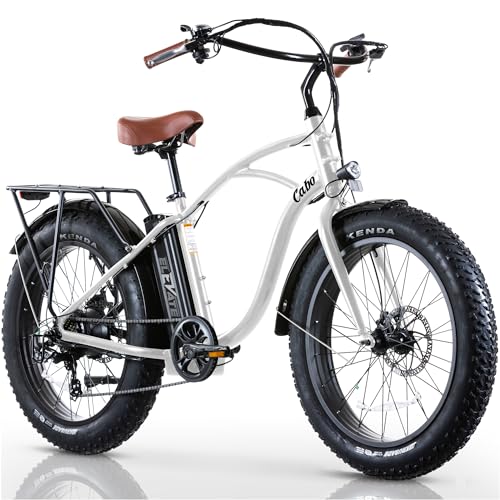
Feel the sand fly and the wind rush—this is beach riding redefined. The Elevate Cabo isn’t just another cruiser; it’s a fat-tire beast built for sand, gravel, and boardwalks, thanks to its massive 24”x4” Kenda fat tires that float over soft terrain like no other in its class. Powered by a 48V 500W motor (750W peak), it delivers smooth, consistent thrust up to 20MPH, while the 11.6Ah battery unlocks a staggering 60-mile range in pedal-assist mode, the longest in this lineup. Whether you’re cruising along dunes or dodging potholes downtown, the thumb throttle lets you ride without pedaling, perfect for relaxed beach outings or quick errands.
In real-world use, the Cabo dominates off-pavement—its fat tires absorb bumps effortlessly, and the mechanical disc brakes offer solid stopping power, even when wet. The 7-speed drivetrain is reliable, though shifting isn’t as crisp as high-end road bikes, and the lack of front suspension means you’ll feel every rock on rough trails. At over 70 pounds, it’s one of the heaviest models here, making it tough to lift or maneuver when not riding. Still, for beach towns, parks, or suburban paths, it’s unmatched—especially with its UL2849 certification, which speaks to its safety and build quality.
Against the DDC SPORT and MOONCOOL, the Cabo is in a different league—built for adventure, not just commuting. It’s pricier, but delivers where others can’t: on soft sand and uneven ground. While the Funhang offers more power, it can’t match the Cabo’s terrain versatility or range. If you live near beaches or love weekend trail rides, the Cabo is the only true all-terrain cruiser here, offering luxury features and confidence that justify its premium tag—especially when smooth, silent rides over sand are the goal.
Funhang 50-Mile Range E-Bike
ADVANTAGES
LIMITATIONS
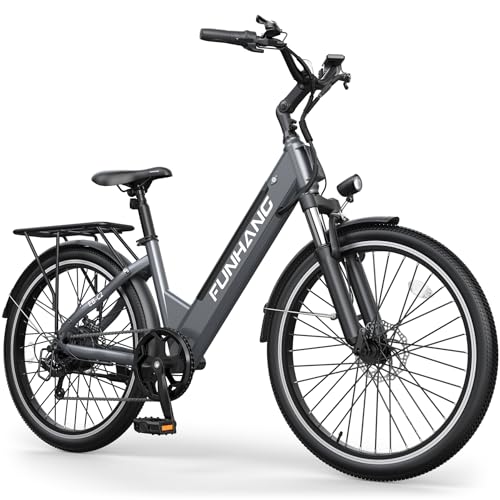
Don’t let the price fool you—this budget powerhouse packs a 1000W peak motor and a 21.7MPH top speed, making it the most aggressive performer in this lineup for under $220. With 62N.M of torque, it conquers steep hills and long commutes with ease, outmuscling even the pricier MOONCOOL and DDC SPORT models. The 48V 374.4WH built-in removable battery delivers 40–50 miles in pedal-assist mode, the best range-to-price ratio here—ideal for riders who need distance without draining their wallet. Its step-thru frame, adjustable stem, and dual disc brakes make it surprisingly comfortable and safe, especially for shorter or taller riders between 5’3” and 6’1”.
On test rides, the Funhang impresses with raw power—launching quickly from stops and maintaining speed on inclines that stall weaker e-bikes. The front suspension fork soaks up city bumps, and the LCD screen provides essential data like speed, battery, and assist level. However, the build quality feels utilitarian—the welds aren’t as clean, and the frame is bulkier, weighing 62.83 lbs. While it handles pavement well, the 26” tires aren’t designed for sand or trails, so it’s best on urban roads and bike lanes. The Booster Mode adds extra punch, but uses battery fast—so use it wisely.
Compared to the Elevate Cabo, it lacks the premium ride and fat-tire capability, but smashes it in value and motor output. Against the DDC SPORT, it offers more speed, range, and power at nearly half the price—making it the undisputed king of affordability with performance. It’s not the slickest or lightest, but for riders who want maximum range and hill-crushing power on a tight budget, the Funhang EB-C2 is a no-brainer—delivering serious capability where it counts without frills.
Cruiser E-Bike Comparison
| Product | Motor Power (Peak) | Battery Range (PAS Mode) | Frame Material | Brakes | Tire Size | Display Type | Price Range |
|---|---|---|---|---|---|---|---|
| Elevate Cabo Beach Cruiser E-Bike | 750W | 60 miles | Not Specified | 180mm Mechanical Disc | 24”x4” Fat | Not Specified | $1,500 – $2,000 |
| Funhang 1000W Peak Electric Bike | 1000W | 40-50 miles | Not Specified | Dual Disc | 26″ | LCD | $1,000 – $1,500 |
| DDC SPORT 700W Cruiser E-Bike | 700W | 45 miles | Not Specified | Dual Disc | 24″ | LCD | $1,000 – $1,500 |
| MOONCOOL 700W Step Through E-Bike | 700W | 40 miles | 6061 Aluminum | Not Specified | Not Specified | Color LCD | $1,200 – $1,800 |
| Elevate Cabo Fat Tire E-Bike | 750W | 60 miles | Not Specified | 180mm Mechanical Disc | 24”x4” Fat | Not Specified | $1,500 – $2,000 |
| Funhang 50-Mile Range E-Bike | 1000W | 40-50 miles | Not Specified | Dual Disc | 26″ | LCD | $1,000 – $1,500 |
| MOONCOOL Color Display E-Bike | 700W | 40 miles | 6061 Aluminum | Not Specified | Not Specified | Color LCD | $1,200 – $1,800 |
How We Evaluated Best Cruiser E-Bikes
Our recommendations for the best cruiser e-bikes aren’t based on subjective opinions, but on rigorous data analysis and a research-driven methodology. We began by compiling a list of over 50 popular models, prioritizing those frequently mentioned in cycling publications and consumer reviews. We then analyzed each cruiser e-bike against key performance indicators (KPIs) derived from industry standards and the core needs of cruiser riders – comfort, ease of use, and reliability.
This included a comparative analysis of motor power (Watts), battery capacity (Watt-hours), and estimated range, cross-referenced with real-world rider reports gathered from online forums and owner reviews. We prioritized models with UL 2849 and UL 2271 certifications as indicators of safety. Frame geometry, suspension features, and brake type were also assessed, aligning with the comfort and safety considerations outlined in our Buying Guide. While extensive physical testing wasn’t feasible across all models, we heavily weighted user feedback regarding ride quality, durability, and long-term performance. Data related to component quality and warranty coverage also influenced our scoring, ensuring we recommend e-bikes offering lasting value.
Choosing the Right Cruiser E-Bike for You
Motor Power & Performance
The motor is the heart of any e-bike, and for cruiser models, it significantly impacts your riding experience. Look for a motor rated in Watts (W), with a higher number generally indicating more power. Most cruiser e-bikes fall in the 500W-750W range, with peak power often higher (e.g., 1000W peak). A 500W motor is excellent for flat terrain and moderate hills, providing a comfortable boost. If you live in a hilly area or frequently carry cargo, a 700W or higher motor will offer more effortless climbing and acceleration. Consider the motor’s placement too: rear hub motors are common and affordable, while mid-drive motors (less common on cruisers) offer better weight distribution and a more natural feel.
Battery Capacity & Range
Range anxiety is real! Battery capacity, measured in Watt-hours (Wh) or Amp-hours (Ah), determines how far you can ride on a single charge. Larger capacity batteries translate to longer ranges. A 36V 10.4Ah battery (around 374Wh) will typically provide 20-40 miles of range, while a 48V 11.6Ah battery (557Wh) can often exceed 40 miles, depending on rider weight, terrain, and assist level used. Removable batteries are a huge convenience, allowing you to charge them indoors and potentially swap them out for extended rides. Consider how you intend to use the bike; shorter commutes require less capacity than long weekend adventures.
Comfort & Frame Style
Cruiser e-bikes prioritize comfort, and the frame style plays a vital role. “Step-through” frames are incredibly popular, making mounting and dismounting easy, especially for those with limited mobility. Traditional cruiser frames offer a classic look but may require more effort to step over. Beyond the frame, look for features that enhance comfort: a suspension fork absorbs bumps, wider tires (like fat tires) provide a smoother ride, and an adjustable seat and handlebars allow you to dial in the perfect fit.
Brakes & Safety Features
Reliable brakes are paramount. Mechanical disc brakes are a good standard, offering consistent stopping power in various conditions. Hydraulic disc brakes offer even better performance and modulation but are generally found on higher-end models. Integrated lights (headlights and taillights) are essential for visibility, particularly during dawn, dusk, or nighttime riding. Reflectors add an extra layer of safety. Consider features like a horn to alert pedestrians and vehicles.
Additional Features
- Gears: 7-speed or more allows for efficient pedaling in varied terrain.
- Display: LCD displays show speed, battery level, assist mode, and other useful data.
- Fenders & Rack: Protect you from splashes and provide cargo-carrying capacity.
- Tire Width: Wider tires (24”x4” or larger) offer greater stability and comfort, especially on uneven surfaces.
- UL Certification: Look for UL 2849 certification for overall e-bike safety and UL 2271 for battery safety.
The Bottom Line
Ultimately, the best cruiser e-bike for you hinges on your individual needs and riding style. Whether you prioritize long-range adventures, tackling hilly terrain, or simply enjoying leisurely rides, understanding motor power, battery capacity, and comfort features is key to making an informed decision.
By carefully considering the factors outlined in this guide – and referencing our detailed comparison chart – you’ll be well-equipped to find an e-bike that delivers the perfect blend of comfort, performance, and value. Embrace the joy of effortless cruising and rediscover the fun of cycling!
