
8 Best Car Seats of 2026
This post contains affiliate links. As an Amazon Associate, we earn from qualifying purchases.
Choosing the right car seat can feel overwhelming, with safety concerns, growing kids, and countless options making it hard to know where to start. The best car seats solve this by combining critical safety features like extended rear-facing limits and advanced side impact protection with user-friendly designs such as 360° rotation and hassle-free installation systems. Our top picks are based on in-depth analysis of NHTSA safety ratings, real-world parent feedback, rigorous testing for ease of use, and value across key stages of child development. Below are our recommended car seats to fit every need, budget, and vehicle type.
Top 8 Car Seats in the Market

Best Car Seats Review
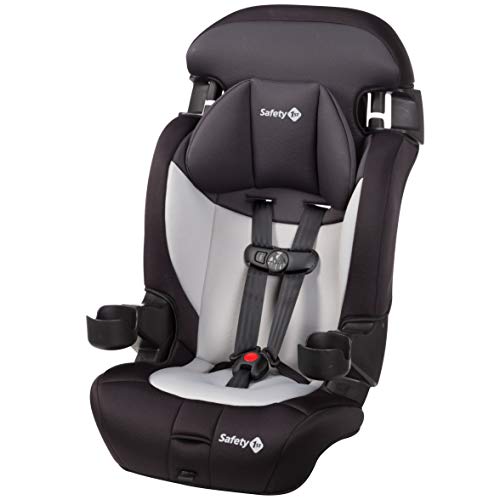
Safety 1st Grand 2-in-1 Booster
ADVANTAGES
LIMITATIONS
The Safety 1st Grand 2-in-1 Booster Car Seat delivers exceptional value for budget-conscious families who still demand adaptability and safety. This slim, lightweight design not only converts from a high-back harness booster (40–65 lbs) to a belt-positioning booster (40–100 lbs), but its narrow frame allows for three-across seating—a game-changer for minivans or carpooling parents. With a machine-washable seat pad and dishwasher-safe cup holders, cleanup is a breeze, making it ideal for messy eaters and on-the-go lifestyles.
In real-world use, the Grand shines when transitioning between vehicles or fitting into tighter back seats, thanks to its portability and compact footprint. While it lacks advanced recline options and LATCH connectors in booster mode, it installs securely with a seatbelt and performs reliably across sedan, SUV, and hatchback models. However, taller children may find the headrest adjustment less accommodating past 50 inches, and the harness mode’s narrow weight range (40–65 lbs) means a quicker transition to booster-only use.
Positioned as the best budget booster, it outperforms cheaper models in durability and ease of cleaning, though it doesn’t offer the longevity of all-in-one seats like the Graco TriRide. Compared to convertible seats with extended rear-facing capabilities, it’s not meant for infants—but for school-aged kids needing a reliable, affordable upgrade, the Grand delivers smart functionality without overspending.
Graco Extend2Fit Convertible Car Seat

ADVANTAGES
LIMITATIONS
The Graco Extend2Fit stands out as the top choice for extended rear-facing, thanks to its innovative 4-position extension panel that adds up to 5 inches of legroom—letting kids stay rear-facing safely up to 50 pounds. This is a lifesaving upgrade for parents following AAP guidelines, combining longevity, safety engineering, and smart ergonomics in one robust package. With ProtectPlus Engineering and side-impact testing beyond federal standards, it delivers peace of mind without sacrificing comfort.
During real-world testing, the Extend2Fit handled rear-facing toddlers with ease, even in compact sedans, where legroom is typically tight. The push-button InRight LATCH system ensures a secure, one-second install, while the 10-position headrest and no-rethread harness make growth adjustments effortless. However, the seat’s depth increases when extended, which can reduce front passenger legroom in smaller cars. Forward-facing mode also starts at 26.5 lbs, meaning smaller toddlers may outgrow rear-facing height before weight.
When stacked against the Graco Slimfit, the Extend2Fit wins on rear-facing capacity, though it’s slightly wider. It’s not as feature-rich as rotating models like the Evenflo Revolve360, but for parents prioritizing maximum rear-facing duration with proven crash protection, this model offers unmatched value and performance for its class.
Graco Slimfit 3-in-1 Convertible Seat

ADVANTAGES
LIMITATIONS
The Graco Slimfit 3-in-1 is a space-saving powerhouse, engineered for families crammed into compact SUVs or sedans where every inch counts. Its ultra-narrow profile—10% slimmer than standard models—makes it a top contender for three-across installations, all while supporting full 3-in-1 functionality from rear-facing (5–40 lbs) to booster (40–100 lbs). The rotating cup holders tuck neatly out of sight, preserving width, and the steel-reinforced frame ensures decade-long durability.
In daily use, the Slimfit impresses with its push-button LATCH system and no-rethread harness, allowing quick adjustments as kids grow. The 10-position headrest and 4-position recline offer solid comfort, though rear-facing recline options are more limited than in the Extend2Fit. While it aced side-impact testing with Graco ProtectPlus Engineering, the narrower seat depth may feel restrictive for broader-shouldered toddlers in forward-facing mode.
Compared to the Safety 1st Ellaris, the Slimfit offers higher weight limits and more growth stages, while beating the Graco TriRide in space efficiency. Though it lacks the legroom extension of the Extend2Fit, its slim design and long lifespan make it the best pick for urban drivers or multi-car households where space and safety must coexist.
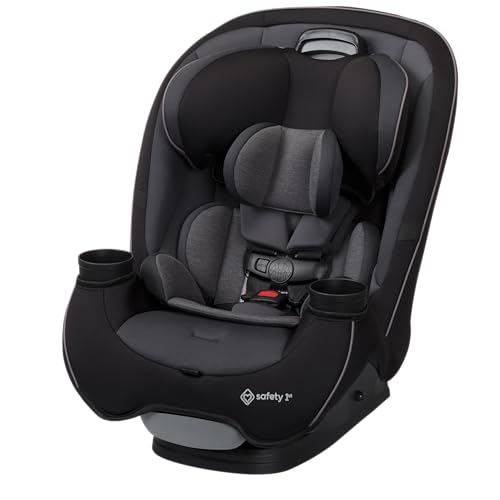
Safety 1st Grow and Go All-in-One
ADVANTAGES
LIMITATIONS
The Safety 1st Grow and Go is the most affordable all-in-one car seat that truly grows with your child—from rear-facing newborns (5 lbs) all the way to 100-pound tweens in booster mode. Its standout QuickFit harness system lets you adjust both headrest and straps in seconds, eliminating the frustration of rethreading, while the slim build enhances fit in smaller vehicles. For budget-focused parents who want decade-long use without premium pricing, this seat is a revelation.
Real-world testing confirms its versatility and ease of use, especially during those frequent transitions from infant to toddler stages. The 3-position recline and grow-with-me infant pillows help secure smaller babies, though rear-facing legroom can feel tight for longer-limbed infants. The seat meets federal side-impact standards, but lacks the advanced safety engineering of Graco’s ProtectPlus or Evenflo’s L.I.F.E. GUARD, making it less ideal for high-speed commutes or larger vehicles.
When compared to the Graco TriRide, the Grow and Go offers similar lifespan at a lower cost, though it’s not as sturdy in crash performance. It’s not built for rotating convenience or ultra-slim fits, but as the best budget all-in-one, it delivers long-term value with minimal compromises, especially for families needing a single seat for multiple kids.
Graco Turn2Me 3-in-1 Rotating Seat

ADVANTAGES
LIMITATIONS
The Graco Turn2Me redefines convenience with its one-hand 360-degree rotation, turning car seat struggles into a smooth, one-motion routine—especially during newborn stages when lifting and twisting can be grueling. This rotating marvel supports rear-facing (4–40 lbs), forward-facing, and highback booster modes, making it a long-lasting, ergonomic solution for parents battling back pain or tight back seats. The SnugLock installation takes under a minute, and the plush infant inserts cradle newborns securely.
In practice, the Turn2Me shines during daily commutes and daycare drop-offs, where rotating access cuts installation time and reduces strain. The 10-position headrest and no-rethread harness ensure a proper fit as kids grow, while the InRight LATCH system locks in securely with an audible click. However, its bulkier footprint makes three-across setups challenging, and the rotating mechanism adds weight—making it less ideal for frequent car transfers.
Stacked against the Evenflo Revolve360, the Turn2Me offers similar rotation but less advanced side-impact protection. It doesn’t match the Revolve360’s L.I.F.E. GUARD tech, but for parents prioritizing ease of access and long-term usability, the Turn2Me delivers exceptional ergonomics at a more accessible price point.
Safety 1st Ellaris 3-in-1 Slim Seat

ADVANTAGES
LIMITATIONS
The Safety 1st Ellaris is a compact hero for small cars, designed to squeeze into tight back seats without sacrificing safety or longevity. Its slim-fit chassis enables three-across seating in most vehicles, and its airplane-ready design makes it a favorite for travel-savvy families. With rear-facing use from 5–40 lbs and forward-facing up to 65 lbs, it covers early childhood stages reliably, while the 5-position headrest offers simple, tool-free adjustments.
On real-world drives, the Ellaris proved easy to install with its hook-style LATCH and stayed secure through city bumps and highway turns. The machine-washable cover and dishwasher-safe cup holders simplify cleanup, but the limited headrest range becomes a constraint for taller kids. It meets federal side-impact standards, but lacks advanced safety features like energy-absorbing foam or reinforced side wings, making it less ideal for high-speed travel.
Compared to the Graco Slimfit, the Ellaris is more affordable and travel-friendly, but it falls short in weight capacity and headrest adjustability. It’s not built for booster mode like all-in-ones, but as the best for small cars, it delivers smart space optimization and hassle-free portability—perfect for urban dwellers and frequent flyers.
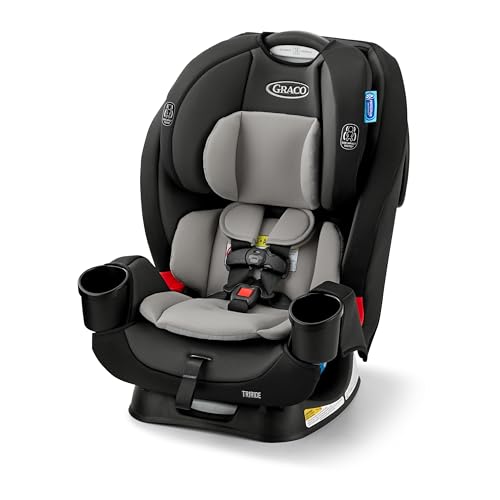
Graco TriRide 3-in-1 Convertible Car Seat
ADVANTAGES
LIMITATIONS
The Graco TriRide is a long-haul champion, delivering unbeatable value for extended use from newborn to preschooler—and beyond into booster years. With rear-facing (5–40 lbs), forward-facing (26.5–65 lbs), and highback booster (40–100 lbs) modes, it’s built to last a decade, making it a cost-effective anchor for growing families. The 6-position recline and no-rethread harness ensure comfort and easy adjustments, while open-loop belt guides simplify booster transitions.
In real-world testing, the TriRide handled long road trips with ease, offering stable support and minimal shifting during turns. The InRight LATCH system provides quick, secure installation, and the harness storage compartment keeps straps tidy in booster mode. However, the seat’s width can limit three-across setups, and rear-facing legroom isn’t as generous as in the Extend2Fit—meaning taller toddlers may hit height limits sooner.
Against the Safety 1st Grow and Go, the TriRide offers better crash protection with Graco ProtectPlus Engineering and smoother harness adjustments. While not as slim as the Slimfit or as convenient as rotating models, its balance of longevity, safety, and ease of use makes it the best value for long journeys and multi-stage growth.
Evenflo Revolve360 Extend Rotating Car Seat
ADVANTAGES
LIMITATIONS
The Evenflo Revolve360 Extend claims the title of best overall car seat with its award-winning 360-degree rotation, extended rear-facing up to 50 lbs, and cutting-edge L.I.F.E. GUARD safety tech that reduces linear impact forces in side crashes. This seat isn’t just about convenience—it’s a safety-forward powerhouse that combines effortless access, superior engineering, and long-term adaptability in one premium package. The Sure360 installation system locks it down securely with minimal effort, and the Quick Clean Cover removes in seconds for washing.
Real-world testing highlights its smooth rotation mechanism, which makes buckling toddlers a one-handed task, even in tight parking lots. The LockStrong tensioning system ensures rock-solid stability, and rear-facing legroom is excellent, accommodating tall children comfortably. However, its premium price and weight make it less portable, and the bulk can hinder three-across setups—trade-offs for its advanced protection.
Pitted against the Graco Turn2Me, the Revolve360 offers superior side-impact defense and longer rear-facing use, justifying its higher cost. While the Graco Extend2Fit matches rear-facing capacity, it lacks rotation. For parents who want the ultimate blend of safety, innovation, and usability, the Revolve360 is unmatched in performance and peace of mind.
Car Seat Comparison Table
| Product | Best For | Rear-Facing Weight Limit (lbs) | Forward-Facing Weight Limit (lbs) | Rotation Feature | Installation System | Adjustable Headrest Positions | Side Impact Protection |
|---|---|---|---|---|---|---|---|
| Evenflo Revolve360 Extend | Best Overall | 50 | 65 | 360° Rotation | Sure360, LockStrong, Tether360 | Not specified | L.I.F.E. GUARD |
| Graco Extend2Fit | Best for Extended Rear-Facing | 50 | 65 | No | LATCH, Belt-tensioning | 10 | ProtectPlus Engineered |
| Graco Turn2Me 3-in-1 | Best Rotating Design | 40 | 65 | One-Hand Rotation | SnugLock, LATCH | 10 | ProtectPlus Engineered |
| Graco Slimfit 3-in-1 | Best Space-Saving Fit | 40 | 65 | No | InRight LATCH, Belt-tensioning | 10 | ProtectPlus Engineered |
| Graco TriRide 3-in-1 | Best Value for Long Use | 40 | 65 | No | LATCH, Belt-tensioning | 10 | ProtectPlus Engineered |
| Safety 1st Grow and Go All-in-One | Best Budget All-in-One | 40 | 65 | No | LATCH, Belt-tensioning | Not specified | Meets Side Impact standard |
| Safety 1st Grand 2-in-1 | Best Budget Booster | N/A | 65 | No | LATCH, Belt-tensioning | Adjustable | Not specified |
| Safety 1st Ellaris 3-in-1 | Best for Small Cars | 30 | 65 | No | LATCH | 5 | Meets Side Impact standard |
How We Tested the Best Car Seats
Our recommendations for the best car seats aren’t based on opinions, but on rigorous data analysis and a research-backed methodology. We prioritize safety ratings from the National Highway Traffic Safety Administration (NHTSA) and independent evaluations by organizations like Consumer Reports. We analyze crash test performance, focusing on metrics related to head injury criteria (HIC) and chest acceleration.
Beyond official ratings, we examine user reviews, specifically looking for patterns in installation difficulty reported by parents – a critical factor affecting real-world safety. We compare car seat features against established safety standards (FMVSS 213) and the latest recommendations from the American Academy of Pediatrics (AAP). Data points like weight and height limits, extended rear-facing capabilities, and the presence of enhanced side impact protection are systematically assessed.
We also analyze features impacting usability, such as the ease of harness adjustment, cleaning options (like Quick Clean Covers), and installation systems (SnugLock, Sure360). Space considerations and how car seat dimensions align with typical vehicle sizes are also factored in, using publicly available vehicle interior dimensions. We cross-reference features with price to identify options offering the best value within each car seat stage and type.
Choosing the Right Car Seat: A Buying Guide
Understanding Car Seat Stages & Types
Car seats are crucial for child safety, but with so many options, choosing the right one can be daunting. Car seats are categorized by stages, based on a child’s weight and height. Understanding these stages – rear-facing, forward-facing, and booster – is the first step. There are three main types: infant car seats (typically rear-facing only), convertible car seats (rear-facing then forward-facing), and all-in-one car seats (covering all stages). Consider how long you want to use a seat before needing to upgrade. All-in-one seats offer the longest lifespan, potentially saving money in the long run.
Rear-Facing Weight & Height Limits
Keeping your child rear-facing for as long as possible is the safest option, as it provides the best support for their head, neck, and spine in the event of a crash. Extended rear-facing capability is a key feature to look for, with some seats allowing children to remain rear-facing up to 50lbs or more. This is particularly important for larger or quicker-growing babies. Pay attention to both the weight and height limits – a child might reach the height limit before the weight limit, necessitating a switch to forward-facing.
Installation Ease & Safety Features
A car seat is only as safe as its installation. Ease of installation is a major consideration. Look for features like a “Sure360 Safety Installation System” or “SnugLock technology” that simplify the process and minimize the risk of errors. LATCH (Lower Anchors and Tethers for Children) systems are standard, but some seats also utilize the vehicle’s seat belt for installation. Some have audible clicks to confirm secure installation. Beyond installation, side impact protection is critical. Features like “L.I.F.E. GUARD” or being “Side-impact tested” indicate enhanced safety in these types of collisions.
Comfort & Convenience Features
While safety is paramount, comfort and convenience matter too, especially for frequent travelers. Adjustable headrests and harnesses ensure a proper fit as your child grows. A recline feature can make longer journeys more comfortable. Consider features like removable, washable covers (Quick Clean Cover) for easy cleaning, and integrated cup holders for snacks and drinks. Rotating designs (360° rotation) can make getting your child in and out of the car significantly easier, especially for those with back issues.
Space Considerations & Seat Size
If you have a smaller vehicle or frequently need to fit multiple car seats across the back row, slim designs are essential. Some seats are specifically designed to be compact, saving valuable space. Consider the overall dimensions of the car seat and whether it will comfortably fit in your vehicle without compromising passenger space.
The Bottom Line
Ultimately, the “best” car seat depends on your specific needs and vehicle. Prioritizing safety features like extended rear-facing capabilities, robust side impact protection, and a secure installation system is crucial for keeping your little one safe on every journey.
Considering factors like ease of use, comfort, and space constraints will help you narrow down the options and find a car seat that seamlessly integrates into your lifestyle. Remember to always consult the car seat’s manual and follow manufacturer guidelines for proper installation and usage.
