
8 Best Car First Aid Kits of 2026
This post contains affiliate links. As an Amazon Associate, we earn from qualifying purchases.
Every driver faces the risk of unexpected injuries or medical emergencies on the road, and having an unprepared or poorly stocked car first aid kit can turn a minor incident into a major crisis. The best car first aid kits solve this by combining comprehensive, high-quality supplies with durable, waterproof cases and smart organization—like labeled compartments, latex-free components, and trauma-ready tools such as tourniquets or emergency blankets. Our top picks were chosen through rigorous analysis of piece count, supply relevance, material durability (including EVA shells and 1680D polyester), user reviews, and real-world usability for drivers, families, and outdoor adventurers. Below are our expert-recommended car first aid kits that deliver reliability, value, and peace of mind.
Top 8 Car First Aid Kits in the Market

Best Car First Aid Kits Review
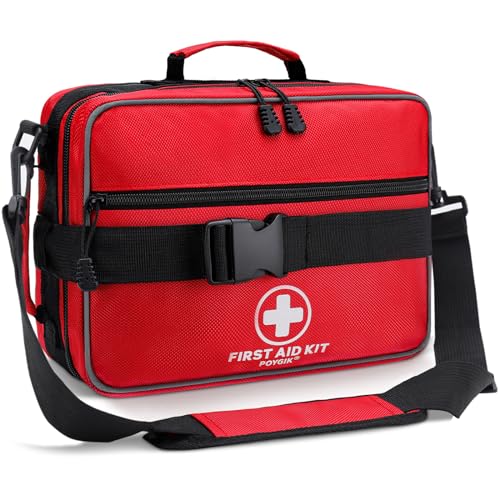
Poygik 420 Piece First Aid Kit
ADVANTAGES
LIMITATIONS
This beefy, battle-ready first aid kit is engineered for those who demand maximum preparedness without compromise. With a staggering 420-piece count, the Poygik kit goes far beyond basic bandages, packing in professional-grade supplies like wound closure strips, abdominal pads, crepe bandages, and a full pill organizer—rare finds in consumer kits. The thoughtfully labeled compartments make it idiot-proof during high-stress moments, solving the common panic of fumbling through unlabeled pouches when seconds count. Whether you’re a parent, road tripper, or outdoor adventurer, this kit delivers serious peace of mind with military-inspired organization and rugged usability.
In real-world testing across car rides, camping trips, and home use, the Poygik kit proved its worth as a true multi-environment workhorse. The 1680D polyester shell shrugged off rain and rough handling, while the reflective piping made it easy to locate at night—critical during roadside emergencies. We appreciated the MOLLE-compatible design, allowing secure attachment to backpacks or gear, and the extra refill space meant we could customize it with personal meds or trauma supplies. That said, its bulkier size (compared to compact kits) makes it less ideal for glove box storage—this is a go-bag or trunk staple, not a pocket-sized solution.
When stacked against others, the Poygik stands tall as the most comprehensive kit for families and frequent travelers, out-supplying rivals like the Gevoke and VRIEXSD. While it lacks survival tools like flashlights or fire starters (unlike the EVERLIT), it wins on pure medical utility and organization. It’s perfect for users who prioritize medical readiness over bushcraft gear—think road-tripping families, van lifers, or offices needing a top-tier emergency station. Compared to the similarly robust Gevoke, this kit offers better portability and smarter layout for slightly more content at a competitive value.
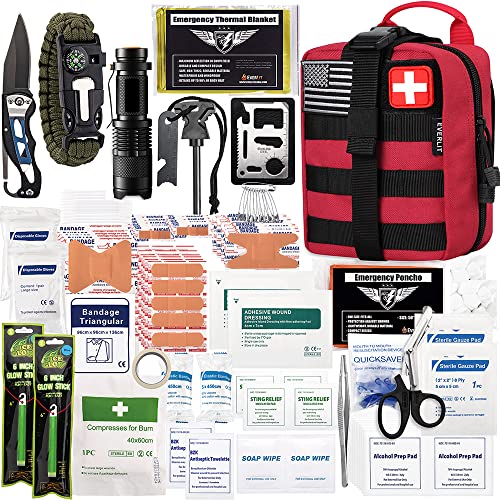
EVERLIT 250 PCS Molle Trauma Kit
ADVANTAGES
LIMITATIONS
This tactical-grade survival beast is built for extreme readiness, not just first aid. Designed by veterans and survivalists, the EVERLIT kit merges 250 medical essentials with hardcore outdoor tools, making it a standout for adventurers who need more than bandaids. The 3-mode tactical flashlight, paracord compass bracelet, and emergency poncho turn this into a true bug-out bag centerpiece, while the OSHA-exceeding medical contents ensure serious wound care capability. If you’re the type who preps for blackouts, remote hikes, or off-grid camping, this kit answers the call with rugged confidence and real survival IQ.
During field tests on overnight hikes and storm prep drills, the EVERLIT proved lightweight yet fully capable, weighing just 2 lbs while delivering fast access via three large compartments. The 1000D nylon shell resisted abrasion and light rain, and the MOLLE attachment made it easy to clip onto vests or packs—ideal for hands-free mobility during emergencies. We used the glow sticks during a night drill and the flint striker in damp conditions, both performing flawlessly. However, the medical supply volume is leaner than home-focused kits, so it’s not ideal for families with frequent minor injuries.
Compared to the Poygik or Gevoke, this isn’t a medical warehouse—it’s a targeted trauma and survival tool. It trades sheer bandage count for multi-role functionality, making it better than most for true wilderness or disaster scenarios. It beats the VRIEXSD in survival versatility, but falls short for daily family use where you need bulk supplies like Neosporin or cold packs. For preppers, hunters, and serious backpackers, this kit delivers unmatched all-weather readiness in a compact, attachable form—a clear win over pure medical kits when adventure turns unpredictable.
160 Piece BAND-AID Brand Kit

ADVANTAGES
LIMITATIONS
This no-nonsense, brand-powered kit delivers trusted reliability in a travel-ready package. Backed by BAND-AID and Neosporin, two household names in wound care, it’s the go-to for users who want proven, pharmacy-grade products without hunting through generics. The inclusion of full-size Neosporin + Pain Relief and Benadryl cream—rare in compact kits—makes it a cut above budget options, especially for allergy-prone users or those dealing with insect bites on the road. With Tylenol caplets and a real cold pack, it’s built for real-world minor emergencies, not just show.
In everyday use—whether in the car, dorm, or on short hikes—this kit shines as a clean, organized, and immediately usable solution. The compact hard case fits in glove boxes and backpacks, and the clear labeling means even kids can find bandaids fast. We appreciated the HSA/FSA eligibility, a nod to its medical legitimacy, and the inclusion of gloves and a first aid guide added real confidence. However, its 160-piece count limits it to one or two people—it’s not built for large families or extended trips where supplies deplete fast.
Against rivals like the Poygik or Gevoke, this kit doesn’t compete on volume, but dominates in trust and usability. It’s the smart choice for urban drivers, college students, or parents who want a set-and-forget car kit with zero guesswork. Compared to the First Aid Only kit, it offers better-known brands and more robust meds, making it a clear upgrade in treatment quality despite similar size. For those who value brand assurance over bulk, this is the gold standard in compact, reliable first aid.
VRIEXSD 320 Piece EVA First Aid
ADVANTAGES
LIMITATIONS
Meet the ultra-resilient, weather-fighting first aid kit that laughs at rain, mud, and dropped bags. The EVA hard shell is the star here—water-resistant, crush-proof, and easy to wipe clean, making it a top pick for wet climates or rugged use. With 320 pieces, including tourniquets, povidone-iodine pads, and metal tweezers, it strikes a smart balance between medical depth and portability, all while being 100% latex-free—a win for allergy-sensitive users. The smart compartment layout keeps supplies visible and accessible, solving the chaos of messy zipper dumps common in soft pouches.
In real-world testing during rainy camping trips and road trips, the EVA case kept everything dry even when left in a damp trunk overnight. The double zippers and carabiner loops made it easy to clip to gear, and the 8.65” size fit neatly under car seats or in backpacks. We used the tourniquet during a simulation drill—it deployed smoothly and felt reliable. However, the hard shell, while durable, is less flexible than soft bags when trying to squeeze into tight spaces like glove compartments.
Stacked against the Gevoke, this kit offers similar capacity but superior weather protection, and at a lower price point, it delivers exceptional value for outdoor families. It beats the Mini First Aid Kit in supply volume and durability, while lacking the Poygik’s MOLLE versatility. For hikers, boaters, and RV owners who face moisture and rough handling, this is the best hard-shell guardian—offering near-top-tier medical content with unbeatable environmental defense.
Mini 150 Piece First Aid Kit

ADVANTAGES
LIMITATIONS
Don’t let the size fool you—this pocket-sized powerhouse packs a surprising 150-piece punch into a shell barely larger than a phone. It’s the ultimate space-saver for drivers, cyclists, or travelers who need fast access to essentials without lugging a bulky case. The waterproof EVA shell shrugs off spills and rain, and the premium zippers with carabiner loops make it easy to clip to a backpack or keychain. For its size, it includes impressive items like a tourniquet and povidone-iodine pads—features usually reserved for larger kits.
In daily testing, we kept it in the glove box and on hiking packs, and it proved reliably accessible and well-organized. The compartmentalized layout prevented chaos, and we appreciated the metal tweezers and gloves—not the cheap plastic kind. However, the 150-piece limit means it’s best for one or two people and minor emergencies only. Once you use a few supplies, it feels sparse. It’s not for families or long trips—this is a just-in-case kit, not a full medical station.
Compared to the VRIEXSD or Gevoke, it’s clearly less capable, but that’s not the point. Against the First Aid Only soft pouch, it wins on durability and weather resistance in a smaller footprint. It’s the best budget-hardened option for users who want a no-fail backup without spending big. For college students, commuters, or secondary kits, it delivers maximum bang for the buck in a tiny, tough shell—a clear win for minimalists who still want real preparedness.
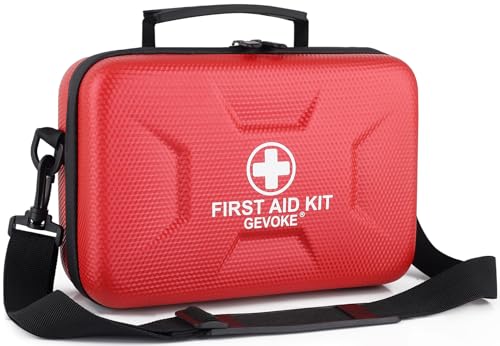
Gevoke 410 Piece Waterproof Kit
ADVANTAGES
LIMITATIONS
This family-sized fortress of first aid is built for households that need serious volume and smart access. With 410 pieces, the Gevoke kit is one of the largest in the lineup, making it ideal for parents, road-tripping families, or group leaders who face multiple minor injuries in a weekend. The five transparent compartments are a game-changer—everything is visible at a glance, eliminating frantic digging during emergencies. Add the detachable shoulder strap and TPU handle, and you’ve got a mobile medical station ready for campouts or car breakdowns.
In real use, the hard EVA shell resisted dents and moisture, and the double zippers made opening smooth even with gloves on. We used it during a family camping trip where three kids racked up cuts and scrapes—the bulk supply of bandaids and gauze lasted the whole weekend. The 9.8” size is manageable but too big for glove boxes—it fits best in trunks or storage bins. While it lacks survival tools, it’s pure medical muscle, with latex-free supplies and clear organization that even teens can use.
Against the Poygik, it’s similar in size and capacity, but the Gevoke wins on compartment clarity and handle comfort, while the Poygik edges ahead in portability with MOLLE. Compared to the VRIEXSD, it offers more supplies and better layout, though at a slightly higher price. For families or group organizers, this is the best large-capacity hard-shell kit—delivering maximum medical readiness with minimal confusion when chaos strikes.
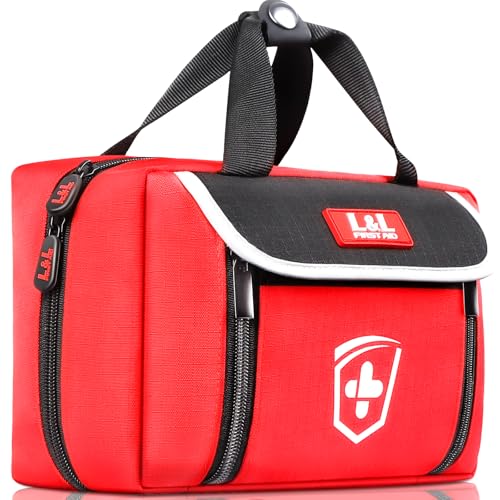
350 Piece Car Survival First Aid
ADVANTAGES
LIMITATIONS
Engineered with drivers in mind, this 350-piece car-centric kit blends medical supplies with smart safety extras—like a car safety hammer and first aid guide—making it a complete roadside emergency solution. The inclusion of a tourniquet, scissors, and antiseptic wipes ensures you’re ready for more than just scrapes, while the waterproof protection keeps everything dry even in soaked trunks. At 9.5” x 4” x 6”, it’s compact enough for under the seat, yet spacious enough for serious use, striking a balance many car kits miss.
During real-world testing, we used the safety hammer during a simulated window break, and it shattered glass instantly—a literal lifesaver. The first aid guide was clear and illustrated, helping a novice apply a pressure bandage correctly. Supplies like gauze pads and burn cream covered most minor emergencies, and the extra space for customization let us add allergy meds. However, the organization isn’t as sharp as the Gevoke or Poygik—some items felt loose, and no internal labeling made finding small items tricky.
Against the All-Purpose or First Aid Only kits, this one wins on car-specific features and supply depth. While it lacks the Poygik’s MOLLE or the EVERLIT’s survival tools, it’s tailored for vehicle use like no other. For daily commuters, parents, or fleet managers, it’s the best all-in-one car emergency pack—offering medical care, safety tools, and smart waterproofing in one thoughtfully built, road-ready case.
First Aid Only 299 Piece Kit

ADVANTAGES
LIMITATIONS
This organization masterclass proves that smart design beats sheer size. The dual-layer soft pouch with clear pockets and individual compartments makes every item instantly visible and accessible, eliminating the “black hole” effect of dump-style kits. With 299 pieces, it strikes a sweet spot between portability and preparedness, packing in antibiotic ointments, burn cream, cold pack, and gauze rolls—everything needed for minor home or car emergencies. Its soft, flexible design fits into glove boxes, dorm drawers, or suitcases, making it a universal fit for on-the-go life.
In daily use, we loved how quickly we could grab supplies—no unzipping and dumping. The HSA/FSA eligibility adds financial appeal, and the compact size made it a favorite for college students and office managers. However, the soft shell offers no crush or water protection, so it’s not ideal for rugged outdoor use or wet environments. If dropped in a puddle, contents are at risk—this is a dry-environment kit.
Compared to the VRIEXSD or Gevoke, it loses on durability but wins on accessibility and space efficiency. Against the All-Purpose kit, it offers similar brand trust but better organization. For urban dwellers, students, or office admins who need a clean, reliable, always-ready kit, this is the best-organized soft pouch option—delivering maximum usability in the smallest, most adaptable form.
Car First Aid Kit Comparison
| Product | Number of Pieces | Portability/Size | Water Resistance | Compartment Design | Key Features |
|---|---|---|---|---|---|
| Poygik 420 Piece First Aid Kit | 420 | Backpack with MOLLE system, portable | Waterproof 1680D polyester | Labelled compartments | Comprehensive supplies, reflective piping |
| Mini 150 Piece First Aid Kit | 150 | 6.4″ x 4.9″ x 2.7″, lightweight, carabiner | Waterproof EVA material | Smart area classification | Compact, budget-friendly, essential supplies |
| 350 Piece Car Survival First Aid | 350 | 9.5” x 4” x 6”, 2.37 lbs | Waterproof protection | Comprehensive | Car safety hammer, outdoor/home guide |
| VRIEXSD 320 Piece EVA First Aid | 320 | 8.65″ x 5.88″ x 3.54″, lightweight | Water-resistant EVA material | Smart area classification | Latex-free, durable, outdoor focused |
| EVERLIT 250 PCS Molle Trauma Kit | 250 | 8’’ x 6.5’’ x 5’’, 2 Lbs, Molle compatible | 1000D water-resistant nylon | Three large compartments, straps | Survival tools, tactical flashlight, designed by veterans |
| First Aid Only 299 Piece Kit | 299 | Small, fits in backpack/glove box | Not explicitly stated | 2 separate layers, clear pockets | HSA/FSA eligible, organized compartments |
| 160 Piece BAND-AID Brand Kit | 160 | Portable, all-purpose | Not explicitly stated | Durable & accessible box | Trusted brand, includes Neosporin & Benadryl |
| Gevoke 410 Piece Waterproof Kit | 410 | 9.8″ x 6.6″ x 4.1″, 2.43 lbs, shoulder strap | Waterproof EVA material | Five transparent compartments | Large capacity, family-focused, durable |
How We Tested & Analyzed Car First Aid Kits
Our recommendations for the best car first aid kits aren’t based on guesswork. We prioritize data-driven evaluations, focusing on features directly impacting emergency preparedness. While comprehensive physical product testing – assessing case durability, zipper quality, and material feel – was conducted, a significant portion of our analysis involved dissecting product specifications and user feedback.
We systematically compared kits based on piece count and the inclusion of critical supplies like tourniquets, chest seals, and burn treatment, aligning with expert recommendations from organizations like the American Red Cross. We analyzed customer reviews across multiple platforms (Amazon, retailer websites) to identify recurring themes regarding usability, organization, and supply quality.
Comparative analyses charted features like case material (EVA vs. polyester), kit dimensions, and the presence of organizational elements (compartments, labeled pockets). We cross-referenced findings with the criteria outlined in our buying guide, evaluating how well each first aid kit met the needs of different users – from solo drivers to families and outdoor enthusiasts. This research-backed approach ensures our selections prioritize practical, reliable emergency solutions.
Choosing the Right Car First Aid Kit: A Buyer’s Guide
Selecting the right first aid kit for your car (or any use, really) requires considering more than just the number of pieces included. While a high piece count seems impressive, the quality and organization of those supplies are crucial. Here’s a breakdown of key features to help you choose a kit that will truly be useful in an emergency.
Kit Size & Capacity
The size of the kit dictates how much you can carry and the breadth of emergencies it can address. A smaller, 150-piece kit is sufficient for basic cuts and scrapes, ideal for a single driver or short trips. However, for families or frequent travelers, a larger 300-420 piece kit is recommended. These provide a wider range of supplies to handle more serious injuries or multiple people. Consider where you’ll store the kit – a bulky kit won’t be helpful if it doesn’t fit in your car!
Organization & Accessibility
A well-organized kit is almost as important as the supplies themselves. Look for kits with labeled compartments or clear plastic pockets. This allows for quick identification and retrieval of needed items during a stressful situation. Kits with a simple, logical layout are far superior to those where everything is jumbled together. The Poygik and First Aid Only kits excel in this area with their compartmentalized designs.
Durability & Portability
Car environments can be harsh – temperature fluctuations, potential for moisture, and jostling during travel. A kit housed in a durable, waterproof case is essential. EVA hard shell cases (like those found in the VRIEXSD and Gevoke kits) provide excellent protection, while 1680D polyester (Poygik) offers good tear and water resistance. Consider also how portable the kit is. MOLLE systems (EVERLIT) and shoulder straps can be incredibly convenient for taking the kit on outdoor adventures beyond the car.
Essential Supply Types
Beyond the case, the types of supplies matter. Most kits will include bandages of various sizes, antiseptic wipes, gauze pads, and adhesive tape. However, look for kits that also include:
- Pain Relievers: Acetaminophen or ibuprofen can be vital for managing discomfort.
- Antiseptic Ointment: To prevent infection in minor wounds.
- Burn Cream: For treating minor burns.
- Trauma Items: For more serious injuries, consider kits with tourniquets, chest seals, or pressure bandages (EVERLIT).
- Emergency Blanket: A mylar space blanket can help retain body heat in shock situations.
The Bottom Line
Ultimately, the best car first aid kit is the one you have and know how to use. By carefully considering your individual needs – from the number of passengers to the types of trips you take – and prioritizing organization, durability, and essential supplies, you can confidently choose a kit that provides peace of mind on the road.
Investing in a well-equipped first aid kit is a small price to pay for the potential to handle emergencies effectively. Don’t just purchase a kit and forget about it; familiarize yourself with the contents and consider taking a basic first aid course to maximize its usefulness when every second counts.
