
7 Best RC Car Radio Transmitters of 2025
This post contains affiliate links. As an Amazon Associate, we earn from qualifying purchases.
Choosing the right RC car radio transmitter can be overwhelming, with poor signal reliability and limited control options often leading to frustrating driving experiences. The best transmitters solve this by delivering stable 2.4GHz FHSS communication, long-range performance, and features like gyro stabilization and telemetry for precise, responsive control. We evaluated each model based on real-world range, channel flexibility, feature set, user reviews, and value across different skill levels—from beginners to advanced hobbyists. Below are our top picks for the best RC car radio transmitters to match your driving needs and budget.
Top 7 Rc Car Radio Transmitters in the Market


Best Rc Car Radio Transmitters Review
Flysky FS-GT2E 2CH Transmitter

ADVANTAGES
LIMITATIONS
The Flysky FS-GT2E punches well above its weight for beginners craving a no-nonsense, rock-solid entry-level transmitter. With its AFHDS 2A protocol, it delivers interference-free signal stability that’s rare at this price, making it ideal for new RC drivers dodging signal dropouts during first-time drives. The dual-rate steering adjustment and simple 2-channel layout strip away complexity, letting users focus on mastering throttle and turn response without drowning in menus.
In real-world testing, the FS-GT2E shines on basic crawlers and entry-level buggies, maintaining reliable control up to 250 feet—perfect for backyard runs or small off-road tracks. It runs on standard 4x AA batteries, a major plus for hassle-free power swaps, though it lacks telemetry and model memory. While limited to two channels and basic tuning, it handles grass, pavement, and mild dirt with confidence. However, multi-vehicle users may find the single-model storage a bottleneck during group sessions.
Compared to more advanced options like the Radiolink RC6GS V3, the FS-GT2E trades features for simplicity and reliability. It’s not built for telemetry geeks or drift masters—but that’s the point. This is the perfect starter transmitter for teens, hobby newcomers, or parents buying a first RC car. It delivers bulletproof connectivity and intuitive operation at a fraction of the cost of high-channel systems, making it the smart pick when you want to just drive without programming headaches.
Radiolink RC6GS V3 7CH Transmitter
ADVANTAGES
LIMITATIONS
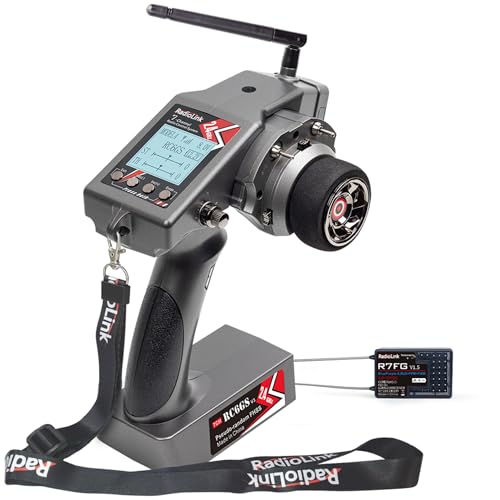
Step into the cockpit with the Radiolink RC6GS V3, a feature-packed powerhouse that redefines what an all-in-one RC transmitter can do. Its 7-channel output and dual three-way switches open the door to complex setups—think winches, lights, FPV head tracking, and dual ESC control—all from a single, intuitive interface. The real-time telemetry display is a game-changer, feeding back voltage and signal strength so you never get stranded by a dead battery.
On the track or trail, the RC6GS V3 proves its mettle with a 600-meter control range thanks to FHSS frequency-hopping tech, allowing multiple users to run simultaneously without crosstalk. Paired with the R7FG gyro receiver, it delivers buttery-smooth drifting and straight-line stability, ideal for high-speed on-road runs or technical rock crawling. The dual prom mix control lets you program custom channel blending—perfect for tanks or 4WD rigs—while the 30-model memory keeps your fleet organized. The only hiccup? The learning curve for first-time users navigating its deep menu system.
When stacked against the Flysky GT2E or Hobby Fans 4CH, the RC6GS V3 is in a different league—a true all-rounder for intermediate to advanced drivers. It’s not the cheapest, but it’s the most versatile and future-proof option in the lineup. With telemetry, gyro integration, and expandable control, it outclasses simpler remotes while staying more accessible than pro-grade systems.
ATA HOBBY Radiolink RC4GS V3
ADVANTAGES
LIMITATIONS
The ATA HOBBY RC4GS V3 is a beginner’s dream wrapped in pro-level tech, delivering gyro-stabilized control without overwhelming complexity. With 5 programmable channels and 30 model memories, it bridges the gap between entry-level simplicity and serious customization—perfect for new drivers stepping up from toy-grade RCs. The built-in gyro via dual R6FG receivers ensures straight tracking and drift control, making it ideal for learning on-road handling or crawler line precision.
In practice, the RC4GS V3 performs impressively across surfaces, maintaining stable 400-meter range even in crowded parks. The one-key EPA/D/R switching is a hidden gem—swap tuning presets on the fly when switching between a buggy and a tank. The timer function aids practice runs, while low-voltage alarms protect both transmitter and vehicle batteries. It handles AA or LiPo power, but the lack of a color screen or HD feedback keeps it from matching premium models in visual clarity.
Compared to the Flysky GT2E, this is a quantum leap in capability—offering more channels, memory, and gyro support—while staying more approachable than the 10-channel DUMBORC monster. It’s the smart middle ground for hobbyists who want advanced features without a pro price tag. With better future-proofing than budget options and a smoother learning curve than high-end systems, it delivers exceptional value for growing enthusiasts.
DUMBORC 10CH DDF-350 Transmitter
ADVANTAGES
LIMITATIONS
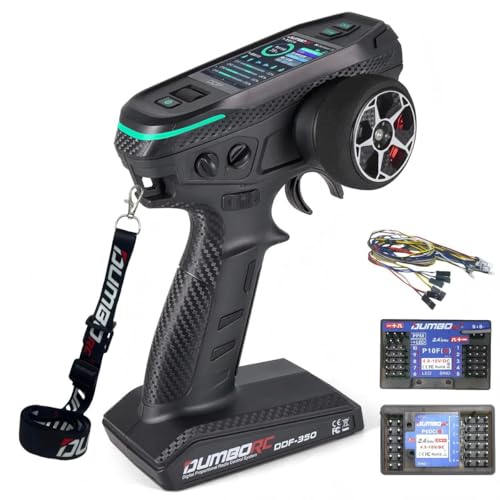
Meet the DUMBORC DDF-350, a command center on your belt built for advanced builders and multi-function RC rigs. With a full 10-channel output and HD color screen, it’s the most powerful transmitter in this lineup—designed for complex machines like 1/5 scale trucks, winch-equipped crawlers, or lighted parade models. The 12 included LED lights and 1–10 channel light control system let you sync lighting effects with steering or throttle, adding showmanship to performance.
In real-world use, the DDF-350 excels in large-scale or custom builds where control granularity matters. The PPM/PWM dual output, independent channel reversal, and custom mix programming let you fine-tune every servo and motor. The coach function enables two drivers to share control—great for mentoring kids or team training. At 350 meters, its range is solid, though not class-leading. The firmware-upgradable design ensures longevity, but the interface demands patience from first-time users.
Stacked against the Radiolink RC6GS V3, the DDF-350 trades portability for unmatched expandability—it’s not for casual racers, but for tinkerers and show builders who need every channel and light under control. While pricier and heavier, it offers more customization than any other model here, making it the ultimate choice when functionality trumps simplicity.
DUMBORC X6 6CH Transmitter

ADVANTAGES
LIMITATIONS
The DUMBORC X6 is a hidden gem in the mid-range market, blending pro-level features with wallet-friendly pricing. Its built-in gyro and 400–500m control range deliver exceptional stability for drifting, crawling, or off-road bashing, while the 3ms receiver response ensures snappy, lag-free inputs. The throttle speed limit is a standout—perfect for new drivers learning throttle control without flying off a ramp.
On the track, the X6 proves reliable across asphalt, gravel, and dirt, with out-of-control protection kicking in during signal loss. The three power options—AA, USB, or LiPo—make charging flexible, and the mixed mode function allows dual-channel blending for advanced maneuvers. It lacks telemetry and model memory, but for the price, it’s shockingly capable. The only letdown is the monochrome screen, which feels dated next to color competitors.
Compared to the Radiolink RC4GS V3, the X6 offers similar gyro performance at a lower cost, but with fewer channels and no model storage. It’s not as flashy as the 10-channel DUMBORC, but for drivers who want strong performance without complexity, it’s a sweet spot between cost and capability. It delivers pro-level stability and tuning in a no-frills package that’s ready to bash out of the box.
Hobby Fans 4CH 2.4G Transmitter
ADVANTAGES
LIMITATIONS
The Hobby Fans 4CH Transmitter is the budget king—a bare-bones but effective solution for first-time RC owners who want to drive, not debug. With 2.4GHz FHSS technology, it fights interference like more expensive models, delivering smooth control up to 250 meters on pavement and backyard turf. The CH1&CH2 mixing control lets you operate steering and throttle from one stick, a neat trick for simplified driving.
In real-world use, it’s perfectly adequate for toy-grade crawlers, boats, or entry-level buggies. The integrated light control system handles headlights and turn signals—rare at this price—while the adjustable lanyard keeps it secure during active play. But it’s not without limits: only one model memory, no telemetry, and transmitter-receiver pairing is locked, so replacements must come from the same brand.
Against the Flysky GT2E, it trades channel simplicity for added features like light control and mixing—but lacks the Flysky’s proven AFHDS reliability. Still, for parents buying a first RC car or teens testing the waters, it’s a no-risk entry point. It doesn’t wow with specs, but it gets the job done where affordability matters most, offering solid performance when you’re not ready to invest in high-end gear.
Flysky FS-GT3B 3CH Transmitter

ADVANTAGES
LIMITATIONS
The Flysky FS-GT3B is a tuner’s delight, engineered for drivers who crave granular control and repeatable setups. With 3 channels and a full suite of tuning tools—including ABS, EXP, End Point, and dual rates—it’s built for custom calibration of steering response, throttle curves, and servo behavior. The 160-frequency hopping and unique ID pairing ensure rock-solid signal integrity, even in multi-driver environments.
On the trail, it delivers crisp, predictable handling ideal for precision crawling or technical track runs. The trainer port is a standout for mentors teaching new drivers, while servo reversal and trim settings let you fine-tune off-center wheels or uneven steering. It lacks telemetry and model memory, but the high receiver sensitivity and low power draw make it reliable over long sessions. The biggest limitation? Only three channels, which rules out complex rigs.
Compared to the Hobby Fans 4CH, the GT3B offers deeper tuning but fewer channels—it’s not about lights or mixing, but pure driving refinement. For modders, tuners, or competitive crawlers who value repeatable setups and micro-adjustments, it’s the most precise 3CH option available. It doesn’t have flashy extras, but for drivers who speak servo jargon, it’s precision over padding.
RC Car Radio Transmitter Comparison
| Product | Best For | Channels | Max Control Distance | Telemetry | Gyro Support | Mixing Control | Price Range |
|---|---|---|---|---|---|---|---|
| Radiolink RC6GS V3 | Best Overall | 7 | 600m (1900ft) | Yes | Yes (with R7FG/R8FG/R8FGH) | Dual PROM Mix | $100 – $150 |
| Hobby Fans 4CH 2.4G | Best Budget Friendly | 4 | 250m | No | No | CH1&CH2 Mixing | $50 – $80 |
| DUMBORC 10CH DDF-350 | Best for Advanced Users | 10 | 350m (voltage return 40m) | Yes | Yes | Custom Mixed Control | $150 – $200 |
| ATA HOBBY Radiolink RC4GS V3 | Best for Beginners with Gyro | 6 | Not specified | No | Yes (with R6FG) | 5 Channels Mix Programmable | $80 – $120 |
| DUMBORC X6 6CH | Best Mid-Range Performance | 6 | 400m – 500m | No | Yes | 1 & 2 Channels Mixing | $70 – $100 |
| Flysky FS-GT2E | Best Simple Entry-Level | 2 | Not specified | No | No | No | $40 – $60 |
| Flysky FS-GT3B | Best for Custom Tuning | 3 | Not specified | No | No | No | $70 – $90 |
How We Test RC Car Radio Transmitters
Our evaluation of the best RC car radio transmitters relies on a data-driven approach, combining extensive research with analysis of technical specifications and user feedback. We prioritize transmitters compatible with a wide range of RC car types and skill levels.
We analyze key features like channel count, range (focusing on real-world performance, not just advertised maximums), and communication protocols (primarily 2.4GHz FHSS) using manufacturer data sheets and independent reviews. Comparative analysis focuses on telemetry capabilities – assessing the usefulness and accuracy of data like battery voltage and signal strength, as seen in models like the Radiolink RC6GS V3.
Receiver compatibility is a crucial factor; we verify receiver options and potential limitations, like those found with Hobby Fans transmitters. Where possible, we examine user reviews for reports on signal interference, range consistency, and durability. While physical product testing isn’t always feasible for every model, we leverage detailed user reports and expert opinions to assess ergonomic design, ease of programming, and the effectiveness of features like gyro stabilization (Radiolink RC6GS V3) and adjustable endpoints. This ensures our recommendations are grounded in both technical data and practical experience, helping you select the optimal RC car radio transmitter for your needs.
Choosing the Right RC Car Radio Transmitter
Selecting the right radio transmitter is crucial for enjoying your RC car experience. It’s the link between you and your vehicle, and the features it offers can significantly impact control, customization, and overall fun. Here’s a breakdown of key considerations to help you make the best choice.
Channel Count & Customization
The number of channels dictates how many functions you can control independently. A 2-channel transmitter is sufficient for basic forward/backward and steering control – ideal for very simple RC cars or beginners (like the Flysky FS-GT2E). However, as you delve into more complex vehicles like crawlers, tanks, or those with winches, you’ll need more channels.
A 3-channel (Flysky FS-GT3B) or 4-channel (Hobby Fans 4CH) transmitter allows for additional functions. More advanced users often opt for 6-channel (DUMBORC X6) or even 7-10 channel transmitters (Radiolink RC6GS V3, DUMBORC 10CH DDF-350). Higher channel counts enable customization like controlling lights, winches, shifting gears, or even FPV camera angles. Consider how many functions you might want to control in the future, not just your current needs. Features like dual PROM mix control (Radiolink RC6GS V3) or the ability to mix channels on the DUMBORC X6 allow for even greater flexibility.
Range & Communication Technology
The transmitter’s range dictates how far you can drive your RC car before losing signal. Most modern transmitters utilize 2.4GHz frequency hopping spread spectrum (FHSS) technology (Hobby Fans 4CH, DUMBORC X6) which minimizes interference.
Range varies between models, generally falling between 250m (Hobby Fans) and 600m (Radiolink RC6GS V3). Consider your typical driving environment. If you’re primarily running in a small backyard, a shorter range is sufficient. However, if you plan to run on larger tracks or in open areas, a longer range is essential. Two-way communication (Radiolink RC6GS V3) is a bonus, providing telemetry data like battery voltage and signal strength, offering valuable insight into your vehicle’s status.
Receiver Features & Gyro Stabilization
The receiver is the counterpart to the transmitter, installed in your RC car. Some receivers offer built-in gyro functionality (Radiolink RC6GS V3, ATA HOBBY Radiolink RC4GS V3). A gyro helps stabilize the vehicle, particularly useful for drifting or on-road cars, keeping it tracking straight. The sensitivity of the gyro can often be adjusted.
Consider the compatibility of the receiver with your vehicle’s electronic speed controller (ESC) and servos. Some transmitters are only compatible with their own receivers (Hobby Fans 4CH), so ensure compatibility before purchasing.
Advanced Features for Specific Needs
- Telemetry: Real-time data on battery voltage, signal strength, and temperature (Radiolink RC6GS V3) can prevent unexpected shutdowns and help optimize performance.
- Model Memory: The ability to store settings for multiple RC cars (ATA HOBBY Radiolink RC4GS V3) saves time and eliminates the need to reconfigure the transmitter each time you switch vehicles.
- Adjustable Endpoints & Dual Rates: These features allow you to fine-tune steering and throttle sensitivity for precise control.
- Trainer Mode: Useful for teaching others to drive, allowing an experienced driver to override the controls if needed (Flysky FS-GT3B).
- Light Control: Some transmitters (DUMBORC 10CH DDF-350) offer integrated light control for adding realistic effects.
The Bottom Line
Ultimately, the best RC car radio transmitter depends on your individual needs and budget. From the budget-friendly Hobby Fans 4CH to the feature-rich Radiolink RC6GS V3 and DUMBORC 10CH DDF-350, there’s an option to suit every RC enthusiast.
Carefully consider the channel count, range, and features like telemetry and gyro support when making your decision. Investing in a quality transmitter will significantly enhance your RC car experience, providing reliable control and opening up possibilities for customization and fun.
